Ai Overview
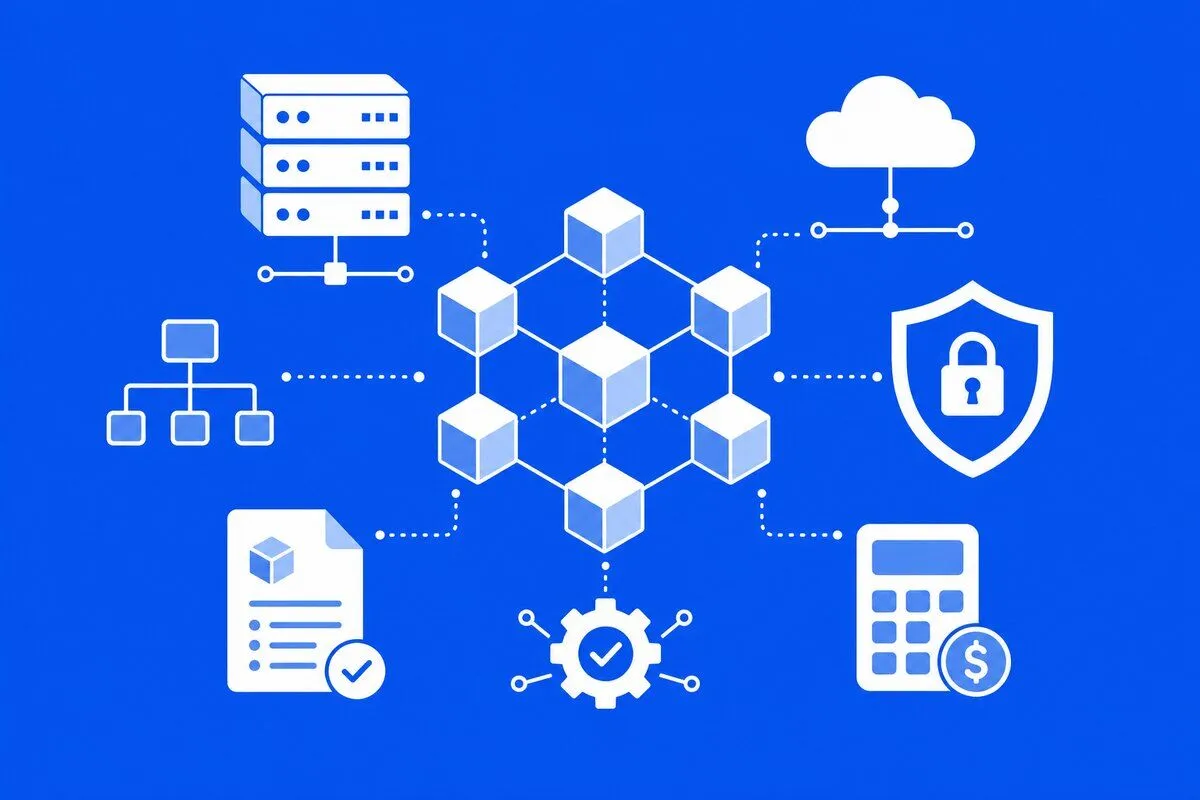
Blockchain in B2B retail refers to the application of distributed ledger technology to facilitate secure, transparent, and automated transactions between businesses in the retail ecosystem. B2B transactions often involve complex Request for Proposal processes, negotiated terms, volume based pricing, and performance based agreements. B2B retail procurement involves complex Request for Proposal processes with detailed specifications, pricing negotiations, and performance requirements.
Key Takeaways
- The blockchain in retail market is projected to grow from 825.4 million USD in 2024 to 26.19 billion USD by 2033, representing a 41.3 percent CAGR driven by B2B adoption.
- Approximately 75 percent of B2B transactions experience some form of payment fraud, making blockchain’s immutable ledger essential for establishing trust between business partners.
- Smart contracts in B2B retail automate RFPs, purchase orders, payment releases, and vendor agreements, reducing manual processing costs by up to 40 percent.
- Global counterfeiting costs are expected to reach 4.2 trillion USD by 2025, with blockchain product authentication providing verified provenance to eliminate counterfeit goods in B2B supply chains.
- Blockchain enables trusted data exchange for Know Your Customer and Know Your Supplier processes, streamlining B2B onboarding and reducing compliance costs.
- B2B eCommerce is growing at 18.7 percent CAGR, with blockchain providing the secure infrastructure needed for multi-stakeholder transactions across global retail networks.
- Permissioned blockchain networks allow retailers, suppliers, and logistics providers to share transaction data while maintaining competitive privacy and data governance.
- Blockchain is expected to save businesses up to 1 trillion USD annually by 2030 through fraud reduction, automated processes, and streamlined reconciliation.
The B2B retail landscape is undergoing a fundamental transformation as blockchain technology addresses long standing challenges in business to business transactions. From eliminating payment fraud that plagues approximately 75 percent of B2B transactions to automating complex procurement processes through smart contracts, blockchain is reshaping how retailers, wholesalers, distributors, and suppliers conduct business. This comprehensive guide explores how blockchain for B2B retail is not just a technological upgrade but a strategic imperative for businesses seeking competitive advantage in the digital commerce era.
B2B retail operates in an environment of inherent complexity where multiple stakeholders, cross border transactions, and intricate payment terms create opportunities for fraud, disputes, and inefficiencies. Traditional systems rely on trust based relationships and manual reconciliation processes that consume time and resources while leaving businesses vulnerable to counterfeiting and payment manipulation. Blockchain technology offers a paradigm shift by creating shared, immutable records that all authorized parties can trust, fundamentally changing the dynamics of B2B commerce.
This article draws on industry research, market analysis, and our extensive experience in building enterprise blockchain solutions for retail and commerce applications. Our blockchain development team has delivered B2B platforms including Connect3’s digital interaction platform, Rubic’s decentralized exchange, and GroveX’s zero fee trading platform, demonstrating practical expertise in building secure B2B blockchain infrastructure.
What is Blockchain in B2B Retail?
Definition
Blockchain in B2B retail refers to the application of distributed ledger technology to facilitate secure, transparent, and automated transactions between businesses in the retail ecosystem. It creates a shared, tamper proof record of all business interactions including purchase orders, invoices, shipment tracking, payments, and agreements between retailers, wholesalers, distributors, manufacturers, and suppliers. By establishing a single source of truth accessible to all authorized stakeholders, blockchain eliminates the reconciliation gaps and trust deficits that characterize traditional B2B commerce.
B2B retail encompasses a vast ecosystem of transactions where products move from manufacturers through distributors and wholesalers before reaching retail stores. Unlike consumer-facing retail where individual transactions are relatively simple, B2B retail involves complex negotiations, bulk orders, credit terms, multi-party logistics, and ongoing business relationships that span years. Each of these touchpoints generates data that traditionally exists in siloed systems, creating opportunities for discrepancies, disputes, and fraud.
Blockchain technology transforms this fragmented landscape by creating a unified data layer that connects all participants. When a retailer places an order with a distributor, that transaction is recorded on the blockchain, where both parties can verify its authenticity. As goods move through the supply chain, each handoff creates an immutable record. Payment terms encoded in smart contracts automatically execute when delivery conditions are met. This creates an end-to-end visibility that was previously impossible in B2B retail.
Blockchain B2B Retail Ecosystem
Manufacturers
Product origin verification and quality certification on chain
Distributors
Inventory tracking and automated purchase order processing
Retailers
Verified supplier relationships and streamlined procurement
Payment Providers
Automated settlement via smart contracts
Read Also: Blockchain Payment Systems: Complete Guide →
Challenges in Traditional B2B Retail That Blockchain Solves
Traditional B2B retail suffers from structural challenges that blockchain technology is uniquely positioned to address. Understanding these pain points helps clarify why blockchain adoption in B2B commerce is accelerating and what benefits of blockchain technology businesses can expect.
Payment Fraud and Trust Deficits
Reports indicate that approximately 75 percent of B2B transactions experience some form of payment-related fraud or discrepancy. This staggering figure reflects the trust challenges inherent in business relationships where buyers and sellers may operate in different jurisdictions, use different systems, and have limited visibility into each other’s operations. Blockchain’s immutable ledger creates verifiable records that eliminate disputes about whether payments were made, when goods were shipped, or what terms were agreed upon.
Data Silos and Reconciliation Complexity
B2B retail involves multiple parties maintaining separate records of the same transactions. A single purchase order might exist in the retailer’s procurement system, the distributor’s order management system, the logistics provider’s tracking system, and the bank’s payment system. Reconciling these records consumes enormous time and resources while still leaving room for errors. Blockchain creates a shared data layer where all parties work from identical records, eliminating reconciliation entirely.
Counterfeiting and Product Authenticity
Global counterfeiting costs are projected to reach 4.2 trillion USD by 2025, with B2B channels being particularly vulnerable as products pass through multiple intermediaries before reaching consumers. Each handoff creates an opportunity for substitution with counterfeit goods. Blockchain provides end to end provenance tracking that verifies product authenticity from manufacturer to final destination, protecting both businesses and ultimately consumers from fake products.
Complex Procurement and Contract Management
B2B transactions often involve complex Request for Proposal processes, negotiated terms, volume based pricing, and performance based agreements. Managing these relationships through traditional systems requires extensive manual effort and creates opportunities for misunderstandings. Smart contracts on blockchain can encode all agreement terms and automatically execute actions when conditions are met, such as releasing payment when goods are delivered in specified condition.
Supplier Onboarding and Compliance
Know Your Supplier processes in B2B retail require extensive documentation collection, verification, and ongoing monitoring. Each retailer duplicates this effort with the same suppliers, creating inefficiencies across the industry. Blockchain enables trusted data exchange where verified supplier credentials can be shared across multiple business relationships, dramatically reducing onboarding time and compliance costs while maintaining data security.
| Challenge | Traditional Approach | Blockchain Solution | Business Impact |
|---|---|---|---|
| Payment Fraud | Manual verification, trust based | Immutable transaction records | 90% fraud reduction potential |
| Data Reconciliation | Siloed systems, manual matching | Shared single source of truth | Eliminates reconciliation costs |
| Counterfeiting | Spot checks, reactive detection | End to end provenance tracking | Verified product authenticity |
| Contract Management | Manual processing, disputes | Self executing smart contracts | 40% processing cost reduction |
| Supplier Onboarding | Duplicate KYS processes | Trusted credential sharing | 70% faster onboarding |
| Dispute Resolution | Conflicting records, arbitration | Timestamped audit trails | Near zero disputes |
Key Benefits of Blockchain in B2B Retail
Implementing blockchain in B2B retail delivers measurable benefits across multiple dimensions of business operations. These advantages compound over time as network effects grow and more participants join blockchain enabled ecosystems.
Transparency and Trust Enhancement
Blockchain’s transparent ledger creates unprecedented visibility into B2B transactions. Every participant can verify the complete history of any transaction, from initial order through payment, without relying on the word of counterparties. This transparency fundamentally changes business relationships by replacing trust with verification. Retailers can confirm that distributors actually hold the inventory they claim, while suppliers can verify that retailers have the credit capacity they represent. This trust enhancement is particularly valuable in global B2B commerce where parties may have limited prior relationship history.
Smart Contract Automation
Smart contracts transform how B2B agreements are executed by encoding terms directly into the blockchain. When a retailer submits a Request for Proposal, smart contracts can automatically evaluate supplier responses against predefined criteria, issue purchase orders to winning bidders, track delivery milestones, and release payments when conditions are met. This automation eliminates manual processing delays, reduces errors, and ensures that all parties adhere to agreed terms without requiring continuous oversight. The B2B system fundamentally runs on RFPs, and blockchain brings unprecedented efficiency to this process.
Supply Chain Visibility and Traceability
For B2B retailers managing products from multiple sources, blockchain provides complete supply chain visibility. Every movement of goods creates an immutable ledger entry that stakeholders can query in real time. This visibility enables proactive management of supply chain disruptions, accurate delivery predictions for downstream customers, and rapid response to quality issues. When problems occur, retailers can instantly identify which products are affected and trace them back to specific batches, suppliers, or manufacturing runs.
Improved Cash Flow Management
Blockchain enables more efficient working capital management across B2B retail relationships. Smart contracts can release payments immediately upon verified delivery, eliminating the delays that plague traditional invoice processing. Alternatively, verified transaction records on blockchain can be used as collateral for supply chain financing, allowing suppliers to access capital more quickly and at better rates. Implementing accounts receivable automation can further enhance cash flow by reducing manual errors and accelerating collections.
Fraud Prevention and Security
The immutable nature of blockchain makes it extremely difficult to manipulate transaction records or perpetrate payment fraud. Cryptographic signatures verify the identity of every participant, while consensus mechanisms ensure that no single party can alter records unilaterally. This security is particularly valuable in B2B retail where transaction values are high and fraudulent activity can result in significant financial losses. Blockchain based blockchain security provides protection that traditional systems cannot match.
📊 Blockchain B2B Retail Benefits by the Numbers
$1 Trillion
Annual savings potential by 2030
41.3%
CAGR for blockchain in retail
50%
Reduction in paperwork costs
75%
B2B fraud transactions addressable
Read Also: Blockchain Finance Use Cases Guide →
Top B2B Retail Use Cases for Blockchain
Blockchain applications in B2B retail span the entire business relationship lifecycle, from initial supplier discovery through ongoing transaction processing and dispute resolution. These blockchain use cases demonstrate the technology’s versatility in addressing diverse B2B challenges.
1. Trusted Data Exchange for KYC and KYS
Know Your Customer for financial institutions and Know Your Supplier for retailers represent major onboarding bottlenecks in B2B commerce. Blockchain enables trusted data exchange platforms where verified credentials can be shared securely across multiple business relationships. Once a supplier completes verification with one major retailer, that verified status can be recognized by others in the network, dramatically reducing redundant compliance work while maintaining security. This approach is generating significant value across B2B platforms, with the platform economy estimated to deliver 10 trillion euros in social and economic value over the next decade.
2. Automated Procurement and RFP Management
B2B retail procurement involves complex Request for Proposal processes with detailed specifications, pricing negotiations, and performance requirements. Smart contracts can automate the entire RFP lifecycle: publishing requirements to qualified suppliers, receiving and evaluating bids, awarding contracts based on predefined criteria, and managing ongoing performance against agreed terms. Through smart contracts, customers can lay out their project requirements along with all necessary details like intricacies, payment plans, and delivery timelines, with automatic enforcement of terms. To ensure optimal vendor selection, it’s important to establish clear evaluation criteria that consider not only cost but also quality, reliability, and compliance with project requirements.
3. Supply Chain Provenance and Anti Counterfeiting
Product provenance verification is essential in B2B retail where counterfeit goods can damage brand relationships and create legal liability. Blockchain creates an unbroken chain of custody from manufacturer to retailer, with each participant cryptographically attesting to product handling. This becomes extremely easy for stakeholders to check the origin of products, crossing all instances of counterfeit infiltration. Industries from electronics to pharmaceuticals to luxury goods benefit from this capability.
4. Trade Finance and Invoice Factoring
B2B transactions often involve extended payment terms that strain supplier cash flow. Blockchain enables efficient trade finance by creating verified, tamper proof records of transactions that can serve as collateral for financing. Financial institutions can confidently advance funds against blockchain verified invoices, knowing the transaction details are authentic. This improves liquidity across the supply chain and reduces financing costs for all participants. Our experience with projects like Frax Finance’s DeFi ecosystem demonstrates practical applications of blockchain in financial infrastructure.
5. B2B Loyalty and Incentive Programs
While consumer loyalty programs are well established, B2B loyalty and rebate programs often suffer from complexity and lack of transparency. Blockchain enables transparent, easily auditable B2B incentive programs where retailers can track accumulated rebates, verify qualification criteria, and redeem rewards with certainty. These points are verifiable and cannot be falsified or stolen, creating trust in incentive programs that traditional systems cannot provide.
6. Cross Border B2B Payments
International B2B retail involves complex payment flows across currencies and jurisdictions. Traditional correspondent banking networks add days of delay and significant fees to each transaction. Blockchain based payment systems enable near instant settlement at a fraction of traditional costs. Suppliers and distributors can settle invoices in minutes through blockchain, contrasting sharply with multi day timelines of conventional payment rails.
7. Inventory Management and Stock Visibility
Accurate inventory visibility across the B2B network enables better demand planning, reduces stockouts, and minimizes excess inventory costs. Blockchain provides a shared view of stock levels across distributors and retailers, enabling automated reordering when thresholds are reached and ensuring all parties work from the same data. Built in barcode scanning, automated data sync, and blockchain backed transaction proof ensure immutable and trustworthy inventory records throughout the supply chain.
| Use Case | Stakeholders | Key Technology | Primary Benefit |
|---|---|---|---|
| KYC/KYS Data Exchange | Retailers, Suppliers, Banks | Permissioned blockchain, digital identity | 70% faster onboarding |
| RFP Automation | Buyers, Suppliers | Smart contracts | Automated bid evaluation |
| Product Provenance | Manufacturers, Distributors, Retailers | Immutable tracking, IoT integration | Counterfeit elimination |
| Trade Finance | Suppliers, Banks, Factors | Verified transaction records | Improved liquidity access |
| B2B Loyalty Programs | Vendors, Channel Partners | Tokenization, smart contracts | Transparent incentives |
| Cross Border Payments | Global trading partners | Stablecoins, payment rails | Minutes vs days settlement |
| Inventory Visibility | Entire supply chain | Shared ledger, IoT sensors | Real time stock data |
🏆 Our B2B Blockchain Development Experience
Our blockchain development team has delivered enterprise B2B solutions across trading, finance, and commerce platforms. Notable projects include:
- Rubic – Decentralized multi chain exchange for B2B trading infrastructure
- O3 Swap – Cross chain aggregation protocol enabling seamless B2B asset transfers
- Maverick – DeFi protocol powering efficient B2B liquidity management
- Pendle Finance – Yield management platform for enterprise treasury operations
- Truflation – Real time data tokenization for B2B analytics and pricing
How Blockchain Technology Works in B2B Retail
Understanding the technical mechanisms that power blockchain B2B solutions helps business leaders make informed implementation decisions. The technology combines several components of blockchain to create robust B2B infrastructure.
Permissioned Blockchain Networks
Most B2B retail applications use permissioned blockchains where participation is restricted to authorized parties. Unlike public blockchains where anyone can participate, permissioned networks maintain controlled access that meets enterprise security and privacy requirements. Participants must be members of the relevant blockchain consortium or invited by existing members. This approach balances the transparency benefits of blockchain with the confidentiality requirements of commercial relationships.
Smart Contract Architecture
Smart contracts are self executing code deployed on the blockchain that automatically enforce business rules. In B2B retail contexts, smart contracts encode purchase agreements, payment terms, quality requirements, and performance metrics. When predefined conditions are met such as delivery confirmation from an IoT sensor or quality certification from an inspector, smart contracts automatically trigger subsequent actions like payment release or inventory updates. The provisions of any contract can be easily and automatically carried out via blockchain, reducing friction between business parties.
Integration with Enterprise Systems
Blockchain in B2B retail must integrate seamlessly with existing ERP, procurement, and supply chain management systems. This integration occurs through APIs and middleware that connect enterprise applications to blockchain networks. When a purchase order is created in a retailer’s ERP system, that data flows to the blockchain where all parties can access it. Transaction confirmations on blockchain flow back to update enterprise records. This bidirectional integration ensures blockchain becomes part of existing workflows rather than requiring parallel processes.
Consensus and Validation
B2B blockchain networks use consensus mechanisms appropriate for enterprise use cases. Unlike public blockchain mining that consumes significant energy, enterprise blockchains typically use efficient consensus approaches like Byzantine Fault Tolerance or Delegated Proof of Stake that provide fast transaction finality while maintaining security. This ensures B2B transactions are confirmed quickly enough to support real time business operations.
B2B Retail Blockchain Architecture
Enterprise Apps
ERP, SCM, CRM
Integration
APIs, Middleware
Smart Contracts
Business Logic
Blockchain Network
Distributed Ledger
Read Also: Blockchain Architecture Explained →
Choosing the Right Blockchain Platform for B2B Retail
Different types of blockchain platforms offer varying characteristics suited to different B2B retail requirements. Selecting the appropriate platform is critical for successful implementation.
Hyperledger Fabric
Hyperledger Fabric is the leading enterprise blockchain platform for B2B applications. Its modular architecture supports private channels that allow subsets of network participants to conduct confidential transactions. Fabric’s execute order validate architecture provides high transaction throughput suitable for B2B volume requirements. Major retail blockchain initiatives including food traceability networks have built on Hyperledger Fabric.
Ethereum and Enterprise Ethereum
Ethereum offers the most mature smart contract ecosystem, making it attractive for B2B applications requiring complex business logic. Enterprise Ethereum implementations provide the privacy and performance features needed for B2B use while leveraging Ethereum’s extensive developer community and tooling. Layer 2 solutions address scalability concerns for high volume applications.
R3 Corda
R3 Corda was designed specifically for enterprise B2B use cases with a focus on financial services and supply chain. Its unique architecture shares transaction data only with parties that need to know, providing privacy by design. Corda’s focus on interoperability with existing enterprise systems makes it attractive for B2B retail applications that must integrate with legacy infrastructure.
Consortium and Hybrid Approaches
Many B2B retail blockchain implementations use consortium blockchains where multiple industry participants jointly govern the network. This approach distributes control and cost while ensuring the network serves the collective interest. Hybrid blockchains combine public and private elements, allowing certain data to be verified publicly while keeping sensitive commercial information private.
| Platform | Best For | Privacy Model | Throughput |
|---|---|---|---|
| Hyperledger Fabric | Supply chain, multi party B2B | Private channels | 3,500+ TPS |
| Enterprise Ethereum | Complex smart contracts | Private transactions | 1,000+ TPS with L2 |
| R3 Corda | Financial services, trade finance | Need to know basis | 1,700+ TPS |
| Solana | High volume transactions | Public with encryption | 65,000+ TPS |
Implementing Blockchain in Your B2B Retail Operations
Successful blockchain implementation in B2B retail requires careful planning, stakeholder alignment, and phased deployment. Based on our experience developing blockchain systems, here is a proven implementation approach.
Phase 1: Use Case Identification and Business Case
Begin by identifying specific B2B pain points where blockchain provides clear advantages. Focus on processes involving multiple parties who would benefit from shared, trusted data. Common starting points include supplier verification, product provenance, or automated payment processing. Develop a detailed business case quantifying expected benefits against implementation costs. Planning is always the first step in integrating blockchain, and the use case you wish to execute is one of the most crucial aspects.
Phase 2: Partner Ecosystem Development
B2B blockchain delivers maximum value when adopted across the trading network. Engage key suppliers, distributors, and logistics partners early to understand their concerns and build alignment. Address data sharing concerns by clearly defining governance, access controls, and what information will be visible to which parties. Being an early adopter has huge advantages as companies that move first can establish network standards that others must follow.
Phase 3: Platform Selection and Architecture
Choose blockchain platforms aligned with your specific B2B requirements considering factors like transaction volume, privacy needs, smart contract complexity, and integration requirements. Design architecture that accommodates future growth and additional use cases. Work with experienced blockchain developers who understand both the technology and B2B retail business context.
Phase 4: Pilot Implementation
Deploy a focused pilot covering limited products, partners, or geography. Gather feedback from users, measure performance against business case objectives, and refine processes before expanding scope. Pilots should demonstrate clear value to build organizational momentum for broader deployment.
Phase 5: Scale and Network Expansion
Build on successful pilots to extend blockchain coverage across additional products, partners, and use cases. Develop a clear scale up plan understanding that the ultimate KPI of B2B platforms is adoption at scale. Network effects mean value increases non linearly as more participants join, creating compelling incentives for continued expansion.
B2B Blockchain Implementation Timeline
Discovery
Use case analysis
Design
Architecture planning
Development
Build and test
Pilot
Limited deployment
Scale
Network expansion
Challenges and Considerations for B2B Blockchain
While blockchain offers significant advantages for B2B retail, organizations must navigate certain blockchain adoption challenges to achieve successful implementation.
Network Effect Dependencies
B2B blockchain value depends heavily on network participation. A blockchain solution with only a few participants provides limited benefit compared to one where the entire supply chain participates. Organizations must develop strategies to drive partner adoption, which may include demonstrating clear value propositions, providing implementation support, or creating incentive structures that reward early adopters.
Integration with Legacy Systems
Many B2B retailers operate on mature ERP and supply chain systems not designed for blockchain integration. Connecting these systems requires middleware development, data mapping, and process changes. Small suppliers who may not have sizeable account systems or teams can continue to work with large blockchain using customers through simplified interfaces, but integration remains a significant implementation consideration.
Governance and Standards
Multi party blockchain networks require governance structures that all participants accept. Decisions about network rules, dispute resolution, and platform evolution must be made collectively. Establishing clear governance from the outset prevents conflicts as the network grows. The governance model of the business network will significantly impact long term success.
Data Privacy and Competitive Concerns
B2B partners may be reluctant to share data on a shared platform due to competitive concerns. Zero knowledge proofs and private channels address many privacy concerns, but organizations must carefully design what data is shared and with whom. Blockchain does not exist to replace existing systems entirely but to enhance them in ways that all parties can accept.
Ready to Transform Your B2B Retail Operations with Blockchain?
Leverage blockchain technology to build trusted B2B relationships, automate procurement processes, and eliminate fraud in your retail operations. From smart contract development to enterprise integration, our experts help you capture the competitive advantages of blockchain-enabled commerce.
Final Thoughts
Blockchain technology is fundamentally transforming B2B retail by addressing the trust deficits, fraud vulnerabilities, and operational inefficiencies that have long plagued business to business commerce. With the blockchain in retail market projected to grow from 825 million USD to over 26 billion USD by 2033, organizations that act now to implement blockchain solutions position themselves for significant competitive advantage.
The technology’s impact extends beyond simple efficiency gains. Smart contracts are automating complex procurement processes that previously required extensive manual effort. Trusted data exchange is transforming supplier relationships by eliminating redundant verification processes. Immutable provenance tracking is protecting brands from counterfeiting while building consumer confidence. Cross border payment solutions are enabling faster, cheaper international trade.
While implementation challenges exist around network adoption, legacy integration, and governance, the path forward is clear. Organizations that build blockchain capabilities now, starting with focused pilots and expanding based on demonstrated value, will lead the transformation of B2B retail. As more participants join blockchain networks, the benefits compound through network effects, creating ecosystems where trust is verified rather than assumed and where B2B transactions flow as smoothly as consumer purchases. The question is not whether blockchain will transform B2B retail, but which organizations will lead that transformation.
Blockchain in B2B Retail FAQs
Q1.What is blockchain in B2B retail?
Blockchain in B2B retail is the application of distributed ledger technology to facilitate secure, transparent transactions between businesses in the retail ecosystem. It creates a shared, immutable record of all business interactions including purchase orders, invoices, shipment tracking, and payments between retailers, wholesalers, distributors, and suppliers. By establishing a single source of truth, blockchain eliminates reconciliation gaps and trust deficits that characterize traditional B2B commerce.
Q2.How does blockchain benefit B2B retail businesses?
Blockchain delivers multiple benefits for B2B retail including fraud reduction addressing the 75 percent of transactions affected by payment discrepancies, automated smart contracts that reduce processing costs by up to 40 percent, complete supply chain visibility and product provenance verification, faster supplier onboarding through trusted credential sharing, improved cash flow through immediate payment settlement, and elimination of data reconciliation costs through shared records.
Q3.What are the main B2B use cases for blockchain in retail?
Primary B2B retail blockchain use cases include trusted data exchange for KYC and KYS processes, automated procurement and RFP management via smart contracts, supply chain provenance and anti counterfeiting verification, trade finance and invoice factoring with verified transaction records, B2B loyalty and incentive programs with transparent tracking, cross border payment settlement in minutes rather than days, and real time inventory visibility across the distribution network.
Q4.Which blockchain platform is best for B2B retail?
The optimal platform depends on specific requirements. Hyperledger Fabric excels for supply chain and multi party B2B applications with its private channel capability. Enterprise Ethereum suits complex smart contract requirements. R3 Corda was designed specifically for financial services and B2B trade applications. Most B2B implementations use permissioned or consortium blockchains that balance transparency with commercial confidentiality requirements.
Explore Services
Related Services
Reviewed by

Aman Vaths
Founder of Nadcab Labs
Aman Vaths is the Founder & CTO of Nadcab Labs, a global digital engineering company delivering enterprise-grade solutions across AI, Web3, Blockchain, Big Data, Cloud, Cybersecurity, and Modern Application Development. With deep technical leadership and product innovation experience, Aman has positioned Nadcab Labs as one of the most advanced engineering companies driving the next era of intelligent, secure, and scalable software systems. Under his leadership, Nadcab Labs has built 2,000+ global projects across sectors including fintech, banking, healthcare, real estate, logistics, gaming, manufacturing, and next-generation DePIN networks. Aman’s strength lies in architecting high-performance systems, end-to-end platform engineering, and designing enterprise solutions that operate at global scale.