Ai Overview
The decentralized application landscape has evolved dramatically over the past decade, transforming how developers and businesses approach software creation across blockchain networks. According to DappRadar analytics, the number of unique active wallets interacting with dApps exceeded 24 million daily in 2025, representing a 340% increase from previous years. This multi-chain strategy increased their total addressable market by 300% while maintaining security through Ethereum settlement.
The decentralized application landscape has evolved dramatically over the past decade, transforming how developers and businesses approach software creation across blockchain networks. Building a dApp requires understanding both traditional development principles and the unique characteristics of distributed systems that power Web3 infrastructure. Our agency has guided startups and enterprises across the USA, UK, UAE, and Canada through successful dApp launches for over eight years, witnessing firsthand how proper planning and execution determine project success.
According to DappRadar analytics, the number of unique active wallets interacting with dApps exceeded 24 million daily in 2025, representing a 340% increase from previous years. This explosive growth demonstrates the massive opportunity awaiting developers who master the fundamentals of building a dApp while implementing security best practices that protect users and assets.
Key Takeaways
- Building a dApp requires mastering smart contract development, frontend integration, and blockchain platform selection to create functional decentralized applications.
- Ethereum remains the dominant platform for dApp development, processing over 1.2 million daily transactions with established tooling and developer communities.
- Smart contracts form the backend logic of every dApp, executing automatically when predetermined conditions are met without intermediary involvement.
- Security auditing is mandatory before mainnet deployment, with professional audits costing between $5,000 and $50,000 depending on complexity and scope.
- Testnet deployment allows developers to identify bugs and optimize gas consumption before committing real funds on production blockchain networks.
- Web3.js and Ethers.js libraries enable frontend applications to communicate with blockchain networks through wallet providers like MetaMask integration.
- The average dApp development timeline ranges from 3 to 12 months depending on complexity, team size, and feature requirements.
- Gas optimization techniques can reduce transaction costs by 40 to 60 percent, significantly improving user experience and adoption rates.
What Is a dApp and Why It Matters?
A decentralized application, commonly known as a dApp, is software that runs on a distributed computing system rather than centralized servers controlled by a single entity. Unlike traditional applications where companies maintain complete control over data and functionality, dApps leverage blockchain technology to distribute operations across thousands of nodes worldwide, creating censorship-resistant systems with transparent operation.
Industry Standard: A properly architected dApp must satisfy three fundamental criteria: open-source code that allows community verification, decentralized data storage on blockchain networks, and cryptographic token economics that incentivize network participants.
Real-World Example: Uniswap, the leading decentralized exchange, exemplifies successful dApp implementation. Processing over $111 billion in monthly trading volume as of August 2025, Uniswap demonstrates how building a dApp with proper architecture can disrupt traditional financial services while maintaining complete transparency through on-chain operations.
Key Features of a Decentralized Application
Essential dApp Characteristics
Decentralization
- No single point of failure
- Distributed node operation
- Consensus-based validation
- Global accessibility
Transparency
- Open-source smart contracts
- Verifiable transaction history
- Public audit capability
- Immutable record keeping
Token Economics
- Native cryptocurrency integration
- Incentive alignment mechanisms
- Governance participation rights
- Value transfer capabilities
Popular Blockchain Platforms for Building dApps
Selecting the appropriate blockchain platform represents one of the most consequential decisions when building a dApp. Each network offers distinct advantages regarding transaction throughput, gas costs, developer tooling, and existing user base. Enterprises in the USA and UK typically prioritize Ethereum for its security and liquidity, while startups in Dubai and Canada often explore Layer 2 solutions for cost efficiency.
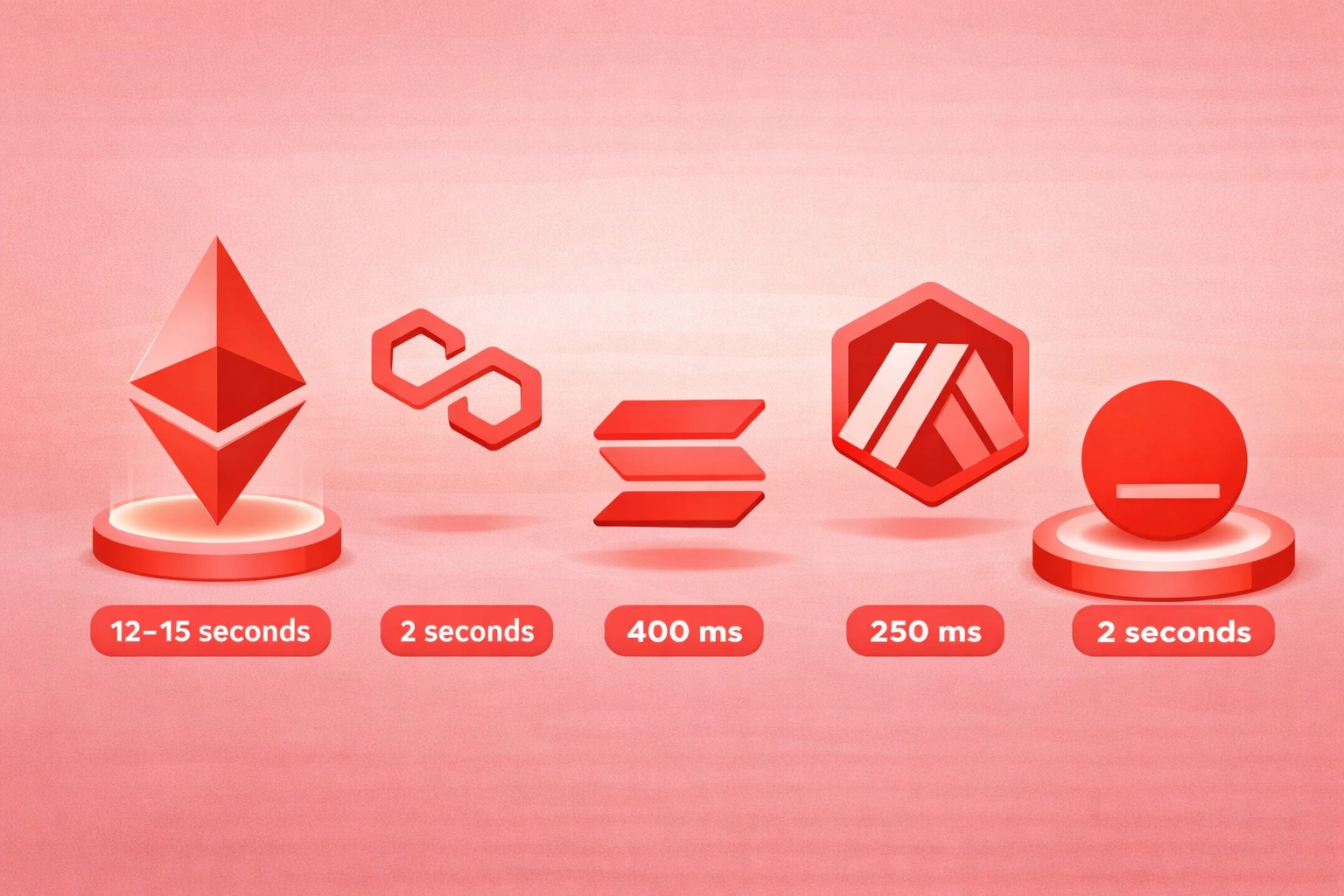
| Platform | Transaction Speed | Avg Gas Cost | Smart Contract Language | Best For |
|---|---|---|---|---|
| Ethereum | 12-15 seconds | $2-$50 | Solidity, Vyper | DeFi, NFTs, Enterprise |
| Polygon | 2 seconds | $0.001-$0.01 | Solidity | Gaming, Social, Scaling |
| Solana | 400ms | $0.00025 | Rust, C | High-frequency trading, Gaming |
| Arbitrum | 250ms | $0.01-$0.10 | Solidity | DeFi, Ethereum scaling |
| Base | 2 seconds | $0.001-$0.05 | Solidity | Consumer apps, Social |
Real-World Example: Aave, the leading DeFi lending protocol, initially launched on Ethereum but expanded to Polygon, Arbitrum, and other networks to provide users with lower transaction costs. This multi-chain strategy increased their total addressable market by 300% while maintaining security through Ethereum settlement.
Understanding Smart Contracts in dApp Development
Smart contracts serve as the foundational backend logic when building a dApp, executing predefined operations automatically when specific conditions are satisfied. These self-executing programs eliminate the need for intermediaries by encoding business logic directly into immutable blockchain code that runs exactly as programmed without possibility of downtime, censorship, or third-party interference.
Process Principle: Every smart contract function that modifies blockchain state requires gas payment, making efficiency optimization critical. Functions should be designed to minimize storage operations, batch transactions where possible, and use events for data that does not require on-chain retrieval.
Frontend vs Backend in dApp Development
The architecture of a dApp differs fundamentally from traditional web applications, with the backend residing on blockchain networks rather than centralized servers. When building a dApp, developers must understand this paradigm shift where smart contracts handle all business logic while the frontend serves as the user interface connecting wallets and displaying blockchain state.
Frontend Layer
- React, Vue, or Angular frameworks
- Web3.js or Ethers.js integration
- Wallet connection (MetaMask, WalletConnect)
- Transaction signing interface
- Real-time blockchain state display
- IPFS for decentralized hosting
Backend Layer (On-Chain)
- Smart contracts (Solidity/Rust)
- State management on blockchain
- Token transfer logic
- Access control mechanisms
- Event emission for indexing
- Upgradability patterns
Choosing the Right Development Tools and Frameworks
The tooling ecosystem for building a dApp has matured significantly, offering developers comprehensive frameworks that streamline compilation, testing, deployment, and verification processes. Selecting appropriate tools directly impacts development velocity, code quality, and long-term maintainability of your decentralized application. For developers experimenting with newer Layer-1 networks, understanding Sui-specific development workflows and execution models can further improve architectural decisions.
Operational Guideline: Development teams should standardize on a single framework across all projects to maximize knowledge sharing and code reuse. Hardhat currently dominates enterprise dApp development due to its TypeScript support, extensive plugin ecosystem, and superior debugging capabilities.
Platform Selection Criteria for dApp Development
1. Transaction Volume Needs
- High volume: Solana, Arbitrum
- Medium: Polygon, Base
- Enterprise: Ethereum L1
2. Security Requirements
- Maximum: Ethereum mainnet
- High: L2 with Ethereum settlement
- Standard: Alt-L1 chains
3. Developer Experience
- Solidity experience: EVM chains
- Rust proficiency: Solana
- Move language: Aptos, Sui
4. User Base Location
- USA/UK: Ethereum ecosystem
- Asia: BNB Chain popularity
- Global: Multi-chain approach
5. Cost Sensitivity
- Budget-conscious: L2 solutions
- Cost-agnostic: Any platform
- Hybrid: Multi-chain deployment
6. Ecosystem Maturity
- Established: Ethereum, Polygon
- Growing: Base, Arbitrum
- Emerging: New L2s
Step 1: Planning Your dApp Idea and Use Case
Every successful journey of building a dApp begins with thorough planning that identifies the specific problem your application solves and why blockchain technology provides advantages over traditional solutions. This foundational phase determines technical requirements, target audience characteristics, and monetization strategies that guide all subsequent development decisions.
Real-World Example: OpenSea identified that traditional art marketplaces suffered from authenticity verification challenges and high intermediary fees. By building a dApp on Ethereum, they created verifiable digital ownership through NFTs, reducing fraud while enabling creators to earn royalties automatically on secondary sales. This clear problem-solution fit drove their growth to over $30 billion in lifetime trading volume.
Step 2: Designing the dApp Architecture
Architecture design establishes the structural blueprint for your decentralized application, defining how components interact and data flows between on-chain and off-chain systems. A well-designed architecture balances decentralization principles with practical performance requirements, ensuring your dApp remains scalable as user adoption grows.
Performance Consideration: Not all data requires on-chain storage. Metadata, images, and non-critical information should leverage decentralized storage solutions like IPFS or Arweave, with only essential state and verification hashes maintained on the blockchain to optimize gas consumption.
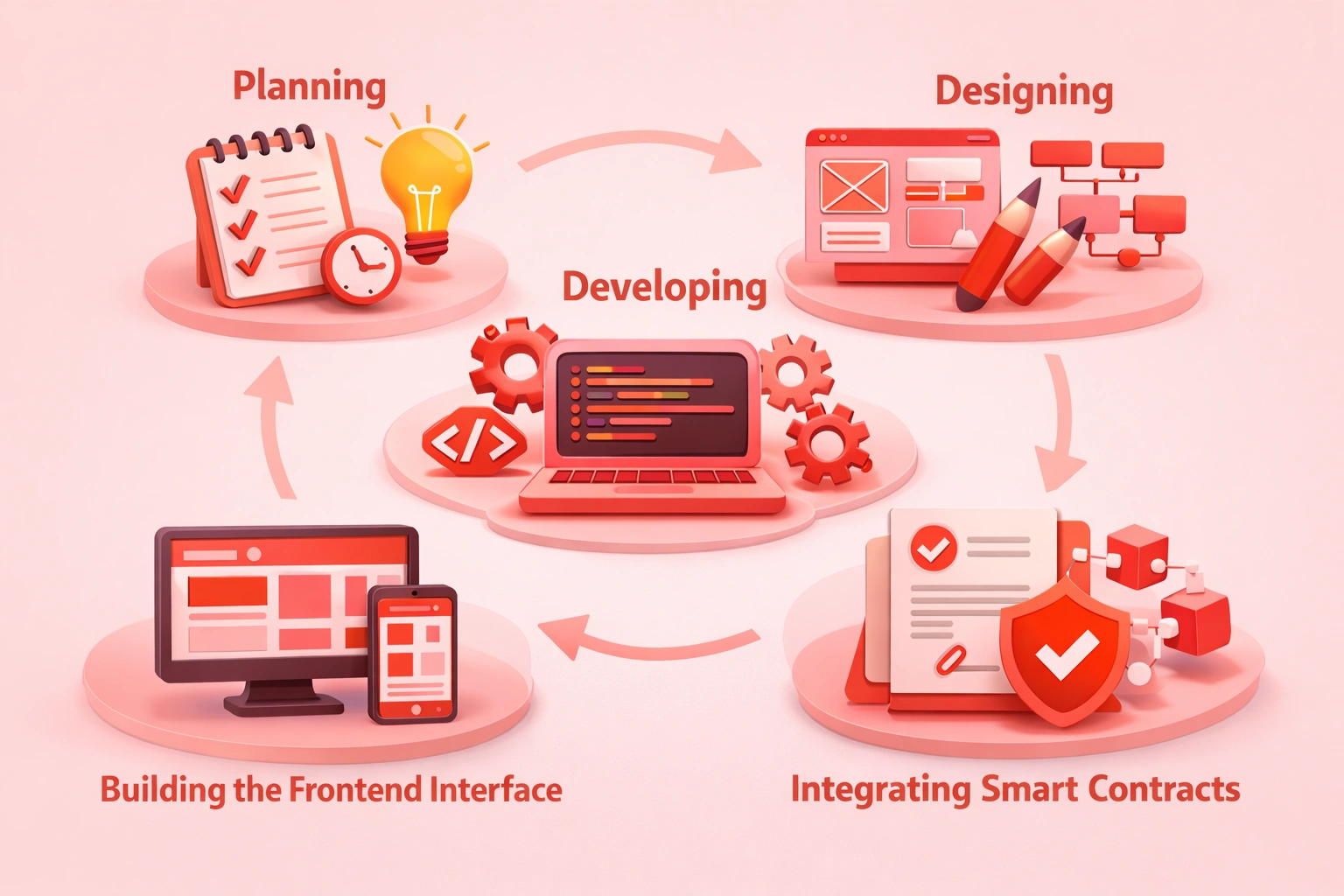
Step 3: Developing Smart Contracts
Smart contract development represents the core technical challenge when building a dApp, requiring expertise in blockchain-specific programming paradigms, security considerations, and gas optimization techniques. Solidity remains the dominant language for Ethereum-compatible chains, while Rust serves Solana and other high-performance networks.
Real-World Example: Compound Finance revolutionized DeFi lending by implementing algorithmic interest rate models in their smart contracts. Their cToken architecture, which represents deposited assets, has been forked over 200 times and forms the basis for billions of dollars in lending protocols across the ecosystem, demonstrating how well-designed smart contracts create lasting infrastructure.
Step 4: Building the Frontend Interface
The frontend interface determines user experience quality and adoption potential for your decentralized application. Modern dApp frontends leverage familiar web technologies like React or Vue while integrating Web3 libraries that enable wallet connections, transaction signing, and real-time blockchain state synchronization.
Recommended Practice: Implement progressive disclosure patterns that hide blockchain complexity from users until necessary. Transaction confirmation flows should display clear status indicators, estimated wait times, and gas cost previews to reduce abandonment rates during the signing process.
Step 5: Integrating Smart Contracts with the Frontend
Contract integration bridges your smart contract logic with the user interface, enabling seamless interaction between Web2 frontend technologies and Web3 blockchain infrastructure. This critical phase when building a dApp requires careful handling of asynchronous operations, error states, and wallet provider compatibility across different environments.
Frontend Integration Components
Web3 Provider Setup
- Ethers.js provider initialization
- Network detection and switching
- RPC endpoint configuration
- Fallback provider handling
Wallet Connection
- MetaMask integration
- WalletConnect protocol
- Coinbase Wallet support
- Account change listeners
Contract Interaction
- ABI import and parsing
- Read function calls
- Write transaction handling
- Event subscription setup
Step 6: Testing Your dApp on Testnets
Testnet deployment provides a risk-free environment for validating your dApp functionality before committing real assets on production networks. Major blockchain platforms maintain dedicated testnets that mirror mainnet behavior while using worthless test tokens, allowing comprehensive testing of all smart contract functions and frontend interactions.
Risk Assessment Standard: Minimum testnet deployment duration should span two weeks with active user testing before proceeding to security audits. All edge cases, failure modes, and gas consumption patterns must be documented and optimized during this phase.
Step 7: Deploying Your dApp on the Mainnet
Mainnet deployment represents the culmination of your development efforts, transitioning your decentralized application from testing environment to production blockchain where real value flows through your smart contracts. This irreversible step requires meticulous preparation, verified deployment scripts, and contingency plans for potential issues.
Real-World Example: Lido Finance, the largest liquid staking protocol with over $30 billion TVL, executed a phased mainnet launch strategy when building their dApp. They initially limited deposits to validate contract behavior under real conditions before removing caps, preventing potential catastrophic losses during the critical early adoption period.
Common Challenges When Building a dApp and How to Overcome Them
| Challenge | Impact | Solution | Prevention Cost |
|---|---|---|---|
| Smart Contract Bugs | Critical – Fund Loss | Multiple audits, formal verification | $15K-$100K |
| High Gas Costs | Medium – User Friction | L2 deployment, gas optimization | $5K-$20K |
| Wallet UX Complexity | Medium – Adoption | Account abstraction, social login | $10K-$30K |
| Scalability Limits | Medium – Growth Cap | Multi-chain architecture | $20K-$50K |
| Oracle Manipulation | Critical – Exploits | Chainlink, TWAP oracles | $8K-$25K |
Security Best Practices for dApp Development
Security considerations must permeate every phase when building a dApp, from initial architecture decisions through post-deployment monitoring. The immutable nature of blockchain deployments means vulnerabilities cannot simply be patched like traditional software, making proactive security measures essential for protecting user assets and protocol integrity.
dApp Security Governance Checklist
Pre-Deployment
- ✓ 95%+ test coverage achieved
- ✓ External audit completed
- ✓ Bug bounty program active
- ✓ Emergency pause mechanism
Access Control
- ✓ Multi-sig admin controls
- ✓ Time-locked upgrades (48hr+)
- ✓ Role-based permissions
- ✓ Key rotation procedures
Ongoing Monitoring
- ✓ Real-time alert systems
- ✓ Transaction anomaly detection
- ✓ Regular security reviews
- ✓ Incident response plan
Real-World Example: The Euler Finance exploit in March 2023 resulted in $197 million in losses due to a vulnerability in their donation function. However, through negotiation and on-chain messaging, they recovered $176 million from the attacker. This case demonstrates both the severity of smart contract vulnerabilities and the importance of incident response planning when building a dApp.
Future Roadmap: dApp Development Trends
Final Thoughts
Building a dApp represents one of the most impactful development journeys available to modern software engineers, combining traditional programming skills with blockchain-specific knowledge to create applications that operate without centralized control. The seven-step process outlined in this guide provides a structured pathway from initial concept through production deployment, applicable whether you are building a simple token contract or a complex DeFi protocol.
Success when building a dApp requires balancing innovation with security, user experience with decentralization principles, and development speed with thorough testing practices. Organizations across the USA, UK, UAE, and Canada increasingly recognize that decentralized applications offer unique advantages for transparency, censorship resistance, and trustless operation that traditional software architectures cannot provide.
Start Building Your First dApp Today
Learn step-by-step how to design, code, and deploy decentralized applications on blockchain. Get hands-on guidance to turn your ideas into fully functional dApps with expert support.
Our agency has guided over 150 dApp projects from concept to mainnet deployment across eight years of specialized blockchain development. Whether you are an enterprise exploring decentralized solutions or a startup building the next breakthrough protocol, the fundamentals covered in this guide establish the foundation for successful execution in the rapidly evolving Web3 landscape.
Ready to start building your dApp? Contact our experienced development team for a comprehensive consultation on architecture, security, and deployment strategy tailored to your specific requirements.
Frequently Asked Questions
Q1.What is a dApp?
A dApp, or decentralized application, is a software program that runs on a blockchain rather than a centralized server. It operates through smart contracts, ensuring transparency, security, and trustless interactions. dApps are commonly used in finance, gaming, and decentralized marketplaces, providing users with direct control over their data and assets.
Q2.Which blockchain is best for beginners to build a dApp?
Ethereum is widely recommended due to its robust ecosystem, developer tools, and smart contract support. Other beginner-friendly blockchains include Binance Smart Chain, Polygon, and Solana. The choice depends on your project needs, transaction fees, scalability, and community support for easier learning and deployment.
Q3.Do I need coding skills to build a dApp?
Yes, basic programming skills are required, especially in Solidity for Ethereum or Rust for Solana. Understanding smart contracts, web3.js, or ethers.js is essential. However, some platforms offer low-code or no-code solutions that simplify dApp creation for beginners without extensive coding knowledge.
Q4.What are smart contracts, and why are they important?
Smart contracts are self-executing code on a blockchain that enforces agreements automatically. They are critical for dApps as they handle transactions, logic, and user interactions without intermediaries. Properly designed smart contracts ensure security, reliability, and trust within the decentralized ecosystem.
Q5.How do I test my dApp before launching?
Testing involves using blockchain testnets like Ropsten, Rinkeby, or Mumbai. Tools such as Remix, Truffle, or Hardhat allow developers to simulate transactions, debug smart contracts, and ensure functionality without risking real funds. Testing ensures the dApp operates securely and as intended before deployment.
Q6.How can I connect my dApp to users’ wallets?
You can integrate wallet providers like MetaMask, WalletConnect, or Coinbase Wallet using Web3 libraries. This allows users to interact with the dApp, sign transactions, and manage assets securely while keeping full control of their private keys and funds.
Q7.What programming languages are needed for dApp development?
Common languages include Solidity for Ethereum smart contracts, Rust for Solana, and JavaScript or TypeScript for frontend interaction with Web3 libraries. HTML/CSS is used for UI design. Knowing these languages helps build, deploy, and maintain functional and interactive decentralized applications.
Q8.How do I deploy my dApp on a blockchain?
After testing, you deploy smart contracts to the mainnet using tools like Truffle, Hardhat, or Remix. Once deployed, you connect your frontend to the contract’s address, enabling users to interact with your dApp on the blockchain securely and efficiently.
Explore Services
Related Services
Reviewed by

Aman Vaths
Founder of Nadcab Labs
Aman Vaths is the Founder & CTO of Nadcab Labs, a global digital engineering company delivering enterprise-grade solutions across AI, Web3, Blockchain, Big Data, Cloud, Cybersecurity, and Modern Application Development. With deep technical leadership and product innovation experience, Aman has positioned Nadcab Labs as one of the most advanced engineering companies driving the next era of intelligent, secure, and scalable software systems. Under his leadership, Nadcab Labs has built 2,000+ global projects across sectors including fintech, banking, healthcare, real estate, logistics, gaming, manufacturing, and next-generation DePIN networks. Aman’s strength lies in architecting high-performance systems, end-to-end platform engineering, and designing enterprise solutions that operate at global scale.