Ai Overview
Before diving deep into each layer, it helps to visualize how all seven layers connect and interact with one another. Bitcoin, for example, operates with over 15,000 public nodes according to Wikipedia’s documentation on the Bitcoin network. The DAO hack in 2016 demonstrated how a single reentrancy bug could drain $60 million from a smart contract. Visa processes over 65,000 transactions per second by comparison.
Key Takeaways
- Blockchain architecture consists of seven interconnected layers that work together to create a secure and decentralized system.
- Developers must understand each layer to build efficient decentralized applications and avoid common security pitfalls.
- Consensus mechanisms like Proof of Work and Proof of Stake determine how transactions get validated across the network.
- Smart contracts run on the execution layer and require careful coding to prevent vulnerabilities and exploits.
- Choosing between public, private, or consortium blockchain depends on your specific business requirements and scalability needs.
- Layer 2 solutions address the blockchain trilemma by improving scalability without sacrificing security or decentralization.
Building applications on blockchain requires more than just writing code. It demands a solid understanding of how different components work together behind the scenes. Whether you are a developer starting your first crypto project or a business leader evaluating blockchain solutions, knowing the architectural foundations will save you time and money.
This guide breaks down blockchain architecture from an execution and development standpoint. We will walk through each layer, explain how transactions flow through the system, and show you practical considerations for building real applications. No theoretical fluff here, just the technical details you need to make informed decisions.
At Nadcab Labs, we have spent over 8 years building blockchain solutions for clients across different industries. This experience has taught us that most project failures trace back to architectural misunderstandings. A developer who grasps the full stack can design systems that actually work under production loads.
Understanding Blockchain Architecture Diagram
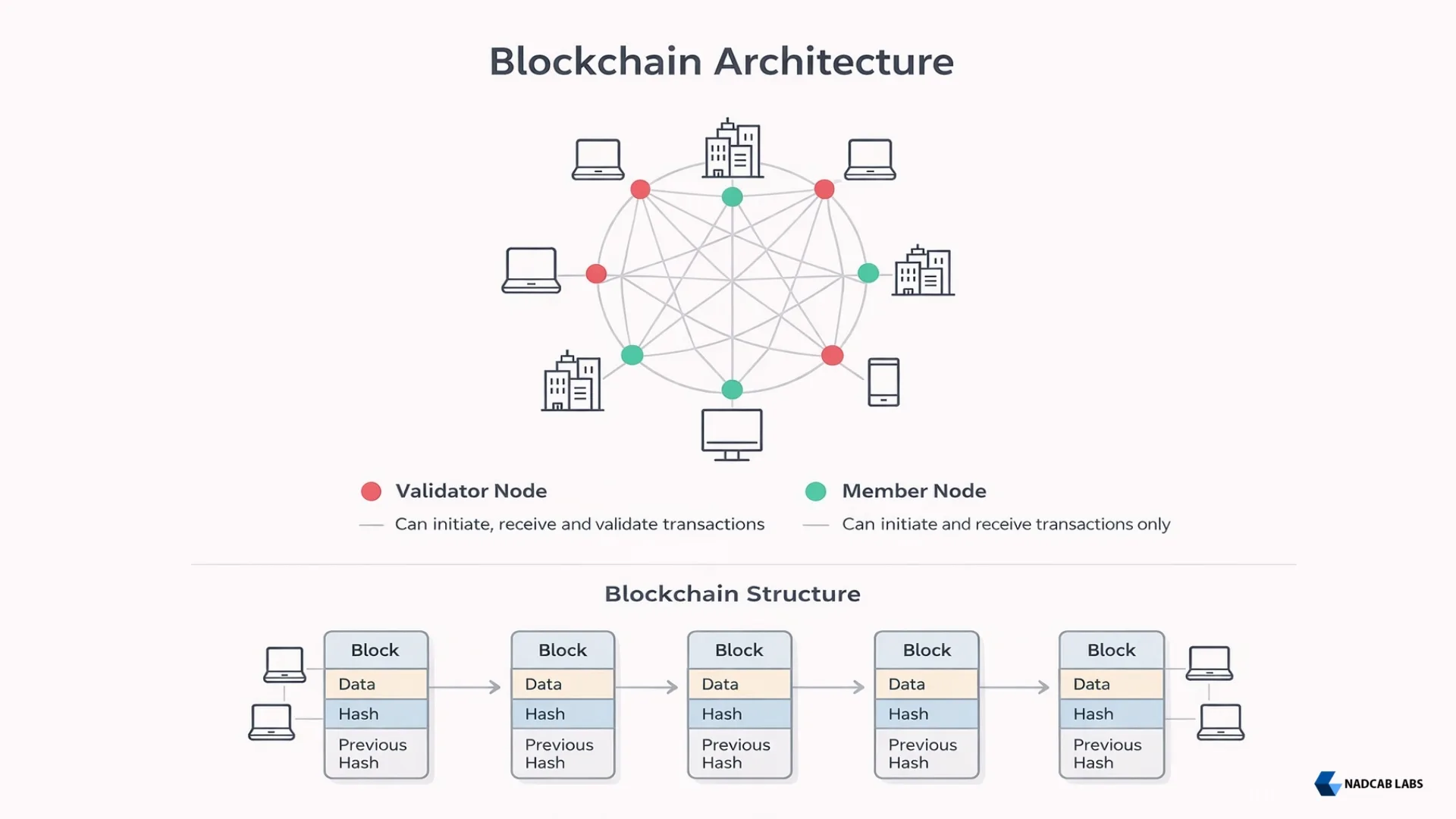
Before diving deep into each layer, it helps to visualize how all seven layers connect and interact with one another. A blockchain architecture diagram provides a clear, top-down view of the entire system, showing how the network layer at the bottom supports the data and consensus layers above it, and how everything ultimately feeds into the application layer that users interact with.
For developers and business decision-makers alike, referring to a well-structured blockchain architecture diagram simplifies complex relationships between components like nodes, Merkle trees, consensus protocols, and smart contracts. Instead of treating each layer in isolation, the diagram reveals how a transaction flows upward from the network layer through consensus validation, cryptographic verification, smart contract execution, and finally reaches the user-facing application.
Here is the blockchain architecture diagram below to help you better understand how blockchain functions:
What Makes Blockchain Architecture Different
Traditional software follows a client-server model. Your application talks to a central database, and that database holds the truth. Blockchain flips this model completely. Instead of one server, you have thousands of nodes scattered across the globe. Each node maintains its own copy of the data, and they all agree on what that data should look like.
This distributed nature creates both opportunities and challenges. On one hand, you get censorship resistance and fault tolerance. On the other hand, you face coordination problems that traditional databases never encounter. Every design decision involves tradeoffs between speed, security, and decentralization.
The architecture stack can be divided into seven distinct layers. Each layer handles specific responsibilities, and understanding their interactions is crucial for developers working on decentralized applications. Let us examine each one in detail.
The Seven Layers of Blockchain Architecture
Think of blockchain architecture like building a house. You need a foundation, walls, plumbing, electrical systems, and finishing touches. Each layer depends on the ones below it, and skipping any component leads to structural problems.
| Layer | Primary Function | Key Components | Developer Focus |
|---|---|---|---|
| Network Layer | Peer-to-peer communication | Nodes, gossip protocol, message propagation | Node configuration, network topology |
| Data Layer | Transaction and block storage | Blocks, Merkle trees, chain structure | Data modeling, storage optimization |
| Consensus Layer | Agreement among nodes | PoW, PoS, PBFT, DPoS | Validator setup, finality understanding |
| Cryptography Layer | Security and verification | Hash functions, digital signatures, encryption | Key management, signature verification |
| Smart Contract Layer | Programmable logic | Contract code, state variables, events | Solidity, Rust, contract security |
| Execution Layer | Transaction processing | Virtual machines, gas calculations, state transitions | Gas optimization, execution efficiency |
| Application Layer | User interaction | dApps, wallets, APIs, SDKs | Frontend integration, UX design |
Network Layer: The Foundation of Decentralization
Every blockchain starts with its network layer. This is where nodes discover each other, share information, and maintain connectivity across geographic boundaries. Without a robust network layer, the entire system falls apart.
The peer-to-peer architecture means there is no central server to attack or shut down. Bitcoin, for example, operates with over 15,000 public nodes according to Wikipedia’s documentation on the Bitcoin network. Each node stores a complete copy of the blockchain and validates transactions independently.
From a development perspective, you need to understand how the gossip protocol works. When you broadcast a transaction, it does not go directly to validators. Instead, it spreads through the network like a rumor, hopping from node to node until it reaches miners or validators. This process typically takes a few seconds, but network congestion can slow things down considerably.
Node Types and Their Roles
Not all nodes perform the same functions. Full nodes download and verify every transaction since the genesis block. They provide maximum security but require significant storage and bandwidth. Light nodes only download block headers and rely on full nodes for transaction verification. They work well for mobile applications where resources are limited.
Archive nodes go even further, storing historical state data that regular full nodes prune away. Developers building analytics tools or block explorers often need archive node access to query historical data.
Data Layer: How Blocks Get Structured
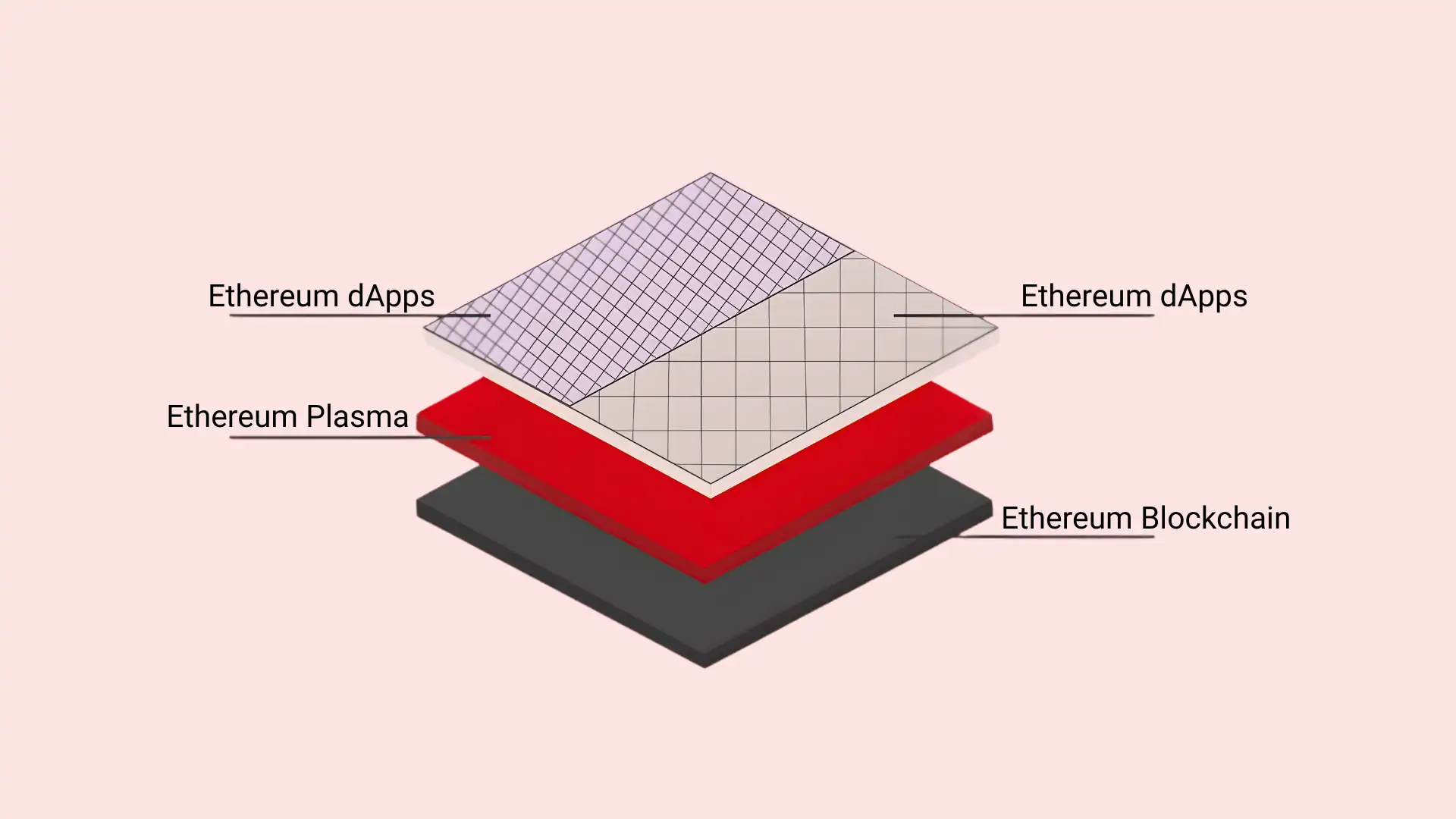
The data layer defines how information gets organized and stored on the blockchain. This is where blocks, transactions, and Merkle trees come into play. Understanding this layer helps developers write more efficient code and debug issues faster.
Each block contains a header and a body. The header includes metadata like the previous block hash, timestamp, nonce (for Proof of Work chains), and the Merkle root. The body holds the actual transaction data. This separation allows light clients to verify block validity without downloading full transaction details.
Merkle Trees: Efficient Data Verification
Merkle trees are one of the most elegant data structures in blockchain design. Named after computer scientist Ralph Merkle, these binary trees allow you to verify whether a specific transaction exists in a block without downloading all transactions.
The tree works by hashing pairs of transactions together, then hashing those hashes, and continuing until you reach a single root hash. If anyone changes even one bit in any transaction, the entire Merkle root changes. This property makes tampering immediately detectable.
For developers building applications that need to prove transaction inclusion, understanding Merkle proofs is essential. These proofs let you verify membership with logarithmic complexity instead of checking every transaction linearly.
Consensus Layer: Achieving Agreement Without Trust
Consensus mechanisms solve the fundamental problem of getting thousands of independent computers to agree on a single version of truth. Different blockchains use different approaches, and choosing the right one affects everything from transaction speed to energy consumption.
Understanding consensus is critical for developers working with Layer 1 blockchain platforms. The consensus mechanism determines finality times, which impacts user experience in your applications.
| Consensus Mechanism | How It Works | Advantages | Limitations |
|---|---|---|---|
| Proof of Work (PoW) | Miners compete to solve computational puzzles | Battle-tested security, true decentralization | High energy consumption, slow finality |
| Proof of Stake (PoS) | Validators stake tokens as collateral | Energy efficient, faster blocks | Potential centralization, nothing-at-stake concerns |
| Delegated Proof of Stake (DPoS) | Token holders vote for validators | Very high throughput, governance features | More centralized, plutocratic tendencies |
| Proof of Authority (PoA) | Pre-approved validators sign blocks | Extremely fast, predictable performance | Centralized, requires trust in validators |
| PBFT | Validators reach agreement through voting rounds | Immediate finality, enterprise-grade | Limited scalability, requires known validators |
Finality and Its Impact on Development
Finality refers to the point at which a transaction becomes irreversible. In Proof of Work systems like Bitcoin, finality is probabilistic. Each new block added on top of your transaction makes reversal exponentially harder, but never mathematically impossible. Most exchanges wait for 6 confirmations before crediting deposits.
Proof of Stake systems often achieve faster finality. Ethereum’s Casper mechanism provides finality after two epochs, roughly 12.8 minutes. Some chains like Solana claim near-instant finality, though this comes with different security assumptions.
As developers, you need to decide how many confirmations your application requires. A coffee shop payment needs different finality guarantees than a house purchase recorded on the blockchain for property transactions.
Cryptography Layer: The Security Backbone
Cryptography provides the mathematical guarantees that make blockchain trustworthy. Without proper cryptographic primitives, anyone could forge transactions, steal funds, or rewrite history. This layer touches every other component in the architecture.
Hash functions form the backbone of blockchain security. Bitcoin uses SHA-256, which takes any input and produces a fixed 256-bit output. These functions are one-way, meaning you cannot reverse-engineer the input from the output. They are also collision-resistant, making it computationally infeasible to find two different inputs that produce the same hash.
Public Key Cryptography in Practice
Every blockchain user has a public key and a private key. The private key must remain secret because it signs transactions and proves ownership. The public key, derived from the private key through elliptic curve mathematics, serves as your address on the network.
When you send cryptocurrency, you create a transaction and sign it with your private key. Anyone can verify this signature using your public key, confirming that you authorized the transfer. This system enables trustless transactions without any central authority.
Developers must handle key management carefully. A single bug in your signature verification code can lead to catastrophic losses. We have seen projects lose millions because they implemented cryptographic functions incorrectly. At Nadcab Labs, our security audits always prioritize cryptographic components because errors here are unforgiving.
Smart Contract Layer: Programmable Money and Beyond
Smart contracts transformed blockchain from a simple ledger into a programmable platform. These self-executing programs live on the blockchain and run automatically when predetermined conditions are met. No intermediary can stop them, modify them, or censor specific users.
Ethereum pioneered smart contracts with its introduction of the Ethereum Virtual Machine (EVM). Today, multiple chains support smart contract execution, each with different programming languages and capabilities. Understanding the smart contract layer is essential for anyone building blockchain games or DeFi applications.
Smart Contract Development Considerations
Writing smart contracts differs significantly from traditional programming. Once deployed, you cannot easily patch bugs. Gas costs penalize inefficient code. And every operation happens in a public, adversarial environment where attackers actively search for vulnerabilities.
Common vulnerabilities include reentrancy attacks, integer overflows, and access control issues. The DAO hack in 2016 demonstrated how a single reentrancy bug could drain $60 million from a smart contract. Modern development practices include formal verification, extensive testing, and professional audits before mainnet deployment.
Solidity remains the dominant language for EVM-compatible chains, but alternatives exist. Vyper offers Python-like syntax with improved security defaults. Rust powers smart contracts on Solana and Near. Each language has tradeoffs between expressiveness, safety, and ecosystem support.
Build Secure Blockchain Architecture
Partner with Nadcab Labs to design and deploy blockchain solutions that scale. Our team brings 8+ years of hands-on experience building production-ready systems across multiple chains.
Execution Layer: Where Transactions Come to Life
The execution layer processes transactions and updates the blockchain state. This is where your smart contract code actually runs, gas gets calculated, and state transitions happen. Two primary execution models dominate the landscape: UTXO and account-based systems.
UTXO Model: Bitcoin’s Approach
Bitcoin uses the Unspent Transaction Output (UTXO) model. Instead of tracking account balances, Bitcoin tracks individual coins. When you receive 1 BTC, you get a UTXO that you can later spend. Spending requires referencing the original UTXO and creating new outputs.
This model provides strong privacy features because each transaction can use fresh addresses. It also enables parallel transaction validation since UTXOs are independent. However, it makes smart contracts more difficult to implement because you cannot easily track state across multiple transactions.
Account-Based Model: Ethereum’s Design
Ethereum uses an account-based model similar to traditional banking. Each account has a balance, and transactions adjust these balances directly. This approach supports smart contracts naturally because contracts themselves are accounts with associated code and storage.
The account model requires more careful handling of transaction ordering since the same account cannot have two pending transactions simultaneously without nonce management. It also creates challenges for privacy since account balances are transparent.
Gas and Execution Costs
Most programmable blockchains charge fees based on computational complexity. Ethereum calls this gas. Each operation in the EVM has a gas cost, and users specify how much they are willing to pay per gas unit. Miners or validators prioritize transactions with higher gas prices.
Understanding gas optimization is crucial for developers. Inefficient code does not just waste money; it limits your contract’s usability. During network congestion, poorly optimized contracts become prohibitively expensive to use. Techniques like storage packing, loop optimization, and efficient data structures can reduce costs significantly.
Real-world execution also involves on-chain trading mechanisms where execution speed and gas efficiency directly impact profitability for traders and liquidity providers.
Storage Layer: Managing Blockchain Data
As blockchains grow, storage becomes a significant challenge. The Bitcoin blockchain exceeds 550 GB, and Ethereum’s full archive node requires multiple terabytes. Efficient storage strategies determine whether ordinary users can run nodes and maintain decentralization.
Full nodes store every block and transaction since genesis. They provide maximum security and can independently verify any historical claim. Light nodes sacrifice this completeness for resource efficiency, storing only block headers and requesting specific data on demand.
Off-Chain Storage Solutions
Not everything belongs on the blockchain. Storing large files on-chain is prohibitively expensive and bloats the network. Decentralized storage solutions like IPFS and Arweave complement blockchain by hosting files off-chain while storing only content hashes on-chain.
This pattern works well for NFTs, where the artwork itself lives on IPFS while the ownership record exists on Ethereum. Developers must understand these hybrid architectures to build practical applications that balance cost, performance, and decentralization.
Application Layer: Building User-Facing Products
The application layer is what users actually interact with. Wallets, exchanges, DeFi platforms, and NFT marketplaces all live here. This layer translates blockchain complexity into intuitive interfaces that non-technical users can navigate.
Building effective blockchain applications requires understanding the entire stack. Your frontend communicates with the blockchain through RPC endpoints, which connect to nodes running the protocol. Libraries like ethers.js and web3.js abstract away low-level details, letting developers focus on application logic.
Wallet Integration Best Practices
Most blockchain applications require wallet connectivity. MetaMask dominates the browser extension market, but mobile wallets like Trust Wallet and hardware wallets like Ledger serve different user needs. Supporting multiple wallet types improves accessibility.
Connection flows should be smooth and forgiving. Users often misunderstand blockchain concepts, so clear error messages and guided onboarding reduce friction. Consider what happens when users reject transactions, switch networks, or disconnect unexpectedly.
Our team at Nadcab Labs has built applications serving thousands of users. We learned that user experience often matters more than technical sophistication. A beautiful application that users cannot understand will fail regardless of its underlying architecture. You can see examples of our approach in our Open Campus blockchain education case study.
Types of Blockchain Architecture
Not all blockchains serve the same purpose. The architecture you choose depends on your specific requirements around accessibility, performance, and control. Four main categories exist, each with distinct characteristics.
| Architecture Type | Access Control | Best For | Examples |
|---|---|---|---|
| Public Blockchain | Anyone can participate | Cryptocurrencies, DeFi, NFTs | Bitcoin, Ethereum, Solana |
| Private Blockchain | Single organization controls access | Internal record keeping, supply chain | Hyperledger Fabric |
| Consortium Blockchain | Multiple organizations share control | Banking, healthcare, trade finance | R3 Corda, Quorum |
| Layer 2 Solutions | Inherits from base layer | Scaling existing blockchains | Polygon, Optimism, Arbitrum |
Public Blockchains: Maximum Decentralization
Public blockchains allow anyone to join, transact, and validate. They prioritize censorship resistance and trustlessness over performance. Bitcoin and Ethereum exemplify this category, processing billions of dollars daily without any central authority.
Building on public blockchains means accepting their constraints. Transaction fees fluctuate with demand. Confirmation times vary. Storage costs limit what you can put on-chain. But in exchange, you get credible neutrality that no private system can match.
Private and Consortium Blockchains: Controlled Environments
Enterprises often need blockchain benefits without full public exposure. Private blockchains restrict participation to approved entities, enabling faster consensus and confidential transactions. Consortium blockchains distribute control among multiple organizations rather than concentrating it in one.
These architectures work well for supply chain tracking, interbank settlements, and regulatory compliance. They sacrifice some decentralization benefits but gain performance and privacy. According to Investopedia’s analysis of permissioned blockchains, many enterprises prefer this hybrid approach because it balances innovation with control.
Layer 2 Solutions: Scaling Without Compromise
Layer 2 protocols build on top of existing blockchains to increase throughput without sacrificing security. They process transactions off the main chain and periodically settle results back to Layer 1. This approach addresses the blockchain trilemma by adding scalability while inheriting base layer security.
Rollups currently dominate the Layer 2 landscape. Optimistic rollups assume transactions are valid and only verify when challenged. Zero-knowledge rollups use cryptographic proofs to verify correctness. Both approaches dramatically reduce fees and increase transaction capacity.
The Blockchain Development Lifecycle
Building production blockchain systems follows a structured process. Each phase has specific deliverables and checkpoints that prevent costly mistakes downstream. Having guided numerous projects through this lifecycle, we have identified patterns that separate successful launches from failed ones.
Phase 1 – Requirements Analysis: Define what the blockchain needs to accomplish. Identify stakeholders, transaction volumes, latency requirements, and regulatory constraints. Wrong assumptions here cascade through the entire project.
Phase 2 – Architecture Design: Select the appropriate blockchain type, consensus mechanism, and technology stack. Create detailed technical specifications covering all seven layers.
Phase 3 – Development: Write smart contracts, build backend infrastructure, and develop frontend applications. Follow security best practices from the start rather than bolting them on later.
Phase 4 – Testing: Unit tests, integration tests, and testnet deployment. Simulate attack scenarios and stress test under realistic loads. Fix issues before they become expensive.
Phase 5 – Audit: Professional security audits identify vulnerabilities that internal testing misses. Multiple audits from different firms provide additional confidence.
Phase 6 – Deployment and Monitoring: Mainnet launch with gradual rollout. Continuous monitoring detects anomalies early. Incident response plans prepare teams for unexpected situations.
Security Considerations in Blockchain Architecture
Blockchain security operates on multiple levels. The protocol itself provides certain guarantees through cryptography and consensus. But application-level security remains the developer’s responsibility. Most hacks exploit smart contract bugs, not protocol weaknesses.
Bitcoin has operated for over 15 years without a successful protocol-level attack, despite enormous financial incentives for hackers. This track record demonstrates that well-designed blockchain architecture can achieve remarkable security. However, applications built on top of secure protocols can still fail spectacularly.
Common Attack Vectors
Reentrancy attacks occur when external calls allow malicious contracts to re-enter functions before state updates complete. Flash loan attacks manipulate prices within a single transaction to extract value from DeFi protocols. Front-running lets miners or validators see pending transactions and insert their own trades ahead.
Each attack vector requires specific mitigations. Using checks-effects-interactions patterns prevents reentrancy. Time-weighted average prices reduce manipulation risk. Private transaction pools and commit-reveal schemes address front-running. Developers must understand these threats to build resilient applications.
Scalability: The Ongoing Challenge
Every blockchain architect faces the trilemma: you can optimize for scalability, security, or decentralization, but improving one typically hurts the others. Bitcoin chose security and decentralization, accepting roughly 7 transactions per second. Visa processes over 65,000 transactions per second by comparison.
Various solutions address this limitation. Larger blocks increase throughput but raise node requirements, potentially centralizing the network. Shorter block times improve speed but increase the chance of chain reorganizations. Sharding splits the network into parallel processing groups but complicates cross-shard communication.
Modern Scaling Approaches
Layer 2 rollups currently offer the most promising scaling path for EVM chains. By moving execution off-chain and posting only proofs to Layer 1, rollups achieve thousands of transactions per second while inheriting Ethereum’s security.
Modular blockchain architectures separate consensus, data availability, and execution into distinct layers. Projects like Celestia provide data availability while other chains handle execution. This specialization allows each component to optimize independently.
Zero-knowledge proofs enable new scaling possibilities. ZK-rollups prove transaction validity without revealing transaction details. ZK-SNARKs and ZK-STARKs compress complex computations into small, verifiable proofs. These technologies are rapidly maturing and will likely dominate future scaling solutions.
Real-World Architecture Examples
Bitcoin’s Architecture
Bitcoin’s architecture prioritizes simplicity and security above all else. It uses Proof of Work consensus with SHA-256 hashing. The UTXO model tracks coin ownership. A gossip protocol propagates transactions across 15,000+ nodes worldwide. No smart contracts, no complex state, just reliable value transfer.
This conservative design has proven remarkably robust. Bitcoin has never suffered a consensus failure or successful protocol attack. Its architecture serves as the gold standard for cryptocurrency security, even as newer chains pursue different tradeoffs.
Ethereum’s Architecture
Ethereum added programmability to blockchain through the EVM and smart contracts. It transitioned from Proof of Work to Proof of Stake in 2022, reducing energy consumption by over 99%. The account-based model supports complex state management required for DeFi and NFTs.
Ethereum’s architecture enables an entire ecosystem of decentralized applications. Developers can deploy arbitrary code that executes deterministically across thousands of nodes. This flexibility comes with complexity, but it unlocked use cases that simpler architectures cannot support.
Future Directions in Blockchain Architecture
Blockchain architecture continues evolving rapidly. Several trends will shape the next generation of systems. Understanding these directions helps developers and businesses prepare for upcoming changes.
Cross-chain interoperability is becoming essential. Users want to move assets between chains without centralized bridges. Protocols like IBC (Inter-Blockchain Communication) and Polkadot’s XCMP enable native cross-chain messaging. Future architectures will likely treat interoperability as a core feature rather than an afterthought.
Account abstraction simplifies user experience by making smart contracts the primary account type. This enables features like social recovery, gas payment in any token, and batched transactions. Ethereum’s ERC-4337 standard moves toward this vision without protocol changes.
Privacy-preserving computation allows confidential transactions on public chains. Zero-knowledge proofs verify correctness without revealing underlying data. As these technologies mature, blockchain will support use cases previously limited to private networks.
Putting It All Together
Blockchain architecture combines distributed systems, cryptography, game theory, and software engineering into coherent designs. Each layer serves specific purposes, and understanding their interactions separates competent developers from exceptional ones.
The choice between architectures depends on your specific requirements. Public blockchains offer maximum trustlessness but limited throughput. Private chains provide performance at the cost of decentralization. Layer 2 solutions try to capture benefits of both approaches.
At Nadcab Labs, we have spent 8+ years helping clients navigate these decisions. Our blockchain development services cover the entire stack, from consensus mechanism selection to production deployment. We understand that architecture decisions made early determine project success or failure years later.
Whether you are building a simple token or a complex DeFi protocol, start with solid architectural foundations. Understand each layer. Consider your tradeoffs carefully. And when you need guidance, work with teams who have done it before.
Frequently Asked Questions
Q1.What does blockchain architecture actually mean?
Blockchain architecture refers to how a blockchain system is designed — including its network, data structure, consensus mechanism, cryptography, smart contracts, and the applications built on top. It explains how blockchains stay secure, decentralized, and tamper-proof.
Q2.Why is understanding blockchain architecture important for developers?
Developers who understand blockchain architecture can design secure smart contracts, identify vulnerabilities, build scalable systems, and create efficient dApps. It also helps them choose the right chain, optimize performance, and avoid costly security mistakes.
Q3.How does blockchain ensure data can’t be changed?
Blockchains use cryptographic hashes, Merkle trees, and consensus mechanisms to secure data. Once a block is added, altering it would require changing all following blocks, which is nearly impossible on major networks like Bitcoin and Ethereum.
Q4.What role do consensus mechanisms play in blockchain?
Consensus mechanisms help all nodes agree on the same version of the blockchain without needing a central authority. Systems like Proof of Work and Proof of Stake prevent double-spending, secure the network, and validate transactions.
Q5.Do all blockchains support smart contracts?
No. Blockchains like Bitcoin only focus on secure value transfer, while platforms such as Ethereum, BNB Chain, and Solana support smart contracts that power decentralized apps, NFTs, and DeFi platforms.
Q6.What are the main types of blockchain architectures?
The major types include public blockchains (Bitcoin, Ethereum), private blockchains (Hyperledger), consortium blockchains (Corda), and Layer-2 solutions like Polygon and Optimism. Each type offers different benefits depending on the use case.
Explore Services
Related Services
Reviewed by

Aman Vaths
Founder of Nadcab Labs
Aman Vaths is the Founder & CTO of Nadcab Labs, a global digital engineering company delivering enterprise-grade solutions across AI, Web3, Blockchain, Big Data, Cloud, Cybersecurity, and Modern Application Development. With deep technical leadership and product innovation experience, Aman has positioned Nadcab Labs as one of the most advanced engineering companies driving the next era of intelligent, secure, and scalable software systems. Under his leadership, Nadcab Labs has built 2,000+ global projects across sectors including fintech, banking, healthcare, real estate, logistics, gaming, manufacturing, and next-generation DePIN networks. Aman’s strength lies in architecting high-performance systems, end-to-end platform engineering, and designing enterprise solutions that operate at global scale.