Ai Overview
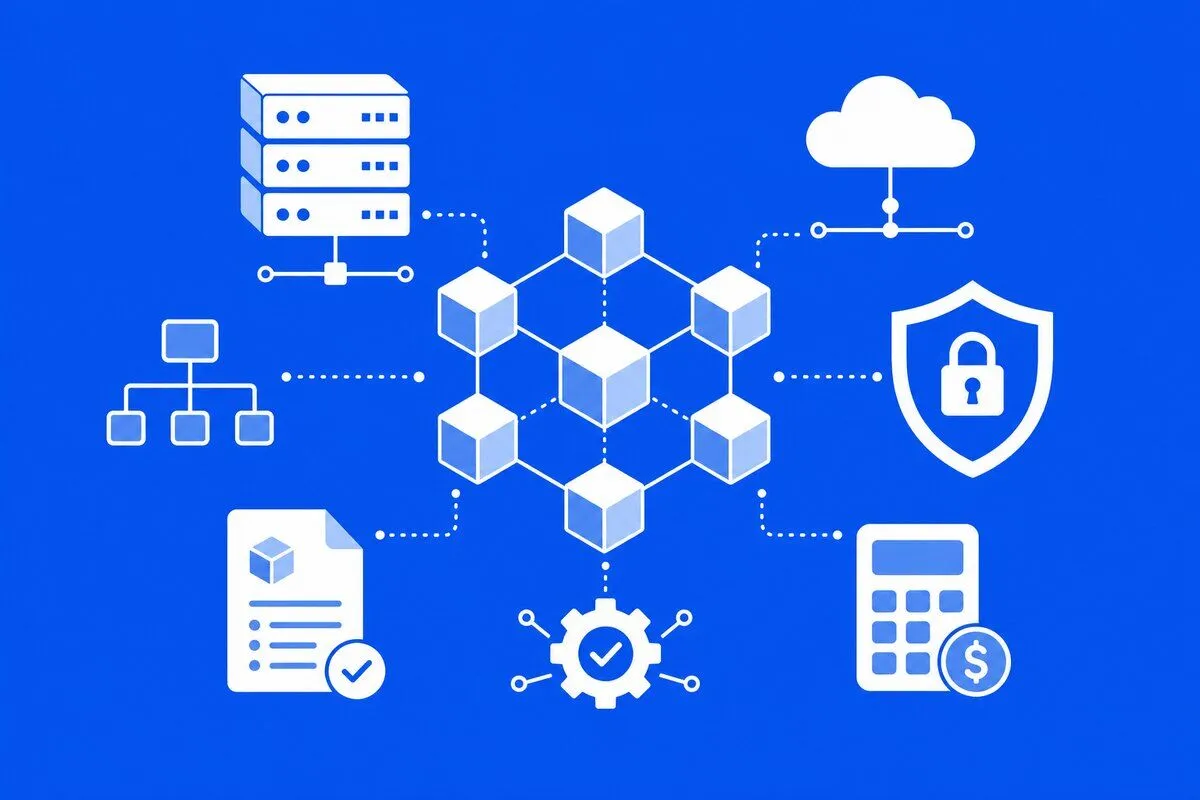
Blockchain in intellectual property refers to the use of distributed ledger technology to record, manage, verify, and protect intellectual property rights, including patents, copyrights, trademarks, and trade secrets. For independent creators and startups, this cost and time barrier means many valuable inventions and creative works go unprotected.
Key Takeaways
- The global blockchain technology market was valued at 31.28 billion USD in 2024 and is projected to reach 1,431.54 billion USD by 2030, with IP protection emerging as one of its fastest-growing applications.
- In 2024, innovators worldwide filed 3.7 million patent applications, a 4.9 percent increase over 2023, creating massive demand for better IP management tools powered by blockchain.
- In March 2025, the Marseille Judicial Court in France formally recognized blockchain timestamps as legitimate evidence of IP ownership, marking a landmark legal milestone for creators globally.
- WIPO established the Blockchain Task Force under its Committee on WIPO Standards to develop a new global standard for blockchain applications within IP ecosystems.
- Over 300 intellectual property registries began experimenting with blockchain-based timestamping for digital copyright verification, and 35 percent of newly registered songs were secured using blockchain timestamps.
- Smart contracts on blockchain automate intellectual property licensing agreements and royalty payments, eliminating intermediaries and reducing both costs and disputes for creators and businesses.
- WIPO ADR data shows IP disputes increased 70 percent from 2024 to 2025, with copyright and digital content cases accounting for 71 percent, making blockchain proof of creation more critical than ever.
- Customs authorities worldwide seized over 85,000 shipments of counterfeit goods in 2023, totaling more than 700 million fake products, a challenge that blockchain provenance tracking can directly address.
Imagine spending years developing a groundbreaking invention, only to discover someone else has filed for the patent first, or worse, has copied your design and is selling it under a different brand. This scenario plays out thousands of times every year across the globe. In 2024 alone, innovators filed 3.7 million patent applications worldwide, while customs authorities seized over 700 million counterfeit products. The current intellectual property system, built on paper trails and centralized registries, simply cannot keep pace with the speed of digital creation and global commerce. That is where blockchain technology steps in.
Blockchain in intellectual property is not a theoretical concept anymore. In March 2025, a French court formally accepted blockchain timestamps as valid evidence of copyright ownership, ruling in favor of a fashion house that had proactively registered its designs on a blockchain years before any dispute arose. This decision sent a clear signal: blockchain-based proof is now recognized in courtrooms. From patents and trademarks to copyrights and trade secrets, blockchain offers creators and businesses a faster, cheaper, and more secure way to establish ownership, manage licensing, and fight infringement.
In this comprehensive guide, we will explore how blockchain transforms every stage of intellectual property management. You will learn what blockchain intellectual property protection actually means, how it works for patents, copyrights, and trademarks, and which real companies and institutions are already using it. We will also cover smart contract-based licensing, WIPO’s global standardization efforts, real world court cases, the challenges that remain, and how your business can start using blockchain to protect its most valuable creative and innovative assets. This guide draws on our extensive experience building enterprise blockchain solutions and our deep understanding of blockchain intellectual property protection frameworks.
What is Blockchain in Intellectual Property?
Definition
Blockchain in intellectual property refers to the use of distributed ledger technology to record, manage, verify, and protect intellectual property rights, including patents, copyrights, trademarks, and trade secrets. By creating tamper-proof, timestamped records of creation, ownership, and transfers on a decentralized network, blockchain provides creators and businesses with verifiable proof of their intellectual assets that does not rely on any single authority or intermediary. It enables automated licensing through smart contracts, transparent royalty distribution, and an immutable chain of custody that can serve as evidence in legal disputes.
To understand why blockchain is so valuable for intellectual property, consider how the traditional system works. When a creator invents something new or produces an original work, they typically need to file for protection with a national or regional IP office. This process can take months or even years, costs significant money, and only provides protection within specific jurisdictions. During that waiting period, the creator’s work is vulnerable to theft, copying, and unauthorized use. Even after registration, enforcing IP rights across borders remains enormously difficult and expensive.
Blockchain technology addresses these gaps by providing instant, permanent, and globally accessible proof of creation and ownership. When a creator registers their work on a blockchain, the system generates a cryptographic hash, essentially a unique digital fingerprint, along with a timestamp that records exactly when the work was registered. This record is stored across a distributed network of computers, making it virtually impossible to alter, delete, or forge. Unlike traditional IP registration, this process can happen in minutes and costs a fraction of conventional filing fees.
How Blockchain Intellectual Property Protection Works
Step 1: Create
Creator produces an invention, design, artwork, code, or brand asset
Step 2: Register
Digital fingerprint (hash) and timestamp recorded on the blockchain
Step 3: License
Smart contracts automate licensing terms, royalties, and permissions
Step 4: Enforce
Immutable records serve as court admissible evidence in disputes
Why Traditional Intellectual Property Systems Need Blockchain
The intellectual property landscape faces structural problems that have persisted for decades. Despite ongoing improvements in digital filing systems, the core challenges of proving ownership, fighting counterfeits, and managing licensing across borders remain largely unsolved. The benefits of blockchain in intellectual property management offer a more secure, efficient, and reliable framework for protecting and monetizing creative assets worldwide.
Slow and Expensive Registration Processes
Filing a patent can take two to five years in major jurisdictions, and the costs often run into thousands of dollars when factoring in legal fees, filing fees, and maintenance. For independent creators and startups, this cost and time barrier means many valuable inventions and creative works go unprotected. Blockchain registration, by contrast, can timestamp a creation in minutes at minimal cost, providing at least a verifiable record of when a work existed, even before formal intellectual property office registration.
Difficulty Proving Ownership and Prior Art
One of the most common disputes in IP law is who created something first. Traditional proof methods, such as notarized documents, mailed envelopes, or published disclosures, can be challenged, forged, or lost. WIPO ADR data from 2025 reveals that intellectual property disputes surged 70 percent compared to 2024, with copyright and digital content disputes making up 71 percent of cases. Blockchain’s immutable ledger creates permanent proof of when a creation was recorded, providing evidence that courts are increasingly willing to accept.
Rampant Counterfeiting and Piracy
Counterfeiting remains a massive global problem. Customs authorities seized over 85,000 shipments containing more than 700 million fake products in 2023. Digital piracy cost the global software industry more than 41 billion USD in losses in the same year. Traditional enforcement is reactive and expensive, often requiring lengthy court proceedings across multiple jurisdictions. Blockchain provides proactive protection through transparent, auditable supply chains where product authenticity can be verified at every step from creation to consumer.
Complex Licensing and Royalty Management
intellectual property licensing involves intricate agreements between multiple parties, often across different countries with different legal frameworks. Tracking usage, calculating royalties, and ensuring timely payments through traditional systems is error prone and expensive. Intermediaries such as collecting societies, agents, and lawyers take a significant portion of revenues. Smart contracts on blockchain can automate these processes entirely, ensuring that creators receive payments automatically whenever their work is used.
Jurisdictional Limitations
intellectual property rights are territorial. A patent granted in the United States does not protect the invention in Europe or Asia. Creators must file separately in each jurisdiction where they seek protection, multiplying costs and administrative burden. Blockchain operates on a borderless network, creating a single, globally accessible record of IP assets. While this does not replace national legal frameworks, it provides a universal evidence layer that can support claims in any jurisdiction.
| IP Challenge | Traditional System | Blockchain Solution | Impact |
|---|---|---|---|
| Proof of Creation | Notarized docs, mailed envelopes | Immutable timestamped hash records | Instant, tamper proof evidence |
| Registration Speed | Months to years for patents | Minutes for blockchain registration | Near instant protection |
| Licensing Management | Manual contracts, intermediaries | Self executing smart contracts | Automated royalty payments |
| Anti Counterfeiting | Reactive enforcement, spot checks | End to end provenance tracking | Verified product authenticity |
| Cross Border Protection | Separate filings per jurisdiction | Borderless, globally accessible records | Universal evidence layer |
| Ownership Tracking | Fragmented records, disputes | Transparent transfer history | Clear chain of ownership |
| Cost of Protection | Thousands in legal and filing fees | Minimal blockchain transaction fees | Democratized IP access |
Key Applications of Blockchain in Intellectual Property
Blockchain’s versatility makes it applicable across every category of intellectual property. From establishing the moment an idea was born to tracking how a product moves through global supply chains, here are the most impactful blockchain use cases in the IP space.
1. Immutable Proof of Creation and Ownership
The most foundational use of blockchain in intellectual property is establishing when a creation came into existence. By hashing a digital file, whether it is a manuscript, source code, design file, or invention disclosure, and recording that hash on the blockchain with a timestamp, creators generate permanent, verifiable proof that they possessed the work at that specific moment. This proof is critical in copyright disputes, patent priority claims, and trade secret protection. The March 2025 Marseille court decision proved this works in practice, as AZ Factory used blockchain timestamps from 2021 to successfully demonstrate prior ownership of fashion designs that were later copied by a competitor.
2. Patent Management and Prior Art Documentation
Patent data is distributed among national and international authorities operating at different efficiency levels and with different policies. This fragmentation makes working with global patent data cumbersome. Blockchain can streamline patent management by creating a unified, searchable record of inventions and their development timelines. Inventors can document their research process step by step, creating a verifiable innovation trail that supports patent applications and defends against challenges. Blockchain also serves as a powerful tool for documenting prior art through defensive publications, where creators disclose inventions publicly to prevent others from patenting the same idea.
3. Smart Contract Based Licensing and Royalties
Smart contracts are self executing programs on the blockchain that automatically enforce the terms of an agreement when predefined conditions are met. In the context of IP, smart contracts can automate the entire licensing lifecycle. When a licensee uses copyrighted music in a video, the smart contract can detect the usage, calculate the royalty, and transfer payment to the rights holder automatically, all without intermediaries. This is especially transformative for the music industry, where platforms like Ujo Music have demonstrated how blockchain can ensure artists receive fair and timely compensation every time their work is used.
4. Digital Rights Management and Content Authentication
Traditional digital rights management systems are centralized and can be circumvented. Blockchain-based DRM provides a more robust alternative by recording content ownership and usage rights on a distributed ledger. Creators can manage who has permission to access, use, or distribute their content, with all permissions tracked transparently on chain. This is particularly valuable for photographers, designers, journalists, and software developers whose digital content is easily copied and redistributed without authorization. Fox Corporation launched its Verify platform specifically to authenticate content and support AI licensing using blockchain technology.
5. Trademark Verification and Brand Protection
Trademarks protect brand identity, but enforcing trademark rights against counterfeiters operating across borders is extremely challenging. Blockchain enables brands to create verifiable records of trademark registration, usage history, and ownership transfers. When combined with blockchain based supply chain tracking, brands can trace every product from manufacturing to retail, ensuring consumers receive genuine goods. Each product can carry a unique blockchain-verified identifier that anyone can scan to confirm authenticity.
6. IP Marketplace and Asset Tokenization
Blockchain makes it possible to tokenize intellectual property assets, converting patents, copyrights, or trademarks into digital tokens that can be traded, licensed, or fractionally owned. This creates new possibilities for intellectual property monetization. A startup with valuable patents but limited cash flow could sell fractional ownership of those patents through blockchain tokens, raising capital while retaining operational control. An IP marketplace built on blockchain supports three core functions: IP registries where offices create records of assets, IP exchanges for transferring assets with verified authentication, and IP payments for executing transactions related to IP transfers.
7. Trade Secret Protection and Version Control
Trade secrets are protected as long as they remain confidential, but proving when a trade secret existed and who had access to it can be difficult in disputes. Blockchain provides a secure way to document the existence and evolution of trade secrets without revealing their content. By hashing confidential information and recording the hash on the blockchain, businesses can prove they possessed specific knowledge at a specific time without exposing the secret itself. Blockchain also enables version control for intellectual property assets, linking all versions like an end to end lifecycle record, giving every file a unique fingerprint, removing duplicates, and indexing them for easy tracing.
Read Also: Cryptographic Signatures in Blockchain →
| Application | IP Type | Blockchain Feature Used | Key Benefit |
|---|---|---|---|
| Proof of Creation | All IP types | Timestamping, hashing | Court admissible ownership proof |
| Automated Licensing | Copyright, Patents | Smart contracts | No intermediaries, instant royalties |
| Brand Protection | Trademarks | Supply chain tracking | Eliminates counterfeit infiltration |
| Intellectual Property Tokenization | Patents, Copyrights | NFTs, tokenization | New monetization channels |
| Prior Art Records | Patents | Immutable documentation | Defensive publication evidence |
| Trade Secret Logging | Trade Secrets | Hash records without disclosure | Proves possession without revealing |
| Content Authentication | Copyright | Distributed DRM | Creator controlled access rights |
Benefits of Blockchain for IP Protection
Blockchain offers distinct advantages over traditional IP management systems. These benefits are not theoretical but are being validated by real market adoption, court rulings, and institutional initiatives from organizations like WIPO and the EU Intellectual Property Office.
Unbreakable Proof Through Immutability
Once data is written to a blockchain, it cannot be changed, deleted, or backdated. This immutability provides the strongest possible evidence of when a creation existed and who registered it. Unlike paper documents that can be lost, damaged, or forged, and unlike digital files on centralized servers that can be hacked or altered, blockchain records persist as long as the network exists. This permanence makes blockchain evidence increasingly valuable in legal proceedings, as the 2025 Marseille court ruling demonstrated.
Reduced Costs and Faster Processes
Traditional IP registration and enforcement are expensive. Patent prosecution can cost tens of thousands of dollars, and litigation costs can run into millions. Blockchain reduces costs at multiple points in the IP lifecycle. Registration is faster and cheaper, licensing is automated through smart contracts, and disputes can be resolved more quickly when clear blockchain evidence exists. For SMEs, startups, and independent creators, this cost reduction democratizes access to intellectual property protection that was previously available only to well funded organizations.
Transparency and Trust in Transactions
Every transaction on a blockchain is visible to authorized participants, creating a transparent record of intellectual property ownership, transfers, and licensing history. This transparency builds trust between creators, licensees, and investors. When an investor evaluates a company’s IP portfolio, they can verify the complete ownership history and licensing agreements directly on the blockchain. This transparency is powered by the same consensus mechanisms that secure billions of dollars in blockchain transactions globally.
Global Accessibility Without Borders
Blockchain networks are global by nature. A creation registered on a blockchain in India is instantly verifiable by anyone, anywhere in the world. While this does not replace national IP legal frameworks, it provides a supplementary evidence layer that overcomes the jurisdictional limitations of traditional systems. This is particularly valuable for digital creators whose works are distributed and consumed globally online, making jurisdictional intellectual property enforcement difficult with conventional approaches.
Enhanced Security Through Decentralization
Centralized IP databases represent single points of failure. A cyberattack or system failure at a national IP office could compromise millions of records. Blockchain distributes records across thousands of nodes, ensuring that no single point of failure exists. The security architecture of blockchain makes it far more resilient than traditional centralized databases. Even if individual nodes are compromised, the network as a whole maintains the integrity of all recorded data.
Blockchain Intellectual Property Protection: Key Data Points
3.7 Million
Patent applications filed globally in 2024
70%
Increase in IP disputes from 2024 to 2025
300+
IP registries experimenting with blockchain
$41 Billion
Software piracy losses in 2023
WIPO and Global Blockchain Intellectual Property Initiatives
The integration of blockchain into intellectual property is not just a private sector initiative. Major intergovernmental organizations and national IP offices are actively exploring and implementing blockchain solutions. Understanding these efforts provides insight into where the industry is heading and what standards will shape the future.
WIPO Blockchain Task Force
The World Intellectual Property Organization established the Blockchain Task Force under the Committee on WIPO Standards at its sixth session in 2018. The task force operates under Task No. 59, which mandates it to explore blockchain’s potential in IP rights protection, collect information about IP office developments with blockchain, develop reference models for blockchain usage in intellectual property, and prepare a proposal for a new WIPO standard. WIPO published a comprehensive white paper on blockchain and intellectual property ecosystems, examining potential applications, opportunities, and challenges across the entire IP value chain covering generation, protection, management, and commercialization of IP assets.
European Union Intellectual Property Office
The EUIPO has been actively researching blockchain applications for IP protection within the European framework. The office documented the March 2025 Marseille ruling as a significant development, analyzing its implications for blockchain evidence standards across EU member states. The European Union also allocated 250 million euros to its IP Action Plan for SMEs, which includes support for digital filing systems and technology driven IP protection mechanisms. These institutional efforts signal that blockchain based IP solutions are moving from experimental to mainstream.
National IP Office Experiments
Multiple national IP offices are running pilot programs with blockchain. China’s IP system, which leads the world in patent filings, saw its courts accept blockchain evidence as early as 2018 in the landmark Hangzhou case. Germany’s federal government has explored how blockchain secured data can function as evidence before courts. Sweden has tested blockchain for land ownership registration, establishing precedents that extend to IP rights. These experiments demonstrate that governments worldwide recognize blockchain’s potential to improve IP administration and are working to integrate it into their legal frameworks.
Read Also: Governance in Blockchain →
Landmark Court Cases: Blockchain as IP Evidence
The legal recognition of blockchain evidence in IP disputes is evolving rapidly. Recent court rulings have established important precedents that strengthen the case for blockchain based IP protection. These decisions are shaping how businesses and creators approach evidence preservation.
AZ Factory vs Valeria Moda (France, March 2025)
This case represents the most significant blockchain intellectual property ruling to date. AZ Factory, the fashion house founded by the late designer Alber Elbaz, had proactively registered its original fashion designs on the blockchain platform BlockchainYourIP in May and September 2021. When the company discovered Valeria Moda was copying these designs, they brought the case to the Marseille Judicial Court. Despite a procedural issue that invalidated a seizure report, the court accepted the blockchain timestamps as valid evidence of prior existence and ownership. The ruling confirmed that blockchain records constitute legitimate proof for establishing creation dates in IP disputes, marking a watershed moment for digital evidence standards.
Hangzhou Internet Court (China, 2018)
China set an early precedent when the Hangzhou Internet Court accepted blockchain evidence in a copyright infringement case. The plaintiff, a media company, had used blockchain to document its original articles before the defendant republished them without authorization. The court recognized the blockchain timestamps as valid proof of the plaintiff’s prior creation, establishing a framework that Chinese courts have continued to build upon. Given that China leads the world in patent filings, with a significant share of the global 3.7 million applications filed in 2024, this precedent carries enormous practical significance.
Watch Skins vs LVMH TAG Heuer (2025)
This ongoing case illustrates blockchain’s growing role at the intersection of intellectual property and emerging technologies. Watch Skins, a company specializing in blockchain authenticated NFTs for smartwatches, alleged that TAG Heuer infringed on its patented technology for displaying NFTs on smartwatch faces. The case hinges on the fundamental question of who developed the technology first, precisely the kind of dispute where blockchain timestamped records of early prototypes and development milestones could prove decisive.
Global Recognition of Blockchain IP Evidence
France
Marseille court ruling recognized blockchain timestamps as legitimate evidence (2025)
China
Hangzhou Internet Court accepted blockchain evidence in copyright case (2018)
United States
Courts exempting computer generated blockchain records from hearsay rules
Germany
Federal government exploring blockchain data as court evidence
Companies Using Blockchain for IP Protection
Several pioneering companies and platforms are already deploying blockchain-based intellectual property protection solutions. These real world implementations demonstrate that the technology has moved beyond proof of concept into production use.
Bernstein.io
Bernstein provides blockchain-based IP registration where digital assets of any size and format can be quickly registered online to prove existence, ownership, and development over time. The platform creates a certified version history that serves as a digital trail of innovation and creation processes. Files are privately timestamped without third party access, ensuring that confidential inventions can be documented without risk of disclosure.
Fox Corporation’s Verify Platform
Fox Corporation launched Verify, a blockchain-based platform designed to authenticate content and support AI licensing. In an era where AI can generate content that mimics human work, establishing clear provenance of original content is critical. Verify uses blockchain to create permanent records of content creation and ownership, helping content creators protect their work from unauthorized AI training and reproduction.
Ujo Music and FilmChain
In the creative industries, platforms like Ujo Music and FilmChain demonstrate how blockchain automates royalty distribution. These platforms use smart contracts to track content usage and automatically distribute payments to rights holders based on predefined terms. This eliminates the delays, errors, and intermediary fees that have long plagued creative industries, ensuring artists and creators receive fair compensation for their work.
Blockai and Verisart
Blockai leverages blockchain timestamps to document the creation of new works, helping writers, artists, and other creators protect them from copyright infringement. Verisart takes a different approach by providing secure, tamper-proof digital certificates for artworks and products, allowing verification of authenticity. Both platforms make blockchain IP protection accessible to individual creators who may not have the resources for traditional IP registration.
Read Also: Blockchain Identity Management →
How Blockchain Technology Works for IP Protection
Understanding the technical mechanisms behind blockchain IP protection helps creators and businesses make informed decisions about implementation. Several key components of blockchain work together to create a robust IP protection infrastructure.
Cryptographic Hashing for Digital Fingerprints
When a creator registers IP on the blockchain, the system generates a cryptographic hash of the file. This hash is a fixed length string of characters that is unique to that specific file. Even a single character change in the original file produces a completely different hash. The hash is stored on the blockchain, not the file itself, which means confidential inventions can be timestamped without revealing their contents. This approach is critical for trade secrets and patent applications where premature disclosure could compromise protection.
Timestamping and Block Confirmation
Every transaction on a blockchain includes a timestamp that records the exact moment it was added to the network. This timestamp is validated by the network’s consensus mechanism, ensuring it cannot be manipulated by any single party. For IP purposes, this means the timestamp provides independent, third party verification of when a creation was registered, similar to a notary’s stamp but far more secure and permanent.
Smart Contract Execution for IP Agreements
Smart contracts are programs stored on the blockchain that run automatically when predetermined conditions are met. In IP contexts, a smart contract might specify that when a licensee streams a song, a royalty payment of a specific amount is automatically transferred to the creator’s wallet. These contracts are transparent, since both parties can see the terms, and self enforcing, since no intermediary is needed to ensure compliance. Smart contracts can handle complex multi party licensing arrangements that would be extremely expensive to manage manually.
On Chain vs Off Chain Storage
Storing large files like high resolution images, video, or detailed patent documentation directly on the blockchain would be expensive and slow. Most blockchain IP solutions use a hybrid approach where the hash and metadata are stored on chain, while the actual files are stored in decentralized storage systems like IPFS. This ensures the integrity and timestamp of the file can be verified on chain while keeping storage costs manageable. The on chain hash serves as an anchor that proves the off chain file existed at a specific point in time.
Choosing the Right Blockchain Platform
Different blockchain platforms offer different advantages for IP protection. Ethereum provides the most mature smart contract ecosystem, making it ideal for complex licensing automation. Hyperledger Fabric offers private channels suitable for enterprise IP management where confidentiality is paramount. Public blockchains provide maximum transparency and decentralization, while permissioned blockchains offer controlled access for consortium based IP registries. The choice depends on specific requirements around privacy, cost, throughput, and the nature of the IP being protected.
| Platform | Best IP Use Case | Privacy Level | Smart Contract Support |
|---|---|---|---|
| Ethereum | Copyright licensing, royalties | Public with encryption options | Full Solidity support |
| Hyperledger Fabric | Enterprise patent management | Private channels | Chaincode support |
| Solana | High volume content registration | Public | Rust based programs |
| Polkadot | Cross chain IP verification | Configurable per parachain | Substrate framework |
Read Also: Blockchain Architecture Explained →
Blockchain IP Protection Across Industries
Different industries face unique IP challenges, and blockchain offers tailored solutions for each. Here is how blockchain is transforming IP protection across key sectors.
Music and Entertainment
The music industry has been a pioneer in blockchain IP adoption. Over 35 percent of newly registered songs in 2023 were secured using blockchain timestamps. Smart contracts automate royalty payments every time a song is streamed, downloaded, or used in media production. This eliminates the complex intermediary chains that traditionally delay payments to artists by months. Film production companies use blockchain to track content rights and automate revenue distribution among producers, actors, writers, and other stakeholders.
Fashion and Luxury Goods
The AZ Factory court case demonstrated blockchain’s value for fashion IP. Designers can register their collections on the blockchain before they are publicly shown, creating timestamped evidence of their original work. Combined with supply chain tracking, blockchain also helps luxury brands fight counterfeit products by giving consumers the ability to verify a product’s authenticity and provenance from design studio to retail store.
Software and Technology
Software developers face constant threats from code theft and patent trolls. Blockchain enables developers to timestamp their source code commits, creating a verifiable record of when specific code was written. This is particularly valuable for open source projects where proving contribution history is important. Companies developing proprietary algorithms or AI models can use blockchain to document their development process, creating defensible evidence of innovation priority without revealing the underlying code.
Pharmaceuticals and Biotechnology
Drug development involves massive R&D investments, and patents are critical to protecting these investments. Blockchain can document every stage of the drug discovery and development process, creating an unbroken evidence chain that supports patent applications and defends against challenges. Combined with blockchain supply chain solutions, pharmaceutical companies can also track drugs from manufacturing to pharmacy, combating the dangerous counterfeit drug market.
Art and Digital Collectibles
Artists can use blockchain to create certificates of authenticity for their physical and digital works. While NFTs have attracted attention, it is important to note that owning an NFT does not automatically confer copyright ownership, it simply proves ownership of the token itself. However, when properly structured with legal agreements encoded in smart contracts, NFTs can serve as effective tools for managing art licensing, tracking provenance, and ensuring artists receive royalties on secondary sales.
Challenges and Limitations of Blockchain in IP
While blockchain offers transformative potential for IP protection, several challenges must be addressed before it can achieve widespread adoption. Understanding these limitations is essential for businesses planning blockchain IP strategies. Navigating blockchain adoption challenges requires realistic expectations alongside technical and legal planning.
Legal Recognition Varies by Jurisdiction
Despite positive developments like the Marseille ruling, legal recognition of blockchain evidence is not universal. Many jurisdictions have not yet established clear frameworks for how blockchain records should be treated in court. Even in countries where blockchain evidence has been accepted, it is typically treated as a corroborative element rather than absolute proof. Businesses should use blockchain as a complementary layer to, not a replacement for, traditional IP registration processes. As WIPO’s task force continues its standardization work, greater international harmonization is expected.
Immutability Creates Challenges for Corrections
Blockchain’s greatest strength, immutability, can also create problems. If incorrect information is recorded on the blockchain, it cannot be deleted or corrected in the traditional sense. While new records can be added to update or supersede previous entries, the original erroneous data remains permanently on chain. This conflicts with data protection regulations like GDPR that require the ability to delete personal data. IP systems must carefully design workflows to minimize errors and include mechanisms for handling corrections without compromising the integrity of the record.
Interoperability Between Platforms
The blockchain ecosystem includes hundreds of different platforms, each with its own protocols and standards. IP records registered on one blockchain may not be easily verifiable on another. This lack of blockchain interoperability creates fragmentation that limits the utility of blockchain IP systems. WIPO’s standardization efforts aim to address this challenge, but achieving true cross chain interoperability remains an ongoing technical challenge.
Scalability and Cost Considerations
Recording every piece of creative content on a public blockchain can become expensive, especially during periods of high network congestion when transaction fees spike. While Layer 2 solutions and private blockchains offer more cost effective alternatives, scalability remains a consideration for organizations with large volumes of IP assets to protect. Blockchain scalability solutions are evolving rapidly, but businesses must evaluate costs carefully against the value of the IP being protected.
User Awareness and Technical Complexity
Many creators and businesses still lack awareness of blockchain IP protection tools. Even among those who understand the potential, the technical complexity of blockchain can be a barrier to adoption. User friendly platforms that abstract away the underlying blockchain complexity are essential for mass adoption. Companies like Bernstein and Blockai have made significant progress in this area, but much work remains to make blockchain IP protection as intuitive as uploading a file to cloud storage.
Blockchain Records Do Not Grant IP Rights
One critical distinction must be understood clearly: registering an asset on a blockchain does not, by itself, create or grant intellectual property rights. IP rights are created through national and international legal frameworks, not through technology. Blockchain provides evidence that supports IP claims, but the rights themselves still require legal recognition. Similarly, owning an NFT that represents artwork does not mean you own the copyright to that artwork unless a separate legal agreement transfers those rights. This gap between blockchain records and legal IP systems remains one of the biggest challenges in the space.
The Future of Blockchain in Intellectual Property
The convergence of blockchain technology and intellectual property management is accelerating. Several trends indicate where this integration is heading in the coming years.
AI Generated Content and Blockchain Provenance
As AI generated content becomes more prevalent, establishing the provenance and authorship of creative works becomes more complex. Blockchain can play a critical role by providing verifiable records of human created content, differentiating it from AI generated material. The January 2025 U.S. Copyright Office decision that accepted digital documentation as proof of human authorship in AI assisted works suggests that blockchain based evidence will become increasingly important in this evolving landscape.
Standardization Through WIPO and International Cooperation
WIPO’s ongoing work on blockchain standards for intellectual property ecosystems will likely produce formal guidelines and protocols that IP offices worldwide can adopt. As these standards mature, interoperability between different blockchain IP systems will improve, creating a more unified global framework. The WIPO white paper and Task Force activities indicate strong institutional commitment to making this vision a reality. Expect increasing international cooperation on blockchain IP standards throughout the coming years.
Hybrid Models Combining Traditional and Blockchain Systems
The most likely near term future involves hybrid models where blockchain complements rather than replaces traditional IP systems. National IP offices will continue to grant official IP rights, but blockchain will serve as an additional evidence and management layer. Creators will register their works on the blockchain for immediate timestamped protection while pursuing formal IP registration through official channels. This hybrid approach combines the speed and cost advantages of blockchain with the legal authority of established IP institutions.
Integration with IoT and Supply Chain Systems
The combination of blockchain with Internet of Things sensors and supply chain management systems will create powerful anti counterfeiting solutions. Physical products will carry unique digital identities linked to blockchain records, allowing anyone in the supply chain to verify authenticity. This integration is already underway in industries like pharmaceuticals and luxury goods, and it will expand rapidly as the technology matures and costs decrease.
Ready to Protect Your Intellectual Property with Blockchain?
Whether you need to timestamp your creations, automate licensing through smart contracts, or build a comprehensive intellectual property protection platform, our blockchain development team has the expertise to help. From enterprise integration to custom smart contract development, we deliver solutions that protect your most valuable intellectual assets.
Final Thoughts
Blockchain technology is reshaping how intellectual property is created, protected, licensed, and enforced. The March 2025 French court ruling that formally accepted blockchain timestamps as evidence of IP ownership marked a decisive turning point. Courts are now recognizing what technologists have long known: blockchain provides the most reliable method of proving when a creation existed and who registered it.
With 3.7 million patent applications filed globally in 2024, IP disputes rising 70 percent, and counterfeiting causing billions in losses, the need for better IP protection tools has never been greater. Blockchain addresses these challenges through immutable timestamping, automated smart contract licensing, transparent ownership tracking, and end to end supply chain provenance. Major institutions like WIPO are actively building global standards to support this integration, and real companies are already using blockchain to protect their IP assets in production environments.
While challenges remain around legal harmonization, platform interoperability, and the important distinction between blockchain registration and legal IP rights, the trajectory is clear. Organizations that begin integrating blockchain into their IP strategies now will be better positioned to protect their innovations, monetize their creations, and defend their rights in an increasingly digital and globally connected world. The question is not whether blockchain will transform intellectual property management, but whether your organization will be prepared when it does.
Frequently Asked Questions
Q1.1. What is blockchain IP protection and how does it work?
Blockchain IP protection uses distributed ledger technology to create immutable records of intellectual property ownership, creation dates, and licensing terms. When creators register their work on blockchain, they receive cryptographic proof of authorship with precise timestamps that cannot be altered. This tamper-proof system provides verifiable evidence in disputes, automates royalty payments through smart contracts, and enables global enforcement across jurisdictions in USA, UK, UAE, and Canada.
Q2.2. How does blockchain help prevent intellectual property theft?
Blockchain prevents IP theft by creating permanent, transparent records that establish clear ownership chains. Every transaction involving the intellectual property gets recorded on the distributed ledger, making unauthorized transfers immediately detectable. The technology enables real-time monitoring of content usage across digital platforms, automatic detection of infringement through hash matching, and instant verification of authenticity. This comprehensive tracking significantly reduces piracy and counterfeiting risks for creators worldwide.
Q3.3. Can blockchain records be used as legal evidence in IP disputes?
Blockchain records are increasingly accepted as legal evidence in IP disputes across multiple jurisdictions. Courts in USA, UK, UAE, and Canada have begun recognizing blockchain timestamps as proof of prior creation and ownership. The cryptographic security and immutability of blockchain entries provide stronger evidentiary value than traditional documentation. However, legal recognition varies by jurisdiction, and businesses should consult local regulations while implementing blockchain IP systems.
Q4.4. What types of intellectual property can be protected using blockchain?
Blockchain can protect virtually all intellectual property types including copyrights, patents, trademarks, trade secrets, and digital assets. Creative works like music, art, software code, literary content, and design files can be registered with immutable timestamps. Patents and inventions can be documented with proof of prior art. Trademarks benefit from authentication systems preventing counterfeiting. The technology adapts flexibly to protect both traditional and emerging digital IP categories.
Q5.5. What are the costs associated with blockchain IP protection systems?
Blockchain IP protection costs vary based on network choice, transaction volume, and feature complexity. Public blockchain registration typically costs between $5 to $50 per asset depending on network congestion. Enterprise solutions range from $10,000 to $500,000 annually for comprehensive platforms. Ongoing costs include gas fees for transactions, storage fees for large files, and maintenance expenses. However, these costs often prove lower than traditional IP registration and enforcement expenses.
Explore Services
Related Services
Reviewed by

Aman Vaths
Founder of Nadcab Labs
Aman Vaths is the Founder & CTO of Nadcab Labs, a global digital engineering company delivering enterprise-grade solutions across AI, Web3, Blockchain, Big Data, Cloud, Cybersecurity, and Modern Application Development. With deep technical leadership and product innovation experience, Aman has positioned Nadcab Labs as one of the most advanced engineering companies driving the next era of intelligent, secure, and scalable software systems. Under his leadership, Nadcab Labs has built 2,000+ global projects across sectors including fintech, banking, healthcare, real estate, logistics, gaming, manufacturing, and next-generation DePIN networks. Aman’s strength lies in architecting high-performance systems, end-to-end platform engineering, and designing enterprise solutions that operate at global scale.