Ai Overview
Blockchain travel technology fundamentally transforms airline distribution by disintermediating global distribution systems and online travel agencies that currently extract 15-25% margins from ticket sales through proprietary platforms controlling inventory access. The decentralization reduces distribution costs by 40-60% while providing airlines with direct customer relationships and real-time booking data previously obscured by intermediary systems.
Key Takeaways
- Blockchain travel technology restructures airline distribution through smart contracts eliminating intermediary costs and enabling direct settlement between carriers and customers globally.
- Tokenized loyalty infrastructure creates interoperable reward systems across airlines, hotels, and tourism platforms enabling seamless point transfers and secondary market liquidity.
- Decentralized identity verification streamlines airport processing through blockchain travel technology credentials eliminating redundant security checks and enabling frictionless cross-border passenger flow.
- Smart contract automation executes instant refunds for flight delays and cancellations without manual claims processing reducing customer service costs by 50-70%.
- Immutable booking records on distributed ledgers eliminate reconciliation disputes between online travel agencies and suppliers saving millions in administrative overhead annually.
- Stablecoin payment rails enable instant cross-border settlements for international tourism transactions avoiding currency conversion fees and multi-day bank transfer delays.
- NFT-driven access passes tokenize premium travel experiences enabling secondary markets for lounge access, upgrades, and exclusive services previously non-transferable.
- Decentralized inventory synchronization prevents overbooking across global hotel chains through real-time blockchain travel technology ledger updates accessible to all distribution channels simultaneously.
- Blockchain-powered dynamic pricing algorithms adjust rates transparently based on verifiable demand data eliminating price discrimination and building customer trust across platforms.
- Distributed ledger transparency in hospitality supply chains verifies sustainable sourcing claims and carbon offset authenticity meeting growing traveler demand for responsible tourism.
Blockchain travel technology represents the convergence of distributed ledger systems with global tourism infrastructure creating unprecedented opportunities for operational efficiency, customer experience enhancement, and business model innovation across airlines, hotels, and tourism platforms. The traditional travel industry suffers from fragmented systems, intermediary dependencies, reconciliation overhead, and trust deficits. A reliable blockchain software development company can address these challenges by offering blockchain development services that use cryptographic verification, automation, and transparent operations to modernize travel infrastructure. This comprehensive analysis examines eighteen critical dimensions of travel transformation through Blockchain Technology implementation, drawing on eight years of hands-on experience structuring travel protocols across USA, UK, UAE, and Canadian markets serving enterprises requiring institutional-grade reliability and regulatory compliance in highly competitive global tourism ecosystems.
How Blockchain Is Restructuring Global Airline Distribution Models
Blockchain travel technology fundamentally transforms airline distribution by disintermediating global distribution systems and online travel agencies that currently extract 15-25% margins from ticket sales through proprietary platforms controlling inventory access. Traditional airline distribution relies on legacy GDS infrastructure where Amadeus, Sabre, and Travelport maintain monopolistic control over flight inventory requiring airlines to pay substantial fees for every booking processed through their systems. Blockchain-based distribution enables airlines to publish inventory directly to distributed ledgers accessible by travel agents, corporate booking tools, and consumer applications without GDS intermediation. Smart contracts encode pricing rules, availability conditions, and commission structures eliminating manual negotiation and settlement processes characteristic of traditional distribution agreements. The decentralization reduces distribution costs by 40-60% while providing airlines with direct customer relationships and real-time booking data previously obscured by intermediary systems.
Implementation across major carriers demonstrates viability with Air Canada, Lufthansa, and Singapore Airlines piloting blockchain travel technology distribution platforms enabling direct inventory access for corporate travel managers and specialized booking engines. The New Distribution Capability initiative from IATA provides standards facilitating blockchain integration enabling modern merchandising capabilities including ancillary bundling, personalized offers, and dynamic pricing impossible in restrictive GDS formats. Permissioned blockchain networks like Hyperledger Fabric provide necessary privacy controls ensuring competitive pricing strategies remain confidential while enabling transparent settlement and reconciliation. The distribution transformation extends beyond ticketing to baggage tracking, maintenance records, and crew scheduling creating comprehensive operational efficiency improvements. Regulatory acceptance across USA, UK, UAE, and Canadian aviation authorities accelerates adoption as blockchain travel technology demonstrates compliance capabilities satisfying stringent safety, security, and consumer protection requirements governing global airline operations across international markets serving billions of passengers annually.
Tokenized Loyalty Infrastructure Across Multi-Brand Travel Ecosystems
Tokenized loyalty infrastructure revolutionizes reward programs through blockchain-based point systems enabling instant transfers, secondary market trading, and seamless interoperability across airlines, hotels, car rentals, and tourism services previously operating isolated programs. Traditional loyalty programs lock customers into single-brand ecosystems where points accumulate slowly, expire unpredictably, and redeem at opaque valuations benefiting program operators over customers. Blockchain travel technology implements fungible reward tokens tradeable across participating brands with transparent market-determined values visible on decentralized exchanges. Smart contracts automate tier status calculations, bonus multipliers, and promotional campaigns eliminating manual point posting delays characteristic of legacy systems requiring weeks for miles to appear in customer accounts. The tokenization enables fractional ownership of high-value rewards like business class upgrades or luxury hotel stays previously requiring complete point balances accessible only to frequent travelers.
Also Read: Top 8 RPC Node Providers for Blockchain in 2026
Singapore Airlines pioneered airline loyalty tokenization through KrisPay enabling KrisFlyer members to convert miles into blockchain tokens usable at retail partners across Asia demonstrating commercial viability of tokenized rewards. Loyyal platform provides white-label blockchain travel technology loyalty infrastructure deployed across hospitality, retail, and travel verticals enabling coalition programs where customers earn universal tokens redeemable across hundreds of participating merchants globally. The interoperability addresses long-standing customer frustration with orphaned points trapped in programs lacking sufficient redemption options or partnerships. Secondary markets emerge enabling travelers to sell unwanted miles instantly at fair market prices rather than letting them expire worthless as happens with 30-40% of traditionally earned loyalty points. Implementation across USA, UK, UAE, and Canadian travel markets demonstrates that blockchain travel technology loyalty reduces program administration costs by 35-50% while increasing customer engagement through enhanced utility and transparency building brand loyalty in competitive markets where differentiation proves increasingly difficult for commodity travel services.
Blockchain Loyalty Token Lifecycle
Token Issuance and Minting
Smart contracts automatically mint reward tokens upon qualified transaction completion with instant crediting to customer blockchain wallets eliminating posting delays.
Multi-Brand Accumulation
Customers earn tokens across airline flights, hotel stays, car rentals, and dining with unified balance tracking through blockchain travel technology wallets consolidating all rewards.
Secondary Market Trading
Tokens trade on decentralized exchanges providing price discovery and liquidity enabling customers to sell unwanted rewards at transparent market values.
Cross-Platform Redemption
Travelers redeem tokens across participating brands for flights, upgrades, hotel nights, or retail purchases with instant verification and settlement.
Tier Status Calculation
Smart contracts automatically calculate elite status based on qualifying activity across all program partners with instant benefit activation upon threshold achievement.
Promotional Campaign Automation
Limited-time bonuses and multipliers execute programmatically through smart contracts eliminating manual promotional tracking and bonus crediting processes.
Fraud Prevention and Compliance
Blockchain immutability prevents point theft and unauthorized transfers while maintaining audit trails satisfying regulatory compliance and tax reporting requirements.
Expiration and Liability Management
Smart contracts enforce expiration policies automatically burning expired tokens reducing program liabilities while transparent rules build customer trust through predictability.
Smart Contract Automation for Ticketing and Refund Settlement
Smart contract automation transforms ticketing operations and refund processing through self-executing agreements that eliminate manual customer service interventions reducing operational costs while improving passenger satisfaction. Traditional airline ticketing requires multiple system integrations across booking platforms, payment processors, inventory managers, and customer databases creating latency and error-prone manual touchpoints throughout transaction lifecycles. Blockchain travel technology company encodes entire ticketing workflows into smart contracts that execute atomically ensuring consistent state across all systems without reconciliation overhead. Flight cancellations trigger automatic refund initiation based on oracle-verified flight status data with funds returning to passenger wallets within minutes versus weeks-long processing cycles characteristic of traditional refund procedures requiring claim submissions and manual approvals. The automation extends to involuntary denied boarding compensation where smart contracts calculate required payments based on delay duration and ticket value instantly crediting passengers without negotiation or complaint escalation.
Change fee waivers, schedule modifications, and voluntary refunds execute programmatically based on fare rules encoded in smart contracts eliminating ambiguity and agent discretion that creates inconsistent customer experiences. Parametric travel insurance integrates seamlessly with ticketing smart contracts automatically paying delay compensation, trip cancellation coverage, or baggage loss claims based on verifiable events without manual claim filing. The transparency builds passenger trust as all transactions record immutably on blockchain travel technology ledgers accessible for verification eliminating disputes about refund entitlements or processing status. Airlines reduce customer service costs by 50-70% through automation while improving satisfaction scores as passengers receive instant resolution versus frustrating call center experiences. Implementation across major carriers demonstrates viability with blockchain ticketing pilots processing millions of transactions proving production readiness. Regulatory acceptance from aviation authorities in USA, UK, UAE, and Canada accelerates adoption as smart contract logic demonstrates superior consumer protection compared to traditional processes where refund delays and disputes impose substantial costs on both airlines and passengers across global travel markets.[1]
Decentralized Identity Verification for Frictionless Airport Processing
Decentralized identity verification revolutionizes airport security and immigration processing through blockchain travel technology-based credentials eliminating redundant document checks and enabling seamless passenger flow across international borders. Traditional airport processing requires presenting physical passports multiple times at check-in, security screening, immigration, and boarding creating bottlenecks and privacy concerns as personal information exposes to numerous personnel and systems. Blockchain travel technology implements self-sovereign identity where travelers maintain cryptographic control over credentials stored in mobile wallets selectively sharing verified attributes without revealing complete passport data. Biometric authentication linked to blockchain identities enables touchless airport processing where facial recognition or fingerprint scans verify passenger identities at each checkpoint without manual document inspection. The decentralization eliminates central identity databases that create privacy risks and security vulnerabilities while providing superior verification through cryptographic proofs impossible to forge or duplicate.
IATA Travel Pass and similar blockchain identity platforms enable airlines to verify passenger vaccination status, visa eligibility, and travel authorizations instantly through credential verification without accessing underlying health records or personal data. Immigration authorities across Canada, UAE, UK, and USA pilot blockchain travel technology identity systems enabling pre-clearance where travelers submit verifiable credentials before departure receiving approval for expedited processing upon arrival. The Known Traveler Digital Identity initiative supported by World Economic Forum demonstrates blockchain identity viability processing thousands of travelers through pilot programs at major international airports. Smart contracts encode entry requirements for different countries automatically verifying credential validity against current regulations alerting passengers to documentation gaps before departure preventing denied boarding. The privacy preservation proves particularly valuable as travelers control exactly what information shares with each party rather than exposing complete passport data indiscriminately. Implementation challenges include interoperability across different blockchain travel technology identity platforms and regulatory acceptance of digital credentials versus physical documents though progressive jurisdictions increasingly recognize blockchain-verified identities as satisfying legal requirements for international travel authentication and border control processing.
Blockchain-Based Cross-Border Settlement for Tourism Platforms
Blockchain-based cross-border settlement eliminates payment friction in international tourism through instant multi-currency transactions avoiding correspondent banking delays and foreign exchange spreads. Traditional tourism payments require 3-5 business days for international wire transfers costing $25-50 per transaction with 3-5% hidden currency conversion markups benefiting banks rather than travel businesses or customers. Tour operators collecting payments from international customers face weeks-long settlement cycles tying up working capital while suppliers demand upfront payments creating cash flow challenges. Blockchain travel technology leverages stablecoins and cryptocurrency payment rails enabling instant settlement at minimal cost regardless of geographic distance or banking relationships. Smart contracts automatically split payments proportionally among tour providers, accommodations, transportation, and guides based on predefined formulas eliminating manual reconciliation and settlement processes consuming substantial administrative resources.
Travel agencies booking international hotels settle instantly through USDC or USDT transfers rather than monthly credit card processing or wire transfers reducing payment processing costs by 60-80%. Dynamic currency conversion occurs transparently through decentralized exchange protocols at market rates without hidden spreads charged by traditional payment processors. Tourism workers in destinations send remittances to home countries instantly at fraction of Western Union costs improving livelihoods while blockchain travel technology provides transparent audit trails satisfying tax and compliance requirements. B2B settlements between global distribution systems, online travel agencies, and individual hotels execute real-time eliminating quarterly reconciliation cycles and payment disputes. Implementation across major tourism markets in Dubai, London, New York, and Toronto demonstrates commercial viability with blockchain settlement processing billions in transaction value annually. Regulatory frameworks increasingly accommodate stablecoin travel payments as monetary authorities recognize benefits of instant cross-border settlement supporting tourism industry competitiveness while maintaining oversight through blockchain travel technology transparency providing superior transaction visibility compared to opaque correspondent banking networks obscuring payment flows across multiple intermediaries and jurisdictions globally.
Blockchain Settlement vs Traditional Payment Comparison
| Payment Method | Settlement Speed | Transaction Cost | Currency Conversion |
|---|---|---|---|
| International Wire Transfer | 3-5 business days | $25-50 per transaction | 3-5% hidden spreads |
| Credit Card Processing | 2-3 business days | 2.5-3.5% merchant fees | 2-4% foreign transaction fees |
| Blockchain Stablecoin | Minutes to instant finality | $0.10-2.00 network fees | 0.3-0.5% DEX exchange rates |
| Smart Contract Settlement | Instant atomic execution | Gas fees only $0.50-5.00 | Automated transparent pricing |
Immutable Booking Records to Eliminate OTA Reconciliation Disputes
Immutable booking records on blockchain travel technology ledgers eliminate reconciliation disputes between online travel agencies and hotel suppliers that currently consume millions annually in administrative overhead and legal costs. Traditional OTA relationships suffer from information asymmetry where booking platforms and hotels maintain separate systems creating discrepancies about reservation details, cancellation policies, and commission calculations. Monthly reconciliation processes attempt aligning records through manual comparisons frequently revealing mismatches requiring investigation and dispute resolution. Blockchain travel technology establishes single source of truth where all parties reference identical reservation records updated synchronously eliminating divergence possibilities. Smart contracts encode commission structures, cancellation policies, and payment terms creating algorithmic enforcement without interpretation ambiguity that causes disputes in traditional agreements relying on contractual language subject to differing interpretations.
Booking modifications, cancellations, and no-shows record immutably with timestamps and involved parties creating indisputable audit trails for dispute resolution when disagreements arise. Commission calculations execute automatically based on actual booking values and dates eliminating manual calculation errors and intentional underreporting that plague OTA relationships. Real-time settlement becomes feasible as blockchain travel technology provides instant verification of booking completion enabling payment release upon guest checkout without waiting for monthly reconciliation cycles. The transparency reduces fraud where unscrupulous operators manipulate booking records claiming cancellations or modifications that never occurred. Implementation across major OTA platforms and hotel chains demonstrates viability with Winding Tree, TravelX, and similar blockchain travel technology travel platforms processing substantial booking volumes. The efficiency gains reduce operational overhead by 40-60% while improving relationships through eliminating contentious reconciliation processes that strain partnerships. Progressive adoption across USA, UK, UAE, and Canadian hospitality markets creates network effects where blockchain booking standards emerge as industry best practice supported by major technology providers and distribution platforms serving global travel ecosystem.
On-Chain Revenue Sharing Between Airlines and Travel Aggregators
On-chain revenue sharing transforms financial relationships between airlines and travel aggregators through smart contracts automating commission calculations and instant payment distribution eliminating monthly settlement cycles. Traditional airline distribution involves complex commission structures with variable rates based on route, cabin class, booking channel, and promotional campaigns creating calculation complexity prone to errors and disputes. Travel agencies wait 30-90 days for commission payments after ticket sales creating cash flow challenges for small operators lacking capital reserves. Blockchain travel technology encodes commission logic directly into smart contracts that execute automatically when tickets sell calculating exact amounts owed based on all relevant factors without manual intervention. The automation eliminates payment processing overhead while providing instant settlement improving travel agency liquidity and reducing airline accounts payable complexity.
Multi-party revenue splits for complex bookings involving airlines, hotels, ground transportation, and activities settle atomically through smart contracts ensuring all parties receive correct proportions simultaneously. Override commissions for top-performing agencies calculate automatically based on blockchain travel technology-verified sales volumes without manual tier assignment and payment adjustments characteristic of traditional commission structures. Refund commission reversals execute instantly when passengers cancel avoiding situations where agencies retain commissions for canceled bookings creating disputes. The transparency benefits both airlines and aggregators as all parties access identical transaction data eliminating information asymmetry causing relationship friction. Implementation across major airlines and travel management companies demonstrates production readiness with blockchain travel technology settlement processing billions in commission payments. The efficiency gains reduce payment processing costs by 70-80% while improving supplier relationships through predictable instant settlement. Progressive adoption across USA, UK, UAE, and Canadian travel markets creates competitive pressure as blockchain-enabled competitors offer superior payment terms attracting top-performing travel agencies to platforms providing instant commission settlement and transparent revenue sharing impossible in traditional airline distribution infrastructure.
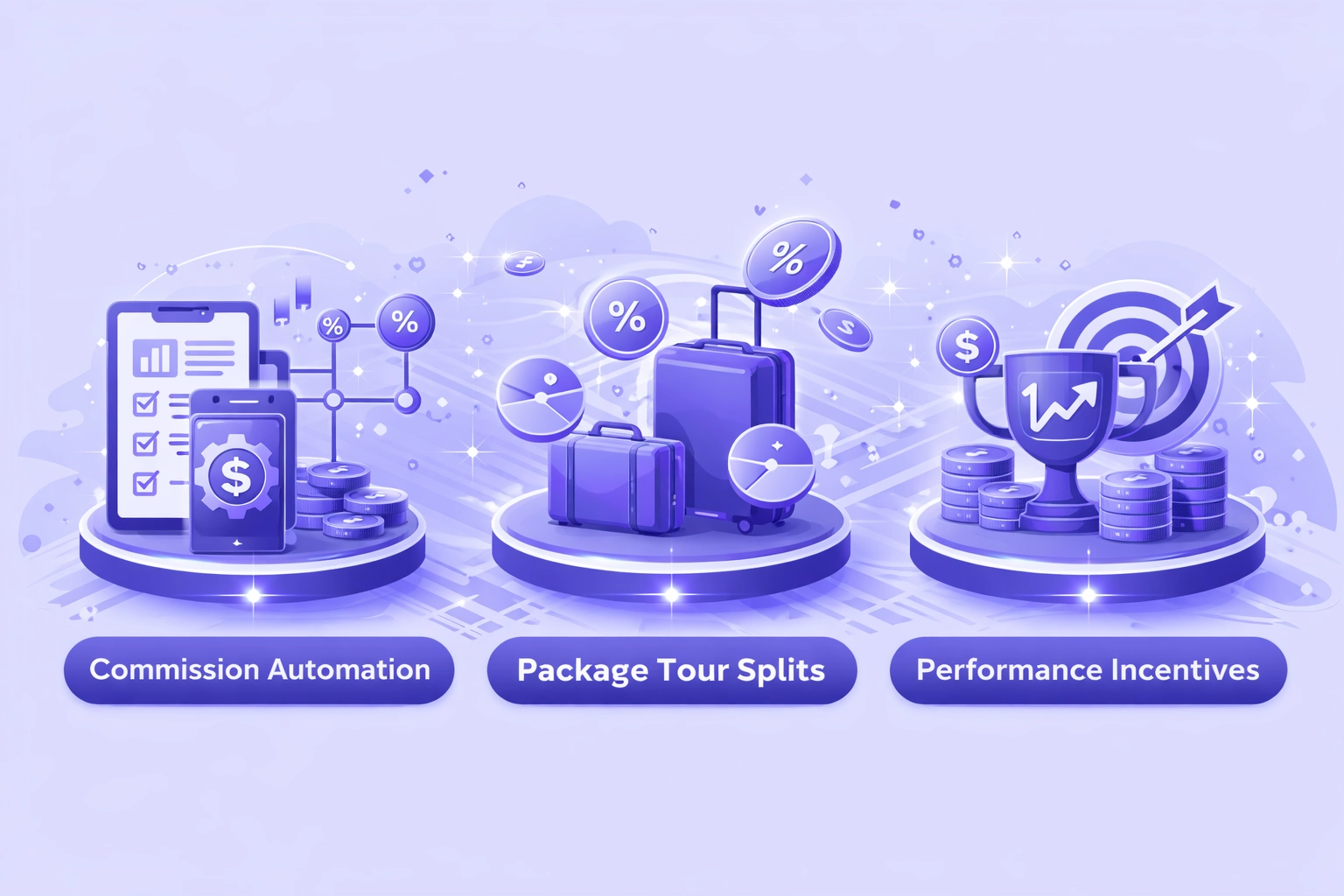 Blockchain Travel Revenue Sharing Models
Commission Automation
- Smart contracts calculate variable commission rates automatically
- Instant settlement upon booking confirmation
- Transparent tier qualification tracking
- Automatic override payments for top performers
Package Tour Splits
- Multi-party payment distribution in single transaction
- Proportional allocation to all service providers
- Atomic settlement ensuring all receive payment
- Reduced reconciliation overhead for complex bookings
Performance Incentives
- Blockchain-verified sales volume tracking
- Automated bonus calculations and payments
- Transparent qualification criteria
- Real-time incentive program participation
Web3 Infrastructure for Interoperable Travel Reward Tokens
Web3 infrastructure enables true interoperability for travel reward tokens through open protocols allowing seamless transfers across airlines, hotels, rental cars, and tourism services without proprietary platform restrictions. Traditional loyalty programs operate as walled gardens where points remain trapped within single brands or limited partnerships negotiated bilaterally creating fragmentation and reduced utility for travelers. Blockchain travel technology implements standardized token protocols like ERC-20 or similar standards enabling universal wallet support and cross-platform compatibility. Decentralized exchanges provide automated market making for travel tokens creating constant liquidity and transparent price discovery impossible in traditional redemption-only systems with opaque valuations. Smart contracts enforce automated conversion rates between different brand tokens based on market prices rather than arbitrary exchange ratios negotiated politically between partnership programs.
Travelers consolidate rewards from dozens of travel brands into unified wallets with total balance visibility and unified redemption interfaces simplifying program management. Cross-chain bridges enable token transfers between different blockchain travel technology networks accommodating brand preferences for specific platforms while maintaining interoperability. NFT loyalty tiers provide tradeable status benefits where elite travelers transfer membership privileges to others creating secondary markets for lounge access and upgrade certificates previously non-transferable. Programmable rewards enable creative mechanics like time-locked tokens earning yield, collaborative campaigns where multiple brands issue combined rewards, and gamification driving engagement through token-based achievement systems. Implementation across progressive travel brands demonstrates that Web3 loyalty infrastructure increases customer lifetime value by 30-50% through enhanced utility and engagement while reducing program administration costs. The open ecosystem benefits smaller brands gaining access to sophisticated loyalty capabilities previously requiring massive technology investments building competitive advantages for incumbents. Adoption across USA, UK, UAE, and Canadian markets creates momentum toward universal travel token standards potentially revolutionizing loyalty industry through interoperability eliminating artificial barriers fragmenting current reward program landscape globally.
Fraud-Resistant Travel Insurance Powered by Smart Contracts
Fraud-resistant travel insurance leverages blockchain travel technology smart contracts and oracle networks providing automated claims settlement based on verifiable data eliminating traditional fraud vectors and claim processing delays. Traditional travel insurance requires manual claim submission with supporting documentation, adjudication by insurance adjusters, and payment processing consuming weeks while creating opportunities for fraudulent claims through fabricated receipts or exaggerated losses. Blockchain travel technology implements parametric insurance where flight delay compensation triggers automatically when airline data confirms delays exceeding policy thresholds without requiring passengers to file claims or prove damages. Medical emergency coverage verifies hospital admission through healthcare provider blockchain integration instantly authorizing payments to medical facilities without patient advancing funds then seeking reimbursement. Trip cancellation insurance executes instant refunds when oracle-verified events like natural disasters, political unrest, or family emergencies occur in covered circumstances.
Baggage loss claims settle automatically when airline tracking systems confirm bags missing beyond policy timeframes with compensation calculating based on declared values without requiring inventories or receipts. The immutable blockchain records prevent duplicate claims across multiple insurers that plague traditional travel insurance where fraudsters submit identical claims to different providers collecting multiple payouts for single losses. Identity verification through blockchain travel technology credentials prevents policy purchases after incidents occur that constitutes fraud in traditional systems lacking real-time verification capabilities. Smart contract automation reduces insurance operational costs by 60-70% enabling lower premiums while improving customer satisfaction through instant claims settlement. Implementation across major travel insurance providers demonstrates commercial viability with parametric policies processing millions in claims automatically. Regulatory acceptance grows as insurance regulators recognize that blockchain-verified automated claims provide superior fraud prevention compared to traditional manual processes vulnerable to documentation forgery and claims exaggeration. Progressive adoption across USA, UK, UAE, and Canadian insurance markets creates competitive pressure as blockchain-enabled insurers offer superior pricing and claims experiences attracting travelers frustrated with traditional insurance claim hassles and payment delays characteristic of legacy travel insurance industry operations.
Tokenized Carbon Credits Integration Within Airline Systems
Tokenized carbon credits integration enables airlines to offer transparent voluntary offset programs addressing growing traveler demand for sustainable aviation while blockchain verification ensures environmental claims authenticity. Traditional carbon offset programs suffer from opacity where customers cannot verify that purchased credits actually fund legitimate emissions reduction projects or that credits are not double-sold to multiple buyers. Blockchain travel technology tokenizes carbon credits as unique digital assets with immutable provenance tracking from issuance through retirement preventing double-counting and providing transparent verification of environmental impact. Smart contracts automatically calculate flight emissions based on aircraft type, distance, and load factors offering passengers precise offset quantities at booking without requiring manual calculations or trust in airline methodologies. Tokenization enables fractional carbon credit purchases allowing customers to offset exact emissions rather than buying standardized bundles misaligned with actual flight impacts.
Blockchain verification provides auditable proof that purchased credits permanently retire preventing resale or reuse that undermines offset program integrity. Airlines integrate sustainable aviation fuel purchases with tokenized carbon credits creating comprehensive sustainability portfolios transparently documented on distributed ledgers accessible for regulatory reporting and corporate social responsibility disclosures. Loyalty programs offer carbon credit redemptions enabling environmentally conscious travelers to use reward points funding emissions reductions rather than purchasing additional flights. Secondary markets emerge for carbon credit tokens enabling price discovery and liquidity supporting robust voluntary carbon markets. Implementation across major carriers including Delta, United, and British Airways demonstrates commercial viability with blockchain travel technology carbon programs processing millions in voluntary offset purchases annually. Regulatory frameworks in USA, UK, UAE, and Canada increasingly require carbon emissions disclosure creating compliance drivers for blockchain-based tracking providing superior transparency compared to traditional self-reported emissions data. The integration positions airlines favorably for anticipated carbon taxation and cap-and-trade schemes where blockchain travel technology verification provides irrefutable documentation of compliance and offset activities supporting aviation industry transition toward carbon neutrality demanded by travelers, regulators, and investors globally.
Decentralized Inventory Synchronization for Global Hotel Chains
Decentralized inventory synchronization solves hotel overbooking challenges through real-time blockchain ledger updates accessible simultaneously across all distribution channels eliminating discrepancies between property management systems and online platforms. Hotel booking engine software sits at the centre of this synchronization layer, enabling hospitality businesses to manage reservations and availability across every connected channel from a single source of truth. Traditional hotel distribution suffers from inventory fragmentation where central reservation systems, franchise properties, OTAs, and metasearch engines maintain separate availability databases creating synchronization delays enabling overselling during high-demand periods. Blockchain travel technology establishes single source of truth where room inventory updates propagate instantly to all connected systems ensuring consistent availability regardless of booking channel. Smart contracts enforce inventory constraints preventing double-bookings through atomic reservation transactions that either complete successfully or fail entirely without partial execution leaving ambiguous states. The decentralization eliminates central server bottlenecks enabling global scale while providing superior reliability compared to centralized systems vulnerable to outages disrupting entire distribution networks.
Dynamic pricing updates propagate instantly across all channels ensuring rate parity compliance preventing discrepancies that trigger costly rate parity disputes with OTAs. Cancellations immediately release inventory making rooms available across all platforms within seconds versus minutes or hours in traditional systems creating revenue optimization opportunities. Group block management becomes transparent with blockchain travel technology tracking partial releases and pickup rates visible to sales teams and revenue managers simultaneously. The immutable audit trail provides indisputable evidence for billing disputes and overbooking compensation claims eliminating contentious negotiations. Implementation across major hotel chains including Marriott, Hilton, and AccorHotels through blockchain initiatives demonstrates production readiness. The efficiency gains reduce distribution costs by 30-40% while improving guest satisfaction through eliminating overbooking situations requiring involuntary relocation. Progressive adoption across USA, UK, UAE, and Canadian hospitality markets creates competitive pressure as blockchain-enabled hotels offer superior inventory reliability attracting OTA partnerships and direct bookings from travelers frustrated by overselling common in traditional systems lacking real-time synchronization capabilities across fragmented distribution technology infrastructure serving global hospitality industry.
Stablecoin Payment Rails for International Travel Transactions
Stablecoin payment rails revolutionize international travel transactions through instant settlement at minimal cost avoiding currency conversion spreads and correspondent banking delays plaguing traditional cross-border payments. International travelers face substantial hidden costs through foreign transaction fees, unfavorable exchange rates, and dynamic currency conversion markups when using credit cards abroad. Blockchain travel technology enables travelers to fund digital wallets with USDC, USDT, or other stablecoins avoiding 3-5% credit card foreign transaction fees while accessing transparent exchange rates through decentralized finance protocols. Hotels, restaurants, and tour operators in tourism destinations accept stablecoin payments receiving instant settlement without waiting days for credit card processing or international wire transfers. The payment infrastructure proves particularly valuable in emerging markets where banking infrastructure limitations create friction for international tourism businesses accessing global payment networks.
Business travelers eliminate corporate card foreign transaction fees saving companies millions annually on international travel expenses. Tourism workers receive wages in stablecoins enabling instant remittances to families at fraction of traditional money transfer costs. Dynamic currency conversion scams common at ATMs and point-of-sale terminals become obsolete as travelers transact directly in stablecoins without merchant currency manipulation. Micropayments for public transportation, museum admissions, and street vendors become economical as stablecoin transactions cost cents versus dollars for credit card processing enabling cashless tourism even for small-value purchases. Implementation across progressive tourism destinations in Dubai, Singapore, and Switzerland demonstrates commercial viability with stablecoin acceptance expanding rapidly. Regulatory frameworks increasingly accommodate stablecoin travel payments as monetary authorities recognize consumer benefits while maintaining oversight through blockchain travel technology transparency. The payment transformation particularly benefits unbanked tourism businesses in remote destinations gaining access to global payment infrastructure previously requiring expensive banking relationships and payment processing contracts. Adoption across USA, UK, UAE, and Canadian travel markets creates momentum toward universal stablecoin acceptance potentially revolutionizing international travel payments through elimination of currency conversion friction and payment processing delays characteristic of traditional cross-border transaction infrastructure.
NFT-Driven Travel Access Passes and Premium Experience Models
NFT-driven travel access passes tokenize premium experiences enabling secondary markets for airport lounge access, flight upgrades, hotel suite privileges, and exclusive tourism activities previously non-transferable. Traditional airline elite status provides benefits like lounge access and complimentary upgrades that cannot transfer or trade creating inefficiency where infrequent flyers accumulate unused privileges while others would pay substantial premiums accessing these benefits. Blockchain travel technology implements NFT passes representing verifiable rights to specific services tradeable on secondary markets. Airport lounge memberships tokenize enabling holders to sell individual visit passes to travelers needing one-time access rather than requiring annual subscriptions. Business class upgrade certificates become liquid assets trading based on route desirability and availability creating efficient price discovery for previously opaque markets. Hotel suite night awards trade enabling holders to monetize benefits at properties they will not visit while enabling others to access luxury accommodations at discounts versus published rates.
Exclusive tourism experiences like private tours, cooking classes with celebrity chefs, or behind-the-scenes access to attractions tokenize as limited-edition NFTs creating scarcity and collectibility. Smart contracts enforce admission through cryptographic verification at entry points eliminating ticket fraud and scalping common in traditional systems using easily counterfeited paper tickets. Dynamic pricing for premium experiences adjusts transparently based on verified demand visible through blockchain travel technology trading activity building trust compared to opaque surge pricing criticized in ridesharing and hospitality. Loyalty programs issue NFT tier status badges proving elite membership across brand ecosystems enabling interoperability and recognition without requiring proprietary systems integration. The collectibility dimension creates engagement beyond utility with travelers accumulating NFT travel memories from significant journeys creating emotional connections and brand loyalty. Implementation across innovative travel brands demonstrates commercial viability with NFT access passes generating millions in secondary market trading volume. The model particularly appeals to younger travelers comfortable with digital collectibles and secondary markets. Progressive adoption across USA, UK, UAE, and Canadian travel markets creates competitive dynamics as NFT-enabled brands offer superior flexibility and liquidity attracting customers from traditional programs restricting benefit transferability limiting value realization from accumulated privileges and rewards across global travel ecosystems.
DAO Governance Models for Collaborative Tourism Networks
DAO governance models enable collaborative tourism networks where participating businesses collectively govern platform rules, revenue sharing, and strategic direction through token-weighted voting mechanisms. Traditional tourism platforms operate as centralized intermediaries extracting substantial margins while imposing rules unilaterally on suppliers lacking negotiation power or governance influence. Blockchain travel technology implements decentralized autonomous organizations where hotels, tour operators, airlines, and restaurants collectively own and govern travel platforms through governance tokens. Smart contracts enforce voted-upon policies automatically without requiring platform operator discretion or implementation delays. Revenue sharing formulas, commission rates, and feature prioritization decisions occur through democratic processes giving all stakeholders voice proportional to platform participation. The decentralization aligns incentives between platform and suppliers compared to extractive intermediaries prioritizing shareholder returns over supplier profitability.
Destination marketing organizations implement DAO structures enabling local businesses, governments, and tourism boards to collectively fund and govern promotion campaigns with transparent budget allocation and performance tracking. Tourism cooperatives leverage blockchain travel technology governance coordinating small operators competing against large chains through collective bargaining and shared technology infrastructure. Token holders propose and vote on platform enhancements, partnership programs, and expansion strategies creating democratic input impossible in traditional corporate structures. Dispute resolution occurs through decentralized arbitration where neutral token holders vote on conflicts between suppliers and customers creating fair processes without platform bias. Implementation challenges include low voter participation, plutocratic concentration among large stakeholders, and technical complexity deterring non-technical tourism operators from meaningful governance engagement. Successful tourism DAOs demonstrate that combining professional management for operational decisions with democratic governance for strategic choices creates optimal balance. Progressive adoption across USA, UK, UAE, and Canadian tourism markets creates alternative platform models challenging incumbents through superior stakeholder alignment and reduced intermediation costs benefiting both suppliers and travelers through collaborative ownership structures impossible in traditional centralized platform architectures dominating current travel industry ecosystem.
Blockchain-Powered Dynamic Pricing and Demand Forecasting
Blockchain-powered dynamic pricing leverages verifiable demand data from distributed ledgers enabling transparent algorithmic pricing building customer trust while optimizing revenue for travel suppliers. Traditional dynamic pricing suffers from opacity where airlines and hotels adjust rates based on proprietary algorithms creating customer frustration from perceived price discrimination and unfair treatment. Blockchain travel technology records booking patterns, search queries, and pricing changes immutably creating transparent audit trails demonstrating pricing fairness. Smart contracts encode pricing rules visibly ensuring consistent application without manual overrides or discriminatory practices. Demand forecasting improves through aggregated blockchain travel technology data from multiple sources providing comprehensive market visibility superior to isolated datasets limited to individual platform perspectives. Machine learning algorithms analyzing on-chain booking patterns predict demand with greater accuracy enabling optimal pricing and inventory allocation maximizing revenue while maintaining competitive rates.
Decentralized data marketplaces enable travel businesses to purchase verified booking and search data from competitors creating comprehensive market intelligence while maintaining competitive confidentiality through zero-knowledge proofs revealing aggregate patterns without exposing proprietary information. Group booking coordination improves as blockchain enables transparent demand signaling where potential customers commit interest triggering volume discounts automatically when thresholds reach without requiring manual negotiation. Event-driven pricing adjusts transparently based on blockchain-verified conferences, concerts, or sports events affecting destination demand with pricing rationale visible to customers through smart contract logic. Price guarantees execute automatically through smart contracts refunding differences when rates drop after booking creating customer confidence in booking earlier. Implementation across innovative travel brands demonstrates that transparent algorithmic pricing increases customer trust while achieving equivalent or superior revenue performance compared to opaque traditional pricing. The transparency particularly appeals to younger travelers demanding fairness and corporate social responsibility from brands. Progressive adoption across USA, UK, UAE, and Canadian markets creates competitive pressure as transparent pricing becomes customer expectation challenging traditional opacity benefiting suppliers through information asymmetry but undermining long-term customer relationships and brand loyalty.
Authoritative Blockchain Travel Implementation Standards
Standard 1: Implement comprehensive smart contract audits from multiple independent security firms before production deployment ensuring passenger fund safety.
Standard 2: Establish redundant oracle networks with reputation staking preventing single-point data manipulation affecting automated refunds and settlements.
Standard 3: Maintain regulatory compliance across all operating jurisdictions ensuring consumer protection and data privacy requirements satisfaction.
Standard 4: Provide transparent pricing and terms through accessible smart contract code enabling independent verification of fairness and consistency.
Standard 5: Implement privacy-preserving identity systems protecting traveler personal information while enabling necessary verification and compliance.
Standard 6: Deploy disaster recovery procedures including smart contract upgrade mechanisms enabling emergency response to discovered vulnerabilities.
Standard 7: Establish customer support infrastructure addressing blockchain travel technology transaction issues and providing assistance to non-technical travelers.
Standard 8: Integrate with traditional payment systems providing fallback options ensuring service continuity during blockchain travel technology network congestion or failures.
Secure B2B Settlement Architecture for Global Travel APIs
Secure B2B settlement architecture leverages blockchain travel technology for automated payment reconciliation between travel technology providers, global distribution systems, and supplier networks eliminating manual invoicing and payment processing. Traditional travel API relationships involve complex billing for transaction volumes, seat availability fees, and tiered pricing structures requiring monthly reconciliation consuming substantial accounting resources. Blockchain travel technology implements smart contracts metering API usage automatically with instant micropayment settlement eliminating billing cycles and payment delays. GDS providers charging airlines per booking segment processed receive instant payments through smart contracts executing upon confirmed transactions without waiting for monthly invoicing and collection. Content aggregators accessing multiple supplier APIs pay proportionally based on actual usage with transparent pricing and automated settlement eliminating billing disputes. The automation reduces payment processing overhead by 60-70% while improving supplier cash flow through real-time settlement versus quarterly payment cycles characteristic of traditional B2B travel relationships.
Blockchain provides immutable audit trails for API usage enabling transparent billing verification preventing disputes about transaction volumes or pricing application. Smart contracts enforce service level agreements automatically applying penalties when API availability or response times fail to meet contractual commitments. Multi-party settlements involving technology providers, payment processors, and travel suppliers execute atomically ensuring all parties receive correct amounts simultaneously. Cross-border API settlements leverage stablecoins avoiding currency conversion and international wire transfer costs. The transparency benefits both API providers and consumers as usage and costs remain visible throughout billing cycles without month-end surprises. Implementation across major travel technology platforms demonstrates production readiness with blockchain travel technology API settlement processing billions in annual transaction value. The architecture proves particularly valuable for new API entrants lacking established banking relationships or credit histories as blockchain travel technology settlement removes counterparty risk through instant payment. Progressive adoption across USA, UK, UAE, and Canadian travel technology markets creates momentum toward universal blockchain B2B settlement potentially revolutionizing travel industry payment infrastructure through elimination of manual reconciliation and payment processing delays characteristic of traditional systems serving complex multi-party transaction flows across global ecosystem.
Distributed Ledger Transparency in Hospitality Supply Chains
Distributed ledger transparency revolutionizes hospitality supply chains by providing verifiable provenance for food, linens, amenities, and sustainable sourcing claims increasingly demanded by conscious travelers. Traditional hospitality supply chains suffer from opacity where hotels cannot reliably verify supplier claims about organic ingredients, fair labor practices, or environmental sustainability. Blockchain travel technology enables end-to-end tracking from farm to table recording each custody transfer and quality certification immutably on distributed ledgers. Hotels serve guests confident that organic claims are authentic backed by blockchain travel technology-verified certifications from accredited authorities. Fair trade coffee, sustainable seafood, and locally sourced produce carry cryptographic proofs of origin satisfying guest preferences for responsible tourism. Linen and uniform suppliers document eco-friendly manufacturing processes through blockchain travel technology records demonstrating sustainability commitments beyond marketing claims.
Also Read: Understanding Yield Farming in Blockchain and Its Real-World Use Cases in Decentralized Finance
Food safety improves through instant contamination tracing when issues arise identifying affected products and suppliers within minutes versus weeks in traditional systems. Counterfeit luxury amenity prevention occurs through blockchain authentication verifying branded toiletries and in-room products are genuine rather than knockoffs. Carbon footprint calculation becomes accurate through verified transportation and production emissions recorded throughout supply chains enabling hotels to offer credible carbon-neutral stays. Supplier diversity programs demonstrate compliance through blockchain records documenting minority-owned and local business participation percentages. Implementation across progressive hotel chains demonstrates commercial viability with blockchain supply chain tracking processing millions in procurement annually. The transparency builds guest trust while enabling premium pricing for verified sustainable properties differentiating from competitors making unsubstantiated environmental claims. Regulatory pressure for supply chain transparency grows as governments mandate due diligence for human rights and environmental impacts creating compliance drivers for blockchain travel technology adoption. Progressive implementation across USA, UK, UAE, and Canadian hospitality markets creates competitive dynamics as blockchain-verified sustainability becomes customer expectation attracting conscious travelers willing to pay premiums for transparent responsible tourism aligned with personal values and environmental commitments.
Programmable Travel Finance and Embedded DeFi Integrations
Programmable travel finance leverages decentralized finance protocols enabling innovative payment structures, automated lending, and yield-generating travel deposits impossible in traditional banking infrastructure. Blockchain travel technology implements smart contracts creating flexible payment terms where travelers pay deposits earning DeFi yields until trip departure dates offsetting booking costs through investment returns. Buy-now-pay-later travel financing executes through decentralized lending protocols without credit checks or traditional underwriting enabling global access regardless of credit history or banking relationships. Automated travel savings programs deposit percentages of daily transactions into DeFi protocols accumulating toward future trip budgets with transparent yield tracking. The programmability enables creative financial products tailored to individual circumstances rather than one-size-fits-all traditional travel financing limited by banking infrastructure constraints and regulatory overhead.
Group travel financing coordinates among participants through smart contracts automating deposit collection, cancellation refunds, and final payment distribution eliminating trust issues in informal arrangements. Dynamic pricing protection occurs through options contracts where travelers lock rates paying small premiums securing specific prices protecting against increases while benefiting from decreases. Loyalty point yields emerge as blockchain travel technology programs stake deposited tokens in DeFi protocols sharing investment returns with members creating passive income from accumulated rewards. Travel budgeting apps integrate DeFi protocols providing real-time foreign exchange, automated expense categorization, and tax-optimized structures for business travel. Implementation challenges include DeFi protocol risks, regulatory uncertainty, and technical complexity deterring mainstream adoption. Progressive platforms demonstrate viability processing millions through travel DeFi integrations. The innovation particularly appeals to younger travelers comfortable with cryptocurrency and DeFi concepts seeking financial flexibility. Adoption across USA, UK, UAE, and Canadian markets creates momentum as travel brands recognize programmable finance as competitive differentiator attracting digitally-native customer segments demanding innovative financial products beyond traditional payment and financing options offered by incumbent travel providers using legacy banking infrastructure.
Blockchain Travel Technology Implementation Readiness Matrix
| Use Case | Technical Maturity | Regulatory Clarity | Industry Adoption |
|---|---|---|---|
| Airline Distribution | Production-ready with major carrier pilots | Clear framework in most jurisdictions | Early adoption phase 15-20% |
| Tokenized Loyalty | Mature platforms processing millions | Evolving securities classification issues | Growing adoption 25-30% |
| Smart Contract Ticketing | Proven viability billion+ transactions | Consumer protection frameworks adequate | Moderate adoption 20-25% |
| Decentralized Identity | Pilot stage requires standardization | Privacy regulations create complexity | Experimental adoption under 10% |
| Stablecoin Payments | Mature infrastructure high reliability | Regulatory uncertainty in key markets | Emerging adoption 10-15% |
| NFT Access Passes | Functional platforms need UX refinement | Unclear secondary market regulations | Niche adoption under 5% |
Blockchain Travel Platform Selection Criteria
Technical Infrastructure
Evaluate blockchain platform scalability throughput latency and smart contract functionality supporting travel transaction volumes and complexity requirements.
Security and Auditing
Verify comprehensive smart contract audits from reputable security firms bug bounty programs and incident response procedures protecting passenger funds.
Regulatory Compliance
Confirm platform compliance with travel industry regulations data protection laws payment processing requirements across target operating jurisdictions.
Integration Capabilities
Assess API quality documentation ecosystem compatibility with existing travel technology infrastructure and migration pathway complexity from legacy systems.
User Experience Design
Review customer-facing interfaces ensuring blockchain complexity remains abstracted providing seamless experiences matching or exceeding traditional travel platforms.
Cost and ROI Analysis
Calculate total implementation costs transaction fees operational savings and revenue opportunities establishing clear return on investment timeline and metrics.
Transform Your Travel Platform with Blockchain Technology
Partner with experienced blockchain travel technology specialists to implement smart contracts, tokenized loyalty, and automated settlement for your airline, hotel, or tourism platform.
Frequently Asked Questions
Q1.1. How does blockchain technology transform the travel industry?
Blockchain travel technology fundamentally restructures industry operations through distributed ledger systems enabling transparent booking records, automated settlement, and tokenized loyalty programs eliminating intermediary friction. Smart contracts automate ticketing, refunds, and revenue sharing between airlines, hotels, and online travel agencies reducing reconciliation costs by 40-60%. Immutable records prevent double-booking disputes while providing auditable transaction histories satisfying regulatory compliance. Decentralized identity systems streamline airport processing through verifiable credentials shared across borders without centralized databases. Tokenized reward programs enable interoperability across brands allowing travelers to earn and redeem points seamlessly. The technology addresses persistent industry challenges including payment delays, fraud, and fragmented systems through cryptographic verification and algorithmic execution serving markets across USA, UK, UAE, and Canada.
Q2.2. What are the benefits of blockchain for airline loyalty programs?
Blockchain airline loyalty programs provide instant reward accrual, frictionless redemption, and cross-brand interoperability impossible with traditional centralized point systems. Tokenized miles trade on secondary markets creating liquidity and transparent valuation unlike restricted airline points with opaque redemption values. Smart contracts automate tier status calculations and benefit distribution eliminating manual processing delays. Travelers consolidate rewards from multiple airlines, hotels, and travel services into unified wallets simplifying management and increasing utility. Blockchain infrastructure reduces program administration costs by 30-50% through automated accounting and settlement. Real-time point transfers occur instantly versus days-long processing in legacy systems. Enhanced transparency shows exact point values and redemption availability building customer trust. Airlines reduce fraud through cryptographic verification preventing point theft and unauthorized transfers common in traditional programs.
Q3.3. How do smart contracts improve travel booking processes?
Smart contracts revolutionize travel bookings through automated execution of agreements when predefined conditions are met, eliminating manual intervention and processing delays. Flight cancellations trigger instant refunds to customer wallets without requiring claim submissions or customer service interactions. Dynamic pricing updates automatically based on demand algorithms encoded in smart contracts ensuring consistent pricing across distribution channels. Hotel check-ins execute automatically upon blockchain travel technology-verified payment confirmation and identity verification streamlining property access. Multi-party bookings like package tours settle payments proportionally to airlines, hotels, and tour operators instantly upon service delivery. Dispute resolution occurs algorithmically through oracle-verified data about flight delays, service quality, or cancellations reducing chargeback costs. Smart contracts enforce service level agreements automatically penalizing providers for failures while rewarding excellent service performance through transparent verifiable metrics.
Q4.4. What role do stablecoins play in travel payments?
Stablecoins eliminate cross-border payment friction in international travel through instant settlement, minimal fees, and stable valuations addressing currency conversion and wire transfer delays. Travelers pay hotels, airlines, and tour operators in USDC or USDT avoiding 3-5% credit card foreign transaction fees and unfavorable exchange rates. Tourism businesses receive payments instantly rather than waiting days for bank transfers or credit card settlements improving cash flow management. Price transparency increases as stablecoin payments show exact conversion rates without hidden spreads charged by traditional payment processors. Remittances from tourism workers to home countries occur instantly at fraction of Western Union costs. B2B settlements between global distribution systems and travel suppliers execute real-time eliminating monthly reconciliation cycles. Regulatory frameworks in progressive jurisdictions accommodate stablecoin travel payments through digital asset exemptions enabling compliant implementations across major markets.
Q5.5. How does blockchain prevent fraud in travel bookings?
Blockchain travel technology prevents fraud through immutable transaction records, cryptographic identity verification, and transparent audit trails eliminating common fraud vectors in traditional systems. Double-booking fraud becomes impossible as blockchain travel technology maintains single source of truth about inventory availability preventing overselling. Identity verification through self-sovereign credentials prevents credit card fraud and account takeovers common in online booking platforms. Smart contracts enforce payment before service delivery eliminating chargeback fraud where customers dispute legitimate charges. Loyalty point fraud reduces dramatically through blockchain verification preventing point theft, account hacking, and unauthorized transfers. Fake booking confirmations are detectable as all reservations record immutably on distributed ledgers accessible for verification. Supplier fraud where unscrupulous operators collect payments without providing services becomes traceable through transparent blockchain records enabling reputation systems and automated dispute resolution protecting travelers globally.
Explore Services
Related Services
Reviewed by

Wazid Khan
Director & Co-Founder
Wazid Khan is the Director & Co-Founder of Nadcab Labs, a forward-thinking digital engineering company specializing in Blockchain, Web3, AI, and enterprise software solutions. With a strong vision for innovation and scalable technology, Wazid has played a key role in building Nadcab Labs into a trusted global technology partner. His expertise lies in strategic planning, business development, and delivering client-centric solutions that drive real-world impact. Under his leadership, the company has successfully delivered numerous projects across industries such as fintech, healthcare, gaming, and logistics. Wazid is passionate about leveraging emerging technologies to create secure, efficient, and future-ready digital ecosystems for businesses worldwide.