Ai Overview
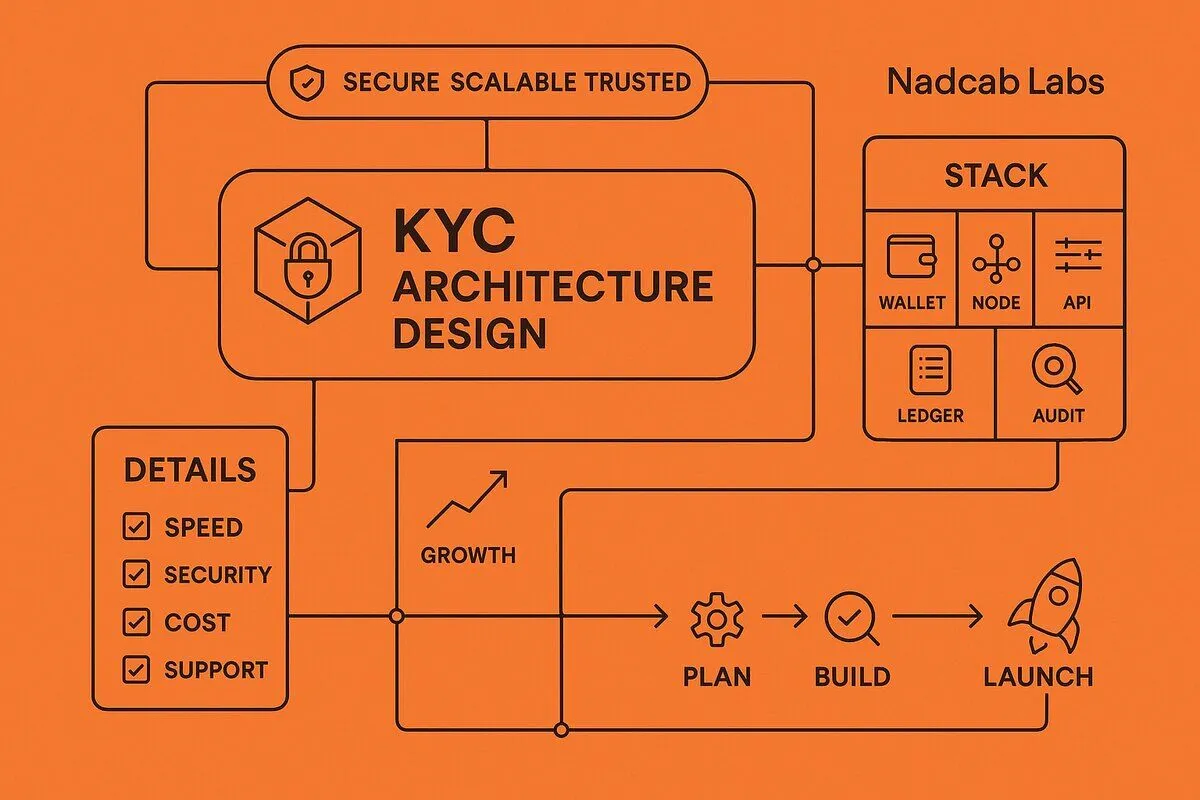
Building a robust blockchain KYC AML compliance architecture requires carefully designed layers that balance regulatory requirements with blockchain’s unique characteristics. This guide explores the architectural patterns, integration strategies, and design decisions needed to create scalable, performant compliance infrastructure that meets multi-jurisdictional regulatory demands while preserving the benefits of decentralized systems.
Building a robust blockchain KYC AML compliance architecture requires carefully designed layers that balance regulatory requirements with blockchain’s unique characteristics. This guide explores the architectural patterns, integration strategies, and design decisions needed to create scalable, performant compliance infrastructure that meets multi-jurisdictional regulatory demands while preserving the benefits of decentralized systems.
Key Takeaways
- Effective blockchain KYC AML compliance architecture separates identity verification, transaction monitoring, and regulatory reporting into distinct, independently scalable layers
- Identity verification modules must integrate third-party providers, support decentralized identity protocols, and implement privacy-preserving credential storage mechanisms
- Transaction monitoring requires real-time stream processing, configurable rule engines, and ML-powered pattern recognition to detect suspicious activities across blockchain networks
- Multi-jurisdiction compliance demands modular reporting frameworks with jurisdiction-specific templates, secure API gateways, and comprehensive audit trails
- Scalability depends on microservices decomposition, hybrid on-chain/off-chain data strategies, and intelligent caching to handle high transaction volumes without performance degradation
What Are the Core Architectural Layers in Blockchain KYC AML Systems?
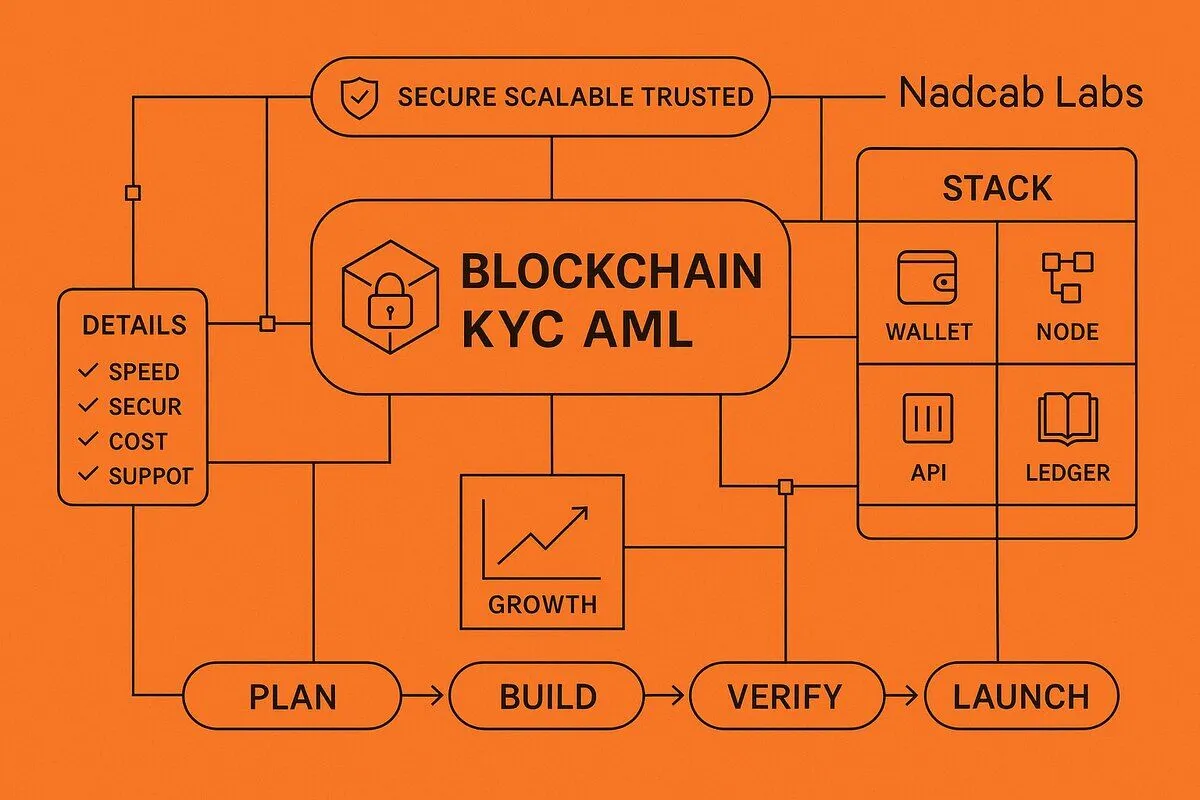
The foundation of any blockchain KYC AML compliance architecture rests on three primary layers, each serving distinct regulatory and operational functions. Understanding how these layers interact and where boundaries exist is critical for building maintainable, compliant systems.
The identity verification layer handles user onboarding and credential management. This layer integrates document validation services that verify government-issued IDs, passports, and utility bills. Biometric authentication components—facial recognition, liveness detection, fingerprint scanning—add security and prevent identity fraud. Credential storage uses encrypted databases or blockchain-based solutions, depending on privacy requirements and regulatory jurisdiction. For Layer 1 blockchain platforms, this layer often connects directly to smart contracts that gate access to specific functions based on verification status.
The transaction monitoring layer continuously analyzes blockchain activity for suspicious patterns. Real-time analysis engines process transactions as they occur, applying rule-based filters and machine learning models to identify anomalies. Pattern recognition algorithms detect structuring (breaking large transactions into smaller ones), rapid movement of funds through multiple wallets, and connections to known bad actors. Risk scoring mechanisms assign numerical values to transactions and addresses, enabling compliance teams to prioritize investigations. This layer must handle the throughput characteristics of different blockchain types—high-frequency Layer 2 solutions require different processing strategies than base layer networks.
The regulatory reporting layer transforms monitored data into compliant reports for authorities. Audit trails capture every system action, creating immutable records of compliance activities. Jurisdiction-specific templates format data according to local requirements—FinCEN SARs in the US, FIU reports in the EU, AUSTRAC submissions in Australia. Automated submission workflows reduce manual effort and ensure timely filing. This layer also manages data retention policies, balancing compliance mandates with privacy regulations like GDPR.
| Layer | Primary Functions | Key Technologies | Avg Processing Time |
|---|---|---|---|
| Identity Verification | Document validation, biometric checks, credential issuance | OCR, facial recognition APIs, DID protocols | 2-5 minutes |
| Transaction Monitoring | Real-time analysis, pattern detection, risk scoring | Stream processors, ML models, graph databases | 50-200ms per tx |
| Regulatory Reporting | Audit logging, report generation, authority submission | Data warehouses, ETL pipelines, secure APIs | Hours to days |
How Do You Design the Identity Verification Module for Blockchain Compliance?
Designing the identity verification module requires balancing regulatory compliance with user privacy and blockchain’s transparency characteristics. The architecture must support multiple verification tiers while integrating both traditional and decentralized identity systems.
Integration patterns for third-party KYC providers typically follow an adapter or facade pattern. Your system defines a common interface for identity verification operations—submit documents, check verification status, retrieve results. Behind this interface, adapters connect to services like Jumio, Onfido, or Trulioo. This abstraction lets you switch providers without changing core application logic. For on-chain credential storage, consider using encrypted hashes rather than raw data. Store a cryptographic commitment to the verification result on-chain, keeping sensitive documents off-chain in encrypted databases with strict access controls. Privacy-preserving verification protocols like zero-knowledge proofs enable proving attributes (age over 18, country of residence) without revealing underlying identity data.
Multi-tier verification workflows accommodate different risk profiles. A basic tier might require only email and phone verification for low-value transactions. An intermediate tier adds government ID verification for moderate limits. An enhanced tier includes biometric checks, proof of address, and source of funds documentation for institutional users or high-value operations. Each tier maps to specific blockchain permissions—basic users can trade up to $1,000 daily, enhanced users access DeFi lending protocols. Jurisdictional requirements add complexity; EU users need GDPR-compliant data handling, while US users face state-specific money transmitter rules. Your architecture must route verification workflows based on detected user location and applicable regulations.
Decentralized identity integration represents the cutting edge of KYC architecture design blockchain. Implementing Blockchain Identity Management with DIDs (Decentralized Identifiers) and verifiable credentials shifts control to users. In this model, a trusted issuer (government agency, KYC provider) creates a verifiable credential attesting to identity attributes. The user stores this credential in a digital wallet and presents it to your platform when needed. Your system verifies the credential’s cryptographic signature without contacting the issuer. Selective disclosure mechanisms let users prove specific attributes—citizenship, accredited investor status—without revealing full identity details. This approach aligns with emerging regulations like eIDAS 2.0 in Europe while reducing your platform’s data liability.
Identity Verification Process Flow
Email/wallet connect
Risk-based workflow
ID + biometric check
Third-party API call
On/off-chain storage
What Transaction Monitoring Architecture Patterns Support AML Compliance?
Transaction monitoring forms the operational heart of AML compliance system architecture. The challenge is processing high volumes of blockchain transactions in real-time while maintaining accuracy and minimizing false positives that burden compliance teams.
Real-time stream processing architecture is essential for blockchain transaction analysis. Apache Kafka or AWS Kinesis serve as the event backbone, ingesting transaction data from blockchain nodes as blocks are confirmed. Stream processing frameworks like Apache Flink or Spark Streaming apply configurable rule engines—checking transaction amounts against thresholds, identifying velocity patterns, flagging transactions to sanctioned addresses. Machine learning models run in parallel, using features like transaction graph topology, wallet age, and historical behavior to predict risk. A typical architecture processes 10,000+ transactions per second with sub-second latency. For platforms building on layer 1 blockchain infrastructure, direct node integration provides the lowest latency, while modular blockchain approaches may require aggregating data from multiple execution layers.
Data pipeline design connects multiple information sources. On-chain events provide transaction details—sender, receiver, amount, token type, smart contract interactions. Off-chain databases store KYC data, historical risk scores, and previous investigation results. External risk intelligence feeds from services like Chainalysis, Elliptic, or TRM Labs add wallet risk ratings, exposure to mixers or darknet markets, and connections to known criminal entities. Your pipeline must join these data sources efficiently. Graph databases like Neo4j excel at representing wallet relationships and tracing fund flows across multiple hops. Time-series databases handle historical transaction patterns for behavioral analysis. The architecture should support both real-time queries for immediate screening and batch analytics for pattern discovery.
Alert management systems transform raw detections into actionable cases. When monitoring rules trigger, the system creates an alert with relevant context—transaction details, parties involved, triggered rules, risk score. Case workflows route alerts to investigators based on severity and type. Investigator dashboards display transaction graphs, wallet histories, and links to external intelligence. False-positive reduction strategies are critical—initial implementations often generate 90%+ false positive rates. Machine learning feedback loops learn from investigator decisions, adjusting model thresholds. Rule tuning interfaces let compliance officers modify detection parameters without developer involvement. Integration with AML and KYC processes ensures alerts trigger appropriate actions—additional verification requests, transaction blocking, or regulatory filing.
Alert Volume by Detection Method (Weekly Average)
How Should Regulatory Reporting Infrastructure Be Architected for Multi-Jurisdiction Compliance?
Regulatory reporting infrastructure must accommodate diverse filing requirements across jurisdictions while maintaining audit integrity and operational efficiency. The architecture needs flexibility to adapt as regulations evolve without requiring system-wide changes.
A modular reporting framework separates report generation logic from data collection and submission. Core modules handle Suspicious Activity Reports (SARs), Currency Transaction Reports (CTRs), and Travel Rule disclosures. Each module contains jurisdiction-specific implementations—FinCEN SAR format for the US, STR format for the UK, AUSTRAC SMR for Australia. Version control tracks regulatory changes; when FinCEN updates SAR form fields, you deploy a new version without touching other jurisdictions. Template engines render reports in required formats—XML for automated submission, PDF for manual review. This approach supports ICO compliance requirements and ongoing operational reporting with the same underlying infrastructure. Understanding layer separation in blockchain architecture helps structure these reporting modules for maximum reusability.
Data retention architecture balances competing demands. Compliance regulations typically require 5-7 years of transaction records. Privacy regulations like GDPR grant users the right to erasure. Blockchain immutability means on-chain data persists indefinitely. The solution: separate mutable and immutable data. Store personally identifiable information (PII) in encrypted off-chain databases with deletion capabilities. Store transaction hashes, risk scores, and compliance decisions on-chain or in append-only databases. When a user exercises erasure rights, delete PII while retaining pseudonymized compliance records. Implement data lifecycle policies that automatically archive old records to cold storage, reducing operational database size while maintaining regulatory access. For platforms requiring blockchain disaster recovery architecture, ensure reporting data replication across geographic regions.
API gateway design for regulatory authority integrations requires security and reliability. Modern regulators increasingly accept automated submissions via APIs rather than manual portal uploads. Your gateway must support multiple authentication schemes—OAuth 2.0 for some authorities, mutual TLS for others, API keys for legacy systems. Secure data transmission uses encryption in transit (TLS 1.3) and at rest. Rate limiting prevents accidental DoS of regulatory systems. Retry logic with exponential backoff handles temporary outages. Audit log generation captures every submission attempt—timestamp, destination authority, report type, submission status, response codes. These logs prove due diligence during regulatory examinations. For Crypto Wallet Compliance, API integration enables real-time reporting of suspicious wallet activities to relevant authorities.
| Jurisdiction | Primary Report Types | Submission Method | Filing Deadline |
|---|---|---|---|
| United States | SAR, CTR, FBAR | FinCEN BSA E-Filing (XML API) | 30 days (SAR) |
| European Union | STR, Travel Rule | FIU.net, national portals | Immediate (Travel Rule) |
| United Kingdom | SAR, Defense Against ML | NCA online portal | ASAP (reasonable grounds) |
| Singapore | STR, CTR | STRO online system | 15 days (STR) |
What Are the Scalability and Performance Considerations for Compliance Architecture?
As blockchain platforms grow, compliance infrastructure design must scale without degrading performance or increasing costs linearly. Strategic architectural decisions determine whether your system handles 10x growth gracefully or collapses under load.
Microservices decomposition separates concerns for independent scaling. The KYC service handles identity verification, the AML service processes transaction monitoring, the reporting service generates regulatory filings. Each service has its own database, API, and deployment pipeline. This separation lets you scale transaction monitoring horizontally during high-volume periods without over-provisioning KYC infrastructure. Service communication uses asynchronous messaging (RabbitMQ, AWS SQS) to decouple dependencies and improve fault tolerance. When the KYC service completes verification, it publishes an event that the AML service consumes to update risk profiles. API gateways provide a unified interface to external clients while routing requests to appropriate microservices. This architecture supports the compliance infrastructure design patterns needed for enterprise-scale blockchain platforms.
Caching layers and database sharding reduce latency for high-frequency operations. Redis or Memcached cache frequently accessed data—user verification status, wallet risk scores, recent transaction histories. Cache hit rates above 80% dramatically reduce database load. For transaction screening, cache negative results (wallet not on sanctions list) with short TTLs to avoid repeated external API calls. Database sharding distributes data across multiple instances. Shard user data by geographic region to support data residency requirements. Shard transaction data by time period—current month in hot storage, previous quarters in warm storage, historical data in cold storage. Graph databases handling wallet relationships may shard by wallet address prefix. Proper sharding strategies let compliance systems process 100,000+ transactions per second while maintaining sub-100ms query latency.
Hybrid on-chain/off-chain architecture balances transparency with performance. Store compliance-critical commitments on-chain—hashes of KYC verification results, risk score attestations, regulatory filing confirmations. This provides immutable proof of compliance activities. Store detailed data off-chain in traditional databases—full KYC documents, transaction monitoring alerts, investigation notes. Off-chain storage offers better performance (no blockchain confirmation delays), lower costs (no gas fees for data storage), and privacy compliance (ability to delete data). Smart contracts reference off-chain data through content-addressed storage (IPFS) or traditional database IDs. This pattern is common in regulatory reporting architecture where blockchain provides audit trails while sensitive data remains protected. The approach aligns with principles used in building scalable blockchain applications across different network types.
Performance Benchmarks for Compliance Operations
- KYC verification completion: 2-5 minutes for automated checks, 24-48 hours including manual review
- Transaction screening throughput: 50,000-100,000 transactions per second with proper caching and sharding
- Alert investigation time: 15-45 minutes per alert depending on complexity and available intelligence
- Regulatory report generation: 5-30 seconds for standard reports, minutes for complex multi-jurisdiction filings
- API response times: <100ms for cached data, <500ms for database queries, <2s for external provider calls
Final Thoughts
Building effective blockchain KYC AML compliance architecture requires thoughtful layer design that separates identity verification, transaction monitoring, and regulatory reporting while enabling them to work together seamlessly. By implementing modular frameworks, leveraging both on-chain and off-chain storage strategically, and designing for scalability from the start, you create compliance infrastructure that meets regulatory demands without sacrificing performance. The architectural patterns outlined here—microservices decomposition, hybrid data strategies, multi-tier verification workflows—provide a foundation for building compliant blockchain platforms that can adapt as regulations evolve and transaction volumes grow. Success depends on balancing technical sophistication with operational practicality, ensuring your compliance architecture serves both regulatory requirements and business objectives effectively.
Frequently Asked Questions
Q1.How do you separate KYC and AML functions in blockchain compliance architecture?
Separate KYC and AML through distinct microservices with dedicated databases. KYC service handles identity verification and document validation, while AML service performs transaction monitoring, risk scoring, and sanctions screening. Use event-driven architecture where KYC completion triggers AML monitoring. Implement separate access controls and audit trails for each function to maintain regulatory clarity and enable independent scaling.
Q2.What database architecture works best for storing compliance data in blockchain systems?
Use hybrid architecture combining encrypted off-chain databases with on-chain references. Store sensitive PII in encrypted PostgreSQL or MongoDB with field-level encryption, while recording verification hashes and compliance status on-chain. Implement database sharding for scalability, regular encrypted backups, and geographic data residency controls. Maintain separate hot storage for active checks and cold storage for archived compliance records.
Q3.How can decentralized identity protocols integrate with traditional KYC requirements?
Integrate DID protocols by mapping verifiable credentials to KYC requirements. Use standards like W3C DIDs where users control identity attestations from verified issuers. Implement credential verification endpoints that validate cryptographic proofs against traditional KYC criteria. Bridge decentralized identifiers with regulatory frameworks through accredited credential issuers, ensuring selective disclosure capabilities while meeting jurisdiction-specific identification standards.
Q4.What are the key API endpoints needed in a blockchain compliance architecture?
Essential endpoints include identity verification submission, document upload, verification status check, AML risk assessment, transaction screening, sanctions list checking, compliance report generation, and webhook notifications. Implement RESTful APIs with OAuth2 authentication, rate limiting, and comprehensive logging. Include batch processing endpoints for historical transaction analysis and real-time screening APIs for transaction approval workflows.
Q5.How do you design for GDPR compliance while maintaining blockchain immutability?
Store personal data off-chain in mutable encrypted databases with deletion capabilities, while recording only verification hashes and compliance status on-chain. Implement data minimization by storing minimal identifiers on blockchain. Use encryption key management where destroying keys effectively renders data inaccessible, satisfying right-to-erasure. Design smart contracts referencing off-chain data stores rather than embedding personal information directly.
Q6.What microservices pattern is recommended for separating compliance concerns in blockchain platforms?
Implement domain-driven design with bounded contexts: Identity Verification Service, Document Management Service, AML Screening Service, Risk Assessment Service, Reporting Service, and Audit Service. Use API Gateway for routing, event bus for inter-service communication, and saga pattern for distributed transactions. Deploy services independently with separate databases, enabling isolated scaling, updates, and regulatory adaptations per compliance domain.
Explore Services
Related Services
Reviewed by

Aman Vaths
Founder of Nadcab Labs
Aman Vaths is the Founder & CTO of Nadcab Labs, a global digital engineering company delivering enterprise-grade solutions across AI, Web3, Blockchain, Big Data, Cloud, Cybersecurity, and Modern Application Development. With deep technical leadership and product innovation experience, Aman has positioned Nadcab Labs as one of the most advanced engineering companies driving the next era of intelligent, secure, and scalable software systems. Under his leadership, Nadcab Labs has built 2,000+ global projects across sectors including fintech, banking, healthcare, real estate, logistics, gaming, manufacturing, and next-generation DePIN networks. Aman’s strength lies in architecting high-performance systems, end-to-end platform engineering, and designing enterprise solutions that operate at global scale.