Ai Overview
Private blockchain deployment cost encompasses infrastructure setup, node hosting, consensus implementation, permissioning systems, smart contract development, security audits, and ongoing DevOps maintenance. Total expenses typically range from $150,000 to $800,000+ for initial deployment, with monthly operational costs between $15,000 and $60,000 depending on network size, throughput requirements, and security standards.
Private blockchain deployment cost encompasses infrastructure setup, node hosting, consensus implementation, permissioning systems, smart contract development, security audits, and ongoing DevOps maintenance. Total expenses typically range from $150,000 to $800,000+ for initial deployment, with monthly operational costs between $15,000 and $60,000 depending on network size, throughput requirements, and security standards. Organizations must budget across hardware resources, development labor, third-party integrations, and continuous monitoring to achieve production-ready enterprise blockchain systems.
Key Takeaways
- Infrastructure costs vary dramatically based on node count, cloud provider choice, and storage architecture, with validator nodes costing $800-$3,500 monthly per instance.
- Consensus mechanism selection impacts both development expenses and ongoing operational budgets, with custom implementations adding $80,000-$200,000 to project costs.
- Permissioning and identity management layers require substantial investment in PKI infrastructure, HSM integration, and IAM system connections, typically consuming 15-25% of total deployment budget.
- Smart contract development and security audits represent critical cost centers, with comprehensive formal verification audits ranging from $30,000 to $150,000+ per contract suite.
- Ongoing DevOps and maintenance expenses often exceed 40% of initial deployment costs annually, requiring dedicated monitoring infrastructure and incident response capabilities.
- Consortium deployments introduce coordination overhead and shared infrastructure costs that can increase budget requirements by 30-50% compared to single-organization implementations.
What are the core infrastructure components driving private blockchain deployment costs?
Infrastructure represents the largest single cost category in private blockchain deployments, consuming 35-45% of total project budgets. Node hardware and cloud compute resources form the foundation, with organizations choosing between on-premises deployments, hybrid architectures, or fully cloud-hosted solutions. Validator nodes require high-performance compute instances to process transactions and maintain consensus, while peer nodes handle API requests, data queries, and application connectivity. A typical production network with 5 validator nodes and 8 peer nodes running on AWS EC2 c5.2xlarge instances costs approximately $12,000-$18,000 monthly just for compute resources.
Cloud provider selection significantly impacts cost structures. AWS offers granular instance types but premium pricing, while Azure provides enterprise integration advantages at competitive rates. Google Cloud Platform delivers strong Kubernetes support for containerized blockchain deployments, often reducing orchestration costs by 20-30%. Organizations must also account for data transfer fees, which accumulate quickly in distributed networks. A consortium blockchain with nodes across three geographic regions can incur $2,000-$5,000 monthly in inter-region bandwidth charges alone, especially when processing high transaction volumes or synchronizing large state databases.
Storage architecture costs scale with ledger growth and data retention requirements. Blockchain networks accumulate immutable transaction history, requiring expanding storage capacity over time. A network processing 500 transactions per second with average transaction sizes of 2KB generates approximately 86GB of ledger data monthly. Organizations typically implement tiered storage strategies: high-performance SSD storage for active state databases ($0.10-$0.20 per GB monthly), standard block storage for recent ledger history ($0.04-$0.08 per GB monthly), and cold storage archives for historical data ($0.004-$0.01 per GB monthly). A mature network with 2TB of active data and 10TB of historical records incurs $600-$1,200 monthly in storage costs across these tiers.
Network layer expenses include VPN tunnels, dedicated connections, and security infrastructure. Enterprise deployments often require site-to-site VPN connections between organizational data centers and cloud-hosted nodes, costing $200-$800 monthly per connection. Consortium blockchains with strict latency requirements may implement AWS Direct Connect or Azure ExpressRoute dedicated circuits, adding $1,500-$5,000 monthly per connection but reducing transaction confirmation times by 40-60%. Load balancers, API gateways, and DDoS protection services contribute an additional $500-$2,000 monthly to network infrastructure costs.
| Infrastructure Component | Typical Configuration | Monthly Cost Range | Annual Cost Range |
|---|---|---|---|
| Validator Nodes (5x) | c5.2xlarge instances, 8 vCPU, 16GB RAM | $4,000 – $6,500 | $48,000 – $78,000 |
| Peer Nodes (8x) | c5.xlarge instances, 4 vCPU, 8GB RAM | $3,200 – $5,000 | $38,400 – $60,000 |
| Storage (Tiered) | 2TB SSD active, 10TB standard archive | $600 – $1,200 | $7,200 – $14,400 |
| Network & Bandwidth | VPN tunnels, inter-region transfer, API gateway | $2,700 – $7,800 | $32,400 – $93,600 |
| Load Balancers & Security | Application LB, WAF, DDoS protection | $800 – $2,500 | $9,600 – $30,000 |
| Total Infrastructure Costs | $11,300 – $23,000 | $135,600 – $276,000 | |
Backup and disaster recovery infrastructure adds another layer of expense. Organizations implementing comprehensive business continuity plans typically maintain hot standby nodes in separate availability zones, effectively doubling compute costs for critical validator infrastructure. Automated backup systems with point-in-time recovery capabilities cost $1,500-$4,000 monthly for enterprise-grade solutions. Geographic redundancy for consortium blockchains, where each member organization maintains nodes in multiple regions, can increase infrastructure costs by 60-100% but provides resilience against regional outages and regulatory compliance for data sovereignty requirements.
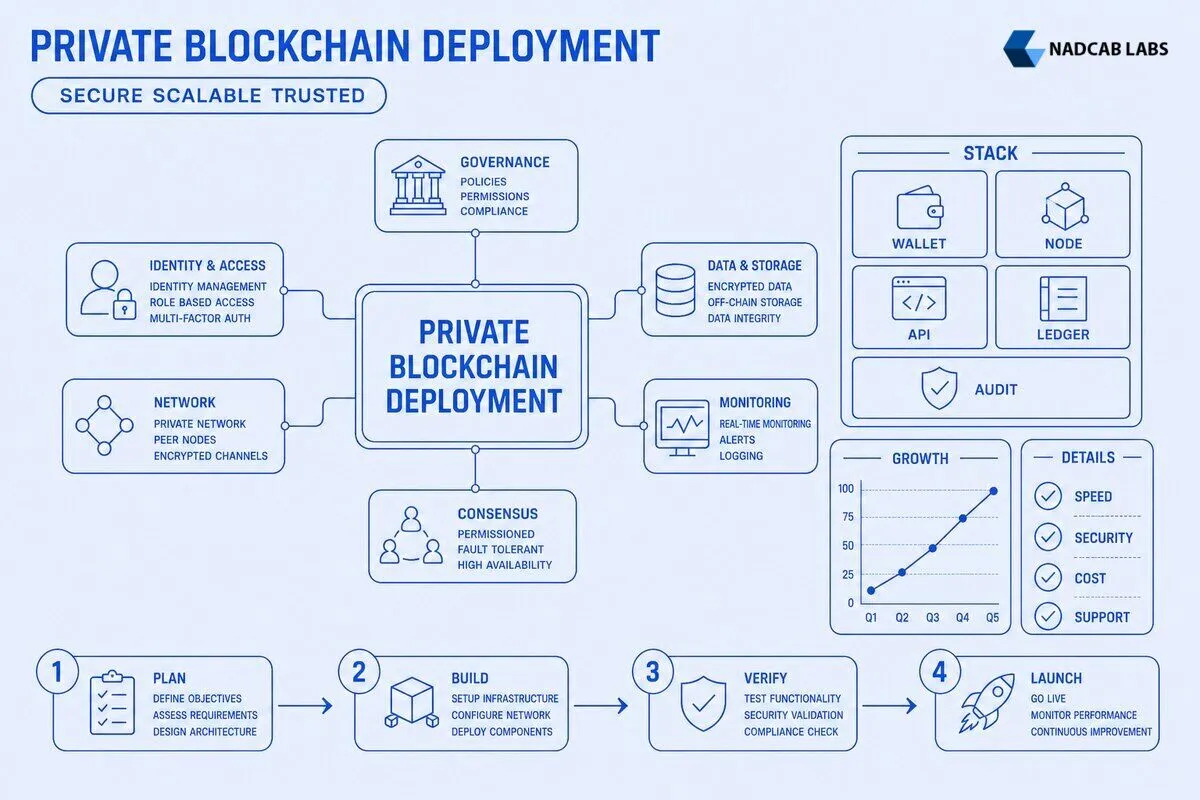
How do consensus mechanism choices impact development and operational budgets?
Consensus mechanism selection fundamentally shapes both initial development costs and ongoing operational expenses. Organizations choosing pre-built consensus modules from established frameworks like Hyperledger Fabric or Quorum typically invest $40,000-$80,000 in configuration, testing, and integration work. These frameworks provide production-ready implementations of Raft, PBFT (Practical Byzantine Fault Tolerance), or Istanbul BFT consensus algorithms, significantly reducing development risk and time-to-market. However, customization requirements for specific business rules or performance optimizations can add $20,000-$50,000 to implementation costs.
Custom consensus implementation costs escalate dramatically when organizations require proprietary algorithms or modifications to standard protocols. Developing a custom PBFT variant with specialized voting mechanisms or transaction ordering rules typically requires 6-12 months of blockchain engineering effort at $150-$250 per hour, totaling $180,000-$480,000 for complete implementation including testing and documentation. These custom implementations become necessary when organizations need consensus rules tied to specific business logic, such as weighted voting based on transaction volume or dynamic validator selection based on reputation scores.
Performance requirements directly impact consensus-related costs. Standard configurations targeting 100-200 transactions per second work well with default consensus parameters and modest hardware specifications. However, organizations requiring 1,000+ TPS throughput must invest in consensus optimization, including parallel transaction processing, optimized state management, and enhanced networking protocols. This performance tuning typically adds $60,000-$150,000 to development costs and requires more powerful validator node hardware, increasing monthly infrastructure expenses by 40-70%. The private blockchain architecture design patterns significantly influence these performance optimization costs.
Consensus Implementation Process Flow
Ongoing validator node maintenance represents a significant operational cost component tied to consensus mechanisms. PBFT-based systems require continuous monitoring of validator participation rates, with automated alerting when nodes fall below minimum online thresholds. Organizations typically allocate 0.5-1.0 FTE (full-time equivalent) DevOps engineer time for consensus monitoring and incident response, costing $60,000-$120,000 annually. Raft-based systems offer simpler operational models but require careful leader election monitoring and failover testing, consuming similar DevOps resources.
Consensus algorithm updates and protocol upgrades introduce periodic costs that organizations must budget for. Major framework releases often include consensus improvements, security patches, or performance enhancements that require coordinated upgrades across all network nodes. Planning and executing these upgrades in production environments without downtime typically costs $15,000-$40,000 per major version update, including testing in staging environments, rollback planning, and coordinated deployment across consortium members. Organizations should budget for 2-3 major upgrades annually, totaling $30,000-$120,000 in ongoing consensus maintenance expenses.
Consortium blockchains face unique consensus cost challenges due to multi-organization coordination. Each member organization must maintain validator nodes with consistent consensus configurations, requiring governance frameworks for protocol changes and upgrade coordination. This governance overhead adds 20-35% to consensus-related costs compared to single-organization deployments. Legal agreements defining consensus rule changes, dispute resolution for fork scenarios, and validator performance SLAs often require $25,000-$60,000 in legal and consulting fees during initial network setup.
What are the typical costs for permissioning systems and identity management layers?
Permissioning systems and identity management infrastructure typically consume 15-25% of total private blockchain deployment budgets, representing critical security and access control investments. Certificate authority setup forms the foundation of enterprise blockchain identity management, with organizations implementing either internal PKI infrastructure or integrating with existing enterprise certificate authorities. Building a dedicated blockchain CA infrastructure costs $35,000-$80,000 for initial setup, including root CA establishment, intermediate CA hierarchy, certificate issuance workflows, and revocation list management. Organizations with existing PKI systems can reduce these costs by 40-60% through integration, though custom blockchain certificate extensions and automated issuance APIs still require $15,000-$35,000 in development work.
Hardware Security Module (HSM) integration represents a substantial but essential security investment for protecting cryptographic keys in production environments. Enterprise-grade HSMs for storing validator private keys, CA signing keys, and organizational identity keys cost $8,000-$25,000 per device, with most deployments requiring 2-3 HSMs for redundancy and disaster recovery. Cloud HSM services like AWS CloudHSM or Azure Dedicated HSM offer subscription-based alternatives at $1,200-$2,500 monthly per HSM instance, making them cost-effective for organizations without existing HSM infrastructure. HSM integration development, including key generation ceremonies, backup procedures, and application-level HSM API integration, adds $20,000-$50,000 to permissioning system costs.
Role-based access control (RBAC) development encompasses admin consoles, member onboarding workflows, and permission matrices that define who can submit transactions, query data, or participate in consensus. Custom RBAC systems for enterprise blockchains typically require 3-6 months of development effort, costing $80,000-$180,000 depending on complexity. These systems must handle multiple permission levels: network administrators who manage node infrastructure, channel administrators who control data visibility in Hyperledger Fabric deployments, smart contract administrators who deploy and upgrade chaincode, and end users with transaction submission rights. The Blockchain Identity Management solutions provided by specialized firms can reduce these development costs by leveraging pre-built frameworks.
Integration with existing enterprise IAM systems adds complexity and cost but provides essential user experience benefits. Connecting blockchain permissioning to Active Directory, LDAP, or OAuth providers enables single sign-on experiences and centralized user management, reducing administrative overhead. These integrations typically cost $25,000-$60,000 for initial implementation, including SAML or OAuth protocol integration, user attribute mapping, group-based permission assignment, and automated user provisioning workflows. Organizations with complex IAM environments involving multiple authentication providers or federated identity scenarios may incur integration costs of $80,000-$150,000.
| Permissioning Component | Implementation Scope | Cost Range | Timeline |
|---|---|---|---|
| PKI Infrastructure | CA setup, certificate issuance, revocation management | $35,000 – $80,000 | 6-10 weeks |
| HSM Integration | Hardware procurement, key ceremonies, API integration | $28,000 – $75,000 | 4-8 weeks |
| RBAC System | Admin console, permission matrices, onboarding workflows | $80,000 – $180,000 | 12-24 weeks |
| Enterprise IAM Integration | Active Directory, LDAP, OAuth provider connections | $25,000 – $60,000 | 6-12 weeks |
| Member Onboarding Portal | Self-service registration, approval workflows, credential issuance | $40,000 – $90,000 | 8-14 weeks |
| Total Permissioning Investment | $208,000 – $485,000 | 36-68 weeks | |
Member onboarding workflows require careful design to balance security with user experience. Automated onboarding systems that verify organizational credentials, issue blockchain identities, and provision node access reduce administrative burden but require substantial development investment. A comprehensive onboarding portal with approval workflows, credential verification, automated certificate issuance, and node provisioning typically costs $40,000-$90,000 to develop. Consortium blockchains often implement multi-stage approval processes where existing members vote on new member applications, requiring workflow engines and voting mechanisms that add $15,000-$30,000 to onboarding system costs.
Ongoing permissioning system maintenance includes certificate renewal automation, access right auditing, and identity lifecycle management. Organizations should budget $15,000-$35,000 annually for these operational tasks, including quarterly access reviews, automated certificate renewal testing, and user deprovisioning workflows. Compliance requirements in regulated industries often mandate detailed audit trails of permission changes, requiring logging infrastructure and reporting tools that cost $8,000-$20,000 to implement and $200-$500 monthly to operate.
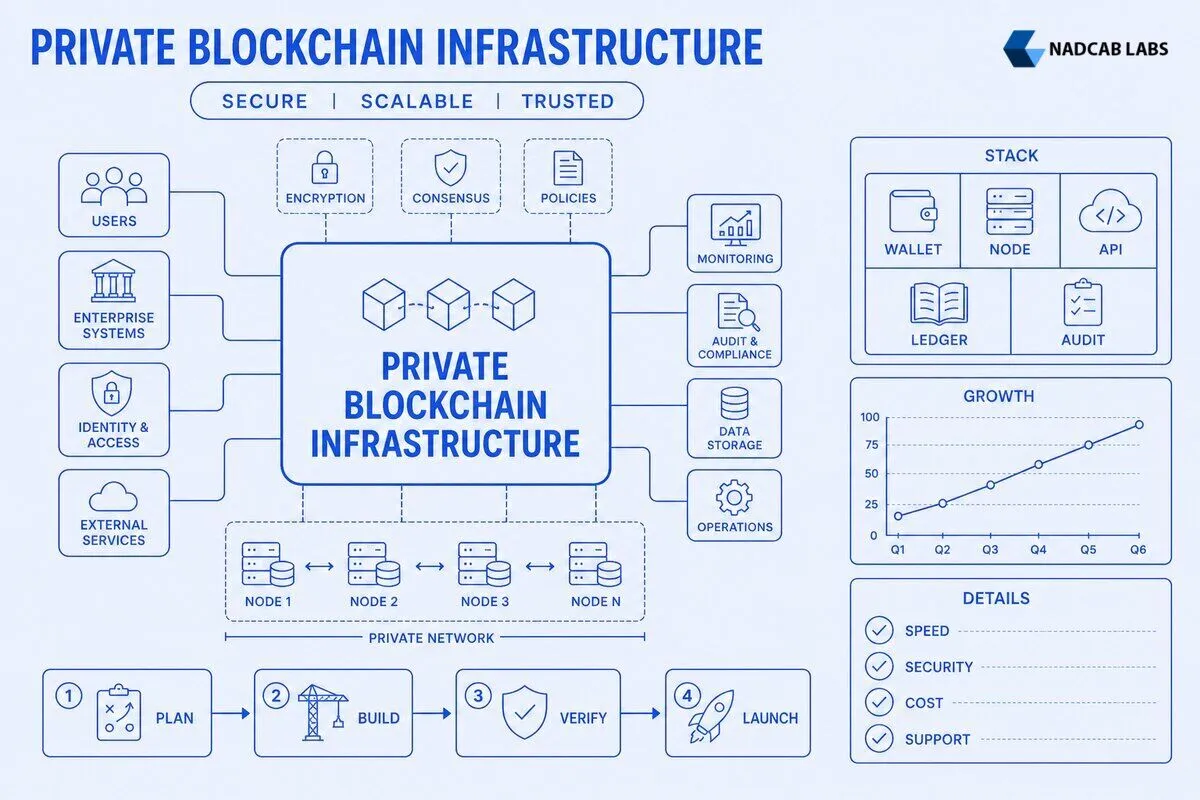
How should teams budget for smart contract development and security audits?
Smart contract development costs vary dramatically based on complexity tiers, ranging from simple asset tracking applications to complex multi-party workflows with intricate business logic. Simple smart contracts implementing basic token transfers, asset registries, or single-party state updates typically require 2-4 weeks of development effort at $120-$200 per hour, totaling $19,000-$32,000 per contract. These contracts involve straightforward logic, minimal state management, and limited integration points, making them suitable for proof-of-concept deployments or simple use cases.
Medium-complexity smart contracts handling multi-party workflows, conditional logic, or external data integration require 6-12 weeks of development, costing $58,000-$96,000 per contract suite. Examples include supply chain tracking with multiple participant roles, escrow systems with time-based release conditions, or trade finance workflows with document verification steps. These contracts require careful state machine design, event emission for off-chain monitoring, and error handling for edge cases. Development costs increase when contracts must integrate with external systems through oracles or API gateways, adding $12,000-$25,000 for integration development and testing.
High-complexity smart contracts implementing sophisticated financial instruments, algorithmic governance, or cross-chain interactions represent the upper tier of development costs at $120,000-$300,000+ per contract suite. These implementations require formal specification documents, extensive unit testing, integration testing across multiple scenarios, and performance optimization for gas efficiency (in gas-based systems) or computational limits. Complex contracts often involve multiple interdependent contracts with upgrade mechanisms, requiring proxy patterns or modular architectures that add 30-50% to base development costs. The dApp development cost breakdown provides additional context for application-layer expenses beyond core smart contract logic.
Smart Contract Development Cost Distribution
Third-party security audits represent essential investments for production smart contract deployments, with costs varying based on audit depth and contract complexity. Basic code review audits examining common vulnerability patterns, logic errors, and best practice violations typically cost $8,000-$20,000 for simple contract suites. These audits provide line-by-line code review, automated vulnerability scanning, and a summary report of findings with severity classifications. While valuable for catching obvious issues, basic audits may miss subtle logic flaws or complex attack vectors.
Comprehensive security audits including manual code review, formal verification, and economic attack modeling cost $30,000-$150,000+ depending on contract complexity and audit firm reputation. Leading audit firms like Trail of Bits, ConsenSys Diligence, or OpenZeppelin conduct multi-week engagements involving multiple security researchers. These audits include threat modeling sessions, formal specification development, automated theorem proving for critical functions, and economic simulation of incentive mechanisms. Organizations deploying contracts managing significant financial value or sensitive data should budget for comprehensive audits, as the cost of post-deployment exploits far exceeds audit expenses.
Formal verification represents the highest tier of smart contract assurance, using mathematical proofs to verify that contract code matches its specification under all possible input conditions. Formal verification costs range from $50,000 to $200,000+ for complex contract systems, requiring specialized expertise in formal methods and theorem proving. While expensive, formal verification provides the strongest security guarantees and is increasingly required for DeFi protocols, custody solutions, and mission-critical enterprise applications. The process typically extends project timelines by 6-10 weeks but eliminates entire classes of vulnerabilities that manual audits might miss.
Post-deployment monitoring tools and automated vulnerability scanning subscriptions provide ongoing security assurance beyond initial audits. Runtime monitoring services that detect anomalous transaction patterns, unexpected state changes, or potential exploit attempts cost $500-$3,000 monthly depending on transaction volume and monitoring complexity. Automated scanning tools that check for newly discovered vulnerability patterns in deployed contracts typically cost $200-$800 monthly per network. Organizations should budget $6,000-$36,000 annually for these continuous security services, which provide early warning of potential issues before they escalate to critical incidents.
Bug bounty programs represent an alternative or complementary approach to traditional audits, offering rewards to security researchers who discover vulnerabilities. Establishing a bug bounty program costs $5,000-$15,000 for platform setup, legal terms, and initial promotion. Organizations typically allocate $25,000-$100,000 in reward budgets for critical vulnerabilities, with payouts ranging from $500 for low-severity issues to $50,000+ for critical exploits. Bug bounties provide continuous security testing and align incentives with the security research community, though they work best as supplements to formal audits rather than replacements.
What ongoing DevOps and maintenance expenses should organizations plan for?
Ongoing DevOps and maintenance expenses often exceed 40% of initial deployment costs annually, making them critical components of total cost of ownership calculations. Organizations must budget for 24/7 monitoring infrastructure, alerting systems, and dedicated incident response capabilities to maintain production blockchain networks. Comprehensive monitoring solutions tracking node health, consensus participation, transaction throughput, and system resource utilization cost $8,000-$25,000 for initial setup and $1,500-$4,500 monthly for monitoring platform subscriptions and data retention.
Dedicated DevOps team allocation represents the largest ongoing expense category. Production blockchain networks require continuous monitoring, performance optimization, and rapid incident response to maintain service level agreements. Organizations typically allocate 2-4 FTE DevOps engineers for networks with 10-20 nodes, costing $240,000-$480,000 annually in fully-loaded labor costs. These engineers handle routine maintenance tasks, respond to alerts, coordinate upgrades, and optimize performance as transaction volumes grow. Consortium blockchains often implement follow-the-sun support models with DevOps teams across multiple time zones, increasing labor costs by 50-80% but providing true 24/7 coverage.
Regular software updates, security patches, and protocol upgrades require careful planning and execution to avoid network disruptions. Major blockchain framework updates occur 2-4 times annually, with each upgrade requiring 40-80 hours of DevOps effort for testing in staging environments, developing rollback procedures, coordinating with consortium members, and executing production deployment. At $150-$250 per hour for senior DevOps engineering, organizations should budget $24,000-$80,000 annually for planned upgrade activities. Emergency security patches require immediate response, often outside business hours, necessitating on-call rotation compensation of $8,000-$15,000 annually per DevOps engineer.
Disaster recovery testing and business continuity planning represent essential but often overlooked maintenance expenses. Organizations should conduct quarterly disaster recovery drills simulating node failures, network partitions, data corruption scenarios, and complete data center outages. Each drill requires 20-40 hours of planning, execution, and post-mortem analysis, totaling $12,000-$40,000 annually for comprehensive DR testing programs. Maintaining hot standby infrastructure for rapid failover doubles compute costs for critical validator nodes, adding $48,000-$96,000 annually to infrastructure expenses for high-availability deployments.
| Maintenance Category | Activities Included | Annual Cost | % of TCO |
|---|---|---|---|
| DevOps Team | 24/7 monitoring, incident response, performance tuning | $240,000 – $480,000 | 42-48% |
| Monitoring Infrastructure | Platform subscriptions, alerting, log aggregation, dashboards | $18,000 – $54,000 | 3-5% |
| Software Updates | Framework upgrades, security patches, testing, deployment | $24,000 – $80,000 | 4-8% |
| Disaster Recovery | Quarterly drills, hot standby infrastructure, backup testing | $60,000 – $136,000 | 10-14% |
| Security Operations | Vulnerability scanning, penetration testing, audit response | $35,000 – $85,000 | 6-9% |
| Capacity Planning | Growth analysis, infrastructure scaling, performance optimization | $15,000 – $45,000 | 3-5% |
| Total Annual Maintenance | $392,000 – $880,000 | 68-89% | |
Security operations extend beyond initial audits to include continuous vulnerability assessment and penetration testing. Organizations should conduct annual penetration tests of their blockchain infrastructure, costing $25,000-$60,000 for comprehensive engagements covering network security, node access controls, API security, and smart contract attack vectors. Quarterly vulnerability scans of all network components cost $2,000-$5,000 per scan, totaling $8,000-$20,000 annually. Responding to security audit findings and implementing recommended fixes typically requires 80-160 hours of development effort annually, costing $15,000-$40,000 depending on finding severity and complexity.
Capacity planning and performance optimization become increasingly important as blockchain networks mature and transaction volumes grow. DevOps teams must continuously monitor transaction throughput trends, block times, and resource utilization to anticipate scaling needs before performance degradation occurs. Quarterly capacity planning analyses examining growth projections, infrastructure scaling options, and optimization opportunities cost $3,000-$8,000 per quarter in consultant or internal engineering time. Implementing scaling improvements such as database optimization, caching layers, or additional node deployment requires $5,000-$20,000 per major optimization initiative.
Backup verification and restoration testing ensure that disaster recovery procedures work when needed. Monthly automated backup verification tests checking backup integrity and restoration times cost $500-$1,500 monthly in automation tool subscriptions and compute resources for test environments. Quarterly full restoration drills simulating complete data loss scenarios require 16-32 hours of DevOps effort, totaling $9,600-$32,000 annually. Organizations managing sensitive data or operating in regulated industries often implement more frequent testing schedules, increasing these costs by 50-100%.
Documentation maintenance and knowledge transfer activities prevent operational knowledge from becoming siloed in individual team members. Maintaining up-to-date runbooks, architecture diagrams, incident response procedures, and operational playbooks requires 10-15% of DevOps team time, effectively adding $24,000-$72,000 to annual labor costs. Regular knowledge transfer sessions, cross-training programs, and documentation reviews ensure team resilience and reduce dependency on individual engineers, which becomes critical as teams scale or experience turnover.
Consortium blockchain maintenance introduces coordination overhead that increases operational costs by 25-40% compared to single-organization deployments. Member organizations must coordinate upgrade schedules, share monitoring data, jointly respond to incidents, and maintain consistent configurations across independently operated nodes. Quarterly consortium coordination meetings, shared incident response drills, and joint capacity planning sessions require dedicated program management, costing $40,000-$80,000 annually. Implementing shared monitoring dashboards and alerting systems that aggregate data across member organizations adds $15,000-$35,000 to initial monitoring infrastructure costs and $2,000-$5,000 to monthly operational expenses.
License and subscription costs for blockchain frameworks, monitoring tools, and security services accumulate to significant annual expenses. Enterprise editions of blockchain frameworks like Hyperledger Fabric or R3 Corda typically include commercial support contracts costing $50,000-$150,000 annually depending on network size and support tier. Monitoring platform subscriptions, log aggregation services, and security scanning tools add $18,000-$54,000 annually. Organizations should budget 8-12% of total operational costs for software licenses and subscriptions, with costs scaling as network complexity and transaction volumes increase. The modular blockchain cost analysis provides additional perspective on component-level expenses that apply to both public and private deployments.
Organizations implementing private blockchain solutions should view maintenance expenses as ongoing investments in network reliability and security rather than optional costs. Underfunding DevOps and maintenance activities leads to technical debt accumulation, increased outage risk, and degraded performance over time. A comprehensive TCO analysis spanning 3-5 years typically shows that initial deployment costs represent only 40-55% of total expenses, with ongoing maintenance, upgrades, and operational support consuming the majority of lifetime costs. Planning for these ongoing expenses from project inception ensures adequate resource allocation and prevents budget surprises as networks mature and scale.
Final Thoughts
Private blockchain deployment cost planning requires comprehensive analysis across infrastructure, development, security, and ongoing operational categories. Organizations should expect total initial deployment investments between $300,000 and $1,200,000 for production-ready enterprise networks, with annual operational costs representing 40-60% of initial deployment expenses. Infrastructure choices around node hosting, storage architecture, and network connectivity drive 35-45% of initial costs, while consensus mechanism selection, permissioning systems, and smart contract development consume the remaining deployment budget. Security audits, formal verification, and continuous monitoring represent essential investments that protect against costly post-deployment exploits and operational failures.
Successful budget planning incorporates realistic timelines, adequate contingency reserves for unexpected complexity, and clear understanding of ongoing maintenance requirements. Organizations should allocate 15-20% contingency budgets for initial deployment and plan for annual operational costs equal to 40-60% of initial investment. Consortium deployments require additional coordination overhead and governance frameworks that increase costs by 25-50% compared to single-organization implementations. By understanding these cost drivers and planning comprehensively across all expense categories, organizations can deploy robust private blockchain networks that deliver long-term value while maintaining predictable total cost of ownership. Working with experienced blockchain development firms provides access to pre-built frameworks, proven architectures, and operational best practices that reduce deployment risk and accelerate time-to-production while optimizing total costs.
Frequently Asked Questions
Q1.What is the average total cost to deploy a private blockchain for a mid-size enterprise?
Mid-size enterprise private blockchain deployment typically ranges from $150,000 to $500,000 for initial setup. This includes infrastructure provisioning ($30,000–$80,000), node configuration, smart contract development ($40,000–$120,000), security audits ($25,000–$75,000), integration work, and three months of operational costs. Ongoing annual expenses add $60,000–$150,000 for maintenance, hosting, and support depending on network complexity and transaction volume.
Q2.How much does it cost to run validator nodes in a private blockchain network monthly?
Running validator nodes costs $800–$3,500 monthly per node depending on configuration. Cloud-hosted enterprise-grade validators (8–16 vCPUs, 32–64GB RAM) run $1,200–$2,000 monthly each. A typical four-node network costs $4,800–$8,000 monthly. On-premises hardware reduces recurring costs but requires $8,000–$15,000 upfront per server plus maintenance, power, and staffing expenses that often exceed cloud economics.
Q3.What percentage of private blockchain budget should be allocated to security audits?
Allocate 15–25% of total deployment budget to security audits and penetration testing. For a $300,000 project, budget $45,000–$75,000 for comprehensive smart contract audits ($20,000–$40,000), infrastructure security reviews ($15,000–$25,000), and ongoing quarterly assessments. Critical financial or healthcare applications may require 30% allocation. Skimping on audits creates vulnerabilities that cost exponentially more to remediate post-deployment.
Q4.How do consortium blockchain costs differ from single-organization private deployments?
Consortium blockchains cost 40–70% more than single-organization deployments due to governance complexity. Shared infrastructure reduces per-participant costs but adds coordination overhead, multi-party consensus mechanisms, and legal frameworks. A four-member consortium might spend $400,000–$800,000 collectively versus $200,000–$350,000 for solo deployment. However, per-organization costs drop to $100,000–$200,000 when shared, plus ongoing governance and arbitration expenses.
Q5.What are the hidden costs in private blockchain deployment that teams often overlook?
Overlooked costs include data migration ($15,000–$50,000), legacy system integration ($30,000–$80,000), staff training ($10,000–$25,000), regulatory compliance documentation ($20,000–$60,000), disaster recovery infrastructure (20% of hosting costs), and change management. Transaction monitoring tools, backup storage, API gateway fees, and third-party oracle services add $2,000–$8,000 monthly. Budget 25–35% contingency for these hidden elements.
Q6.How can organizations reduce private blockchain infrastructure costs without compromising security?
Use containerization (Docker/Kubernetes) to reduce infrastructure by 30–40%, implement auto-scaling for dynamic workloads, and leverage spot instances for non-critical nodes saving 50–70% on compute. Choose proven frameworks like Hyperledger Fabric over custom development. Start with three validators instead of five, use managed blockchain services (AWS/Azure) eliminating DevOps overhead, and implement incremental security audits. Open-source monitoring tools replace expensive enterprise solutions.
Explore Services
Related Services
Reviewed by

Aman Vaths
Founder of Nadcab Labs
Aman Vaths is the Founder & CTO of Nadcab Labs, a global digital engineering company delivering enterprise-grade solutions across AI, Web3, Blockchain, Big Data, Cloud, Cybersecurity, and Modern Application Development. With deep technical leadership and product innovation experience, Aman has positioned Nadcab Labs as one of the most advanced engineering companies driving the next era of intelligent, secure, and scalable software systems. Under his leadership, Nadcab Labs has built 2,000+ global projects across sectors including fintech, banking, healthcare, real estate, logistics, gaming, manufacturing, and next-generation DePIN networks. Aman’s strength lies in architecting high-performance systems, end-to-end platform engineering, and designing enterprise solutions that operate at global scale.