Ai Overview
Digital transformation now extends beyond its previous boundaries which included only automation and cloud migration. Enterprises today work to establish trust while maintaining transparency and enabling real-time collaboration throughout their intricate business networks. Prioritize use cases by ROI potential and implementation feasibility to create a focused starting point that demonstrates value quickly.
Blockchain Integration with ServiceNow: Transforming Enterprise Workflows
Digital transformation now extends beyond its previous boundaries which included only automation and cloud migration. Enterprises today work to establish trust while maintaining transparency and enabling real-time collaboration throughout their intricate business networks. The implementation of Blockchain Integration with ServiceNow establishes an effective strategic advantage for this situation. Organizations gain new security, compliance, and operational efficiency solutions which result from combining ServiceNow workflow automation with blockchain technology, which provides decentralized and unchangeable ledger systems that form the backbone of next-generation enterprise infrastructure.
Blockchain technology is being adopted by businesses in every industry to create more trustworthy and transparent enterprise systems. The combination of ServiceNow with this system creates three core benefits which include protection against record tampering, automated execution of smart contracts, and reliable verification processes that operate without the need for centralized oversight or intermediary validation. These capabilities are particularly valuable in multi-vendor environments where trust between parties cannot be assumed and must be cryptographically enforced.
With over eight years of experience implementing enterprise technology solutions across the USA, UK, UAE, and Canada, our team has observed firsthand how Blockchain Integration with ServiceNow is reshaping the way organizations manage Snowflake implementation services, vendor relationships, compliance obligations, and cross-enterprise collaboration. This comprehensive guide explains how blockchain technology works with ServiceNow through its real-world use cases, architectural methods, benefits, challenges, and strategies for implementation in forward-thinking companies.
Understanding Blockchain Technology in Enterprise Context
Before studying how Blockchain Integration with ServiceNow operates in practice, it is essential to understand what blockchain brings to the enterprise technology landscape. Blockchain functions as a distributed ledger technology which records transactions through its decentralized system that maintains data integrity using cryptographic security measures. Unlike standard centralized database systems, blockchain establishes its security through a combination of architectural principles that fundamentally change how trust is established and maintained across organizational boundaries.
Enterprises can use blockchain technology for far more than cryptocurrency purposes. It provides secure solutions for supply chain tracing, digital identity authentication, compliance control, and secure data distribution across partner networks. Blockchain technology improves trust levels between organizations while its operational capacity increases transparency through its integration with enterprise workflow platforms like ServiceNow, making it a transformative layer in any serious enterprise digital strategy.
Immutability
The system prevents alteration of data records once they are written to the distributed ledger, creating a permanent and verifiable history.
Transparency
The system provides complete visibility of all changes made to network participants, enabling real-time verification without central authority.
Smart Contracts
The system uses smart contracts to execute business processes automatically when predefined conditions are met without manual intervention.
Decentralization
The system enables organizations to function without needing outside parties, reducing dependency on intermediaries and single points of failure.
Overview of the ServiceNow Platform
ServiceNow is the enterprise workflow backbone that blockchain transforms from a centralized system into a decentralized trust engine.
The ServiceNow platform is widely recognized for digital workflow automation. The platform provides organizations with a unified cloud-based system that enables them to handle IT services, HR processes, customer service, blockchain security operations, and many other enterprise functions through a single integrated interface. It is the operational core of thousands of enterprise IT organizations across the USA, UK, UAE, and Canada, and its workflow automation capabilities make it the ideal platform for blockchain enhancement. ServiceNow functions primarily using centralized database systems which enable efficient governance and audit functions but lack the ability to establish decentralized trust systems and create tamper-proof records which multiple external organizations can independently access and verify.
Why Enterprises Need Blockchain Integration with ServiceNow
Modern enterprises face a growing set of operational challenges that traditional centralized systems are increasingly ill-equipped to handle. Managing collaborations which involve multiple parties from different vendor and partner organizations creates trust gaps that generate disputes, delays, and reconciliation costs. Regulatory compliance requirements have intensified across all major markets including the USA, UK, UAE, and Canada, demanding more rigorous documentation and audit trail standards than centralized IT systems can reliably provide. The cross-organization trust and audit verification processes that define complex enterprise operations create difficulties which blockchain-powered ServiceNow integration resolves by making trust a technical property rather than a contractual assumption.
📋 Tamper-Proof Records
Authentication through records that cannot be modified after creation, providing a reliable source of truth for all parties involved in enterprise workflows.
🔁 Cross-Org Verification
Enterprise systems need to establish data verification connections between different organizational units without exposing sensitive internal information to external parties.
🤖 Contract Automation
Automatic contract fulfillment through smart contracts ensures that all service level agreement requirements are met through their complete performance without manual oversight.
🛡 Digital Identity
Digital identities need protection through secure management systems that prevent fraud while enabling legitimate parties to verify their credentials across organizational boundaries.
How Blockchain Can Integrate with ServiceNow
Three distinct architectural approaches enable organizations to implement blockchain technology within their ServiceNow environments at different levels of complexity and capability.
Use Cases of Blockchain in ServiceNow Platform
Six high-value application areas where blockchain transforms ServiceNow operations across enterprise environments.
The practical applications of Blockchain Integration with ServiceNow span every major enterprise function, from IT operations to financial contract management. Each use case addresses a specific trust or transparency challenge that traditional ServiceNow configurations cannot resolve independently. Our team has identified and implemented these use cases across clients in the USA, UK, UAE, and Canada, consistently finding that the highest ROI comes from applications where multiple parties need to share verified data without a central trusted intermediary managing the record of truth.
IT Service Management
Blockchain for IT service management creates permanent records of incident timestamps, verifies SLA compliance metrics, increases vendor accountability, and ensures all audit records remain protected against unauthorized modification. Managed service providers maintain client trust through complete operational visibility verified on-chain.
Vendor and Contract Management
Smart contracts automate vendor onboarding, verify compliance document authenticity, monitor progress toward project goals, and initiate payments without human intervention. Organizations decrease litigation risk and eliminate manual payment verification processes across complex multi-vendor supply chains.
Asset Lifecycle Tracking
Blockchain stores essential asset lifecycle events including procurement, deployment, maintenance, transfer, and decommission. ServiceNow Asset Management benefits from blockchain integration which creates tamper-proof records needed by regulated industries such as healthcare and finance across global operations.
🛡 Cybersecurity Incident Logging
Cybersecurity investigations require reliable audit trails. Blockchain provides a secure method to store hash values of security incidents, log entries, and forensic evidence. The system guarantees that all logs remain intact and verifiable for use in legal proceedings and regulatory investigations.
📋 Compliance and Audit Management
Companies in regulated industries require permanent record-keeping which blockchain provides. ServiceNow workflows automatically create blockchain records for essential compliance checkpoints including risk assessments, audit documentation, compliance certifications, and regulatory reporting submissions.
👤 Digital Identity Verification
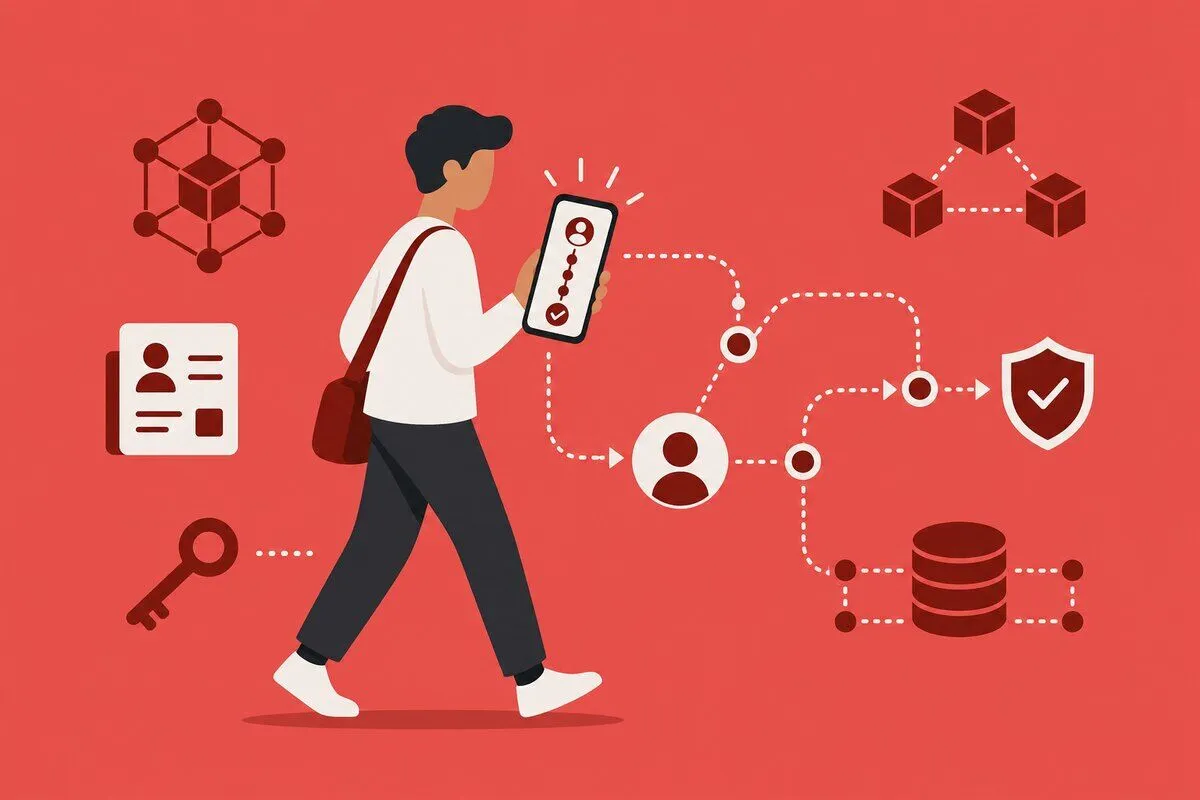
Blockchain-based identity systems validate employee credentials, vendor certifications, customer identity, and access privileges. The system provides secure access control together with decreased identity fraud when implemented within ServiceNow’s user management and access governance workflows.
Architecture of ServiceNow Blockchain Integration
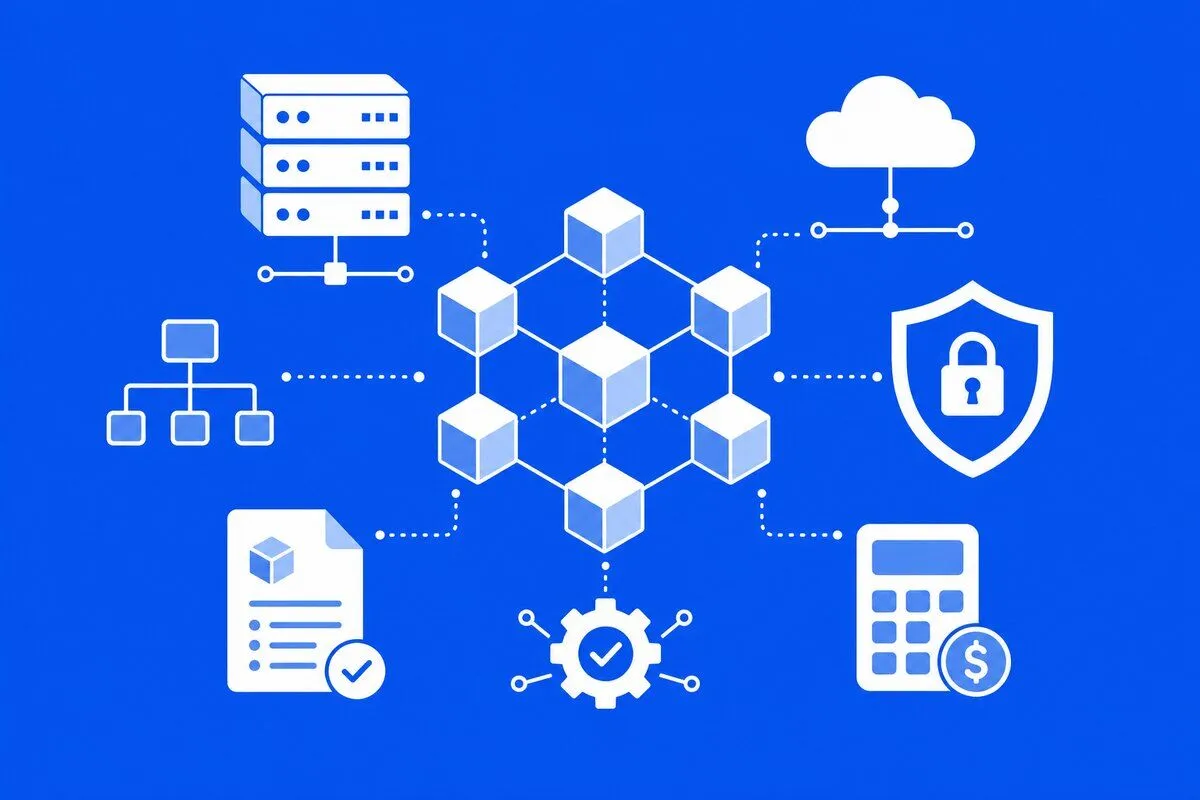
The architecture of Blockchain Integration with ServiceNow is designed to ensure secure, scalable, and efficient enterprise workflows. A well-structured framework typically includes five distinct layers that each serve a specific purpose in the overall system design. Understanding these layers is essential for enterprises planning a serious implementation that can scale with organizational growth and evolving regulatory requirements across markets in the USA, UK, UAE, and Canada.
ServiceNow Platform Layer
The core workflow engine handles IT service management together with asset management and operational processes. This is where use cases are initiated and where user interactions with the blockchain-enhanced system occur through familiar ServiceNow interfaces.
Integration Layer
An API gateway or middleware that enables seamless communication between ServiceNow and the blockchain network. The system enables secure data transfer together with event verification within the enterprise environment, acting as the trusted bridge between centralized and decentralized systems.
Blockchain Network Layer
A private or consortium blockchain that records validated transactions. The system establishes immutability, transparency, and trust between participants through cryptographic validation that no single party can manipulate or override without network consensus.
Smart Contract Layer
The system automates predefined rules which include SLA validation, vendor payments, and incident confirmations. Smart contracts execute deterministically when trigger conditions are met, eliminating manual processing delays and reducing human error in critical enterprise workflows.
Off-Chain Storage Layer
The system protects sensitive data through storage in secure enterprise databases while using hash references that remain on-chain for verification. This hybrid architecture maintains data integrity together with compliance requirements and high-performance operation without exposing confidential records to network participants.
Technical Considerations for Successful Implementation
Successful Blockchain Integration with ServiceNow ITSM requires organizations to develop technical plans that will protect their systems while enabling them to grow and maintain operational efficiency. The technical decisions made during the planning phase directly determine the security, performance, and long-term viability of the integrated system. Organizations that skip thorough technical planning often encounter costly performance issues, security vulnerabilities, or compliance gaps that require expensive remediation after go-live. Our experience across enterprise implementations in the UAE and UK consistently shows that upfront technical planning prevents the majority of post-launch issues.
Blockchain Network Selection
The selection of an appropriate framework is essential for successful integration. Organizations choose private key and consortium blockchains because they want to maintain control over their operations while protecting private information through secure collaborative methods that support governance requirements.
Scalability and Performance
Organizations should use a hybrid blockchain model where validation hashes are stored on-chain while operational high-volume data remains off-chain. This keeps enterprise workflows fast and prevents latency issues that would degrade the user experience during peak transaction periods.
Security and Encryption
Implementation requires strong encryption methods, secure API authentication, and role-based access control. The system achieves better security through safe key management practices and protected node hosting procedures that prevent unauthorized access to blockchain data or transaction signing capabilities.
Smart Contract Governance
Organizations must carry out complete testing and auditing procedures for smart contracts before deployment. Governance protocols must define procedures for handling contract updates, node operations, and user access rights to prevent unauthorized changes from disrupting automated enterprise workflow operations.
Compliance and Data Privacy
The organization must use applicable regulatory standards to determine data storage methods. Sensitive data must be stored off-chain in compliance with privacy regulations while blockchain technology provides permanent verification hashes that satisfy audit requirements across all target jurisdictions.
Comparing Traditional ITSM vs Blockchain-Enabled ITSM
The operational difference between traditional IT service management and blockchain-enabled ITSM is not merely technical. It represents a fundamental shift in how trust, transparency, and accountability are engineered into enterprise operations. Traditional ITSM relies on centralized databases and manual processes that are prone to disputes, manipulation, and reconciliation errors. Blockchain-enabled ITSM replaces these trust assumptions with cryptographic certainty, creating an environment where every action is verifiable, every record is permanent, and every party operates from the same source of truth.
| Aspect | Traditional ITSM | Blockchain-Enabled ITSM |
|---|---|---|
| Data Storage | Centralized database maintained by a single organization | Decentralized ledger accessible to all participants, immutable by design |
| Transparency | Limited cross-party visibility | High transparency with verifiable records for all network participants |
| Audit Trail | Editable logs with administrative access vulnerabilities | Tamper-proof, cryptographically secured and immutable records |
| SLA Management | Manual tracking and dispute resolution processes | Automated SLA validation via smart contracts with instant enforcement |
| Vendor Management | Relies on manual reconciliation between parties | Real-time validation and automated vendor payments on delivery |
| Security | Depends entirely on internal controls and access policies | Enhanced trust with decentralized cryptographic validation |
| Dispute Resolution | Time-consuming and heavily document-dependent | Faster resolution through immutable proof accessible to all parties |
| Trust Model | Trust based on contractual agreements only | Trust enforced by blockchain protocol and cryptographic consensus |
⚠
Challenges in Blockchain Integration with ServiceNow
Enterprises can achieve significant advantages through Blockchain Integration with ServiceNow, but organizations need to overcome multiple obstacles during this process. Understanding these challenges in advance enables enterprise teams to build mitigation strategies into their implementation roadmap rather than encountering them as surprises after launch. From our experience with clients across the USA, UK, UAE, and Canada, we have identified seven challenges that most consistently affect implementation timelines, budgets, and outcomes for organizations attempting this integration without adequate preparation.
| Challenge | Impact | Recommended Approach |
|---|---|---|
| Integration Complexity | High | Establish complete interface standards linking APIs, middleware, and blockchain technologies early in project planning |
| Scalability Limitations | Medium | Design hybrid on-chain/off-chain architecture to prevent delays during periods of high transaction activity |
| Data Privacy Risks | High | Plan off-chain storage for sensitive data with on-chain hash verification to satisfy privacy and audit requirements simultaneously |
| Smart Contract Vulnerabilities | Critical | Mandate independent third-party security audits for all smart contracts before production deployment without exception |
| Skill Gaps | Medium | Engage experienced blockchain consulting partners alongside internal training programs for long-term capability building |
| Change Management Resistance | Medium | Invest in executive sponsorship, team communication, and phased rollout to build confidence in decentralized processes progressively |
| Governance and Control | Medium | Define node ownership, contract update procedures, and access rights in a formal governance framework before go-live |
Blockchain Integration Implementation Lifecycle
A structured eight-phase approach for enterprises implementing Blockchain Integration with ServiceNow across their operations.
Strategic Use Case Assessment
Assess business workflows to identify where blockchain delivers measurable value such as SLA automation, vendor validation, or compliance tracking. Prioritize use cases by ROI potential and implementation feasibility to create a focused starting point that demonstrates value quickly.
Architecture and Framework Selection
Design ServiceNow blockchain integration models which can scale operations through selection of suitable blockchain networks and creation of on-chain and off-chain execution plans. Define the integration approach, API strategy, and middleware requirements based on organizational complexity and data volume.
Governance Framework Establishment
Define node governance frameworks together with access management controls and standards for regulatory compliance. Establish clear ownership of smart contract updates, node operations, and incident response procedures before any technical implementation work begins.
Secure Smart Contract Design
Build smart contracts for the identified use cases with security as the primary design principle. Conduct thorough unit testing, integration testing, and third-party security audits before any contract is deployed to a production or staging environment accessible to external parties.
ServiceNow Workflow Integration
Connect ServiceNow workflows to the blockchain layer through APIs or middleware, ensuring that relevant workflow events trigger the correct blockchain writes and that blockchain confirmations update ServiceNow records in real time without disrupting existing user processes or service continuity.
Security Testing and Compliance Validation
Conduct comprehensive penetration testing of the integrated system, validate that data privacy requirements are met through off-chain storage strategies, and confirm that the implementation satisfies all applicable regulatory requirements for each target jurisdiction before go-live authorization.
Phased Production Rollout
Deploy the integration in phases, starting with the highest-priority use case and lowest-risk workflows. Monitor performance, user adoption, and blockchain confirmation times closely during initial rollout and resolve any issues before expanding to additional use cases and organizational units.
Continuous Monitoring and Optimization
Establish ongoing monitoring of blockchain node health, smart contract performance, API latency, and compliance status. Continuously optimize the integration based on operational data, evolving regulatory requirements, and expanding use case needs as the organization’s blockchain maturity grows over time.
Role of Blockchain Consulting and Implementation Experts
The process of Blockchain Integration with ServiceNow needs more than technical connections between systems. It requires proper planning, secure system architecture, and delivery through enterprise-level processes that account for organizational complexity, regulatory requirements, and long-term scalability goals. Blockchain consulting and implementation experts provide the strategic guidance, technical depth, and governance expertise that internal teams often lack when approaching this integration for the first time. Organizations in the USA and UK that engage experienced partners consistently achieve faster time-to-value and fewer post-launch issues than those attempting implementation with internal resources alone.
Strategic Use-Case Identification
Experts assess business workflows to determine where blockchain delivers measurable value through SLA automation, vendor validation, or compliance tracking that justifies implementation investment.
Architecture and Framework Selection
Professionals design integration models that scale operations through selection of suitable blockchain networks and creation of optimized on-chain and off-chain execution plans.
Secure Smart Contract Design
Consultants ensure smart contracts operating in ServiceNow environments undergo third-party audits and that API and integration systems are protected against known attack vectors.
Governance and Compliance Advisory
Specialists develop node governance frameworks, access management controls, and regulatory compliance standards that enable blockchain adoption lasting over the long term.
Future of Blockchain in ServiceNow Platform
The future of Blockchain Integration with ServiceNow systems will build trustworthy automated security systems for complete enterprise environments. Organizations will use blockchain technology to enhance their workflow automation systems which operate within the ServiceNow platform to meet growing demands for transparency and inter-organizational collaboration. As AI, DeFi, and regulatory technology converge with enterprise ITSM platforms, the organizations that have already invested in blockchain-ServiceNow integration will have a significant architectural advantage over those beginning the journey later. Key future developments are already emerging across enterprise technology markets in the USA, UK, UAE, and Canada.
AI and Blockchain Analytics
Organizations will combine AI analytics with blockchain-based workflows to achieve better decision-making processes through pattern recognition across immutable historical transaction records.
Decentralized Identity
The decentralized identity framework will expand for enhancing access control and cybersecurity across enterprise systems, replacing vulnerable centralized identity management approaches.
Cross-Enterprise Interoperability
Sustained adoption of ServiceNow blockchain integration in vendor contract management and SLA enforcement will enable seamless cross-enterprise collaboration at unprecedented scale.
Real-Time Compliance Monitoring
Organizations will monitor compliance status through permanent audit records across entire international business activities, enabling continuous regulatory readiness without periodic audit scrambles.
Decentralized Governance and Control
The Blockchain Integration with ServiceNow establishes a governance system which allows all stakeholders to verify workflows through secure methods without depending on a single central authority. The system verifies all approvals, changes, and transactions through collective verification which creates permanent records that cannot be altered by any single party.
Shared control across departments and vendors
Distributed authority with cryptographic accountability for all parties
Transparent decision-making with immutable audit records
Every governance decision permanently recorded and verifiable by authorized parties
Reduced dependency on intermediaries
Protocol-enforced trust replaces costly third-party verification services
Stronger accountability through distributed validation
Network consensus prevents unilateral changes to records or contract terms
Conclusion: Building the Decentralized Enterprise
The Blockchain Integration with ServiceNow technology enables businesses to create automated workflows that operate as secure, verifiable digital systems. The ongoing digital transformation of industries will lead to decentralized validation systems and smart contract automation solutions which will transform enterprise service management in the upcoming years. Organizations that invest in this integration now are not simply adopting a new technology; they are fundamentally redesigning the trust architecture of their enterprise operations to meet the demands of a more complex, distributed, and regulated business world.
For enterprises in the USA, UK, UAE, and Canada managing complex multi-vendor relationships, navigating stringent regulatory requirements, and seeking operational efficiencies that centralized systems cannot deliver, Blockchain Integration with ServiceNow represents a high-ROI strategic investment. The combination of ServiceNow’s proven workflow automation capabilities with blockchain’s immutability, transparency, and smart contract automation creates a uniquely powerful platform for the next generation of enterprise service management.
With the right architectural approach, experienced implementation partners, and a phased rollout strategy that prioritizes quick wins and manages change carefully, any enterprise can successfully navigate the technical and organizational challenges of this integration and emerge with a significantly stronger, more trustworthy, and more efficient operational foundation.
Strategic Takeaway
Blockchain Integration with ServiceNow is not a future concept. It is a deployable, proven architecture that leading enterprises are implementing today to create tamper-proof operations, automated compliance, and decentralized trust across their global business networks. The question is not whether your organization should explore this integration, but how quickly you can begin building the foundation that your competitors are already laying.
Frequently Asked Questions
Q1.What is Blockchain Integration with ServiceNow?
The process establishes connections between ServiceNow workflows and blockchain networks which enable secure and unchangeable decentralized transaction verification.
Q2.How does ServiceNow blockchain integration improve ITSM?
The system provides complete visibility of operations while creating permanent incident records which automatically controls service level agreements and decreases conflicts across multiple vendor systems.
Q3.Is blockchain suitable for all ServiceNow workflows?
Not all workflows require blockchain. The system works best when there is a need to establish trust and maintain audit records while multiple parties need to verify information.
Q4.Which blockchain framework is best for enterprise integration?
Private and consortium blockchains which include Hyperledger Fabric have become the preferred choice for businesses that need to use enterprise-level systems.
Q5.Can blockchain slow down ServiceNow performance?
The system introduces latency when its design fails to meet requirements. The system achieves maximum performance through its hybrid on-chain/off-chain system.
Q6.What are the key benefits of Blockchain Integration with ServiceNow?
Blockchain Integration with ServiceNow improves transparency, security, and trust in enterprise workflows. It creates tamper-proof records, automates service-level agreements using smart contracts, reduces fraud risks, and enables better collaboration between multiple organizations working within the same service ecosystem.
Q7.How can smart contracts work with ServiceNow workflows?
Smart contracts can automatically execute predefined business rules when specific conditions are met. When integrated with ServiceNow workflows, they can trigger actions such as SLA validation, vendor payments, incident confirmations, and asset ownership transfers without requiring manual intervention.
Q8.What industries can benefit from Blockchain Integration with ServiceNow?
Industries such as finance, healthcare, supply chain, logistics, insurance, and government can benefit greatly from Blockchain Integration with ServiceNow. These sectors require secure record management, transparent collaboration, and reliable audit trails across multiple stakeholders.
Q9.What are the security advantages of integrating blockchain with ServiceNow?
Blockchain adds an additional layer of security by creating immutable transaction records and decentralized verification. When integrated with ServiceNow, it ensures that sensitive workflow data cannot be altered, improving cybersecurity, data integrity, and compliance management.
Q10.What challenges should organizations consider before implementing Blockchain Integration with ServiceNow?
Organizations should evaluate integration complexity, blockchain scalability, smart contract security, and regulatory compliance. Proper planning, selecting the right blockchain framework, and working with experienced blockchain developers can help ensure a smooth and secure implementation.
Explore Services
Related Services
Reviewed by

Aman Vaths
Founder of Nadcab Labs
Aman Vaths is the Founder & CTO of Nadcab Labs, a global digital engineering company delivering enterprise-grade solutions across AI, Web3, Blockchain, Big Data, Cloud, Cybersecurity, and Modern Application Development. With deep technical leadership and product innovation experience, Aman has positioned Nadcab Labs as one of the most advanced engineering companies driving the next era of intelligent, secure, and scalable software systems. Under his leadership, Nadcab Labs has built 2,000+ global projects across sectors including fintech, banking, healthcare, real estate, logistics, gaming, manufacturing, and next-generation DePIN networks. Aman’s strength lies in architecting high-performance systems, end-to-end platform engineering, and designing enterprise solutions that operate at global scale.