Ai Overview
Elon Musk’s transformation of X into a comprehensive financial services platform represents one of the most ambitious pivots in social media history. The differentiation extends to revenue models and competitive dynamics. While Robinhood relies heavily on payment for order flow and Coinbase charges percentage-based trading fees, X can subsidize trading costs through its existing subscription revenue and advertising business.
Key Takeaways
- X’s trading platform merges social media engagement with brokerage services, creating an unprecedented ecosystem where market sentiment and trade execution coexist seamlessly.
- The platform will require extensive regulatory approvals across multiple jurisdictions including FINRA, SEC, FCA, and state money transmitter licenses before launch.
- X’s existing 500+ million user base provides instant distribution advantages that traditional brokers spent years building through customer acquisition campaigns.
- Integration with X’s verified identity system streamlines KYC processes, potentially reducing onboarding friction compared to standalone trading platforms requiring separate verification.
- Cryptocurrency trading serves as the foundation for X’s broader financial services strategy, enabling 24/7 markets and programmable money features.
- The platform must implement institutional-grade custody solutions combining hot wallets for liquidity with cold storage for asset security and regulatory compliance.
- Real-time market data integration within X’s social feed creates unique opportunities for sentiment analysis and social-driven investment strategies.
- Revenue diversification beyond advertising could fundamentally reshape X’s business model through trading commissions, premium features, and payment processing fees.
- Competition with Robinhood and Coinbase will center on user experience, trading costs, and the unique value of integrated social features.
- Security architecture must address both traditional financial threats and cryptocurrency-specific vulnerabilities including private key management and smart contract risks.
How Elon Musk’s X Trading Platform Will Actually Work
Elon Musk’s transformation of X into a comprehensive financial services platform represents one of the most ambitious pivots in social media history. The trading functionality will integrate directly into X’s existing interface, allowing users to view real-time market data, execute trades, and manage portfolios without leaving the app. This infrastructure builds upon X’s payment processing capabilities, which already handle subscription fees and creator monetization. The Crypto Exchange functionality will coexist alongside traditional stock trading, creating a unified marketplace accessible to X’s global user base across the USA, UK, UAE, and Canada.
The technical architecture requires integration with multiple financial market infrastructures. For stock trading, X must connect to traditional clearinghouses, market data providers, and broker-dealer networks. Crypto and Stock Trading demands different infrastructure including blockchain node operations, liquidity pool connections, and custodial wallet systems. Users will access trading features through dedicated sections within the X app, with real-time price feeds appearing alongside social content. The platform’s design prioritizes seamless transitions between consuming market information, discussing trades with other users, and executing transactions through the same interface.
What Makes X’s Crypto and Stock Trading Model Different?
Traditional brokerage platforms operate in isolation from social networks, forcing users to gather information on one platform and execute trades on another. X’s model eliminates this friction by embedding trading capabilities directly within the social graph. When influential market analysts post insights, followers can immediately act on that information without switching applications. This integration creates powerful network effects where trading activity generates more engagement, which in turn attracts more traders. The model also leverages X’s verified identity system, potentially streamlining the KYC process that typically creates onboarding friction on standalone platforms.
The differentiation extends to revenue models and competitive dynamics. While Robinhood relies heavily on payment for order flow and Coinbase charges percentage-based trading fees, X can subsidize trading costs through its existing subscription revenue and advertising business. This financial flexibility enables aggressive pricing strategies that undercut established competitors. The platform can also monetize unique features like premium market data subscriptions, exclusive trading signals from verified experts, and priority customer support tiers. Furthermore, X’s global reach allows simultaneous launches across multiple markets, whereas traditional brokers typically expand geographically over years through regulatory approvals in each jurisdiction.
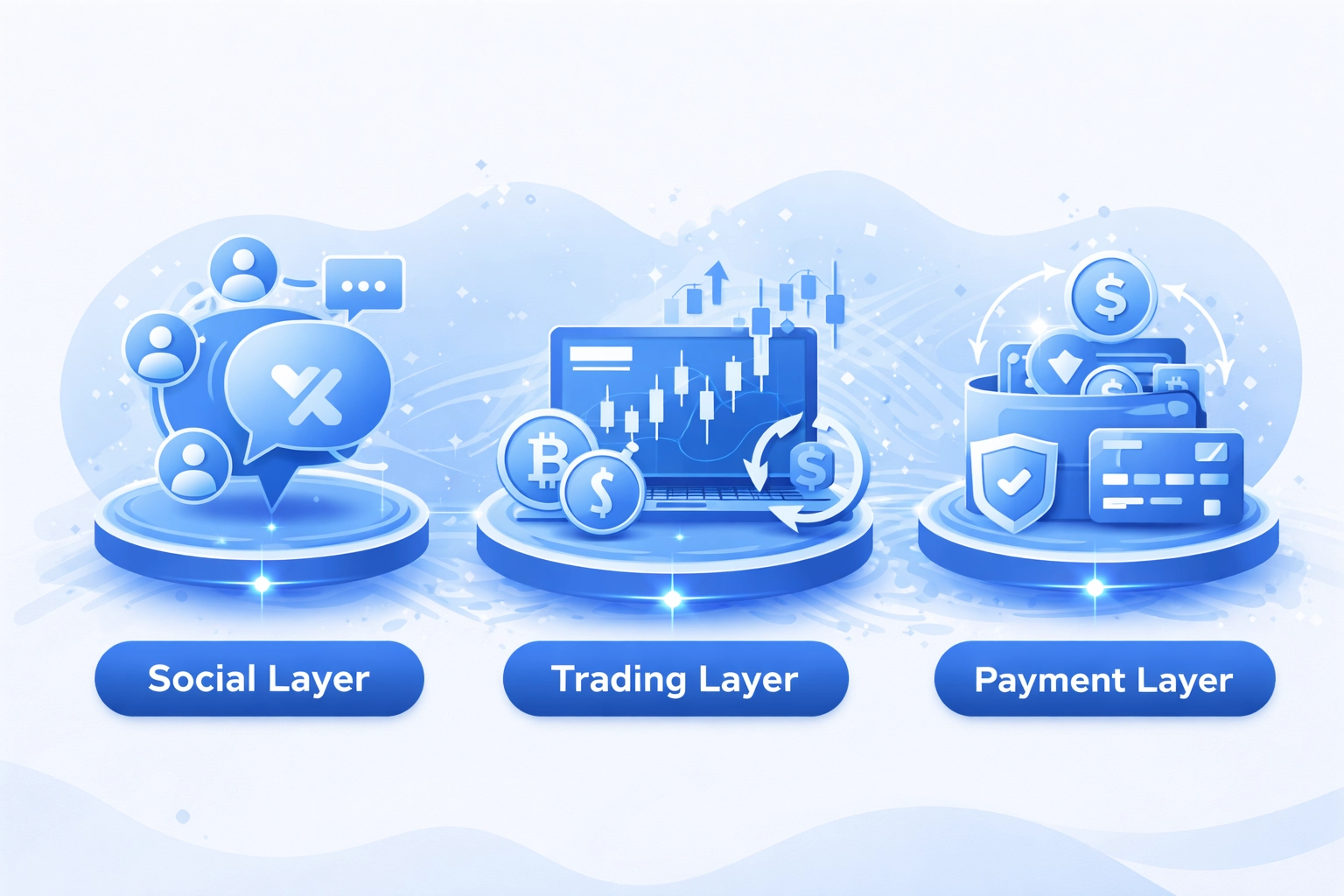 X Trading Platform Integration Layers
Social Layer
- Real-time market sentiment analysis from user posts
- Trading signal sharing between verified analysts
- Portfolio performance social sharing features
- Community-driven investment research collaboration
Trading Layer
- Order execution through traditional and Crypto and Stock Trading
- Real-time portfolio tracking and performance analytics
- Advanced order types including limit and stop orders
- Cross-asset trading between stocks and Crypto and Stock Trading
Payment Layer
- Instant deposits through existing X payment rails
- Stablecoin settlement for cross-border transactions
- Integrated wallet for Crypto and Stock Trading and fiat balance management
- Automated tax reporting and transaction documentation
Why X’s Trading Launch Could Disrupt Retail Investing
Market disruption potential stems from X’s ability to attack incumbent weaknesses while leveraging unique structural advantages. Traditional brokers struggle with customer acquisition costs exceeding $200 per account, while X’s embedded distribution reduces this to near zero. The platform’s existing engagement mechanisms, including notifications and algorithmic timeline placement, create natural touchpoints for trading prompts that standalone apps cannot replicate. When market volatility spikes, X can surface trading opportunities directly in user feeds alongside relevant news and analysis, converting passive observers into active participants during high-volume periods.
The disruption extends beyond user acquisition into fundamental market structure changes. Social trading features enable sophisticated investors to build followings and monetize their expertise through subscription services or performance fees on copied trades. This creates new revenue streams for skilled traders while providing retail investors access to professional-grade strategies. The platform can also aggregate order flow from its user base to negotiate better execution pricing or internalize trades, potentially improving price discovery compared to fragmented retail brokerage markets. Markets in the USA, UK, Canada, and UAE all present different regulatory environments that X must navigate, but the core value proposition of integrated social trading remains consistent across jurisdictions.
How Payments, Wallets, and Trading Will Integrate on X
| Integration Component | Functionality | User Benefit | Technical Requirement |
|---|---|---|---|
| Unified Wallet System | Single balance for fiat, Crypto and Stock Trading, and securities | Simplified fund management across asset classes | Multi-currency accounting with real-time conversion |
| Instant Deposit Rails | ACH, wire, card, and Crypto and Stock Trading deposits | Immediate trading capability without settlement delays | Banking partnerships and payment processor integration |
| Cross-Asset Swaps | Direct conversion between stocks and Crypto and Stock Trading | Portfolio rebalancing without multiple transactions | Atomic swap protocols with price oracle integration |
| Payment Integration | Spend trading profits on X subscriptions/services | Closed-loop ecosystem increasing platform stickiness | Internal ledger system with compliance tracking |
| Withdrawal Options | Bank transfer, crypto transfer, or hold in wallet | Flexibility in accessing and moving funds | Blockchain node infrastructure for Crypto and Stock Trading withdrawals |
The wallet architecture must balance convenience with security and regulatory compliance. Users need frictionless access to funds for trading while maintaining segregation between different asset types for legal and accounting purposes. The system will likely employ a hub-and-spoke model where a master wallet coordinates sub-accounts for stocks, cryptocurrencies, and cash equivalents. Smart routing logic determines optimal paths for transactions, automatically converting assets when necessary while minimizing fees and settlement times. This infrastructure supports advanced features like automatic dividend reinvestment, recurring Crypto and Stock Trading purchases, and algorithmic rebalancing strategies.
X Trading Platform Launch Lifecycle
Regulatory Filing
Submit broker-dealer applications to FINRA, SEC, FCA, and relevant authorities in target markets including USA, UK, Canada, and UAE.
Infrastructure Build
Construct trading engine, custody systems, market data feeds, and integration with clearinghouses and blockchain networks.
Beta Testing
Limited rollout to verified users for testing trading execution, wallet functionality, and social integration features.
Phased Launch
Gradual expansion starting with Crypto and Stock Trading, followed by stock trading as regulatory approvals complete in each jurisdiction.
Feature Expansion
Add advanced order types, margin trading, options, derivatives, and premium subscription tiers for professional traders.
Social Integration
Launch social trading features including copy trading, performance sharing, and verified trader credentialing systems.
International Scaling
Expand to additional markets beyond initial launch countries, adapting features for local regulatory requirements and market conditions.
Ecosystem Maturation
Full integration with X’s broader super app vision including payments, commerce, and creator monetization features.
What Regulatory Framework Will Govern X’s Trading Platform?
Regulatory compliance represents the most significant hurdle for X’s trading ambitions. In the United States, the platform must register as a broker-dealer with FINRA and the SEC, obtaining separate money transmitter licenses in all 50 states for Crypto and Stock Trading operations. The UK requires FCA authorization as both an investment firm and Crypto and Stock Trading asset firm, while Canada demands registration with provincial securities regulators and FINTRAC for anti-money laundering compliance. The UAE’s regulatory landscape varies between Dubai International Financial Centre (DIFC) and Abu Dhabi Global Market (ADGM), each with distinct licensing requirements for financial services providers.
Beyond initial licensing, ongoing compliance obligations create operational complexity. X must maintain minimum capital requirements, file regular financial reports, implement comprehensive surveillance systems for market manipulation, and establish robust customer protection mechanisms including SIPC insurance for securities accounts. Crypto and Stock Trading operations face additional scrutiny around custody standards, with regulators increasingly requiring qualified custodians and proof of reserves. The platform must also navigate evolving regulations around stablecoins, which many users might employ for trading and settlement. Cross-border operations compound these challenges, as X must respect market access restrictions preventing US securities from trading on foreign platforms and vice versa, while managing currency controls in certain jurisdictions.
How X’s Infrastructure Compares to Traditional Brokers
| Infrastructure Component | X Platform Approach | Traditional Broker Approach | Strategic Advantage |
|---|---|---|---|
| User Interface | Embedded within social feed with native integration | Standalone app requiring dedicated download | Reduced friction, higher conversion rates |
| Customer Acquisition | Organic through existing user base and viral features | Paid marketing campaigns and referral bonuses | Near-zero acquisition cost at scale |
| Market Data | Real-time feeds integrated with social sentiment | Third-party data providers with licensing fees | Enhanced with crowd-sourced analysis |
| Order Routing | Smart routing across exchanges and liquidity pools | Payment for order flow to market makers | Potentially better execution quality |
| Identity Verification | Leverages existing X verification and user data | Separate KYC process from scratch | Faster onboarding, reduced fraud |
| Revenue Model | Diversified across subscriptions, ads, and trading | Primarily dependent on trading commissions | Flexibility in pricing strategy |
The infrastructure comparison reveals X’s ability to leverage existing platform capabilities while avoiding greenfield buildout costs that burdened traditional brokers. However, X also faces unique integration challenges ensuring trading systems maintain the reliability and security standards required for financial services while operating within a social media environment designed for viral content and rapid iteration. The platform must implement circuit breakers preventing accidental trades triggered by social features, maintain strict separation between trading data and general platform analytics, and establish failover systems that can handle market volatility events without compromising the broader social network’s availability.
Why This Move Signals X’s Super App Ambition
The trading platform launch represents one piece of Musk’s broader vision transforming X into a comprehensive digital services hub rivaling WeChat’s dominance in China. Super apps combine messaging, social networking, payments, commerce, and financial services within a single interface, creating network effects where each additional feature increases the value of existing ones. Trading fits naturally into this ecosystem by monetizing the financial conversations already occurring on the platform while providing users another reason to maintain daily engagement. The strategy mirrors how Alibaba evolved from e-commerce into Alipay and Ant Financial, recognizing that payment and investment services create stickier user relationships than standalone social features.
Success requires X to execute across multiple dimensions simultaneously. The platform must maintain social media engagement while adding complex financial services, balance rapid feature iteration with regulatory compliance, and compete against specialized incumbents in each vertical it enters. Trading serves as a particularly strategic choice because it generates measurable revenue from existing user activity, creates data assets valuable for targeting other services, and establishes regulatory relationships necessary for future financial product launches. The ambition extends beyond simple feature addition into fundamental business model transformation, shifting X from advertising-dependent to transaction-based revenue with trading commissions, payment processing fees, and premium subscription tiers all contributing to diversified income streams.[1]
Asset Custody Standards
Institutional-grade cold storage for majority of funds with multi-signature authorization and hardware security modules protecting private keys.
Transaction Monitoring
Real-time surveillance detecting unusual patterns, market manipulation attempts, and compliance with anti-money laundering regulations across jurisdictions.
Insurance Coverage
SIPC protection for securities accounts and Crypto and Stock Trading insurance policies covering custody failures, hacks, and operational losses up to policy limits.
Access Controls
Multi-factor authentication, biometric verification, device fingerprinting, and IP whitelisting preventing unauthorized account access and fraudulent transactions.
Segregated Accounts
Customer funds held separately from X’s operational capital with clear legal designation preventing commingling and protecting against bankruptcy claims.
Audit Transparency
Regular third-party security audits, proof-of-reserves for Crypto and Stock Trading holdings, and public attestations demonstrating one-to-one backing of customer balances.
What Role Will Crypto and Stock Trading Play in X’s Financial Strategy?
Crypto and Stock Trading serves as the cornerstone enabling X’s financial services expansion. Unlike traditional banking infrastructure requiring complex partnerships and lengthy integration timelines, blockchain networks provide permissionless access to global payment rails. X can facilitate instant cross-border transfers using stablecoins, avoiding correspondent banking fees and multi-day settlement periods. This capability particularly benefits X’s international user base, allowing creators in developing markets to monetize content and receive payments in stable assets regardless of local banking infrastructure quality. The 24/7 nature of Crypto and Stock Trading markets also complements X’s global user activity patterns, enabling trading and engagement outside traditional stock market hours.
Strategic Crypto and Stock Trading positioning extends beyond simple trading functionality into programmable money applications. Smart contracts enable automated creator payments, content monetization through microtransactions, and complex financial products like yield farming or liquidity provision. X could launch its own token facilitating platform governance, premium feature access, or rewards for quality content creation. The platform might also explore decentralized finance (DeFi) integrations, allowing users to earn yield on idle balances or collateralize Crypto and Stock Trading holdings for loans without leaving the app. These features differentiate X from traditional brokers while creating sticky financial relationships that increase lifetime user value beyond advertising revenue alone.
Authoritative Platform Security Standards
Standard 1: Implement end-to-end encryption for all financial data transmissions with perfect forward secrecy preventing retroactive decryption.
Standard 2: Maintain SOC 2 Type II compliance certification demonstrating adherence to security, availability, and confidentiality controls.
Standard 3: Conduct quarterly penetration testing by independent security firms specializing in financial services infrastructure.
Standard 4: Deploy hardware security modules for cryptographic key management with distributed key generation and threshold signatures.
Standard 5: Establish bug bounty programs incentivizing ethical hackers to identify vulnerabilities before malicious actors exploit them.
Standard 6: Implement real-time fraud detection using machine learning models trained on transaction patterns and behavioral analytics.
Standard 7: Maintain incident response procedures with defined escalation paths and recovery time objectives under four hours for critical systems.
Standard 8: Require background checks and security clearances for all personnel with access to customer financial data or trading systems.
How X Could Compete With Robinhood and Coinbase
Competition centers on leveraging unique advantages while neutralizing incumbent strengths. X’s primary differentiator remains its social integration creating viral growth loops impossible for standalone brokers. When users share successful trades or market insights, they organically promote the trading platform to followers, generating free acquisition. The platform can also gamify trading through leaderboards, achievement badges, and social recognition for performance, tapping into competitive instincts that drive engagement. Unlike Robinhood’s controversial payment for order flow model or Coinbase’s high fees, X can experiment with revenue models including subscription tiers, premium data access, and algorithmic trading tools monetizing power users while keeping basic trading accessible.
Incumbent strengths include established infrastructure, regulatory relationships, and market credibility that X must build from scratch. Robinhood and Coinbase have weathered regulatory investigations, settled enforcement actions, and established compliance frameworks that took years and billions in investment to construct. These platforms also benefit from network effects in liquidity and market making relationships that improve execution quality. X counters by attacking different customer segments, potentially targeting younger users comfortable mixing social media with finance, international markets underserved by US-centric incumbents, and creators seeking integrated monetization tools. The platform’s success depends on execution speed, avoiding regulatory missteps, and maintaining user trust through the inevitable security incidents and technical issues that plague all financial services launches.
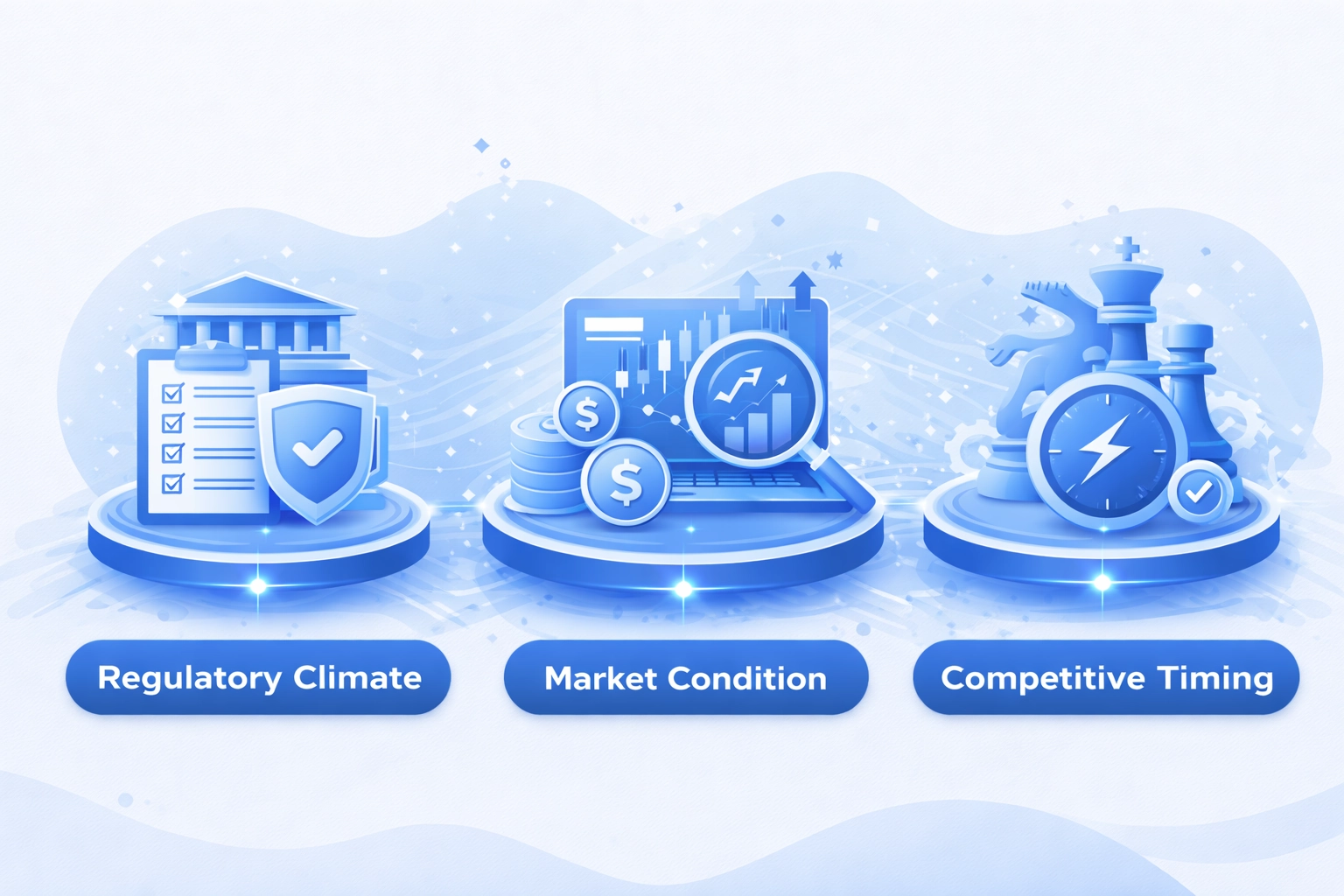 Why Musk’s Timing Matters for Market Expansion
Regulatory Climate
- Post-FTX reforms clarifying crypto custody standards
- MiCA regulation in Europe providing legal certainty
- US stablecoin legislation potentially passing in 2026
- Reduced political resistance to crypto innovation
Market Conditions
- Rising retail investor participation in markets
- Cryptocurrency adoption reaching mainstream tipping point
- Traditional finance institutions validating crypto assets
- Demographic shift toward digital-native investors
Competitive Timing
- Incumbent platforms facing regulatory scrutiny
- Market consolidation creating partnership opportunities
- User dissatisfaction with existing broker limitations
- First-mover advantage in social trading integration
How User Identity and KYC May Be Structured on X
Identity verification infrastructure must balance regulatory requirements with user experience. X’s existing verification system provides a foundation, but financial services demand additional documentation including government ID, proof of address, and tax identification numbers. The platform can streamline this process by requesting information incrementally, allowing basic trading with minimal verification while requiring full KYC for larger transaction limits or advanced features. This tiered approach mirrors how Coinbase and other exchanges gradually onboard users, reducing initial friction while maintaining compliance for higher-risk activities.
Implementation requires sophisticated identity verification partners capable of validating documents across multiple jurisdictions. Markets in the USA, UK, Canada, and UAE each maintain different acceptable identification types and verification standards. X must also implement ongoing monitoring detecting suspicious activity patterns, flagging accounts for enhanced due diligence based on transaction behaviors. The platform’s social graph provides unique verification signals unavailable to traditional brokers, potentially using account age, engagement history, and network analysis to assess fraud risk. However, this data usage raises privacy concerns requiring clear user consent and transparent data handling policies that comply with GDPR, CCPA, and similar regulations.
How X Could Reshape Social-Driven Investing
Social-driven investing represents a paradigm shift in how retail investors discover opportunities and make decisions. Traditional finance separates research from execution, forcing investors to consume analysis on platforms like Seeking Alpha or Twitter, then separately log into their brokerage to trade. X eliminates this friction by embedding trading directly within the information discovery flow. When influential analysts post bullish or bearish cases, followers can immediately act on that information, creating powerful feedback loops where quality analysis drives engagement which attracts more followers and trading volume. This integration fundamentally changes market dynamics by accelerating information dissemination and reducing the time between insight publication and market reaction.
The social features enable new investment products impossible on traditional platforms. Copy trading allows users to automatically replicate portfolios of verified investors, democratizing access to sophisticated strategies previously available only through expensive wealth management services. Community-curated watchlists aggregate crowd wisdom about emerging opportunities, while sentiment analysis tools quantify market psychology from millions of posts. X could also facilitate decentralized autonomous organization (DAO) structures where users pool capital for collective investment decisions governed through on-chain voting. These innovations create network effects where social engagement generates trading volume, which attracts more users and content creators, reinforcing X’s position as the primary destination for retail investors seeking both information and execution capabilities.
Why This Launch Is Bigger Than Just Crypto Trading
| Strategic Dimension | Current State | Future Potential | Market Impact |
|---|---|---|---|
| Business Model | Advertising-dependent revenue | Diversified financial services income | Reduced dependence on advertiser whims |
| User Engagement | Content consumption and posting | Financial transactions creating daily touchpoints | Higher retention and lifetime value |
| Data Assets | Social graph and engagement metrics | Financial behavior and portfolio insights | New monetization through data products |
| Platform Positioning | Social media network | Financial super app ecosystem | Competitive moat against Meta and Google |
| Regulatory Status | Social media content moderation | Multi-jurisdictional financial oversight | Established relationships with regulators |
The trading platform launch signals X’s evolution from media company to financial infrastructure provider. This transformation positions X to capture value from economic activity occurring on its platform rather than merely advertising around it. When users discuss investing strategies, research companies, or debate market trends, X currently monetizes through ad impressions. Trading integration allows X to monetize the actual financial transactions stemming from those discussions, dramatically increasing revenue per user. The shift mirrors how Amazon monetized e-commerce transactions rather than just hosting product discussions, or how PayPal captured payment processing fees rather than just facilitating financial communication.
How Revenue Models May Shift Beyond Advertising
Revenue diversification represents the core strategic objective behind trading platform integration. Advertising markets face structural challenges including privacy regulations limiting targeting capabilities, brand safety concerns reducing advertiser spending, and economic cycles creating volatile revenue streams. Financial services revenue provides more stable income through transaction fees that correlate with user engagement rather than advertiser sentiment. Trading commissions, although potentially low per transaction, accumulate across millions of users making thousands of trades. Subscription tiers offering premium features like advanced charting, priority customer support, or exclusive market analysis create recurring revenue independent of trading volume.
Additional revenue streams emerge from financial services infrastructure. Payment processing fees capture value whenever users move money on or off the platform, while interest on idle cash balances provides spread income similar to traditional banks. Margin lending allows X to charge interest on borrowed funds for leveraged trading, creating high-margin revenue from power users. The platform might also monetize its unique data assets, selling aggregated market sentiment indicators to institutional investors or licensing its social trading algorithms to wealth management firms. These diversified income sources reduce X’s vulnerability to advertising market downturns while aligning revenue with user value creation rather than attention monetization alone.
Platform Selection Criteria for Traders
Execution Quality
- Order routing optimization minimizing slippage
- Transparent price improvement reporting
- Latency measurements for time-sensitive trades
- Liquidity access across multiple exchanges
Cost Structure
- Zero-commission equity trading baseline
- Competitive crypto trading fees under 0.5%
- No hidden costs in currency conversion
- Transparent margin lending interest rates
Asset Coverage
- Full access to US, UK, and Canadian equities
- Comprehensive cryptocurrency selection beyond top 50
- International market access for diversification
- Emerging asset classes like NFTs or tokenized securities
Research Tools
- Advanced charting with technical indicators
- Fundamental data and financial statements
- Social sentiment analysis unique to X
- Analyst ratings and price target aggregation
Platform Reliability
- 99.9% uptime during market hours
- Stress testing for high volatility events
- Failover systems preventing order execution failures
- Mobile app stability matching desktop experience
Regulatory Trust
- Clear licensing in operating jurisdictions
- Transparent audit reports and financials
- Customer asset segregation guarantees
- Responsive regulatory compliance history
What This Means for the Future of Digital Brokerage
X’s entry into trading accelerates the convergence between social media, financial services, and technology platforms. The traditional brokerage model separating financial services from everyday digital interactions faces disruption from integrated super apps offering everything from messaging to investing within unified experiences. This shift particularly impacts younger investors who expect seamless digital experiences and resist downloading specialized apps for single-purpose functions. As X demonstrates the viability of embedded finance, other platforms including Meta, Google, and Amazon may pursue similar strategies, creating a new competitive landscape where technology companies compete directly with traditional financial institutions.
The implications extend beyond individual companies to market structure itself. Social trading platforms could increase retail investor influence on price discovery, creating new forms of market manipulation risk requiring regulatory attention. The blending of social content and financial advice raises questions about fiduciary duties, disclosure requirements, and liability when influential users make investment recommendations. Markets may also become more volatile as social amplification accelerates information dissemination, reducing the time between news events and price reactions. These dynamics will force regulators, exchanges, and traditional brokers to adapt their approaches, potentially reshaping financial market regulation for the digital age in ways that prioritize both innovation and investor protection.
Ready to Build Your Trading Platform?
Partner with experienced blockchain architects to design secure, compliant, and scalable exchange infrastructure that meets modern regulatory standards.
People Also Ask
Q1.1. How will Elon Musk's X trading platform differ from existing crypto and stock brokers?
X’s trading platform integrates social features directly into the brokerage experience, allowing real-time market discussions alongside trade execution. Unlike traditional platforms like Robinhood or Coinbase that separate social features from trading, X embeds everything within its existing social infrastructure. This creates a unified ecosystem where users can analyze market sentiment, follow influential traders, and execute trades without switching platforms. The integration with X’s existing payment rails and verified identity system also streamlines onboarding compared to standalone brokers requiring separate KYC processes.
Q2.2. What regulatory approvals does X need to launch crypto and stock trading services?
X must obtain multiple licenses including broker-dealer registration from FINRA and SEC in the USA, FCA authorization in the UK, and equivalent approvals from financial regulators in Canada and UAE. For Crypto and Stock Trading, X needs money transmitter licenses across US states, virtual asset service provider (VASP) registration in Europe, and compliance with FinCEN’s anti-money laundering requirements. The platform must also register as an alternative trading system (ATS) or partner with existing exchanges to facilitate stock trading, while Crypto and Stock Trading operations may require separate exchange licenses depending on jurisdiction.
Q3.3. Can X compete with established platforms like Robinhood and Coinbase in retail trading?
X possesses unique competitive advantages through its 500+ million user base and existing social engagement infrastructure. While Robinhood and Coinbase excel in pure trading functionality, X can leverage network effects by integrating trading with content discovery, influencer recommendations, and real-time market discussions. The platform’s existing payment infrastructure and verified user accounts reduce friction in onboarding new traders. However, X faces challenges in building robust trading infrastructure, establishing market maker relationships, and overcoming regulatory scrutiny that established platforms have already navigated.
Q4.4. How will X handle security and custody of user assets in its trading platform?
X will likely implement institutional-grade custody solutions combining hot wallets for immediate trading liquidity with cold storage for the majority of user assets. The platform must employ multi-signature authentication, hardware security modules, and segregated accounts to protect customer funds. For Crypto and Stock Trading custody, X may partner with established custodians like Coinbase Custody or Anchorage Digital rather than building proprietary solutions initially. Stock holdings will be held through traditional clearinghouses and broker-dealer relationships, maintaining separation between customer assets and X’s operational funds as required by financial regulations.
Q5.5. What role will cryptocurrency play in X's overall financial services strategy?
Cryptocurrency serves as the foundation for X’s super app ambition, enabling cross-border payments, micropayments for content creators, and programmable money features impossible with traditional finance. Crypto and Stock Trading provides a gateway product attracting younger, tech-savvy users who may then adopt X’s other financial services. The platform can leverage stablecoins for instant settlements, reducing reliance on traditional banking infrastructure while lowering transaction costs. Cryptocurrency’s 24/7 markets also complement X’s global user base across different time zones, creating engagement opportunities beyond traditional stock market hours.
Explore Services
Related Services
Reviewed by

Aman Vaths
Founder of Nadcab Labs
Aman Vaths is the Founder & CTO of Nadcab Labs, a global digital engineering company delivering enterprise-grade solutions across AI, Web3, Blockchain, Big Data, Cloud, Cybersecurity, and Modern Application Development. With deep technical leadership and product innovation experience, Aman has positioned Nadcab Labs as one of the most advanced engineering companies driving the next era of intelligent, secure, and scalable software systems. Under his leadership, Nadcab Labs has built 2,000+ global projects across sectors including fintech, banking, healthcare, real estate, logistics, gaming, manufacturing, and next-generation DePIN networks. Aman’s strength lies in architecting high-performance systems, end-to-end platform engineering, and designing enterprise solutions that operate at global scale.