Ai Overview
Tokenized real estate loan collateral is the practice of using blockchain-based property tokens as security for a financial loan. The result is a loan that can be originated, collateralized, and disbursed in hours rather than weeks, at a fraction of the cost. If a lender offers an LTV of 60 percent and a borrower deposits tokens worth USD 100,000, the maximum loan the borrower can receive is USD 60,000.
Key Takeaways
- ✓Tokenized real estate loan collateral allows property token holders to pledge digital ownership stakes as security for loans without selling the underlying asset or going through traditional bank processes.
- ✓Smart contracts automate the entire collateral locking, loan disbursement, repayment monitoring, and collateral release process without requiring manual intervention from a bank or lender.
- ✓Loan to value ratios for tokenized real estate collateral typically range between 50 and 70 percent, reflecting both the asset quality and the liquidity conditions of the secondary token market.
- ✓In India, GIFT City’s IFSCA framework provides the most structured regulatory environment for tokenized real estate collateral arrangements, with sandbox approvals already issued to qualifying platforms.
- ✓NRIs based in Dubai and Singapore can use Indian property tokens held through GIFT City IFSC structures as collateral on eligible lending platforms under applicable FEMA and IFSCA guidelines.
- ✓Loan default in tokenized real estate collateral arrangements triggers automatic smart contract liquidation of the pledged tokens, protecting lenders without requiring court action or lengthy recovery processes.
- ✓DeFi lending protocols on Ethereum and Polygon are the primary global infrastructure for tokenized real estate collateral loans, while regulated CeFi platforms serve institutional and compliance-focused borrowers.
- ✓The total cost of a tokenized real estate collateral loan, including smart contract fees and platform charges, is typically significantly lower than traditional bank loan origination costs for equivalent capital amounts.
- ✓Dubai’s DeFi lending ecosystem and Singapore’s regulated digital asset framework are currently the most mature markets globally for tokenized real estate collateral lending with live operational platforms.
- ✓The tokenized real estate collateral market is projected to exceed USD 50 billion in active loans globally by 2028 as regulatory frameworks mature and institutional lending platforms scale their operations.
For decades, the only way to unlock the value sitting inside a piece of real estate without selling it was to go through a bank, a mortgage broker, a stack of legal documents, and a waiting period measured in weeks. That model is being fundamentally disrupted by tokenized real estate loan collateral, a new financial mechanism that allows property owners and investors to pledge their digital property tokens as security for a loan and receive funds within hours rather than months. With over eight years of experience working across India, UAE, and Singapore at the intersection of real estate finance and blockchain technology, our team has watched this capability move from a theoretical concept in DeFi whitepapers to a practically accessible tool for investors and property owners across multiple jurisdictions. Understanding how Real Estate Tokenization creates the foundation for collateral-based lending is the first step toward using it effectively and safely.
What is Tokenized Real Estate Loan Collateral and Why Is It Becoming Popular in 2026
Tokenized real estate loan collateral is the practice of using blockchain-based property tokens as security for a financial loan. When a property is tokenized, its ownership is divided into digital tokens recorded on a blockchain, and each token represents a proportional stake in the physical asset held within a Special Purpose Vehicle. These tokens are not merely digital certificates. They are legally enforceable ownership instruments that carry the same economic rights as the underlying property interest: the right to receive rental income, to benefit from capital appreciation, and to participate in decisions about the asset. Because these rights are real, liquid on secondary markets, and verifiable on-chain, they can serve as collateral for a loan in the same fundamental way that a physical property title can secure a mortgage.
The growing popularity of tokenized real estate loan collateral in 2026 reflects the convergence of several trends that have been building for years. Real estate tokenization has achieved sufficient regulatory legitimacy in key markets, including India’s GIFT City, Dubai’s DIFC, and Singapore’s MAS framework, to create a pool of legally structured tokens that lenders can credibly accept as collateral. DeFi lending infrastructure has matured to the point where smart contract-based loan management is reliable, audited, and capable of handling complex collateral types. And investors who have been accumulating tokenized property positions since 2023 and 2024 now hold significant value in these assets and are looking for ways to access liquidity without giving up their long-term real estate exposure.
The appeal is straightforward from the borrower’s perspective. You have built a position in a tokenized commercial building in Dubai or a residential complex in Mumbai. You need capital for a new investment or business opportunity. Selling your tokens means losing your real estate exposure and potentially triggering a taxable event. Using them as tokenized real estate loan collateral lets you access the capital you need while keeping your tokens, your rental income stream, and your long-term appreciation potential fully intact.

To appreciate what tokenized real estate loan collateral actually changes, it helps to understand what the traditional property loan process looks like in practice. In a conventional property-backed loan in India, UAE, or Singapore, the borrower submits an application to a bank or financial institution, provides physical title documents, engages a certified valuer, waits for the lender’s credit assessment team to review the application, negotiates loan terms, signs a stack of legal documents including a mortgage deed or charge document, registers the charge with the relevant land authority, and finally receives the disbursement, which in many cases takes four to eight weeks from initial application. Throughout this process, the borrower pays origination fees, legal fees, valuation fees, and stamp duty in some jurisdictions. The lender charges processing fees and maintains significant internal overhead to manage the compliance, documentation, and risk assessment functions.
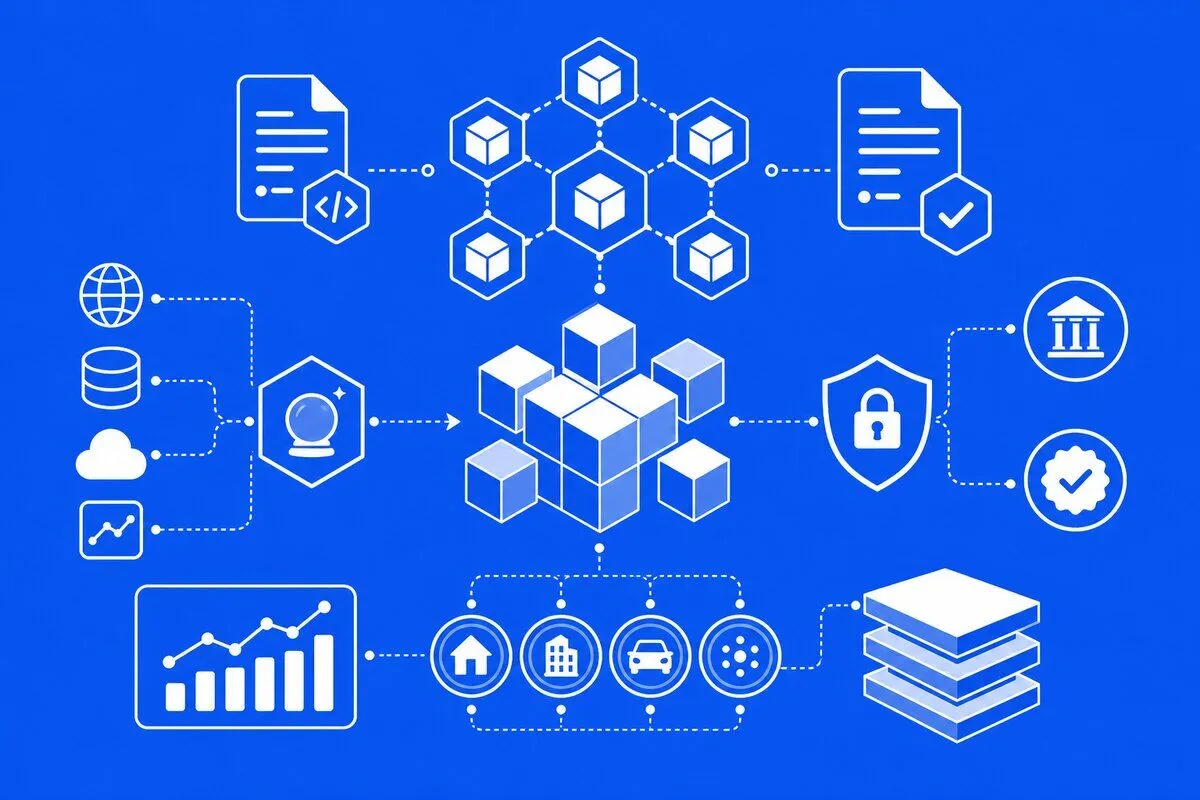
Tokenized real estate loan collateral restructures every stage of this process. The token itself carries its valuation on-chain through oracle price feeds and secondary market data, eliminating the need for a commissioned valuer. The ownership record is immutable and instantly verifiable on the blockchain, eliminating title document verification. The collateral locking mechanism is executed by a smart contract, eliminating the need for a lawyer to draft and register a mortgage deed. And the loan disbursement happens automatically when the smart contract confirms that the required collateral has been deposited, eliminating the bank’s internal approval process. The result is a loan that can be originated, collateralized, and disbursed in hours rather than weeks, at a fraction of the cost.
What tokenized collateral does not change is the fundamental economic logic of secured lending: the lender needs to be confident that if the borrower defaults, the collateral can be liquidated to recover the loan value. The smart contract-based approach actually strengthens this confidence in several ways, because the liquidation process is automatic, immediate, and not subject to the delays and costs of court-based recovery that plague traditional secured lending in markets like India.
How a Real Estate Token Becomes a Collateral Asset on a Blockchain Platform
The process by which a real estate token transitions from a passive investment holding into an active collateral asset is more structured than many investors initially realise, and understanding each stage is important for anyone considering using their tokenized real estate loan collateral in practice. The first requirement is that the token must be a security token issued through a properly structured SPV with clear legal documentation establishing the token holder’s ownership rights. Not all tokens that are labelled as real estate tokens meet this standard. Some represent only profit-sharing agreements without underlying ownership. Others are issued through jurisdictions with no enforceable legal framework for token ownership. For a token to function as credible collateral, it must have verifiable legal substance, and the lender must be able to confirm that substance before accepting the token.
Once a borrower decides to use their tokens as tokenized real estate loan collateral, they connect their digital wallet to the lending platform and initiate a collateral deposit transaction. The smart contract governing the lending protocol receives the tokens and locks them in a dedicated escrow function. This lock is conditional: the tokens remain locked until either the loan is fully repaid with interest, in which case the smart contract automatically releases them back to the borrower’s wallet, or the loan falls into default, in which case the smart contract executes a liquidation process. While the tokens are locked, the borrower can no longer sell or transfer them, but they typically continue to receive rental income distributions from the underlying property because the income distribution is governed by a separate smart contract that recognizes token holdings regardless of whether those tokens are locked in a collateral position.
The valuation of the collateral is maintained throughout the loan period through price oracles, which are data feeds that bring real-world asset price information on-chain. For real estate tokens with active secondary markets, the oracle uses current market prices. For tokens with limited secondary market activity, independent valuation updates at defined intervals are required. The relationship between current collateral value and outstanding loan amount is tracked continuously by the smart contract, which is what enables the LTV ratio monitoring that protects both parties throughout the loan.
What Is DeFi Lending and How Do You Get a Loan Against Your Real Estate Tokens
DeFi, which stands for Decentralized Finance, refers to financial services and products that operate through smart contracts on blockchain networks rather than through traditional financial intermediaries like banks. DeFi lending protocols allow users to deposit digital assets as collateral and borrow other digital assets or stablecoins against that collateral, with all the terms, conditions, and enforcement mechanisms encoded in smart contracts that execute automatically without requiring human approval or intervention. For investors holding real estate tokens in India, UAE, or Singapore, DeFi lending represents a pathway to accessing liquidity from their property holdings that bypasses the traditional banking system entirely and operates around the clock without geographic restriction.
The practical process of obtaining a loan against real estate tokens through a DeFi platform begins with wallet connection and identity verification. Most serious platforms require KYC for real estate token collateral given the regulatory status of security tokens in most jurisdictions. Once verified, the borrower selects the tokens they wish to pledge, reviews the offered LTV ratio and interest rate, approves the collateral deposit transaction, and receives the loan amount in stablecoin or fiat to their account. The entire process can be completed in a matter of hours on platforms with efficient onboarding.
Beyond pure DeFi protocols, there are also Centralized Finance, or CeFi, platforms that offer tokenized real estate collateral loans with a more traditional interface and customer support structure but still use smart contracts for the core collateral management. These platforms are often preferable for first-time borrowers or for larger loan amounts where human relationship management adds value to the process. Dubai-based lending platforms, several of which operate within the DIFC ecosystem, and Singapore platforms regulated by MAS are the most developed examples of regulated CeFi tokenized real estate collateral lending in the Asia and Middle East region.
Token Deposit
Connect wallet and lock real estate tokens in the lending smart contract escrow
LTV Calculation
Smart contract calculates eligible loan amount based on current token value and LTV ratio
Loan Disbursement
Stablecoin or fiat transferred to borrower account upon contract confirmation
Token Release
Full repayment triggers automatic release of locked tokens back to borrower wallet
What Is Loan to Value Ratio in Tokenized Real Estate and How Is It Calculated
The loan to value ratio, universally abbreviated as LTV, is one of the most important numbers in any tokenized real estate loan collateral arrangement. It defines the maximum percentage of the collateral’s current market value that the lender is willing to advance as a loan. If a lender offers an LTV of 60 percent and a borrower deposits tokens worth USD 100,000, the maximum loan the borrower can receive is USD 60,000. The remaining USD 40,000 of token value serves as a buffer that protects the lender if the token price drops before the loan is repaid. LTV ratios in tokenized real estate collateral lending are typically more conservative than those offered in traditional property-backed lending, reflecting the additional risk factors specific to the digital asset context.
Several factors determine the specific LTV ratio offered for a given token collateral position. The underlying property type and location are primary determinants: tokens representing prime commercial real estate in Dubai Marina or Singapore’s CBD are likely to attract higher LTV ratios than tokens in less liquid or less institutionally recognized markets. The depth of the secondary market for the specific tokens matters significantly, because a token that can be liquidated quickly if needed is less risky collateral than one that might take weeks to find a buyer. The platform’s own risk models, regulatory requirements in the lending jurisdiction, and the borrower’s credit history on the platform all contribute to the final LTV offered.
The LTV is not static during the loan period. Smart contracts on leading lending platforms continuously monitor the ratio between the current value of locked collateral and the outstanding loan balance. If the token price drops and the LTV rises toward a defined threshold, the smart contract issues a margin call notification to the borrower, giving them the option to deposit additional collateral or repay part of the loan to bring the ratio back within acceptable limits. If the LTV breaches the liquidation threshold without corrective action, the smart contract automatically initiates the liquidation process. This continuous monitoring replaces the periodic manual reviews that banks conduct in traditional secured lending. For borrowers still using conventional finance for rental properties, understanding DSCR underwriting remains essential; see how Griffin DSCR lending structures income-based approvals and refinancing options that complement tokenized-collateral strategies.
LTV Ratios for Tokenized Real Estate Collateral by Property Type
| Property Type | Typical LTV Range | Market Context | Liquidation Trigger |
|---|---|---|---|
| Prime Commercial (Dubai/Singapore) | 65-70% | High liquidity, stable valuation | 80% LTV breach |
| Residential Complex (India GIFT City) | 55-65% | Emerging secondary market | 75% LTV breach |
| Hospitality and Hotels | 50-60% | Income variability factored | 72% LTV breach |
| Industrial and Logistics | 60-68% | Long lease structures, stable | 78% LTV breach |
Smart contracts are the operational engine of any tokenized real estate loan collateral arrangement, and understanding exactly how they manage each stage of the lending lifecycle gives borrowers a clear picture of what to expect and where their risk exposures lie. The collateral locking function is the first smart contract action in the process. When a borrower approves the token deposit transaction, the smart contract’s escrow function receives the tokens and records the deposit along with the loan terms: the principal amount, the interest rate, the loan duration, the LTV threshold for margin calls, and the LTV threshold for liquidation. All of these parameters are immutably recorded on the blockchain at the moment of contract execution, meaning neither the lender nor the borrower can unilaterally change them after the loan begins.
During the loan period, the smart contract performs continuous monitoring functions. It queries price oracles at regular intervals to update the current market value of the locked collateral. It calculates the current LTV ratio by dividing the outstanding loan balance by the collateral value. If this ratio approaches the margin call threshold, the contract generates an automated notification to the borrower through the platform interface. Throughout the loan period, interest accrues according to the agreed rate and is tracked in the contract’s state variables. Some platforms allow partial repayments that reduce both the outstanding principal and the accrued interest, which the smart contract adjusts in real time. [1]
The repayment and release function is the most straightforward smart contract action from the borrower’s perspective. When the borrower repays the outstanding principal plus accrued interest in full, the smart contract verifies receipt of the correct amount, calculates any final interest that has accrued since the last payment, confirms that all obligations are settled, and automatically transfers the locked collateral tokens back to the borrower’s wallet. This entire release process happens within the same blockchain transaction as the final repayment, typically completing within seconds to minutes depending on network conditions. There is no waiting for a bank to process a release, no paperwork to file, and no human administrator to approve the collateral return.
Smart Contract Loan Lifecycle
Step 1: Collateral Deposit and Lock
Borrower deposits tokens, smart contract locks them in escrow and records all loan terms immutably
Step 2: Loan Disbursement
Stablecoin or fiat amount transferred to borrower automatically upon successful collateral confirmation
Step 3: Continuous LTV Monitoring
Oracle price feeds update collateral valuation continuously. Margin calls triggered if LTV threshold approached
Step 4: Interest Accrual and Tracking
Contract calculates interest continuously and updates outstanding balance in real time
Step 5: Repayment and Collateral Release
Full repayment received, contract settles final interest and releases locked tokens instantly to borrower wallet
What Happens to Your Real Estate Tokens If You Cannot Repay the Loan
Default in a tokenized real estate loan collateral arrangement is handled with the same efficiency and automation that characterizes every other aspect of the smart contract lending process, and understanding exactly what happens in a default scenario is essential for any investor considering this financing mechanism. When a borrower fails to maintain the required collateral ratio or misses repayments beyond the defined grace period, the smart contract does not wait for human instruction. It begins the liquidation process automatically according to the pre-defined liquidation parameters that were recorded when the loan was originated. The first stage of this process is typically a grace period notification, where the contract sends an alert to the borrower’s wallet and the platform interface giving them a defined window, often 24 to 72 hours, to restore the collateral ratio by depositing additional tokens or making a partial repayment.
If the borrower does not respond within the grace period, the smart contract initiates liquidation. For liquid tokens with active secondary markets, the contract may sell the tokens directly through an integrated trading mechanism at the current market price, using the proceeds to repay the outstanding loan balance plus accrued interest and any applicable liquidation penalty. If the sale proceeds exceed the loan obligation, the surplus is returned to the borrower’s wallet. If they fall short, which can happen in periods of rapid price decline, the lender absorbs the shortfall, which is precisely why conservative LTV ratios and liquidation thresholds exist as protective buffers. For less liquid tokens, the liquidation may involve transferring token ownership to the lender, who then manages the disposal at their discretion.
The critical distinction between tokenized real estate loan collateral default and traditional mortgage default is the absence of court proceedings. In India, for example, recovering collateral from a defaulting property borrower through SARFAESI Act proceedings or court intervention can take months or years. The smart contract approach compresses this to hours, which is one of the strongest arguments lenders make for preferring tokenized collateral over physical property as security.
The legal status of tokenized real estate loan collateral in India is best understood in layers, because the answer differs depending on whether the activity occurs within the GIFT City IFSC regulatory perimeter or in the broader Indian domestic market. Within GIFT City’s IFSC, the IFSCA has been progressively building a framework that accommodates tokenized asset structures including the use of those tokens in financial arrangements. Platforms operating within the IFSC under IFSCA oversight can structure tokenized real estate collateral lending within the sandbox framework, which provides regulatory approval to test and operate the product under supervised conditions. For investors and borrowers accessing these platforms, the activity is legally sanctioned and operates under the oversight of a statutory regulator established by an act of Parliament.
Outside the GIFT City perimeter, the picture is more complex. India’s broader financial regulatory framework, primarily overseen by SEBI for securities and the RBI for banking and lending, does not yet have a specific framework for tokenized real estate as collateral. The use of digital assets as collateral for lending falls into a regulatory grey area that is governed by general contract law principles and the broader digital asset policy framework that India has been developing since 2022. Practically, this means that while there is no specific prohibition on tokenized real estate collateral arrangements in India’s domestic market, there is also no defined legal framework that provides the clear enforceability and investor protection that IFSCA oversight provides within GIFT City. For this reason, most structured tokenized real estate collateral lending targeting Indian investors currently routes through GIFT City or offshore jurisdictions like Dubai and Singapore.
The trajectory of Indian regulation is clearly toward greater clarity and legitimacy for tokenized assets. SEBI’s consultation papers on digital asset securities and the government’s progressive stance on blockchain technology suggest that a more comprehensive domestic framework for tokenized real estate collateral lending will emerge within the 2026 to 2028 timeframe, bringing the GIFT City model to a broader Indian investor population.
How NRIs and Indian Investors Can Use Their Property Tokens as Loan Collateral in 2026
For Non-Resident Indians based in Dubai, Singapore, or other financial centres, the ability to use Indian property tokens as tokenized real estate loan collateral represents a genuinely new financial capability that was not practically accessible before the current regulatory framework existed. An NRI who has invested in a tokenized commercial property in Mumbai or a residential complex through a GIFT City IFSC platform now holds a liquid, transferable, and legally structured digital asset that carries real economic value. Using that asset as collateral for a loan, whether to fund a new property acquisition in Dubai, to support a business venture in Singapore, or simply to access working capital, requires navigating the intersection of FEMA regulations, IFSCA guidelines, and the specific rules of the lending platform they choose to use.
The most straightforward pathway for NRIs in 2026 is to use a GIFT City IFSC-based lending platform that is specifically designed for international investors and has IFSCA approval for its collateral lending product. These platforms allow NRIs to deposit their Indian property tokens as collateral and receive loan disbursements in foreign currency to their overseas bank account. The foreign currency loan is typically denominated in USD, AED, or SGD depending on the borrower’s location, and the repayment terms can be structured to align with the borrower’s overseas income flow. The entire arrangement remains within the IFSCA regulatory perimeter, providing investor protection and regulatory oversight without requiring the NRI to navigate India’s domestic banking system for the transaction.
For Indian resident investors with tokenized property holdings through GIFT City platforms, accessing tokenized real estate loan collateral facilities requires careful attention to the LRS limits and applicable FEMA provisions. Borrowing against tokens held within the IFSC perimeter is treated differently from domestic property-backed borrowing, and the specific treatment depends on the loan currency, the purpose of borrowing, and the residency status of the borrower. Our team works with Indian investors across all categories to structure these arrangements correctly from the outset, because the compliance requirements, while manageable, are specific enough to require professional guidance.
NRI Adoption of Tokenized Real Estate Loan Collateral by Region (2026)
What is the Future of Tokenized Real Estate Loan Collateral and Which Platforms Are Leading It
The future trajectory of tokenized real estate loan collateral points toward a financial ecosystem where the boundaries between property ownership, capital markets access, and lending are fundamentally restructured. Within the next three to five years, based on current regulatory and market trends across India, UAE, and Singapore, we expect to see tokenized real estate collateral lending become a mainstream financial product accessible to a broad range of investors, rather than the early-adopter and institutional product it is today. Several specific developments are driving this evolution. First, the deepening of secondary markets for real estate tokens will progressively improve the liquidity of collateral, which in turn will allow lenders to offer higher LTV ratios and more competitive interest rates, making the product more attractive to a wider borrower pool. Second, the maturation of on-chain price oracles for real estate assets will reduce the valuation uncertainty that currently leads to conservative LTV pricing, creating more accurate and fair collateral assessments.
Among the platforms currently leading the tokenized real estate collateral lending space globally, several names stand out. Centrifuge has been building the infrastructure for real-world asset backed lending in DeFi since 2020 and has progressively incorporated real estate token collateral into its protocol. RealT, a US-based platform, has been exploring collateral lending features for its tokenized property portfolio. Within the DIFC ecosystem in Dubai, several regulated CeFi platforms are building collateral lending products specifically designed for the region’s institutional and high-net-worth investor base. In Singapore, platforms operating under MAS’s digital asset framework are piloting real estate token collateral products in collaboration with traditional bank partners. And within India’s GIFT City, the first IFSCA-approved platform to offer tokenized real estate collateral lending to NRIs and qualified institutional investors is expected to launch at scale in 2026.
The convergence of these platform developments with improving regulatory clarity across multiple jurisdictions creates a compelling outlook for investors who are building tokenized real estate positions today with the intention of using them as collateral in the future. The product is real, the infrastructure is being built, and the regulatory frameworks are advancing. The question for investors is not whether tokenized real estate loan collateral will become a mainstream financial tool, but how quickly and in which jurisdiction they will be best positioned to use it.
Tokenized Collateral vs Traditional Property Loan: Side by Side
| Comparison Factor | Tokenized Collateral Loan | Traditional Mortgage Loan |
|---|---|---|
| Processing Time | Hours | 4 to 8 weeks |
| Documentation Required | KYC only | Title deeds, income proof, valuations |
| Default Recovery | Automatic (hours) | Court proceedings (months to years) |
| Geographic Access | Global (NRI friendly) | Jurisdiction restricted |
| Origination Cost | 0.5 to 1.5% | 2 to 4% plus stamp duty |
| LTV Transparency | Real-time on-chain | Periodic manual review |
Frequently Asked Questions
Q1.1. What does it mean to use tokenized real estate as loan collateral?
Using tokenized real estate as loan collateral means pledging your digital property tokens as security against a loan. The tokens are locked in a smart contract until you repay, giving the lender confidence without requiring you to sell the underlying property or go through traditional mortgage paperwork.
Q2.2. Can I get a loan against my real estate tokens in India right now?
In India, the most structured pathway for using tokenized real estate as loan collateral is through platforms operating within GIFT City’s IFSCA framework. Outside this perimeter, the regulatory environment is still evolving, but several DeFi platforms accessible to Indian investors already accept verified real estate tokens as collateral for crypto-backed loans.
Q3.3. How is a tokenized real estate loan different from a regular mortgage?
A traditional mortgage requires physical property documents, a notary, weeks of processing, and bank approval. A tokenized real estate loan collateral arrangement uses smart contracts to lock tokens automatically, disburse funds within hours, and release collateral upon repayment, all without paper, intermediaries, or branch visits.
Q4.4. What happens to my property if I cannot repay a tokenized real estate loan?
If you default, the smart contract that holds your tokens as collateral automatically executes a liquidation process according to the terms you agreed to. Your tokens may be sold on a secondary market or transferred to the lender. The underlying property remains in the SPV unless the entire token supply representing it is liquidated.
Q5.5. What is the loan to value ratio for tokenized real estate collateral?
LTV ratios for tokenized real estate collateral typically range between 50 and 70 percent of the token’s current market value. This conservative ratio protects lenders against token price volatility while giving borrowers meaningful access to liquidity. Premium commercial assets in stable markets like Dubai or Singapore may attract higher LTV ratios from some platforms.
Q6.6. Is DeFi lending using property tokens safe for regular investors?
DeFi lending against real estate tokens carries specific risks including smart contract vulnerabilities, token price volatility, secondary market liquidity constraints, and regulatory uncertainty. These risks are manageable with proper due diligence but are not trivial. Using regulated platforms with audited smart contracts and clear liquidation terms significantly reduces the risk profile.
Q7.7. Which platforms currently allow tokenized real estate as loan collateral?
Several platforms globally are building tokenized real estate collateral lending including Centrifuge, RealT, and emerging platforms within Dubai’s DIFC ecosystem. In India, GIFT City-based platforms are in various stages of enabling this functionality. The space is evolving rapidly with new entrants announcing collateral lending features regularly through 2025 and 2026.
Q8.8. Do I need to sell my property to use it as tokenized loan collateral?
No. The entire value proposition of tokenized real estate loan collateral is that you retain your property exposure while accessing liquidity. Your tokens are locked as collateral during the loan period but the underlying property in the SPV continues to appreciate, generate rental income, and remain legally yours unless you default.
Q9.9. How quickly can I get a loan using my real estate tokens as collateral?
On DeFi platforms with automated smart contract processing, loan disbursement after token collateral is submitted can happen within minutes to a few hours. On regulated CeFi platforms with KYC and compliance checks, the process may take one to three business days but is still significantly faster than traditional bank loans against property.
Q10.10. Are NRIs based in Dubai or Singapore able to use Indian property tokens as collateral?
NRIs who hold tokens in Indian properties structured through GIFT City’s IFSC framework can use those tokens as collateral on platforms that operate within the same regulatory perimeter. Cross-border collateral arrangements are more complex and depend on the specific platform, the jurisdictions involved, and the applicable FEMA regulations for the NRI’s residential status.
Explore Services
Related Services
Reviewed by

Aman Vaths
Founder of Nadcab Labs
Aman Vaths is the Founder & CTO of Nadcab Labs, a global digital engineering company delivering enterprise-grade solutions across AI, Web3, Blockchain, Big Data, Cloud, Cybersecurity, and Modern Application Development. With deep technical leadership and product innovation experience, Aman has positioned Nadcab Labs as one of the most advanced engineering companies driving the next era of intelligent, secure, and scalable software systems. Under his leadership, Nadcab Labs has built 2,000+ global projects across sectors including fintech, banking, healthcare, real estate, logistics, gaming, manufacturing, and next-generation DePIN networks. Aman’s strength lies in architecting high-performance systems, end-to-end platform engineering, and designing enterprise solutions that operate at global scale.