Ai Overview
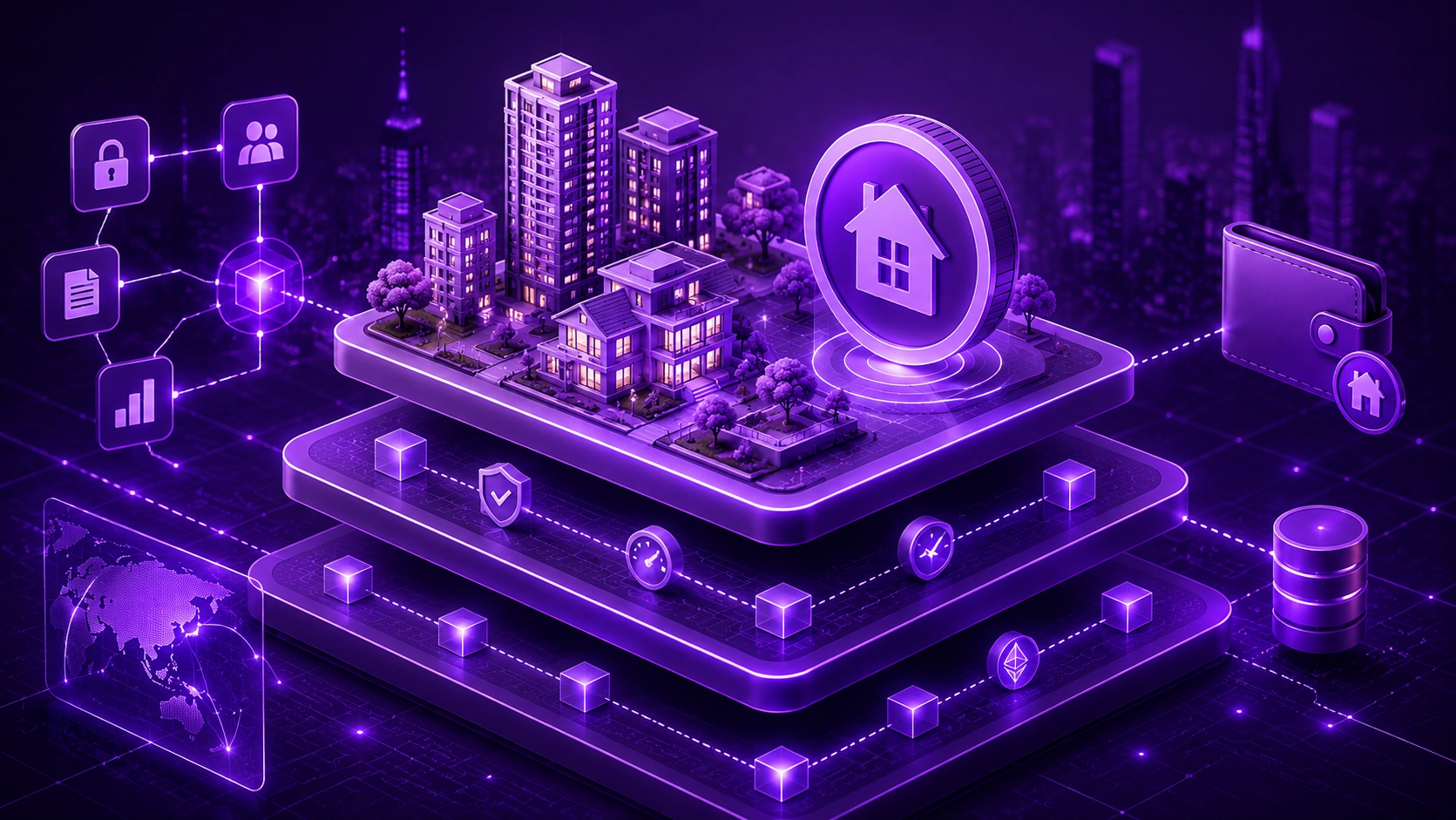
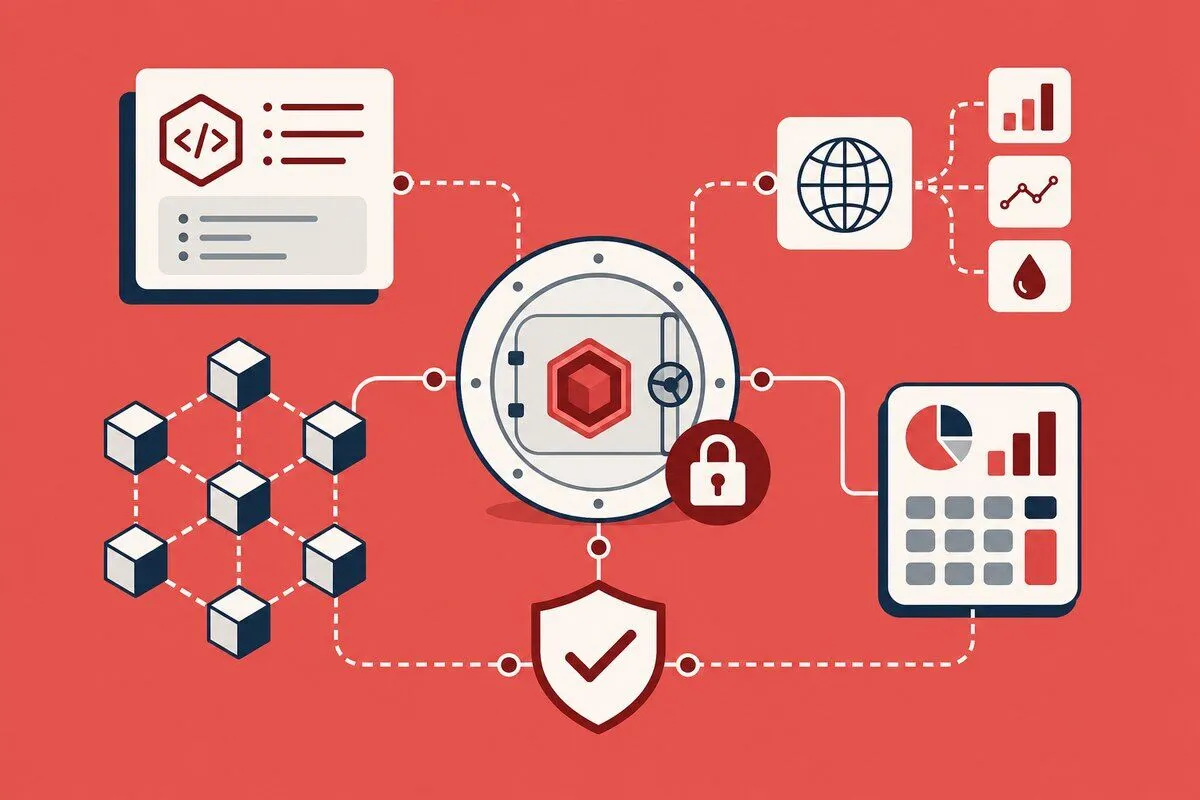
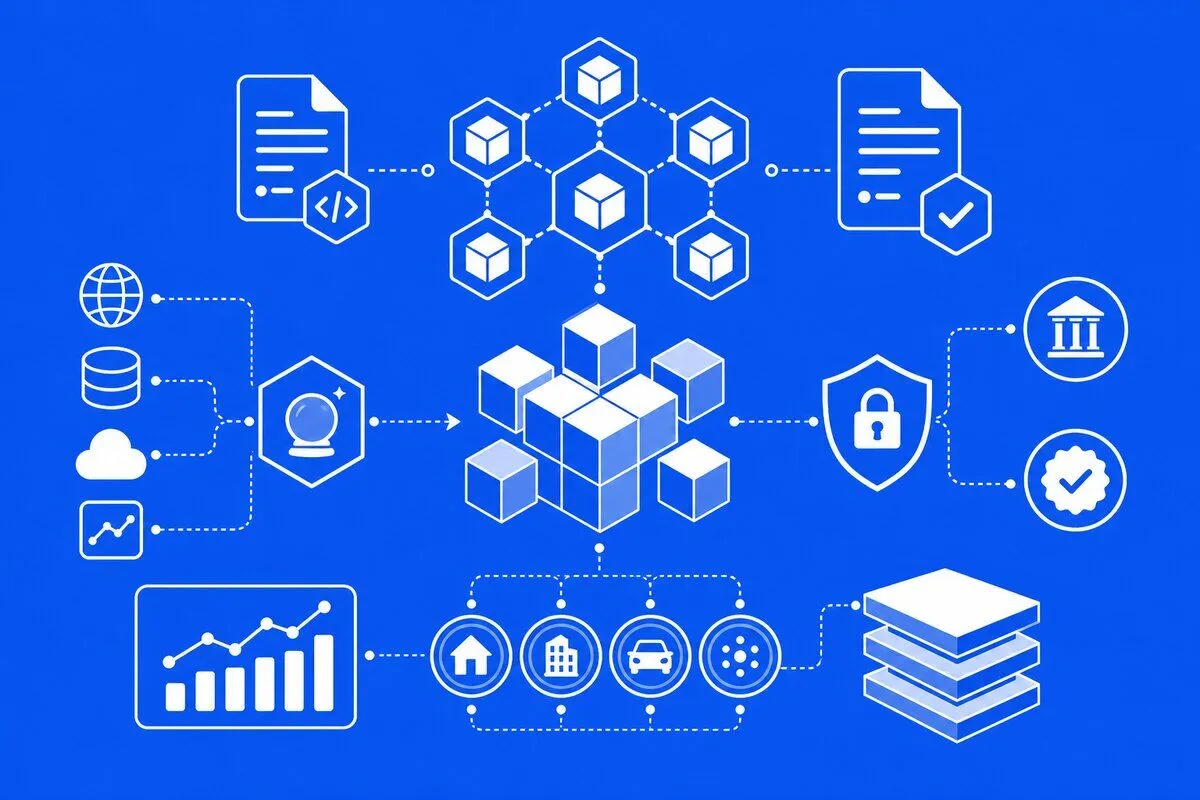
Structural Shift in Investment: Real Estate Tokenization Explained highlights how blockchain digitizes legally enforceable ownership and economic rights. Legal Continuity: Tokenization does not replace real estate laws but strengthens them through SPVs trusts and compliant digital structures. Multiple Investment Models: Equity debt revenue sharing and SPV based token models support varied risk profiles and return expectations.
Key Takeaways – Real Estate Tokenization Explained 2026
- Structural Shift in Investment: Real Estate Tokenization Explained highlights how blockchain digitizes legally enforceable ownership and economic rights.
- Legal Continuity: Tokenization does not replace real estate laws but strengthens them through SPVs trusts and compliant digital structures.
- Lower Entry Barriers: Fractional ownership enables global investors to access residential commercial rental and portfolio based properties.
- Multiple Investment Models: Equity debt revenue sharing and SPV based token models support varied risk profiles and return expectations.
- Liquidity Enablement: Tokenized real estate achieves liquidity through secondary marketplaces OTC trading and structured buyback mechanisms.
- Hybrid Platform Architecture: Effective platforms combine on chain transparency with off chain legal documentation compliance and asset management.
- Technology Selection: Choosing the right blockchain and token standard is essential for scalability security and institutional adoption.
- Embedded Compliance: Regulatory requirements vary by jurisdiction and must be built into platform design through KYC AML and transfer controls.
- Risk Management: Smart contract custody and legal risks require audits governance frameworks and licensed custodians.
- Improved ROI: Real estate tokenization enhances capital efficiency expands investor reach reduces friction and improves asset liquidity.
Real Estate Tokenization Explained From Traditional Property to Digital Ownership
Real estate is one of the largest asset classes in the world, yet it has traditionally remained illiquid, capital-intensive, and restricted to a limited group of investors. Blockchain technology is changing this reality.
Basics of Real Estate Tokenization
Real estate tokenization is the process of transforming ownership rights of a physical real-world property into digitally issued tokens recorded on a blockchain. These tokens represent verifiable, divisible, and transferable ownership or economic rights linked to the underlying real estate asset.
Instead of requiring investors to purchase an entire property often involving large capital commitments, tokenization enables fractional ownership, allowing investors to buy smaller portions of a property through digital tokens. This approach lowers entry barriers, expands global investor access, and introduces liquidity into an otherwise illiquid asset class.
At its core, real estate tokenization bridges traditional property ownership with blockchain-based financial infrastructure, ensuring transparency, automation, and regulatory alignment.
How Real Estate Tokenization Works at a Conceptual Level?
Real estate tokenization does not eliminate legal ownership structures. Instead, it enhances them by digitizing rights, not replacing laws. The physical asset remains governed by real-world legal frameworks while blockchain technology manages representation, transfer, and automation.
Key Concept Breakdown
1. Legal Structuring of the Physical Property
Before any token is issued, the real estate asset must be legally structured to ensure compliance and enforceability.
Common approaches include:
- Special Purpose Vehicle (SPV): The property is owned by a company, and tokens represent shares or rights in that entity.
- Trust or Fund Structure: The property is placed under a trust that issues tokens to beneficiaries.
- Revenue Assignment Agreements: Used when tokens represent income rights rather than ownership.
This step ensures that token holders have legally recognized rights tied to the asset.
2. Digitization of Ownership Rights into Blockchain Tokens
Once the legal structure is in place, ownership or economic rights are digitized into blockchain-based tokens.
These tokens:
- Are recorded immutably on the blockchain
- Represent a defined share of ownership or financial rights
- Can be transferred between eligible investors
- Carry embedded compliance rules
This digitization enables global accessibility, real-time settlement, and transparent ownership records.
3. Token Types Used in Real Estate Tokenization
Real estate tokens can be designed to represent different financial interests, depending on the investment model.
Common token representations include:
- Equity Tokens: Represent ownership shares and entitlement to rental income and asset appreciation
- Debt Tokens: Represent loans or bonds secured by real estate assets
- Revenue or Yield Tokens: Represent a share of rental or operational income without direct ownership
Each token type is structured according to regulatory classification and investor risk profiles.
4. Digital contracts for Automation and Trust
Digital contracts are self-executing programs deployed on the blockchain that automate critical processes in tokenized real estate.
They are used to:
- Enforce ownership rules and transfer restrictions
- Automate rental income or yield distributions
- Apply KYC and AML compliance checks
- Manage voting and governance rights
- Reduce reliance on intermediaries
By embedding rules directly into code, Digital contracts enhance trust, efficiency, and transparency across the investment lifecycle.
Why This Model Changes Real Estate Investment
By combining legal frameworks, blockchain tokens, and automated Digital contracts, real estate tokenization creates a new investment paradigm that is:
- More accessible
- More liquid
- More transparent
- More efficient
This is why Real Estate Tokenization Explained is not just a technological upgrade, but a structural shift in how property assets are owned, managed, and traded globally.
Types of Real Estate Assets Suitable for Tokenization
When discussing Real Estate Tokenization Explained, it’s important to understand that nearly any type of property can be tokenized. Tokenization allows physical real estate to be represented digitally on a blockchain, enabling fractional ownership, improved liquidity, and global investor participation. Different property types serve different investment goals, risk appetites, and yield expectations.
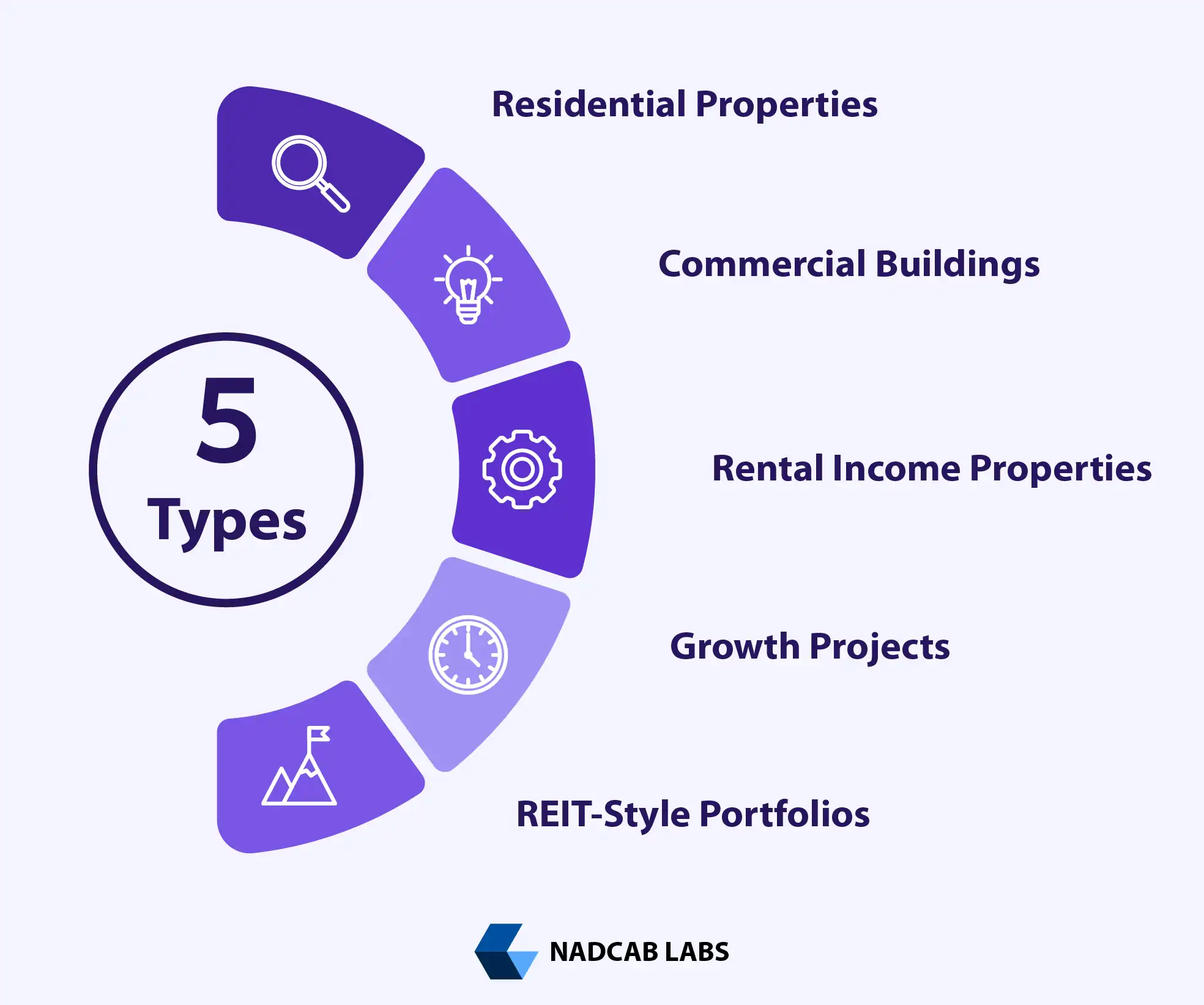
1. Residential Properties
Residential properties are among the most commonly tokenized assets. This includes apartments, villas, and multi-family homes. Tokenization enables investors to purchase fractions of high-value residential assets without buying the entire property.Benefits:
- Access to premium real estate markets
- Stable rental income for token holders
- Diversification across multiple residential units
2. Commercial Buildings
Commercial buildings such as office complexes, shopping malls, and co-working spaces are ideal candidates for tokenization. Through blockchain, these high-value assets become accessible to a broader investor base.Benefits:
- Potential for higher rental yields compared to residential
- Attracts institutional and corporate investors
- Enables fractional ownership of premium commercial assets
3. Rental Income Properties
Properties designed specifically to generate rental income, whether residential or commercial, are particularly attractive for tokenization. Investors receive proportional income through automated smart contract payouts.Benefits:
- Recurring cash flows for token holders
- Transparent and automated distribution via blockchain
- Ideal for long-term investment strategies
4. Growth Projects
Tokenization is also applied to under-construction or planned real estate projects. Investors can participate in funding Growth projects by purchasing tokens representing future ownership or revenue share.Benefits:
- Early-stage access to high-value real estate
- Enables smaller investors to participate in Implementation funding
- Supports project financing without traditional loans
5. REIT-Style Portfolios
Tokenization allows Real Estate Investment Trust (REIT)-like structures to be digitized. A portfolio of multiple properties can be represented as a single tokenized asset or divided into multiple tokens, providing exposure to diversified real estate.Benefits:
- Instant diversification across multiple properties
- Lower risk through pooled investments
- Simplified management and transfer of property interests
Market Trends in Tokenized Real Estate
Global Market Trends in Real Estate Tokenization
The global market for real estate tokenization is experiencing accelerated growth as blockchain infrastructure matures and regulatory frameworks become more clearly defined. What began as experimental pilot projects has now evolved into institutional-grade investment infrastructure, attracting asset managers, real estate funds, developers, and financial institutions.
This growth is primarily driven by the demand for greater liquidity, transparency, and global capital access in real estate markets that have traditionally been fragmented and inefficient.
Key Market Trends Shaping Real Estate Tokenization
1. Institutional-Grade Tokenized Real Estate Assets
Tokenization platforms are increasingly designed to meet institutional requirements, including strong custody solutions, audited Digital contracts, regulated token standards, and enterprise-level governance. This shift signals a move away from retail-focused experiments toward professionally managed, compliance-first real estate assets.
2. Growth of Regulated Security Token Offerings
The rise of regulated security token offerings is one of the most significant implementations in the tokenized real estate market. These offerings ensure that tokenized assets comply with securities laws, investor protection regulations, and disclosure requirements.
By embedding compliance directly into token standards and Digital contracts, issuers can confidently offer tokenized properties to both retail and institutional investors within approved jurisdictions.
3. Geographical Expansion Across Key Regions
Certain regions have emerged as global leaders in real estate tokenization due to regulatory openness and strong financial ecosystems.
- Dubai and UAE: Proactive regulatory sandboxes and real estate innovation initiatives
- European Union: Harmonized digital asset regulations and cross-border investment frameworks
- Asia: Rapid adoption driven by fintech growth and real estate demand
This regional expansion is enabling cross-border property investment at scale.
4. Integration with DeFi Lending and Yield Products
Tokenized real estate is increasingly being integrated with decentralized finance infrastructure. Property-backed tokens can be used as collateral for lending, enabling investors to unlock liquidity without selling their holdings.
In some models, rental income is routed through DeFi yield mechanisms, creating hybrid products that blend traditional real estate stability with blockchain-based financial innovation.
5. Rising Demand for Fractional Property Ownership
Fractional ownership remains a major driver of adoption. Investors are seeking exposure to high-value properties without committing large amounts of capital. Tokenization enables:
- Smaller ticket sizes
- Portfolio diversification across regions and asset types
- Simplified entry and exit mechanisms
This trend is reshaping how both retail and accredited investors access real estate markets.
Launch Your Tokenized Real Estate Platform with Nadcab Labs!
Transform your property assets into digital tokens seamlessly. Nadcab Labs delivers secure, scalable, and legally compliant platforms to unlock global investor access and maximize liquidity.
Why Institutions Are Entering the Real Estate Tokenization Space?
1. Portfolio Diversification and Risk Management
Tokenized real estate allows institutions to diversify portfolios across multiple properties, regions, and asset classes without the operational burden of direct ownership. Fractional exposure reduces concentration risk while maintaining stable returns.
2. Operational Efficiency and Cost Reduction
Blockchain-based systems automate processes such as ownership transfers, compliance checks, and income distribution. This reduces reliance on intermediaries, shortens settlement times, and lowers administrative costs compared to traditional real estate investment structures.
3. Expanded Global Investor Reach
Tokenization removes geographical barriers by enabling compliant cross-border investment. Institutions can raise capital from a global pool of investors while maintaining jurisdiction-specific controls through Digital contracts.
4. Transparent and Auditable Asset Management
Blockchain provides a single, immutable source of truth for ownership records, transactions, and payouts. This transparency improves reporting accuracy, enhances investor trust, and simplifies audits and regulatory oversight.
Liquidity Mechanisms in Tokenized Real Estate Markets
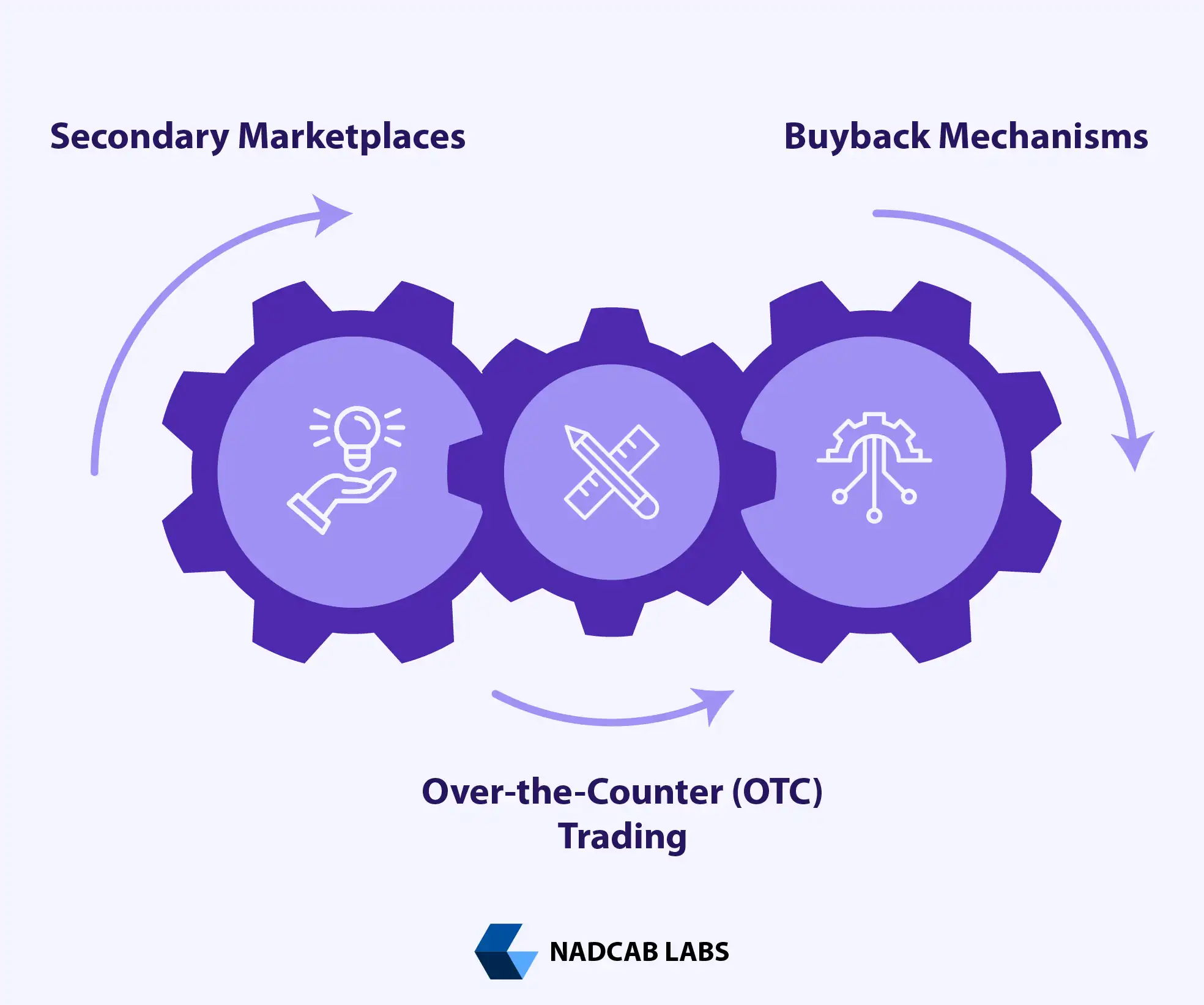
Understanding liquidity is a crucial aspect when exploring Real Estate Tokenization Explained. Unlike traditional real estate, which can be highly illiquid due to long transaction cycles and high entry barriers, tokenized properties offer multiple avenues to improve liquidity for investors. Efficient liquidity mechanisms ensure that token holders can buy, sell, or exchange their stakes quickly, creating a more dynamic and attractive investment ecosystem.
1. Secondary Marketplaces
Secondary marketplaces are platforms where investors can trade tokenized real estate assets after the initial issuance. These marketplaces operate similarly to stock exchanges but are specifically designed for digital property tokens.
Benefits:
- Enables continuous buying and selling of property tokens
- Improves market transparency and price discovery
- Attracts a broader base of investors due to easier access
2. Over-the-Counter (OTC) Trading
OTC trading allows large-volume token transactions to occur directly between two parties, often facilitated by brokers or specialized platforms. This method is particularly useful for institutional investors or high-net-worth individuals who want to move significant positions without affecting market prices on public platforms.
Benefits:
- Reduces the impact of large trades on token prices
- Maintains confidentiality for investors
- Allows customized settlement terms between parties
3. Buyback Mechanisms
Some tokenized real estate platforms incorporate buyback programs, where the issuer or platform repurchases tokens at predefined conditions. This mechanism can provide a safety net for investors, enhance trust, and create additional liquidity.
Benefits:
- Offers exit options for investors when secondary market activity is low
- Helps maintain token price stability
- Boosts investor confidence in long-term projects
Investment Models in Real Estate Tokenization
Tokenized real estate supports multiple investment structures depending on risk appetite and compliance requirements.

Common Tokenization Models
1. Equity Token Model
- Tokens represent ownership shares
- Investors receive rental income and appreciation
- Suitable for long-term investors
2. Debt Token Model
- Tokens represent loan or bond instruments
- Fixed or variable returns
- Lower risk profile
3. Revenue Sharing Model
- Returns based on rental income
- Automated payouts via Digital contracts
4. SPV-Based Tokenization
- Property held by a Special Purpose Vehicle
- Tokens represent shares of the SPV
- Common in regulated markets
Architecture of a Real Estate Tokenization Platform
A strong technical architecture ensures scalability, security, and compliance.
High-Level Architecture Layers
| Layer | Purpose |
|---|---|
| Blockchain Layer | Token issuance ownership records and transaction processing on the blockchain |
| Digital Contract Layer | Smart contract logic for ownership rules automation income distribution and transfers |
| Compliance Layer | KYC AML enforcement investor eligibility and jurisdiction specific regulatory controls |
| Backend Services | Data management integrations APIs reporting asset and transaction orchestration |
| Frontend Dashboard | Investor and admin interfaces for portfolio tracking compliance and platform operations |
| Custody Layer | Secure asset custody private key management and protection of investor funds |
On-Chain vs Off-Chain Components
- On-chain: Tokens, ownership records, transfers
- Off-chain: Legal documents, valuations, property management data
Blockchain and Token Standards Used
Selecting the appropriate blockchain network and token standard is a foundational decision in any real estate tokenization initiative. This choice directly impacts regulatory compliance, scalability, transaction costs, investor accessibility, and long-term platform viability.
A well-chosen blockchain and token standard ensure that tokenized real estate assets remain secure, compliant, and interoperable across markets and platforms.
Common Token Standards Used in Real Estate Tokenization
1. ERC-20 for Fungible Ownership Tokens
ERC-20 is widely used for fractional ownership models where each token represents an equal share of a property or investment vehicle.
Key characteristics:
- Tokens are interchangeable and divisible
- Ideal for large investor pools
- Supported by most wallets and exchanges
- Suitable for revenue-sharing and yield distribution
Best use case: Rental income–generating properties with uniform ownership rights.
2. ERC-721 for Unique Asset Representation
ERC-721 is designed for non-fungible tokens, where each token represents a unique asset or property.
Key characteristics:
- Each token is distinct and non-interchangeable
- Ideal for single-property representation
- Clear ownership traceability
- Limited use for fractional liquidity
Best use case: High-value, unique real estate assets or property title representation.
3. ERC-3643 for Compliant Security Tokens
ERC-3643 is a purpose-built standard for regulated security tokens, making it highly suitable for institutional-grade real estate tokenization.
Key characteristics:
- Built-in compliance and transfer restrictions
- Integrated KYC and AML enforcement
- Jurisdiction-based investor eligibility
- Designed for regulated markets
Best use case: Cross-border, institutional, and compliance-driven real estate offerings.
Comparison of Token Standards
| Token Standard | Ownership Type | Compliance Support | Best Fit |
|---|---|---|---|
| ERC-20 | Fungible fractional ownership | External compliance tools required | Retail focused and simple tokenization models |
| ERC-721 | Unique asset ownership | Limited compliance capabilities | Single property or one of one asset representation |
| ERC-3643 | Regulated security tokens | Native built in compliance and transfer controls | Institutional and regulation first platforms |
Key Blockchain Selection Factors for Real Estate Tokenization
1. Regulatory Acceptance
The blockchain must be widely accepted by regulators, custodians, and financial institutions. Public blockchains with proven regulatory recognition are often preferred for real estate tokenization.
Why it matters:
Ensures long-term legal sustainability and institutional participation.
2. Transaction Costs and Scalability
Transaction fees can significantly affect investor experience, especially for platforms handling frequent payouts or transfers.
Considerations include:
- Gas fees
- Transaction throughput
- Layer-2 or scaling solutions
3. Network Security and Reliability
Real estate assets represent high-value investments, making security non-negotiable.
Key aspects:
- Network decentralization
- Proven resistance to attacks
- Mature validator ecosystem
4. Ecosystem Maturity and Developer Support
A strong ecosystem ensures access to:
- Wallets and custody solutions
- Smart contract tooling
- Auditors and compliance providers
This reduces upgrade risk and speeds up time-to-market.
5. Institutional and Enterprise Support
Institutional adoption depends on compatibility with:
- Regulated custodians
- Enterprise-grade infrastructure
- Traditional financial systems
Blockchains with strong institutional backing are better positioned for large-scale tokenized real estate projects.
Legal and Regulatory Framework for Real Estate Tokenization
Legal compliance is the foundation of trust, legitimacy, and long-term sustainability in real estate tokenization. No matter how advanced the technology is, a tokenized real estate project can only succeed if ownership rights, investor protections, and regulatory obligations are clearly defined and enforceable under applicable laws.
Real estate tokenization does not bypass legal systems. Instead, it digitizes legally recognized rights and embeds compliance directly into the platform architecture.
Key Legal Considerations in Real Estate Tokenization
1. Property Ownership Verification
Before token issuance, the underlying property must undergo rigorous ownership verification. This ensures that the issuer has the legal authority to tokenize the asset.
Key elements include:
- Clear title ownership
- Encumbrance and lien checks
- Land registry verification
- Legal due diligence documentation
Without verified ownership, tokenized assets lack enforceability and investor confidence.
2. Securities Law Classification
Most real estate tokens are classified as securities because they represent ownership, income rights, or profit expectations.
Legal teams must determine:
- Whether tokens qualify as equity or debt instruments
- Applicable securities regulations
- Offering exemptions or registration requirements
Correct classification is critical to avoid regulatory violations and penalties.
3. Investor Eligibility and Access Control
Not all investors are legally eligible to participate in every tokenized offering.
Compliance frameworks often require:
- Investor categorization (retail, accredited, institutional)
- Jurisdiction-based access controls
- KYC and AML verification
- Transfer restrictions embedded in Digital contracts
This ensures that tokens are only transferred among legally approved participants.
4. Jurisdiction-Specific Regulatory Requirements
Real estate laws vary significantly by country and region. Tokenization platforms must adapt to local regulations related to:
- Property ownership
- Foreign investment restrictions
- Securities issuance
- Digital asset regulations
Cross-border offerings require multi-jurisdiction compliance strategies.
5. Tax Implications for Issuers and Investors
Tokenized real estate introduces complex tax considerations, including:
- Capital gains tax on token transfers
- Rental income taxation
- Withholding tax on cross-border distributions
- Corporate tax implications for SPVs
Tax structuring should be addressed early to avoid disputes and inefficiencies.
Jurisdictional Overview of Real Estate Tokenization
1. United Arab Emirates
The UAE is one of the most progressive regions for real estate tokenization.
Key highlights:
- Regulatory sandboxes supporting blockchain innovation
- Strong alignment between real estate authorities and regulators
- Favorable environment for foreign investors
- Clear pathways for compliant token issuance
Dubai has emerged as a global hub for tokenized property initiatives.
2. European Union
The EU offers a structured regulatory framework for tokenized real estate.
Key highlights:
- Security token compliance frameworks
- MiCA regulation improving legal clarity
- Passporting advantages across member states
- Strong investor protection standards
This makes the EU attractive for institutional-grade tokenization platforms.
3. United States
The US maintains one of the strictest regulatory environments.
Key highlights:
- Tokens classified as securities under SEC regulations
- Strong disclosure and investor protection requirements
- Limited exemptions for private offerings
- High compliance costs but strong legal enforceability
US-compliant tokenization projects must prioritize legal precision.
4. India
India is in an early but evolving stage of real estate tokenization.
Key highlights:
- Growing regulatory discussions around digital assets
- Strict real estate and securities laws
- Cautious institutional adoption
- Emerging use cases through private and enterprise models
Legal clarity is improving, but conservative approaches are recommended.
Compliance-by-Design Approach
Successful platforms adopt a compliance-by-design strategy, where legal rules are embedded directly into Digital contracts and platform workflows.
This includes:
- Automated KYC and AML enforcement
- Jurisdiction-based transfer restrictions
- Real-time compliance monitoring
- Audit-ready transaction records
Regulatory Checklist Table
| Region | Token Classification | KYC / AML Requirements | Investor Eligibility | Notes |
|---|---|---|---|---|
| United States | Security Token (SEC regulated) | Strict KYC AML via registered broker dealers or compliant platforms | Primarily accredited investors | Must comply with SEC Regulation D or Regulation S along with state securities laws |
| UAE / Dubai | Security Token or Asset backed Token | KYC AML enforced via DFSA or relevant free zone authorities | Retail and institutional investors based on platform license | Dubai is progressive and offers regulatory sandboxes for tokenized real estate projects |
| European Union | Security Token under MiCA or national frameworks | KYC AML compliance under EU AMLD directives | Retail and professional investors depending on member state rules | MiCA provides pan European regulatory clarity for digital securities |
| India | Security Token under SEBI and RBI oversight | KYC AML as prescribed by SEBI regulations | Accredited and retail investors with defined limits | Regulatory clarity is emerging with increasing guidance on blockchain based assets |
Security Risks and Investor Protection in Real Estate Tokenization
Security and investor protection are critical pillars of any real estate tokenization platform. Because tokenized real estate combines high-value physical assets with blockchain-based infrastructure, platforms must address both technical vulnerabilities and legal exposure.
A failure in either area can result in financial loss, regulatory penalties, and loss of investor trust.
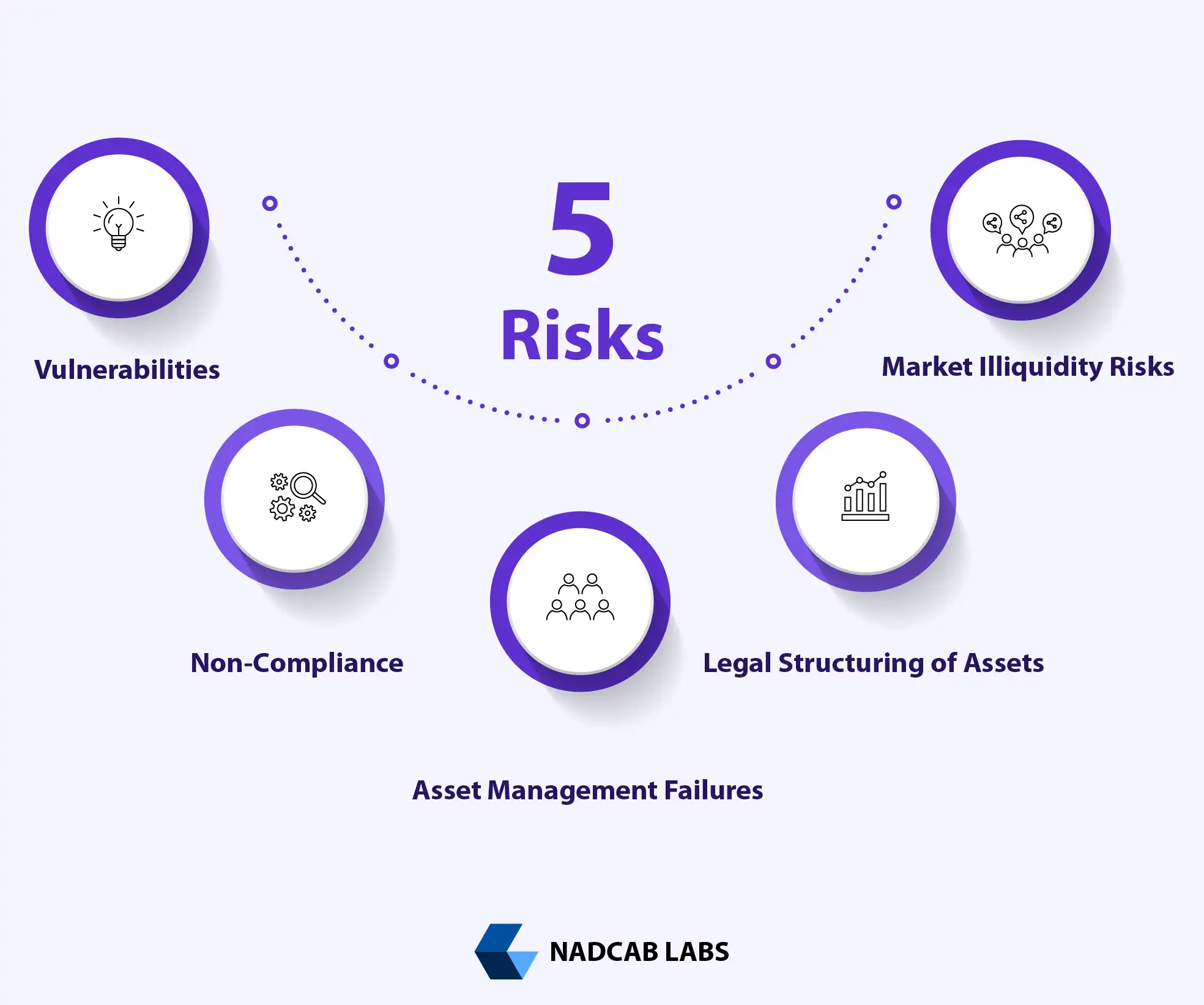
Common Risks in Real Estate Tokenization
1. Digital Contract Vulnerabilities
Digital contracts control ownership transfers, payouts, and compliance logic. Any flaw in contract code can be exploited, leading to:
- Unauthorized token transfers
- Manipulated payout calculations
- Permanent locking of investor funds
Since Digital contracts are immutable once deployed, security flaws can be difficult to correct without costly migrations.
2. Regulatory Non-Compliance
Non-compliance with securities laws, property regulations, or investor protection rules is one of the most common failure points in tokenization projects.
Potential consequences include:
- Regulatory enforcement actions
- Token trading restrictions
- Forced shutdown of platforms
- Legal liability for issuers
This risk increases significantly in cross-border offerings.
3. Custody and Asset Management Failures
Tokenized real estate platforms rely on custodians to manage:
- Private keys
- Investor funds
- Asset documentation
Weak custody practices can result in theft, loss of access, or mismanagement of underlying assets, directly impacting investor capital.
4. Poor Legal Structuring of Assets
If tokens are not properly linked to legally enforceable ownership or economic rights, investors may hold tokens without real-world claims.
This risk typically arises from:
- Inadequate SPV or trust structures
- Unclear contractual rights
- Misalignment between token logic and legal documents
Such issues undermine the credibility of tokenized assets.
5. Market Illiquidity Risks
Although tokenization improves liquidity, it does not guarantee active secondary markets.
Illiquidity may occur due to:
- Limited investor participation
- Regulatory transfer restrictions
- Lack of approved trading venues
This can restrict investor exits and affect perceived asset value.
Risk Mitigation Strategies for Investor Protection

1. Digital Contract Audits and Security Testing
Independent smart contract audits are essential to identify vulnerabilities before deployment.
Best practices include:
- Multiple audit rounds
- Formal verification for critical logic
- Continuous security monitoring
Audited contracts significantly reduce technical risk.
2. Use of Licensed Custodians
Licensed custodians provide institutional-grade security for digital assets and sensitive data.
Benefits include:
- Secure key management
- Regulatory compliance
- Insurance coverage
- Operational accountability
Custody solutions are especially critical for institutional investors.
3. Transparent Disclosures and Documentation
Transparency is key to investor trust.
Platforms should clearly disclose:
- Asset details and valuation methods
- Token rights and limitations
- Legal and regulatory risks
- Fee structures and payout mechanisms
Well-documented offerings reduce disputes and regulatory scrutiny.
4. Strong Governance and Oversight Models
Effective governance frameworks ensure accountability and long-term platform stability.
Common governance measures include:
- Defined roles and responsibilities
- Investor voting rights
- Regular audits and reporting
- Legal oversight committees
Strong governance aligns platform operators with investor interests.
Investor Protection as a Strategic Advantage
Investor protection is not just a compliance requirement, it is a competitive differentiator. Platforms that proactively address security risks and implement robust protection mechanisms are more likely to attract institutional capital and achieve sustainable growth.
Cost of Real Estate Tokenization – Detailed Breakdown
| Cost Component | Description | Typical Range / Notes |
|---|---|---|
| Legal Structuring & Compliance | Setting up SPV or LLC, securities structuring, legal documentation, contracts, regulatory filings, and advisory support. | Varies by jurisdiction, asset structure, and regulatory complexity.[1] |
| Digital Contract & Audit | Token logic, smart contract deployment, and independent security audits to reduce technical and operational risk. | Scope depends on token standard, automation level, and audit depth. |
| Platform Frontend & Backend | Development of investor dashboards, admin panels, blockchain integrations, payment rails, and user experience layers. | Depends on feature depth, scalability needs, and system architecture. |
| Compliance Tools KYC AML | Identity verification, risk screening, transaction monitoring, and regulatory reporting workflows. | Based on provider selection, geography coverage, and verification volume. |
| Token Issuance Fees | Fees charged by tokenization platforms or service providers for issuance, onboarding, and lifecycle support. | Structured as percentage based or fixed service tiers. |
| Marketing & Investor Outreach | Investor education, pitch materials, PR campaigns, and distribution strategy execution. | Highly variable depending on target investor base and market reach. |
| Custody & Escrow Services | Secure custody of digital assets, escrow management, and controlled investor fund flows. | Often recurring and dependent on transaction volume and asset size. |
| Ongoing Maintenance & Compliance | Platform upgrades, regulatory reporting, security updates, and blockchain network operations. | Recurring operational requirement for long term platform stability. |
ROI and Business Benefits of Real Estate Tokenization
Real Estate Tokenization Explained from an ROI perspective shows how blockchain-based property ownership creates value across the entire investment lifecycle. By digitizing real estate assets, tokenization improves liquidity, reduces operational friction, and unlocks new revenue opportunities for both investors and asset owners.
According to Investopedia, tokenized real estate enables fractional ownership, faster transactions, and improved transparency compared to traditional property investment models.[2]
Investor Benefits of Tokenized Real Estate
1. Fractional Access to Premium Properties
Tokenization allows investors to buy fractions of high-value real estate assets instead of purchasing entire properties. Each token represents a proportional economic and legal interest, lowering the capital barrier to entry.
This model enables retail and institutional investors to access commercial buildings, rental properties, and global assets that were previously out of reach.
2. Global Portfolio Diversification
Blockchain removes geographical limitations, allowing investors to participate in real estate projects across different countries through compliant token offerings.
This global reach improves portfolio diversification and reduces exposure to single-market risks.
3. Transparent and Verifiable Returns
All ownership records, transactions, and income distributions are stored on an immutable blockchain ledger. Investors can independently verify rental income, dividend payouts, and asset performance in real time.
This level of transparency significantly reduces information asymmetry and increases investor trust.
4. Faster Settlements and Lower Transaction Costs
Digital contracts automate settlement, compliance checks, and fund distribution. This reduces reliance on intermediaries such as brokers, escrow agents, and manual registries.
As a result, transactions settle faster and operational costs are significantly reduced.
Asset Owner Benefits of Real Estate Tokenization
1. Improved Capital Efficiency
Property owners can unlock capital without selling the entire asset by offering fractional tokens to investors. This enables faster fundraising and flexible capital structuring compared to traditional debt or equity routes. Tokenization also reduces dependency on bank financing.
2. Expanded Global Investor Base
Tokenized assets can be offered to a wider pool of investors, including international participants, subject to regulatory compliance. This broader investor access improves demand and pricing efficiency.
3. Automated Operations and Lower Administrative Overhead
Digital contracts automate dividend distribution, investor onboarding, compliance enforcement, and reporting. This reduces manual processes, human error, and ongoing administrative costs.
Operational automation improves scalability for asset managers handling multiple properties.
4. Liquidity Creation for Traditionally Illiquid Assets
Real estate has historically been illiquid. Tokenization introduces the possibility of secondary trading on regulated marketplaces, allowing partial exits without selling the entire property.
Liquidity attracts more investors and increases overall asset attractiveness.
ROI Impact Summary for Real Estate Tokenization
Real Estate Tokenization Explained clearly demonstrates how ROI improves through:
- Reduced transaction and compliance costs
- Faster capital deployment and settlement cycles
- Access to global investor demand
- Improved asset liquidity
- Transparent and auditable performance data
Common Misconceptions About Real Estate Tokenization
When exploring Real Estate Tokenization Explained, many new investors and industry participants hold misconceptions that can create confusion or hesitation. Clearing these doubts not only builds credibility but also helps stakeholders make informed decisions. Below, we address some of the most common myths.
1. Tokenization Equals Crypto Speculation
Misconception: Many people assume that tokenized real estate is purely speculative like cryptocurrency.
Reality: Tokenized real estate represents actual ownership or economic rights in tangible properties. While tokens are traded digitally on blockchain platforms, they are backed by physical assets, offering stability and long-term value, unlike volatile cryptocurrencies.
2. Tokenized Assets Have No Legal Backing
Misconception: Some believe that owning a token does not confer any enforceable rights.
Reality: When structured correctly, real estate tokens are fully compliant with legal frameworks. Platforms often use SPVs, trusts, or contracts to ensure that each token corresponds to enforceable ownership, profit-sharing rights, or rental income entitlements.
3. Tokenization Means Fully Decentralized Ownership
Misconception: A common belief is that tokenized real estate is completely decentralized, removing the need for intermediaries.
Reality: While blockchain provides transparency and automated transactions, most real estate tokenization models still involve governance mechanisms, legal custodians, and platform operators to manage compliance, asset custody, and dispute resolution. It is not purely decentralized in the way cryptocurrencies like Bitcoin are.
Additional Misconceptions to Be Aware Of
- Tokenized real estate is only for large investors → In reality, fractional ownership allows small-scale investment.
- Tokenization eliminates all risk → Proper risk assessment, legal compliance, and audits are still essential.
- Blockchain guarantees instant liquidity → Liquidity depends on secondary markets, OTC options, and buyback mechanisms.
Myths and Facts About Real Estate Tokenization
When exploring Real Estate Tokenization Explained, many investors and industry participants encounter myths that can cause confusion or hesitation. Understanding the truth behind these misconceptions is essential to make informed decisions and take advantage of the benefits of tokenized real estate.
Tokenization is often misunderstood as speculative cryptocurrency, legally ambiguous, or fully decentralized. In reality, tokenized real estate represents asset-backed ownership, is structured to comply with laws, and provides fractional access to properties globally. Moreover, mechanisms like secondary marketplaces, OTC trading, and buybacks ensure liquidity, while proper legal frameworks mitigate risks.
Below is a detailed Myths vs. Facts table to clarify common misunderstandings:
| Myth | Fact | Explanation |
|---|---|---|
| Tokenization is just crypto speculation | Real estate tokens are asset backed | Tokens represent ownership or revenue rights linked to real physical properties rather than volatile cryptocurrencies. |
| Tokenized real estate has no legal backing | Proper legal structures exist | SPVs trusts and compliant contracts provide enforceable ownership income and profit sharing rights. |
| Tokenization is fully decentralized | Hybrid governance is used | Platforms blend blockchain transparency with legal oversight custodianship and dispute resolution mechanisms. |
| Only large investors can participate | Fractional ownership enables access | Investors can purchase partial tokens of high value assets reducing minimum capital requirements. |
| Blockchain guarantees instant liquidity | Liquidity depends on mechanisms | Secondary markets OTC trades and structured buybacks enable exits rather than instant property sales. |
| Tokenization eliminates all risk | Risks remain and require management | Market legal and technical risks still apply making audits compliance and governance essential. |
Glossary of Advanced Terms – Real Estate Tokenization Explained
Real estate tokenization involves legal, financial, and blockchain concepts that may be unfamiliar to many readers. This glossary explains key advanced terms used throughout tokenized real estate platforms, helping investors, developers, and businesses clearly understand structures, compliance, and technology without confusion.
| Term | Definition | Notes |
|---|---|---|
| SPV (Special Purpose Vehicle) | Legal entity holding the real estate asset and issuing tokens representing ownership or revenue rights. | Ensures enforceable ownership and regulatory compliance. |
| Trust Structure | Legal framework where property is placed in a trust, and tokens are issued to beneficiaries. | Often used for income rights or revenue-sharing token models. |
| Equity Tokens | Tokens representing ownership shares in a property or SPV, entitling holders to rental income and appreciation. | Suitable for long-term investors. |
| Debt Tokens | Tokens representing loans or bonds secured by real estate assets. | Fixed or variable returns, lower risk profile. |
| Revenue/Yield Tokens | Tokens representing a share of rental or operational income without direct ownership. | Income distributed automatically via Digital contracts. |
| Secondary Marketplaces | Platforms for trading tokenized real estate after initial issuance. | Functions like a stock exchange for property tokens. |
| OTC Trading | Over-the-counter trading allows large-volume token transactions between parties outside public platforms. | Maintains confidentiality and reduces market impact. |
| Buyback Mechanisms | Programs where the issuer or platform repurchases tokens under predefined conditions to enhance liquidity and price stability. | Can be automated via Digital contracts. |
| ERC-20 | Fungible token standard used for fractional ownership or revenue-sharing properties. | Interchangeable, ideal for retail investors. |
| ERC-721 | Non-fungible token standard representing unique properties or assets. | Best for high-value single-property representation. |
| ERC-3643 | Compliant security token standard with embedded KYC/AML and jurisdiction restrictions. | Suitable for institutional-grade tokenized real estate. |
| KYC (Know Your Customer) | Regulatory process for verifying investor identities. | Ensures AML compliance and investor eligibility. |
| AML (Anti-Money Laundering) | Regulatory requirements to prevent illicit financial activities. | Critical in tokenized real estate with global investors. |
| Jurisdictional Compliance | Adherence to property, securities, and digital asset regulations based on the operating country. | Examples: SEC (US), DFSA (UAE), MiCA (EU), SEBI (India). |
| Custody Services | Secure management of digital assets, private keys, and investor funds. | Ensures safety of tokens and enforceable rights. |
| Liquidity Mechanisms | Methods to facilitate buying, selling, or exchanging tokenized assets. | Includes secondary marketplaces, OTC trading, buybacks. |
| Token Issuance Fee | Charges by tokenization platforms for creating and issuing tokens. | Typically 1–5% of asset value or fixed fee. |
| MiCA (Markets in Crypto Assets) | EU regulation providing legal clarity for digital securities including tokenized real estate. | Harmonizes cross-border token offerings within the EU. |
| Compliance-by-Design | Embedding legal and regulatory rules into platform architecture and Digital contracts. | Ensures real-time KYC/AML and jurisdictional compliance. |
| Hybrid Governance | Governance model combining blockchain automation with legal custodians and platform oversight. | Balances decentralization with regulatory compliance. |
| REIT-Style Portfolios | Tokenized investment structures representing diversified portfolios of multiple properties. | Offers diversification and reduced risk for investors. |
| On-Chain vs Off-Chain | On-chain blockchain-recorded ownership and transactions Off-chain legal documents valuations and management data. | Both components are critical for enforceability and transparency. |
| Digital Contract Audits | Security and legal review of Digital contracts to prevent vulnerabilities. | Independent audits and formal verification recommended. |
| Jurisdiction-Specific Restrictions | Transfer ownership and participation rules based on local laws. | Critical for cross-border tokenized offerings. |
| Institutional-Grade Custody | Professional custody solutions for handling large-scale tokenized assets. | Required for regulated and high-value investments. |
| Token Redemption / Exit Mechanisms | Methods for investors to convert tokens back to cash or underlying asset value. | Can include buybacks secondary sales or OTC settlements. |
People Also Ask
Q1.What types of real estate are most suitable for tokenization?
Real estate tokenization can be applied to a wide range of property types, but certain assets are more conducive due to liquidity potential and investor demand. Residential properties, including high-value apartments and multi-family homes, attract retail investors through fractional ownership. Commercial buildings like office complexes and shopping malls are ideal for institutional and corporate investors seeking higher rental yields. Growth projects and under-construction properties allow early-stage investment in future income streams, while REIT-style portfolios enable diversified exposure across multiple assets. Understanding which asset type fits your investment goals is key to effective tokenization.
Q2.How does fractional ownership in tokenized real estate work?
Fractional ownership allows investors to buy a portion of a property through digital tokens, reducing the capital barrier to entry. Each token represents a legal and economic claim to the underlying asset, such as rental income, appreciation, or voting rights. Blockchain ensures transparency by recording ownership immutably, while Digital contracts automate payouts and compliance rules. Fractional ownership also enables investors to diversify their portfolios across multiple properties or regions, improving risk management without requiring full property purchases.
Q3.What are the primary token models used in real estate tokenization?
Tokenized real estate typically uses three main models: equity tokens, representing ownership shares with rental or appreciation benefits; debt tokens, representing bonds or loans secured by property, often providing fixed or variable returns; and revenue-sharing or yield tokens, offering a portion of rental or operational income without direct ownership. Additionally, SPV-based structures are widely used to legally link tokens to enforceable asset rights. The choice of token model depends on investor type, regulatory compliance, and risk appetite.
Q4.How is liquidity achieved in tokenized real estate markets?
Liquidity in tokenized real estate is provided through multiple mechanisms. Secondary marketplaces allow investors to trade tokens after initial issuance, enhancing price discovery and market access. Over-the-counter (OTC) trading enables large-volume, confidential transactions between investors without disrupting market prices. Some platforms implement buyback programs, where tokens can be repurchased under predefined rules to provide an exit option and maintain price stability. Digital contracts automate these processes, ensuring transparent and timely execution for token holders.
Q5.What blockchain standards are recommended for real estate tokenization?
The choice of blockchain and token standard significantly impacts security, compliance, and investor accessibility. ERC-20 is suitable for fungible fractional ownership models, enabling retail investor participation and easy integration with wallets and exchanges. ERC-721 is ideal for unique, high-value properties requiring non-fungible representation. ERC-3643 is designed for regulated security tokens, embedding KYC/AML rules and jurisdiction-based investor eligibility, making it perfect for institutional-grade, cross-border offerings. Platform architects must align token standards with investment models and legal requirements.
Q6.How do legal and regulatory frameworks affect tokenized real estate?
Legal compliance is critical for enforceability and investor trust. Tokenized real estate does not replace property law; it digitizes rights within legal frameworks. SPVs, trusts, or revenue assignment agreements ensure each token corresponds to an enforceable claim. Regulatory considerations vary by region: the US requires SEC-compliant security tokens, the EU follows MiCA guidelines, the UAE offers sandbox approvals, and India is evolving under SEBI and RBI frameworks. Jurisdictional compliance includes KYC/AML enforcement, investor categorization, and adherence to securities regulations to avoid penalties.
Q7.What are the main risks associated with real estate tokenization?
Tokenized real estate combines physical assets with blockchain technology, which introduces both technical and legal risks. Smart contract vulnerabilities can allow unauthorized transfers or frozen funds. Poor legal structuring may leave tokens without enforceable rights. Custody failures or asset mismanagement can threaten investor capital. Regulatory non-compliance risks fines, trading restrictions, or platform shutdowns. Market illiquidity may limit exits if secondary marketplaces or OTC channels are inactive. Mitigation strategies include audits, licensed custodians, compliance-by-design, and robust governance.
Q8.What are the typical costs involved in developing a real estate tokenization platform?
The cost of tokenizing real estate depends on several factors, including the legal complexity of the property, the chosen tokenization model (equity, debt, revenue-sharing, or SPV-based), the technology stack and blockchain platform, compliance requirements such as KYC/AML and jurisdiction-specific regulations, and the scale of the platform or number of investors. Additional considerations include the sophistication of Digital contracts, investor dashboard features, custody solutions, and ongoing maintenance and compliance processes. Understanding these factors helps investors and developers plan budgets effectively for tokenization projects.
Q9.How can institutional investors benefit from real estate tokenization?
Institutional investors gain multiple advantages through tokenized real estate. Fractional ownership allows portfolio diversification across properties, regions, and asset classes. Blockchain automation reduces operational costs and settlement times, eliminating intermediaries. Transparency through immutable ownership records improves reporting and audit efficiency. Cross-border token offerings expand investor reach, while integration with DeFi lending and yield products unlocks liquidity without asset sale. Together, these benefits create cost-efficient, scalable, and globally accessible investment opportunities.
Q10.How do tokenized real estate platforms ensure investor protection?
Investor protection is achieved through a combination of legal, technical, and operational measures. Digital contracts undergo independent audits to minimize vulnerabilities. Licensed custodians secure funds, assets, and private keys. Compliance-by-design ensures real-time KYC/AML enforcement and jurisdictional restrictions. Transparent disclosures communicate asset details, token rights, and risks. Strong governance frameworks, including investor voting, audits, and legal oversight, further safeguard interests. These measures build credibility, reduce exposure to risk, and attract both retail and institutional participants.
Explore Services
Related Services
Reviewed by

Aman Vaths
Founder of Nadcab Labs
Aman Vaths is the Founder & CTO of Nadcab Labs, a global digital engineering company delivering enterprise-grade solutions across AI, Web3, Blockchain, Big Data, Cloud, Cybersecurity, and Modern Application Development. With deep technical leadership and product innovation experience, Aman has positioned Nadcab Labs as one of the most advanced engineering companies driving the next era of intelligent, secure, and scalable software systems. Under his leadership, Nadcab Labs has built 2,000+ global projects across sectors including fintech, banking, healthcare, real estate, logistics, gaming, manufacturing, and next-generation DePIN networks. Aman’s strength lies in architecting high-performance systems, end-to-end platform engineering, and designing enterprise solutions that operate at global scale.