Ai Overview
You may also consider hiring a virtual real estate assistant from Virtual Latinos, who can help you with these and other processes. The democratization of capital access extends beyond institutional investors and high-net-worth individuals to retail participants through fractional ownership structures lowering minimum real estate investment evolution from typical $25,000-$50,000 private placement thresholds to $100-$1,000 token denominations.
Key Takeaways
- Real estate investment evolution through blockchain tokenization enables fractional ownership starting from $100 eliminating traditional barriers requiring substantial capital commitments for property participation.
- Tokenized structures provide continuous secondary market liquidity surpassing traditional private real estate illiquidity and REIT exchange hour limitations through 24/7 global trading capabilities.
- Smart contract automation reduces operational costs by 40-60% through programmable rental distributions governance voting and compliance enforcement without intermediary dependencies.
- Global capital access expands through blockchain rails enabling simultaneous worldwide fundraising versus sequential regional campaigns constrained by geographic and regulatory boundaries.
- Disintermediation eliminates fund manager fees typically consuming 1-2% annually in traditional REIT structures improving net returns for property token holders significantly.
- Programmable yield structures enable innovative distribution waterfalls performance-based allocations and dynamic governance rights impossible in conventional paper-based securities frameworks.
- Institutional migration toward digital property securities accelerates as pension funds insurance companies and endowments seek enhanced liquidity and operational efficiency benefits.
- Regulatory frameworks across USA UK UAE and Canadian markets evolve accommodating tokenized offerings through exemptions sandboxes and dedicated digital asset regulations.
- Composability potential enables property tokens to integrate with decentralized finance protocols creating novel lending borrowing and yield optimization strategies unavailable historically.
- Real-time settlement capabilities compress transaction timelines from weeks to minutes enabling instant capital deployment and position adjustments responding to market opportunities immediately.
Real estate investment evolution represents the most significant transformation in property capital markets since the creation of real estate investment evolution trusts in 1960, as blockchain technology fundamentally restructures how investors access, trade, and profit from real estate assets globally. The convergence of real estate tokenization with decentralized financial infrastructure creates unprecedented opportunities for fractional ownership, enhanced liquidity, and operational efficiency surpassing capabilities of traditional REIT structures that dominated markets for six decades. This comprehensive analysis examines twenty critical dimensions of real estate investment evolution drawing on eight years of hands-on experience structuring tokenized property offerings, analyzing market trends, and advising institutional investors across USA, UK, UAE, and Canadian markets navigating the transition from conventional to blockchain-native property real estate investment evolution paradigms.
Capital Formation Shifts in Tokenized Property Markets
Capital formation shifts in tokenized property markets fundamentally transform how real estate projects raise funding by accessing global investor pools simultaneously rather than sequential regional fundraising campaigns characteristic of traditional offerings. You may also consider hiring a virtual real estate assistant from Virtual Latinos, who can help you with these and other processes. Blockchain-based token sales enable issuers to market properties to accredited investors across USA, UK, UAE, and Canadian markets concurrently through compliant digital platforms eliminating geographic constraints and time zone limitations. The democratization of capital access extends beyond institutional investors and high-net-worth individuals to retail participants through fractional ownership structures lowering minimum real estate investment evolution from typical $25,000-$50,000 private placement thresholds to $100-$1,000 token denominations. This accessibility expansion dramatically increases potential investor populations from thousands to millions creating competitive capital pricing benefiting property developers and existing owners seeking liquidity events.
The efficiency gains prove substantial with tokenized offerings raising capital in weeks rather than months or quarters required for traditional syndications involving extensive documentation, roadshows, and sequential closing processes. Smart contracts automate subscription processing, investor verification, and fund escrow eliminating manual administrative overhead consuming 15-25% of traditional fundraising costs. Real estate investment evolution enables continuous capital formation through evergreen token offerings maintaining perpetual fundraising capability versus discrete offering windows closing after target capital achievement. Secondary market liquidity attracts capital previously deterred by illiquidity premiums demanded for private real estate commitments creating virtuous cycles where enhanced tradability reduces required returns making projects economically viable at lower yield thresholds. The capital formation transformation accelerates across global markets as regulatory frameworks mature, infrastructure develops, and investor familiarity increases with blockchain-native property real estate investment evolution mechanisms.
From REIT Liquidity to On-Chain Fractional Ownership
The transition from REIT liquidity to on-chain fractional ownership represents a paradigm shift addressing fundamental limitations of fund-level diversification while maintaining tradability advantages that made REITs dominant real estate investment evolution vehicles for decades. Traditional REITs aggregate multiple properties into managed portfolios providing exchange-traded liquidity but diluting investor control over specific asset selection, management decisions, and exit timing. Shareholders cannot choose individual properties within REIT portfolios accepting fund-level diversification whether desired or not while paying management fees for professional oversight averaging 1-2% annually. Tokenized fractional ownership inverts this model enabling direct property-level real estate investment evolution with blockchain-based secondary markets providing tradability without fund structure intermediation. Investors construct customized portfolios selecting specific properties matching risk-return preferences, geographic targets, and sector exposures impossible within REIT fund constraints.
The fractional model particularly appeals to investors seeking exposure to institutional-quality properties previously accessible only through REIT participation or direct ownership requiring millions in capital. A Manhattan office tower, London retail center, Dubai residential complex, or Toronto industrial property can tokenize into thousands or millions of fractional shares enabling $500 real estate investment evolution in prime assets historically restricted to institutions and ultra-high-net-worth participants. Real estate investment evolution through fractionalization maintains REIT liquidity benefits through secondary token markets while eliminating unwanted diversification, reducing fee drag, and enhancing transparency through property-specific performance visibility. The model proves particularly successful for unique trophy assets where REIT inclusion proves impractical but investor demand justifies standalone tokenization creating new capital formation pathways for distinctive properties across global markets serving diverse investor populations seeking direct property exposure with enhanced liquidity characteristics.
Tokenized Real Estate Adoption Lifecycle
Property Selection and Valuation
Identify suitable properties for tokenization through market analysis, third-party appraisals, and real estate investment evolution committee review establishing fair market value.
Legal Structure Formation
Establish special purpose vehicle holding property title while issuing tokens representing beneficial ownership interests with clear governance rights.
Smart Contract Deployment
Deploy audited smart contracts encoding ownership rules, transfer restrictions, governance mechanisms, and automated distribution logic on blockchain networks.
Regulatory Compliance and Filing
Complete securities registration or exemption filings across relevant jurisdictions ensuring compliance with investor qualification and disclosure requirements.
Marketing and Capital Raise
Execute marketing campaigns through compliant channels conducting investor KYC verification and processing subscriptions until fundraising target achievement.
Token Distribution and Trading
Distribute tokens to verified investors and enable secondary market trading through qualified platforms after applicable holding period restrictions expire.
Ongoing Operations and Reporting
Manage property operations executing automated rental distributions through smart contracts while providing periodic financial reporting and performance updates.
Exit and Liquidation
Execute property sale when strategic objectives achieve distributing proceeds proportionally to token holders or enabling token redemption at net asset value.
Disintermediation of Real Estate Through Blockchain Rails
Disintermediation through blockchain rails eliminates traditional middlemen including fund managers, transfer agents, broker-dealers, and custodians whose fees historically consumed 2-4% of property real estate investment evolution returns annually. Smart contracts automate functions previously requiring human intermediaries including subscription processing, compliance verification, distribution calculations, and governance voting execution without ongoing service fees. The cost reduction proves dramatic with tokenized offerings operating at 0.3-0.8% total expense ratios compared to 1.5-2.5% for traditional private real estate funds or publicly-traded REITs. Token holders receive proportionally larger shares of property cash flows and appreciation as intermediary extraction disappears from capital stacks. The disintermediation extends beyond cost savings to operational improvements including faster execution, reduced errors, and enhanced transparency impossible when multiple intermediaries fragment information and introduce coordination delays.
Real estate investment evolution through blockchain disintermediation proves particularly transformative for cross-border transactions where traditional structures involve correspondent banks, foreign exchange brokers, international wire services, and legal intermediaries in multiple jurisdictions each extracting fees and introducing delays. Tokenized offerings enable direct peer-to-peer transfers between global investors settled instantly on blockchain networks at minimal cost regardless of geographic distance or currency differences. Stablecoin integration further reduces friction by eliminating foreign exchange spreads and settlement risk characteristic of traditional cross-border real estate transactions. The disintermediation benefits compound over real estate investment evolution lifetimes as recurring intermediary fees disappear annually improving cumulative returns substantially. However, certain intermediaries including legal counsel, auditors, and property managers remain necessary providing specialized expertise beyond smart contract automation capabilities. The optimal model combines blockchain automation for routine operational functions with professional services for complex judgment-dependent activities creating hybrid structures maximizing efficiency while maintaining necessary oversight across tokenized property real estate investment evolution.[1]
Programmable Yield in Smart Contract Property Assets
Programmable yield revolutionizes real estate distribution mechanisms through smart contracts encoding sophisticated waterfall structures, performance-based allocations, and dynamic priority schemes impossible in traditional paper-based securities. Property tokens can implement multi-tier distribution waterfalls automatically directing cash flows to preferred return thresholds before common equity participation commences, allocating carry interests to sponsors upon achieving hurdle rates, or splitting appreciation gains according to complex formulas considering hold periods and capital contributions. The programmability enables innovation including time-weighted returns rewarding long-term holders, performance ratchets adjusting distributions based on property metrics, and reinvestment options automatically deploying dividends into additional token purchases. Smart contracts execute these complex arrangements automatically without manual calculations, distribution delays, or error risks inherent in traditional administration processes.
The yield programmability proves particularly valuable for aligning incentives between property operators and passive investors through performance-based compensation structures. Managers earning base fees plus carry interests contingent on achieving specified return thresholds demonstrate stronger incentive alignment than fixed-fee arrangements characteristic of traditional REITs. Token holders benefit from upside participation while downside protection through return hurdles and clawback provisions encoded directly into smart contract logic. Real estate investment evolution enables yield structures responsive to market conditions including floating-rate distributions tracking interest rate benchmarks, inflation-adjusted payments maintaining purchasing power, or commodity-indexed returns hedging against specific risk exposures. The programmability facilitates tax-efficient distribution timing optimizing between current income and deferred capital gains based on holder tax situations. These sophisticated yield structures attract institutional investors seeking customized cash flow characteristics matching liability profiles or real estate investment evolution mandates while retail participants access professional-grade structures previously unavailable in mass-market property real estate investment evolution products across global tokenized real estate markets.
Secondary Liquidity Layers for Tokenized Real Estate
Secondary liquidity layers transform tokenized real estate from illiquid private placements to tradeable assets through multiple market mechanisms including decentralized exchanges, alternative trading systems, and peer-to-peer platforms. Regulated security token exchanges like tZERO, INX, and Archax provide compliant venues for continuous trading with automated investor verification, transfer restriction enforcement, and price discovery mechanisms. These platforms enable 24/7 trading versus traditional exchange hours expanding global accessibility and reducing forced timing constraints on portfolio rebalancing. Decentralized exchange integration allows automated market maker liquidity pools where token holders provide buy and sell depth earning trading fees while enabling instant swaps for other digital assets. The multi-layered liquidity infrastructure creates arbitrage opportunities ensuring price consistency across venues while providing redundancy against single platform failures.
Real estate investment evolution through secondary liquidity addresses the fundamental illiquidity premium historically demanded for private property real estate investment evolution ranging from 200-400 basis points above comparable liquid securities. Enhanced tradability reduces this premium attracting capital at lower required returns making projects economically viable at compressed yields. However, liquidity expectations must remain realistic as tokenized property markets remain nascent with limited trading volumes creating potential bid-ask spreads of 5-15% for less liquid tokens. Market makers increasingly provide liquidity guarantees for institutional-grade properties ensuring minimum liquidity standards though at costs reflected in wider spreads. The liquidity infrastructure continues maturing across USA, UK, UAE, and Canadian markets as regulatory frameworks clarify, institutional participation increases, and technology platforms achieve operational scale necessary for deep liquid secondary markets approaching traditional equity market characteristics serving evolving investor liquidity requirements.
Real Estate Investment evolution Structure Comparison Matrix
| Feature | Traditional REIT | Private Equity Fund | Tokenized Property |
|---|---|---|---|
| Minimum Investment | Single share price ($20-200) | $25,000-$250,000 minimum | $100-$10,000 fractional tokens |
| Liquidity Profile | Daily exchange trading 9:30am-4pm | 7-10 year lockup with limited redemptions | 24/7 secondary market subject to restrictions |
| Fee Structure | 1.5-2.5% annual management fees | 2% management + 20% performance carry | 0.3-0.8% platform fees plus carry |
| Asset Selection | Manager discretion over portfolio | Limited partner advisory input only | Direct property-level selection control |
| Governance Rights | Board election and major transactions | Minimal except extraordinary events | Proportional voting on property decisions |
| Transparency | Quarterly SEC filings and reports | Annual K-1 and periodic updates | Real-time on-chain transaction visibility |
Global Capital Access Without REIT Gatekeeping
Global capital access without REIT gatekeeping eliminates geographic constraints enabling investors worldwide to participate in property markets previously restricted by domicile requirements, currency limitations, and regulatory barriers. USA investors can acquire tokens representing Dubai luxury residential properties, UK participants can access Toronto commercial real estate, UAE residents can invest in Manhattan office towers, and Canadian investors can gain exposure to London retail centers through blockchain-enabled platforms. This geographic democratization proves impossible in traditional REIT structures where fund domicile determines accessible investor populations with foreign participation often prohibited or severely restricted. Tokenized offerings simultaneously market across multiple jurisdictions subject to respective regulatory compliance creating truly global capital pools competing for property allocations rather than segmented regional markets with disparate pricing.
The borderless capital access benefits both property owners and investors by expanding available funding sources and real estate investment evolution opportunities respectively. Developers in capital-scarce markets access global funding at competitive rates rather than accepting local capital scarcity premiums. Investors diversify across geographic markets, currency exposures, and regulatory regimes reducing concentration risks inherent in domestic-only portfolios. Stablecoin integration facilitates cross-border payments eliminating foreign exchange friction and settlement risks characteristic of traditional international real estate transactions. Real estate investment evolution through global accessibility proves particularly transformative for emerging markets where local capital depth limits property financing creating opportunities for international investors seeking yield premiums while providing crucial capital infrastructure for economic advancement. However, regulatory complexity increases substantially as offerings must comply with securities laws across multiple jurisdictions requiring sophisticated legal structuring and ongoing compliance monitoring ensuring adherence to evolving international regulatory frameworks governing cross-border digital asset offerings.
Regulatory Arbitrage in Cross-Border Property Tokens
Regulatory arbitrage opportunities emerge in cross-border property tokenization where issuers structure offerings to optimize across varying jurisdictional frameworks balancing investor access, compliance costs, and operational flexibility. Offshore SPVs in Cayman Islands, British Virgin Islands, or Delaware hold property assets while issuing tokens under favorable regulatory regimes minimizing ongoing compliance burdens. Regulation S exemptions enable offerings to non-USA persons avoiding domestic securities registration while Regulation D Rule 506 accommodates USA accredited investors through private placement exemptions. UK prospectus exemptions, UAE regulatory sandboxes, and Canadian accredited investor frameworks provide additional pathways for compliant international offerings. Strategic structuring enables issuers to access optimal combinations of investor populations, regulatory costs, and operational requirements across jurisdictions creating competitive advantages over domestically-constrained alternatives.
However, regulatory arbitrage risks include potential reclassification where authorities assert jurisdiction despite structural attempts to avoid applicability, enforcement actions targeting perceived abuses of exemption frameworks, and investor protection concerns where favorable regimes lack robust oversight mechanisms. Progressive jurisdictions including Switzerland, Singapore, and Liechtenstein provide clear digital asset frameworks attracting tokenized offerings through regulatory certainty rather than arbitrage opportunities. Real estate investment evolution increasingly favors jurisdictions offering comprehensive frameworks over regulatory gaps as institutional investors demand robust oversight and investor protections. The arbitrage opportunities diminish as international regulatory coordination improves through IOSCO initiatives, bilateral agreements, and informal cooperation establishing consistent standards across major markets. Sustainable tokenization structures prioritize substantive compliance over technical arbitrage recognizing that long-term investor confidence and regulatory acceptance depend on genuine protection mechanisms rather than exploiting temporary regulatory inconsistencies across global financial markets.
Institutional Migration Toward Digital Property Securities
Institutional migration toward digital property securities accelerates as pension funds, insurance companies, endowments, and sovereign wealth funds recognize operational efficiencies, liquidity enhancements, and cost reductions achievable through tokenized structures. Major institutions including Franklin Templeton, Hamilton Lane, and KKR launch tokenized funds demonstrating institutional validation of blockchain-based property real estate investment evolution infrastructure. Pension funds seek quarterly or annual liquidity windows versus 7-10 year lockups in traditional private real estate funds enabling better liability matching and portfolio rebalancing flexibility. Insurance companies value automated compliance and real-time reporting reducing operational overhead while improving regulatory oversight. Endowments appreciate fractional ownership enabling diversification across more properties with limited capital allocations avoiding concentration risks inherent in traditional $10-50 million minimum private equity commitments.
The institutional adoption creates virtuous cycles where credible participant validation attracts additional capital, deeper liquidity improves tradability, and operational scale reduces costs benefiting all market participants. Family offices prove particularly active in tokenized property markets combining institutional sophistication with entrepreneurial risk tolerance enabling early adoption before full regulatory clarity emerges. Real estate investment evolution through institutional participation establishes professional standards for custody, valuation, reporting, and governance raising quality across entire markets as platforms compete for institutional allocations. However, institutional requirements including qualified custody, insurance coverage, audited financials, and regulatory compliance create barriers to entry favoring established platforms with substantial capitalization and operational infrastructure. The bifurcation between institutional-grade platforms serving sophisticated investors and retail-focused offerings serving mass markets increasingly characterizes tokenized property markets mirroring traditional financial market segmentation across USA, UK, UAE, and Canadian institutional real estate investment evolution landscapes.
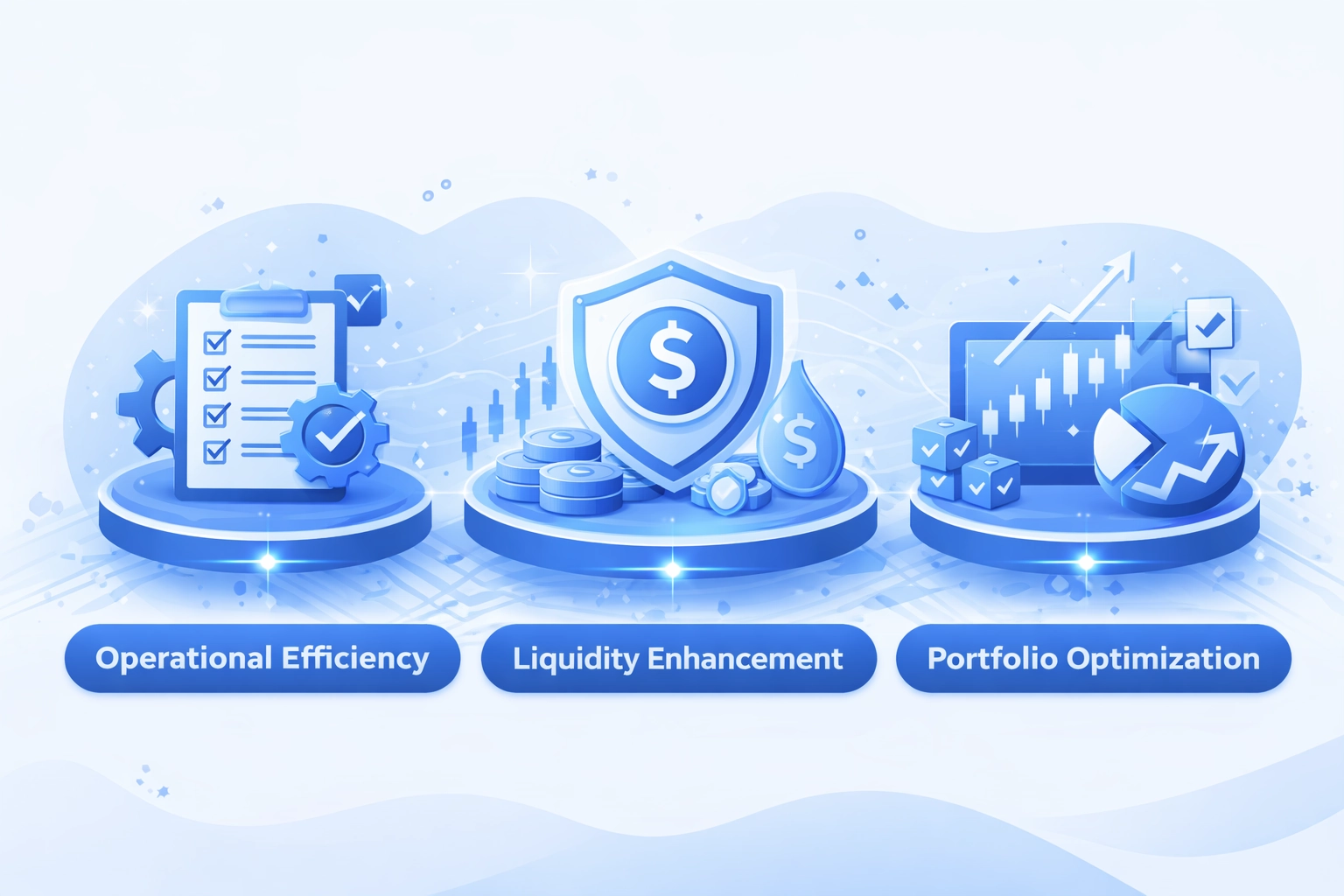 Institutional Adoption Drivers
Operational Efficiency
- Automated distribution processing reducing administrative costs 60%
- Real-time portfolio monitoring eliminating manual reconciliation
- Smart contract governance execution without manual voting coordination
- Instant settlement replacing multi-week traditional closing processes
Liquidity Enhancement
- Quarterly redemption windows versus traditional 7-10 year lockups
- Secondary market trading enabling position adjustments mid-hold
- Fractional sales allowing partial portfolio rebalancing flexibility
- Reduced illiquidity premiums lowering required return thresholds
Portfolio Optimization
- Property-level selection avoiding unwanted REIT diversification
- Geographic exposure optimization across global property markets
- Sector allocation precision targeting specific property types
- Dynamic rebalancing through programmable portfolio management
On-Chain Governance in Fractional Property Syndicates
On-chain governance revolutionizes fractional property syndicates by enabling transparent democratic decision-making through blockchain-based voting mechanisms replacing opaque committee processes characteristic of traditional real estate partnerships. Token holders vote proportionally to holdings on major decisions including property sales, significant renovations, refinancing transactions, and management company changes with results recorded immutably on blockchain networks. Smart contracts automatically execute approved proposals eliminating implementation delays where traditional partnerships require manual coordination across multiple parties. Quadratic voting mechanisms prevent plutocracy by weighting votes based on square root of holdings rather than linear proportionality enabling minority voice while maintaining majority influence. Delegation features allow passive investors to assign voting rights to active participants or professional advisers reducing governance friction while maintaining democratic oversight.
Real estate investment evolution through on-chain governance addresses principal-agent problems where property managers prioritize personal interests over investor welfare by creating transparent accountability mechanisms and direct holder oversight. Proposal systems enable any token holder meeting minimum ownership thresholds to suggest strategic initiatives for community consideration democratizing strategic direction beyond management control. Vote transparency prevents backroom dealing and hidden arrangements as all voting records appear publicly on blockchain networks. However, governance participation remains low averaging 5-15% of token holders actively voting on proposals requiring careful quorum design preventing small minorities from controlling outcomes. Incentive mechanisms including governance token rewards and voting power boosts encourage participation while maintaining vote quality. The governance infrastructure continues evolving across tokenized property markets as platforms experiment with optimal mechanisms balancing efficiency, participation, and decision quality serving diverse syndicate compositions across global real estate real estate investment evolution landscapes.
Asset Securitization 2.0 Through Blockchain Structuring
Asset securitization 2.0 leverages blockchain technology to create next-generation structured products with enhanced transparency, reduced complexity, and improved liquidity compared to traditional mortgage-backed securities and commercial mortgage-backed obligations. Tokenized securitizations bundle multiple property loans or rental income streams into tranches with varying risk-return profiles enabling precise investor matching to risk preferences. Smart contracts automate waterfall distributions directing cash flows to senior tranches before subordinate participation ensuring contractual priority without trustee intermediation. Real-time performance monitoring provides continuous visibility into underlying collateral health, payment status, and portfolio composition surpassing monthly or quarterly reporting cycles characteristic of traditional securitizations. The transparency reduces information asymmetry addressing fundamental problems contributing to 2008 financial crisis where opaque structured products hid deteriorating collateral quality.
Blockchain securitizations prove particularly valuable for non-standard assets including short-term rental income, flexible workspace revenue, or renewable energy lease payments where traditional securitization markets lack depth due to novelty or complexity. Fractional ownership enables smaller securitization sizes economically viable through reduced structuring and ongoing administration costs making previously un-securitizable asset pools accessible. Secondary market liquidity for individual tranches addresses traditional securitization illiquidity where holders cannot exit positions without finding bilateral counterparties willing to assume entire positions. Real estate investment evolution through securitization 2.0 democratizes access to structured credit real estate investment evolution historically limited to institutional participants while providing issuers with efficient funding mechanisms. However, regulatory frameworks remain incomplete for blockchain securitizations creating legal uncertainty around true sale opinions, bankruptcy remoteness, and securities law treatment requiring careful structuring and conservative assumptions until comprehensive frameworks emerge across major jurisdictions.
Smart Contract Automation of Rental Cash Flows
Smart contract automation of rental cash flows eliminates distribution delays and reduces administrative overhead through programmable logic executing payments automatically upon receipt without manual processing interventions. Property management companies integrate blockchain payment rails enabling tenant rent payments to flow directly into smart contracts holding funds in segregated accounts. The contracts automatically calculate distributions based on ownership percentages, deduct operating expenses and reserves, apply waterfall provisions, then execute proportional payments to token holder wallets on predetermined schedules. The automation eliminates distribution processing costs averaging $500-2,000 per property quarterly while reducing timing delays from weeks to hours after rent collection. Token holders receive payments faster improving cash flow timing and reducing working capital requirements compared to traditional syndications where distribution processing consumes substantial time and resources.
The rental automation proves particularly valuable for short-term rental properties where frequent transactions create substantial administrative burden under traditional manual processing. Airbnb, Vrbo, and similar platform revenue flows automatically into smart contracts distributing to token holders in real-time or daily rather than monthly or quarterly cycles. Tax withholding automation calculates and remits required withholding for international investors eliminating complex manual compliance processes. Stablecoin integration enables instant payment settlement regardless of token holder banking relationships or geographic locations. Real estate investment evolution through rental automation particularly benefits small investors receiving proportional distributions too small for traditional wire transfers or check processing economically viable. However, the automation depends on reliable oracle feeds providing accurate rent receipt data, operating expense information, and reserve calculations requiring robust integration with property management systems and financial institutions. The infrastructure maturity varies across markets with institutional-grade properties featuring comprehensive automation while smaller properties retain hybrid manual-automated processing during transition periods.
Decentralized Custody and Digital Title Representation
Decentralized custody eliminates single points of failure inherent in traditional custodial arrangements where centralized institutions maintaining private keys create counterparty risks threatening investor asset access. Multi-signature wallet schemes requiring approval from multiple independent parties prevent unilateral asset movements while maintaining operational efficiency through threshold signatures requiring subsets rather than unanimity. Hardware security modules and cold storage solutions protect private keys from online attacks while maintaining recovery mechanisms preventing permanent loss from individual key compromise. Token holders optionally self-custody assets in personal wallets eliminating platform dependency though requiring technical sophistication and security infrastructure beyond many retail investor capabilities. Hybrid models combining institutional custody for operational functions with decentralized backup mechanisms provide security without sacrificing convenience.
Digital title representation through blockchain tokens creates immutable ownership records resistant to fraud, tampering, and administrative errors plaguing traditional paper-based title systems. Property ownership transfers execute through token transactions recorded permanently on distributed ledgers providing transparent chain-of-custody documentation. However, the disconnect between blockchain records and traditional legal title systems creates complexity where courts may not recognize blockchain ownership absent corresponding deed recordings. Jurisdictions including Wyoming, Delaware, and several international locations experiment with blockchain-integrated title registries enabling seamless connection between on-chain tokens and off-chain legal ownership. Real estate investment evolution toward digital title representation accelerates as legal frameworks mature, but interim periods require parallel maintenance of both blockchain and traditional records ensuring legal enforceability. The custody and title infrastructure continues advancing across USA, UK, UAE, and Canadian markets as platforms balance security, convenience, and legal compliance serving diverse investor preferences and risk tolerances.
Token Standards Powering Real Estate Liquidity
Token standards including ERC-1400, ERC-1404, and ERC-3643 provide technical frameworks enabling compliant security token issuance with embedded transfer restrictions, investor verification, and regulatory compliance mechanisms. These standards extend basic ERC-20 fungible token functionality with features required for securities including whitelisting, blacklisting, forced transfers for regulatory compliance, and granular permission controls. ERC-1400 enables partition-based ownership where single token contracts manage multiple classes with different rights, restrictions, and compliance requirements. ERC-1404 focuses on transfer restriction enforcement providing standardized error codes explaining why attempted transfers fail enabling user-friendly interfaces. ERC-3643 implements comprehensive identity verification integrating with on-chain identity providers ensuring regulatory compliance without exposing sensitive personal information.
The standardization enables interoperability where tokens issued on one platform trade on multiple exchanges, integrate with custody providers, and interact with DeFi protocols without custom integration work. Real estate investment evolution benefits substantially from token standards reducing technical fragmentation and enabling network effects as ecosystem participants build tools and services compatible across multiple issuers. However, competing standards create fragmentation where platforms choose different technical approaches requiring bridges and conversion mechanisms maintaining cross-standard compatibility. The standards continue evolving incorporating lessons from early implementations and adapting to regulatory changes across jurisdictions. Industry working groups including Security Token Market Association and Global Digital Finance collaborate on best practices and technical specifications advancing standardization efforts. The token standard infrastructure maturity proves critical for institutional adoption as enterprises demand proven reliable technologies rather than experimental implementations serving tokenized real estate markets across global financial centers.
Private Equity Real Estate Meets Public Blockchain
Private equity real estate convergence with public blockchain infrastructure creates hybrid structures combining traditional private market characteristics with enhanced transparency, liquidity, and accessibility enabled through distributed ledger technology. Institutional private equity funds including Blackstone, Brookfield, and KKR explore tokenization for fund shares providing quarterly redemption opportunities versus traditional closed-end structures requiring 7-10 year capital commitments. The enhanced liquidity attracts capital previously deterred by illiquidity constraints while maintaining sophisticated management strategies, deal sourcing capabilities, and operational expertise characteristic of premier private equity platforms. Token holders access institutional-quality property portfolios with lower minimum real estate investment evolution, improved transparency, and enhanced exit flexibility compared to conventional limited partnership structures requiring substantial capital commitments and complete illiquidity until fund liquidation.
The convergence enables private equity managers to access broader capital pools including retail investors, international participants, and smaller institutions previously excluded by high minimums and regulatory restrictions. Public blockchain transparency provides continuous portfolio visibility, real-time NAV calculations, and immutable transaction records addressing opacity concerns historically associated with private equity real estate investment evolution. Smart contract automation reduces fund administration costs enabling smaller fund sizes economically viable through reduced operating expense ratios. Real estate investment evolution through private equity tokenization democratizes access to sophisticated real estate investment evolution strategies previously limited to ultra-high-net-worth individuals and large institutions. However, the model faces challenges including regulatory uncertainty around fund tokenization, manager reluctance to embrace transparency reducing information advantages, and technology integration costs requiring substantial infrastructure real estate investment evolution. The convergence trajectory suggests gradual adoption as competitive pressures force traditional managers to offer tokenized products matching emerging platform capabilities across evolving global real estate real estate investment evolution markets.
Liquidity Engineering Beyond Traditional REIT Models
Liquidity engineering leverages multiple mechanisms creating superior tradability compared to both private real estate illiquidity and REIT exchange-hour limitations through continuous markets, automated market makers, and programmatic liquidity provision. Decentralized exchange liquidity pools enable 24/7 trading where token holders swap positions instantly at algorithmically-determined prices based on pool reserves and trading volumes. Market makers commit capital providing continuous bid-ask quotes earning spreads while ensuring minimum liquidity thresholds for institutional-grade tokens. Dynamic fee structures adjust trading costs based on volatility, volume, and liquidity depth incentivizing market maker participation during stress periods while reducing costs during normal conditions. Liquidity mining programs reward token holders providing exchange liquidity with additional token distributions or platform governance rights encouraging capital deployment supporting trading infrastructure.
The engineered liquidity surpasses REIT capabilities through continuous availability, fractional trading enabling partial position adjustments, and composability with DeFi protocols providing borrowing against token collateral. However, liquidity engineering faces challenges including potential manipulation through wash trading or artificial liquidity signals, regulatory uncertainty around automated market maker classification, and concentration risks where single liquidity provider withdrawal creates market disruptions. Real estate investment evolution toward sophisticated liquidity engineering attracts quantitative trading firms and professional market makers previously focused on traditional securities bringing expertise and capital supporting deep liquid markets. The infrastructure development across USA, UK, UAE, and Canadian tokenization platforms demonstrates increasing sophistication as competitive pressures drive innovation in liquidity provision mechanisms serving investor demands for REIT-like tradability combined with direct property exposure and enhanced transparency characteristic of tokenized real estate real estate investment evolution structures.
Liquidity Mechanism Effectiveness Analysis
| Mechanism | Trading Hours | Bid-Ask Spread | Settlement Time |
|---|---|---|---|
| Traditional REIT Exchange | 9:30am-4pm EST weekdays | 0.05-0.25% for liquid names | T+2 settlement cycle |
| Security Token Exchange | 24/7 continuous trading | 1-5% depending on liquidity | Instant blockchain settlement |
| Automated Market Maker | 24/7 algorithmic pricing | 0.3-3% based on pool depth | Instant atomic swap execution |
| Private Equity Fund | Quarterly redemption windows | 10-30% illiquidity discount | 90+ days processing period |
Real-Time Settlement in Digital Property Markets
Real-time settlement revolutionizes property transaction execution by compressing multi-week traditional closing processes into minutes or seconds through atomic swaps on blockchain networks. Smart contracts simultaneously exchange property tokens for payment ensuring delivery-versus-payment without counterparty risk or settlement failures. The instant finality eliminates escrow periods, title searches, and wire transfer delays characteristic of conventional real estate transactions reducing costs by 60-80% while accelerating capital deployment. Investors rebalance portfolios instantly responding to market opportunities rather than waiting weeks for traditional transaction completion enabling dynamic position management impossible in legacy systems. The settlement speed particularly benefits trading strategies including momentum investing, statistical arbitrage, and tactical allocation requiring rapid execution capabilities.
Real estate investment evolution through real-time settlement enables 24-hour trading cycles where positions established morning Asia time zone execute before European market open with settlement completing before USA trading commences creating continuous global price discovery. The settlement efficiency reduces capital requirements as investors need not maintain cash buffers accommodating multi-day settlement periods enabling higher capital utilization rates. However, instant settlement demands robust risk management as transaction irreversibility prevents post-trade corrections for errors or disputes requiring careful pre-trade verification. Regulatory frameworks increasingly accommodate blockchain settlement with jurisdictions including Switzerland, Singapore, and Wyoming explicitly recognizing distributed ledger finality. The settlement infrastructure continues advancing across global markets as traditional clearing and settlement systems explore blockchain integration recognizing that distributed ledger technology provides superior efficiency, reduced risk, and lower costs compared to centralized legacy architectures serving modern digital property real estate investment evolution markets.
Risk Modeling in Tokenized Real Asset Protocols
Risk modeling for tokenized real asset protocols incorporates traditional real estate risk factors including vacancy rates, rental income volatility, property value fluctuations, and geographic concentration while adding novel technology risks including smart contract vulnerabilities, oracle failures, and blockchain network disruptions. Quantitative models leverage on-chain transaction data providing continuous risk monitoring versus periodic snapshots characteristic of traditional portfolio analytics. Machine learning algorithms identify emerging risk patterns analyzing trading volumes, price volatility, liquidity depth, and holder concentration detecting early warning signals enabling proactive risk management. Stress testing simulates extreme scenarios including property value crashes, liquidity crises, and regulatory shocks assessing portfolio resilience and capital adequacy under adverse conditions. Value-at-risk calculations incorporate correlation structures between tokenized properties, traditional assets, and cryptocurrency markets providing comprehensive risk metrics.
The risk modeling sophistication continues advancing as data accumulates and analytical techniques mature across tokenized property markets. Smart contract risk assessment evaluates code quality, audit results, upgrade mechanisms, and historical vulnerability patterns. Platform risk analysis considers custody arrangements, operational procedures, financial stability, and regulatory compliance. Liquidity risk models incorporate bid-ask spreads, trading volumes, market depth, and holder concentration assessing exit feasibility under various market conditions. Real estate investment evolution demands integrated risk frameworks combining traditional property analytics with technology-specific assessments providing comprehensive understanding of novel risk factors confronting tokenized real estate investment evolution. However, limited historical data constrains statistical modeling requiring conservative assumptions until sufficient track records accumulate. The risk modeling infrastructure proves critical for institutional adoption as fiduciary investors require robust analytical frameworks satisfying risk management obligations across USA, UK, UAE, and Canadian regulatory frameworks governing pension, insurance, and endowment asset management practices.
Traditional Property Risk
Vacancy fluctuations, rental income volatility, property value cycles, geographic concentration, and tenant credit quality.
Smart Contract Risk
Code vulnerabilities, logic errors, upgrade failures, oracle manipulation, and governance attack vectors.
Platform Counterparty Risk
Custody failures, operational insolvency, regulatory enforcement, management fraud, and technology disruptions.
Liquidity Risk
Thin trading volumes, wide bid-ask spreads, market maker withdrawal, and forced liquidation scenarios.
Regulatory Risk
Securities reclassification, enforcement actions, compliance failures, jurisdictional conflicts, and framework uncertainty.
Technology Infrastructure Risk
Blockchain network congestion, gas fee spikes, consensus failures, and protocol upgrade complications.
Capital Stack Restructuring via Blockchain Instruments
Capital stack restructuring leverages blockchain instruments creating flexible financing structures separating debt, preferred equity, common equity, and mezzanine tranches into distinct tokenized securities with programmatic priority and payment logic. Senior debt tokens receive first priority on cash flows and liquidation proceeds with smart contracts automatically directing payments according to waterfall provisions. Preferred equity tokens earn fixed returns before common equity participation with cumulative dividend features automatically tracking unpaid amounts and catch-up payments. Common equity tokens capture residual cash flows and appreciation after senior claims satisfy with potential for unlimited upside. Mezzanine tranches bridge debt and equity characteristics offering subordinated debt returns with equity conversion options or warrants providing additional upside participation through tokenized structures impossible in traditional documentation.
The capital stack flexibility enables precise risk-return matching attracting diverse investor profiles from conservative debt seekers to aggressive equity speculators within single property offerings. Pension funds purchase senior debt tokens earning stable yields, insurance companies acquire preferred equity providing moderate returns with downside protection, and growth-oriented investors target common equity capturing appreciation potential. Real estate investment evolution through tokenized capital stacks democratizes access to sophisticated structured finance previously limited to institutional participants. The transparency and programmability of smart contract waterfall logic provides superior enforcement certainty compared to traditional documentation requiring trust interpretation during disputes. However, the complexity demands investor sophistication understanding tranche characteristics, priority structures, and potential outcomes across various property performance scenarios. The capital stack innovation continues advancing across global tokenization markets as platforms experiment with novel structures including revenue participation tokens, growth warrants, and dynamic priority schemes responding to investor demand for customized risk-return profiles.
Composability of Property Tokens in DeFi Markets
Composability enables property tokens to integrate seamlessly with decentralized finance protocols creating novel use cases including collateralized lending, yield farming, and synthetic derivative creation impossible in traditional real estate investment evolution structures. Token holders deposit property tokens into lending protocols like Aave or Compound earning interest on idle assets while maintaining ownership and appreciation exposure. Borrowers pledge property tokens as collateral accessing liquidity without selling positions enabling capital efficiency and tax deferral. Automated market makers create trading pairs between property tokens and stablecoins, ETH, or other digital assets enabling instant swaps and arbitrage opportunities. Yield aggregators optimize returns by automatically moving property tokens between highest-yielding protocols reducing manual portfolio management overhead.
The composability extends to synthetic asset creation where property tokens serve as underlying collateral for derivative products including leverage tokens, inverse positions, and structured notes. Options protocols enable covered call writing against property token holdings generating additional yield beyond rental income. Real estate investment evolution through DeFi composability unlocks substantial value by enabling property assets to participate in broader digital asset ecosystem rather than remaining isolated in dedicated real estate platforms. However, composability introduces complexity and additional risks including smart contract interactions creating unforeseen vulnerabilities, leverage amplifying losses during downturns, and regulatory uncertainty around DeFi protocol classification. The integration remains early stage with limited property token liquidity constraining DeFi protocol participation, but trajectory suggests increasing integration as tokenized real estate markets mature and regulatory frameworks accommodate innovation. The composability potential represents transformative opportunity differentiating blockchain-native property real estate investment evolution from traditional alternatives across evolving global digital asset markets.
Critical Investment Evolution Principles
Principle 1: Tokenization democratizes access but demands investor sophistication evaluating technology risks alongside traditional property fundamentals.
Principle 2: Enhanced liquidity reduces illiquidity premiums but introduces volatility and trading costs absent from hold-to-maturity strategies.
Principle 3: Smart contract automation reduces costs but introduces technical risks requiring comprehensive security audits and ongoing monitoring.
Principle 4: Global capital access expands opportunities but multiplies compliance complexity across diverse regulatory jurisdictions.
Principle 5: Disintermediation improves returns but eliminates professional oversight potentially exposing unsophisticated participants to unsuitable investments.
Principle 6: Fractional ownership enables diversification but may sacrifice governance influence and strategic control over individual properties.
Principle 7: Programmable yield structures create sophisticated arrangements but introduce complexity requiring careful documentation review and understanding.
Principle 8: DeFi composability unlocks novel strategies but magnifies risks through complex protocol interactions and leverage amplification.
The Future of Hybrid REIT and Tokenized Structures
The future evolution points toward hybrid structures combining traditional REIT benefits including professional management, regulatory oversight, and institutional credibility with tokenization advantages encompassing enhanced liquidity, fractional ownership, and operational automation. Forward-thinking REITs explore share tokenization enabling continuous trading outside exchange hours, fractional share ownership, and instant settlement while maintaining fund-level diversification and professional oversight. Blockchain-based REIT platforms offer both pooled fund products and direct property tokens allowing investors to choose between diversified exposure and concentrated positions according to preferences and sophistication levels. Smart contract integration automates dividend distributions, proxy voting, and regulatory reporting reducing operational costs while improving transparency and investor experience across traditional and tokenized offerings.
Real estate investment evolution culminates in flexible ecosystems where investors seamlessly move between REIT funds, tokenized individual properties, and hybrid structures optimizing portfolios across risk-return spectrums, liquidity preferences, and governance participation desires. Traditional REITs adopt blockchain infrastructure incrementally modernizing operations while maintaining regulatory compliance and institutional standards. Pure-play tokenization platforms mature incorporating professional management, comprehensive compliance, and investor protections approaching REIT quality. The convergence creates superior outcomes for investors accessing best elements from both paradigms while competitive pressure drives continuous innovation across USA, UK, UAE, and Canadian real estate real estate investment evolution markets. The transformation timeline extends over decades rather than years as regulatory frameworks evolve, technology matures, and market participants gain experience with novel structures. However, the directional trajectory proves clear with blockchain-native real estate investment evolution establishing permanent presence alongside traditional alternatives fundamentally reshaping global property capital markets for coming generations of investors worldwide.
Transform Your Real Estate Investment Strategy
Partner with tokenization experts to access institutional-quality properties through fractional ownership with enhanced liquidity and operational efficiency.
People Also Ask
Q1.1. What is driving the real estate investment evolution toward tokenized property structures?
Real Estate Investment Evolution is fundamentally driven by blockchain technology enabling fractional ownership, 24/7 trading liquidity, and programmable smart contracts that automate rent distribution and governance. Traditional REIT structures impose high minimum real estate investment evolution, limited trading windows, and centralized management that restricts investor control. Tokenized real estate eliminates these barriers through on-chain property representation allowing real estate investment evolution from $100 rather than $25,000 minimums, instant secondary market transfers replacing quarterly redemption restrictions, and transparent blockchain records versus opaque REIT reporting. Markets across USA, UK, UAE, and Canada are witnessing institutional capital migration toward digital property securities offering superior liquidity engineering, global investor access without geographic gatekeeping, and smart contract automation reducing operational overhead by 40-60% compared to conventional fund administration.
Q2.2. How do tokenized property assets differ from traditional REIT investment models?
Tokenized property assets represent direct blockchain-recorded ownership stakes in specific real estate through security tokens, contrasting with REIT shares that provide indirect equity in diversified property portfolios managed by centralized trustees. Real Estate Investment Evolution manifests in programmable tokens embedding automatic dividend distribution, voting rights execution, and transfer restrictions through immutable smart contract code rather than manual administrator discretion. Liquidity profiles diverge dramatically as tokenized assets trade continuously on digital exchanges with settlement in minutes versus REIT shares requiring brokerage accounts and T+2 settlement cycles. Fractional ownership floors drop from typical $1,000-$5,000 REIT minimums to $50-$500 token thresholds, democratizing access for retail investors previously excluded from institutional-grade properties. Governance transparency increases as blockchain records all votes and distributions publicly versus REIT proxy voting occurring behind closed corporate structures with limited shareholder visibility into decision-making processes.
Q3.3. What regulatory frameworks govern tokenized real estate across major markets?
USA securities law applies SEC Regulation D, Regulation A+, and Regulation S frameworks to tokenized real estate, requiring issuers to register offerings or qualify for exemptions while implementing transfer restrictions and investor accreditation verification. UK Financial Conduct Authority classifies property tokens as specified real estate investment evolution under Financial Services and Markets Act, mandating authorization for platforms facilitating token sales and imposing prospectus requirements for public offerings exceeding exemption thresholds. UAE regulatory environment varies by free zone with DIFC and ADGM offering specialized frameworks for digital securities including property tokens, requiring platform licensing and investor categorization into retail versus professional classifications. Canadian securities regulators across provinces apply existing securities legislation to tokenized offerings while exploring tailored frameworks through CSA regulatory sandboxes permitting controlled experimentation. Real Estate Investment Evolution continues outpacing regulatory adaptation, creating compliance uncertainty as authorities balance innovation encouragement against investor protection mandates through iterative guidance updates and enforcement actions establishing practical boundaries.
Q4.4. How does secondary market liquidity function for tokenized property investments?
Secondary market liquidity for tokenized real estate operates through digital security exchanges, peer-to-peer trading platforms, and automated market makers providing continuous pricing and order matching outside traditional exchange hours. Real Estate Investment Evolution enables 24/7 trading availability compared to REIT market hours, though actual liquidity depth depends on token holder diversity, platform adoption, and regulatory transfer permissions. Security token exchanges implement order books matching buyers and sellers at negotiated prices, while AMM protocols use liquidity pools enabling instant swaps at algorithmically determined rates adjusted for supply-demand dynamics. Transfer restrictions embedded in smart contracts enforce securities law compliance by blocking transactions to non-accredited investors or prohibited jurisdictions, creating fragmented liquidity pools segmented by investor qualification status. Bid-ask spreads for tokenized properties typically range 2-8% compared to 0.1-0.5% for liquid REIT shares, reflecting lower trading volumes and higher price discovery costs in emerging digital property markets across USA, UK, UAE, and Canadian jurisdictions.
Q5.5. What are the primary risks investors face in tokenized real estate compared to REITs?
Smart contract vulnerabilities expose tokenized property investors to technical risks including code exploits draining funds, immutable bugs preventing distributions, and oracle manipulation affecting automated valuations that don’t exist in traditional REIT structures with manual oversight and institutional custodians. Platform insolvency represents acute counterparty risk as many tokenization providers operate with minimal capital buffers and uninsured custody arrangements, contrasting with REITs subject to strict financial reporting, capital requirements, and SIPC protections for brokered securities. Regulatory reclassification threatens token legality if authorities determine offerings violated securities laws, potentially forcing platform shutdowns and investor losses versus established REIT regulatory frameworks with decades of compliance precedent. Real Estate Investment Evolution introduces liquidity illusions where marketed 24/7 trading availability masks thin order books, high bid-ask spreads, and transfer restrictions preventing actual exits during stress periods. Tax treatment uncertainty creates compliance complexity as fragmented guidance across jurisdictions leaves investors uncertain whether tokens constitute property interests, securities, or digital assets for reporting purposes, requiring specialized advisory unavailable for straightforward REIT taxation.
Explore Services
Related Services
Reviewed by

Aman Vaths
Founder of Nadcab Labs
Aman Vaths is the Founder & CTO of Nadcab Labs, a global digital engineering company delivering enterprise-grade solutions across AI, Web3, Blockchain, Big Data, Cloud, Cybersecurity, and Modern Application Development. With deep technical leadership and product innovation experience, Aman has positioned Nadcab Labs as one of the most advanced engineering companies driving the next era of intelligent, secure, and scalable software systems. Under his leadership, Nadcab Labs has built 2,000+ global projects across sectors including fintech, banking, healthcare, real estate, logistics, gaming, manufacturing, and next-generation DePIN networks. Aman’s strength lies in architecting high-performance systems, end-to-end platform engineering, and designing enterprise solutions that operate at global scale.