Ai Overview
Unlike conventional software where patches can retroactively fix bugs, blockchain immutability means deployed contract vulnerabilities persist indefinitely unless upgrade mechanisms exist and function correctly. The October 2025 incident where a major property token platform lost $12 million to a complex reentrancy attack despite three prior audits demonstrates the inherent limitations of pre-deployment security verification in identifying all potential vulnerabilities.
Key Takeaways
- Token holder risks in real estate tokenization span technical vulnerabilities, legal uncertainties, regulatory compliance gaps, and operational failures across custodial infrastructure.
- Smart contract vulnerabilities expose property token holder risks to permanent loss through coding errors, logic flaws, and architectural weaknesses exploitable by malicious actors.
- Legal structuring deficiencies in SPV arrangements create ownership ambiguities, bankruptcy exposure, and jurisdictional conflicts undermining token holder asset protection.
- Custody failures through private key compromise, platform insolvency, or multi-signature coordination breakdowns eliminate access to tokenized real estate holdings.
- Secondary market liquidity constraints limit exit options for property token holder risks facing transfer restrictions, low trading volumes, and fragmented exchange platforms.
- Regulatory reclassification threatens grandfathered token holder risks status imposing retrospective compliance burdens, trading restrictions, and potential enforcement actions against holders.
- Governance manipulation in tokenized property DAOs enables control seizure through voting power concentration, proposal manipulation, and quorum requirement exploitation.
- Tax treatment uncertainty across capital gains, property income, and securities taxation generates compliance risks and potential liabilities requiring specialized advisory support.
- Insurance coverage gaps leave token holders exposed to smart contract failures, custody breaches, and platform insolvencies without adequate risk transfer mechanisms.
- Enforcement challenges in smart contract disputes create practical barriers to legal remedy recovery despite theoretical rights established in token documentation.
Token holder risks represent a critical yet frequently underestimated dimension of real estate tokenization that demands comprehensive understanding before capital commitment. The convergence of blockchain technology with property investment creates novel risk vectors spanning smart contract vulnerabilities, legal framework uncertainties, regulatory compliance complexities, and operational infrastructure failures. Unlike traditional real estate investments where risks concentrate around property valuation, tenant defaults, and market cycles, tokenized property introduces technical, cryptographic, and jurisdictional exposures requiring specialized expertise to evaluate and mitigate. This comprehensive analysis examines eighteen critical risk categories confronting token holder risks across USA, UK, UAE, and Canadian markets, providing actionable insights drawn from eight years of hands-on experience structuring tokenized real estate offerings and navigating the evolving regulatory landscape.
Smart Contract Vulnerabilities in Property Token Issuance
Smart contract vulnerabilities represent the foundational technical risk confronting token holder risks in real estate tokenization, as coding errors, logic flaws, and architectural weaknesses create permanent loss exposures without traditional recourse mechanisms. Unlike conventional software where patches can retroactively fix bugs, blockchain immutability means deployed contract vulnerabilities persist indefinitely unless upgrade mechanisms exist and function correctly. Common vulnerability classes include reentrancy attacks exploiting callback function ordering, integer overflow and underflow corrupting accounting logic, access control failures granting unauthorized administrative privileges, and front-running vulnerabilities enabling transaction ordering manipulation. Real estate token contracts managing millions in property value become high-value targets for sophisticated attackers constantly probing for exploitable weaknesses across deployed code bases.
The complexity of property tokenization smart contracts amplifies vulnerability risks as multiple interacting components manage token holder risks issuance, ownership transfers, dividend distributions, governance voting, and compliance restrictions. Each integration point introduces potential failure modes where assumptions about external contract behavior prove incorrect under adversarial conditions. Upgrade mechanisms designed to patch vulnerabilities themselves become attack vectors if improperly secured, enabling contract hijacking where malicious actors replace legitimate code with versions transferring funds to attacker-controlled addresses. Token holders in Dubai, London, New York, and Toronto markets increasingly demand comprehensive security audits from reputable firms before investment, yet even thoroughly audited contracts occasionally harbor critical flaws discovered only after exploitation. The October 2025 incident where a major property token platform lost $12 million to a complex reentrancy attack despite three prior audits demonstrates the inherent limitations of pre-deployment security verification in identifying all potential vulnerabilities.
Legal Structuring Risks in Tokenized Real Estate SPVs
Legal structuring through special purpose vehicles represents a critical layer in real estate tokenization architecture, yet structural deficiencies create substantial token holder risks around ownership clarity, bankruptcy protection, and enforcement rights. Most tokenized property offerings establish SPVs owning underlying real estate separately from token holder risks issuance entities, theoretically providing bankruptcy remoteness protecting property assets from issuer operational failures. However, inadequate legal structuring can pierce corporate veils, subordinate token holder claims to other creditors, or create ambiguous ownership rights where tokens represent neither direct property ownership nor clearly defined contractual claims. The legal relationship between token ownership and beneficial property interest varies dramatically across structuring approaches, with some implementations providing only unsecured creditor status while others establish equitable interests approaching traditional ownership rights.
Jurisdictional selection for SPV establishment creates critical implications for token holder risks protections, as different legal systems provide varying creditor rights, bankruptcy procedures, and property law frameworks. Delaware statutory trusts popular in USA markets provide pass-through taxation and flexible governance but introduce complexity around beneficial ownership documentation. UK limited partnerships offer transparency and established legal precedents but face challenges integrating with blockchain-based ownership records. UAE free zone SPVs provide regulatory flexibility and favorable tax treatment but may complicate enforcement for international token holder risks. Canadian provincial corporations face securities regulation complexity across multiple jurisdictions. Token holders must carefully evaluate SPV structuring quality before investment, as deficient legal architecture creates risks far exceeding typical property investment exposures. Recent litigation in multiple jurisdictions involving tokenized property bankruptcies reveals how poorly structured SPVs fail to protect token holder interests during issuer insolvency, with courts treating tokens as unsecured debt rather than property interests despite marketing materials suggesting equity-like ownership rights.
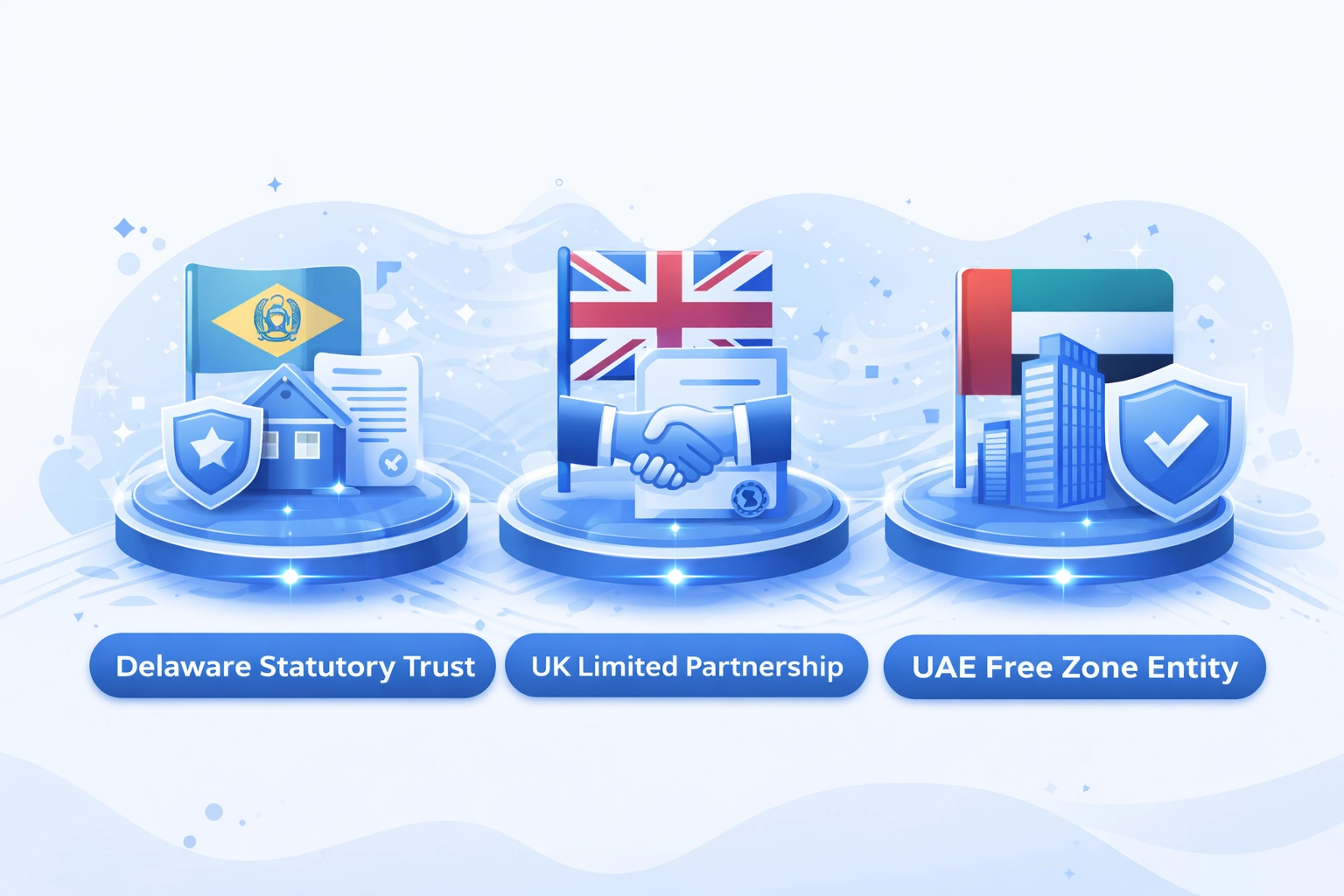 SPV Structuring Models in Property Tokenization
Delaware Statutory Trust
- Pass-through taxation avoiding entity-level tax
- Flexible governance structures with trustee control
- Established precedents in real estate transactions
- Beneficial ownership documentation complexity
UK Limited Partnership
- Transparent ownership with public registry
- Established legal frameworks and court precedents
- Integration challenges with blockchain records
- Complex reporting requirements for partnerships
UAE Free Zone Entity
- Favorable tax treatment with zero corporate tax
- Regulatory sandbox flexibility for innovation
- Potential enforcement complications internationally
- Evolving frameworks adapting to tokenization
Jurisdictional Conflicts in Cross-Border token holder risks Ownership
Jurisdictional conflicts emerge as a defining characteristic of token holder risks in real estate tokenization, as distributed blockchain networks enable cross-border token holder risks ownership while underlying properties remain subject to local jurisdiction legal frameworks. A token holder risks issued by a Cayman Islands entity representing beneficial interests in a Dubai property held through a Delaware SPV and traded on a Singapore exchange by a Canadian resident creates multiple overlapping legal jurisdictions with potentially conflicting regulations, tax treatments, and enforcement mechanisms. Each jurisdiction may assert authority over different transaction aspects based on issuer location, property location, token holder residence, or trading platform jurisdiction. This jurisdictional complexity creates enforcement gaps where no single legal system provides comprehensive token holder protection while simultaneously exposing holders to multiple regulatory regimes imposing cumulative compliance burdens.
Conflict of laws principles designed for traditional cross-border transactions prove inadequate for tokenized property ownership where digital asset characteristics challenge conventional legal categorizations. Courts struggle determining whether property token holder risks represent securities subject to financial regulation, property interests governed by real estate law, or novel digital assets requiring new legal frameworks. Choice of law provisions in token documentation often fail to anticipate all potential disputes, creating litigation uncertainty about which jurisdiction’s substantive law applies. Enforcement of judgments across borders faces practical obstacles even when jurisdiction is clear, as token holder risks immutability on blockchain networks complicates traditional asset seizure mechanisms. Token holders in USA, UK, Canada, and UAE markets face particular complexity from differing common law versus civil law traditions, securities regulation approaches, and property rights frameworks. The lack of international harmonization around tokenized asset treatment means cross-border token investments carry inherently elevated legal risk compared to domestic property holdings or securities subject to mutual recognition agreements between regulatory authorities.[1]
Custody Failures and Private Key Compromise Exposure
Custody risks in tokenized real estate create fundamental vulnerabilities where private key compromise results in permanent, irreversible loss of token holder risks holdings without traditional recovery mechanisms available for conventional securities or property ownership. Unlike bank accounts with fraud protection, insurance coverage, and legal reversal procedures, blockchain transactions provide cryptographic finality where possession of private keys establishes absolute control regardless of legitimate ownership claims. Token holders face constant threats from sophisticated phishing attacks, social engineering exploits, malware infections, and physical theft targeting key material. The complexity of secure key management creates usability tradeoffs where enhanced security through hardware wallets, multi-signature schemes, and air-gapped storage introduces friction discouraging proper implementation by non-technical holders lacking cryptographic expertise.
Custodial solutions transferring key management to third-party services introduce counterparty risks where platform insolvency, operational failures, or regulatory seizures threaten token access despite holders maintaining nominal ownership. The centralization inherent in custodial arrangements contradicts blockchain’s decentralization promise while recreating traditional financial intermediary risks that tokenization theoretically eliminates. Hybrid custody models employing multi-signature architectures requiring threshold participants for transaction execution provide security benefits but introduce coordination complexity where unavailable signatories prevent legitimate transfers. Inheritance planning becomes particularly challenging as cryptographic key management lacks established estate transfer mechanisms, with substantial token holder risks holdings effectively lost when holders die without proper succession arrangements. Enterprise investors across major financial centers increasingly demand institutional-grade custody solutions meeting fiduciary standards, yet the nascent custody provider market lacks the track record and regulatory oversight characterizing traditional securities custodians managing trillions in conventional assets.
Secondary Market Liquidity Risk in Property Tokens
Secondary market liquidity represents a critical yet frequently overlooked token holder risk, as marketing materials emphasizing improved liquidity compared to direct property ownership often fail to materialize in practice due to regulatory restrictions, fragmented markets, and limited buyer pools. While tokenization theoretically enables fractional ownership transferability creating liquid secondary markets, actual trading volumes remain minimal across most property token holder risks offerings. Transfer restrictions imposed for securities compliance prevent unrestricted trading to retail investors, limiting markets to qualified purchasers or accredited investors in USA and similar high-net-worth requirements in UK, Canada, and UAE jurisdictions. Platform fragmentation means tokens listed on specific exchanges lack cross-platform liquidity, with holders unable to transfer between venues due to technical incompatibilities or regulatory constraints.
Bid-ask spreads for thinly traded property tokens frequently reach 10-25% creating substantial transaction costs eroding returns for holders needing liquidity. Market makers rarely provide continuous two-sided quotes for small-cap property token holder risks lacking trading volume to justify capital commitment. Lock-up periods common in tokenized offerings prevent any secondary trading for 6-12 months post-issuance, with subsequent right of first refusal provisions requiring offering token holder risks to existing holders before external sales. Property-specific risks including tenant vacancies, maintenance issues, or local market downturns create information asymmetries where informed sellers offload tokens to less-informed buyers lacking access to current property condition and financial performance data. The promise of 24/7 trading on blockchain platforms proves largely theoretical when no counterparties exist at reasonable prices, leaving token holders facing effective illiquidity despite technical trading capabilities. Holders contemplating investment must recognize secondary market liquidity as aspirational rather than established reality across most current tokenized property offerings.
Liquidity Constraints Across Property token holder risks Markets
| Market Constraint | Impact on Liquidity | Typical Severity | Mitigation Options |
|---|---|---|---|
| Transfer Restrictions | Limits eligible buyers to accredited investors | High | Reg A+ exemptions for retail access |
| Platform Fragmentation | Isolates liquidity across multiple venues | Medium-High | Cross-platform listing arrangements |
| Limited Trading Volume | Wide bid-ask spreads exceeding 15% | High | Market maker incentive programs |
| Lock-Up Periods | Complete trading prohibition for 6-12 months | Very High | Staggered release schedules |
| Information Asymmetry | Adverse selection favoring informed sellers | Medium | Enhanced disclosure requirements |
Regulatory Reclassification and Securities Law Triggers
Regulatory reclassification represents an existential token holder risk where authorities retroactively determine that token holder risks marketed as utility tokens or property interests constitute securities requiring registration and compliance with investor protection regulations. The Howey Test in USA jurisdictions, investment contract analysis under UK FCA frameworks, and similar tests in Canadian provinces and UAE financial centers create interpretive flexibility enabling regulators to challenge initial token holder risks classifications. Tokens initially offered under exemptions claiming utility functionality may face reclassification as securities if economic reality demonstrates primary value deriving from expected profits from third-party efforts rather than intrinsic utility. This regulatory uncertainty creates retrospective compliance risks where token holders suddenly face trading restrictions, mandatory registration requirements, or enforcement actions despite good-faith reliance on initial legal opinions supporting non-security classifications.
Reclassification triggers potentially devastating consequences for token holders including immediate trading halts pending registration, forced buybacks at below-market prices, or criminal and civil liability for participating in unregistered securities offerings. Secondary market platforms delist reclassified tokens to avoid operating unregistered exchanges, eliminating liquidity overnight. Tax treatment changes from reclassification create additional liabilities where tokens initially treated as property face securities taxation with different basis calculations and holding period requirements. Grandfathering provisions protecting existing holders from new requirements remain uncertain, with aggressive enforcement agencies sometimes pursuing retroactive application. International token holder risks holders face particular exposure as reclassification in one jurisdiction creates pressure for similar actions globally, with USA SEC enforcement frequently catalyzing parallel investigations by UK FCA, Canadian CSA, and UAE regulators. The fundamental uncertainty around token classification means holders bear ongoing reclassification risk throughout holding periods, unable to achieve regulatory certainty even with quality initial legal opinions that merely reflect current interpretations subject to evolution.
Token Holder Risk Assessment Lifecycle
Pre-Investment Due Diligence
Evaluate smart contract audits, legal structuring documentation, regulatory compliance status, and custody arrangements before capital commitment to identify red flags.
Initial Token Acquisition
Execute purchase through compliant channels ensuring proper KYC verification, transfer restrictions acknowledgment, and secure custody setup protecting private keys.
Ongoing Monitoring
Track property performance, regulatory developments, governance proposals, and platform operational status identifying emerging risks requiring response.
Dividend and Revenue Collection
Verify distribution mechanisms function correctly with rental income or appreciation sharing reaching token holders per documentation specifications.
Governance Participation
Exercise voting rights on material decisions including property management changes, capital improvements, or refinancing proposals affecting token value.
Tax Compliance Management
Maintain detailed records of acquisitions, distributions, and dispositions ensuring accurate reporting across applicable jurisdictions with specialized advisory support.
Liquidity Exit Planning
Assess secondary market conditions, transfer restriction expiration, and alternative exit mechanisms including redemption rights or property sale proceeds distribution.
Dispute Resolution
Navigate enforcement mechanisms for breaches including arbitration provisions, smart contract dispute resolution, or litigation strategies protecting token holder interests.
Asset Title Disputes Impacting Token Holder Rights
Asset title disputes create fundamental challenges for token holders as blockchain records of token holder risks ownership exist separately from traditional property title systems creating potential conflicts between registered property owners and token holder claims. Most tokenization structures employ SPVs holding legal title while tokens represent beneficial interests, but this separation introduces complexity during title disputes where third parties challenge SPV ownership. Liens, encumbrances, or adverse possession claims against underlying properties may not immediately appear in token documentation, with holders learning of title defects only when attempting to exercise rights or realize value through property sale. The integration gap between blockchain token records and government property registries means token transfers may not reflect in official title documentation, creating situations where token holders believe they possess beneficial interests in properties where legal title remains with predecessors or exhibits clouded ownership.
Title insurance policies typically exclude coverage for tokenized property interests, leaving holders without traditional protections against title defects, survey errors, or undisclosed liens affecting property value. Jurisdictions across USA, UK, Canada, and UAE maintain varying approaches to blockchain record recognition in property title disputes, with most courts giving precedence to traditional registry systems over token ownership claims when conflicts arise. Fraudulent property tokenization schemes exploit this gap by issuing tokens representing interests in properties where issuers lack legitimate ownership rights, with due diligence challenges making such fraud difficult to detect before investment. Recent cases involving multiple competing token offerings for identical properties demonstrate how inadequate title verification processes enable duplicative tokenization where multiple investor groups claim beneficial interests in single properties. Token holders require comprehensive title insurance, detailed chain of title documentation, and regular title searches throughout holding periods to mitigate these risks, though obtaining such protections for tokenized interests remains challenging given insurance industry unfamiliarity with blockchain-based property claims.
Bankruptcy Risk of Issuer and Bankruptcy Remote Structures
Issuer bankruptcy risk represents a critical threat to token holders where operating company insolvency potentially compromises access to underlying property assets despite theoretical separation through SPV structures. Bankruptcy remoteness relies on legal structuring maintaining sufficient distance between operating entities and property-holding vehicles, but courts can pierce corporate veils finding that SPVs represent mere instrumentalities of bankrupt operating companies rather than independent entities. Substantive consolidation doctrines in USA bankruptcy courts permit combining SPV assets with parent company estates when functional integration suggests single economic enterprise despite multiple legal entities. UK and Canadian insolvency frameworks provide similar judicial discretion to disregard corporate separateness when equitable considerations favor creditor protection over technical structural boundaries. Token holders marketed investments emphasizing bankruptcy protection through SPV isolation discover during actual insolvency proceedings that claimed protections prove less robust than anticipated.
Fraudulent conveyance challenges threaten property transfers into SPVs when structuring occurs shortly before or during financial distress, with courts potentially unwinding transactions returning assets to bankruptcy estates. Operating company creditors may assert claims that token issuance constituted disguised financing deserving priority over token holder beneficial interests. Management services agreements between operating companies and SPVs create functional dependencies where operating company bankruptcy disrupts SPV management even if legal separation technically protects property ownership. The practical reality that operating companies typically control SPV governance means bankrupt operators can cause SPVs to enter bankruptcy or take actions favoring operating company creditors over token holders. Recent tokenized property bankruptcies across multiple jurisdictions demonstrate these risks manifesting despite sophisticated legal structuring intended to provide bankruptcy remoteness. Token holders require detailed analysis of SPV independence, governance controls, and bankruptcy case law in relevant jurisdictions before assuming structural protections will withstand insolvency challenges. Preference for established jurisdictions with extensive bankruptcy precedent protecting separate entity doctrine may provide somewhat greater confidence versus untested jurisdictions where judicial discretion introduces significant uncertainty.
Governance Manipulation in Tokenized Property DAOs
Governance manipulation emerges as a sophisticated token holder risk in decentralized autonomous organization structures purportedly providing democratic control over tokenized properties. While DAOs theoretically distribute decision-making across token holder populations, practical realities enable control seizure through voting power concentration, proposal manipulation, and quorum requirement exploitation. Large token holders or coordinated groups accumulate sufficient voting power to pass self-serving proposals extracting value from minority holders through excessive management fees, related-party transactions, or forced property sales at below-market prices. The one-token-one-vote paradigm common in property DAOs creates plutocratic governance where economic power directly translates to political control without checks on majority tyranny protecting minority interests. Apathy among dispersed small holders creates low participation enabling narrow factions to achieve quorum and pass proposals despite minority actual support.
Proposal timing manipulation allows coordinated actors to introduce controversial measures during periods when opposing voters are inattentive or unable to participate, such as holiday periods or immediately following token distribution. Vote buying markets enable covert control accumulation as holders sell voting rights to aggregators pursuing governance capture. Delegation mechanisms intended to improve participation create centralization risks when representatives control substantial delegated voting power potentially exercised against delegator interests. Flash loan attacks enable temporary voting power accumulation for proposal approval duration before returning borrowed tokens, creating governance manipulation without sustained capital commitment. Smart contract governance logic itself introduces manipulation vectors through parameter manipulation, timing attacks, and technical vulnerabilities enabling unauthorized proposal execution. Token holders in DAO-governed properties face ongoing risks of governance exploitation as sophisticated actors develop increasingly creative manipulation strategies exploiting design limitations in decentralized governance frameworks. Protection requires active participation, coalition formation with aligned holders, and careful analysis of governance mechanism security before investment commitments in DAO-structured tokenization offerings.
Voting Power Concentration
Large holders control governance through accumulated voting power enabling self-serving proposal passage without minority consent mechanisms.
Proposal Timing Exploitation
Strategic introduction during low-attention periods achieves passage of controversial measures with limited scrutiny or opposition.
Quorum Manipulation
Low participation enables narrow factions to meet quorum thresholds passing proposals despite minority actual support among holder base.
Vote Buying Markets
Covert control accumulation through purchasing voting rights from holders prioritizing liquidity over governance participation.
Delegation Centralization
Representative concentration of delegated voting power enables exercise against delegator interests without effective oversight mechanisms.
Flash Loan Attacks
Temporary voting power accumulation for proposal approval duration enables governance manipulation without sustained capital commitment.
Oracle Manipulation Affecting Property Valuation Data
Oracle manipulation represents a technical vulnerability specific to tokenized real estate where smart contracts depend on external data feeds for property valuations, rental income verification, and trigger conditions in automated distribution mechanisms. Oracles serve as bridges connecting blockchain smart contracts to off-chain real-world data, but these connection points create attack vectors where compromised or manipulated data feeds cause incorrect contract executions. Property valuation oracles determining token redemption prices, collateral ratios, or liquidation triggers become high-value targets for manipulation by parties benefiting from distorted valuations. Unlike centralized property appraisals where professional standards and legal liability constrain fraud, blockchain oracles may lack accountability mechanisms enabling undetected manipulation affecting substantial token holder risks value.
Decentralized oracle networks theoretically provide manipulation resistance through aggregating multiple data sources, but practical implementations often rely on limited providers creating single points of failure. Oracle operators themselves face conflicts of interest when providing data determining their own compensation or affecting positions they hold in tokenized properties. Time-delay attacks exploit oracle update lag introducing stale data into smart contracts executing based on outdated valuations. Sybil attacks create multiple false identities in decentralized oracle networks distorting consensus toward manipulated values. The subjective nature of property valuation makes manipulation detection challenging as reasonable professionals can reach substantially different conclusions about market value absent clear fraud. Token holders across USA, UK, UAE, and Canadian markets face particular exposure in automated liquidation scenarios where manipulated oracle data triggers forced sales at artificially depressed valuations. Protection requires understanding oracle architecture, data source diversity, update frequency, and dispute resolution mechanisms before investing in tokenized properties employing oracle-dependent smart contract logic for material functions.
AML and KYC Compliance Gaps in Token Distribution
Anti-money laundering and know-your-customer compliance gaps create substantial token holder risks holder risks as inadequate identity verification and transaction monitoring enable illicit fund flows that trigger regulatory enforcement against platforms and token issuers. Financial Action Task Force standards adopted across USA, UK, Canadian, and UAE jurisdictions require comprehensive KYC for securities offerings and ongoing transaction monitoring detecting suspicious activity patterns. Many tokenization platforms implement minimal compliance controls during growth phases, accumulating regulatory violations that surface during enforcement sweeps threatening platform viability. Token holders on non-compliant platforms face sudden account freezes, forced liquidations, or complete platform shutdowns when regulators impose penalties or revoke operating licenses. The pseudo-anonymous nature of blockchain transactions creates money laundering risks where criminals exploit tokenized property offerings to convert illicit proceeds into seemingly legitimate real estate holdings.
Retrospective compliance requirements force platforms to implement enhanced KYC on existing holders, with those unable or unwilling to provide additional documentation facing account closure and forced token sales at potentially unfavorable prices. Sanctions screening failures enabling prohibited persons to acquire token holder risks create secondary liability risks for compliant holders when authorities freeze assets or claw back transactions involving sanctioned parties. Geographic restrictions excluding residents of certain jurisdictions prove difficult to enforce when blockchain enables borderless transactions, with platforms facing enforcement actions for inadequate geo-blocking. The Travel Rule requiring transmission of originator and beneficiary information for crypto-asset transfers introduces compliance complexity for peer-to-peer token trades between holders. Decentralized platforms avoiding KYC through non-custodial designs face regulatory challenges as authorities increasingly demand compliance regardless of technical architecture. Token holders require careful evaluation of platform compliance infrastructure, regulatory track record, and geographic operating scope before investment to avoid exposure to compliance failures triggering disruptive enforcement actions.
Tax Treatment Uncertainty for Fractional Property Tokens
Tax treatment uncertainty creates pervasive compliance challenges for token holder risks holders as tax authorities across jurisdictions struggle applying traditional property, securities, and cryptocurrency taxation frameworks to tokenized real estate. The fundamental classification question determines whether tokens represent property interests taxed under real estate rules, securities subject to capital gains treatment, or digital assets following cryptocurrency taxation. Each classification produces dramatically different tax consequences affecting acquisition basis calculation, holding period requirements, income recognition timing, and loss deduction limitations. USA IRS guidance remains fragmented with property token holder risks potentially classified as partnership interests, securities, or digital assets depending on specific structuring. UK HMRC provides limited clarity on tokenized property taxation leaving holders reliant on general principles applied to novel fact patterns. Canadian Revenue Agency offers minimal guidance creating compliance uncertainty across provincial jurisdictions. UAE’s evolving tax frameworks for digital assets introduce additional complexity for token holders in Dubai and Abu Dhabi markets.
Dividend distributions from tokenized properties face uncertainty around qualified dividend treatment, return of capital characterization, or ordinary income classification affecting tax rates and reporting requirements. Foreign token holdings trigger international tax reporting including FBAR, FATCA, and CRS obligations with substantial penalties for non-compliance. Passive activity loss limitations restrict deduction of rental losses for USA holders depending on property token holder risks classification and participation levels. Like-kind exchange rules potentially enabling tax-deferred property swaps face unclear applicability to token-for-token exchanges. Estate and gift tax treatment remains ambiguous with valuation challenges for thinly-traded tokens lacking established market prices. Token holders require specialized tax advisory from professionals experienced with both real estate taxation and digital asset treatment, yet such expertise remains scarce and expensive. The potential for retroactive tax authority recharacterization creates ongoing liability exposure where holders filing returns under one theory face subsequent challenges requiring amended returns, interest payments, and potential penalties. Prudent holders maintain detailed contemporaneous documentation supporting tax positions and establish reserves for potential adverse determinations in future examinations.
Tax Treatment Scenarios Across Jurisdictions
| Jurisdiction | Classification Approach | Income Treatment | Compliance Burden |
|---|---|---|---|
| USA Federal | Fact-dependent: property, securities, or digital asset | Ordinary, capital gains, or qualified dividends | High with international reporting requirements |
| United Kingdom | Generally securities unless property ownership direct | Capital gains with potential dividend treatment | Medium with self-assessment obligations |
| Canada | Provincial variation with digital asset emphasis | Capital gains or business income depending on activity | High with complex provincial coordination |
| UAE | Evolving frameworks with free zone benefits | Generally tax-exempt with new corporate tax considerations | Low-Medium with increasing reporting expectations |
Platform Insolvency and Custodial Counterparty Risk
Platform insolvency represents acute counterparty risk for token holder risks utilizing custodial services where third-party platforms maintain control of private keys and facilitate token holder risks transactions. Unlike traditional securities custodians subject to strict capital requirements, segregated account mandates, and insurance coverage, many tokenization platforms operate with minimal capital buffers and commingled custody arrangements. Platform bankruptcy or operational failure potentially freezes token holder assets indefinitely while insolvency proceedings determine creditor priority and asset distribution. The classification of custodied tokens as platform property versus customer assets varies across jurisdictions, with some bankruptcy regimes treating digital assets on platforms as unsecured creditor claims rather than segregated customer property entitled to priority return. Token holders may join lengthy bankruptcy queues competing with operational creditors, suffering substantial delays and recovery haircuts before regaining access to holdings.
Platform operational failures short of formal bankruptcy create similar risks where technical problems, security breaches, or management incompetence prevent normal token holder risks access and trading. The concentration of tokenization activity on limited platforms creates systemic risk where single platform failure affects substantial portions of token holder population lacking alternative access to holdings. Regulatory shutdowns following compliance violations immediately terminate platform operations leaving holders uncertain about asset recovery timelines and procedures. International platform insolvencies complicate recovery efforts as holders face foreign bankruptcy proceedings, language barriers, and legal system unfamiliarity pursuing claims. The nascent state of tokenization platform insurance means coverage gaps leave holders exposed to platform failures without third-party risk transfer mechanisms. Recent collapses of major cryptocurrency platforms demonstrate how custodial counterparty risk manifests in practice, with token holders learning that perceived platform stability provides little protection against sudden failure. Prudent holders minimize platform risk through self-custody of tokens in personal wallets, diversification across multiple platforms, and preference for established entities with transparent financial statements, adequate capitalization, and comprehensive insurance coverage protecting against custodial losses.
Transfer Restrictions in Regulated Security Token Holder Risks
Transfer restrictions embedded in security token holder risks smart contracts create substantial liquidity constraints as compliance requirements limit token transferability to qualified purchasers meeting accreditation, sophistication, or wealth thresholds. USA Regulation D exemptions enabling unregistered securities offerings impose resale restrictions preventing transfers to non-accredited investors, with smart contracts programmatically enforcing these limitations rejecting non-compliant transactions. UK financial promotion rules restrict marketing and transfer of restricted securities to certified sophisticated investors or high-net-worth individuals. Canadian prospectus exemptions create hold periods and resale restrictions varying across provincial jurisdictions. UAE regulatory frameworks impose similar constraints on security token transfers based on investor classification and offering structure. These restrictions fragment potential buyer pools limiting secondary market depth and creating substantial bid-ask spreads for holders seeking liquidity.
Geographic restrictions prevent cross-border transfers to avoid triggering foreign securities law obligations, with smart contracts blocking transactions involving IP addresses or wallet addresses associated with prohibited jurisdictions. Lock-up periods prevent any transfers during initial 6-12 month periods post-issuance regardless of buyer qualifications. Rights of first refusal require offering tokens to existing holders or issuers before external sales, creating timing delays and price discovery challenges. Mandatory hold periods under Regulation S for offshore offerings prevent USA resales for specified durations. The cumulative effect of multiple overlapping restrictions makes security tokens significantly less liquid than marketed, with holders facing substantial practical barriers to exit even when willing buyers theoretically exist. Restrictions embedded in immutable smart contract code prove difficult or impossible to modify as regulatory frameworks evolve or holder circumstances change, creating permanent structural constraints on transferability. Token holders must carefully evaluate the comprehensiveness and permanence of transfer restrictions before investment, recognizing that regulatory compliance necessarily sacrifices the frictionless transferability characterizing unrestricted digital assets while often providing less liquidity than traditional private securities with established transfer procedures.
Authoritative Risk Management Standards for Token Holders
Standard 1: Conduct comprehensive smart contract audit review from reputable security firms before token acquisition evaluating vulnerability history and remediation quality.
Standard 2: Verify SPV legal structuring through independent counsel review ensuring bankruptcy remoteness and clear ownership rights documentation.
Standard 3: Implement institutional-grade custody solutions with multi-signature security, hardware wallet backup, and documented succession planning.
Standard 4: Assess secondary market liquidity through trading volume analysis bid-ask spread evaluation and transfer restriction documentation review.
Standard 5: Monitor regulatory developments across relevant jurisdictions tracking classification guidance compliance requirements and enforcement trends.
Standard 6: Obtain specialized tax advisory from professionals experienced with tokenized asset treatment maintaining detailed contemporaneous documentation.
Standard 7: Participate actively in governance processes monitoring proposals coordinating with aligned holders and exercising voting rights protecting interests.
Standard 8: Establish risk reserves accounting for potential regulatory reclassification tax liability disputes and enforcement exposures beyond initial investment.
Dividend Distribution Failures in Revenue Sharing Models
Dividend distribution failures represent operational risks where promised rental income or property appreciation sharing fails to materialize through smart contract execution problems, cash flow mismanagement, or deliberate withholding. Many tokenized property offerings emphasize passive income through automated distribution of rental proceeds proportional to token holdings, yet implementation complexity creates numerous failure points. Smart contracts may contain logic errors preventing distribution execution, require manual triggers that operators neglect to initiate, or depend on oracle feeds that malfunction preventing income verification. Property management fees, maintenance reserves, and operating expenses often consume larger portions of rental income than projected, leaving insufficient cash flow for distributions. Opportunistic operators exploit ambiguous distribution formulas prioritizing management fees over holder payments, creating structural subordination where holders receive distributions only after operator compensation.
Capital calls requiring additional holder contributions to fund property improvements or cover shortfalls create unexpected obligations diluting returns when holders cannot or will not contribute. Waterfall distribution provisions favoring senior classes or founder tokens mean common token holder risks holders receive distributions only after preferred payments, potentially receiving nothing during underperformance periods. Tax withholding requirements complicate cross-border distributions as platforms struggle implementing jurisdiction-specific withholding across diverse holder populations. Distribution frequency promises often prove unsustainable as operational complexity discourages frequent payouts despite marketing materials suggesting monthly or quarterly income streams. Token holders should carefully model realistic distribution scenarios incorporating conservative assumptions about operating expenses, vacancy rates, and property management costs rather than relying on pro forma projections typically presented in offering materials. Legal remedies for distribution failures prove limited as most token agreements disclaim distribution guarantees characterizing them as discretionary or subject to available cash flow, leaving holders with minimal recourse when distributions cease or fall short of expectations despite adequate property cash generation.
Insurance Coverage Gaps in Tokenized Real Assets
Insurance coverage gaps leave token holder risks exposed to numerous risks without traditional insurance mechanisms protecting conventional real estate investors. Property insurance covering physical damage typically protects underlying real estate assets but provides no coverage for token-specific risks including smart contract failures, custody breaches, or platform insolvencies. Errors and omissions insurance for property managers may exclude coverage for tokenization-related activities creating gaps when management failures affect token holder interests. Cyber liability insurance increasingly available for cryptocurrency platforms often contains exclusions for securities-related activities potentially denying coverage for security token platforms. Directors and officers liability insurance for token holder risks issuers may exclude coverage for securities law violations, the most likely source of significant claims against tokenization platforms and their management.
Title insurance typically excludes coverage for beneficial interests in SPVs rather than direct property ownership, leaving token holder risks without protection against title defects affecting underlying properties. Custody insurance for digital assets remains nascent with high premiums, substantial deductibles, and extensive exclusions limiting practical protection. The novelty of tokenized property creates coverage uncertainty as insurers lack actuarial data for pricing and structuring appropriate policies. Many platforms operate without any insurance coverage relevant to token holder risks, despite marketing materials suggesting institutional-grade protection. Token holders should not assume insured risk transfers exist absent specific policy review confirming coverage applicability to tokenization structures. The insurance gap represents a critical difference between tokenized property investment and traditional real estate where comprehensive insurance programs provide risk transfer for most major exposures. Until insurance markets mature developing standardized products for tokenization risks, holders must self-insure through position sizing, diversification, and conservative capital allocation treating tokenized property as high-risk alternative investments rather than insurance-protected traditional assets.
Voting Power Dilution in Fractional Ownership Pools
Voting power dilution creates governance risks where fractional token holder risks ownership provides minimal influence over property decisions despite significant capital commitment. The one-token-one-vote paradigm means holders with small positions exercise negligible control even when substantial value is at stake. Tokenization theoretically democratizes property investment enabling participation with modest capital, but governance reality concentrates power among large holders who can unilaterally pass proposals over diffuse minority opposition. Dilution accelerates through secondary token issuances where operators create additional token holder risks to raise capital or compensate service providers, reducing existing holder voting percentages without corresponding increase in property value. The practical inability to coordinate dispersed holders for collective action creates free-rider problems where monitoring costs exceed individual holder stakes incentivizing rational apathy.
Supermajority requirements for certain decisions create hold-out risks where minority factions block value-enhancing proposals demanding side payments for approval. Quadratic voting mechanisms attempting to mitigate plutocracy introduce complexity and create manipulation vulnerabilities through Sybil attacks splitting holdings across multiple identities. Delegation systems concentrating voting power with professional representatives may not adequately represent diverse holder interests particularly when delegates face conflicts from relationships with operators. Time-weighted voting rewarding long-term holders over recent acquirers creates fairness questions and may discourage secondary market participation. The fundamental tension between fractional ownership enabling capital efficiency and governance requiring coordination means token holder risks should expect minimal practical influence over property decisions absent forming control coalitions with other holders. Investors prioritizing control should acquire substantial positions enabling unilateral or near-unilateral decision-making, while those seeking passive exposure should evaluate management quality and align interests through reputation and incentive compatibility rather than expecting governance rights to provide meaningful protection against operator opportunism.
Token Holder Rights Comparison Framework
| Ownership Right | Traditional Real Estate | Tokenized Property | Risk Implication |
|---|---|---|---|
| Title Certainty | Direct ownership with title insurance | Beneficial interest through SPV structure | Unclear ownership during disputes |
| Transfer Rights | Unrestricted subject to market conditions | Heavily restricted by securities compliance | Severe liquidity constraints |
| Governance Control | Direct management authority proportional to ownership | Limited voting rights subject to dilution | Minimal practical influence |
| Income Rights | Direct receipt of rental income and appreciation | Contractual distribution subject to waterfall | Distribution failure exposure |
| Legal Remedies | Established property law with court enforcement | Arbitration with smart contract complications | Enforcement challenges |
Enforcement Challenges in Smart Contract Disputes
Enforcement challenges create practical barriers to legal remedy recovery despite theoretical rights established in token holder risks documentation and smart contracts. The immutability of blockchain transactions means successful legal claims may prove unenforceable when smart contracts automatically execute incorrect distributions, lock tokens indefinitely, or transfer assets to unintended recipients. Courts lack technical mechanisms to reverse blockchain transactions absent cooperation from all network validators, which proves practically impossible on decentralized networks. Even when operators owe legal duties to token holder risks holders, judgment enforcement faces obstacles when operators operate through offshore entities, lack attachable assets, or disappear entirely after fraudulent schemes. Arbitration provisions common in token holder risks agreements create procedural hurdles requiring expensive specialized proceedings before pursuing judicial enforcement.
Jurisdictional complexity means token holder risks may need to pursue claims in multiple countries to achieve complete relief, multiplying legal costs beyond economically viable levels for modest holdings. The pseudonymous nature of blockchain participants complicates defendant identification for claims against unknown parties who caused losses through hacking, market manipulation, or fraud. Class action mechanisms potentially aggregating holder claims face challenges achieving certification when dispersed international holder populations lack common legal frameworks. Smart contract terms claiming to constitute complete agreements may prevent consideration of external documents or representations creating evidentiary challenges proving operator misconduct. The novelty of tokenized property means limited judicial precedent exists establishing token holder risks rights and operator duties, creating litigation uncertainty about likely outcomes. Token holders contemplating investment should recognize that contractual and statutory rights provide limited practical protection when enforcement mechanisms prove inadequate to compel compliance or recover losses from malfeasance. Preference for operators with substantial assets in enforcement-friendly jurisdictions, strong reputation incentives for honest dealing, and transparent operations enabling community monitoring provides better practical protection than legal rights absent realistic enforcement mechanisms.
Navigate Token Holder Risks with Expert Guidance
Partner with experienced tokenization specialists to conduct comprehensive risk assessment and implement protective strategies for your real estate token holder risks investments.
People Also Ask
Q1.1. What are the main risks token holders face in real estate tokenization?
Token holders in real estate tokenization face multiple interconnected risks including smart contract vulnerabilities that could result in permanent loss of funds, legal structuring deficiencies creating unclear ownership rights, custody failures exposing private keys to compromise, and regulatory reclassification threatening security status. Secondary market liquidity constraints limit exit options while jurisdictional conflicts complicate cross-border enforcement. Platform insolvency represents counterparty risk for custodial arrangements. Governance manipulation in decentralized structures enables control seizure by concentrated holders. Oracle failures affecting property valuations create pricing distortions. Tax treatment uncertainty across jurisdictions generates compliance complexity and potential liabilities requiring specialized advisory support.
Q2.2. How do smart contract vulnerabilities affect property token security?
Smart contract vulnerabilities in property tokenization create critical security exposures through coding errors, logic flaws, and architectural weaknesses enabling unauthorized access or fund manipulation. Reentrancy attacks exploit callback functions to drain token holder risks reserves while integer overflow vulnerabilities corrupt accounting logic. Access control failures grant unauthorized administrative privileges enabling malicious parameter changes. Upgrade mechanism weaknesses allow contract hijacking replacing legitimate code with malicious versions. Time-dependent vulnerabilities enable transaction ordering manipulation. External call failures cascade through dependent contracts creating system-wide disruptions. Inadequate testing before production deployment leaves critical flaws undiscovered until exploitation occurs. Formal verification and comprehensive auditing mitigate but cannot eliminate all smart contract risks inherent in tokenized property structures.
Q3.3. What legal protections exist for tokenized real estate investors?
Legal protections for tokenized real estate investors vary significantly across jurisdictions with USA securities regulations providing disclosure requirements and anti-fraud provisions through SEC oversight. UK FCA frameworks establish conduct standards for token holder risks issuers while UAE ADGM and DFSA create regulatory sandboxes with investor protection mechanisms. Canadian provincial securities commissions enforce prospectus requirements and registration obligations. SPV structures provide bankruptcy remoteness isolating underlying assets from issuer insolvency though legal enforceability requires careful structuring. Smart contract code audits offer technical due diligence but lack legal enforceability. Insurance products covering custody failures and platform insolvency remain nascent with limited coverage availability. Investor rights ultimately depend on jurisdiction-specific frameworks requiring specialized legal counsel for adequate protection.
Q4.4. How does regulatory uncertainty impact token holder rights?
Regulatory uncertainty creates fundamental ambiguity around token holder risks rights as classification disputes between securities, commodities, and property rights generate conflicting legal frameworks. Retroactive reclassification threatens grandfathered exemptions forcing compliance with registration requirements or trading restrictions. Jurisdictional conflicts between token holder risks issuer location, property location, and investor residence create regulatory arbitrage opportunities but also enforcement gaps. Evolving AML and KYC standards impose retrospective compliance burdens on existing token holders. Tax treatment uncertainty across capital gains, property income, and securities taxation generates compliance risks and potential liabilities. Governance rights enforceability remains untested through judicial proceedings. Transfer restrictions responding to regulatory requirements limit liquidity and market development constraining token holder exit options.
Q5.5. What custody risks should property token investors consider?
Custody risks in property tokenization encompass private key compromise through hacking, phishing, or social engineering attacks resulting in permanent fund loss without recovery mechanisms. Custodial platform insolvency creates counterparty risk where third-party key management services face bankruptcy or operational failure. Multi-signature schemes introduce coordination risks requiring threshold participants for transaction execution. Hardware wallet failures or seed phrase loss eliminate access to token holder risks. Inheritance planning complexity arises from cryptographic key management without traditional estate transfer mechanisms. Regulatory seizure of custodial platforms threatens asset access during enforcement actions. Smart contract wallet vulnerabilities enable unauthorized withdrawals despite proper key management. Hybrid custody models balancing security against convenience introduce tradeoffs requiring careful evaluation based on individual risk tolerance.
Explore Services
Related Services
Reviewed by

Aman Vaths
Founder of Nadcab Labs
Aman Vaths is the Founder & CTO of Nadcab Labs, a global digital engineering company delivering enterprise-grade solutions across AI, Web3, Blockchain, Big Data, Cloud, Cybersecurity, and Modern Application Development. With deep technical leadership and product innovation experience, Aman has positioned Nadcab Labs as one of the most advanced engineering companies driving the next era of intelligent, secure, and scalable software systems. Under his leadership, Nadcab Labs has built 2,000+ global projects across sectors including fintech, banking, healthcare, real estate, logistics, gaming, manufacturing, and next-generation DePIN networks. Aman’s strength lies in architecting high-performance systems, end-to-end platform engineering, and designing enterprise solutions that operate at global scale.