Ai Overview
The Play-to-Earn revolution represents a fundamental shift in the gaming paradigm. The benefits of GameFi include multiple revenue streams, compound earnings potential, and deeper engagement with game economies. Beyond entertainment, P2E games offer tangible financial benefits, social connections, and investment potential that traditional gaming simply cannot match. Earning real-world value through P2E earnings has transformed gaming from a pure expense to a potential income source.
Key Takeaways
- Play-to-Earn games combine blockchain technology with gaming to create real economic opportunities, allowing players to earn cryptocurrency and NFTs through gameplay activities.
- Crypto exchanges serve as essential infrastructure for P2E ecosystems, enabling players to trade, convert, and manage their gaming tokens and digital assets seamlessly.
- GameFi platforms integrate decentralized finance mechanics with gaming, offering staking, yield farming, and complex tokenomics beyond simple play-to-earn rewards.
- Web3 wallets like MetaMask are mandatory for P2E participation, storing tokens and NFTs while facilitating transactions across games and exchanges.
- Market volatility, security concerns, and regulatory uncertainties represent significant risks that require careful research and risk management strategies.
- The P2E market continues expanding with innovations in decentralized gaming, improved gameplay quality, and deeper integration with mainstream crypto exchanges.
- Community participation through guilds and DAOs can significantly enhance earning potential and provide valuable knowledge sharing among players.
- Successful P2E strategies involve diversifying across multiple games, understanding tokenomics, and staying updated with rapidly evolving market trends.
The intersection of blockchain technology and gaming has created one of the most transformative movements in both industries. Play-to-Earn games have evolved from a niche concept to a multi-billion dollar ecosystem that is reshaping how players interact with digital entertainment.
Understanding Play-to-Earn (P2E) Games
The Play-to-Earn revolution represents a fundamental shift in the gaming paradigm. Traditional games operate on a closed economic model where publishers control all value, and player investments of time and money remain locked within proprietary systems. Blockchain gaming disrupts this model by introducing true digital ownership, transparent economies, and the ability to extract real-world value from gaming activities.
What Are Play-to-Earn Games?
Play-to-Earn games are blockchain-based gaming applications that reward players with cryptocurrency tokens or non-fungible tokens for their participation and achievements. These games leverage smart contracts to create transparent, immutable reward systems where players can verify their earnings and ownership on public ledgers. The fundamental mechanics involve completing quests, winning battles, crafting items, breeding characters, or participating in virtual economies.
Play-to-Earn tokens function as the native currencies within these gaming ecosystems. They can be utility tokens used for in-game transactions, governance tokens that grant voting rights on game development decisions, or reward tokens distributed for achievements. In-game tokens represent the lifeblood of P2E economies, facilitating everything from purchasing equipment to accessing premium content and participating in marketplace transactions.
Industry Insight: Based on our extensive experience developing blockchain gaming solutions, we recommend that new players start with established games that have proven tokenomics and active communities before exploring newer, potentially riskier projects. Due diligence is essential in this rapidly evolving space.
How Play-to-Earn Works on Crypto Exchanges
Crypto exchanges serve as the critical infrastructure connecting P2E games to the broader cryptocurrency ecosystem. When players earn tokens through gameplay, these assets initially reside in their Web3 wallets. To realize their value, players transfer tokens to exchanges where they can trade against other cryptocurrencies or convert to fiat currency through off-ramps. This seamless integration between gaming platforms and exchanges creates a complete economic cycle.
Tokenized rewards on exchanges offer numerous trading opportunities. Players can hold tokens for potential appreciation, immediately sell for stable assets, or trade between different gaming tokens based on market analysis. Many exchanges now feature dedicated GameFi sections that aggregate P2E tokens, provide market data, and offer specialized trading pairs. This integration streamlines the process of earning crypto by gaming and converting those earnings into tangible value.
If you are considering building your own crypto exchange platform, our comprehensive guide to cryptocurrency exchange development provides detailed insights into the technical requirements and best practices for creating robust trading infrastructure.
| Aspect | Play-to-Earn Games | Traditional Games |
|---|---|---|
| Asset Ownership | True ownership via blockchain NFTs | Publisher-controlled licenses |
| Economic Value | Real-world tradable value | No external value |
| Transferability | Cross-platform, wallet-to-wallet | Locked to single account |
| Revenue Model | Player-shared economy | Publisher-centric monetization |
| Transparency | On-chain verifiable mechanics | Opaque server-side logic |
Types of Play-to-Earn Games
NFT games on exchanges represent the most prevalent category of blockchain gaming. These games utilize non-fungible tokens to represent unique in-game assets such as characters, weapons, land, and collectibles. Players can earn these NFTs through gameplay, purchase them from marketplaces, or craft new ones by combining existing assets. The value of NFT games stems from scarcity, utility, and community demand, with rare items sometimes selling for thousands of dollars on secondary markets.
GameFi platforms extend beyond simple gaming rewards to incorporate sophisticated decentralized finance mechanisms. These platforms allow players to stake their gaming tokens for additional yields, provide liquidity to gaming-related pools, and participate in governance decisions. The benefits of GameFi include multiple revenue streams, compound earnings potential, and deeper engagement with game economies. Players become stakeholders rather than mere consumers.
Decentralized gaming ecosystems represent the frontier of Web3 gaming innovation. These platforms operate without centralized control, with game rules and economies managed entirely by smart contracts and community governance. Players in decentralized games enjoy censorship resistance, true ownership, and the assurance that game mechanics cannot be arbitrarily changed by developers. This trustless environment attracts players seeking maximum autonomy and transparency.
Benefits of Play-to-Earn Gaming
The Play-to-Earn economy has created unprecedented opportunities for gamers worldwide. Beyond entertainment, P2E games offer tangible financial benefits, social connections, and investment potential that traditional gaming simply cannot match. Understanding these benefits helps players maximize their experience and make informed decisions about their gaming investments.
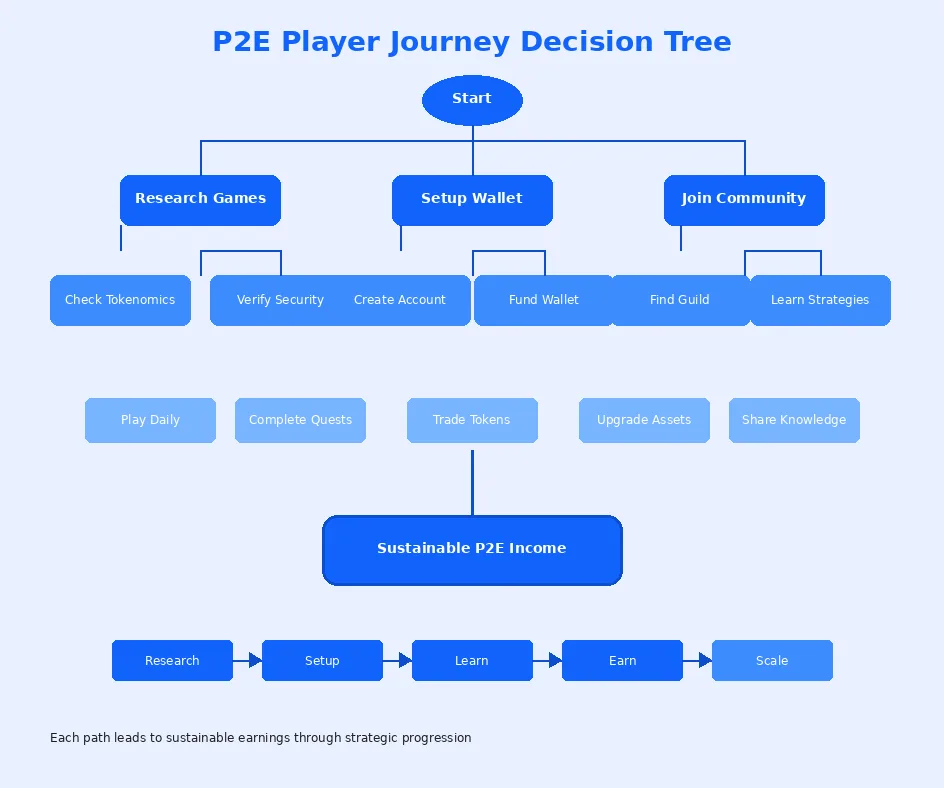
Financial Incentives
Earning real-world value through P2E earnings has transformed gaming from a pure expense to a potential income source. Players can generate consistent returns through daily quests, tournament winnings, and marketplace sales. In regions with lower average incomes, P2E gaming has become a legitimate livelihood for thousands of players who earn competitive wages through dedicated gameplay. The global nature of blockchain gaming means earnings potential is not limited by geographic location.
Crypto gaming rewards offer advantages beyond direct earnings. Players accumulate assets that may appreciate over time, benefit from airdrops and promotional distributions, and can leverage their holdings in DeFi protocols for additional yields. The compounding effect of strategic asset management can significantly amplify initial gaming investments over time.
Engagement and Community
Social interactions in crypto gaming communities create meaningful connections among players with shared interests. Discord servers, Telegram groups, and in-game guilds foster collaboration, strategy sharing, and mutual support. These communities often transcend gaming discussions to include broader crypto education, investment strategies, and genuine friendships across global borders.
The expansion of the Play-to-Earn economy through active participation creates network effects that benefit all stakeholders. More players attract more developers, who create better games, which attract more players. Active community members who contribute content, moderate discussions, and welcome newcomers strengthen the entire ecosystem. This participatory model contrasts sharply with traditional gaming where player contributions rarely influence game development or economics.
Investment Potential
Long-term value growth of Play-to-Earn tokens presents compelling investment opportunities for those who understand the market dynamics. Early adopters of successful games have seen extraordinary returns as player bases grew and token demand increased. However, this potential comes with significant volatility, requiring careful analysis of tokenomics, team credentials, and market positioning before committing substantial capital.
Trading and investment opportunities on crypto exchanges extend beyond simple buy-and-hold strategies. Active traders can profit from market fluctuations, arbitrage opportunities between exchanges, and strategic timing around game updates and announcements. Sophisticated investors might explore options trading, futures contracts, or yield strategies involving gaming tokens. Understanding how crypto exchanges enhance cross-border transactions can help international players optimize their trading strategies.
| Game Category | Primary Earning Method | Investment Required | Skill Dependency |
|---|---|---|---|
| Card Battle Games | Tournament rewards, card trading | Medium to High | High |
| Virtual World Games | Land development, asset creation | High | Medium |
| Monster Breeding Games | Breeding, battling, scholarships | Medium | Medium |
| Move-to-Earn Games | Physical activity rewards | Low to Medium | Low |
| RPG Adventure Games | Quest completion, item drops | Low to Medium | Medium to High |
Getting Started with Play-to-Earn Games
Entering the world of blockchain gaming requires proper preparation and understanding of the technical requirements. This section provides a practical roadmap for newcomers, covering game selection, wallet setup, and token management strategies that will set you up for success in the P2E ecosystem.
Choosing the Right Game
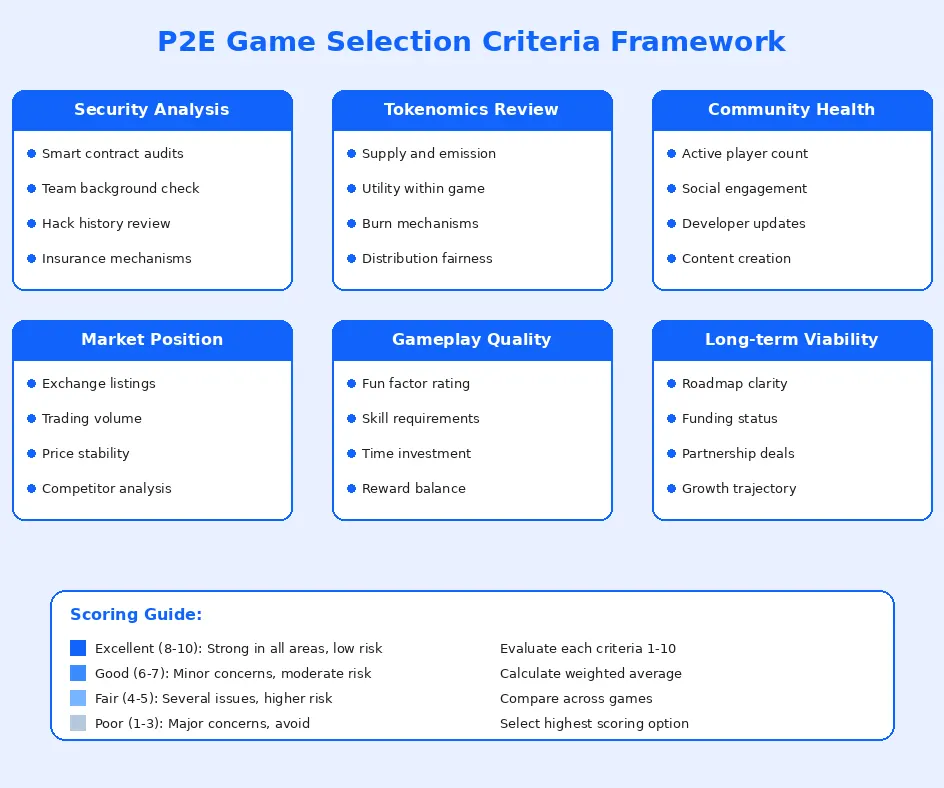
Selecting the best play-to-earn games requires careful evaluation of multiple factors. Begin by assessing the game’s player count and community activity, as these indicators reflect both current viability and future potential. A game with declining players typically experiences token devaluation and reduced earning opportunities. Conversely, growing communities signal increasing demand for gaming tokens.
Evaluating platform security, tokenomics, and game mechanics forms the foundation of informed game selection. Security considerations include smart contract audits, team reputation, and history of exploits or issues. Tokenomics analysis should examine total supply, emission schedules, utility within the game, and burn mechanisms that create deflationary pressure. Game mechanics evaluation focuses on enjoyment, skill requirements, time investment needed, and balance between paying and free players.
P2E Game Selection Criteria Framework
Security Score
Audit status, team transparency, security history, insurance mechanisms
Economic Viability
Token utility, emission rates, revenue model sustainability, sink mechanisms
Community Health
Active players, social engagement, developer responsiveness, content creation
Exchange Support
Listed exchanges, trading volume, liquidity depth, withdrawal options
Setting Up Your Crypto Wallet
Web3 wallets serve as your gateway to P2E gaming, storing tokens and NFTs while facilitating all blockchain interactions. MetaMask remains the most widely used browser extension wallet, offering compatibility with most P2E games and exchanges. Mobile users often prefer Trust Wallet or Coinbase Wallet for their intuitive interfaces and robust security features. Hardware wallets like Ledger provide maximum security for storing valuable gaming assets.
Connecting wallets to exchanges and games requires understanding network configurations. Most P2E games operate on specific blockchain networks such as Ethereum, Polygon, BNB Chain, or Solana. Your wallet must be configured for the correct network, with sufficient native tokens for transaction fees. When connecting to games, always verify you are on official websites to avoid phishing attempts. Never share your seed phrase with anyone, including supposed support staff.
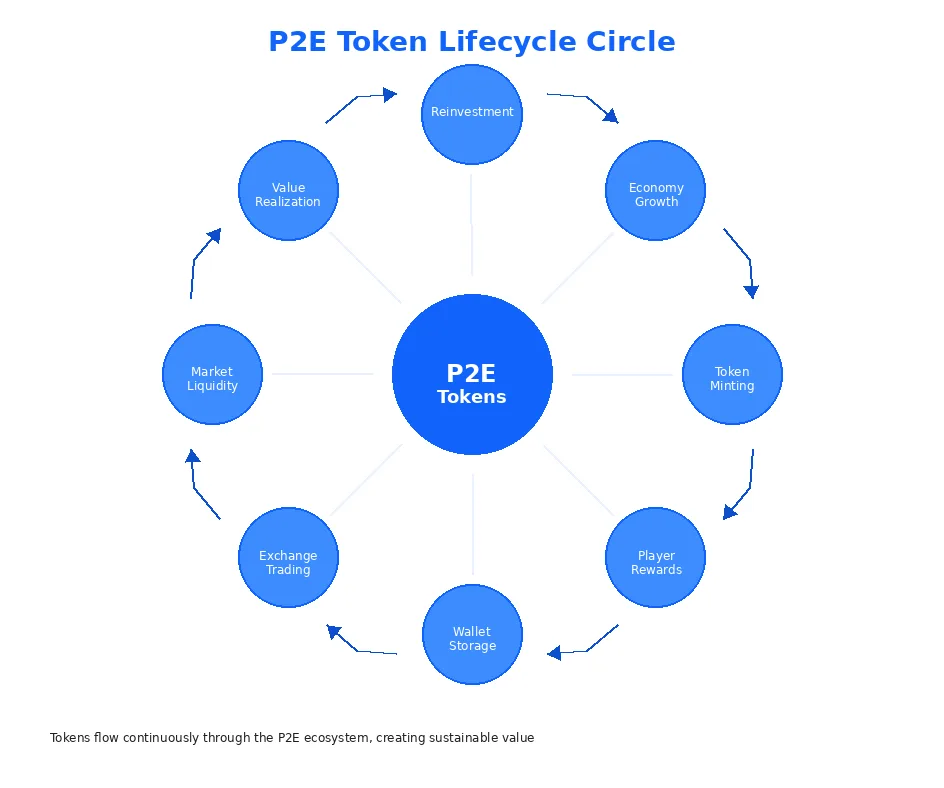
Earning and Managing Tokens
Strategies to earn crypto by gaming efficiently involve understanding each game’s reward structure and optimizing your approach. Daily login bonuses, quest completions, and achievement rewards provide consistent baseline income. Tournament participation offers higher rewards but requires competitive skill levels. Marketplace activities such as crafting, trading, and arbitrage can generate substantial returns for players who understand market dynamics.
Tracking and managing in-game tokens and rewards becomes increasingly important as your portfolio grows. Portfolio tracking tools like DeBank, Zapper, or game-specific dashboards help monitor assets across multiple games and wallets. Establish regular routines for claiming rewards, as some games impose expiration periods on unclaimed tokens. Consider tax implications and maintain records of earnings, sales, and transfers for compliance purposes.
Risk Warning: Never invest more than you can afford to lose in P2E games. Token values can drop significantly, games can shut down unexpectedly, and initial investments may not be recoverable. Always conduct thorough research and consider consulting financial advisors before making substantial investments.
P2E Player Journey Lifecycle
| Stage | Key Activities | Focus Areas | Expected Outcomes |
|---|---|---|---|
| 1. Research | Game evaluation, community analysis | Security, tokenomics, mechanics | Informed game selection |
| 2. Setup | Wallet creation, exchange accounts | Security practices, network config | Ready infrastructure |
| 3. Onboarding | Initial investment, starter assets | Budget management, asset selection | Game access, first assets |
| 4. Learning | Gameplay mastery, strategy development | Skill building, community learning | Improved win rates |
| 5. Earning | Consistent gameplay, reward optimization | Efficiency, time management | Regular token income |
| 6. Scaling | Portfolio expansion, multi-game strategy | Diversification, reinvestment | Sustainable income growth |
Market Trends and Future of Play-to-Earn
Play-to-Earn market trends indicate continued growth and maturation of the blockchain gaming sector. Understanding these trends helps players and investors position themselves advantageously as the industry evolves. From increased exchange integration to technological innovations, the P2E landscape is transforming rapidly.
Growth of Play-to-Earn on Crypto Exchanges
Market adoption of P2E games on exchanges has accelerated dramatically, with major platforms dedicating significant resources to gaming token listings and infrastructure. Exchange operators recognize that gaming represents a massive user acquisition channel, bringing new demographics into the cryptocurrency ecosystem. This symbiotic relationship benefits both gamers seeking liquidity and exchanges seeking growth.
The increasing popularity of NFT games on exchanges has driven innovation in trading infrastructure. Specialized NFT marketplaces integrated within exchanges, fractional NFT trading, and NFT-collateralized lending are emerging features that enhance the value proposition for gaming participants. Projects seeking visibility can explore strategies for listing on major cryptocurrency tracking platforms to increase their market exposure.
Innovations in GameFi and Decentralized Gaming
The rise of decentralized gaming platforms represents a fundamental shift toward player sovereignty. These platforms operate on blockchain infrastructure without centralized servers, ensuring that games cannot be arbitrarily shut down or modified without community consent. Smart contracts govern all economic interactions, providing unprecedented transparency and fairness in gaming economies.
Advancements in Web3 gaming mechanics and features continue pushing the boundaries of what is possible. Layer 2 scaling solutions reduce transaction costs and improve speed, making micro-transactions economically viable. Cross-chain interoperability allows assets to flow between different blockchain networks. AI-driven NPCs and procedurally generated content create richer gaming experiences while maintaining the economic benefits of blockchain integration.
Challenges in the Play-to-Earn Space
Security concerns remain paramount in the P2E ecosystem. Smart contract vulnerabilities have led to significant exploits, with millions of dollars lost to hackers. Market volatility creates unpredictable earning environments where token values can collapse rapidly. Game economies themselves face sustainability challenges, with many projects experiencing death spirals when new player inflows cannot sustain reward distributions to existing players.
Regulatory issues for P2E tokens and exchanges present evolving challenges across jurisdictions. Questions around token classification, gambling regulations, tax treatment, and consumer protection remain unsettled in many regions. The emergence of central bank digital currencies adds another layer of complexity, as explored in our analysis of how crypto exchanges adapt to the CBDC era.
Development Expertise: With over eight years of experience building blockchain platforms, our team has observed that sustainable P2E economies require careful balance between player rewards and long-term viability. Games that prioritize short-term hype over sustainable tokenomics inevitably face collapse. We encourage players to evaluate projects with this principle in mind.
Maximizing Your Play-to-Earn Experience
Optimizing your P2E experience requires strategic thinking, continuous learning, and active community engagement. This section provides advanced strategies for players seeking to maximize their returns while managing risks effectively in the dynamic blockchain gaming landscape.
Launch Play-to-Earn Features in Your Crypto Exchange
We develop secure crypto exchanges with play-to-earn games and reward-driven engagement.
Launch Your Exchange Now
Strategies for Higher Earnings
Combining multiple P2E games for better rewards diversifies your income streams and reduces dependence on any single game’s success. Identify games with complementary time requirements, allowing you to maximize productive hours. Some players focus on high-yield games during peak reward periods and maintain passive income from established games during other times. This portfolio approach mirrors traditional investment diversification principles.
Trading in-game tokens effectively requires understanding market dynamics and timing strategies. Monitor token release schedules, as major unlock events often create selling pressure. Game updates and announcements can drive price movements, creating trading opportunities for informed players. Arbitrage between different exchanges or between in-game marketplaces and external exchanges can generate consistent returns for active traders. Projects can also consider strategic fundraising approaches through token listings to enhance their market presence.
Staying Updated with Trends
Following the latest news in crypto gaming ensures you remain aware of emerging opportunities and potential risks. Subscribe to gaming-focused newsletters, follow influential figures on social media, and participate in community discussions. Early awareness of new game launches, partnership announcements, or protocol upgrades can provide significant advantages in timing investments and gameplay strategies.
Understanding emerging play-to-earn tokens and market patterns helps identify opportunities before they become mainstream. Analyze on-chain metrics like wallet creation rates, transaction volumes, and token distributions to gauge organic growth versus artificial hype. Learning to read market sentiment through social media analysis and community engagement levels provides valuable leading indicators of project trajectories. The broader landscape of digital assets continues evolving, including innovations in real estate tokenization through crypto exchanges.
Community Participation
Joining guilds or communities on GameFi platforms amplifies individual earning potential through collective resources and knowledge. Gaming guilds often provide scholarship programs where asset owners lend NFTs to skilled players who lack capital, splitting earnings between parties. Guild membership also provides access to exclusive alpha information, coordinated strategies, and social connections that enhance the overall gaming experience.
Sharing strategies and rewards to benefit from collective knowledge creates positive feedback loops within P2E communities. Experienced players mentoring newcomers strengthens the ecosystem while reinforcing their own understanding. Collaborative content creation, including guides, tutorials, and analysis, often receives recognition through tips, airdrops, or official rewards from game developers who value community contributors.
For those interested in understanding why crypto exchanges represent the future of digital trading, the integration with P2E gaming provides a compelling case study in blockchain adoption and mainstream appeal.
Looking to build a crypto exchange with P2E gaming integration? Our experienced development team can help you create a robust, secure platform tailored to your vision.
Final Thoughts
Play-to-Earn gaming represents a transformative fusion of blockchain technology and interactive entertainment that is reshaping both industries. The ability to earn real-world value through gameplay has democratized gaming economics, creating opportunities for players worldwide to monetize their skills and time investment. As crypto exchanges continue integrating P2E tokens and NFTs, the infrastructure supporting this ecosystem grows increasingly robust and accessible.
Success in the P2E space requires careful research, strategic planning, and continuous adaptation to evolving market conditions. Whether you are a casual player seeking supplemental income or a dedicated gamer building a primary income stream, understanding tokenomics, security practices, and community dynamics is essential. The games you choose, the strategies you employ, and the communities you join all influence your ultimate success in this dynamic ecosystem.
Looking ahead, the Play-to-Earn economy shows no signs of slowing. Technological innovations continue improving gameplay quality, economic sustainability, and user experience. Mainstream adoption grows as traditional gaming companies explore blockchain integration and crypto exchanges expand their gaming offerings. For players willing to invest time in learning and adapting, the opportunities in blockchain gaming remain compelling. Those considering investment opportunities in the space may also benefit from understanding the fundamentals of crypto investment vehicles like Bitcoin ETFs.
As you embark on your P2E journey, remember that sustainable success comes from balancing entertainment with economic considerations. Choose games you genuinely enjoy, invest only what you can afford to lose, and approach the space with both enthusiasm and caution. The future of gaming is being written on the blockchain, and those who participate thoughtfully today will be well-positioned for the opportunities of tomorrow.
Explore Services
Related Services
Reviewed by

Aman Vaths
Founder of Nadcab Labs
Aman Vaths is the Founder & CTO of Nadcab Labs, a global digital engineering company delivering enterprise-grade solutions across AI, Web3, Blockchain, Big Data, Cloud, Cybersecurity, and Modern Application Development. With deep technical leadership and product innovation experience, Aman has positioned Nadcab Labs as one of the most advanced engineering companies driving the next era of intelligent, secure, and scalable software systems. Under his leadership, Nadcab Labs has built 2,000+ global projects across sectors including fintech, banking, healthcare, real estate, logistics, gaming, manufacturing, and next-generation DePIN networks. Aman’s strength lies in architecting high-performance systems, end-to-end platform engineering, and designing enterprise solutions that operate at global scale.