Ai Overview
The crypto exchange development cost refers to the total investment required to design, build, launch, and maintain a cryptocurrency trading platform. This cost includes several technical components such as the trading engine, security systems, wallet integration, liquidity solutions, and user interface development. The final cost to build crypto exchange platforms can vary widely because each exchange has different requirements.
Key Takeaways
- The crypto exchange development cost depends on platform features, security requirements, and system complexity.
- The white label crypto exchange cost is usually lower because the core platform is already developed.
- The custom crypto exchange cost is higher but provides full flexibility and scalability.
- The overall cost to build crypto exchange platforms can vary depending on the business goals and technical requirements.
- Choosing the right development approach helps businesses manage costs while building a secure and scalable trading platform.
- White label solutions allow startups to launch their exchange faster with a lower initial investment.
- Custom exchange development is suitable for businesses that need advanced trading features and long-term scalability.
- Proper planning, security implementation, and technology selection play an important role in controlling the crypto exchange development cost.
- Working with experienced developers can help businesses optimize resources and reduce unnecessary development expenses.
Cryptocurrency trading has grown rapidly in recent years, and many startups and fintech businesses are now planning to launch their own trading platforms. Before starting such a project, one of the most important things to understand is the cost to build crypto exchange platforms. The overall crypto exchange development cost can vary depending on the type of solution, the technology used, and the level of customization required.
Businesses generally choose between two main options when building an exchange platform: white label solutions or fully custom development. A ready-made solution can reduce the white label crypto exchange cost, while a fully customized platform offers more flexibility but increases the custom crypto exchange cost. Understanding these differences helps entrepreneurs choose the right approach for their business goals and budget.
Understanding Crypto Exchange Development Cost
The crypto exchange development cost refers to the total investment required to design, build, launch, and maintain a cryptocurrency trading platform. This cost includes several technical components such as the trading engine, security systems, wallet integration, liquidity solutions, and user interface development.
The final cost to build crypto exchange platforms can vary widely because each exchange has different requirements. A simple exchange with basic trading features usually costs less, while advanced platforms with high-speed trading engines, security layers, and multiple integrations require a larger investment. Businesses must carefully evaluate their technical needs before deciding whether to choose a white label solution or invest in a fully customized platform.
Key Factors That Affect Crypto Exchange Development Cost
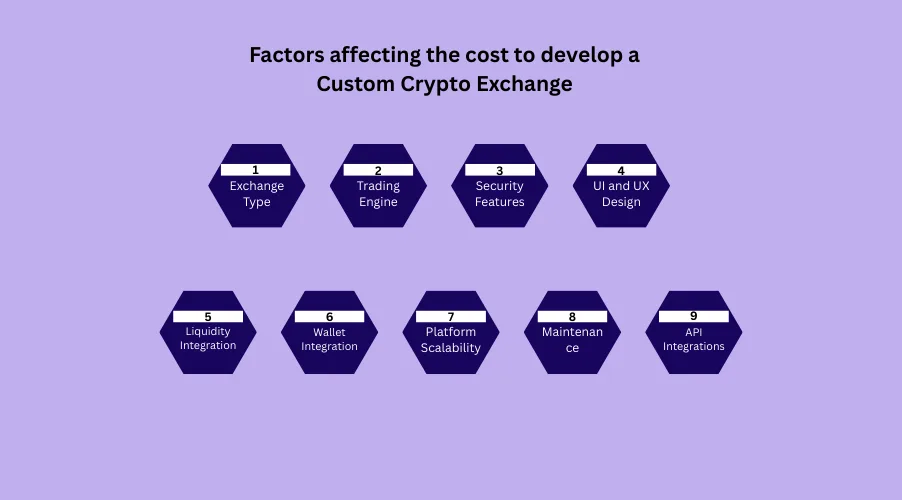
Several technical and operational factors influence the overall crypto exchange development cost. One of the most important factors is the complexity of the trading engine, which processes buy and sell orders in real time. Exchanges that require high transaction speed and advanced order matching systems usually have higher development costs.
Security infrastructure also plays a major role in determining the cost to build crypto exchange platforms. Features such as multi-signature wallets, encryption systems, and advanced authentication methods increase the reliability of the platform but also add to the development cost. In addition, wallet integration, liquidity management, and regulatory compliance systems can significantly impact the overall budget.
Another important factor is customization. Platforms built from scratch require full design, architecture planning, and backend development, which increases the custom crypto exchange cost. On the other hand, ready-made solutions reduce development time and lower the white label crypto exchange cost, but they may offer limited flexibility compared to custom platforms.
White Label Crypto Exchange Cost Explained
A white label exchange is a ready-made trading platform that businesses can purchase and launch under their own brand. Instead of building the entire system from the beginning, companies use an existing infrastructure and customize it according to their business needs. Because of this approach, the white label crypto exchange cost is usually lower than building a fully custom platform.
White label solutions already include essential components such as the trading engine, wallet integration, and basic security features. This significantly reduces development time and allows businesses to launch their platform faster. For startups or companies that want to enter the market quickly, this option can be a practical way to manage the overall crypto exchange development cost.
However, white label platforms may offer limited flexibility in terms of advanced customization. While businesses can modify branding, user interface, and some features, the core system remains the same. Even with these limitations, many startups choose this option because it lowers the initial cost to build crypto exchange platforms and simplifies the launch process.
Average White Label Crypto Exchange Cost
The white label crypto exchange cost depends on the provider, available features, and the level of customization required. In most cases, businesses pay for the platform license, integration services, and ongoing maintenance.
A basic white label exchange with standard trading features usually starts from a relatively moderate investment. If additional features such as advanced trading tools, multiple cryptocurrency pairs, or liquidity integration are required, the price can increase. Custom branding, UI modifications, and security enhancements may also affect the final crypto exchange development cost.
In general, white label solutions remain one of the most affordable ways to launch a trading platform. Since the core system is already developed, businesses can significantly reduce the cost to build crypto exchange platforms while still entering the market with a functional and secure exchange.
Custom Crypto Exchange Cost Explained
A custom exchange is built completely from scratch based on the specific requirements of a business. In this development approach, every component of the platform is designed and developed according to the company’s goals, trading model, and technical preferences. Because of this complete development process, the custom crypto exchange cost is usually higher than the cost of a ready-made platform.
Custom development provides full control over platform architecture, trading features, and user experience. Businesses can integrate advanced trading options, unique security layers, and specialized system designs that match their long-term strategy. This flexibility is one of the main reasons why many large companies prefer custom platforms, even though it increases the overall crypto exchange development cost.
Another advantage of custom development is scalability. A platform built from scratch can be designed to handle large trading volumes and future feature expansions. Although the initial cost to build crypto exchange platforms may be higher, custom exchanges provide more long-term flexibility and performance.
| Feature | White Label Exchange | Custom Exchange |
|---|---|---|
| Development Cost | Lower cost because the platform infrastructure is already built. | Higher cost as the entire exchange system is developed from scratch. |
| Time to Launch | Faster launch since most features are already available. | Longer development time due to full platform design and development. |
| Customization | Limited customization options for core system features. | Full customization based on business requirements and trading features. |
| Scalability | Scalability depends on the capabilities of the white label provider. | Highly scalable platform designed for long-term growth. |
| Maintenance | Provider usually manages updates and maintenance services. | Maintenance is handled by the development team or internal technical team. |
Average Custom Crypto Exchange Cost
The custom crypto exchange cost can vary depending on the complexity of the platform and the features required. Developing an exchange from the ground up involves system architecture planning, backend development, trading engine creation, security implementation, and infrastructure setup.
Platforms that include advanced trading tools, high-speed transaction processing, and strong security layers generally require a higher development budget. Additional integrations, such as liquidity providers, payment gateways, and compliance systems, can also increase the final crypto exchange development cost.
Despite the higher investment, many businesses choose custom development because it provides complete control over the platform. A well-developed custom exchange can offer better scalability, stronger security, and unique features, which can justify the higher cost to build crypto exchange platforms in the long run.
Cost to Build Crypto Exchange Platform in 2026
The cost to build crypto exchange platforms in 2026 can vary depending on the type of exchange, its features, and the level of customization required. As the crypto market continues to grow, businesses are focusing more on building secure, scalable, and user-friendly trading platforms. Because of this, the overall crypto exchange development cost is influenced by several technical and operational requirements.
For businesses that want to launch quickly with a limited budget, a white label solution can significantly reduce development expenses. In such cases, the white label crypto exchange cost is usually lower because the core infrastructure and trading system are already developed. Companies mainly invest in branding, integration, and customization.
On the other hand, businesses that want a unique platform with advanced trading tools often choose custom development. This approach requires designing the system from the ground up, which increases the custom crypto exchange cost. However, it also allows companies to create a highly scalable platform that can support future growth and new features. Because of these differences, the final development cost depends largely on the business model and long-term goals of the exchange.
Which Option Is More Cost Effective for Startups
For many startups entering the crypto industry, managing the crypto exchange development cost is an important factor when choosing a development approach. In most cases, white label solutions are considered the more cost-effective option because they require less time and a smaller initial investment.
The white label crypto exchange cost is lower mainly because the platform is already built and tested. Startups only need to customize the branding and integrate the necessary services before launching their exchange. This makes it possible to enter the market quickly without spending large amounts on development.
However, startups that plan to build a unique trading platform or introduce advanced features may consider custom development. Although the custom crypto exchange cost is higher, it provides complete control over platform design and functionality. The choice between these two options usually depends on the startup’s budget, business goals, and long-term growth plans.
How Development Companies Help Reduce Crypto Exchange Development Cost
Professional development companies play an important role in managing the overall crypto exchange development cost. Their technical expertise helps businesses plan and build trading platforms more efficiently, which can reduce unnecessary expenses during the development process.
Development teams analyze the project requirements and recommend the most suitable architecture for the platform. This approach helps businesses choose the right technology stack and avoid costly mistakes during development. As a result, companies can control the cost to build crypto exchange platforms while ensuring that the system remains secure and scalable.
Another advantage of working with experienced developers is access to ready frameworks and tested development practices. These resources can reduce development time and optimize the white label crypto exchange cost or the custom crypto exchange cost, depending on the project requirements. With proper planning and technical guidance, businesses can build a reliable exchange platform while keeping their development budget under control.
Frequently Asked Questions
Q1.What is the average crypto exchange development cost?
The crypto exchange development cost can vary depending on the platform type, features, and security requirements. On average, a basic crypto exchange platform may cost between $20,000 and $150,000, while advanced platforms with derivatives trading and high-security infrastructure can cost significantly more. The final cost depends on factors such as trading engine performance, liquidity integration, compliance systems, and overall platform complexity.
Q2.How much does white label crypto exchange cost?
The white label crypto exchange cost is usually lower because the core platform is already developed. Most white label solutions range from $5,000 to $40,000+ depending on features and customization. Some providers also offer subscription models that can cost around $899 to $5,000 per month for hosting, maintenance, and technical support.
Q3.What is the cost to build crypto exchange platform?
The cost to build crypto exchange platforms depends on whether you choose a white label solution or custom development. A simple exchange with basic features may start around $20,000–$30,000, while a more advanced exchange with margin trading, liquidity integration, and strong security systems can cost $60,000–$150,000 or more. Large enterprise exchanges with full customization can require much higher investment.
Q4.Is custom exchange more expensive than white label?
Yes, a custom exchange is generally more expensive than a white label solution. Custom platforms require full development from scratch, including system architecture, backend development, and security implementation. Because of this, the custom crypto exchange cost can reach $80,000 to $250,000 or more, while white label solutions usually cost much less and can be launched faster.
Q5.Which option is better for startups white label or custom exchange?
For most startups, white label exchanges are often the better option because they reduce the crypto exchange development cost and allow faster market entry. Since the platform infrastructure is already built, startups only need customization and branding before launch. Custom exchanges are better suited for businesses that want full control, unique features, and long-term scalability.
Q6.How long does it take to build a crypto exchange?
The development time depends on the approach used. A white label exchange can usually be launched within 2 to 6 weeks, while a fully custom crypto exchange may take 4 to 12 months depending on the platform complexity and required features. Faster deployment is one of the main reasons why many startups initially choose white label solutions.
Explore Services
Related Services
Reviewed by

Aman Vaths
Founder of Nadcab Labs
Aman Vaths is the Founder & CTO of Nadcab Labs, a global digital engineering company delivering enterprise-grade solutions across AI, Web3, Blockchain, Big Data, Cloud, Cybersecurity, and Modern Application Development. With deep technical leadership and product innovation experience, Aman has positioned Nadcab Labs as one of the most advanced engineering companies driving the next era of intelligent, secure, and scalable software systems. Under his leadership, Nadcab Labs has built 2,000+ global projects across sectors including fintech, banking, healthcare, real estate, logistics, gaming, manufacturing, and next-generation DePIN networks. Aman’s strength lies in architecting high-performance systems, end-to-end platform engineering, and designing enterprise solutions that operate at global scale.