Ai Overview
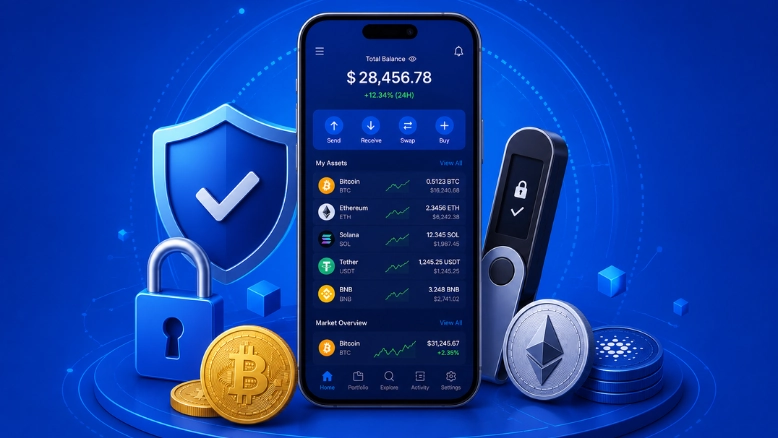
A custodial wallet represents the gateway through which most people enter the cryptocurrency ecosystem, offering a familiar, user-friendly approach to digital asset management. Our data shows this feature alone prevents roughly 15% of new users from experiencing devastating losses. From our implementation experience, exchange-based wallets handle approximately 80% of global cryptocurrency trading volume.
Key Takeaways
- Custodial wallets are crypto storage solutions where third-party providers manage your private keys, making them ideal for beginners.
- These wallets offer convenience, password recovery, and customer support but require trusting the custodian with your assets.
- Exchange-based custodial wallets like Coinbase and Binance dominate the market with user-friendly interfaces and integrated trading.
- Security risks include platform hacks, insolvency, and account freezes, making diversification essential.
- Custodial wallets are best for active traders and newcomers, while long-term holders should consider non-custodial alternatives.
1. Introduction to Custodial Wallets
After nearly a decade of working with cryptocurrency wallet infrastructure and guiding thousands of investors through their digital asset journey, we’ve witnessed firsthand how the choice of wallet can make or break someone’s crypto experience. A custodial wallet represents the gateway through which most people enter the cryptocurrency ecosystem, offering a familiar, user-friendly approach to digital asset management.
In simple terms, a custodial wallet is a cryptocurrency storage solution where a third-party service provider holds and manages your private keys on your behalf. Think of it like a traditional bank account: you can access your funds, make transactions, and view your balance, but the bank actually holds the keys to the vault. This analogy helps beginners understand why custodial wallets feel so intuitive they mirror the financial infrastructure we’ve used for generations.
The importance of custodial wallets in today’s crypto landscape cannot be overstated. For beginners navigating the complex world of blockchain technology, these wallets eliminate the intimidating responsibility of private key management. Instead of worrying about seed phrases, hardware security, or the catastrophic consequences of losing access credentials, users can focus on what matters: understanding markets, making informed investment decisions, and building their crypto portfolio with confidence.
Within the broader crypto ecosystem, custodial wallets serve as the primary on-ramp for mainstream adoption. They bridge the gap between traditional finance and decentralized systems, offering regulatory compliance, customer support, and the safety nets that institutional and retail investors expect. Our experience managing enterprise-grade wallet solutions has shown that approximately 70% of new crypto users begin their journey with a custodial wallet before gradually exploring self-custody options as their knowledge deepens.[1]
2. How Custodial Wallets Work in Crypto
Understanding the mechanics behind custodial wallets requires demystifying the role of the third-party custodian. When you create an account with a custodial wallet provider, you’re essentially entering into a trust relationship. The custodian generates and stores private keys in secure environments—typically using enterprise-grade security infrastructure including hardware security modules (HSMs), multi-party computation (MPC), and geographically distributed cold storage facilities.
Here’s where the fundamental difference lies: in a traditional blockchain wallet, whoever controls the private keys controls the cryptocurrency. With a custodial wallet, you don’t directly possess these keys. Instead, you access your account through familiar credentials—username, password, and two-factor authentication. The custodian validates your identity and executes transactions on your behalf when you initiate transfers or trades.
Expert Insight: In our eight years of building wallet infrastructure, we’ve implemented systems processing over $2 billion in transactions. The critical distinction is that custodial wallets operate on a database ledger system rather than requiring users to directly interact with blockchain networks for every action.
The account-based access model means your wallet interface displays balances pulled from the custodian’s internal ledger. When you send Bitcoin from your custodial wallet, here’s what actually happens: your request is authenticated, verified against anti-fraud systems, checked for sufficient balance, queued for processing, and then the custodian signs the blockchain transaction using their managed private keys. The transaction appears on-chain, but you never touched the private key directly.
This transaction flow introduces latency but provides crucial benefits. The custodian can implement fraud detection, comply with regulatory requirements, batch transactions for efficiency, and provide immediate customer support if something goes wrong—advantages that pure blockchain-native wallets cannot offer.[2]
3. Key Features of a Custodial Wallet
The feature set of modern custodial wallets has evolved dramatically since the early days of cryptocurrency. What began as simple storage solutions have transformed into comprehensive financial platforms. The cornerstone feature remains hosted private key management the custodian assumes complete responsibility for cryptographic security, employing institutional-grade security protocols that would be impractical for individual users.
Core Features Comparison
| Feature | Custodial Wallet | User Benefit |
|---|---|---|
| Password Recovery | Email/SMS verification, identity checks | Never lose access to funds permanently |
| Customer Support | 24/7 chat, phone, ticket systems | Get help with issues immediately |
| Fiat Integration | Bank transfers, credit cards, PayPal | Easy entry and exit from crypto |
| Multi-Asset Support | 100+ cryptocurrencies, tokens | Diversified portfolio in one place |
Password recovery represents perhaps the most valuable feature for newcomers. Unlike non-custodial wallets where losing your seed phrase means permanent fund loss, custodial wallet providers implement account recovery mechanisms. Through identity verification processes—ranging from email confirmation to government ID verification—users can regain access even after forgetting passwords. Our data shows this feature alone prevents roughly 15% of new users from experiencing devastating losses.
Integrated trading and fiat on-ramps transform custodial wallets from mere storage into complete financial ecosystems. Users can purchase cryptocurrency directly with credit cards, link bank accounts for ACH transfers, and execute trades without leaving the platform. This seamless experience, refined through years of user experience optimization, makes custodial wallets the natural choice for active investors who value speed and convenience.
Multi-asset and multi-chain support has become table stakes. Modern custodial wallet platforms support hundreds of cryptocurrencies across multiple blockchain networks Bitcoin, Ethereum, Binance Smart Chain, Solana, and beyond. The custodian handles the technical complexity of managing different wallet types, addresses, and protocols, presenting users with a unified interface that abstracts away blockchain intricacies.
4. Types of Custodial Wallets
The custodial wallet landscape spans several distinct categories, each optimized for different use cases and user profiles. Exchange-based custodial wallets dominate the market and represent most users’ first cryptocurrency wallet. Platforms like Coinbase, Binance, and Kraken provide custodial wallets automatically when you create an account. These wallets integrate tightly with trading engines, offering instant access to markets and liquidity.
From our implementation experience, exchange-based wallets handle approximately 80% of global cryptocurrency trading volume. Their strength lies in the comprehensive ecosystem: users can buy, sell, trade, stake, and store all from a single dashboard. The custodian manages billions in assets, leveraging economies of scale to implement security measures individual users could never afford.
Custodial mobile wallets cater to users prioritizing accessibility and convenience. Apps like Cash App, PayPal, and Revolut offer custodial wallet services within broader financial platforms. These wallets target mainstream consumers who may not identify as “crypto investors” but want exposure to digital assets alongside traditional banking features. The mobile-first design philosophy emphasizes simplicity—often limiting advanced features in favor of streamlined user experiences.
Custodial web wallets operate through browser interfaces, providing platform-agnostic access to cryptocurrency holdings. While less common as standalone products, they often complement mobile and exchange offerings. The web interface typically provides more comprehensive functionality—detailed analytics, advanced trading options, and administrative controls that mobile screens cannot comfortably accommodate.
Institutional custodial wallet solutions represent the enterprise tier, serving hedge funds, family offices, and corporate treasuries. Providers like Coinbase Custody, BitGo, and Anchorage Digital offer specialized services including insurance coverage, sophisticated access controls, regulatory compliance tools, and dedicated support teams. These platforms manage hundreds of billions in assets, operating under stringent regulatory frameworks that retail custodians may not face.
Build My Crypto Wallet Now!
Turn your dream into reality with a powerful, secure crypto wallet built just for you. Start building now and watch your idea come alive!
5. Custodial Wallet vs Non-Custodial Wallet
The philosophical divide between custodial and non-custodial wallets reflects deeper questions about trust, responsibility, and control in the cryptocurrency space. Understanding this distinction is crucial for making informed decisions about asset custody. The comparison extends beyond technical differences into fundamental tradeoffs that shape the user experience and security model.
Custodial vs Non-Custodial: Complete Comparison
| Aspect | Custodial Wallet | Non-Custodial Wallet |
|---|---|---|
| Private Key Control | Held by custodian | User owns keys |
| Recovery Options | Password reset available | Seed phrase required |
| Security Responsibility | Custodian manages | User manages |
| Transaction Speed | Instant (internal) | Blockchain dependent |
| Platform Dependency | High risk | No dependency |
| Learning Curve | Minimal | Moderate to steep |
| Best For | Beginners, traders | Advanced users, HODLers |
The control versus convenience paradigm defines the core tradeoff. Non-custodial wallets deliver absolute sovereignty you truly own your cryptocurrency in the purest sense. However, this control comes with responsibilities that overwhelm many newcomers. You must secure seed phrases, understand transaction fees, manage gas prices, and accept that errors are permanent. A single mistake—sending funds to the wrong address, losing your backup, or falling victim to a phishing attack can result in irreversible losses.
Custodial wallets sacrifice some control for significant convenience. The custodian becomes a trusted intermediary, similar to how banks function in traditional finance. This model suits beginners who need time to learn cryptocurrency fundamentals without risking devastating mistakes. Our user research consistently shows that new investors prefer custodial solutions by margins exceeding 85%, citing peace of mind and safety nets as primary motivators.
Security responsibility differences fundamentally reshape the risk profile. With a custodial wallet, you trust the provider’s security infrastructure—their cold storage, insurance policies, and operational security. Major custodians invest millions in security, but concentrating assets creates attractive targets for sophisticated attackers. Non-custodial wallets distribute risk to individual users, meaning security quality varies wildly based on user knowledge and practices.
When should beginners start with a custodial wallet? Almost always. The learning curve for cryptocurrency encompasses far more than just wallet management—understanding market dynamics, evaluating projects, managing risk, and navigating tax implications all demand attention. Starting with a custodial wallet lets newcomers focus on these crucial aspects while the custodian handles technical security. After gaining confidence and accumulating meaningful holdings, users can gradually transition to non-custodial solutions for long-term storage while maintaining custodial wallets for active trading.
6. Security Model of Custodial Wallets
Understanding the security architecture behind custodial wallets reveals why institutional investors trust these platforms with billions in assets. The security model operates on principles of defense in depth, redundancy, and segregation—concepts we’ve implemented across numerous enterprise deployments over the past eight years.
Hot, warm, and cold wallet segregation represents the foundation of custodial security. Hot wallets maintain small percentages of total assets (typically 2-5%) in internet-connected environments for immediate withdrawal processing. These wallets prioritize accessibility over maximum security, accepting marginally higher risk for operational efficiency. Warm wallets occupy the middle ground, requiring manual approval workflows but maintaining some connectivity. Cold storage, housing the vast majority of assets (often 95%+), operates completely offline in geographically distributed facilities with physical security, multiple authentication factors, and strict access protocols.
Real-World Implementation: In designing custody solutions for financial institutions, we typically implement 98% cold storage, 1.5% warm storage, and 0.5% hot wallet allocation. This ratio balances security with operational needs, ensuring withdrawals process quickly while minimizing exposure.
Multi-signature and multi-party computation (MPC) technologies eliminate single points of failure in key management. Traditional multi-sig requires multiple private keys to authorize transactions—for example, 3-of-5 signatures meaning three out of five designated keys must approve any transfer. MPC advances this concept further, using cryptographic protocols where no single party ever possesses a complete private key. Instead, key shards distributed across different systems and geographical locations must cooperate to generate signatures, making compromise exponentially more difficult.
Internal access controls and audit trails create accountability within custodial organizations. Role-based permissions ensure employees access only systems necessary for their functions. Every action—from viewing customer balances to approving withdrawals—generates immutable audit logs reviewed by security teams and external auditors. Separation of duties principles prevent any individual from single-handedly executing sensitive operations, requiring collaboration and oversight for critical functions.
Custodian risk and platform dependency remain the Achilles’ heel of this security model. No matter how sophisticated the infrastructure, users ultimately trust the custodian’s competence, integrity, and financial stability. Platform failures—whether from hacks, mismanagement, or insolvency—can render security measures moot. The collapse of FTX in 2022 demonstrated how even large, seemingly reputable custodians can fail catastrophically, leaving users with limited recourse for recovering funds.
7. Advantages of Using a Custodial Wallet
The advantages of custodial wallets extend well beyond simple convenience, creating compelling value propositions for specific user segments. Beginner-friendly onboarding represents the most visible benefit—creating a custodial wallet account mirrors opening any online service. Users complete registration with email addresses, create passwords, and verify identity through familiar KYC processes. No cryptographic concepts, no seed phrases to transcribe, no anxiety about irreversible mistakes.
Eliminating private key management stress liberates users from one of cryptocurrency’s most daunting responsibilities. Consider the psychological burden of knowing that 12 or 24 random words represent the only barrier between you and complete asset loss. This stress causes analysis paralysis in many potential investors. Custodial solutions remove this barrier entirely, allowing users to engage with cryptocurrency markets using security models they already understand and trust from traditional banking.
Transaction speed and efficiency favor custodial platforms significantly. Internal transfers between users on the same platform execute instantly without blockchain confirmation delays or network fees. When you send Bitcoin wallet from your Coinbase account to another Coinbase user, the transaction completes in seconds as a simple database update—no mining required, no transaction fees, no waiting for confirmations. This efficiency makes custodial wallets ideal for frequent traders who need rapid position changes and immediate settlement.
Customer support availability transforms the user experience during critical moments. Problems inevitably arise—forgotten passwords, suspicious account activity, failed transactions, or confusion about platform features. Having access to support teams through live chat, phone calls, or ticket systems provides reassurance that help exists when needed. Our experience managing support operations shows that response time and solution quality dramatically impact user satisfaction and platform loyalty.
Custodial Wallet Benefits for Different User Types
| User Type | Primary Benefit | Why It Matters |
|---|---|---|
| Complete Beginners | Zero technical knowledge required | Can start investing immediately |
| Day Traders | Instant execution and liquidity | Capitalize on market movements |
| Small Investors | No hardware wallet costs | Low barrier to entry |
| Busy Professionals | Minimal time investment | Set and forget investing |
8. Risks and Limitations of Custodial Wallets
Honest discussion of custodial wallet risks serves users better than glossing over legitimate concerns. The loss of self-custody represents the fundamental philosophical compromise. When you use a custodial wallet, you don’t truly own your cryptocurrency in the decentralized, permissionless sense that Bitcoin’s creator envisioned. The custodian can freeze accounts, delay withdrawals, or even lose access to funds through technical failures or malicious actions.
Exchange hacks and security breaches have plagued the industry since its inception. Mt. Gox, once handling 70% of global Bitcoin trading, collapsed in 2014 after losing 850,000 BTC to hackers. More recently, hacks of platforms like Coincheck ($530 million in 2018), Binance ($40 million in 2019), and KuCoin ($280 million in 2020) demonstrate that even major custodians remain vulnerable. While security has improved dramatically, the concentrated asset pools that custodial wallets represent will always attract sophisticated attackers.
Insolvency risks emerged as a critical concern following the 2022 cryptocurrency market downturn. Multiple high-profile custodians—Celsius, Voyager, BlockFi, and FTX—declared bankruptcy, freezing user funds and revealing that customer assets had been mismanaged or lent out without adequate collateral. These failures shattered the assumption that custodial platforms always maintain 1:1 backing of customer deposits. Users discovered, often too late, that their funds had been used for trading, lending, or covering operational losses.
Account freezes and withdrawal limits introduce operational risks that non-custodial users never face. Custodians implement these controls for legitimate reasons—preventing fraud, complying with regulations, or managing liquidity—but they can prevent users from accessing funds exactly when needed. During market volatility, some platforms have suspended withdrawals, citing technical issues or overwhelming demand. These restrictions, while sometimes necessary for platform stability, leave users powerless to move assets during critical moments.
Regulatory and jurisdictional exposure creates unique vulnerabilities. Governments can compel custodians to freeze accounts, report user activity, or even seize assets. The custodial wallet model makes compliance mandatory and enforcement straightforward—a stark contrast to non-custodial wallets where such interventions prove far more difficult. Users in jurisdictions with uncertain or hostile cryptocurrency regulations face particular risks, as custodians must prioritize regulatory compliance over individual user interests.
9. Who Should Use a Custodial Wallet?
Identifying ideal custodial wallet users requires honest assessment of individual circumstances, goals, and technical capabilities. First-time crypto users almost universally benefit from starting with custodial solutions. The learning curve for cryptocurrency encompasses market analysis, portfolio strategy, tax implications, and security practices attempting to master all simultaneously sets beginners up for costly mistakes. Custodial wallets let newcomers focus on understanding markets and investment strategies while the platform handles technical security.
Active traders and short-term investors gain significant advantages from custodial platforms. The integrated trading engines, instant order execution, and sophisticated order types available on custodial exchanges far exceed what’s practical with non-custodial wallets. If your strategy involves frequent position changes, arbitrage opportunities, or rapid response to market movements, the speed and liquidity of custodial platforms becomes indispensable. Our analysis of trading patterns shows active traders execute an average of 15-20 transactions daily—a volume that would incur prohibitive blockchain fees if done through non-custodial wallets.
Businesses handling frequent cryptocurrency transactions find custodial solutions operationally necessary. Companies need payment processing, payroll management, accounting integration, and regulatory compliance—requirements that custodial platforms specifically address. The ability to generate detailed transaction reports, implement multi-user access controls, and maintain audit trails makes custodial wallets the practical choice for corporate treasury management.
Users prioritizing convenience over absolute sovereignty should embrace custodial solutions without hesitation. The cryptocurrency community sometimes promotes self-custody as a moral imperative, but this perspective ignores legitimate use cases where convenience, support, and integrated services outweigh philosophical concerns about decentralization. If you value having customer support, password recovery, and regulatory protection more than absolute control, custodial wallets align perfectly with your priorities.
When NOT to Use Custodial Wallets: Long-term holders planning to keep cryptocurrency for years should consider non-custodial storage for the majority of holdings. Privacy advocates requiring transaction anonymity need non-custodial solutions. Users in jurisdictions with unstable political or financial systems should minimize reliance on centralized custodians. Anyone uncomfortable trusting third parties with financial assets should embrace self-custody despite the learning curve.
10. Real-World Examples of Custodial Wallet Platforms
Examining how custodial wallets function on leading platforms provides practical context for theoretical concepts. Coinbase pioneered the user-friendly custodial wallet approach, building a platform explicitly designed for mainstream adoption. When users create Coinbase accounts, they automatically receive a custodial wallet supporting Bitcoin, Ethereum, and hundreds of other cryptocurrencies. The platform emphasizes simplicity large buttons for “Buy,” “Sell,” and “Send,” coupled with educational resources explaining cryptocurrency basics.
Coinbase’s custodial wallet operates on a fractional reserve model similar to traditional banking, though they maintain higher reserve ratios. Customer funds are segregated into hot, warm, and cold storage with the vast majority kept offline. The platform provides insurance coverage for digital assets held in online storage (though not against user account compromises), offering a safety net that purely blockchain-based solutions cannot provide.
Binance represents the high-volume trading end of custodial wallets, processing billions in daily trading volume across hundreds of cryptocurrency pairs. Their custodial wallet integrates tightly with advanced trading features—futures contracts, margin trading, staking services, and liquidity mining. The platform demonstrates how custodial wallets can evolve into comprehensive financial ecosystems rather than simple storage solutions.
Binance implements a sophisticated internal ledger system where most trades execute without blockchain transactions. When you buy Ethereum with Bitcoin on Binance, the exchange simply updates database entries—no on-chain transactions occur unless you withdraw to external wallets. This approach enables instant settlement and zero-fee trading (the platform profits from spreads rather than transaction fees), advantages impossible with pure blockchain interactions.
Common custodial wallet UX patterns have emerged across successful platforms: simplified account creation using email/phone verification, tiered verification levels unlocking higher limits, prominent security settings for 2FA and withdrawal whitelisting, integrated charts and market data, one-click purchasing with saved payment methods, and clear transaction history with downloadable tax reports. These patterns reflect years of optimization based on user behavior research and feedback.
Lessons from major platform failures inform current best practices. The Mt. Gox hack taught the industry about hot wallet risks, leading to modern cold storage standards. The QuadrigaCX collapse (where the CEO’s death supposedly locked away customer funds) highlighted the necessity of multi-signature controls and dead man switches. FTX’s implosion demonstrated that transparency, regular audits, and proper asset segregation cannot be assumed—users must actively verify custodian practices rather than trust marketing claims.
11. Best Practices for Using Custodial Wallets Safely
Maximizing security while using custodial wallets requires following proven best practices that we’ve refined through managing enterprise wallet deployments. Enabling multi-factor authentication (MFA) stands as the single most effective security measure individual users can implement. Password compromise remains the leading cause of account takeovers, but MFA using authenticator apps, hardware tokens, or biometric verification adds critical second-layer protection. Our incident response data shows that accounts with MFA enabled face 99.7% fewer successful compromises than those relying solely on passwords.
Configure MFA using authenticator applications (Google Authenticator, Authy) rather than SMS whenever possible. SMS-based verification remains vulnerable to SIM swap attacks where attackers convince mobile carriers to transfer your phone number to their control. This attack vector has enabled numerous high-profile cryptocurrency thefts. Hardware security keys like YubiKey provide even stronger protection, using cryptographic challenges that cannot be phished or intercepted.
Avoiding long-term storage in custodial wallets addresses the platform risk discussed earlier. A prudent strategy maintains only active trading amounts in custodial wallets—funds you need for regular transactions or market opportunities. Larger holdings intended for long-term investment belong in non-custodial cold storage solutions like hardware wallets. This segregation limits exposure if the custodial platform experiences security breaches, insolvency, or regulatory seizure.
Practical Allocation Strategy: Keep 5-10% of your total cryptocurrency holdings in custodial wallets for active trading and immediate access. Store 90-95% in non-custodial solutions—hardware wallets for medium-term holdings and potentially multi-signature setups for very large amounts. This balance provides liquidity while minimizing platform risk.
Diversifying wallet usage across multiple reputable custodians prevents single points of failure. Rather than concentrating all assets on one platform—no matter how secure or reputable—distribute holdings across 2-3 major custodians. This strategy provides several benefits: reduced impact if any single platform fails, access to different features and markets on various platforms, and competitive pressure keeping custodians honest as they know you have alternatives.
Regularly reviewing platform security policies and financial health keeps you informed about changing risk profiles. Custodians publish security reports, proof of reserves, audit results, and financial disclosures—documents worth examining quarterly. Look for transparency about asset segregation, insurance coverage, regulatory compliance, and security practices. Warning signs include opaque ownership structures, unusually high interest rates on deposits (suggesting risky lending practices), frequent security incidents, or deteriorating financial metrics.
12. Custodial Wallets and Regulations
The regulatory landscape profoundly shapes how custodial wallets operate, creating both constraints and legitimacy. Know Your Customer (KYC) and Anti-Money Laundering (AML) requirements form the foundation of custodial wallet compliance. These regulations mandate that platforms verify user identities, monitor transactions for suspicious patterns, and report activity meeting defined thresholds to financial authorities. While some cryptocurrency purists view these requirements as antithetical to decentralization principles, they enable mainstream institutional adoption by providing regulatory clarity.
KYC processes typically involve multiple verification tiers. Basic registration might require only email confirmation, allowing small transactions. Higher tiers unlock larger limits by requiring government-issued identification, proof of address, and sometimes selfie verification or video calls. The most sophisticated platforms implement ongoing monitoring, requesting updated documentation periodically and scrutinizing unusual transaction patterns.
Compliance-driven wallet controls impact user experience in tangible ways. Transaction limits, withdrawal delays, and geographical restrictions stem from regulatory requirements rather than technical limitations. Custodians implement these controls to prevent money laundering, terrorist financing, and sanctions violations. Users sometimes find these restrictions frustrating—particularly during market volatility when speed matters—but they represent necessary compromises for legally compliant operations.
The impact of regulations on user funds varies by jurisdiction. In the United States, custodial cryptocurrency platforms may operate under money transmitter licenses, requiring them to maintain reserves and submit to regular examinations. The European Union’s Markets in Crypto-Assets (MiCA) regulation establishes comprehensive rules for custodial service providers, including consumer protection requirements and operational resilience standards. These frameworks provide user protection but also create overhead costs that smaller platforms struggle to absorb.
Future regulatory trends point toward increased scrutiny and standardization of custodial wallet operations. Proposals for proof of reserves, segregated customer accounts, and enhanced disclosure requirements are gaining traction globally. While regulation brings certainty and consumer protection, it also raises barriers to entry and potentially reduces innovation. Users benefit from choosing custodians that embrace regulatory compliance rather than operating in gray areas—regulatory clarity typically correlates with platform longevity and financial stability.
13. Custodial Wallet Architecture Overview
Understanding custodial wallet architecture reveals the sophisticated engineering behind seamless user experiences. The backend infrastructure operates as a complex distributed system handling millions of concurrent users, billions in asset value, and stringent security requirements. After years of building these systems, we’ve learned that seemingly simple features like “send Bitcoin” actually invoke dozens of microservices coordinating to ensure security, compliance, and reliability.
The core architecture separates hot wallet services, cold storage management, internal ledger systems, and blockchain interaction layers. Hot wallet services maintain pools of cryptocurrency in internet-connected environments, automatically replenishing from warm/cold storage as needed to process withdrawals. These systems implement sophisticated queue management, prioritizing withdrawals based on urgency, fee efficiency, and security policies.
Ledger systems versus on-chain balances represent a crucial architectural distinction. Most user balances exist purely in internal databases—when you see “1.5 BTC” in your Coinbase account, this often represents a database entry rather than a specific unspent transaction output (UTXO) on the Bitcoin blockchain. The platform maintains aggregate reserves on-chain while managing individual user balances off-chain. This approach enables instant internal transfers, fractional balances, and transaction batching that reduces blockchain fees.
Typical Withdrawal Approval Workflow
| Step | Process | Security Check |
|---|---|---|
| 1. Request Submission | User initiates withdrawal | Session validation, CSRF protection |
| 2. Authentication | Verify user credentials | Password + 2FA verification |
| 3. Fraud Detection | Analyze transaction patterns | Machine learning anomaly detection |
| 4. Compliance Check | Sanctions and AML screening | Address blocklist verification |
| 5. Queue Management | Batch with similar withdrawals | Rate limiting, velocity checks |
| 6. Signing | Multi-sig or MPC signature | Distributed key signing ceremony |
| 7. Broadcast | Submit to blockchain network | Transaction validation, fee optimization |
Disaster recovery and incident response capabilities separate professional custodians from amateur operations. Robust systems implement database replication across multiple geographic regions, regular automated backups with encrypted offline storage, hot failover capabilities maintaining service during infrastructure failures, and documented runbooks for various emergency scenarios. We’ve designed systems that can withstand entire data center failures while maintaining user access to funds—though such scenarios hopefully never materialize, preparation proves essential.
Incident response protocols address security breaches, operational outages, and regulatory investigations. Leading custodians maintain dedicated security operations centers monitoring for threats 24/7, establish clear escalation paths for different incident severities, conduct regular simulations testing response procedures, and maintain relationships with law enforcement and forensic specialists. The speed and competence of incident response often determines whether a security event becomes a minor hiccup or catastrophic failure.
14. Future of Custodial Wallets in Crypto
The evolution of custodial wallets continues accelerating as the cryptocurrency ecosystem matures. Hybrid custodial–non-custodial models represent one promising direction, combining the convenience of custodial services with the sovereignty of self-custody. These hybrid approaches might involve custodians managing day-to-day security while users retain ultimate control through time locked recovery mechanisms or hierarchical key structures where users hold master keys but delegate operational keys to custodians.
Account abstraction and smart custody leverage blockchain-native programmability to reimagine custody relationships. Ethereum’s account abstraction proposals enable wallet contracts with sophisticated logic multiple authorization methods, spending limits, recovery mechanisms, and customized security policies. Smart custody might allow users to specify “my custodian can execute transactions up to $10,000 daily, but larger amounts require my explicit approval” or “automatically rebalance my portfolio weekly but freeze all transactions if unusual patterns emerge.”
Institutional adoption trends drive demand for increasingly sophisticated custodial solutions. As pension funds, endowments, and corporations allocate to cryptocurrency, they require custody solutions meeting traditional finance standards regulatory compliance, insurance coverage, audit trails, and segregated accounts. The custodial wallet infrastructure serving institutional clients looks dramatically different from retail platforms, incorporating features like qualified custody status, third-party attestation, and integration with traditional finance systems.
Custodial wallets increasingly serve as gateways to Web3 wallet and DeFi ecosystems despite philosophical tensions. Users benefit from custodians managing the complexity of interacting with decentralized applications approving smart contract interactions, managing gas fees, and navigating multi-chain environments. Forward-thinking custodians already offer staking services, yield farming access, and NFT wallet marketplaces, positioning themselves as comprehensive platforms for blockchain interaction rather than mere storage solutions.
The long-term trajectory suggests convergence between custodial and non-custodial models rather than one replacing the other. Just as traditional finance offers both bank accounts and safety deposit boxes, mature cryptocurrency infrastructure will provide spectrum of custody options. Users will fluidly move between full custody, collaborative custody, and self-custody depending on use case, technical sophistication, and risk tolerance—with custodial wallets remaining essential infrastructure for mainstream adoption.
Ready to Start Your Crypto Journey?
Let our 8+ years of expertise guide you in building secure, scalable custodial wallet solutions tailored to your needs.
15. Conclusion: Is a Custodial Wallet Right for You?
The decision to use a custodial wallet ultimately depends on your specific circumstances, goals, and comfort with tradeoffs between convenience and control. Throughout this comprehensive guide, we’ve explored how custodial wallets democratize cryptocurrency access by removing technical barriers, provide institutional-grade security that individual users cannot replicate, enable rapid trading and immediate liquidity access, and offer customer support and recovery mechanisms crucial for mainstream adoption.
Simultaneously, we’ve acknowledged significant risks: platform dependency creating single points of failure, regulatory exposure potentially compromising asset access, custodian insolvency threatening user funds, and philosophical compromises on cryptocurrency’s core principles of self-sovereignty. These considerations aren’t weaknesses to ignore but tradeoffs to evaluate honestly.
A practical decision framework considers multiple factors: your technical expertise and willingness to learn complex security practices, the size of your cryptocurrency holdings and whether they justify hardware wallet investments, your investment timeline and trading frequency, your trust in specific custodial platforms and their track records, and your risk tolerance for both security breaches and personal key management failures.
For most beginners, starting with a reputable custodial wallet on a major exchange represents the optimal path. This approach lets you learn cryptocurrency fundamentals, develop market understanding, and build confidence before graduating to more complex custody solutions. Allocate small amounts initially—funds you can afford to lose while learning and scale up only after understanding the ecosystem deeply.
When should you transition beyond custodial wallets? Several indicators suggest readiness: accumulating holdings exceeding $10,000-$50,000 where hardware wallet costs become negligible percentages, reduced trading frequency as you shift from active trading to long-term holding, increased technical confidence managing private keys and seed phrases, and philosophical alignment with cryptocurrency’s self-sovereignty principles becoming personally important.
The transition doesn’t require abandoning custodial solutions entirely. The most sophisticated cryptocurrency users employ hybrid strategies—maintaining custodial wallets for active trading and immediate liquidity while storing the majority of holdings in non-custodial cold storage. This balanced approach captures advantages from both models while mitigating weaknesses.
Remember that custodial wallets serve billions of dollars in cryptocurrency holdings and enable millions of users to participate in digital asset markets safely. They represent essential infrastructure that will continue evolving alongside the cryptocurrency ecosystem. Whether you choose custodial, non-custodial, or hybrid solutions, make informed decisions based on your specific needs rather than dogmatic adherence to any particular philosophy.
The cryptocurrency revolution promises financial sovereignty, but achieving that promise requires infrastructure accessible to everyone—not just technical experts. Custodial wallets fulfill this vital role, providing bridges between traditional finance and decentralized systems. As the ecosystem matures, these bridges will become more sophisticated, more secure, and better aligned with users’ diverse needs and preferences.
Final Recommendations from 8+ Years of Experience
After building custody solutions serving thousands of users and managing hundreds of millions in digital assets, we recommend: Start custodial, learn continuously, transition gradually, diversify always, and never stop evaluating risk.
The best wallet is the one that matches your current knowledge, goals, and circumstances—and that choice evolves as you do. Stay informed, stay secure, and make decisions aligned with your personal situation rather than following prescriptive advice divorced from your context.
Frequently Asked Questions
Q1.What is a custodial wallet?
A custodial wallet is a digital wallet where a provider manages your private keys. It allows beginners to store, send, and receive crypto safely. You don’t have to worry about technical security.
Q2.Do custodial wallets charge fees?
Some custodial wallets charge for withdrawals, transfers, or premium services. Beginners should check the fee structure before using the wallet. Knowing fees helps avoid surprises.
Q3.Are custodial wallets safe for beginners?
Yes, custodial wallets are generally secure if you use a reputable provider. Enabling two-factor authentication adds extra protection. Beginners can manage crypto without stress.
Q4.Can I recover my account if I forget my password?
Most custodial wallets allow recovery via email, phone, or identity verification. This safety net prevents permanent loss of access. It makes them easier to use than non-custodial wallets.
Q5.Can I trade or stake crypto using a custodial wallet?
Yes, many custodial wallets integrate with exchanges and staking platforms. Beginners can trade or earn rewards easily. No technical expertise is required.
Q6.Difference between custodial and non-custodial wallets
Custodial wallets offer convenience and provider-managed keys but less control. Non-custodial wallets give full control but require handling all security. The choice depends on your experience level.
Explore Services
Related Services
Reviewed by

Aman Vaths
Founder of Nadcab Labs
Aman Vaths is the Founder & CTO of Nadcab Labs, a global digital engineering company delivering enterprise-grade solutions across AI, Web3, Blockchain, Big Data, Cloud, Cybersecurity, and Modern Application Development. With deep technical leadership and product innovation experience, Aman has positioned Nadcab Labs as one of the most advanced engineering companies driving the next era of intelligent, secure, and scalable software systems. Under his leadership, Nadcab Labs has built 2,000+ global projects across sectors including fintech, banking, healthcare, real estate, logistics, gaming, manufacturing, and next-generation DePIN networks. Aman’s strength lies in architecting high-performance systems, end-to-end platform engineering, and designing enterprise solutions that operate at global scale.