Ai Overview
Before exploring comprehensive blockchain wallet benefits, let’s establish a clear foundation. A blockchain wallet is a digital tool that stores the cryptographic keys needed to access, manage, and transact with digital assets, often integrated within advanced blockchain application development services. Unlike a physical wallet that holds cash, blockchain wallets don’t actually store your cryptocurrency they store the private keys that prove ownership of assets recorded on the blockchain.
Key Takeaways
- Blockchain wallets give users true ownership by allowing full control over private keys.
- Self-custody ensures no bank, exchange or platform can freeze or revoke access.
- One wallet provides direct access to DeFi, NFTs, DAOs, games, and Web3 applications.
- Blockchain wallets work pseudonymously and do not require KYC for basic use.
- Multi-chain wallets support Ethereum, Polygon, Solana, and Layer 2 networks.
- Security depends on users protecting seed phrases and approving transactions carefully.
- Using a hot wallet for daily activity and a hardware wallet for long-term storage is best practice.
- Blockchain wallets are becoming the core identity and governance layer of Web3.
The rise of Web3 and decentralization marks a fundamental shift from the internet we’ve known Web2 where corporations control our data, to an internet where individuals reclaim sovereignty. At the center of this transformation lies blockchain technology and the primary interface between you and this decentralized future is your blockchain wallet.
The benefits of blockchain wallets extend far beyond simple cryptocurrency storage. These tools represent a philosophical and practical evolution in how we interact with digital systems, offering security, privacy, and control that traditional financial infrastructure simply cannot match. Understanding blockchain wallets in Web3 is no longer optional it’s the foundation of digital literacy in the decentralized era.
With over 8 years of hands-on experience guiding enterprises and individuals through Web3 adoption, our team has witnessed the transformative impact of blockchain wallets firsthand. We’ve seen how early adopters who grasped the benefits of blockchain wallets positioned themselves at the forefront of digital innovation, while those who delayed faced steeper learning curves.
What You’ll Discover: This comprehensive guide explores the core benefits of blockchain wallets, how blockchain wallets in Web3 enable revolutionary use cases, security best practices from 8+ years of industry experience, and strategic insights for choosing and using blockchain wallets effectively in 2026 and beyond.
What Are Blockchain Wallets?
Before exploring comprehensive blockchain wallet benefits, let’s establish a clear foundation. A blockchain wallet is a digital tool that stores the cryptographic keys needed to access, manage, and transact with digital assets, often integrated within advanced blockchain application development services. Unlike a physical wallet that holds cash, blockchain wallets don’t actually store your cryptocurrency they store the private keys that prove ownership of assets recorded on the blockchain.
Think of blockchain wallets in Web3 as a combination of a safe deposit box key and a digital signature device. Your private key is your proof of ownership, while your public key (wallet address) is like your account number that others can use to send you assets.[1]
How Blockchain Wallets Work at a High Level
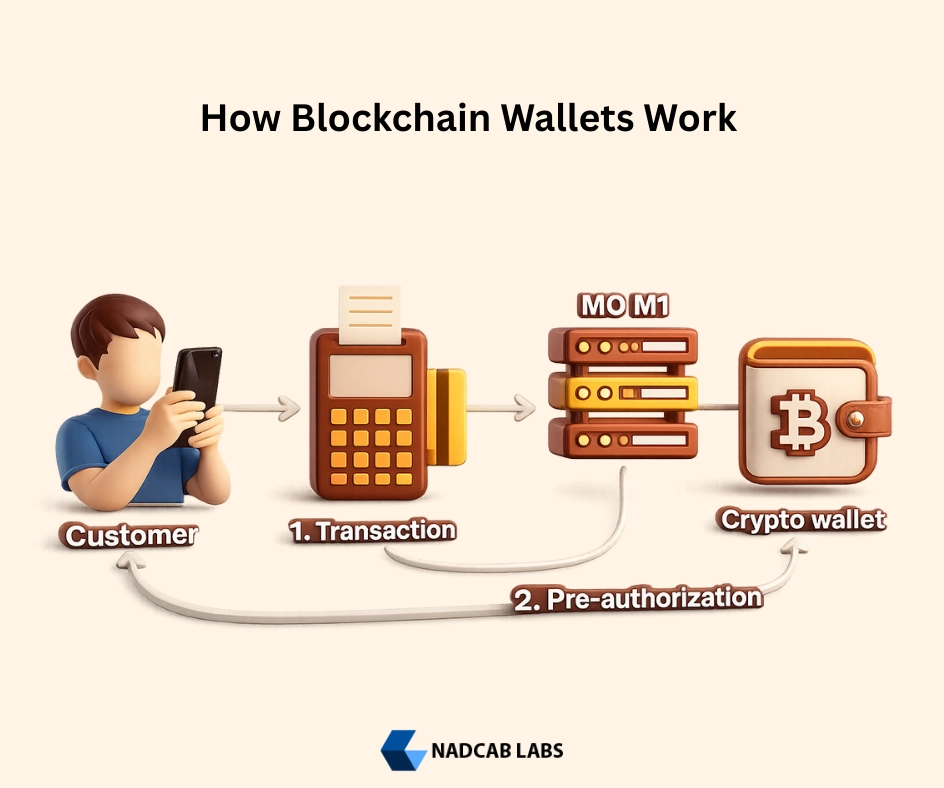
Understanding the mechanics helps you appreciate blockchain wallet advantages more deeply:
Key Generation
When you create a wallet, it generates a pair of cryptographic keys: a private key (kept secret) and a public key (shared freely). This key pair enables secure transactions on blockchain networks.
Transaction Signing
To send assets or interact with smart contracts, your wallet uses the private key to create a cryptographic signature proving you authorize the transaction one of the key benefits of blockchain wallets.
Blockchain Communication
Your wallet communicates with blockchain nodes to broadcast transactions, check balances, and interact with decentralized applications showcasing how blockchain wallets in Web3 serve as your gateway.
Key Differences That Highlight the Benefits of Blockchain Wallets
The Concept of Private Keys & Self-Custody
One of the most fundamental benefits of blockchain wallets is self-custody the ability to hold your own private keys. This seemingly technical detail has profound implications:[2]
“Not your keys, not your crypto wallet“ is the foundational principle of blockchain wallets in Web3. When you control your private keys, you have true ownership. When a third party controls them, you merely have an IOU a promise that can be broken.
This distinction became painfully clear in 2022 when FTX collapsed, wiping out billions in user funds held in custodial exchange wallets. Users with self-custody blockchain wallets were completely unaffected.
Understanding Blockchain Wallets in Web3 Ecosystem
To fully appreciate the benefits of blockchain wallets, we must understand their role within the broader Web3 architecture. Blockchain wallets in Web3 are not isolated tools they’re integral components of a decentralized ecosystem that includes blockchains, nodes, smart contracts, and decentralized applications.
Role of Blockchain Wallets in Web3 Architecture
In the Web3 architecture stack, blockchain wallets occupy a critical position:
The Web3 Technology Stack
User Interface Layer (dApps)
Web3 applications users interact with directly
Blockchain Wallets (YOU ARE HERE)
Your interface to sign transactions and prove identity
Smart Contracts
Self-executing code that powers Web3 applications
Blockchain Networks
Distributed ledgers (Ethereum, Solana, Polygon, etc.)
Network Nodes
Computers that maintain and validate the blockchain
Wallets as the Gateway to Web3 Applications
One of the most transformative benefits of blockchain wallets is their role as a universal gateway. In Web2, you need separate accounts for every service—each with its own username, password, and authentication method. Blockchain wallets in Web3 eliminate this fragmentation:
- Single Sign-On: Your wallet address serves as your identity across all Web3 applications
- No Passwords: Cryptographic signatures replace traditional authentication
- Instant Access: Connect to any dApp without creating accounts or waiting for approvals
- Portable Identity: Your reputation, assets, and data move with you across platforms
Expert Insight from 8+ Years in Web3
The architecture of blockchain wallets in Web3 represents a paradigm shift we’ve been advocating for since 2017. Traditional systems require you to trust multiple intermediaries with your data and assets. Web3 wallets invert this model: you trust mathematics and open-source code instead of corporations. This architectural change is why we consider understanding the benefits of blockchain wallets essential for anyone serious about digital sovereignty.
Core Benefits of Blockchain Wallets for Web3 Users
Now we arrive at the heart of why blockchain wallets in Web3 have become indispensable. The benefits of blockchain wallets extend across multiple dimensions—security, ownership, privacy, and functionality. Let’s explore each in depth.
True Ownership and Full Asset Control
Perhaps the most significant among the benefits of blockchain wallets is genuine digital ownership through self-custody. When you control your private keys, you have absolute authority over your assets no bank can freeze them, no government can easily seize them, no platform can revoke your access.
“Not Your Keys, Not Your Crypto” Explained
This mantra encapsulates one of the core benefits of blockchain wallets. Here’s what it means in practice:
With Your Keys
You have complete control. You can transact 24/7, no one can freeze your funds, you decide which applications to use, and your assets remain yours even if platforms shut down.
Without Your Keys
You depend on a third party. They can freeze accounts, impose limits, suffer hacks, go bankrupt, or decide to restrict your access. You’re at their mercy.
Enhanced Security Through Cryptography
Among the critical wallet benefits is cryptographic security that far exceeds traditional systems. Blockchain wallets in Web3 leverage advanced cryptography that makes unauthorized access mathematically infeasible:
How Blockchain Wallets Secure Transactions
Reduced Reliance on Centralized Intermediaries: Traditional financial systems require you to trust banks, payment processors, and custodians. Each intermediary represents a potential failure point hacking target, bankruptcy risk, or compliance bottleneck. The security benefits of these wallets eliminate most intermediaries, replacing institutional trust with mathematical certainty.
Privacy and User Anonymity
In an era of pervasive surveillance and data harvesting, the privacy benefits of these wallets cannot be overstated. Blockchain wallets in Web3 offer pseudonymity that traditional financial systems simply cannot match.
No KYC Requirement
Create and use blockchain wallets without submitting identification documents, financial history, or personal information. This is impossible with traditional banks or most centralized crypto platforms.
Pseudonymous Transactions
Your wallet address isn’t automatically linked to your real-world identity. While transactions are public on the blockchain, they’re associated with an address, not your name a key privacy benefit of blockchain wallets in Web3.
Selective Disclosure
You control what information you reveal and when. Use different addresses for different purposes, creating separation between your various digital activities—financial freedom that amplifies wallet benefits.
Privacy Wisdom from 8+ Years of Web3 Experience
The privacy benefits of these wallets represent more than just anonymity—they’re about reclaiming control over your digital footprint. We’ve advised clients in authoritarian regimes where blockchain wallets in Web3 provided financial freedom when traditional banks became tools of oppression. Privacy isn’t about hiding illegal activity; it’s about maintaining basic human dignity in digital spaces.
How Blockchain Wallets Enable Web3 Use Cases
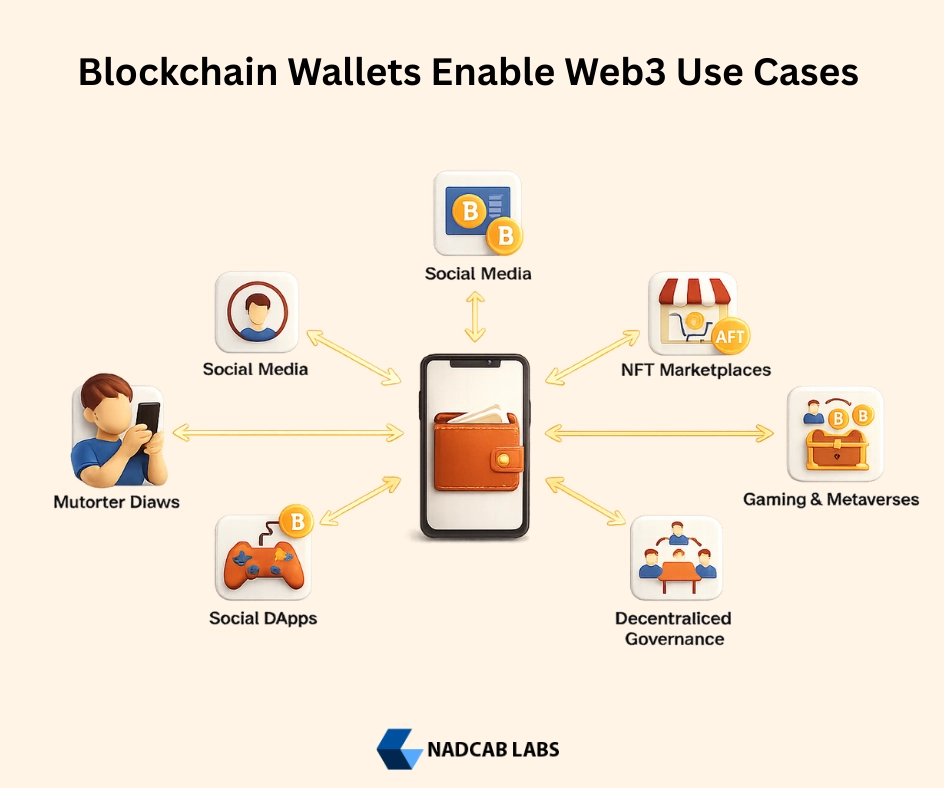
The practical benefits of blockchain wallets become most apparent when examining real-world Web3 applications. Blockchain wallets in Web3 serve as the universal interface enabling entirely new categories of digital interaction.
Accessing DeFi Platforms
Decentralized Finance (DeFi) represents perhaps the most revolutionary use case showcasing blockchain wallet advantages. With your wallet, you can:
DeFi Activities Enabled by Blockchain Wallets
Decentralized Trading
Trade cryptocurrencies on decentralized exchanges (DEXs) like Uniswap or PancakeSwap without creating accounts or submitting to KYC. Your wallet connects, you approve the trade, done. No middleman, no approval process.
Yield Farming & Staking
Earn yields on your cryptocurrency holdings through lending protocols (Aave, Compound) or staking mechanisms. The benefits of blockchain wallets include direct interaction with smart contracts, eliminating banking intermediaries who would take cuts.
Borrowing & Lending
Borrow against your crypto collateral or lend to earn interest—all through smart contracts verified by your wallet. No credit checks, no approval committees, no discrimination based on geography.
Managing NFTs and Digital Collectibles
Non-Fungible Tokens (NFTs) demonstrate another dimension of the benefits of blockchain wallets. Your wallet serves as your digital art gallery, collectibles showcase, and proof of ownership for:
- Digital art and photography purchased from marketplaces like OpenSea or Blur
- Virtual real estate in metaverse platforms like Decentraland or The Sandbox
- Gaming assets that you truly own and can trade across platforms
- Music, videos, and other creative content from artists
- Domain names (like .eth addresses) and digital identity credentials
Participating in DAOs and Governance
Decentralized Autonomous Organizations (DAOs) represent organizational structures where blockchain wallets in Web3 grant voting rights and governance participation. Hold governance tokens in your wallet, and you can vote on protocol decisions affecting billions in value.
Wallet as Universal Web3 Login
Perhaps the most underappreciated among the benefits of blockchain wallets is the “Connect Wallet” button’s power. Instead of creating accounts with usernames, passwords, email verification, and 2FA setup for every Web3 wallet application, you simply connect your wallet. Your blockchain address becomes your portable identity across the entire Web3 ecosystem.
Real-World Impact Example
A DeFi user in Argentina, facing 100%+ annual inflation, uses blockchain wallets in Web3 to:
- Convert pesos to stablecoins (USDC) instantly
- Earn 5-8% APY through DeFi lending protocols
- Maintain purchasing power while banks offer negative real rates
- All without permission from failing financial institutions
This scenario, repeated millions of times globally, illustrates how the benefits of blockchain wallets extend beyond speculation to genuine financial inclusion.
Types of Blockchain Wallets Used in Web3
Understanding different wallet types helps you maximize the benefits of blockchain wallets while managing trade-offs between security and convenience. Blockchain wallets in Web3 come in several varieties, each optimized for different use cases.
Comprehensive Wallet Type Comparison
| Wallet Type | Connection | Security Level | Convenience | Best For |
|---|---|---|---|---|
| Hot Wallet | Internet-connected | Medium | Very High | Daily trading, DeFi |
| Cold Wallet | Offline storage | Very High | Low | Long-term holdings |
| Software Wallet | App/Browser extension | Medium | Very High | Active Web3 users |
| Hardware Wallet | Physical device | Very High | Medium | Large holdings |
| Non-Custodial | User controls keys | High | High | True ownership |
| Custodial | Platform controls keys | Lower | Very High | Beginners only |
Which Blockchain Wallets Are Best for Different Users
Beginners
Recommended: MetaMask or Trust Wallet (software wallets)
Why: Easy to set up, broad dApp support, educational resources. Start experiencing blockchain wallet benefits with minimal friction.
Intermediate Users
Recommended: Rabby or Rainbow + Ledger Nano
Why: Advanced features, better security, hardware wallet integration. Maximize benefits of blockchain wallets while managing risk.
Large Holdings / Institutions
Recommended: Trezor Model T + Gnosis Safe (multi-sig)
Why: Maximum security through hardware isolation and multi-signature requirements. Enterprise-grade protection leveraging the security benefits of these wallets.
Advanced Benefits of Blockchain Wallets in Web3
Beyond the foundational advantages, advanced users discover additional benefits of blockchain wallets that provide competitive advantages in the Web3 ecosystem. These sophisticated features distinguish power users from casual participants.
Multi-Chain and Cross-Chain Support
Modern blockchain wallets in Web3 support multiple blockchain networks from a single interface. This multi-chain capability amplifies wallet benefits by enabling you to:
Manage Multiple Chains
Access Ethereum, BNB Chain, Polygon, Avalanche, and dozens more from one wallet interface. Switch between networks with a single click.
Optimize Costs
Route transactions through low-cost chains when gas fees spike on Ethereum. The flexibility of blockchain wallets in Web3 saves significant money.
Bridge Assets
Move assets between blockchains using cross-chain bridges, all orchestrated through your wallet. Access opportunities across the entire Web3 landscape.
Smart Contract Interaction and Approvals
Advanced benefits of blockchain wallets include sophisticated smart contract interaction capabilities. Your wallet doesn’t just send transactions it enables complex programmable operations:
- Token Approvals: Grant specific smart contracts permission to interact with your tokens
- Transaction Simulation: Preview what transactions will do before signing
- Batch Transactions: Execute multiple operations in a single transaction
- Contract Deployment: Deploy your own smart contracts directly from your wallet
Web3 Identity and On-Chain Reputation
One of the most forward-looking wallet benefits is their evolution into comprehensive identity systems. Blockchain wallets in Web3 are becoming repositories for:
- Verifiable credentials (degrees, licenses, certifications)
- On-chain achievement history (DeFi participation, DAO contributions)
- Social graphs and reputation scores
- ENS names and decentralized identifiers
- Proof of humanity and Sybil resistance mechanisms
Integration with Layer 2 and Emerging Protocols
The cutting-edge wallet benefits include seamless integration with Layer 2 scaling solutions (Arbitrum, Optimism, Base) and emerging protocols (zkSync, StarkNet). This enables dramatically lower transaction costs while maintaining security.
Innovation Insight from 8+ Years in Blockchain
We’ve witnessed blockchain wallets in Web3 evolve from simple key storage to sophisticated identity and interaction layers. The wallets we use today would have seemed impossibly advanced in 2017. Yet we’re still in the early stages—account abstraction, social recovery, and AI-enhanced security represent just the beginning of how the benefits of blockchain wallets will compound over the next decade.
Security Best Practices When Using Blockchain Wallets
To fully realize the benefits of blockchain wallets, you must implement proper security practices. After 8+ years of Web3 security consulting, we’ve distilled critical lessons into actionable guidance.
Critical Security Measures
Protecting Private Keys and Seed Phrases
The Rule: Your seed phrase should never exist in digital form. Write it on paper or steel, store in a secure physical location, never photograph it, never type it into any device except during wallet recovery.
Why It Matters: This is the foundation of security benefits of these wallets. Compromise your seed phrase, lose everything. No exceptions, no recovery.
Avoiding Phishing and Malicious dApps
The Rule: Verify URLs before connecting your wallet. Use wallet security extensions. Never approve contracts you don’t understand. Be paranoid—it’s appropriate.
Common Scams: Fake airdrops, impersonator websites, malicious smart contracts, support scams asking for your seed phrase.
Importance of Wallet Backups and Hardware Wallets
The Rule: For holdings over $1,000, use a hardware wallet. For holdings over $10,000, use a hardware wallet with a multi-signature setup. Never keep all funds in hot wallets.
Best Practice: Maintain 3 copies of your seed phrase in 2 different physical locations, with 1 copy in a fireproof/waterproof safe.
Safe Transaction Signing Practices
The Rule: Always review transaction details. Check the recipient address. Verify token approvals. Send a test transaction first for large amounts. Never rush.
Tools: Use transaction simulators, approval checkers (Revoke.cash), and wallet security extensions to maximize the security benefits of these wallets.
Security Wisdom from 8+ Years of Incidents
The vast majority of blockchain wallets in Web3 losses stem from user error, not protocol failures. Phishing, seed phrase exposure, and malicious approvals account for billions in losses. Yet these are entirely preventable. The security benefits of these wallets are real, but they require user vigilance. Treat your wallet like a bank vault, because it is one—except you’re both the vault owner and the security guard.
How to Choose the Right Blockchain Wallet for Web3
Selecting the right wallet maximizes the benefits of blockchain wallets for your specific needs. Consider these factors carefully:
Security Features
- Open-source code (auditable)
- Hardware wallet support
- Multi-signature capabilities
- Transaction simulation
- Biometric authentication
Supported Blockchains
- Multiple EVM chains
- Bitcoin support
- Solana, Cosmos ecosystems
- Layer 2 integration
- Custom RPC endpoints
UX & Recovery Options
- Intuitive interface
- Mobile & desktop apps
- Social recovery options
- Clear documentation
- Active support community
Web3 Compatibility
- WalletConnect support
- DeFi protocol integration
- NFT display & management
- DAO voting capabilities
- Built-in dApp browser
Common Mistakes to Avoid With Blockchain Wallets
Even experienced users sometimes fail to fully leverage the benefits of blockchain wallets due to preventable mistakes. Here are the most critical errors to avoid:
❌ Storing Seed Phrases Online
Screenshots, cloud storage, email drafts, password managers—all digital storage is vulnerable. One device compromise or cloud breach equals total loss. Physical storage only.
❌ Using Unverified Wallet Apps
Fake wallet apps in app stores harvest seed phrases. Always download from official websites, verify checksums, and check developer signatures. Stick to established wallets.
❌ Blindly Approving Smart Contracts
Malicious contracts can drain your wallet if you grant unlimited approvals. Always review transactions, limit approval amounts, and regularly revoke old approvals using tools like Revoke.cash.
❌ Ignoring Wallet Updates
Security patches and feature improvements matter. Keep your wallet software updated, but always download updates from official sources, never from emails or pop-ups.
Future of Blockchain Wallets in Web3
The benefits of blockchain wallets will multiply as technology advances. Based on our 8+ years of Web3 development experience, here’s where blockchain wallets in Web3 are headed:
Wallets Evolving into Web3 Super-Apps
Future wallet applications will integrate functionality currently requiring multiple platforms:
DeFi Aggregation
Automatically find best yields, lowest swap rates, and optimal paths across hundreds of protocols without leaving your wallet interface.
Social Features
Wallet-to-wallet messaging, social graphs, and community features built directly into the wallet experience.
Gaming Integration
Seamless connection to Web3 games with unified asset management across titles and platforms.
Fiat Integration
Direct bank connections, payment processing, and traditional finance bridges eliminating centralized exchanges.
AI-Driven Security and UX Improvements
Artificial intelligence will enhance the security and usability benefits of blockchain wallets:
- Intelligent Threat Detection: AI models that identify scams and suspicious contracts before you interact
- Natural Language Transactions: Describe actions in plain English and your wallet executes them
- Predictive Gas Optimization: ML algorithms that predict optimal transaction timing
- Personalized Security: Behavioral biometrics that detect unauthorized access attempts
Why Blockchain Wallets Will Drive Mass Web3 Adoption
The future wallet benefits will focus on removing friction while maintaining security:
- Invisible Onboarding: Create wallets without understanding seed phrases through social recovery and account abstraction
- Gasless Transactions: Applications sponsor gas fees, eliminating the need to acquire native tokens
- Embedded Wallets: Applications integrate wallet functionality so users never realize they’re using blockchain
- Multi-Device Sync: Seamless wallet access across phones, browsers, and hardware devices
Our Vision for the Next Decade
After 8+ years building in this space, we’re convinced that blockchain wallets in Web3 will become as fundamental as email addresses or phone numbers. Within a decade, your wallet will manage not just crypto but also your professional credentials, medical records, property deeds, voting rights, and digital identity—all while providing ironclad security.
The benefits of blockchain wallets compound over time. Early adopters build reputation, accumulate valuable assets, and position themselves at the forefront of digital transformation. The question isn’t whether to adopt Web3 wallets it’s how quickly you can establish your Web3 presence.
Why Blockchain Wallets Matter in Web3
We’ve explored the comprehensive benefits of blockchain wallets and examined why blockchain wallets in Web3 represent far more than cryptocurrency storage tools. Let’s consolidate the essential insights:
Key Benefits Recap
True Ownership Through Self-Custody
The foundational benefit: your keys, your crypto, your control. No intermediary can freeze, seize, or deny access to your assets.
Enhanced Security Through Cryptography
Mathematical security that eliminates password vulnerabilities and reduces dependence on trusted intermediaries.
Privacy and Pseudonymity
Control over your digital identity and financial privacy in an era of pervasive surveillance.
Universal Web3 Access
One wallet, thousands of applications. DeFi, NFTs, DAOs, gaming all accessible through your blockchain wallets in Web3.
Future-Ready Identity Infrastructure
Your wallet evolves into comprehensive digital identity, credential repository, and reputation system.
The Stakes: Security, Ownership, Decentralization
These wallet benefits aren’t theoretical they manifest daily for millions of users worldwide:
- Security: While centralized exchanges collapsed (FTX, Celsius, Voyager), users with self-custody wallets retained full control of their assets
- Ownership: NFT collectors truly own their digital art. DeFi users control billions in value. No platform can revoke what you hold in your wallet
- Decentralization: Financial services accessible to anyone with internet connection, regardless of geography, credit history, or institutional approval
Frequently Asked Questions
Q1.What are the main benefits of blockchain wallets in Web3?
The main benefits of blockchain wallets include true asset ownership, self-custody of private keys, enhanced security through cryptography, privacy, permissionless access to Web3 applications, and cross-chain compatibility. Unlike traditional wallets or exchange accounts, blockchain wallets give users full control over their digital assets without relying on intermediaries.
Q2.How do blockchain wallets provide true ownership of crypto assets?
Blockchain wallets provide true ownership by allowing users to control their private keys. Ownership on the blockchain is determined by cryptographic keys, not usernames or accounts. If you control the private keys, you control the assets no exchange, bank, or platform can freeze or revoke access.
Q3.Are blockchain wallets safe to use?
Yes, blockchain wallets are highly secure when used correctly. They rely on advanced cryptography, digital signatures, and decentralized networks. However, security depends on the user protecting seed phrases, avoiding phishing attacks, and using hardware wallets for large holdings are essential best practices.
Q4.What is the difference between a blockchain wallet and an exchange wallet?
A blockchain wallet is non-custodial, meaning you control the private keys. An exchange wallet is custodial, meaning the exchange controls your funds. With exchange wallets, you only have an IOU, while blockchain wallets provide full self-sovereign ownership and Web3 access.
Q5.Do blockchain wallets require KYC or personal information?
No, most blockchain wallets do not require KYC. You can create and use a blockchain wallet in Web3 without providing personal data, identity documents, or financial history. This privacy-by-design approach is one of the major benefits of blockchain wallets.
Q6.How do blockchain wallets enable access to DeFi, NFTs, and dApps?
Blockchain wallets act as a universal Web3 login. By connecting your wallet to decentralized applications, you can trade on DEXs, earn yield in DeFi, buy NFTs, vote in DAOs, and play blockchain games all without creating separate accounts or passwords.
Q7.What types of blockchain wallets are best for Web3 users?
The best blockchain wallet depends on usage. Hot wallets like MetaMask or Trust Wallet are ideal for daily Web3 activity, while hardware wallets such as Ledger or Trezor offer maximum security for long-term holdings. A hot–cold wallet strategy is recommended for most users.
Q8.Can blockchain wallets support multiple blockchains?
Yes, modern blockchain wallets are multi-chain and support networks like Ethereum, Polygon, BNB Chain, Solana, and Layer 2 solutions. This allows users to manage assets, NFTs, and DeFi from a single wallet interface.
Q9.What happens if I lose my blockchain wallet?
If you still have your seed phrase, you can fully recover your blockchain wallet on any compatible app. If the seed phrase is lost, access to the wallet and assets is permanently lost, making secure offline backups essential.
Q10.Why are blockchain wallets essential for the future of Web3?
Blockchain wallets are becoming the core access layer of Web3, managing digital assets, identity, governance, and reputation. As Web3 grows, they will be as essential as email or smartphones for digital interaction.
Explore Services
Related Services
Reviewed by

Aman Vaths
Founder of Nadcab Labs
Aman Vaths is the Founder & CTO of Nadcab Labs, a global digital engineering company delivering enterprise-grade solutions across AI, Web3, Blockchain, Big Data, Cloud, Cybersecurity, and Modern Application Development. With deep technical leadership and product innovation experience, Aman has positioned Nadcab Labs as one of the most advanced engineering companies driving the next era of intelligent, secure, and scalable software systems. Under his leadership, Nadcab Labs has built 2,000+ global projects across sectors including fintech, banking, healthcare, real estate, logistics, gaming, manufacturing, and next-generation DePIN networks. Aman’s strength lies in architecting high-performance systems, end-to-end platform engineering, and designing enterprise solutions that operate at global scale.