Ai Overview
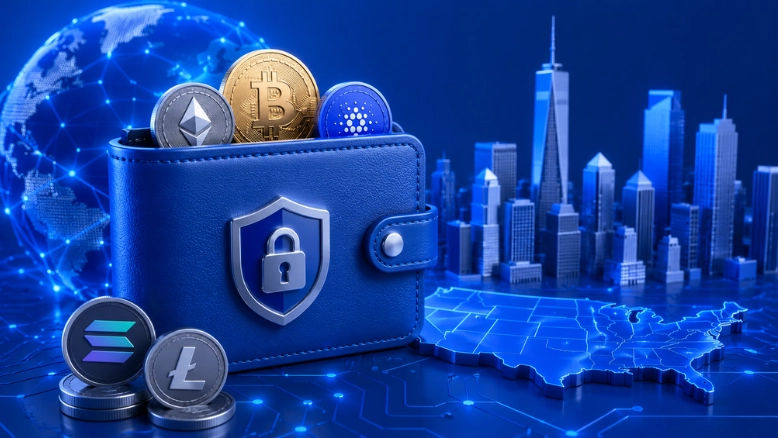
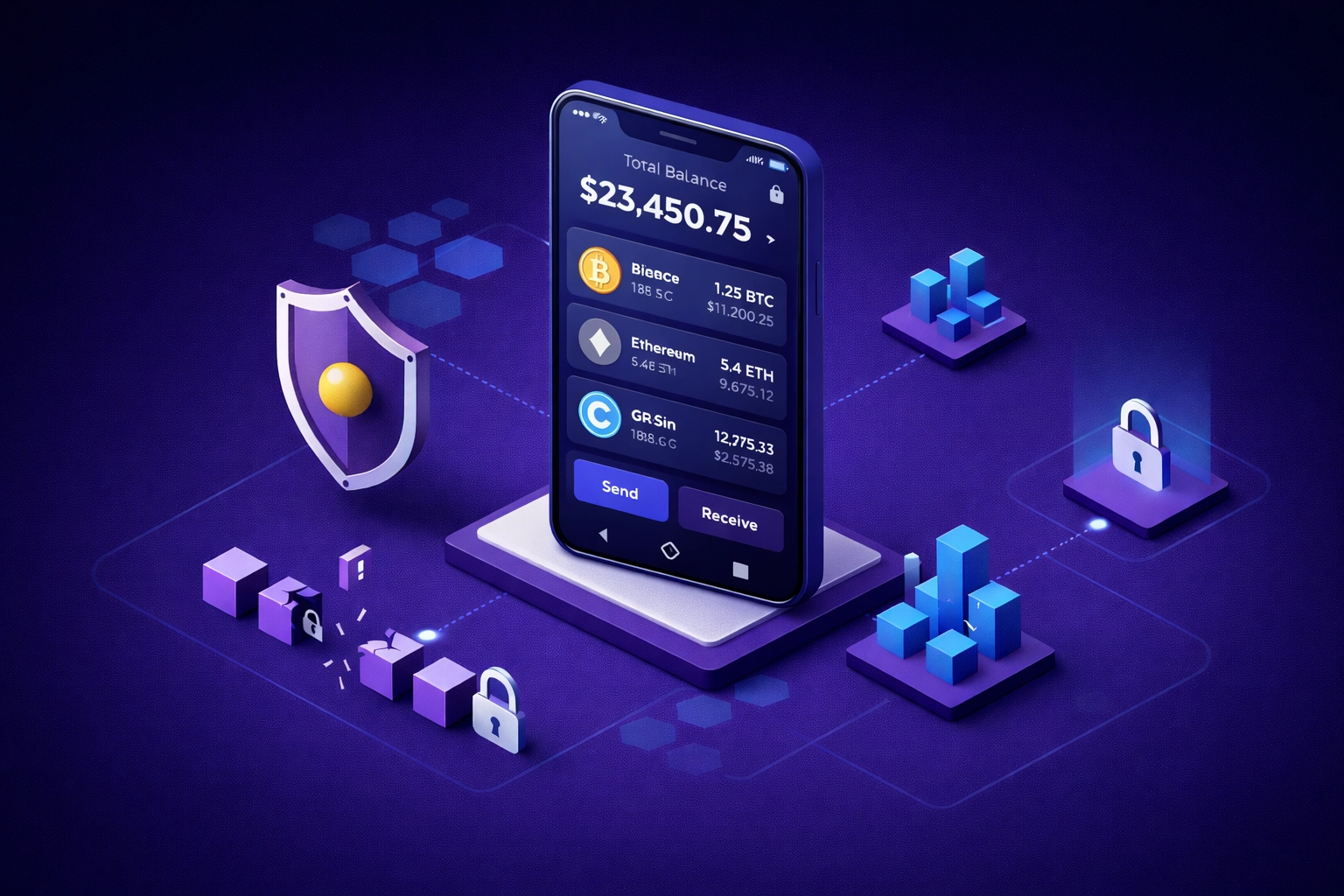
Web3 crypto wallets enable secure, non-custodial access to cryptocurrencies, dApp, DeFi platforms, NFTs, and the broader Web3 ecosystem. Users retain full control of private keys, ensuring true ownership without relying on centralized intermediaries. Modern wallets support multiple blockchains, integrated dApp browsers, NFT management, and seamless DeFi interactions. Wallet security depends heavily on proper user practices such as seed phrase protection, hardware wallet usage, and safe dApp connections.
Key Takeaways – Web3 Crypto Wallets in 2026
- Web3 crypto wallets enable secure, non-custodial access to cryptocurrencies, dApp, DeFi platforms, NFTs, and the broader Web3 ecosystem.
- Users retain full control of private keys, ensuring true ownership without relying on centralized intermediaries.
- Modern wallets support multiple blockchains, integrated dApp browsers, NFT management, and seamless DeFi interactions.
- Wallet security depends heavily on proper user practices such as seed phrase protection, hardware wallet usage, and safe dApp connections.
- Web3 wallets play a critical role in decentralized finance, digital identity, gaming, and global peer-to-peer transactions.
- Market adoption is accelerating due to rising crypto usage, financial inclusion, and increasing demand for self-custody solutions.
- Future innovations include cross-chain interoperability, AI-powered wallet features, and Wallet-as-a-Service (WaaS) models.
- Choosing the right wallet depends on security requirements, supported blockchains, and intended Web3 use cases.
A Web3 crypto wallet is a non-custodial digital wallet that allows users to store cryptocurrencies, manage private keys, interact with decentralized applications (dApp), access DeFi platforms, trade NFTs, and participate in the Web3 ecosystem without relying on centralized intermediaries. At the heart of this transformation is the Web3 wallet, a tool that enables users to securely store, send, receive, and interact with cryptocurrency wallets and other blockchain‑based assets. By 2026, these wallets have evolved far beyond simple digital safes, they are gateways to decentralized applications (dApp), NFTs, decentralized finance, and the broader Web3 ecosystem.
Understanding Web3 crypto wallets is essential not only for investors, but also for developers, creators, everyday users, and anyone looking to participate in the decentralized economy. In this comprehensive guide, we’ll explore what these wallets are, how they work, the different types available, key features, security measures, benefits, market growth, future trends, and how to choose the right one for your needs.
What is a Web3 Crypto Wallet?
A Web3 crypto wallet is a digital application that allows users to manage their cryptocurrencies and interact with decentralized platforms without relying on intermediaries. Unlike traditional bank accounts or centralized exchange wallets, Best web3 wallets give users full ownership of their private keys and the cryptographic credentials that grant access to digital assets. This means you truly own your crypto, and control it directly, without needing to trust a third party.
Web3 wallets are much more than storage units. They let users engage with decentralized finance platforms, trade and manage NFTs, participate in blockchain gaming and connect to thousands of decentralized applications (dApp) across multiple networks. Essentially, a Web3 wallet serves as a gateway into the decentralized digital universe, providing both accessibility and sovereignty over assets.
How Does a Web3 Crypto Wallet Work?
At a technical level, Web3 crypto wallets use cryptography to secure user assets. When a wallet is created, it generates a pair of keys: a public key and a private key. The public key functions like an account number, which others can use to send funds to your wallet. The private key is a secret string of characters that only you should know. This private key allows you to access and control the assets stored in your ai wallet. If it’s lost or compromised, access to your assets can be lost forever.
When you perform an action such as sending crypto or interacting with a DeFi protocol the wallet signs the transaction with your private key. It then broadcasts the signed transaction to the blockchain network, where it’s verified and recorded immutably. This process ensures transparency, security and trustlessness, the core characteristics of blockchain technology that distinguish it from traditional financial systems.
Types of Web3 Crypto Wallets
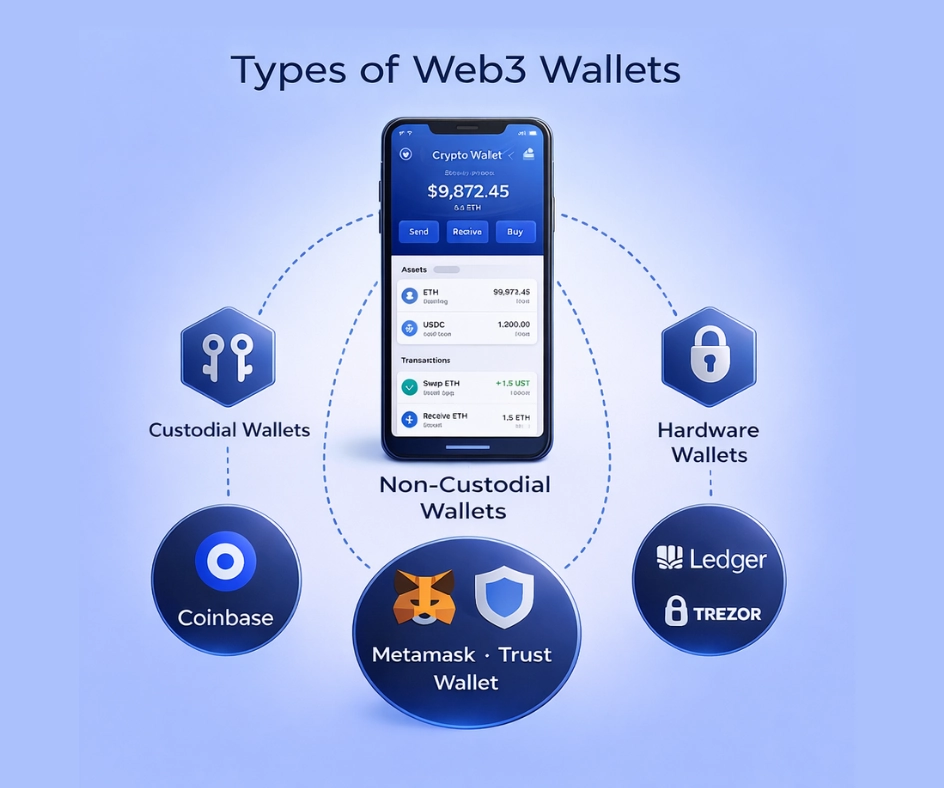
Understanding the different types of Web3 crypto wallets can help you choose the right one based on your security needs, convenience and use cases. While all wallets serve the same basic function of storing private keys, they differ significantly in how they operate and protect your assets.
Hot wallets
Hot wallets are connected to the internet and are designed for easy access and frequent use. These wallets allow users to send and receive transactions rapidly, connect to DeFi platforms, trade tokens, and interact with NFTs. Wallets like MetaMask, Trust Wallet and Rainbow Wallet are popular examples. Web3 users who engage in daily trading or interact with decentralized applications most often rely on hot wallets because of their speed and convenience.
Cold wallets
Cold wallets store private keys offline, completely disconnected from the internet, which dramatically reduces the risk of online attacks and hacking. Physical devices like Ledger Nano X and Trezor are well‑known examples. Cold wallets are favored by long‑term investors and users holding large amounts of digital assets, as they provide the highest level of security by isolating private keys from online exposure.
Custodial wallets
Custodial wallets are provided by third‑party platforms, often exchanges where the service provider manages your private keys on your behalf. This simplifies the onboarding process for beginners, as users don’t have to manage complex keys themselves. However, custodial wallets come with trade‑offs, as users are dependent on the provider’s security practices and systems to safeguard their assets.
Non‑custodial wallets
Non‑custodial wallets allow you to retain full control over your private keys and assets. These wallets give users true ownership, meaning that only the user can authorize transactions. Examples include MetaMask in non‑custodial mode, Wallet Connect, Phantom Wallet, and others. While non‑custodial wallets require users to take responsibility for security and backups, they are the preferred choice for those who value decentralization and self‑custody.
Comparison of Web3 Crypto Wallet Types
| Wallet Type | Connectivity | Security Level | Control Over Assets | Typical Use Case |
|---|---|---|---|---|
| Hot Wallet | Internet Online | Medium | Full | Quick access, dApp, DeFi, NFTs |
| Cold Wallet | Offline | Very High | Full | Long-term storage, large holdings |
| Custodial Wallet | Internet Online | Varies | Limited | Simplified access for beginners |
| Non-Custodial Wallet | Online / Offline | High | Full | Self-custody, dApp, NFTs, DeFi |
This table presents a high‑level comparison of the main wallet types, helping you understand their connectivity, security profiles, degree of control, and typical usage scenarios.
Web3 Crypto Wallet VS Traditional Crypto Wallet
A Web3 crypto wallet differs fundamentally from traditional crypto wallets, especially custodial or exchange-based wallets, in terms of control, functionality, and decentralization. Traditional crypto wallets provided by centralized exchanges store users’ private keys on their servers, meaning users must trust the platform to safeguard their funds. In contrast, Web3 wallets are typically non-custodial, allowing users to control their private keys and assets directly without intermediaries.
Another major distinction is functionality. While traditional crypto wallets are mainly used for storing and transferring cryptocurrencies, Web3 crypto wallets are designed to interact seamlessly with decentralized applications. They enable users to access DeFi protocols, NFT marketplaces, blockchain games, and Web3 services directly from the wallet interface. This makes Web3 crypto wallets essential for users who want full participation in the decentralized internet rather than just holding digital assets.
Key Features of Web3 Crypto Wallets
Modern Web3 crypto wallets offer a wide range of features that go far beyond simply storing digital assets. One of the most important characteristics is that users retain complete ownership of their private keys and digital assets. Multi‑chain support allows wallets to handle tokens on Ethereum, Solana, Binance Smart Chain, Polygon, and other networks, making asset management seamless across ecosystems.
Web3 wallets also integrate with NFT marketplaces, enabling users to buy, sell, store, and showcase digital collectibles directly within the wallet. Built-in dApp browsers allow users to connect to DeFi protocols, blockchain games, and other decentralized services without needing separate interfaces. Portfolio analytics features give users real‑time insights into their asset performance, transaction history, and token allocations. Smart contract integration further allows secure and automated interactions with DeFi protocols, such as lending, borrowing, and staking.
These features make best Web3 wallets incredibly versatile tools not just for storing value, but for participating actively in the decentralized economy.
Security Features of Web3 Crypto Wallets
Security is a critical consideration when using any Web3 crypto wallet. Since users control their private keys, safeguarding those credentials is crucial. Wallets incorporate several security mechanisms to help protect user assets. Private key control ensures that only the user can access or authorize transactions. Seed phrase backups, typically a 12–24 word recovery phrase enable users to restore wallets if devices are lost or compromised. Many wallets support hardware devices for offline key storage, reducing exposure to online threats.
Additional security features include biometric authentication (such as fingerprint or facial recognition) on mobile devices, encrypted transactions to prevent tampering, and alerts for suspicious activity. These practices help ensure that users can interact with DeFi protocols, trade NFTs and manage digital assets with confidence and peace of mind.
Is A Web3 Wallet Safe?
Web3 wallets are considered highly secure when used correctly, particularly non-custodial wallets that give users full control over their private keys. Because these wallets do not store funds on centralized servers, they reduce the risk of large-scale exchange hacks and third-party breaches that commonly affect custodial platforms.
However, the safety of a Web3 crypto wallet largely depends on user behavior. Common risks include phishing attacks, malicious smart contracts and loss of recovery phrases. By securely storing seed phrases offline, using hardware wallets for large holdings, verifying dApp permissions and avoiding suspicious links, users can significantly minimize risks and safely manage their assets within the Web3 ecosystem.
Benefits of Using a Web3 Crypto Wallet
The advantages of using a Web3 crypto wallet reach well beyond simple digital storage. For one, these wallets provide true ownership only if you control your private keys and assets. This level of autonomy gives users complete sovereignty over their financial lives, which is a cornerstone of decentralized finance.
Best web3 wallets open the door to a wide range of decentralized financial opportunities. Users can lend, borrow, stake, earn yield, and participate in liquidity pools directly from their wallets, often earning passive income. Global transactions become instant and borderless, without relying on banks or centralized intermediaries, and typically with lower fees.
In the world of digital collectibles, Web3 wallets are essential for managing NFTs allowing users to securely store, trade and display unique digital assets. Additionally, as blockchain technology continues to integrate with social platforms, gaming, and identity systems, wallets are increasingly serving as tools for managing digital identities and connecting to immersive decentralized experiences.
Market Growth and Future Scope (2026–2035)
The Web3 crypto wallet market is one of the fastest‑growing segments within the blockchain ecosystem, driven by rapid adoption of cryptocurrencies, decentralized applications, and smart contracts. According to market research, the global crypto wallet market was valued at around USD 5.43 billion in 2026 and is projected to expand to approximately USD 56.74 billion by 2035, growing at a robust compound annual growth rate (CAGR) of nearly 29.8 % over this period.[1]
This explosive growth reflects increasing demand for secure, user‑friendly wallet solutions that support multiple blockchains and decentralized services. Emerging markets play a significant role in this expansion, with regions like Asia‑Pacific, Latin America, and Africa showing strong wallet adoption rates driven by mobile usage and financial inclusion. In 2025 alone, global crypto wallet ownership surpassed 820 million active users, accounting for around 15 % of the global internet population, indicating a broad shift toward decentralized asset management.[2]
User engagement with Web3 tools continues to rise. For example, monthly active users of decentralized applications range between 5 million and 10 million, highlighting the growing interest in DeFi, gaming, and social Web3 services. Data also shows that non‑custodial wallet adoption is expected to increase further, as more users seek self‑custody and ownership of their assets.
Looking ahead, the forecast for the Web3 ecosystem remains strong. Market projections suggest the broader blockchain and Web3 industry could exceed $226 billion by 2034, underscoring the long‑term growth potential of wallets as foundational infrastructure for decentralized finance, NFTs and identity systems.
From 2026 to 2035, Web3 crypto wallets are expected to evolve both in adoption and technical capability. Advancements such as cross‑chain interoperability, embedded wallets, and Wallet‑as‑a‑Service (WaaS) models are poised to increase accessibility for mainstream users and businesses alike. As digital asset usage becomes more integrated into everyday financial and digital activities, millions of additional users are expected to join the Web3 ecosystem, driving sustainable long‑term growth for wallet providers and developers.
Best Web3 Wallets in 2026
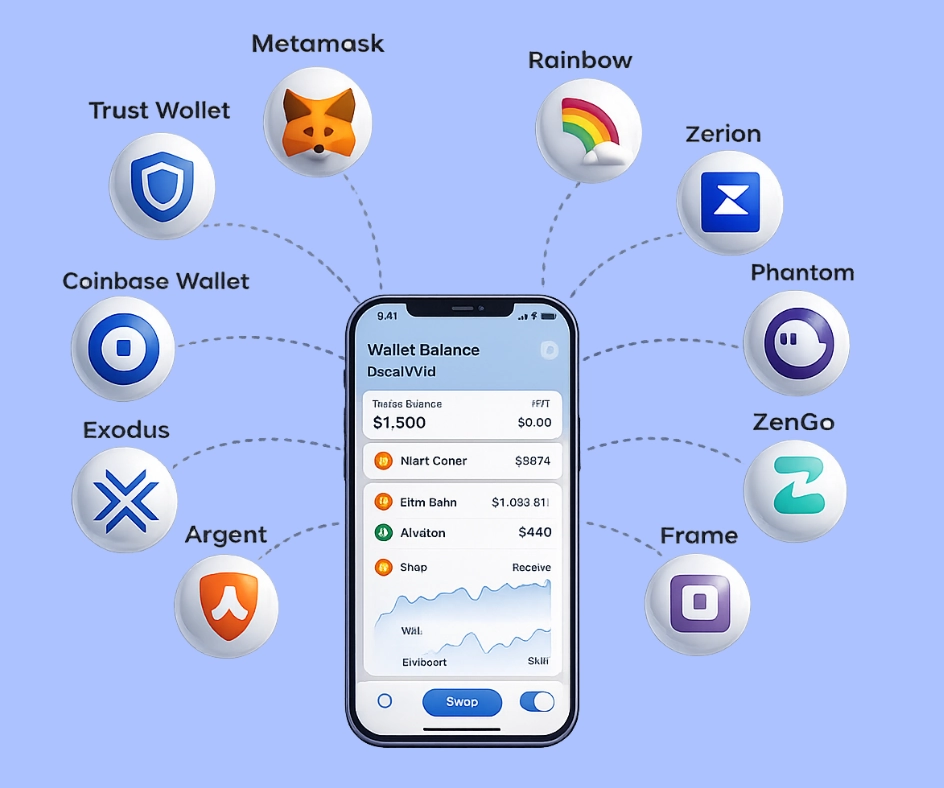
By 2026, several best Web3 wallets have emerged as industry leaders due to their security, usability, and compatibility with decentralized applications. MetaMask remains one of the most widely adopted Web3 wallets, particularly within the Ethereum ecosystem, allowing users to interact with DeFi platforms, NFT marketplaces, and Web3 applications with ease.
Trust Wallet continues to gain popularity for its mobile-first approach and broad multi-chain support, making it suitable for both beginners and experienced users. Phantom Wallet stands out within the Solana ecosystem, offering fast transactions, NFT management and staking features. For users prioritizing maximum security, hardware wallets such as Ledger Nano X and Trezor provide offline private key storage while still supporting Web3 connectivity. Rainbow Wallet is favored for its clean interface and smooth Ethereum-focused user experience, making it ideal for everyday Web3 interactions.
Choosing the Right Web3 Crypto Wallet
To select the right wallet, consider your security needs, convenience preferences, and long‑term goals. Security remains paramount if you prioritize maximum protection, a cold wallet may be ideal. If you engage frequently with DeFi platforms and NFTs, hot wallets with strong dApp integration may suit you better. It’s also important to verify that the wallet supports the blockchains and tokens you plan to use, and offers a user experience you’re comfortable with. Wallets with active development, strong support communities, and regular security updates are more likely to provide reliable, future‑proof services.
Build My Crypto wallet Now!
Turn your dream into reality with a powerful, secure crypto wallet built just for you. Start building now and watch your idea come alive!
Setting Up Your Web3 Crypto Wallet
Setting up a Web3 crypto wallet is a simple process, but it must be done carefully. First, download the wallet from its official website or app store. Create your account, and the wallet will generate a private key and seed phrase. Backup your seed phrase securely offline—this is the only way to recover your wallet if your device is lost or compromised. Enable any additional security features such as biometric authentication or PIN codes. Once set up, you can deposit cryptocurrency, connect to decentralized applications, and explore opportunities across DeFi, NFTs, and blockchain gaming.
Real‑World Use Cases of Web3 Crypto Wallets
Web3 crypto wallets are rapidly gaining real‑world utility. In decentralized finance, they allow users to stake tokens, provide liquidity, lend and borrow assets, and earn passive yields. In the NFT wallet space, wallets are essential for buying, selling, and securely storing digital collectibles. Blockchain‑based games use wallets to manage in‑game assets and distribute rewards. Businesses and freelancers are increasingly using Web3 crypto wallets to receive cross‑border payments with lower fees and faster settlement times than traditional banking. These use cases demonstrate that wallets are not just financial tools, but multifunctional platforms in the decentralized digital economy.
The Role of Web3 Crypto Wallets in the Decentralized Future
Web3 crypto wallets are essential tools for navigating the decentralized digital economy in 2026 and beyond. They provide true ownership, robust security, multi‑chain support, and seamless access to decentralized finance, NFTs, and much more. By understanding wallet types, features, security mechanisms and market trends, users can make informed decisions and safely participate in the Web3 ecosystem. The future of wallet adoption looks bright, with strong market growth forecasts and innovative developments paving the way for broader mainstream integration.
Frequently Asked Question?
Q1.What is a Web3 crypto wallet?
A Web3 crypto wallet is a non-custodial digital wallet that allows users to store cryptocurrencies, manage private keys, and interact directly with decentralized applications (dApp), DeFi platforms, NFTs and blockchain networks without relying on centralized intermediaries.
Q2.How does a Web3 crypto wallet work?
A Web3 wallet works by generating a public and private key pair. The private key signs transactions and proves ownership, while the public key is used to receive assets. The wallet connects to blockchains and dApp to securely execute and verify transactions.
Q3.Is a Web3 crypto wallet safe to use?
Yes, Web3 crypto wallets are safe when used correctly. Non-custodial wallets offer strong security because users control their private keys, but safety depends on secure seed phrase storage, avoiding phishing attacks and using trusted dApp.
Q4.What is the difference between a Web3 wallet and a traditional crypto wallet?
A Web3 wallet enables direct interaction with decentralized applications, DeFi protocols and NFTs, while traditional crypto wallets mainly focus on storing and transferring cryptocurrencies. Web3 wallets are typically non-custodial and support Web3 ecosystems.
Q5.Are Web3 crypto wallets custodial or non-custodial?
Most Web3 crypto wallets are non-custodial, meaning users fully control their private keys and assets. However, some platforms offer custodial Web3 wallets for easier onboarding at the cost of reduced control.
Q6.Which is the best Web3 crypto wallet in 2026?
The best Web3 wallet in 2026 depends on use cases. MetaMask is popular for Ethereum dApp, Trust Wallet supports multiple blockchains, Phantom is ideal for Solana users and hardware wallets like Ledger offer maximum security.
Q7.Can Web3 crypto wallets store NFTs?
Yes, Web3 crypto wallets can store, display and manage NFTs. Most modern wallets integrate directly with NFT marketplaces, allowing users to buy, sell and showcase digital collectibles securely.
Q8.Do Web3 crypto wallets support multiple blockchains?
Many best web3 wallets support multiple blockchains such as Ethereum, Binance Smart Chain, Polygon, Solana and others. Multi-chain support allows users to manage assets across different ecosystems from one wallet.
Q9.Is a Web3 crypto wallet required to use DeFi applications?
Yes, a Web3 crypto wallet is required to access DeFi platforms. It enables users to connect to decentralized exchanges, lending protocols, staking platforms and liquidity pools without intermediaries.
Q10.What happens if I lose my Web3 crypto wallet seed phrase?
If you lose your seed phrase, you permanently lose access to your web3 wallet and assets. Web3 wallets do not offer recovery options, which is why securely backing up the seed phrase offline is essential.
Explore Services
Related Services
Reviewed by

Aman Vaths
Founder of Nadcab Labs
Aman Vaths is the Founder & CTO of Nadcab Labs, a global digital engineering company delivering enterprise-grade solutions across AI, Web3, Blockchain, Big Data, Cloud, Cybersecurity, and Modern Application Development. With deep technical leadership and product innovation experience, Aman has positioned Nadcab Labs as one of the most advanced engineering companies driving the next era of intelligent, secure, and scalable software systems. Under his leadership, Nadcab Labs has built 2,000+ global projects across sectors including fintech, banking, healthcare, real estate, logistics, gaming, manufacturing, and next-generation DePIN networks. Aman’s strength lies in architecting high-performance systems, end-to-end platform engineering, and designing enterprise solutions that operate at global scale.