Ai Overview
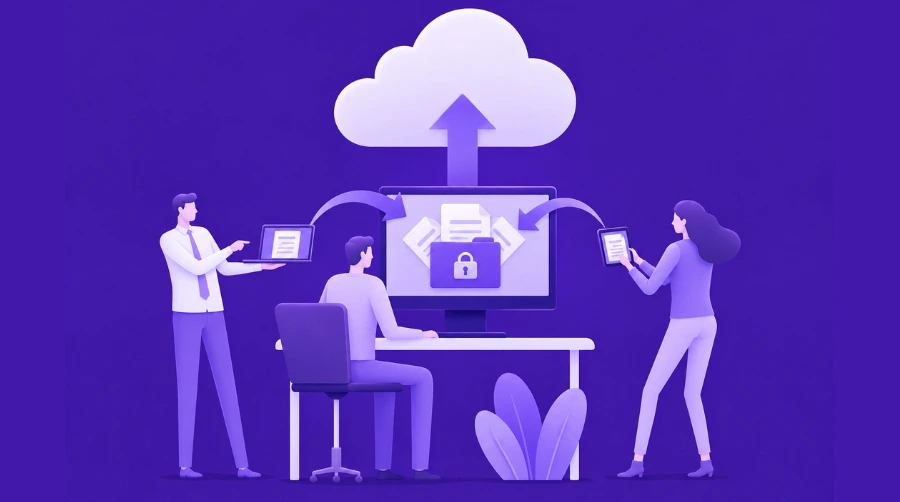
The story of enterprise cloud adoption is no longer a story about whether to move to the cloud. The result is a genuinely multi cloud environment that requires multi cloud management to operate efficiently, securely, and within budget. Multi cloud management adoption is not driven by a single compelling reason but by a cluster of complementary business needs that individually justify the investment and collectively make it compelling.
Key Takeaways
- Multi cloud management is the practice of using and governing cloud services from two or more providers simultaneously — AWS, Azure, Google Cloud — through a unified strategy that prevents vendor lock-in, optimizes costs, and maintains consistent security and compliance across all environments.
- By 2026, 87% of enterprises operate multi cloud environments, making multi cloud management not a competitive differentiator but a foundational operational capability that determines how efficiently organizations translate cloud investment into business outcomes.
- The number-one business driver for multi cloud management adoption is avoiding vendor lock-in — the strategic risk of being unable to negotiate pricing, change providers, or maintain continuity if a single cloud provider experiences extended outages, pricing changes, or service discontinuations.
- Multi cloud management platforms have evolved well beyond dashboard aggregation into intelligent systems that automate workload placement, enforce governance policies across providers, and use AI to continuously optimize the cost-performance balance of every cloud resource.
- The average enterprise running multi cloud environments without dedicated management tooling wastes 32% of its cloud budget — a figure that compounds as the number of providers, accounts, and services grows and manual oversight becomes increasingly inadequate.
- Zero Trust security architecture is the most important security framework for multi cloud management in 2026, replacing the traditional perimeter-based model with identity-verified, continuously authenticated access to every cloud resource regardless of which provider hosts it.
- AI and machine learning are transforming multi cloud management from a reactive governance discipline into a proactive intelligence system — predicting failures, autonomously optimizing workload distribution, and detecting security threats before they impact production.
- Healthcare, financial services, and government are the industries with the most mature multi cloud management programs, driven by regulatory requirements that mandate specific data residency, disaster recovery, and audit trail capabilities that single-cloud architectures cannot adequately deliver.
- The most common multi cloud management mistake is adopting multiple cloud providers without a unified governance policy — resulting in security configurations that drift apart, cost allocation that becomes impossible, and compliance obligations that cannot be demonstrated across all environments.
- Businesses that invest in structured multi cloud management — selecting the right platforms, building a cloud governance framework, implementing automation, and training FinOps teams — consistently achieve 25–40% lower infrastructure costs and significantly faster deployment cycles than those managing multi cloud environments ad hoc.
Why Multi Cloud Management Has Become Non-Negotiable
The story of enterprise cloud adoption is no longer a story about whether to move to the cloud. That decision was made years ago. The story now is about how to manage what has become an extraordinarily complex cloud estate — one that has grown organically over a decade of departmental decisions, technology partnerships, regulatory requirements, and application-specific provider choices into a multi-provider reality that almost no organization planned for but virtually every organization now lives with. Multi cloud management is the discipline, tooling, and governance framework that turns this inherited complexity from an operational liability into a strategic asset.
Businesses today run AWS for their core application infrastructure, Microsoft Azure for identity, productivity, and Windows-native workloads, and Google Cloud for analytics and machine learning pipelines — not because any committee decided this architecture was optimal, but because each technology choice made sense in isolation at the time it was made. The result is a genuinely multi cloud environment that requires multi cloud management to operate efficiently, securely, and within budget. This guide gives you the complete picture: what multi cloud management means, why businesses need it, what features the best platforms provide, which tools lead in 2026, and how to build a governance strategy that converts multi cloud complexity into competitive advantage.
What is Multi Cloud Management?
Definition and Core Purpose
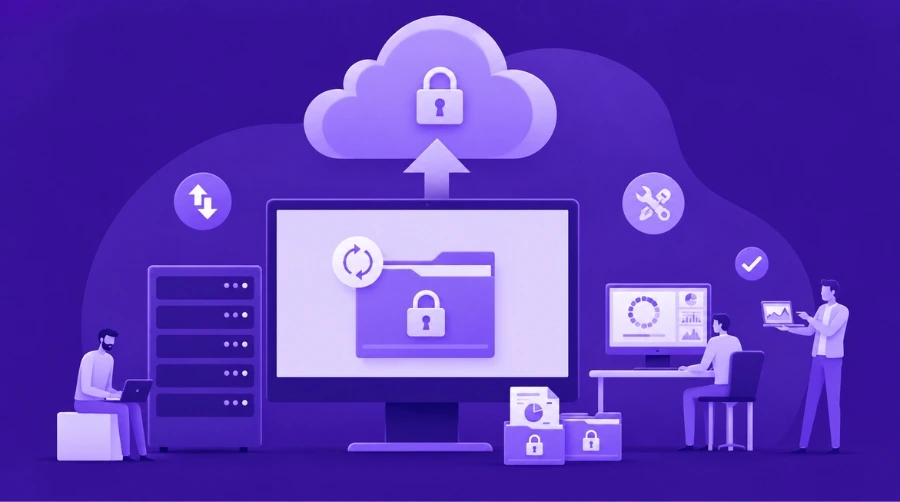
Multi cloud management is the comprehensive practice of deploying, monitoring, governing, optimizing, and securing cloud workloads across two or more public cloud providers — typically AWS, Microsoft Azure, and Google Cloud, often alongside private cloud infrastructure — through a unified strategy and, in mature deployments, through a unified management platform. The “management” in multi cloud management encompasses everything from the technical: provisioning infrastructure, monitoring performance, enforcing security policies, optimizing costs, and automating deployments; to the organizational: establishing governance frameworks, assigning cloud ownership to teams, building FinOps accountability, and maintaining compliance evidence across all providers simultaneously. A practical example of multi cloud management in action: a healthcare company runs its patient-facing application on AWS for its superior serverless capabilities, stores regulated patient data in Azure to leverage its HIPAA-compliant healthcare data services, and processes medical imaging analytics on Google Cloud for its specialized AI/ML infrastructure with a multi cloud management platform monitoring costs, enforcing unified security policies, and providing a single operational dashboard across all three environments.[1]
Multi Cloud vs Hybrid Cloud vs Single Cloud
| Dimension | Single Cloud | Hybrid Cloud | Multi Cloud |
|---|---|---|---|
| Providers Used | One public cloud | Public + private cloud | Two or more public clouds |
| Vendor Lock-in Risk | High | Medium | Low |
| Management Complexity | Low | Medium | High (requires multi cloud management) |
| Resilience | Provider-dependent | Better than single | Highest available |
| Cost Optimization Potential | Limited to one provider’s tools | Moderate | Maximum — competitive pricing leverage |
Key Components of Multi Cloud Management
Unified Control Plane
Single dashboard aggregating all cloud resources, costs, and configurations across every provider into one operational view.
Policy Governance
Unified security policies, tagging standards, and compliance rules enforced identically across AWS, Azure, and Google Cloud environments.
Cost Management
Cross-provider cost visibility, allocation by team or project, optimization recommendations, and commitment purchasing intelligence unified across all bills.
Automation Layer
Infrastructure-as-code provisioning, automated scaling, event-driven remediation, and workload scheduling that execute across provider boundaries from a single engine.
Why Businesses Are Adopting Multi Cloud Management
Multi cloud management adoption is not driven by a single compelling reason but by a cluster of complementary business needs that individually justify the investment and collectively make it compelling. The specific mix of drivers varies by organization size, industry, and cloud maturity, but six motivators appear consistently across enterprises of all types.
Benefits for Startups vs Enterprises
Benefits for Startups
- →Access best-of-breed services from each provider without commitment
- →Leverage free tier credits across multiple providers simultaneously
- →Avoid architectural decisions that constrain future fundraising or acquisition
- →Build investor-ready resilience through multi-provider architecture
Benefits for Enterprises
- →Genuine provider negotiating leverage for volume discount renegotiation
- →Regulatory compliance across global data sovereignty requirements
- →Cross-provider disaster recovery with independently verifiable RTO
- →Workload placement optimization across provider price-performance profiles
Major Challenges in Multi Cloud Management
Multi cloud management delivers substantial strategic value, but it introduces genuine operational challenges that organizations must plan for explicitly. Understanding these challenges in advance is what separates multi cloud programs that deliver on their promise from those that generate complexity without the benefits they were intended to provide.
Complex Infrastructure Management
Each cloud provider has a different management interface, different resource naming conventions, different API structures, and different automation toolchains. Without a unified multi cloud management platform, IT teams must develop and maintain expertise in three or more distinct operational environments simultaneously — a skills and tooling burden that grows with every provider added.
Security Risks Across Multiple Platforms
Every cloud provider uses a different security model, different IAM syntax, and different configuration defaults. Maintaining consistent security policies manually across three or more environments is operationally unsustainable — and the misconfigurations that occur at the boundaries between environments are responsible for the majority of serious cloud security incidents in 2026.
Cost Visibility Issues
AWS, Azure, and Google Cloud each present billing data in different formats with different cost allocation models, making cross-provider comparison and unified cost attribution by team, project, or application extremely difficult without a dedicated multi cloud management platform that normalizes billing data across providers.
Lack of Skilled Professionals
Finding engineers with deep expertise in AWS, Azure, and Google Cloud simultaneously — plus the multi cloud management platforms that govern them — represents a genuine talent scarcity. Most cloud professionals specialize in one provider, and building a team with genuine multi cloud depth requires deliberate investment in training, certification, and often external partnership with specialist advisory firms.
Core Features of Effective Multi Cloud Management Platforms
The feature set that defines a production-grade multi cloud management platform spans six core capability domains. Organizations evaluating platforms should assess each dimension against their specific requirements — a platform that excels at cost management but has shallow security automation will not meet the needs of a regulated enterprise, while one optimized for security governance may lack the DevOps automation capabilities an engineering-led organization requires.
Centralized Dashboard
Single pane of glass visibility across all cloud accounts, regions, and providers — enabling IT teams to understand the full infrastructure state without navigating between separate provider consoles.
Cost Monitoring and Optimization
Cross-provider spend normalization, rightsizing recommendations, reserved instance optimization, budget alerts, and FinOps reporting that makes cloud spending attributable and actionable.
Automation and Orchestration
Cross-provider IaC deployment, automated scaling, event-driven remediation workflows, and scheduled resource lifecycle management that reduces manual operational overhead.
Security and Compliance Tools
Unified IAM policy enforcement, continuous compliance scanning against GDPR/HIPAA/PCI-DSS, configuration drift detection, and automated evidence generation for audit requirements.
AI-Powered Analytics
Machine learning models providing predictive capacity forecasting, anomaly detection, intelligent workload placement recommendations, and natural language infrastructure querying.
Resource Monitoring
Real-time performance metrics, utilization tracking, SLA monitoring, and capacity planning intelligence across all cloud resources and providers in a unified operational view.
Top Multi Cloud Management Tools and Platforms in 2026
The multi cloud management platform market has matured into a diverse ecosystem with strong options across different organizational requirements. Each platform takes a distinct approach — some emphasizing hybrid cloud consistency, others prioritizing cost management, and others focusing on Kubernetes-native workloads. Understanding these differences is essential for selecting the right platform for your specific environment.
Google Anthos
Google’s multi cloud management platform for containerized workloads, providing Kubernetes cluster management, policy enforcement, and service mesh capabilities across GCP, AWS, Azure, and on-premise environments. Anthos excels for organizations with Kubernetes-centric architectures seeking consistent cluster operations regardless of where workloads run.
✓ Best for: Kubernetes-heavy, container-first architectures
VMware Aria Suite
VMware’s enterprise multi cloud management platform combining cost management (Aria Cost), infrastructure automation (Aria Automation), and operations (Aria Operations) into a comprehensive suite. Its depth of VM-level management and its strong VMware-private cloud integration make it the leading choice for enterprises with significant on-premise VMware infrastructure extending into public clouds.
✓ Best for: VMware-based enterprises with hybrid and multi cloud environments
How AI and Automation Are Changing Multi Cloud Management
From Manual Governance to Intelligent Autonomy
Artificial intelligence is transforming multi cloud management from a discipline that requires constant human attention to maintain across complex environments into an intelligent system that monitors, optimizes, and protects itself continuously with minimal human intervention. The scale of modern multi cloud environments — hundreds of accounts, thousands of services, millions of configuration parameters across three or more providers — has simply exceeded what human teams can govern effectively through periodic manual review, making AI-driven automation not a luxury feature but an operational survival requirement for mature multi cloud management programs.
AI-Driven Cloud Monitoring
ML models continuously analyzing performance metrics, log events, and cost signals across all cloud providers simultaneously — surfacing anomalies and optimization opportunities that are invisible to separate per-provider monitoring tools.
Predictive Analytics
Forecasting models that predict capacity requirements, cost trajectory, and failure risk 24–72 hours ahead — enabling proactive resource management that prevents outages rather than merely detecting them.
Smart Workload Balancing
Intelligent routing algorithms that continuously evaluate which cloud provider offers the optimal price-performance balance for each workload type and automatically migrate or direct new deployments accordingly.
AI-Powered Threat Detection
Security ML models analyzing authentication logs, API call patterns, and configuration changes across all cloud providers simultaneously to detect attack patterns that target the boundaries between environments.
Multi Cloud Security Best Practices
Security in multi cloud management environments is more complex and more consequential than in single-cloud deployments, because the attack surface spans multiple providers with different security models, the policy drift between environments creates inconsistencies that attackers exploit, and the authentication boundary between clouds is frequently the weakest link in the entire security architecture. The following practices form the security foundation of any serious multi cloud management program in 2026.
Security Principles for Multi Cloud Management in 2026
Zero Trust Architecture: Replace implicit trust based on network location with identity-verified, continuously authenticated access to every cloud resource — regardless of which provider hosts it or whether the request originates inside or outside the corporate perimeter.
Unified Identity and Access Management: Centralize IAM policy governance in your multi cloud management platform so that access controls are enforced consistently across all providers from a single policy source — eliminating the permission inconsistencies that create exploitable boundaries between cloud environments.
Data Encryption End-to-End: Enforce encryption at rest and in transit across all cloud providers through your multi cloud management platform’s policy engine — not through provider-native optional settings that may not be consistently enabled as new resources are provisioned.
Continuous Compliance Monitoring: Automated scanning of all cloud configurations against your security baselines and regulatory frameworks — generating real-time compliance scores, drift alerts, and remediation guidance rather than point-in-time audit snapshots.
Regular Security Audits: Quarterly multi cloud security reviews examining cross-provider IAM relationships, network connectivity between cloud environments, data classification and sovereignty compliance, and the completeness of log collection for security monitoring.
Compliance Standards in 2026: Multi cloud management programs must demonstrably satisfy GDPR, HIPAA, PCI-DSS, SOC 2, ISO 27001, and sector-specific regulations — requiring compliance evidence that spans all cloud environments simultaneously, not provider-specific attestations that auditors cannot integrate into a unified compliance posture.
Industries Using Multi Cloud Management
Multi cloud management is not an abstract enterprise IT strategy — it is a business-critical operational practice with concrete, industry-specific applications that directly determine patient outcomes in healthcare, transaction integrity in financial services, and customer experience in e-commerce. The following industries demonstrate the highest levels of multi cloud management maturity precisely because their regulatory requirements, availability commitments, and data complexity demands make single-cloud approaches structurally inadequate.
Healthcare
HIPAA-compliant data in Azure, AI-powered medical imaging on Google Cloud, patient-facing applications on AWS — multi cloud management governs data sovereignty, audit trails, and disaster recovery across all three environments simultaneously.
Banking and Fintech
PCI-DSS compliance across multiple cloud environments, real-time fraud detection on the lowest-latency provider, and regulatory data residency requirements met through intelligent workload placement governed by a unified multi cloud management layer.
eCommerce
Multi cloud multi-region deployments providing sub-100ms latency to global customers, with automatic failover between providers during peak traffic events and cost-optimized scaling that routes demand surges to the provider with current spot capacity availability.
SaaS Companies
Enterprise SaaS customers increasingly require contractual multi cloud deployment options for their own data residency and availability requirements — making multi cloud management a product differentiator, not just an internal infrastructure concern.
Government
National security requirements, FedRAMP compliance, and data sovereignty mandates make multi cloud management essential for agencies that must use certified providers for different data classifications while maintaining unified governance across the full environment.
Future Trends of Multi Cloud Management in 2026 and Beyond
| Future Trend | Business Impact | 2026 Status | Priority |
|---|---|---|---|
| AI-Integrated Cloud Ecosystems | Autonomous workload optimization without human intervention | Active in leading platforms | Critical |
| Edge Computing Integration | Multi cloud management extending to distributed edge nodes | Early enterprise adoption | High |
| Green Cloud Computing | Carbon-aware workload placement and sustainability reporting | Growing enterprise adoption | High |
| Serverless Multi Cloud Environments | Event-driven workloads spanning AWS Lambda and Azure Functions | Emerging capability | High |
| Rise of Cloud-Native Technologies | Kubernetes and service meshes as universal multi cloud management layer | Dominant in 2026 | Transformational |
How to Choose the Right Multi Cloud Management Solution
Checklist Before Choosing a Platform
Selecting a multi cloud management platform is a high-stakes infrastructure decision with long implementation timelines and significant switching costs once the platform is embedded in operational workflows. A structured evaluation framework prevents the common mistake of choosing based on demo quality rather than operational fit.
Multi Cloud Management Platform Evaluation Checklist
□
Current cloud footprint mapped — documented inventory of all providers, accounts, and services before selecting a management layer
□
Primary pain point identified — cost visibility, security governance, operational automation, or compliance reporting determines which platform type fits
□
Genuine multi-cloud support verified — confirmed native connectors for every provider in your environment, not just billing data import
□
Integration compatibility confirmed — tested with your existing Terraform, CI/CD pipelines, ITSM, and SIEM before purchase commitment
□
Security and compliance depth assessed — verified support for your specific regulatory frameworks with automated evidence generation, not just manual reporting tools
□
Total cost of ownership calculated — platform licensing plus implementation, training, and ongoing operation costs compared against realistic savings projections
□
Vendor support and roadmap reviewed — verified that the platform’s development roadmap aligns with your planned cloud evolution over the next 2–3 years
□
Proof-of-concept completed — tested the platform against your actual environment for at least 30 days before making a full deployment commitment
Common Mistakes to Avoid
| Mistake | Consequence | Prevention |
|---|---|---|
| No Governance Policy | Security drift and cost sprawl from day one | Define cloud governance framework before deploying workloads |
| Choosing by Feature List | Platform capabilities mismatched to actual requirements | Evaluate based on your specific cloud footprint and pain points |
| Skipping Integration Testing | Expensive rework after discovering incompatibilities in production | 30-day proof-of-concept in actual environment before commitment |
| No FinOps Accountability | Savings opportunities identified but never acted on | Establish team-level cost ownership before platform launch |
| Underestimating Skills Gap | Platform deployed but never fully utilized | Budget for training and specialist advisory partnership |
Conclusion: Multi Cloud Management Is the Foundation of Modern Cloud Strategy
Multi cloud management has moved from an advanced infrastructure practice to a baseline operational requirement for any organization serious about cloud computing in 2026. With 87% of enterprises running workloads across multiple providers, the question is no longer whether to manage a multi cloud environment — it is whether to manage it deliberately, with appropriate tooling and governance, or to manage it reactively, watching costs spiral, security gaps accumulate, and compliance obligations go unmet across an increasingly fragmented environment that provider-native tools cannot adequately oversee.
The organizations that achieve the best outcomes from multi cloud adoption share a common approach: they select their management platforms based on genuine operational fit rather than feature list breadth, they invest in cloud governance frameworks before workloads proliferate across providers, they implement automation that converts policy into consistent reality rather than relying on manual consistency, and they build FinOps accountability structures that make every team responsible for the cloud costs their decisions generate. None of these practices require exceptional technology or exceptional budgets. They require intentionality — the deliberate choice to treat multi cloud management as a strategic capability rather than an operational overhead. In 2026, the businesses that make that choice consistently will define the competitive performance of their industries through the infrastructure advantages that disciplined multi cloud management delivers.
☁️ Key Summary: Multi Cloud Management in 2026
- It is the baseline: 87% of enterprises already run multi cloud environments — the question is whether they manage them deliberately or reactively
- Vendor lock-in prevention is the primary driver: Multi cloud management delivers negotiating leverage, architectural flexibility, and genuine continuity that single-provider strategies cannot match
- AI changes the equation: 68% fewer misconfigurations, 55% reduced operational overhead, 72% faster incident response — only achievable with AI-powered multi cloud management, not manual governance
- Platform selection requires fit-first thinking: Azure Arc for Microsoft-centric enterprises, Google Anthos for Kubernetes-heavy teams, VMware Aria for hybrid VMware environments — match platform to context
- Security is the highest-stakes dimension: Zero Trust, unified IAM, and continuous compliance monitoring are non-negotiable for multi cloud environments where the boundary between providers is the most exploitable attack surface
- Governance before workloads: The single most important multi cloud management practice is defining cloud governance policies before infrastructure proliferates across providers in formats that cannot be retrospectively governed
Frequently Asked Questions (FAQs)
Q1.1.What is multi cloud management?
Multi cloud management is the process of managing multiple cloud computing services from different providers through a centralized system. Businesses use it to monitor performance, improve security, optimize costs, and manage workloads across platforms like Amazon Web Services, Microsoft, and Google. It helps organizations avoid dependency on a single provider while improving flexibility and reliability.
Q2.2.Why is multi cloud management important for businesses?
Multi cloud management is important because modern businesses require better scalability, security, and uptime. By using multiple cloud providers, companies can reduce downtime risks, improve disaster recovery, and choose the best services from each provider. It also helps organizations avoid vendor lock-in and maintain better control over their cloud infrastructure.
Q3.3.What are the main benefits of multi cloud management?
The biggest benefits of multi cloud management include improved flexibility, better workload distribution, enhanced security, and cost optimization. Businesses can run applications on the most suitable cloud platform while ensuring higher availability and performance. It also supports faster innovation by allowing companies to access specialized cloud tools and services.
Q4.4.What challenges do companies face in multi cloud management?
Managing multiple cloud environments can be complex due to different configurations, security policies, and pricing models. Companies often face challenges related to cloud visibility, compliance management, integration, and cost tracking. Without a proper strategy and automation tools, managing multiple cloud providers can become difficult and expensive.
Q5.5.How does multi cloud management improve security?
Multi cloud management improves security by distributing workloads across multiple cloud environments and reducing dependency on a single provider. Businesses can implement advanced security measures such as data encryption, identity access management, Zero Trust architecture, and continuous monitoring. This approach helps reduce vulnerabilities and strengthens overall cybersecurity.
Q6.6.What is the difference between hybrid cloud and multi cloud?
A hybrid cloud combines private and public cloud infrastructure to work together as one environment, while a multi cloud strategy uses services from multiple public cloud providers. Multi cloud management focuses on controlling and optimizing several cloud platforms, whereas hybrid cloud primarily connects private and public cloud systems.
Q7.7.Which industries benefit the most from multi cloud management?
Industries such as healthcare, banking, eCommerce, SaaS, and government organizations benefit greatly from multi cloud management. These sectors require strong security, regulatory compliance, high performance, and reliable uptime. Multi cloud environments help them manage sensitive data securely while ensuring uninterrupted digital services.
Q8.8.What are the best tools for multi cloud management?
Popular multi cloud management tools include VMware Aria Suite, IBM Cloud Pak, Google Anthos, and Microsoft Azure Arc. These platforms provide centralized dashboards, automation, security monitoring, and cost optimization features to simplify cloud infrastructure management across multiple providers.
Q9.9.How does AI help in multi cloud management?
Artificial intelligence helps automate cloud operations, monitor performance, detect security threats, and optimize cloud costs. AI-powered tools can predict system failures, balance workloads automatically, and provide real-time insights for better decision-making. In 2026, AI is becoming a major part of advanced multi cloud management strategies.
Q10.10.How can businesses choose the right multi cloud management solution?
Businesses should evaluate their security needs, budget, scalability goals, and integration requirements before selecting a multi cloud management platform. It is important to choose a solution that offers centralized monitoring, automation, strong security features, and compatibility with multiple cloud providers. A well-planned strategy ensures better performance, lower costs, and long-term scalability.
Explore Services
Related Services
Reviewed by

Aman Vaths
Founder of Nadcab Labs
Aman Vaths is the Founder & CTO of Nadcab Labs, a global digital engineering company delivering enterprise-grade solutions across AI, Web3, Blockchain, Big Data, Cloud, Cybersecurity, and Modern Application Development. With deep technical leadership and product innovation experience, Aman has positioned Nadcab Labs as one of the most advanced engineering companies driving the next era of intelligent, secure, and scalable software systems. Under his leadership, Nadcab Labs has built 2,000+ global projects across sectors including fintech, banking, healthcare, real estate, logistics, gaming, manufacturing, and next-generation DePIN networks. Aman’s strength lies in architecting high-performance systems, end-to-end platform engineering, and designing enterprise solutions that operate at global scale.