Ai Overview
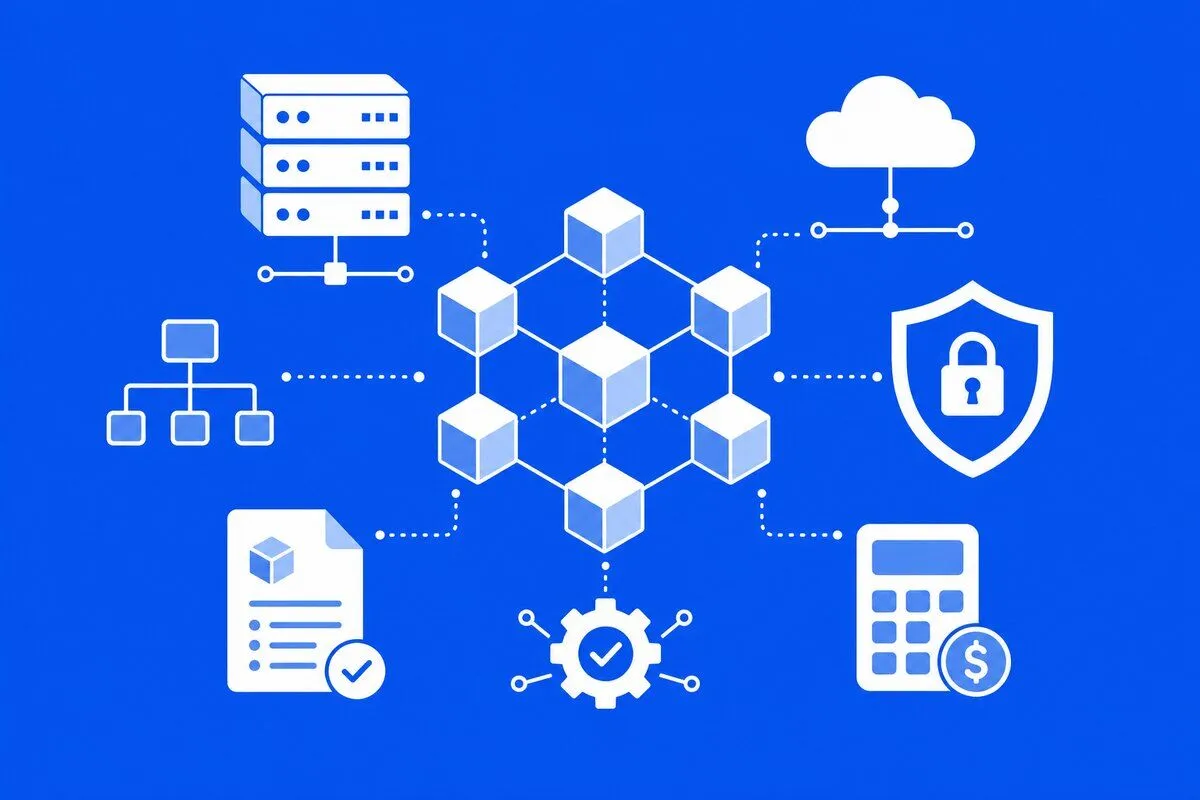
Interbank Blockchain Cross Border Payment networks revolutionize cross-border settlement by establishing shared ledger infrastructure connecting financial institutions directly. JPMorgan’s Onyx platform processes over $1 billion daily in wholesale payment transfers using permissioned Blockchain Cross Border Payment infrastructure. Cost Efficiency: Transaction fees reduced to under 1% compared to 5-7% traditional remittance charges benefiting low-income workers sending funds internationally.
Key Takeaways
- Blockchain Cross Border Payment systems reduce international transfer times from days to seconds through distributed ledger consensus and elimination of correspondent banking intermediaries.
- Financial institutions achieve 40-80% cost reductions by replacing nostro-vostro account networks with real-time Blockchain Cross Border Payment settlement and automated reconciliation processes.
- Tokenized fiat currencies and regulated stablecoins enable instant cross-border value transfer while maintaining price stability and regulatory compliance frameworks.
- Smart contract automation embeds compliance rules directly into payment flows, ensuring real-time sanctions screening, AML verification, and regulatory reporting without manual intervention.
- Atomic settlement models guarantee simultaneous delivery of payment and receipt across borders, eliminating settlement risk and enabling instant foreign exchange conversions.
- Wholesale CBDC networks represent the future of interbank cross-border clearing, providing risk-free central bank money for large-value international transactions.
- Blockchain Cross Border Payment-based payment rails operate 24/7 without traditional banking hour restrictions, enabling continuous settlement and improved global liquidity management.
- Enhanced transaction traceability through immutable Blockchain Cross Border Payment records reduces fraud, improves dispute resolution, and strengthens compliance audit capabilities.
- Cross-chain interoperability protocols connect disparate Blockchain Cross Border Payment networks, enabling seamless value transfer across multiple payment systems and digital asset platforms.
Global cross-border payment systems exceed $150 trillion annually but still depend on slow legacy systems. Businesses are now turning to a blockchain development company in india to build faster, more secure, and cost-efficient payment infrastructure. By removing intermediaries and enabling real-time settlement, blockchain technology is reshaping how international transactions are processed. It combines speed, transparency, and automation, making it a strong foundation for the future of global finance..[1]
Blockchain Cross Border Payment-Enabled Cross-Border Settlement in Interbank Networks
Interbank Blockchain Cross Border Payment networks revolutionize cross-border settlement by establishing shared ledger infrastructure connecting financial institutions directly. Traditional correspondent banking requires multiple intermediary banks to facilitate international transfers, each adding fees, delays, and reconciliation overhead. Blockchain Cross Border Payment eliminates these intermediaries through distributed consensus where participating banks validate transactions collectively. JPMorgan’s Onyx platform processes over $1 billion daily in wholesale payment transfers using permissioned Blockchain Cross Border Payment infrastructure. Banks maintain cryptographic identities on shared networks, broadcasting payment instructions validated by consensus protocols ensuring finality without central clearinghouses. Smart contracts enforce settlement rules automatically, converting currencies and applying fees transparently according to pre-programmed logic. Real-time gross settlement occurs as transactions confirm, eliminating the batch processing delays inherent in traditional clearing systems. Network participants benefit from shared infrastructure costs while maintaining competitive positioning through differentiated services. Interbank Blockchain Cross Border Payment consortiums like Partior in Asia-Pacific demonstrate viability at scale, connecting major regional banks for instant cross-border settlement across Singapore, Malaysia, and beyond.
Real-Time Liquidity Optimization for International Payments Using DLT
Distributed ledger technology enables dynamic liquidity optimization by providing real-time visibility into payment flows across global networks. Traditional systems require banks to pre-fund nostro accounts in multiple currencies, tying up capital in idle balances to ensure sufficient liquidity for customer transfers. Blockchain Cross Border Payment networks allow just-in-time liquidity provisioning where funds move precisely when needed rather than sitting dormant. Banks monitor aggregated payment flows through shared ledger visibility, identifying netting opportunities that reduce gross settlement requirements. Ripple’s XRP Ledger demonstrates on-demand liquidity sourcing where financial institutions access foreign currency liquidity only during actual transfer execution. Smart contracts automatically route payments through optimal liquidity pools, minimizing foreign exchange costs and settlement delays. Treasury departments achieve superior working capital management by redeploying funds previously locked in correspondent accounts. Network-level liquidity optimization algorithms balance payment flows bidirectionally, matching offsetting transfers to minimize net settlement amounts. This dynamic approach reduces total liquidity requirements by 60% compared to traditional pre-funding models while maintaining instant settlement capabilities.
 Liquidity Optimization Mechanisms
Real-Time Netting
Offsetting bidirectional payment flows automatically through smart contracts, reducing gross settlement volumes and minimizing capital requirements for cross-border operations.
On-Demand Sourcing
Accessing foreign currency liquidity precisely when transfers execute, eliminating pre-funded balances and improving treasury capital efficiency significantly.
Predictive Positioning
Machine learning algorithms analyzing payment patterns to forecast liquidity needs, positioning capital optimally across currency pairs and geographic corridors.
Tokenized Fiat and Stablecoins in Global Payment Rails
Tokenized fiat currencies and stablecoins serve as digital settlement assets within Blockchain Cross Border Payment infrastructure, combining cryptocurrency speed with fiat stability. Regulated stablecoins like USDC and EURC maintain one-to-one backing with reserve assets, providing price stability essential for enterprise payment applications. Financial institutions issue blockchain-native representations of bank deposits, enabling instant transfers without volatility risk. These digital assets move across borders at the speed of Blockchain Cross Border Payment consensus rather than traditional wire transfers, settling in seconds instead of days. Payment service providers integrate stablecoin rails alongside conventional fiat channels, offering customers faster, cheaper alternatives for international transfers. Circle’s USDC processes over $4 trillion annual transaction volume, demonstrating institutional-grade stablecoin viability at scale. Smart contracts automatically convert between different stablecoin denominations during cross-border transfers, executing foreign exchange at optimal rates. Regulatory clarity around stablecoin reserves and redemption rights strengthens confidence for financial institution adoption. Banks establish proprietary tokenized deposit systems where customer funds exist simultaneously as traditional deposits and blockchain tokens, enabling seamless movement between conventional and digital payment rails.
Enterprise Stablecoin Comparison Matrix
| Stablecoin | Backing Mechanism | Settlement Speed | Primary Use Case |
|---|---|---|---|
| USDC | Fully reserved US dollar deposits and short-duration treasuries | 15 seconds on Ethereum, instant on Solana | Cross-border remittances and treasury operations |
| JPM Coin | JPMorgan deposits redeemable one-to-one for USD | Real-time on Onyx permissioned network | Wholesale interbank settlement and corporate treasury |
| EURC | Euro-denominated reserves in European financial institutions | 15-30 seconds depending on blockchain network | European cross-border payments and DeFi integration |
| XSGD | Singapore dollar bank deposits with full regulatory compliance | Instant settlement on multiple blockchain protocols | Asian payment corridors and regional trade finance |
Reducing Nostro-Vostro Traps Through Blockchain Cross Border Payment Reconciliation
Nostro and vostro accounts represent pre-funded foreign currency balances banks maintain with correspondent institutions, trapping an estimated $5 trillion globally in idle liquidity. Blockchain Cross Border Payment shared ledgers eliminate these capital inefficiencies through real-time reconciliation and atomic settlement. Traditional correspondent banking requires institutions to maintain multiple currency balances across geographic regions to facilitate customer transfers. These accounts accumulate imbalances requiring periodic rebalancing through expensive foreign exchange transactions. Blockchain Cross Border Payment networks provide continuous reconciliation where all participants share synchronized ledger state, eliminating discrepancies that necessitate nostro funding. Smart contracts execute multilateral netting across network participants, settling only net positions rather than gross transaction volumes. HSBC reports releasing over $250 billion in working capital by replacing nostro networks with Blockchain Cross Border Payment settlement infrastructure. Institutions redirect freed capital toward revenue-generating activities rather than maintaining dormant balances. Real-time settlement finality removes the temporal lag requiring pre-funded accounts as settlement guarantees. Banks participate in shared liquidity pools accessing foreign currency on-demand during transaction execution rather than maintaining permanent balances across all operational currencies.
Capital Release Implementation Steps
Network Integration
Connect to blockchain payment network establishing cryptographic identity and validating technical infrastructure for real-time settlement participation.
Corridor Migration
Pilot blockchain settlement on high-volume payment corridors, gradually transitioning customer flows from correspondent banking to direct settlement.
Balance Drawdown
Systematically reduce nostro account funding as blockchain settlement proves reliable, redeploying capital to treasury operations and lending activities.
Pool Participation
Contribute to shared network liquidity pools enabling mutualized access to foreign currencies, further reducing individual institution capital requirements.
Atomic Settlement Models for Cross-Border Financial Transfers
Atomic settlement guarantees simultaneous execution of payment and receipt across borders through cryptographic protocols ensuring transactions complete entirely or not at all. Traditional cross-border transfers involve settlement risk where sending institutions release funds before receiving confirmation of delivery, creating counterparty exposure. Blockchain Cross Border Payment smart contracts implement atomic swaps using hash time-locked contracts ensuring both parties fulfill obligations simultaneously. Payment transfers and foreign exchange conversions execute atomically within single Blockchain Cross Border Payment transactions, eliminating the sequential processing risks of conventional systems. Delivery-versus-payment mechanisms extend atomic settlement to securities transactions where asset transfer occurs simultaneously with payment finalization. These protocols remove counterparty default risk that plagued international settlements requiring escrow services and settlement guarantees. Cross-chain atomic swaps enable value transfer between different Blockchain Cross Border Payment networks without centralized exchanges or custodians. Banks leverage atomic settlement for treasury operations, executing complex multi-leg foreign exchange transactions with guaranteed execution across all components. The cryptographic certainty of atomic protocols eliminates settlement failures that previously required extensive manual reconciliation and dispute resolution processes.
On-Chain FX Conversion for Multicurrency Payment Flows
Blockchain-native foreign exchange conversion integrates currency conversion directly into payment transactions through automated market makers and decentralized exchange protocols. Traditional FX conversions require separate trading desk operations or third-party currency exchange services adding costs and delays. Smart contracts execute currency swaps automatically during cross-border transfers, sourcing optimal rates from decentralized liquidity pools. Uniswap and similar protocols provide continuous liquidity across currency pairs, enabling instant conversions at transparent market rates. Payment flows involving multiple currency hops optimize routing automatically through algorithmic price discovery across available liquidity sources. Banks deploy private liquidity pools for institutional FX operations, offering competitive spreads while maintaining transaction privacy. On-chain FX settlement eliminates the T+2 settlement cycle of conventional currency markets, providing instant finality and reducing counterparty exposure. Smart contract logic encodes complex FX derivative structures enabling hedging strategies executed atomically with underlying payment transfers. Cross-currency payment protocols abstract complexity from end users who specify sending and receiving currencies while smart contracts handle intermediate conversions transparently. This integration reduces FX costs by 40-60% compared to traditional banking spreads while providing guaranteed execution rates known at transaction initiation.
Compliance-Driven Cross-Border Payments Using Programmable Rules
Smart contracts embed regulatory compliance directly into payment infrastructure through programmable rules executed automatically during transaction processing. Traditional cross-border payments require manual compliance checks at multiple intermediary banks, creating delays and inconsistent enforcement. Blockchain Cross Border Payment enables compliance-by-design where anti-money laundering rules, sanctions screening, and know-your-customer verification occur automatically before settlement approval. Smart contracts integrate with identity verification oracles providing real-time validation of transaction participants against global sanctions lists. Payment limits, geographical restrictions, and regulatory reporting requirements encode directly into contract logic ensuring automatic enforcement. Travel rule compliance for cryptocurrency transfers implements through Blockchain Cross Border Payment metadata containing beneficiary information propagated across jurisdictions. Programmable compliance reduces processing time from hours to seconds while improving accuracy and creating immutable audit trails. RegTech integration through Blockchain Cross Border Payment APIs enables automated reporting to regulatory authorities eliminating manual compliance documentation. Financial institutions customize rule sets based on jurisdiction-specific requirements while maintaining interoperability across global payment networks. The transparency of blockchain compliance creates regulatory confidence accelerating institutional adoption and enabling new cross-border payment corridors previously deemed too risky under manual compliance frameworks.
Automated Compliance Implementation Checklist
Integrate real-time sanctions screening against OFAC, UN, and EU lists through oracle connections validating participants before transaction execution
Implement transaction threshold monitoring automatically flagging unusual patterns or amounts exceeding regulatory reporting requirements
Encode KYC verification requirements ensuring only identity-verified participants can transact with automatic rejection of unvalidated addresses
Deploy Travel Rule metadata propagation including beneficiary information required for cross-jurisdictional regulatory compliance
Establish automated suspicious activity reporting generating regulatory filings from on-chain transaction analysis and pattern detection
Maintain immutable compliance audit trails capturing all verification steps and screening results for regulatory examination and reporting
Blockchain Cross Border Payment as a Messaging and Settlement Layer Replacement
Blockchain Cross Border Payment unifies messaging and settlement functions that remain separate in traditional systems like SWIFT, where payment instructions transmit independently from actual fund movements. SWIFT processes over 40 million messages daily coordinating correspondent bank transfers, but provides no settlement mechanism requiring separate clearing house operations. Blockchain Cross Border Payment combines instruction and settlement atomically where value transfer occurs simultaneously with message validation. This integration eliminates reconciliation discrepancies arising from messaging errors or settlement delays. Smart contracts encode payment instructions directly into executable transactions validated by network consensus. Financial institutions achieve end-to-end transaction finality in single step rather than multi-day messaging and settlement cycles. The unified architecture reduces operational complexity by maintaining single source of truth for payment state rather than synchronized messaging and settlement systems. Cross-border payments execute through native Blockchain Cross Border Payment protocols replacing MT103 message formats with smart contract functions. Banks transition gradually by implementing Blockchain Cross Border Payment settlement layers underneath existing SWIFT messaging infrastructure before full replacement. The convergence of messaging and settlement represents fundamental architectural shift enabling real-time gross settlement across global payment networks without separate clearing mechanisms.
Transform Your Cross-Border Payment Infrastructure
Implement Blockchain Cross Border Payment settlement networks reducing costs 80% while achieving real-time finality for international transfers and treasury operations.
Payment Network Interoperability via Cross-Chain Infrastructure
Cross-chain protocols enable interoperability between disparate Blockchain Cross Border Payment payment networks allowing seamless value transfer across different distributed ledgers. Financial institutions operate on multiple blockchain platforms based on regional preferences, regulatory requirements, and technical capabilities. Cross-chain bridges facilitate asset transfers between networks without requiring all participants to adopt single blockchain standard. Cosmos IBC protocol demonstrates production-grade interoperability connecting over 50 blockchain networks through standardized communication interfaces. Payment flows route automatically across multiple chains optimizing for cost, speed, and liquidity availability. Wrapped assets represent tokens from one blockchain on another, enabling value movement while maintaining native chain security properties. Cross-chain decentralized exchanges aggregate liquidity across networks providing optimal foreign exchange rates regardless of asset location. Banks leverage interoperability to participate in multiple payment networks simultaneously, accessing broader liquidity pools and customer reach. The multi-chain architecture mirrors existing correspondent banking relationships but with cryptographic security and instant settlement replacing trust-based messaging. Interoperability standards like W3C decentralized identifiers enable consistent identity verification across different blockchain payment systems streamlining compliance.
Cross-Chain Protocol Capabilities
| Protocol | Mechanism | Security Model | Use Case |
|---|---|---|---|
| IBC | Light client verification with packet relay | Trustless cryptographic proofs | Cosmos ecosystem payment routing |
| Axelar | Cross-chain gateway network with validator consensus | Proof-of-stake validator security | General message passing and asset transfers |
| LayerZero | Omnichain messaging with oracle and relayer | Independent verification from oracle and relayer | Unified liquidity across payment networks |
| Chainlink CCIP | Cross-chain interoperability protocol with DON | Decentralized oracle network validation | Enterprise cross-chain payment settlement |
Risk Mitigation in International Payments Through Smart Contracts
Smart contracts programmatically enforce risk controls within cross-border payment flows reducing exposure to settlement failures, fraud, and operational errors. Traditional systems rely on manual risk assessment and post-transaction monitoring creating delays and incomplete coverage. Blockchain Cross Border Payment enables real-time risk evaluation embedded directly into payment execution logic. Smart contracts validate transaction parameters against risk thresholds before authorizing settlement, automatically rejecting payments exceeding exposure limits. Multi-signature requirements encode into contracts for high-value transfers ensuring multiple authorized parties approve before execution. Time-locked contracts create cooling-off periods for large transactions allowing fraud review before final settlement. Conditional payment logic implements delivery-versus-payment guarantees where funds release only upon verified receipt of goods or services. Smart contracts integrate with external risk scoring systems through oracle connections, incorporating dynamic fraud probability assessments into authorization decisions. Payment velocity monitoring detects unusual transaction patterns automatically triggering additional verification steps. The deterministic execution of smart contract logic eliminates human error in risk policy application while maintaining complete audit trails of risk decisions. Financial institutions report 70% reduction in payment fraud losses after implementing blockchain-based risk controls.
Smart Contract Risk Mitigation Framework
Pre-Transaction Validation
Smart contracts verify sender identity, check balance sufficiency, validate beneficiary against sanctions lists, and confirm transaction parameters before execution authorization.
Real-Time Risk Scoring
Oracle integration provides current fraud probability scores based on transaction patterns, beneficiary history, and geographic risk factors incorporated into approval logic.
Conditional Settlement
Payment execution contingent on fulfillment verification through cryptographic proofs, time-locks, or multi-party signatures ensuring settlement only upon condition satisfaction.
Velocity Monitoring
On-chain transaction history analysis detecting unusual payment frequencies or amounts triggering enhanced verification requirements before high-risk transfers approve.
Exposure Limits
Smart contract enforcement of counterparty exposure thresholds automatically rejecting transactions exceeding approved credit limits or daily volume caps.
Post-Settlement Monitoring
Continuous surveillance of settled transactions identifying suspicious patterns for investigation while maintaining immutable audit trails supporting regulatory examination.
Regulatory Reporting Automation in Global Transaction Networks
Blockchain immutability and transparency enable automated regulatory reporting eliminating manual data compilation and reducing compliance costs substantially. Traditional cross-border payment reporting requires financial institutions to extract transaction data from multiple systems, format according to regulatory specifications, and submit to various jurisdictions. Blockchain provides single source of truth where all transaction details exist on distributed ledger accessible to authorized regulators. Smart contracts automatically generate regulatory reports from on-chain data meeting jurisdiction-specific requirements without manual intervention. Suspicious activity reporting implements through algorithmic pattern detection triggering automatic SAR generation when thresholds breach. Currency transaction reports aggregate automatically from blockchain records eliminating manual tracking of large cash equivalents. Know Your Transaction data propagates with payment flows ensuring complete audit trails for regulatory examination. The European Union’s MICA regulation recognizes blockchain records as valid compliance documentation accelerating institutional adoption. Financial institutions reduce compliance staff requirements by 50% through automated reporting while improving accuracy and timeliness. Regulatory authorities benefit from real-time access to transaction data enabling proactive monitoring rather than retrospective audits. The transparency creates trust between institutions and regulators facilitating faster approval of new cross-border payment corridors.
Instant Remittance Processing for Banks and PSPs Using Blockchain
Remittance corridors represent high-volume, low-value cross-border payment flows where blockchain creates substantial impact reducing costs and improving speed for migrant workers sending money home. Traditional remittance services charge 5-7% fees on average with 2-5 day settlement times through correspondent banking networks. Blockchain-based remittance platforms achieve sub-1% fees with near-instant settlement benefiting both senders and recipients. Payment service providers integrate blockchain rails alongside conventional channels, routing transactions through optimal networks based on cost and speed requirements. Stablecoin-based remittances eliminate foreign exchange volatility exposure ensuring recipients obtain predictable amounts in local currency. Mobile wallet integration enables cash-to-digital conversion at send points and digital-to-cash at receive locations without requiring bank accounts. Spark facilitates $10 billion annual remittances using Stellar blockchain demonstrating mainstream viability. Smart contracts automate compliance checks including beneficiary verification and sanctions screening without manual intervention. Micropayment capabilities enable sending smaller amounts more frequently without fixed fee burdens of traditional wire transfers. The combination of speed, low cost, and transparency drives adoption particularly in developing markets where remittances constitute significant GDP percentages and blockchain infrastructure outperforms legacy banking systems.
Blockchain Remittance Advantages
Cost Efficiency: Transaction fees reduced to under 1% compared to 5-7% traditional remittance charges benefiting low-income workers sending funds internationally.
Settlement Speed: Real-time transaction finality replacing multi-day settlement cycles enabling instant recipient access to transferred funds.
Financial Inclusion: Mobile-first architecture enabling unbanked populations to participate in global financial system without traditional banking infrastructure requirements.
Transparency: Complete transaction visibility with immutable records eliminating hidden fees and providing verifiable proof of transfer and receipt.
Wholesale CBDCs and Their Role in Cross-Border Clearing
Wholesale central bank digital currencies represent blockchain-based reserve money accessible exclusively to financial institutions for interbank settlement operations. Unlike retail CBDCs targeting consumers, wholesale versions focus on large-value payment systems and securities settlement improving efficiency of existing financial market infrastructure. Multiple central banks including Singapore MAS, Hong Kong HKMA, and Swiss National Bank collaborate on multi-CBDC platforms enabling instant cross-border settlement in risk-free central bank money. Project Dunbar demonstrates technical feasibility of shared platforms where different wholesale CBDCs interoperate through common protocols. Settlement in CBDC eliminates counterparty risk inherent in commercial bank money used for current cross-border payments. Atomic delivery-versus-payment becomes possible where securities transfer occurs simultaneously with CBDC payment finality. Smart contract programmability enables monetary policy implementation directly through CBDC protocols including interest rate adjustments and targeted stimulus distribution. Wholesale CBDCs address the nostro-vostro challenge by providing instant access to foreign central bank money without maintaining pre-funded accounts. The Bank for International Settlements estimates wholesale CBDCs could reduce cross-border payment costs by 50% while eliminating settlement risk. Central banks proceed cautiously balancing innovation against financial stability concerns as CBDC infrastructure potentially reshapes global monetary architecture.
Wholesale CBDC Projects and Status
| Project | Participants | Technology | Status |
|---|---|---|---|
| mBridge | China, Thailand, UAE, Hong Kong, Saudi Arabia | Custom DLT platform with Hyperledger Besu | Pilot phase with $22B transactions processed |
| Project Dunbar | Australia, Malaysia, Singapore, South Africa, BIS | Corda and Partior blockchain platforms | Prototype successful, evaluating production deployment |
| Project Jura | Switzerland, France, BIS Innovation Hub | R3 Corda with atomic settlement capabilities | Completed pilot demonstrating EUR-CHF settlement |
| Meridian | Bank of England, Banque de France, Swiss National Bank | Interconnected domestic CBDC platforms | Research phase exploring interoperability models |
Cost Compression in Global Payments Through Shared Ledgers
Shared distributed ledgers dramatically compress cross-border payment costs by eliminating intermediary fees, reducing operational overhead, and optimizing capital efficiency. Traditional cross-border transfers involve 4-7 intermediary banks each extracting fees resulting in total costs reaching 3-7% of transaction value. Blockchain Cross Border Payment enables direct peer-to-peer settlement between sending and receiving institutions removing intermediary charges entirely. Automated reconciliation through shared ledger visibility eliminates costly manual processes requiring teams of back-office staff at each correspondent bank. Smart contract automation reduces operational headcount requirements by 60-80% while improving accuracy and speed. Treasury departments release trapped capital from nostro accounts redeploying toward revenue-generating activities. Real-time settlement eliminates multi-day float reducing working capital requirements and interest opportunity costs. Network effects create scale economies where additional participants reduce per-transaction costs for all members. Payment service providers pass savings to customers offering competitive pricing previously impossible through correspondent banking. Banks redirecting resources from payment infrastructure toward customer-facing services and product innovation. The combination of eliminated intermediary fees, reduced operational costs, and improved capital efficiency produces total cost reductions of 40-80% depending on payment corridor and volume characteristics.
Accelerate International Payment Innovation
Deploy enterprise Blockchain Cross Border Payment payment infrastructure enabling instant settlement, automated compliance, and superior capital efficiency for global operations.
Fraud Prevention and Traceability in International Transfers
Blockchain Cross Border Payment immutability and transparency provide unprecedented fraud prevention and transaction traceability capabilities for international payments. Traditional cross-border transfers suffer from limited visibility across multiple intermediaries creating opportunities for fraud through payment diversion, account takeover, and fictitious beneficiaries. Blockchain creates end-to-end transparency where sending and receiving institutions track payments throughout entire transfer journey. Cryptographic signatures authenticate each transaction step preventing unauthorized modifications or diversions. Smart contracts enforce beneficiary verification requirements before releasing funds ensuring payments reach intended recipients. Immutable audit trails record complete payment history enabling forensic analysis when fraud suspected. Transaction pattern analysis identifies anomalous behavior triggering investigation before fraudulent transfers complete. Know Your Transaction protocols propagate sender and beneficiary information across payment chain supporting anti-fraud efforts. Blockchain Cross Border Payment analytics tools track fund flows across multiple transfers identifying money laundering patterns and sanctioned entity involvement. The transparency enables rapid dispute resolution with clear record of all payment steps and responsible parties. Financial institutions report 70-90% reduction in international payment fraud after implementing blockchain settlement with integrated fraud controls. Recovery rates improve dramatically when fraud detected as blockchain traceability enables precise identification of fund locations and involved parties.
Blockchain Cross Border Payment-Based Trade Finance Payment Use Cases
Trade finance represents ideal blockchain application combining complex document workflows with cross-border payment coordination across multiple parties. Traditional letters of credit require 5-10 days processing paper documents through correspondent banks creating delays and high costs. Blockchain digitizes entire trade finance lifecycle from purchase order through final payment settlement on shared ledger visible to all parties. Smart contracts automate documentary requirements releasing payment upon verified receipt of compliant shipping documents. Marco Polo Network connects over 50 banks enabling Blockchain Cross Border Payment-based trade finance with real-time payment settlement. Bills of lading tokenize as digital assets transferred cryptographically ensuring only legitimate holders claim goods and payment. Supply chain finance programs extend payment terms to suppliers while providing early payment through blockchain factoring arrangements. Invoice discounting occurs automatically through smart contracts providing working capital without manual underwriting delays. The transparency enables trade-based money laundering detection through analysis of invoice pricing and shipping patterns across blockchain records. Reduced documentation requirements and automated compliance checks compress trade finance costs by 30-50% while accelerating transaction cycles from weeks to days. Small and medium enterprises gain access to trade financing previously available only to large corporations as Blockchain Cross Border Payment reduces due diligence costs making smaller transactions economically viable.
Trade Finance Blockchain Cross Border Payment Benefits Matrix
| Process | Traditional Method | Blockchain Solution | Improvement |
|---|---|---|---|
| Letter of Credit | 5-10 days paper document processing through banks | 24 hours automated verification and payment release | 80-90% time reduction with real-time visibility |
| Bill of Lading | Physical document courier creating fraud risks | Digital asset with cryptographic ownership transfer | Eliminated fraud and instant transfer capability |
| Invoice Financing | Manual underwriting taking 3-5 days for approval | Automated smart contract assessment with instant funding | Real-time working capital access for suppliers |
| Payment Settlement | Multiple intermediaries with 3-7% total fees | Direct blockchain settlement with sub-1% costs | 70-80% cost reduction for international payments |
Institutional Stablecoin Networks for Cross-Border Treasury
Institutional stablecoin networks emerge as enterprise-grade payment infrastructure combining regulatory compliance with Blockchain Cross Border Payment efficiency for corporate treasury operations. Unlike public stablecoins, institutional versions incorporate permissioned access, enhanced compliance controls, and bank-grade security meeting corporate treasury requirements. JPMorgan’s JPM Coin processes over $1 billion daily in internal treasury transfers demonstrating viability at scale. Corporations utilize stablecoin networks for just-in-time funding of foreign subsidiaries eliminating idle balances in local accounts. Intercompany settlements execute instantly across borders without correspondent banking fees or delays. Treasury departments achieve real-time visibility into global cash positions through shared ledger access. Stablecoin yields provide return on otherwise idle cash balances improving overall treasury performance. Supply chain payments to vendors execute through stablecoin transfers with automated invoice matching and payment authorization. The networks enable programmable treasury operations where payments trigger automatically based on predefined business logic and verified conditions. Corporate adoption accelerates as major banks offer custodial stablecoin services meeting regulatory and security requirements. Integration with traditional treasury management systems provides familiar interfaces while leveraging blockchain settlement infrastructure underneath. Institutional stablecoin networks represent pragmatic bridge between conventional and blockchain-native finance enabling gradual enterprise migration to distributed ledger systems.
Future of Cross-Border Payments with DLT-Native Financial Rails
The evolution toward DLT-native financial rails represents fundamental restructuring of global payment infrastructure rather than incremental improvement of existing systems. Future architectures envision wholesale CBDC networks providing risk-free settlement layer with private stablecoin networks offering customer-facing services. Layer-2 scaling solutions enable millions of transactions per second while maintaining blockchain security guarantees. Programmable money enables conditional payments executing automatically based on real-world events verified through oracle networks. Internet of Things devices initiate autonomous payments for supply chain events without human intervention. Digital identity systems provide universal KYC reducing compliance friction across jurisdictions. Artificial intelligence optimizes payment routing across multiple blockchain networks selecting optimal paths for cost, speed, and regulatory requirements. Quantum-resistant cryptography ensures long-term security as computing capabilities advance. Interoperability protocols connect disparate Blockchain Cross Border Payment networks creating seamless global payment fabric. Central banks, commercial banks, fintech companies, and technology firms collaborate establishing open standards and shared infrastructure. The transition occurs gradually as Blockchain Cross Border Payment rails handle increasing transaction volumes while legacy systems phase out over decade-long timeline. Ultimate vision encompasses fully programmable, instantly settled, globally accessible payment infrastructure operating 24/7 with minimal friction and costs approaching zero for routine transactions.
Blockchain Cross Border Payment cross border payment transformation accelerates as financial institutions recognize distributed ledger technology’s capacity to solve longstanding inefficiencies in international transfers. The convergence of tokenized fiat, wholesale CBDCs, automated compliance, and instant settlement creates compelling value proposition driving rapid institutional adoption. Banks reducing costs 40-80% while improving settlement times from days to seconds gain competitive advantages attracting customers from institutions maintaining legacy infrastructure. Regulatory frameworks mature providing clarity supporting scaled deployment across major financial centers. The combination of shared ledgers, smart contract automation, and cryptographic security fundamentally reshapes cross-border payment architecture enabling capabilities impossible under correspondent banking models. As Blockchain Cross Border Payment payment networks achieve critical mass through network effects, the technology transitions from experimental proof of concept to essential financial infrastructure supporting trillions in annual cross-border flows. Financial institutions investing in Blockchain Cross Border Payment capabilities today position themselves advantageously for future where distributed ledger systems become the dominant paradigm for global value transfer across all asset classes and jurisdictions.
Frequently Asked Questions
Q1.1: How does blockchain improve cross-border payment speed compared to traditional systems?
Blockchain enables near-instant cross-border settlements by eliminating intermediary banks and correspondent banking networks. Traditional SWIFT transfers take 3-5 business days due to multiple intermediary validations and batch processing. Blockchain networks process transactions in real-time through distributed consensus, achieving settlement finality within seconds or minutes. Smart contracts automate compliance checks and foreign exchange conversions simultaneously, removing delays from sequential processing. Financial institutions using Blockchain Cross Border Payment report 90% faster settlement times while maintaining regulatory compliance and reducing operational overhead associated with nostro-vostro account management.
Q2.2: What role do stablecoins play in blockchain-based international payments?
Stablecoins serve as digital representations of fiat currencies maintaining price stability for cross-border transfers. They eliminate foreign exchange volatility risks inherent in cryptocurrency payments while preserving blockchain’s speed and cost advantages. Financial institutions use regulated stablecoins as settlement assets, converting sender currency to stablecoins, transferring across borders instantly, then converting to recipient currency. This reduces FX spreads and removes intermediary currency conversions. Enterprise stablecoins like USDC and institutional networks provide compliance-friendly alternatives to volatile cryptocurrencies, enabling 24/7 settlement without traditional banking hour restrictions or weekend delays.
Q3.3: How do banks reduce costs using blockchain for international transfers?
Banks achieve 40-80% cost reductions through Blockchain Cross Border Payment by eliminating correspondent banking fees, reducing operational overhead, and optimizing liquidity management. Traditional cross-border payments involve multiple intermediaries charging fees at each hop, plus costs for maintaining nostro accounts with pre-funded balances. Blockchain Cross Border Payment shared ledgers enable direct settlement between institutions without intermediaries, while smart contracts automate reconciliation eliminating manual processing costs. Real-time settlement reduces working capital requirements and counterparty risk. Banks report savings from reduced compliance costs through automated regulatory reporting and decreased fraud losses via enhanced transaction traceability.
Q4.4: What compliance challenges exist for blockchain cross-border payments?
Blockchain Cross Border Payment must navigate complex regulatory frameworks across multiple jurisdictions including AML, KYC, sanctions screening, and data privacy regulations. Programmable compliance through smart contracts addresses these challenges by embedding regulatory rules directly into payment flows. Transaction screening occurs automatically against sanctions lists before settlement. Know Your Customer data verification integrates with identity solutions ensuring only validated parties transact. Regulatory reporting generates automatically from immutable Blockchain Cross Border Payment records. However, regulatory uncertainty around cryptocurrency classification, licensing requirements for stablecoin issuers, and cross-border data transfer restrictions remain ongoing challenges requiring close coordination with regulators.
Q5.5: How do wholesale CBDCs differ from blockchain payment networks?
Wholesale Central Bank Digital Currencies are Blockchain Cross Border Payment-based digital versions of reserve bank money available exclusively to financial institutions for interbank settlement, while private Blockchain Cross Border Payment networks use tokenized commercial bank money or stablecoins. CBDCs provide risk-free settlement assets backed by central banks, eliminating counterparty risk inherent in commercial bank liabilities. They enable atomic delivery-versus-payment for securities settlement and programmable monetary policy implementation. Private networks offer greater flexibility and faster deployment but rely on commercial bank credit. Multi-CBDC platforms connecting different central bank networks represent the most promising architecture for future cross-border settlement infrastructure.
Explore Services
Related Services
Reviewed by

Aman Vaths
Founder of Nadcab Labs
Aman Vaths is the Founder & CTO of Nadcab Labs, a global digital engineering company delivering enterprise-grade solutions across AI, Web3, Blockchain, Big Data, Cloud, Cybersecurity, and Modern Application Development. With deep technical leadership and product innovation experience, Aman has positioned Nadcab Labs as one of the most advanced engineering companies driving the next era of intelligent, secure, and scalable software systems. Under his leadership, Nadcab Labs has built 2,000+ global projects across sectors including fintech, banking, healthcare, real estate, logistics, gaming, manufacturing, and next-generation DePIN networks. Aman’s strength lies in architecting high-performance systems, end-to-end platform engineering, and designing enterprise solutions that operate at global scale.