Ai Overview
Tokenization represents the process of converting ownership rights in assets into digital tokens recorded on distributed ledger technology, creating programmable, transferable, and divisible representations of value. JPMorgan operates Onyx, a blockchain-based platform processing over $300 billion in daily repo transactions using tokenized collateral.
Key Takeaways
- The future of tokenization in 2026 represents a $5+ trillion market opportunity as regulatory clarity, institutional adoption, and technological maturity converge across USA, UK, UAE, and Canadian markets.
- Real estate tokenization enables fractional ownership of commercial and residential properties, democratizing access to assets previously requiring millions in capital while creating 24/7 tradeable markets.
- Financial asset tokenization transforms traditional stocks, bonds, and investment funds into blockchain-based instruments with instant settlement, reduced costs, and programmable compliance built into smart contracts.
- Commodity future of tokenization brings transparency and efficiency to gold, oil, and agricultural markets through blockchain-verified provenance, fractional trading, and reduced storage and transportation costs.
- Security token offerings have matured into fully regulated investment vehicles with automated compliance, investor protections, and integration with traditional brokerage and custody infrastructure in major financial centers.
- Carbon credit tokenization creates verifiable, transparent climate markets where environmental impact tracking, double-spending prevention, and global trading accessibility accelerate corporate sustainability initiatives and climate finance.
- Intellectual property and luxury future of tokenization unlock new monetization models for creators, artists, and collectors through royalty automation, provenance verification, and fractional ownership of high-value items.
- Smart contract technology automates compliance, settlement, and corporate actions for tokenized assets while oracle networks provide reliable real-world data integration essential for hybrid asset management systems.
- Cross-chain interoperability protocols enable seamless token transfers between blockchain ecosystems, creating unified liquidity pools and reducing fragmentation that previously limited the future of tokenization adoption.
- Enterprise future of tokenization platforms now offer institutional-grade infrastructure with regulatory compliance, professional custody solutions, and integration capabilities that traditional financial institutions require for large-scale asset digitization.
The future of tokenization stands at an unprecedented inflection point in 2026, where technological readiness, regulatory maturity, and market demand align to transform how assets are owned, traded, and managed globally. As a specialized agency with over eight years of experience in blockchain asset digitization and future of tokenization strategy, we have witnessed the evolution from experimental proof-of-concepts to production-scale implementations serving institutional investors and retail participants across the USA, UK, UAE, and Canada. This comprehensive analysis examines the market forces reshaping the future of tokenization and explores the seven key asset classes leading this transformation.
Tokenization technology has progressed beyond early-stage experimentation to become mission-critical infrastructure for financial institutions, real estate developers, commodity traders, and asset managers seeking efficiency, transparency, and accessibility. The convergence of scalable blockchain networks, sophisticated smart contract platforms, institutional custody solutions, and clear regulatory frameworks creates conditions for exponential growth in tokenized asset markets. Major financial centers recognize that the future of tokenization will fundamentally alter capital formation, liquidity provision, and value transfer mechanisms that have remained largely unchanged for decades.
Global tokenized asset markets have expanded from niche blockchain enthusiasts to mainstream financial participants, with tokenization platforms processing billions in transaction volume monthly. Institutional adoption accelerates as banks, asset managers, and broker-dealers integrate tokenization capabilities into existing infrastructure. Regulatory developments in jurisdictions like the United States, United Kingdom, United Arab Emirates, and Canada provide compliance pathways that attract traditional capital while protecting investors. Technological advances in blockchain scalability, interoperability, and security address earlier limitations that constrained the future of tokenization potential.
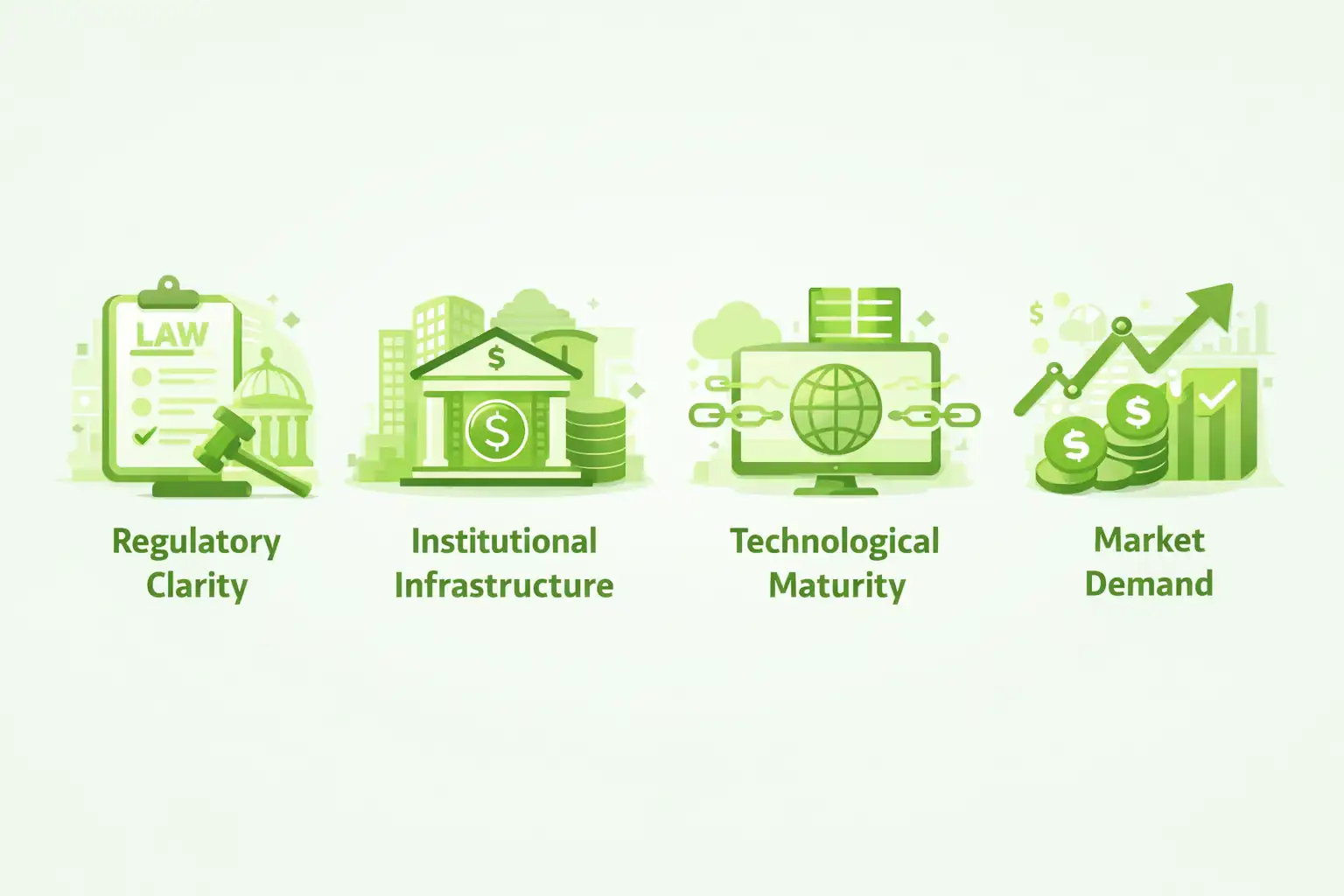
Market Drivers Accelerating the Future of Tokenization
Regulatory Clarity
- SEC establishes clear frameworks for security token offerings
- UK FCA creates innovation sandboxes for tokenization platforms
- UAE regulatory zones provide compliant tokenization infrastructure
- Canadian harmonized provincial regulations reduce compliance complexity
- International standards emerge for cross-border tokenized assets
Institutional Infrastructure
- Major banks launch blockchain settlement networks
- Custody solutions meet institutional security requirements
- Integration with existing brokerage and trading systems
- Insurance products protect tokenized asset holdings
- Professional service providers offer tokenization expertise
Technological Maturity
- Layer-2 scaling reduces transaction costs to cents
- Smart contract security auditing becomes standardized
- Interoperability protocols enable cross-chain transfers
- Oracle networks provide reliable real-world data
- Enterprise blockchain platforms support high transaction volumes
Market Demand
- Investors seek access to previously illiquid asset classes
- Asset owners pursue global liquidity for holdings
- Efficiency gains attract cost-conscious market participants
- Younger demographics prefer digital-native investment vehicles
- ESG considerations drive transparent asset tracking
What Tokenization Means in the Modern Digital Economy
Tokenization represents the process of converting ownership rights in assets into digital tokens recorded on distributed ledger technology, creating programmable, transferable, and divisible representations of value. In the modern digital economy, tokenization extends beyond simple digitization to fundamentally restructure how assets are issued, managed, transferred, and settled. Unlike traditional digital records maintained by centralized intermediaries, tokenized assets leverage blockchain infrastructure to provide transparency, immutability, and peer-to-peer transferability without requiring trusted third parties for every transaction.
The future of tokenization builds upon cryptographic security, distributed consensus mechanisms, and smart contract automation to create asset representations that combine the benefits of traditional securities with the efficiency of digital systems. Each token contains embedded metadata defining ownership rights, transfer restrictions, compliance rules, and economic entitlements programmed directly into the asset itself. This programmability enables automated dividend distributions, voting rights execution, compliance verification, and corporate action processing without manual intervention from intermediaries or custodians.
Asset tokenization serves multiple economic functions in 2026 markets across the USA, UK, UAE, and Canada. Fractional tokenization lowers minimum investment thresholds, enabling broader investor participation in high-value assets like commercial real estate, fine art, or private equity funds. Enhanced liquidity emerges as tokens trade 24/7 on secondary markets rather than requiring lengthy settlement processes. Reduced intermediation costs benefit both issuers and investors as blockchain technology eliminates redundant verification, reconciliation, and custody layers that characterize traditional asset management.
The distinction between tokenization and conventional digitization lies in decentralization, programmability, and composability. Traditional digital assets exist as database entries controlled by single institutions, creating concentration risk and limiting interoperability. Tokenized assets operate on shared infrastructure where no single party controls the ledger, reducing counterparty risk and enabling permissionless innovation. Smart contracts add programmability, automatically executing predefined logic when specific conditions occur. Composability allows tokenized assets to interact with other blockchain-based systems, creating integrated financial products impossible with legacy technology.
Market participants pursue tokenization for strategic advantages beyond technological novelty. Asset issuers access global investor pools without geographical restrictions imposed by traditional distribution channels. Investors gain portfolio diversification through fractional positions in previously inaccessible asset classes. Regulators benefit from enhanced transparency as blockchain records provide comprehensive audit trails. Financial institutions reduce operational costs while expanding service offerings. The future of tokenization aligns incentives across stakeholders by creating more efficient, accessible, and transparent markets.
Why 2026 Is a Turning Point for Asset Tokenization
Several converging factors position 2026 as a watershed moment for tokenization adoption, fundamentally altering the trajectory of blockchain-based asset markets. Regulatory clarity achieved through multi-year engagement between financial authorities and industry participants removes critical uncertainty that previously constrained institutional capital deployment. The United States Securities and Exchange Commission finalized comprehensive frameworks for digital asset securities, providing issuers and investors with clear compliance pathways. United Kingdom regulators established operational sandboxes enabling controlled innovation while protecting market integrity. UAE authorities in Dubai created special economic zones with tailored regulations attracting international tokenization platforms. Canada implemented harmonized provincial approaches reducing fragmented compliance burdens.
Technological infrastructure reaches production-grade reliability and scale in 2026, addressing earlier limitations around transaction throughput, cost, and security. Layer-2 scaling solutions on Ethereum and other platforms process thousands of transactions per second at fractional costs compared to earlier systems. Enterprise blockchain networks designed specifically for financial institutions meet stringent security, privacy, and performance requirements. Smart contract development practices mature with standardized security auditing, formal verification methods, and comprehensive testing protocols reducing vulnerability risks. Oracle systems provide reliable connections between blockchain networks and real-world data sources essential for hybrid asset management.
Institutional adoption crosses critical mass thresholds as major financial institutions move beyond pilot projects to production deployments serving real customers. Leading banks operate blockchain-based settlement systems processing billions in tokenized asset transactions. Asset managers launch regulated investment funds using tokenization for share issuance and management. Brokerage firms integrate tokenized securities alongside traditional holdings in unified custody platforms. Insurance companies underwrite policies protecting tokenized asset holders against smart contract failures and custody breaches. This institutional engagement creates network effects accelerating the future of tokenization adoption.
Market liquidity improvements create virtuous cycles attracting broader participation. Early tokenization platforms suffered from limited trading activity and wide bid-ask spreads, discouraging investor interest. In 2026, secondary markets achieve sufficient depth to support meaningful liquidity for major tokenized asset classes. Market makers provide continuous pricing for high-volume tokens. Automated market maker protocols enable efficient trading for long-tail assets. Cross-platform liquidity aggregation reduces fragmentation. As liquidity improves, more issuers launch tokenized assets, further deepening markets and attracting additional participants.
Generational wealth transfer and demographic shifts favor digital-native investment vehicles. Younger investors entering peak earning years demonstrate strong preferences for technology-enabled financial products offering transparency, accessibility, and mobile-first user experiences. Traditional asset management interfaces designed for prior generations face competitive pressure from blockchain-based alternatives providing real-time portfolio visibility, fractional ownership, and integrated DeFi composability. This demographic transition accelerates the future of tokenization as market participants adapt to evolving investor expectations and technological capabilities.
Core Technologies Powering the Future of Tokenization
Distributed ledger technology forms the foundational infrastructure enabling the future of tokenization by providing shared, immutable records of asset ownership and transfer history. Public blockchains like Ethereum, Polygon, and Avalanche offer permissionless networks where anyone can verify transactions and participate in consensus. Enterprise blockchains such as Hyperledger Fabric and R3 Corda provide permissioned environments meeting privacy and performance requirements for institutional applications. Hybrid approaches combine public network security with private transaction channels, balancing transparency and confidentiality depending on asset class and regulatory requirements.
Smart contracts automate business logic, compliance rules, and operational processes directly within tokenized assets, eliminating manual intervention and reducing settlement times from days to seconds. These self-executing programs encode ownership transfer conditions, dividend distribution mechanisms, voting rights, transfer restrictions, and regulatory compliance checks. When predetermined conditions occur, smart contracts automatically execute corresponding actions without requiring intermediaries. Standardized token frameworks like ERC-20, ERC-1400, and ERC-3643 provide templates for creating compliant security tokens with built-in regulatory features.
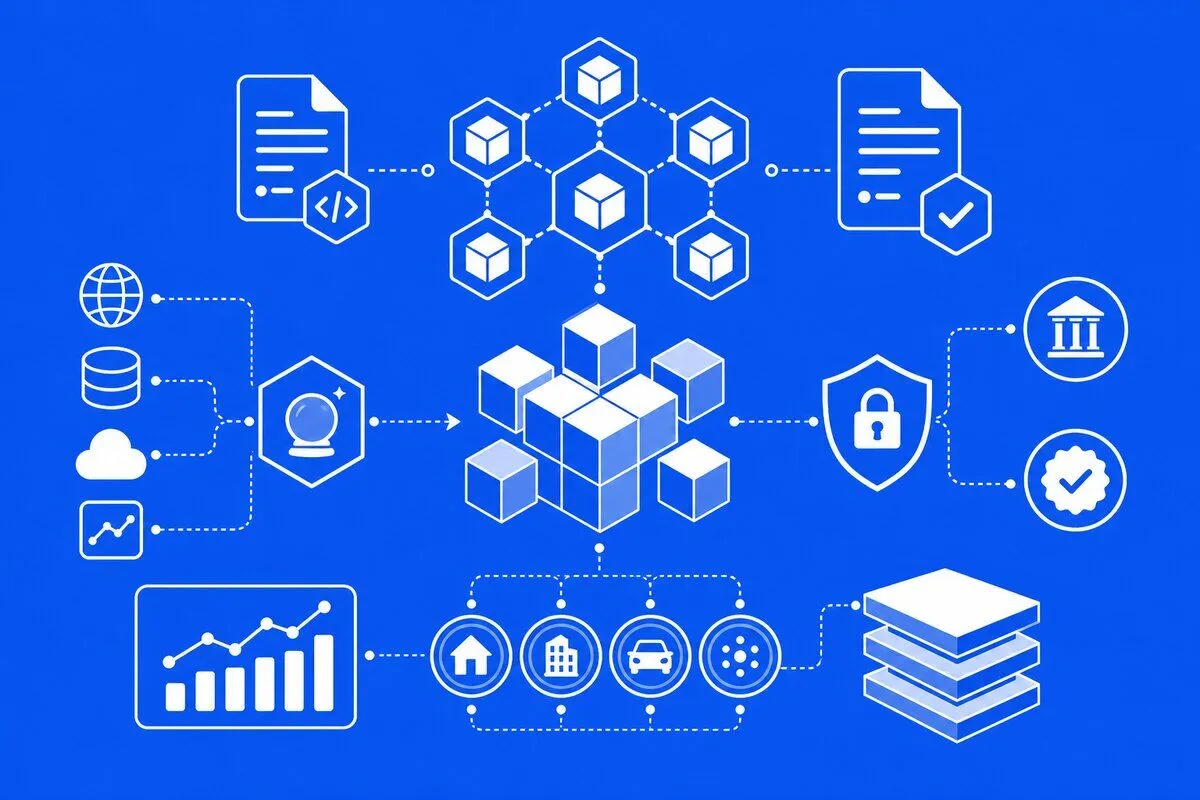
Oracle networks connect blockchain systems to external data sources, enabling tokenized assets to respond to real-world events and incorporate off-chain information into on-chain logic. Chainlink, Band Protocol, and enterprise oracle solutions provide tamper-resistant data feeds for asset prices, interest rates, weather conditions, commodity inventories, and other variables affecting tokenized asset valuations. Decentralized oracle networks aggregate data from multiple sources, reducing single points of failure and manipulation risks. The future of tokenization depends on reliable oracle infrastructure to bridge digital and physical asset worlds.
Layer-2 scaling solutions address blockchain throughput and cost limitations that constrained earlier future of tokenization implementations. Optimistic rollups, zero-knowledge rollups, and state channels process transactions off the main blockchain while inheriting its security guarantees. These technologies enable thousands of transactions per second at costs under one cent per transaction, making tokenization economically viable for high-frequency trading and microtransaction scenarios. Polygon, Arbitrum, Optimism, and other scaling networks support production tokenization platforms serving millions of users across USA, UK, UAE, and Canadian markets.
Interoperability protocols facilitate token transfers between different blockchain networks, reducing liquidity fragmentation and enabling unified asset management across multiple platforms. Cross-chain bridges, atomic swaps, and wrapped token standards allow tokenized assets issued on one blockchain to move to others without losing properties or requiring centralized intermediaries. Cosmos Inter-Blockchain Communication protocol, Polkadot parachains, and LayerZero messaging create interconnected blockchain ecosystems. This interoperability proves essential for the future of tokenization as assets migrate to optimal networks for specific use cases while maintaining broad market access.
Regulatory Maturity and Its Impact on Tokenized Assets
Regulatory evolution in major financial centers transforms the future of tokenization from experimental to mainstream by establishing clear legal frameworks, compliance standards, and investor protections. United States regulators differentiate between utility tokens, security tokens, and commodities, applying appropriate oversight to each category. The SEC provides guidance on token registration requirements, exemptions for small offerings, and ongoing reporting obligations. FinCEN implements anti-money laundering and know-your-customer rules for tokenization platforms. State-level regulations address custody, broker-dealer licensing, and digital asset transmission, creating comprehensive oversight while enabling innovation.
United Kingdom regulatory approaches balance innovation promotion with consumer protection through adaptive frameworks and regulatory sandboxes. The Financial Conduct Authority classifies tokens based on their characteristics and economic functions rather than labels, ensuring appropriate regulation regardless of terminology. FCA-authorized platforms operate under clear standards for client asset protection, operational resilience, and market conduct. UK tax authorities provide guidance on token transactions, capital gains treatment, and income taxation, reducing uncertainty for market participants. This regulatory clarity attracts international tokenization businesses to London as a global hub.
United Arab Emirates positions Dubai as a leading tokenization center through special economic zones with tailored regulations attracting global capital and technology providers. Dubai Multi Commodities Centre, Abu Dhabi Global Market, and Dubai International Financial Centre offer regulatory frameworks specifically designed for digital asset businesses. These zones provide clear licensing pathways, regulatory certainty, and tax advantages while maintaining international compliance standards. UAE regulators collaborate with industry participants to continuously refine rules based on market evolution, supporting the future of tokenization through responsive governance.
Canadian provinces implement harmonized approaches reducing regulatory fragmentation that could constrain future of tokenization growth. Canadian Securities Administrators coordinate provincial securities regulators to create consistent token classification, registration requirements, and compliance obligations across jurisdictions. Ontario, Quebec, British Columbia, and Alberta establish clear frameworks for security token offerings, secondary trading platforms, and custody services. This interprovincial cooperation enables tokenization businesses to operate nationally without navigating conflicting rules, accelerating market development and investor access.
International coordination efforts through organizations like the Financial Stability Board, International Organization of Securities Commissions, and Basel Committee develop global standards preventing regulatory arbitrage and supporting cross-border tokenization. These bodies address classification consistency, custody requirements, capital adequacy for tokenized asset exposure, and information sharing between jurisdictions. As the future of tokenization increasingly involves global investors and multi-jurisdictional assets, international regulatory cooperation becomes essential for market integrity and systemic stability.
Institutional Adoption Trends Driving Tokenization Growth
Major financial institutions transition from blockchain experimentation to production-scale tokenization deployments, fundamentally validating the technology and accelerating market adoption. JPMorgan operates Onyx, a blockchain-based platform processing over $300 billion in daily repo transactions using tokenized collateral. Goldman Sachs issues digital bonds and provides custody services for tokenized securities. HSBC tokenizes gold holdings for clients seeking fractional precious metal exposure. These implementations demonstrate that the future of tokenization integrates seamlessly with existing financial infrastructure while delivering measurable efficiency improvements and cost reductions.
Asset management firms launch tokenized investment funds providing blockchain-based exposure to diversified portfolios, real estate holdings, and alternative assets. Franklin Templeton operates tokenized money market funds on Stellar and Polygon networks, enabling 24/7 subscriptions and redemptions with instant settlement. WisdomTree creates tokenized commodity baskets combining gold, silver, and platinum with automated rebalancing. Fidelity develops tokenization capabilities for retirement accounts and institutional separate accounts. These offerings bring the future of tokenization to mainstream investors through familiar fund structures enhanced with blockchain technology.
Real estate investment trusts and property developers tokenize commercial and residential assets to access global investor pools and improve capital formation efficiency. Brookfield Asset Management tokenizes portions of office buildings and retail centers, enabling fractional ownership with minimum investments starting at $1,000. Blackstone explores tokenization for private real estate funds, providing liquidity options for limited partners. Dubai real estate developers issue tokenized property shares compliant with UAE regulations, attracting international investors. These implementations prove the future of tokenization can democratize access to institutional-quality real estate previously available only to high-net-worth individuals.
Commodity producers and traders leverage tokenization to improve supply chain transparency, reduce financing costs, and enable fractional trading. Gold refiners issue tokens backed by physical bullion stored in vaulted locations, providing digital ownership with redemption rights. Agricultural cooperatives tokenize crop futures, enabling farmers to access working capital before harvest. Energy companies explore tokenization for oil and gas reserves, creating tradeable instruments representing future production. These applications extend the future of tokenization beyond financial assets into real economy sectors.
Traditional stock exchanges and alternative trading systems integrate tokenization capabilities to support digital asset trading alongside conventional securities. SIX Digital Exchange in Switzerland operates a fully regulated platform for tokenized securities issuance and trading. Singapore Exchange collaborates with blockchain infrastructure providers to develop tokenization services. NASDAQ partners with tokenization platforms to explore blockchain-based settlement systems. These initiatives by established market infrastructure providers legitimize the future of tokenization and accelerate institutional adoption through trusted, regulated venues.
Institutional Benefits Driving Tokenization Adoption
Cost Reduction
- Eliminate redundant verification and reconciliation processes
- Reduce settlement times from T+2 to near-instantaneous
- Automate compliance checks and regulatory reporting
- Lower custody and administration fees through smart contracts
- Decrease capital requirements for collateral management
Market Access
- Reach global investor pools without geographical restrictions
- Enable 24/7 trading across all time zones
- Provide fractional access to previously illiquid assets
- Create secondary market liquidity for private securities
- Attract younger, digital-native investor demographics
Operational Efficiency
- Automate dividend distributions and corporate actions
- Streamline investor onboarding with digital identity verification
- Integrate real-time portfolio management and reporting
- Reduce errors from manual data entry and reconciliation
- Enable atomic settlement eliminating counterparty risk
Risk Management
- Create immutable audit trails for regulatory compliance
- Program transfer restrictions preventing unauthorized trades
- Monitor exposure and concentration risks in real-time
- Implement automated circuit breakers and trading halts
- Enhance transparency reducing information asymmetry
Real Estate Tokenization – Fractional Ownership Goes Mainstream
Real estate tokenization represents one of the largest opportunities in the future of tokenization, transforming a $280 trillion global asset class characterized by illiquidity, high entry barriers, and geographic constraints. Commercial and residential property tokenization enables fractional ownership where investors purchase shares representing portions of buildings, portfolios, or development projects. A $50 million office building tokenized into one million shares at $50 each becomes accessible to retail investors unable to commit millions in capital. This democratization expands the investor base while providing property owners with alternative capital sources beyond traditional debt and equity markets.
Tokenization platforms in the USA, UK, UAE, and Canada offer regulated real estate investment opportunities complying with securities laws while leveraging blockchain efficiency. RealT operates a platform for tokenized rental properties across United States markets, distributing rental income automatically to token holders through smart contracts. Elevated Returns tokenized the St. Regis Aspen Resort, creating a $18 million security token offering providing fractional ownership in luxury hospitality real estate. Dubai developers issue property tokens through DAMAC and Emirates Hills projects, attracting international investors to UAE real estate markets. These implementations prove the future of tokenization creates viable real estate investment vehicles.
Transform Your Portfolio with the Future of Tokenization!
The future of tokenization unlocks trillion dollar opportunities in real estate, securities, and commodities. Discover how blockchain transforms traditional assets into accessible fractional investments.
Liquidity improvements constitute a primary value proposition for real estate tokenization, addressing the traditional challenges of exiting property investments requiring months-long sales processes. Secondary markets enable token holders to trade positions without selling entire properties, creating continuous pricing and exit opportunities. Market makers provide bid-ask spreads for high-volume real estate tokens, while automated market makers facilitate trading for smaller properties. This enhanced liquidity attracts institutional investors previously deterred by real estate’s illiquid nature, expanding capital available for property development and acquisition.
Property management and operational processes integrate with future of tokenization platforms to provide transparency, automated distributions, and shareholder engagement. Smart contracts automatically distribute rental income proportionally to token holders monthly or quarterly without manual calculations or wire transfers. Maintenance expenses, property taxes, and management fees deduct automatically before distributions. Token holders access real-time property performance dashboards showing occupancy rates, rental rates, expense ratios, and net operating income. Voting rights embedded in tokens enable shareholder participation in major decisions like property sales or significant renovations.
Cross-border real estate investment becomes significantly more accessible through tokenization, enabling international capital flows without complex legal structures or currency exchange friction. A Canadian investor can purchase tokens representing London commercial real estate through compliant platforms without establishing UK entities or navigating foreign ownership restrictions. Dubai property tokens attract global investors seeking Middle East real estate exposure without in-person purchases or local representation. Smart contracts handle currency conversions, withholding taxes, and compliance reporting automatically. This global accessibility positions real estate tokenization as essential infrastructure for the future of tokenization in international property markets.
Financial Asset Tokenization – Stocks, Bonds, and Funds on Blockchain
Traditional financial securities including stocks, bonds, and investment funds undergo fundamental transformation through future of tokenization, creating blockchain-based instruments combining regulatory compliance with technological efficiency. Security token offerings provide alternative capital raising mechanisms for private companies unable or unwilling to pursue conventional initial public offerings. Issuers create digital equity or debt tokens representing ownership stakes or creditor positions, distributing them to accredited or retail investors depending on regulatory exemptions. Automated compliance embedded in smart contracts enforces transfer restrictions, investor eligibility requirements, and reporting obligations without manual oversight.
Public company stocks migrate to tokenized formats enabling 24/7 trading, instant settlement, and automated corporate actions that improve efficiency over existing clearing and settlement infrastructure. Traditional stock trades settle T+2, meaning two business days elapse between execution and final ownership transfer, creating counterparty risk and capital inefficiency. Tokenized stocks settle atomically in seconds, simultaneously exchanging ownership and payment without intermediaries. Dividend distributions, stock splits, and rights issues execute automatically through smart contract logic, reducing administrative costs and eliminating errors from manual processing.
Bond tokenization transforms fixed income markets by enabling fractional ownership of debt instruments traditionally issued in large denominations accessible only to institutional investors. A $1,000,000 minimum corporate bond becomes divisible into fractional tokens purchasable for $100, democratizing access to credit markets. Interest payments distribute automatically to token holders based on ownership proportions and payment schedules programmed into smart contracts. Secondary market liquidity improves as retail investors trade fractional positions without requiring counterparties seeking entire bond denominations. This fractionalization expands the future of tokenization in fixed income markets historically dominated by institutions.
Mutual funds and exchange-traded funds adopt tokenization for share issuance, net asset value calculations, and investor servicing, creating blockchain-native investment vehicles. Franklin Templeton’s tokenized money market fund processes subscriptions and redemptions 24/7 with instant settlement rather than next-business-day processing. Share prices update in real-time based on underlying portfolio valuations connected through oracle feeds. Management fees deduct automatically from investor holdings without monthly invoicing or payment processing. Regulatory reporting generates directly from blockchain transaction records, reducing compliance costs while improving accuracy and timeliness.
Comparison of Traditional vs Tokenized Financial Securities
| Feature | Traditional Securities | Tokenized Securities | Impact on Future of Tokenization |
|---|---|---|---|
| Settlement Time | T+2 (2 business days) | Instant to seconds | Eliminates counterparty risk and capital inefficiency |
| Trading Hours | 9:30 AM to 4:00 PM EST weekdays | 24/7/365 global access | Increases market efficiency and global participation |
| Minimum Investment | Full share price or $1,000+ for bonds | Fractional amounts from $10+ | Democratizes access for retail investors |
| Compliance Automation | Manual review and verification | Programmed in smart contracts | Reduces costs and prevents unauthorized transfers |
| Corporate Actions | Manual processing, 3-5 business days | Automated execution in real-time | Eliminates errors and delays in dividend payments |
| Transparency | Periodic reporting, limited visibility | Real-time blockchain records | Enhances market integrity and regulatory oversight |
| Geographic Restrictions | Significant barriers to cross-border investment | Global access with programmed compliance | Enables international capital flows and diversification |
| Intermediary Costs | Multiple layers: brokers, clearinghouses, custodians | Reduced through blockchain automation | Lowers transaction costs for all participants |
Commodity Tokenization – Gold, Oil, and Agricultural Assets
Commodity tokenization brings transparency, efficiency, and accessibility to physical asset markets historically characterized by complex logistics, storage costs, and limited retail participation. Precious metals tokenization creates digital representations of gold, silver, platinum, and palladium stored in certified vaults, enabling fractional ownership and instant trading without physical delivery requirements. Paxos Gold and Tether Gold issue tokens each backed by one troy ounce of investment-grade gold held in secure facilities with regular audits verifying reserves. Investors purchase fractional amounts starting from dollars rather than full ounces, lowering barriers to precious metal investment while maintaining redemption rights for physical delivery when desired.
Energy commodity tokenization addresses inefficiencies in oil, natural gas, and electricity markets by creating tradeable instruments representing production capacity, reserves, or delivery contracts. Oil producers issue tokens backed by verified reserves or future production, enabling investors to gain exposure to energy commodities without futures contracts or physical storage. Tokenized carbon allowances create liquid markets for emissions trading, supporting corporate sustainability initiatives and climate finance mechanisms. The future of tokenization in energy markets provides price discovery, risk management tools, and capital formation for renewable energy development across USA, UK, UAE, and Canadian markets.
Agricultural commodity tokenization connects farmers, traders, and investors through blockchain-based markets improving supply chain transparency and financing accessibility. Coffee producers in developing regions tokenize future harvests, securing working capital from global investors before crops mature. Grain traders create tokens representing stored agricultural commodities with verified weights and quality grades, enabling efficient trading without physical inspection. Smart contracts automate quality verification, delivery scheduling, and payment settlement based on oracle data feeds from certified weighing stations and testing laboratories. These applications demonstrate how the future of tokenization extends blockchain benefits to real economy sectors.
Commodity tokenization reduces barriers to international trade by automating customs documentation, financing arrangements, and quality verification through blockchain records and smart contracts. Letters of credit traditionally requiring weeks to process and verify execute automatically when shipment and inspection conditions validate through oracle systems. Trade finance costs decrease as blockchain transparency reduces fraud risk and improves lender confidence. Cross-border commodity transactions settle faster with reduced counterparty risk as atomic swaps exchange tokens for payment simultaneously. This streamlined international trade infrastructure accelerates the future of tokenization adoption in global commodity markets.
Storage and logistics integration with future of tokenization platforms provides real-time inventory tracking, automated warehouse receipt issuance, and streamlined delivery coordination. Tokenized warehouse receipts represent specific quantities and grades of commodities stored at certified facilities, trading freely while physical goods remain stationary. Internet of Things sensors monitor temperature, humidity, and storage conditions, feeding data to blockchain records ensuring product quality maintenance. When token holders request physical delivery, smart contracts initiate logistics coordination, transferring warehouse receipts and arranging transportation automatically. This integration positions commodity tokenization as essential infrastructure for modern supply chain management.
Security Tokenization – Compliant Digital Securities at Scale
Security token offerings have evolved from experimental fundraising mechanisms to regulated investment vehicles fully integrated with traditional financial infrastructure and regulatory oversight. Compliant security tokens embed transfer restrictions, investor eligibility requirements, and regulatory reporting directly into smart contract code, automating compliance without manual intervention. ERC-1400 and ERC-3643 token standards provide frameworks for creating security tokens meeting regulatory requirements across multiple jurisdictions. These standards support features like transfer restrictions based on investor accreditation status, lock-up periods, maximum holder limits, and automated regulatory reporting.
Issuance platforms like Securitize, Polymath, and tZERO provide end-to-end solutions for security token offerings, handling legal structuring, technology implementation, investor onboarding, and ongoing compliance management. Companies seeking to tokenize equity, debt, or fund interests work with these platforms to navigate regulatory requirements in target jurisdictions. The platforms manage KYC/AML verification for investors, ensure compliance with securities regulations, and provide secondary trading infrastructure. This professionalized service ecosystem makes the future of tokenization accessible to issuers without blockchain expertise while maintaining regulatory compliance and investor protection.
Secondary market infrastructure for security tokens reaches maturity in 2026 with regulated alternative trading systems, broker-dealer integration, and institutional custody solutions. tZERO operates an SEC-regulated ATS enabling compliant secondary trading of security tokens with integrated clearing and settlement. OpenFinance Network connects multiple trading venues into unified liquidity pools while maintaining transfer restrictions and compliance requirements. Traditional broker-dealers integrate security token capabilities, enabling investors to hold tokenized securities alongside conventional holdings in unified custody accounts. This infrastructure development proves essential for the future of tokenization scaling beyond early adopters to mainstream finance.
Corporate governance and shareholder rights administration through security tokens provide transparency, accessibility, and efficiency improvements over traditional proxy voting and communications systems. Token holders receive corporate communications automatically based on blockchain ownership records without requiring intermediaries to distribute materials. Voting rights execute through blockchain-based systems where shareholders cast votes using digital signatures, creating tamper-proof records of participation and results. Dividend distributions, rights offerings, and other corporate actions process automatically through smart contracts based on snapshot dates and entitlement calculations programmed into token logic.
Cross-border security token offerings navigate complex multi-jurisdictional regulations through programmable compliance and automated reporting. A security token offering targeting investors across USA, UK, UAE, and Canada implements jurisdiction-specific transfer restrictions and reporting requirements within smart contract code. Investor eligibility verification occurs automatically based on KYC data and regulatory requirements for each jurisdiction. Regulatory reporting generates directly from blockchain transaction records, reducing compliance costs while improving accuracy. This programmable cross-border compliance accelerates the future of tokenization in global capital markets previously constrained by regulatory complexity and coordination costs.
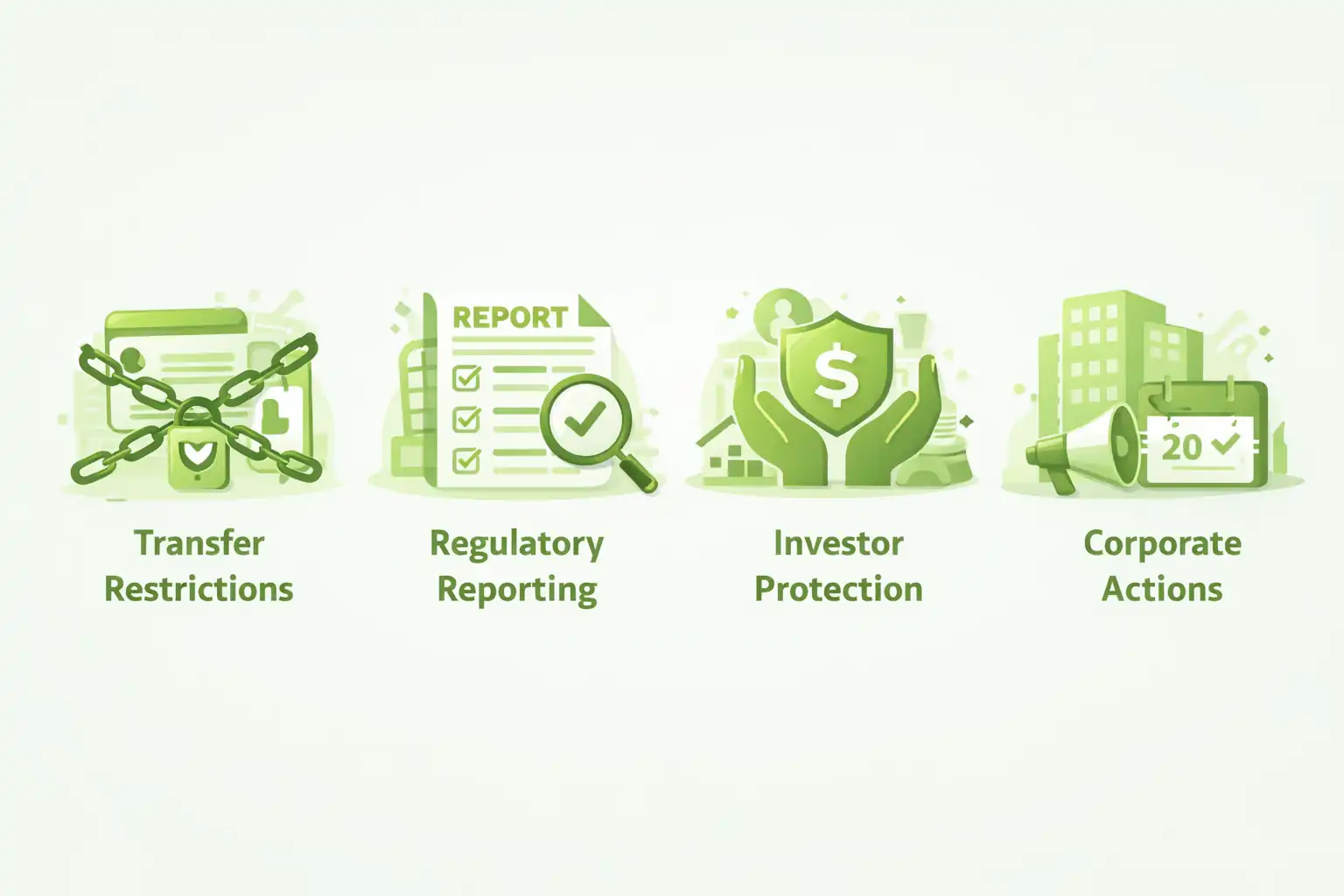
Security Token Compliance Features
Transfer Restrictions
- Accredited investor verification before transfers
- Lock-up period enforcement preventing early sales
- Maximum holder limits maintaining exemption compliance
- Jurisdiction-based restrictions by investor location
- Automated whitelist management for eligible participants
Regulatory Reporting
- Automated Form D filings for Regulation D offerings
- Real-time shareholder registry maintenance
- Transaction reporting to regulatory authorities
- Beneficial ownership transparency under regulations
- Audit trail generation for compliance verification
Investor Protection
- KYC/AML verification before token acquisition
- Cooling-off periods for investor reconsideration
- Disclosure document delivery and confirmation
- Investment limits based on income and net worth
- Fraud prevention through identity verification
Corporate Actions
- Automated dividend distribution calculations
- Record date snapshots for entitlement determination
- Rights offering allocation and exercise processing
- Stock split and reverse split execution
- Merger and acquisition token exchanges
Carbon Credit Tokenization – Transparency in Climate Markets
Carbon credit future of tokenization addresses critical transparency, verification, and double-counting challenges plaguing traditional environmental markets, creating blockchain-based systems for climate finance and corporate sustainability. Voluntary carbon markets historically suffered from opaque pricing, inconsistent quality standards, and difficulties verifying that credits represented genuine emissions reductions. Tokenized carbon credits leverage blockchain immutability and transparency to create verifiable records linking each credit to specific environmental projects with validated carbon sequestration or emissions reduction. This transparency accelerates the future of tokenization in climate markets as corporations and governments seek credible carbon offset mechanisms.
Carbon credit registries including Verra, Gold Standard, and Climate Action Reserve integrate blockchain technology to prevent double-counting and improve market integrity. When environmental projects generate carbon credits through verified activities like reforestation or renewable energy deployment, tokenization platforms issue corresponding digital tokens representing one metric ton of CO2 equivalent reduction. Smart contracts prevent the same carbon credit from being tokenized multiple times or retired in multiple jurisdictions. Blockchain records create permanent audit trails showing credit issuance, transfers, and retirement, enabling regulators and market participants to verify compliance and prevent fraud.
Corporate sustainability programs leverage tokenized carbon credits for transparent offset purchasing, tracking, and reporting supporting net-zero commitments. Microsoft, Salesforce, and other corporations commit to carbon neutrality, requiring verified offsets for unavoidable emissions. Tokenization platforms enable these companies to purchase, track, and retire carbon credits with blockchain-verified provenance and impact. Automated smart contracts retire credits when corporate emissions reach thresholds, ensuring offset obligations meet without manual intervention. Public blockchain records demonstrate sustainability commitment authenticity to stakeholders, customers, and regulators concerned about greenwashing.
Carbon credit future of tokenization creates liquid secondary markets where prices reflect environmental impact quality and project characteristics. Traditional carbon markets suffer from limited liquidity and price opacity, making it difficult for project developers to secure financing or corporations to hedge carbon exposure. Tokenized credits trade on decentralized exchanges and automated market makers, creating continuous pricing and reducing transaction costs. Market participants differentiate credits based on project type, vintage, verification standards, and co-benefits like biodiversity conservation or community development. This price discovery mechanism allocates capital efficiently toward highest-quality environmental projects.
Integration with Internet of Things sensors and satellite monitoring provides real-time verification of carbon sequestration and emissions reductions, strengthening the future of tokenization credibility in climate markets. Reforestation projects deploy IoT sensors measuring tree growth, soil carbon content, and forest health, feeding data to oracle networks that update token metadata. Renewable energy installations report verified generation to blockchain systems, automatically issuing credits proportional to fossil fuel displacement. Satellite imagery confirms land use changes and prevents fraudulent credit issuance. This technology integration creates unprecedented transparency and verification rigor in environmental markets.
Intellectual Property Tokenization – Monetizing Ideas and Royalties
Intellectual property tokenization transforms how creators, artists, and innovators monetize ideas by creating tradeable digital rights to music royalties, patent licensing, book sales, and other creative works. Musicians tokenize royalty streams from song catalogs, enabling fans and investors to purchase fractional ownership in future earnings without requiring record label intermediation. Artist tokenization platforms issue shares in music rights with automated royalty distributions based on streaming data and sales captured through oracle integrations. This direct creator-to-investor relationship improves artist economics while providing investors with alternative asset exposure uncorrelated with traditional financial markets.
Patent tokenization enables inventors and research institutions to monetize intellectual property through fractional licensing arrangements and technology transfer agreements. Universities holding patent portfolios tokenize licensing rights, distributing them to investors who receive proportional shares of licensing revenue from commercial applications. Pharmaceutical companies exploring patent monetization issue tokens representing royalty streams from drug development milestones and sales. Smart contracts automate licensing fee collection and distribution based on agreements programmed into token logic. This IP tokenization creates liquidity for traditionally illiquid assets while providing inventors with upfront capital for continued research.
Book publishing and media content tokenization provides authors and creators with alternative funding sources while enabling fans to participate in creative project success. Authors tokenize future book royalties to fund writing, marketing, and distribution without traditional publisher advances or creative control concessions. Film producers issue tokens representing revenue shares from movie releases, enabling crowd-funding with equity-like participation rather than donation-based models. Podcast creators tokenize advertising revenue and subscription income, building direct economic relationships with audiences. These models reshape creative economy funding through the future of tokenization infrastructure.
Non-fungible tokens representing unique creative works integrate with tokenization platforms to create hybrid ownership models combining singular artworks with fractional economic interests. A valuable NFT artwork might tokenize fractional ownership while maintaining single display rights, enabling multiple investors to share appreciation while one holder controls exhibition. Music NFTs combine unique content with royalty participation, creating collector value alongside investment returns. These hybrid models demonstrate the future of tokenization flexibility in addressing diverse creator and investor needs across creative industries.
Smart contract automation eliminates intermediaries in royalty collection and distribution, ensuring creators receive fair compensation without relying on opaque industry accounting practices. Streaming platforms integrate with tokenization systems through APIs and oracle feeds, reporting play counts and revenue that trigger automatic royalty distributions. Book retailers report sales data enabling instant author payments rather than quarterly statements with 90-day delays. Licensing agreements execute automatically when usage reaches contractual thresholds, eliminating disputes over payment timing or calculation methods. This transparency and automation position intellectual property tokenization as transformative infrastructure for creative economies in USA, UK, UAE, and Canadian markets.
Luxury and Collectible Asset Tokenization – Art, Watches, and Rare Goods
Luxury asset tokenization brings transparency, provenance verification, and fractional ownership to high-value collectibles including fine art, rare watches, classic automobiles, wine, and other premium goods. Art tokenization platforms like Masterworks and Rally enable fractional investment in multi-million dollar paintings by Picasso, Warhol, and contemporary artists previously accessible only to ultra-high-net-worth collectors. Investors purchase tokens representing ownership shares in specific artworks, participating in appreciation when pieces sell at auction or through private transactions. This democratization expands art market participation while providing collectors with liquidity options through secondary token trading rather than requiring full artwork sales.
Watch and luxury goods tokenization addresses authentication, provenance tracking, and ownership transfer challenges in markets plagued by counterfeiting and information asymmetry. Luxury watch manufacturers issue tokenized certificates of authenticity linked to specific timepieces, creating immutable ownership records tracking items from production through resale markets. NFT-based digital twins contain detailed specifications, service histories, and ownership chains, enhancing value and buyer confidence in secondary markets. Smart contracts automate authenticity verification during transfers, preventing counterfeit circulation and protecting brand integrity. This infrastructure development accelerates the future of tokenization in luxury goods markets.
Wine and spirits future of tokenization creates investment opportunities in premium vintages while improving storage verification and provenance tracking. Fine wine platforms tokenize bottles or cases stored in bonded warehouses, enabling trading without physical movement that could damage valuable vintages. Each token links to specific storage location, vintage details, condition reports, and authentication certificates verified through blockchain records. Investors trade fractional interests in wine collections, gaining exposure to alternative assets with historical appreciation rates uncorrelated with stock markets. Automated custody and insurance integration provide institutional-grade asset protection for tokenized wine holdings.
Classic automobile and collectible vehicle future of tokenization enables enthusiasts to invest in rare cars without requiring garage space, maintenance expertise, or full purchase prices. Platforms tokenize ownership in Ferrari, Porsche, and other collectible automobiles professionally stored and maintained, distributing appreciation to fractional shareholders. Token holders vote on decisions regarding restoration, exhibition, or eventual sale. Some platforms combine tokenization with usage rights, enabling shareholders to reserve driving time proportional to ownership stakes. This model brings the future of tokenization to automotive collectibles, creating liquid investment vehicles from historically illiquid passion assets.
Authentication and provenance verification through blockchain integration with physical asset tagging creates unprecedented transparency in luxury goods markets. NFC chips, RFID tags, and other physical identifiers link luxury items to blockchain records containing detailed histories, authenticity certifications, and ownership chains. Museums and galleries employ tokenization for artwork provenance tracking, preventing art theft and authenticating historical claims. Auction houses integrate blockchain verification into consignment processes, providing bidders with verifiable authenticity and ownership documentation. These applications demonstrate how the future of tokenization combines digital infrastructure with physical asset management.
How Liquidity Models Are Evolving for Tokenized Assets
Liquidity provision for tokenized assets evolves through multiple models addressing different market structures, regulatory requirements, and participant needs. Centralized alternative trading systems operated by regulated broker-dealers provide familiar order book interfaces where buyers and sellers submit limit and market orders with matched execution. These platforms meet institutional preferences for traditional trading mechanics while incorporating blockchain settlement advantages. tZERO, INX, and Templum operate regulated ATSs enabling compliant secondary trading of security tokens with integrated custody and reporting. This model proves effective for tokenized securities requiring regulatory oversight and institutional-grade infrastructure.
Automated market makers create continuous liquidity for tokenized assets through algorithmic pricing and pooled capital rather than requiring counterparty matching. AMM protocols like Uniswap, Balancer, and Curve enable token holders to trade against liquidity pools funded by other participants who earn fees from trading activity. Constant product formulas determine prices based on pool token ratios, adjusting automatically as trades occur. This permissionless liquidity provision works well for tokenized commodities, carbon credits, and other assets where regulatory restrictions allow decentralized trading. The future of tokenization leverages AMMs to bootstrap liquidity for new token launches and long-tail assets.
Hybrid models combine centralized and decentralized elements, routing orders to multiple liquidity sources for best execution while maintaining regulatory compliance. Aggregator platforms connect alternative trading systems, AMM pools, and over-the-counter markets, displaying unified order books and executing trades across venues. Smart order routing algorithms optimize for price, speed, and settlement preferences. Compliance checks occur before order placement, ensuring transfers meet regulatory requirements regardless of execution venue. These hybrid approaches maximize liquidity access while preserving compliance, accelerating the future of tokenization adoption across diverse asset classes.
Market maker programs recruit professional liquidity providers offering continuous buy and sell quotes for high-volume tokenized assets. Designated market makers receive fee rebates or token incentives for maintaining spread requirements and minimum quote sizes during trading hours. Their participation improves price discovery, reduces volatility, and enhances investor confidence through visible liquidity. Major future of tokenization platforms negotiate market maker agreements with trading firms experienced in digital assets and traditional securities. This institutional market making infrastructure proves essential for the future of tokenization scaling to trillion-dollar asset classes.
Request-for-quote systems facilitate large block trades and institutional transactions requiring price negotiation and privacy. Investors seeking to buy or sell significant token positions submit RFQs to multiple dealers who respond with bids or offers. Winning quotes execute through blockchain settlement with atomic swaps ensuring simultaneous payment and delivery. RFQ systems prevent market impact from large trades that could move prices in thin markets, addressing institutional concerns about liquidity depth. Integration with compliance systems ensures block trades meet transfer restrictions and reporting requirements essential for security token markets.
Interoperability and Cross-Chain Asset Movement in 2026
Cross-chain interoperability addresses the critical challenge of blockchain fragmentation where tokenized assets issued on different networks cannot interact or transfer without centralized intermediaries. The future of tokenization depends on seamless asset movement between Ethereum, Polygon, Avalanche, Solana, and enterprise blockchains as market participants optimize for network characteristics including transaction costs, speed, privacy features, and existing liquidity. Interoperability protocols enable tokens to move between chains while preserving properties, compliance features, and ownership records, creating unified markets from previously isolated ecosystems.
Bridge protocols facilitate cross-chain transfers through lock-and-mint mechanisms where tokens lock on origin chains while equivalent amounts mint on destination chains. Wrapped token standards create representations of assets from one blockchain on another, backed by locked reserves verifiable through cryptographic proofs. Ethereum-based tokens bridge to Polygon for lower transaction costs, to Avalanche for faster finality, or to enterprise chains for privacy features. Bridge security depends on multi-signature controls, validator decentralization, and regular security audits preventing exploits that have affected earlier bridge implementations. Leading bridge protocols include LayerZero, Synapse, and Wormhole supporting major blockchain networks.
Atomic swaps enable direct peer-to-peer exchanges between tokens on different blockchains without requiring bridge infrastructure or wrapped assets. Hash time-locked contracts create cryptographic conditions ensuring simultaneous execution on both chains or automatic reversal if conditions fail. Atomic swap protocols work particularly well for commodity tokens and certain financial assets where regulatory restrictions allow peer-to-peer trading. This trustless exchange mechanism removes bridge custody risk while enabling cross-chain arbitrage and liquidity provision. However, atomic swaps face limitations for security tokens requiring compliance verification during transfers.
Cosmos Inter-Blockchain Communication protocol provides a comprehensive framework for blockchain interoperability through standardized messaging and zone architecture. IBC enables independent blockchains to transfer tokens, data, and arbitrary messages while maintaining sovereignty and consensus mechanisms. Tokenization platforms building on Cosmos SDK benefit from native interoperability with hundreds of connected chains without custom bridge development. Enterprise blockchains join the Cosmos ecosystem to leverage existing liquidity and composability while maintaining private consensus and permissioned access. This ecosystem approach accelerates the future of tokenization by reducing integration effort and improving network effects.
Polkadot parachains create interoperable blockchain networks sharing security through relay chain validation while maintaining specialized functionality for specific use cases. Tokenized real estate might operate on a privacy-focused parachains while maintaining interoperability with public parachains hosting decentralized exchanges or lending protocols. Shared security prevents the high costs of bootstrapping independent validator sets while preserving customization flexibility. Cross-parachains communication enables complex workflows like using tokenized real estate as collateral for loans issued on lending parachains. This architecture demonstrates how the future of tokenization scales through specialized yet interoperable blockchain networks.
Blockchain Network Comparison for Tokenization Use Cases
| Blockchain Platform | Best Use Cases | Transaction Cost | Settlement Speed | Future of Tokenization Application |
|---|---|---|---|---|
| Ethereum Mainnet | High-value securities, institutional assets, maximum security requirements | $5 to $50 per transaction | 12-15 seconds per block | Large tokenized securities, corporate bonds, institutional real estate |
| Polygon | Retail tokenization, frequent trading, consumer applications | $0.01 to $0.10 per transaction | 2-3 seconds per block | Fractional real estate, carbon credits, loyalty programs, retail securities |
| Avalanche | Enterprise subnets, regulated securities, custom compliance | $0.50 to $2.00 per transaction | Sub-second finality | Private securities, institutional funds, permissioned future of tokenization |
| Hyperledger Fabric | Enterprise consortiums, privacy requirements, permissioned access | Negligible infrastructure costs | Configurable, typically sub-second | Bank settlement systems, trade finance, consortium blockchains |
| Solana | High-frequency trading, orderbook DEXs, performance-critical applications | $0.0001 to $0.001 per transaction | 400ms per block | Commodity tokenization, high-frequency trading, micropayments |
| R3 Corda | Financial institutions, bilateral agreements, privacy-preserving transactions | Infrastructure and licensing costs | Immediate finality between parties | Syndicated loans, trade finance, institutional settlements |
Role of Smart Contracts in Automated Compliance and Settlements
Smart contracts revolutionize compliance automation in tokenized asset markets by embedding regulatory requirements directly into transfer logic, eliminating manual verification and reducing compliance costs. Security tokens programmed with ERC-1400 or ERC-3643 standards include functions verifying investor eligibility, checking transfer restrictions, and enforcing lock-up periods before allowing token transfers. When investors attempt transactions, smart contracts automatically query whitelist registries, verify KYC status, check jurisdiction restrictions, and validate holding period requirements. Transactions failing compliance checks reject automatically without human intervention, preventing regulatory violations while reducing administrative overhead.
Settlement automation through smart contracts eliminates the multi-day clearing and settlement processes characterizing traditional securities markets. Delivery versus payment mechanisms execute atomically, transferring tokens and payment simultaneously without counterparty risk. Hash time-locked contracts ensure both sides of transactions complete or neither executes, preventing scenarios where one party delivers while the other fails to pay. This instant settlement reduces capital requirements, eliminates settlement failures, and improves market efficiency. The future of tokenization builds upon this atomic settlement foundation to create real-time securities markets.
Corporate action automation addresses dividend distributions, stock splits, rights offerings, and other shareholder entitlements through programmable logic eliminating manual calculations and distributions. Smart contracts snapshot token holder balances at specified block heights, calculating dividend entitlements proportional to holdings without requiring centralized registrars. Payment distributions execute automatically by transferring funds from treasury addresses to shareholder wallets based on programmed formulas. Stock splits automatically multiply token balances while adjusting per-token prices, executing across thousands of holders instantaneously. This automation reduces errors, accelerates processing, and decreases costs for issuers managing tokenized assets.
Automated tax reporting and withholding integrates with smart contracts to address complex multi-jurisdictional tax obligations for international investors. Tokens programmed with investor jurisdiction data automatically withhold appropriate tax percentages during dividend distributions based on bilateral tax treaties and domestic regulations. Year-end tax documents generate from blockchain transaction records without manual compilation, providing investors with accurate capital gains reporting and income summaries. Oracle integrations connect smart contracts to tax rate databases ensuring current rates apply to distributions. This automation addresses significant compliance challenges constraining cross-border investment in traditional markets.
Compliance monitoring and suspicious activity reporting through smart contract analytics enables regulatory oversight while preserving privacy where appropriate. Regulators access blockchain records to verify transfer compliance, monitor for wash trading or market manipulation, and identify suspicious transaction patterns. Smart contracts emit events when specific conditions occur, flagging transactions for review without exposing all investor activities. Privacy-preserving technologies like zero-knowledge proofs enable compliance verification without revealing transaction details to public observers. This balance between transparency and privacy proves essential for the future of tokenization in regulated markets across USA, UK, UAE, and Canadian jurisdictions.
Risk Factors and Challenges in Large-Scale Tokenization
Smart contract vulnerabilities pose significant risks to tokenized asset holders as code errors or exploits can result in permanent asset loss or unauthorized transfers. Despite security audits and formal verification, complex smart contracts contain potential vulnerabilities that attackers exploit to drain funds or manipulate token functionality. The DAO hack, Parity multi-signature wallet freeze, and various DeFi exploits demonstrate smart contract risk severity. Tokenization platforms mitigate these risks through comprehensive auditing by multiple security firms, bug bounty programs incentivizing vulnerability disclosure, time-locked upgrades enabling emergency responses, and insurance coverage protecting against code failures. However, smart contract risk remains inherent to the future of tokenization requiring continuous security investment and vigilance.
Regulatory uncertainty and changing compliance requirements create challenges for future of tokenization platforms and asset issuers navigating evolving legal frameworks. Securities regulators continue refining digital asset classifications, registration requirements, and enforcement priorities as markets develop. Tokenized assets issued under specific regulatory interpretations face reclassification risks if authorities change positions. Multi-jurisdictional compliance becomes particularly complex as different countries apply varying standards to identical token structures. Platforms address regulatory risk through conservative compliance approaches, engagement with regulators, flexible smart contract architectures enabling rule updates, and geographic restrictions limiting exposure to uncertain jurisdictions.
Custody risks emerge as tokenized asset holders must secure private keys controlling substantial value, creating single points of failure if keys are lost, stolen, or compromised. Individual investors often lack security expertise to protect private keys properly, while institutional custodians face operational and reputational risks from client asset protection. Multi-signature wallets, hardware security modules, and institutional custody platforms improve security over individual key storage. Insurance products from Lloyd’s of London and specialized digital asset insurers cover custody losses up to policy limits. However, the irreversible nature of blockchain transactions means stolen or lost tokens cannot be recovered, requiring robust security practices throughout the future of tokenization ecosystem.
Liquidity constraints particularly for newer or niche tokenized assets create market risks where holders cannot exit positions without accepting significant price discounts. While tokenization promises liquidity improvements over traditional illiquid assets, secondary markets require sufficient participant depth and trading volume to maintain reasonable bid-ask spreads. Small tokenization offerings face chicken-and-egg problems where limited liquidity discourages new investors, perpetuating thin markets. Market making programs, liquidity incentives, and cross-platform aggregation help address these challenges, but liquidity risk remains especially relevant for specialized assets or smaller issuances in the future of tokenization landscape.
Interoperability and technical fragmentation as numerous blockchain networks, token standards, and infrastructure providers create compatibility challenges and lock-in risks. Assets tokenized on one platform may not easily transfer to others without bridge protocols introducing additional risks and costs. Competing standards for security tokens like ERC-1400, ERC-1404, and ERC-3643 fragment developer resources and create integration overhead. Network effects favor early platforms, potentially entrenching suboptimal technologies. Industry efforts toward standardization, improved bridge security, and cross-chain protocols address fragmentation, but technical coordination remains critical for the future of tokenization scaling efficiently.
Risk Mitigation Strategies for Tokenized Asset Participants
Investor Protection Measures
- Verify platform regulatory licensing and compliance status
- Review independent smart contract security audit reports
- Confirm insurance coverage for custody and smart contract failures
- Assess underlying asset quality and management practices
- Diversify across multiple tokenized asset classes and platforms
- Use institutional-grade custody solutions for large holdings
Issuer Best Practices
- Engage experienced legal counsel for regulatory compliance
- Conduct comprehensive smart contract audits by multiple firms
- Implement gradual rollouts with small initial issuances
- Establish market maker relationships before launch
- Maintain transparent communication with token holders
- Create upgrade mechanisms for compliance rule changes
Platform Operational Standards
- Maintain regulatory compliance across all operating jurisdictions
- Implement comprehensive KYC/AML procedures
- Conduct regular penetration testing and security assessments
- Provide investor education on risks and best practices
- Establish emergency response procedures for security incidents
- Maintain adequate capital reserves and insurance coverage
Regulatory Oversight Enhancement
- Develop clear classification frameworks for token types
- Require registration and periodic reporting from platforms
- Monitor markets for manipulation and fraud
- Coordinate internationally on cross-border enforcement
- Publish guidance on emerging tokenization practices
- Balance innovation enablement with investor protection
Tokenization Use Cases for Enterprises and Retail Investors
Enterprise treasury management through tokenization enables corporations to optimize cash positions, automate cross-border payments, and access alternative financing sources. Companies tokenize commercial paper and short-term debt instruments, distributing them to institutional investors through blockchain platforms with instant settlement and automated maturity payments. Supply chain financing improves as suppliers tokenize invoices, selling them to investors or financial institutions for immediate liquidity rather than waiting payment terms. Smart contracts automatically release payments when delivery confirmations validate through oracle integrations with logistics systems. These applications demonstrate how the future of tokenization transforms corporate finance operations.
Employee compensation and equity management benefits from tokenization through automated vesting schedules, instant global distribution, and improved secondary market liquidity. Startups and growth companies issue tokenized stock options or restricted stock units with smart contract vesting releasing tokens as employees meet time or performance milestones. International employees receive compensation without wire transfer delays or currency conversion fees. Secondary markets enable employees to sell vested tokens providing liquidity without company buyback programs. This tokenized equity administration reduces administrative costs while improving employee experience and retention through enhanced liquidity options.
Retail investment portfolios diversify through tokenized asset access previously limited to institutional investors or high-net-worth individuals. Fractional real estate tokenization enables middle-income investors to build property portfolios across multiple markets and asset types with small capital allocations. Art and collectible tokenization provides exposure to alternative assets appreciating independently from stock market correlation. Tokenized private equity and venture capital funds democratize access to high-growth companies before public offerings. This expanded access creates more inclusive financial markets aligned with the future of tokenization democratization goals.
Loyalty programs and customer engagement platforms leverage tokenization to create transferable rewards with market value beyond single-brand ecosystems. Airlines, hotels, and retailers issue loyalty tokens tradeable on secondary markets or exchangeable for other brands’ tokens, increasing perceived value and customer engagement. Blockchain transparency prevents point manipulation or arbitrary devaluations that erode customer trust in traditional programs. Smart contracts automate reward issuance based on purchase behavior tracked through point-of-sale integrations. These blockchain-based loyalty systems demonstrate consumer-facing applications accelerating the future of tokenization mainstream adoption.
Charitable giving and impact investing through tokenization creates transparency in fund usage, verifiable outcome tracking, and fractional participation in social impact projects. Non-profits tokenize specific initiatives enabling donors to fund particular programs with blockchain-verified expenditure tracking. Impact tokens representing environmental conservation, educational programs, or community development projects trade on secondary markets where prices reflect perceived social value. Oracle integrations report outcome metrics like students educated, carbon sequestered, or clean water access provided, validating impact claims. This transparency addresses donor concerns about charitable effectiveness while creating measurable impact markets.
The Long-Term Outlook – How Tokenization Will Reshape Global Markets
The future of tokenization extends beyond current applications to fundamentally restructure global capital markets, creating seamless integration between physical and digital assets across all major economies. By 2030, industry projections estimate tokenized assets could represent $16 trillion in value as real estate, securities, commodities, and alternative investments migrate to blockchain infrastructure. This transformation will reshape intermediary roles, reduce transaction costs, and create unified global markets accessible 24/7 from any connected device. Traditional financial institutions that adapt to tokenization will maintain relevance, while those resisting change face disruption from blockchain-native competitors offering superior efficiency and user experiences.
Central bank digital currencies integrate with tokenization platforms creating interconnected systems where sovereign digital currencies serve as base layers for private tokenized assets. The Federal Reserve, Bank of England, European Central Bank, and other major central banks explore or pilot CBDC projects potentially launching within the next decade. CBDCs provide settlement assets for tokenized securities, real estate, and commodities, eliminating commercial bank intermediation in certain contexts. Programmable CBDCs enable automated tax collection, conditional payments, and monetary policy transmission directly to citizens. This integration between public and private digital assets accelerates the future of tokenization across entire financial systems.
Decentralized finance integration with tokenized real-world assets creates composable financial products combining blockchain-native protocols with traditional asset exposure. Tokenized real estate serves as collateral for DeFi loans, unlocking liquidity without selling properties. Tokenized stocks participate in automated market maker pools, providing liquidity and earning trading fees. Yield farming strategies incorporate tokenized bonds and commodities alongside cryptocurrency holdings, creating diversified risk-adjusted returns. This composability enables financial innovation impossible with isolated traditional assets, positioning tokenization as critical infrastructure for next-generation finance.
Regulatory evolution toward comprehensive digital asset frameworks provides clarity enabling institutional capital deployment at scale. USA securities regulations likely expand to explicitly address tokenized assets while maintaining investor protections and market integrity standards. UK and EU frameworks continue developing through collaborative industry engagement and regulatory sandboxes testing innovative structures. UAE and Singapore compete as tokenization hubs through favorable regulations and infrastructure investments. International coordination through bodies like IOSCO creates baseline standards preventing regulatory arbitrage while enabling legitimate innovation. This regulatory maturation removes significant barriers constraining the future of tokenization growth.
Technological advancement in blockchain scalability, privacy, and interoperability will address current limitations enabling trillion-dollar tokenized asset markets. Layer-2 solutions and new consensus mechanisms increase transaction throughput to millions per second at negligible costs. Zero-knowledge proofs and privacy-preserving technologies enable compliant confidential transactions meeting institutional requirements. Quantum-resistant cryptography protects long-lived assets against future computational threats. These technological improvements create infrastructure capable of supporting global finance migration to blockchain-based systems, fulfilling the future of tokenization potential.
The future of tokenization in 2026 and beyond transforms global capital markets through technological innovation, regulatory maturation, and institutional adoption. The seven key asset classes leading this transformation demonstrate tokenization’s versatility across real estate, financial securities, commodities, carbon credits, intellectual property, luxury goods, and compliant digital securities. As blockchain infrastructure scales, regulatory frameworks clarify, and market participants gain experience, tokenized assets will become essential components of diversified investment portfolios and corporate treasury strategies. Success in this evolving landscape requires strategic vision, technical competence, regulatory awareness, and commitment to best practices protecting all market participants while enabling innovation that democratizes access to global investment opportunities.
Frequently Asked Questions
Q1.What is tokenization and why is it important in 2026?
Tokenization converts real-world assets into digital tokens on blockchain networks, enabling fractional ownership, enhanced liquidity, and transparent transactions. In 2026, tokenization has become critical as regulatory frameworks mature, institutional adoption accelerates, and blockchain infrastructure scales to support trillion-dollar asset classes. Markets in the USA, UK, UAE, and Canada now recognize tokenization as essential for democratizing access to traditionally illiquid assets like real estate, fine art, and private equity.
Q2.Which assets are being tokenized most successfully in 2026?
Real estate, financial securities, commodities, carbon credits, intellectual property, luxury collectibles, and compliant security tokens lead tokenization adoption in 2026. Real estate tokenization enables fractional ownership of commercial and residential properties across major markets. Financial asset tokenization transforms traditional stocks and bonds into blockchain-based instruments. Commodity tokenization brings gold, oil, and agricultural products onto distributed ledgers, while carbon credit tokenization creates transparent climate markets with verified environmental impact tracking.
Q3.How do regulations affect the future of tokenization?
Regulatory maturity in 2026 provides clear frameworks for tokenized asset issuance, trading, and custody across jurisdictions. The USA has implemented comprehensive digital asset regulations through SEC guidance, while the UK’s FCA established tokenization sandboxes for innovation. UAE regulators in Dubai created special economic zones for tokenized securities, and Canada developed harmonized provincial frameworks. These regulations reduce compliance uncertainty, attract institutional capital, and protect investors while enabling innovation in tokenization markets.
Q4.What technology powers tokenization in 2026?
Smart contracts, distributed ledger technology, oracle networks, and interoperability protocols form the technological foundation for tokenization in 2026. Ethereum, Polygon, Avalanche, and enterprise blockchains provide scalable infrastructure for token issuance and management. Oracle systems connect real-world asset data to blockchain networks, while cross-chain bridges enable seamless token transfers between different blockchain ecosystems. Layer-2 scaling solutions reduce transaction costs and increase throughput for high-volume tokenization applications.
Q5.Can individuals invest in tokenized assets or is it only for institutions?
Both retail investors and institutions actively participate in tokenized asset markets in 2026. Fractional tokenization lowers minimum investment thresholds, enabling individuals to access previously exclusive asset classes with investments starting from hundreds rather than millions of dollars. Regulated tokenization platforms in the USA, UK, UAE, and Canada offer KYC-compliant access for retail participants. However, certain tokenized securities remain restricted to accredited investors based on jurisdiction-specific regulations.
Q6.What are the main risks associated with tokenized assets?
Smart contract vulnerabilities, regulatory uncertainty, liquidity constraints, custody risks, and market volatility represent primary concerns for tokenized assets in 2026. Despite improved security audits, smart contract exploits can result in permanent asset loss. Regulatory changes may impact token classifications and compliance requirements. Some tokenized assets face limited secondary market liquidity compared to traditional securities. Proper custody solutions, insurance coverage, and comprehensive due diligence help mitigate these risks for investors and issuers.
Q7.How does tokenization improve liquidity for traditionally illiquid assets?
Tokenization creates fractional ownership, 24/7 trading capabilities, global investor access, and programmable transferability that enhance liquidity for assets like real estate and private equity. Traditional real estate transactions require weeks or months to complete, while tokenized property shares can trade instantly on secondary markets. Smart contracts automate settlement, reduce intermediary costs, and enable atomic swaps between different tokenized assets. This increased liquidity attracts broader investor participation and more accurate price discovery.
Q8.What role do financial institutions play in the future of tokenization?
Major banks, asset managers, and custodians drive tokenization infrastructure development, provide regulated custody solutions, and create tokenized investment products in 2026. JPMorgan, HSBC, and other global banks operate blockchain-based settlement networks for tokenized securities. Asset managers launch tokenized funds offering exposure to diversified portfolios. Institutional custodians provide secure storage and compliance services for tokenized assets. Financial institutions bridge traditional finance and blockchain-based tokenization, accelerating mainstream adoption.
Q9.How will tokenization impact global financial markets over the next decade?
Tokenization will fundamentally transform capital markets by democratizing asset access, reducing settlement times, eliminating intermediaries, and creating new liquidity pools. Industry projections estimate tokenized asset markets could reach $16 trillion by 2030 as real estate, bonds, equities, and alternative assets migrate to blockchain infrastructure. Cross-border transactions will become faster and cheaper, while programmable compliance automates regulatory requirements. Traditional financial institutions will integrate tokenization into core operations, reshaping how value transfers globally.
Q10.What should investors know before participating in tokenized asset markets?
Investors should understand regulatory status, underlying asset quality, smart contract security, platform reputation, and liquidity conditions before purchasing tokenized assets. Verify that tokenization platforms maintain proper licensing in jurisdictions like the USA, UK, UAE, or Canada. Review independent smart contract audits and platform security measures. Assess whether tokenized assets have adequate secondary market liquidity for potential exit strategies. Consult financial advisors familiar with blockchain technology and digital asset regulations to make informed investment decisions.
Explore Services
Related Services
Reviewed by

Aman Vaths
Founder of Nadcab Labs
Aman Vaths is the Founder & CTO of Nadcab Labs, a global digital engineering company delivering enterprise-grade solutions across AI, Web3, Blockchain, Big Data, Cloud, Cybersecurity, and Modern Application Development. With deep technical leadership and product innovation experience, Aman has positioned Nadcab Labs as one of the most advanced engineering companies driving the next era of intelligent, secure, and scalable software systems. Under his leadership, Nadcab Labs has built 2,000+ global projects across sectors including fintech, banking, healthcare, real estate, logistics, gaming, manufacturing, and next-generation DePIN networks. Aman’s strength lies in architecting high-performance systems, end-to-end platform engineering, and designing enterprise solutions that operate at global scale.