Ai Overview
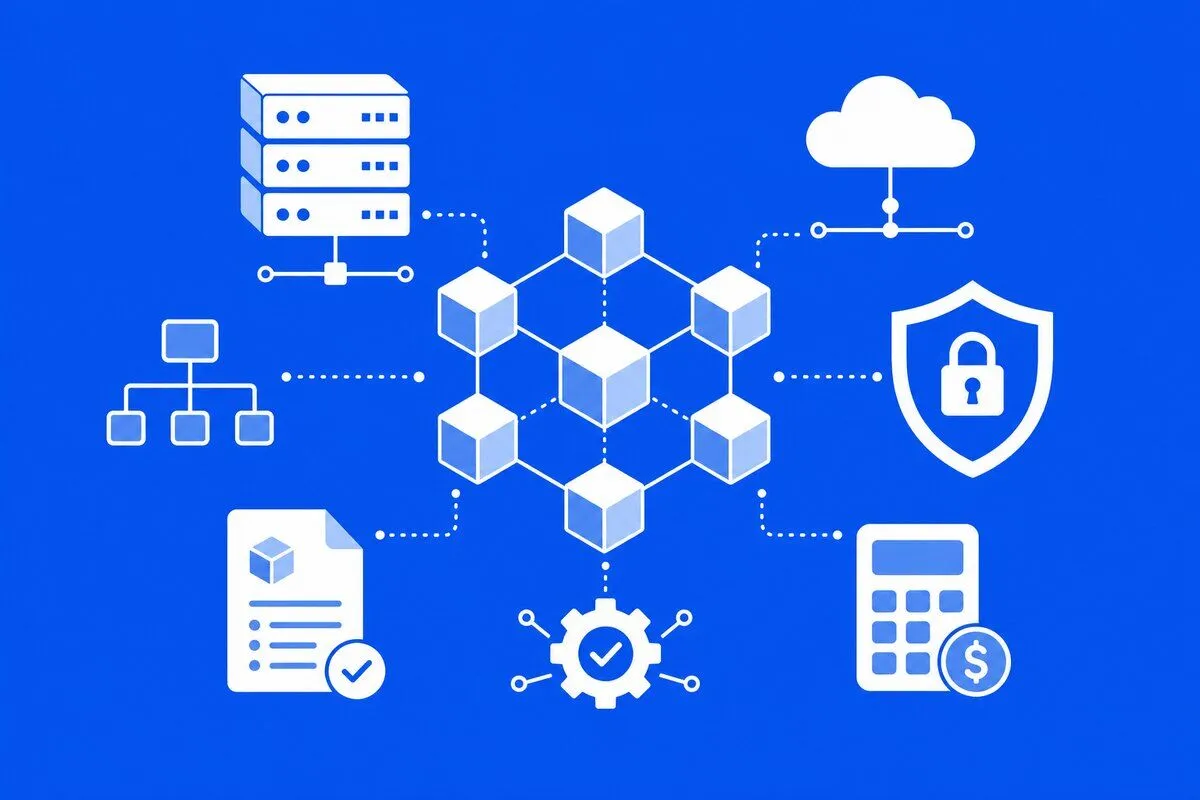
Traditional representative democracies concentrate decision-making power in elected officials who act as intermediaries between citizens and policy implementation, creating principal-agent problems and opportunities for corruption. Budget allocations release funds programmatically when spending criteria are met, regulatory compliance automatically verifies requirements through on-chain data, and benefit distribution processes without case-by-case human review.
Key Takeaways
- Blockchain based models enable trustless political governance through cryptographic verification, eliminating central authorities and creating mathematically verifiable democratic processes for public decision-making.
- Smart contract automation executes policy decisions autonomously based on predefined rules, removing human intermediaries and ensuring consistent, transparent implementation of collective choices.
- Decentralized Political Systems identity systems provide verifiable voter authentication while preserving privacy through zero-knowledge proofs, enabling secure participation without revealing personal information to central databases.
- Tokenized voting power creates new representation models where influence correlates with stake, expertise, or contribution rather than simple one-person-one-vote mechanisms.
- Cryptographic verification prevents electoral manipulation through hash-based ballot integrity, distributed validation, and immutable record-keeping that makes fraud mathematically detectable.
- DAO-based institutions demonstrate algorithmic governance at scale, managing billions in assets through community voting without traditional corporate structures or centralized leadership.
- Quadratic voting mechanisms improve collective decision quality by preventing plutocracy while allowing expression of preference intensity through mathematical vote weighting.
- Cross-border governance becomes feasible through permissionless blockchain networks, enabling global coordination without territorial constraints or traditional diplomatic frameworks.
- Legal recognition challenges persist as blockchain based models conflict with constitutional requirements, regulatory frameworks, and jurisdictional boundaries across USA, UK, UAE, and Canada.
- Scalability constraints limit immediate nationwide deployment, though layer-2 solutions and hybrid architectures show promise for scaling blockchain governance to millions of participants.
The convergence of political theory and cryptographic innovation creates unprecedented opportunities for reimagining governance Decentralized Political Systems through blockchain based models. Traditional democratic institutions face persistent challenges including voter manipulation, centralized power concentration, opaque decision-making processes, and limited citizen participation beyond periodic elections. Blockchain based models address these fundamental limitations by introducing trustless coordination, cryptographic verification, and automated policy execution that operate without requiring faith in central authorities or intermediary institutions. As organizations across USA, UK, UAE, and Canadian markets explore Decentralized Political Systems autonomous organizations for corporate governance, these same principles scale to political systems where transparency, auditability, and resistance to manipulation become paramount. Understanding how blockchain based models transform political infrastructure requires examining the technical architectures, economic mechanisms, and social implications of governance Decentralized Political Systems built on distributed ledger foundations rather than traditional institutional hierarchies.
Blockchain Governance Models Beyond Traditional Democratic Frameworks
Blockchain based models fundamentally reconceptualize democratic governance by replacing trust in institutions with trust in mathematics and cryptographic verification, enabled by advanced blockchain development services that ensure transparency and automation in decision-making systems. Traditional representative democracies concentrate decision-making power in elected officials who act as intermediaries between citizens and policy implementation, creating principal-agent problems and opportunities for corruption. Blockchain based models enable direct participation where citizens vote on specific proposals through cryptographically secured transactions, with smart contracts automatically executing approved policies without human intervention. This architectural shift eliminates intermediary layers while introducing new challenges around information asymmetry, voter engagement, and decision complexity. The Blockchain Technology foundation provides immutable audit trails where every vote, proposal, and implementation becomes permanently recorded, creating unprecedented transparency but also raising privacy concerns for sensitive political decisions.
Governance models built on blockchain infrastructure demonstrate diverse approaches from liquid democracy where voting power delegates fluidly between representatives, to futarchy where prediction markets determine policy based on outcome forecasting. Token-weighted voting assigns influence proportional to stake held, similar to shareholder governance but raising concerns about plutocracy. Reputation-based Decentralized Political Systems grant voting power based on historical contribution or expertise, creating meritocratic elements within democratic structures. Quadratic voting mechanisms allow voters to express preference intensity while preventing wealthy participants from dominating decisions through mathematical constraints. Each model addresses different governance challenges while introducing unique tradeoffs between efficiency, fairness, and resistance to manipulation. Experiments across Dubai innovation districts, Toronto municipal pilots, and UK local councils provide real-world data on how these theoretical models perform under actual political conditions with diverse stakeholder interests and varying levels of technical sophistication.
Trustless Public Decision Making Through On-Chain Decentralized Political Systems
Trustless decision-making represents the philosophical core of blockchain based models, removing dependence on individual honesty or institutional integrity by replacing human discretion with cryptographic protocols. Traditional political Decentralized Political Systems require citizens to trust election officials count votes accurately, legislators faithfully represent constituents, and bureaucrats implement policies as intended. Each trust assumption creates manipulation opportunities and accountability gaps where corruption, incompetence, or bias distort intended outcomes. Blockchain based models eliminate these trust requirements through transparent, verifiable processes where mathematical proofs replace institutional promises. Every vote submission generates cryptographic signatures enabling independent verification without revealing voter identity. Consensus mechanisms require multiple independent validators to confirm vote validity before recording, making fraudulent vote injection infeasible without coordinating majority control.
The shift from trust-based to trustless Decentralized Political Systems fundamentally alters power dynamics in political relationships. Citizens no longer depend on institutional goodwill but instead rely on mathematical guarantees enforced through distributed validation. This transformation particularly benefits marginalized populations historically excluded from fair participation through discriminatory practices or institutional bias. Cryptographic verification treats all votes identically regardless of voter identity, creating mathematical equality unavailable in human-mediated Decentralized Political Systems. However, trustless systems introduce new dependencies on technical infrastructure, protocol designers, and validator economics that may recreate power imbalances in different forms. The requirement for technical literacy to verify Decentralized Political Systems integrity potentially excludes non-technical populations from meaningful oversight. Organizations across New York financial districts, London governance labs, and Dubai smart city initiatives balance trustless ideals against practical accessibility requirements for diverse citizen populations with varying technical capabilities and digital access levels.
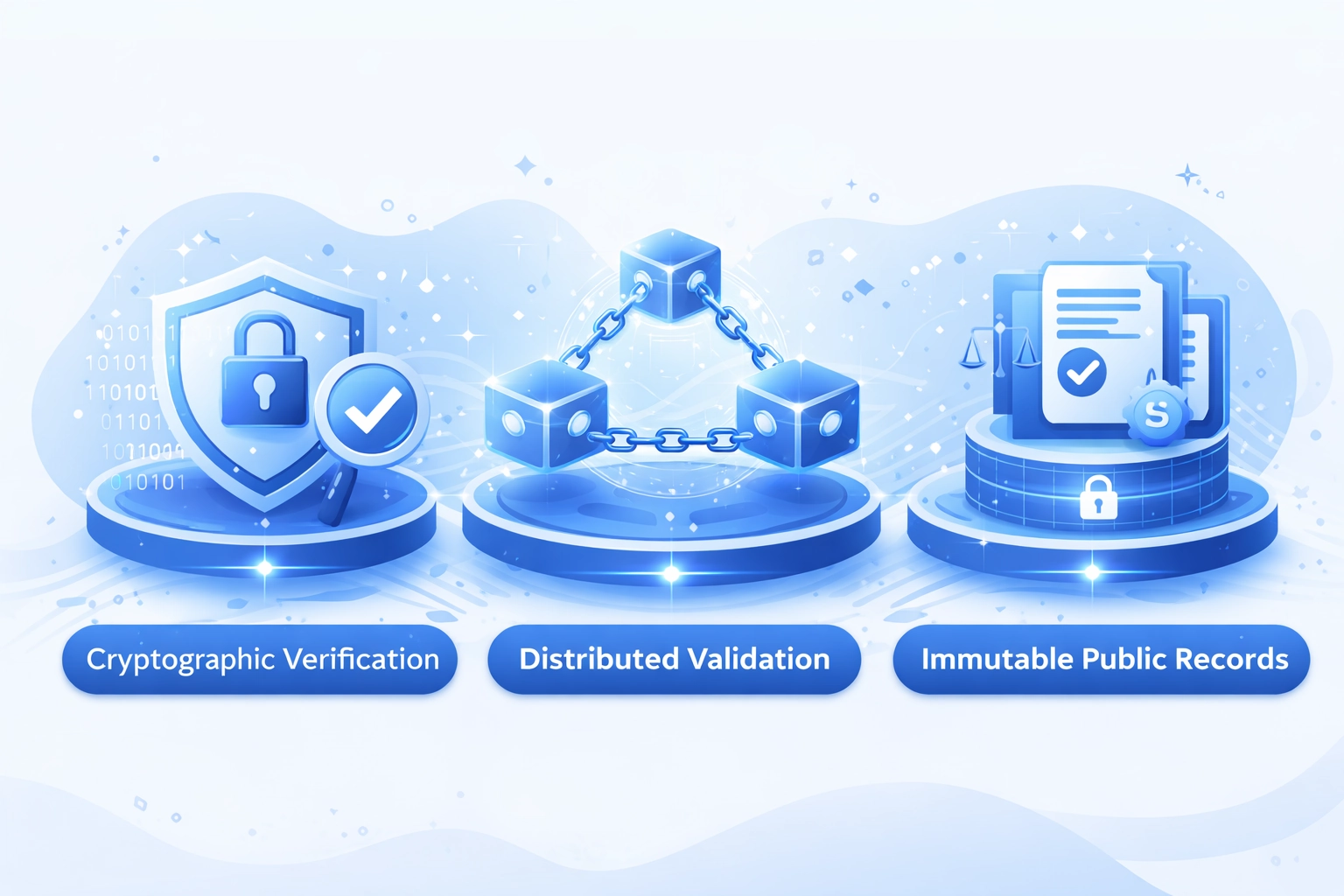 Core Components of Trustless Political Infrastructure
Cryptographic Verification
Digital signatures and hash functions create mathematical proofs of vote authenticity that independent parties can verify without accessing sensitive voter data.
Distributed Validation
Multiple independent nodes must reach consensus before recording votes, eliminating single points of control that enable undetected manipulation.
Immutable Public Records
Blockchain’s append-only structure prevents retroactive alteration of recorded votes, creating permanent audit trails for electoral verification.
Smart Contract Driven Policy Execution Without Central Authorities
Smart contracts transform policy implementation from discretionary bureaucratic processes into deterministic automated execution that operates according to predefined rules without human intervention. Traditional governance separates legislative decision-making from administrative implementation, creating opportunities for policy distortion through bureaucratic interpretation, resource allocation politics, or implementation delays. Blockchain based models encode policy logic directly into smart contracts that execute automatically when trigger conditions occur, removing administrative discretion while ensuring consistent application. Budget allocations release funds programmatically when spending criteria are met, regulatory compliance automatically verifies requirements through on-chain data, and benefit distribution processes without case-by-case human review. This automation dramatically reduces administrative overhead while increasing transparency as all implementation actions become publicly auditable on-chain transactions.[1]
However, smart contract governance introduces rigidity that conflicts with the adaptive flexibility required for complex policy domains. Code cannot capture nuanced judgment required for exceptional circumstances, ambiguous situations, or evolving social conditions. Bugs in smart contract implementation become policy errors affecting real citizens, with blockchain immutability preventing simple corrections. The requirement to specify all policy logic explicitly before deployment favors clear, quantifiable regulations over nuanced qualitative standards requiring case-by-case evaluation. These limitations push smart contract governance toward domains with well-defined rules and measurable outcomes like treasury management, infrastructure spending, or regulatory compliance verification. More complex policy areas involving subjective judgment, emergency response, or rapidly changing conditions may require hybrid models combining smart contract automation with human oversight mechanisms. Pilot programs across Canadian municipalities, UK boroughs, and UAE free zones demonstrate which governance functions benefit from automation versus those requiring maintained human discretion for effective implementation.
Decentralized Political Systems Identity Systems for Verifiable and Private Voter Access
Decentralized Political Systems identity systems solve the fundamental tension between voter verification and ballot secrecy by enabling cryptographic proof of eligibility without revealing identifying information to central databases. Traditional voter registration creates comprehensive databases linking identities to voting records, creating privacy risks and potential surveillance tools for authoritarian regimes. Blockchain based models implement zero-knowledge proofs where voters demonstrate eligibility characteristics without exposing underlying personal data. Self-sovereign identity wallets store credentials locally on user devices rather than central servers, with cryptographic signatures proving authenticity without central verification. Selective disclosure enables sharing only necessary attributes for specific verification tasks, such as proving age eligibility without revealing exact birthdate or address.
Implementation challenges include establishing trusted identity issuance processes that prevent fraud while maintaining decentralization, managing credential revocation when eligibility changes, and ensuring accessibility for non-technical populations unfamiliar with cryptographic key management. Lost private keys result in permanent vote access loss without recovery mechanisms available in centralized Decentralized Political Systems. The requirement for digital literacy and device access creates potential disenfranchisement for elderly, poor, or technologically isolated populations. Hybrid approaches combining Decentralized Political Systems identity verification with traditional accessibility safeguards may provide pathways toward inclusive deployment. Organizations across USA voter registration Decentralized Political Systems, UK electoral commissions, and Dubai digital identity initiatives pilot various models balancing security, privacy, and accessibility requirements for diverse population segments with different technical capabilities and privacy preferences.
Tokenized Voting Power and Its Impact on Political Representation
Tokenized voting power introduces market-based and stake-based mechanisms for political influence allocation that fundamentally challenge one-person-one-vote democratic principles. Blockchain based models can assign voting tokens based on financial stake in outcomes, demonstrated expertise in relevant domains, historical contribution to community, or continuous participation in governance processes. Token-weighted voting ensures those with greatest stake in outcomes hold proportional influence, similar to corporate shareholder governance but applied to public policy domains. Reputation tokens reward consistent participation and quality contributions, creating meritocratic elements within democratic frameworks. Delegated tokens enable liquid democracy where voting power flows to trusted representatives who can further delegate, creating flexible hierarchies based on earned trust rather than electoral cycles.
Critics identify significant risks including plutocracy where wealthy stakeholders dominate decisions, expertise centralization creating technocratic oligarchies, and reputation system gaming through coordinated manipulation. Token markets enable vote buying more explicitly than traditional influence peddling, though with greater transparency about power concentrations. The ability to sell or delegate voting tokens may improve decision quality by concentrating influence among engaged, informed participants, or may simply recreate existing power disparities in new technological forms. Quadratic voting mechanisms attempt to balance stake-based influence against democratic equality by making additional votes progressively more expensive, preventing outright plutocracy while allowing preference intensity expression. Real-world applications across DeFi protocol governance, NFT community decisions, and blockchain infrastructure management provide empirical evidence about how tokenized voting performs under various incentive structures and stakeholder compositions requiring ongoing evaluation and refinement.
Voting Power Distribution Models in Blockchain Governance
| Model Type | Power Allocation Basis | Advantages | Risks |
|---|---|---|---|
| One-Token-One-Vote | Equal power per participant | Democratic equality, simple implementation | Sybil attacks, disengaged voters |
| Stake-Weighted | Proportional to token holdings | Aligns incentives with outcomes, prevents spam | Plutocracy, wealth concentration |
| Reputation-Based | Earned through contribution history | Rewards expertise and engagement | Gaming systems, insider dominance |
| Quadratic Voting | Square root of allocated credits | Balances equality with intensity expression | Complex for voters, identity verification required |
| Delegated Liquid | Transferable to trusted representatives | Flexible participation, expert concentration | Vote buying, influence cartels |
Preventing Electoral Manipulation Using Cryptographic Verification
Cryptographic verification provides mathematical guarantees against electoral manipulation that physical security measures cannot match in traditional voting Decentralized Political Systems. Hash functions create unique digital fingerprints for each ballot that change unpredictably with any alteration, making fraudulent vote modification instantly detectable through fingerprint mismatch. Digital signatures bind votes to authorized voters through public-key cryptography, preventing ballot stuffing while maintaining secrecy through blind signature protocols. Homomorphic encryption enables vote tallying on encrypted ballots without decrypting individual votes, ensuring mathematical accuracy without exposing voter choices. Zero-knowledge proofs allow verification that votes satisfy eligibility requirements without revealing specific voter attributes or ballot contents. These cryptographic tools create layers of verification where manipulation requires breaking multiple independent mathematical protections simultaneously.
Implementation challenges include key management where voters must securely store private keys without losing access or allowing theft, quantum computing threats potentially breaking current cryptographic assumptions, and the complexity of cryptographic verification Decentralized Political Systems making public audit difficult for non-technical citizens. Side-channel attacks exploiting implementation details rather than mathematical weaknesses require careful engineering beyond cryptographic protocol design. The requirement for specialized knowledge to verify electoral integrity may create new expert dependencies replacing trust in institutions with trust in cryptographers and security auditors. However, blockchain based models offer transparency advantages where independent researchers can audit code and cryptographic implementation without institutional permission, enabling crowdsourced security verification. Organizations across USA cybersecurity firms, UK electoral technology vendors, and Dubai smart governance initiatives advance cryptographic voting protocols suitable for production deployment at municipal and national scales.
Blockchain Voting System Implementation Lifecycle
Identity Registration
Eligible voters register Decentralized Political Systems identities through verified credential issuance, establishing cryptographic proofs of eligibility without centralized databases.
Proposal Submission
Authorized participants submit governance proposals to blockchain with supporting documentation, triggering automated validation of submission requirements and format compliance.
Voting Period
Registered voters submit encrypted ballots through smart contract interfaces during defined voting windows, with cryptographic signatures preventing double-voting and unauthorized participation.
Vote Tallying
Smart contracts automatically count votes using homomorphic encryption or threshold decryption, ensuring mathematical accuracy without exposing individual ballot choices to any party.
Result Publication
Election outcomes publish to blockchain with cryptographic proofs of correct tallying, enabling independent verification by any party without trusting central authorities.
Policy Implementation
Approved proposals trigger automated smart contract execution for eligible policy domains, implementing decisions without bureaucratic intermediaries or execution delays.
Audit and Verification
Independent auditors verify electoral integrity through blockchain analysis, cryptographic proof checking, and statistical verification without requiring institutional access permissions.
Continuous Improvement
System operators analyze performance metrics, gather user feedback, and implement protocol upgrades through governance mechanisms, refining processes based on real-world experience.
DAO-Based Political Institutions and Algorithmic Governance Models
Decentralized Political Systems Autonomous Organizations demonstrate blockchain based models operating at scale, managing billions in assets through community governance without traditional corporate structures or centralized leadership. DAOs encode organizational rules in smart contracts that execute automatically based on member votes, creating organizations that operate according to transparent, immutable protocols rather than discretionary management. MakerDAO governs a stablecoin protocol managing over $5 billion through distributed voting on risk parameters, collateral types, and protocol upgrades. Uniswap DAO controls treasury funds and protocol fees through token-holder voting, distributing billions in value according to community decisions. These examples prove blockchain governance can coordinate complex economic activity across thousands of participants without central authorities, boardrooms, or executive hierarchies.
However, DAO governance faces challenges including low participation rates where most token holders ignore voting, concentrated power among large holders and active participants, and vulnerability to governance attacks through coordinated voting blocs. The requirement for continuous engagement to make informed decisions on complex protocol parameters creates practical barriers for most participants. Delegation mechanisms improve efficiency but recreate representative structures DAOs intended to avoid. Emergency response capabilities remain limited as on-chain governance cannot react faster than voting periods allow, requiring backup mechanisms for crisis management. Despite these limitations, DAOs provide empirical evidence about blockchain based models functioning under real economic incentives and diverse stakeholder interests. Lessons from DeFi governance inform political applications as organizations across Toronto, New York, and Dubai municipal governments evaluate DAO structures for participatory budgeting, infrastructure planning, and community decision-making requiring transparent, auditable processes resistant to administrative corruption.
Balancing Transparency and Privacy in On-Chain Civic Participation
Balancing transparency and privacy represents a fundamental tension in blockchain based models where public auditability conflicts with voter secrecy requirements essential for free democratic participation. Blockchain’s transparency enables any party to verify electoral integrity, track treasury spending, and audit policy implementation without institutional permission. However, complete transparency reveals voting patterns enabling coercion, vote buying, or social pressure against minority positions. Traditional secret ballots prevent these risks through physical anonymity that blockchain’s digital audit trails threaten. Zero-knowledge proofs provide technical solutions where voters prove ballot validity and eligibility without revealing vote content, maintaining transparency for aggregate results while preserving individual privacy. Ring signatures and mixing protocols obfuscate transaction origins, preventing vote tracking while enabling verification.
Implementation complexity and computational overhead of privacy-preserving cryptography create practical deployment challenges requiring careful protocol engineering and user experience design. The privacy-transparency balance varies across governance domains, with financial transparency essential for budget oversight while ballot secrecy protects political freedom. Blockchain based models can implement tiered privacy where vote totals publish publicly while individual votes remain encrypted, or delayed transparency where votes publish after elections conclude preventing coercion during voting periods. Selective disclosure enables sharing necessary information for specific verification purposes without full transparency. Organizations across USA municipalities experimenting with blockchain voting pilot hybrid approaches combining public transparency for aggregate outcomes with strong privacy for individual ballots, demonstrating feasibility of balanced implementations suitable for diverse governance applications requiring both accountability and participant protection.
Immutable Public Records for Legislation and Policy Amendments
Immutable public records transform legislative transparency by creating permanent, tamper-proof histories of policy proposals, voting records, and implementation actions that prevent retroactive revision or selective memory. Traditional legislative records maintain in physical archives or centralized databases vulnerable to alteration, loss, or selective editing that obscures historical decision contexts. Blockchain based models record every proposal, amendment, vote, and implementation step as on-chain transactions that cannot be removed or modified without detection. This creates comprehensive audit trails enabling citizens to verify how current policies evolved through specific votes and amendments traceable to individual participants. The transparency empowers accountability as legislators cannot deny previous positions or obscure voting records when facing constituent scrutiny.
However, immutability creates challenges for error correction, policy evolution, and the right to be forgotten under data protection regulations. Mistakes in legislative proposals or implementation code become permanent records requiring complex amendment processes rather than simple corrections. The inability to delete historical records conflicts with GDPR and similar privacy regulations granting individuals rights to data removal. Policy domains requiring confidentiality for diplomatic negotiations, security matters, or privacy-sensitive decisions may be incompatible with blockchain’s permanent transparency. Hybrid architectures combining immutable audit logs with encrypted or off-chain content storage provide potential solutions maintaining accountability while enabling necessary confidentiality. Organizations across UK Parliament, Canadian provincial legislatures, and Dubai municipal councils explore blockchain record-keeping for specific legislative functions demonstrating transparency benefits while identifying domains requiring maintained confidentiality or revision capabilities incompatible with pure blockchain immutability.
Quadratic Voting Mechanisms for Fairer Collective Decision Making
Quadratic voting mechanisms address fundamental limitations of both simple majority voting and stake-weighted governance by mathematically balancing democratic equality against preference intensity expression. Under quadratic voting, additional votes cost quadratically more credits, so the second vote costs four credits, the third costs nine, preventing wealthy participants from dominating outcomes through raw spending power while allowing voters to signal strong preferences on issues mattering most to them. This mechanism reduces tyranny of the majority where 51% impose outcomes on 49% despite weak preferences, while preventing plutocracy where wealth directly converts to political power. Blockchain based models implement quadratic voting through smart contracts that automatically enforce cost functions and credit distributions, ensuring mathematical fairness without trusted administrators.
Implementation challenges include identity verification preventing Sybil attacks where single actors create multiple accounts to circumvent quadratic costs, credit distribution determining how many base credits each participant receives, and voter comprehension as quadratic mechanisms prove more complex than simple voting. Optimal parameter selection for cost functions and credit allocations requires careful calibration based on community size, wealth distribution, and decision domains. Real-world experiments across Gitcoin grant allocations, Colorado state legislative pilots, and Taiwan digital democracy initiatives demonstrate quadratic voting improving funding decisions and policy priorities compared to simple voting or pure stake-weighted Decentralized Political Systems. The mechanism shows particular promise for resource allocation decisions like participatory budgeting, infrastructure priorities, and public goods funding where preference intensity varies significantly across participants requiring nuanced preference aggregation beyond binary yes-no voting.
Cross-Border Governance Enabled by Permissionless Blockchain Networks
Permissionless blockchain networks enable cross-border governance transcending traditional territorial sovereignty by allowing global participation in decision-making without geographical restrictions or diplomatic frameworks. Traditional international governance requires treaty negotiations, intergovernmental organizations, and complex diplomatic processes establishing authority across jurisdictions. Blockchain based models enable communities defined by shared interests rather than geography to coordinate through transparent protocols accessible to anyone with internet connection. Digital nomad communities, diaspora populations, and transnational advocacy groups can form governance structures managing shared resources or coordinating collective action without requiring recognition from territorial governments. This creates new political possibilities for issue-based communities, professional networks, and identity groups transcending national boundaries.
However, cross-border blockchain governance faces legal challenges as territorial governments claim jurisdiction over activities occurring within borders regardless of governance structures. Tax obligations, regulatory compliance, and legal enforcement remain tied to physical presence creating conflicts between blockchain governance and territorial law. The lack of physical enforcement mechanisms limits blockchain governance to domains where compliance occurs voluntarily or through economic incentives rather than coercive authority. Networks spanning USA, UK, UAE, and Canadian jurisdictions face complex regulatory arbitrage opportunities and compliance challenges as participants navigate multiple legal frameworks. Despite these limitations, blockchain enables new forms of voluntary association and collective coordination serving populations poorly represented by territorial governments, providing governance infrastructure for global communities requiring transparent, democratic decision-making without geographical restrictions or traditional diplomatic barriers to international cooperation.
Economic Incentives as Governance Tools in Decentralized Political Systems
Economic incentives provide powerful governance tools in blockchain based models where token rewards, penalties, and market mechanisms shape participant behavior without relying solely on legal authority or social norms. Staking requirements align validator interests with network health through slashing penalties for misbehavior, ensuring economic rationality supports honest participation. Bounty programs reward specific contributions to governance objectives like proposal creation, voting participation, or implementation verification. Token appreciation incentivizes long-term governance engagement as participants benefit financially from protocol success driven by quality decision-making. Fee structures create economic pressure toward efficient resource usage and spam prevention without centralized gatekeeping. These mechanisms harness economic rationality to achieve governance objectives, supplementing or replacing traditional legal authority with financial carrots and sticks.
Critics identify risks including plutocratic capture where wealthy participants manipulate incentive structures benefiting themselves, short-term thinking driven by price speculation overwhelming long-term governance quality, and moral hazard where participants optimize for rewards rather than genuine community benefit. The reduction of political participation to economic calculation may crowd out intrinsic motivation, civic duty, or ethical consideration underlying healthy democratic culture. Income inequality translates directly into governance inequality through economic incentive structures, potentially excluding economically marginalized populations from meaningful participation. However, well-designed incentive mechanisms successfully coordinate large-scale cooperation across diverse participants lacking shared cultural norms or legal frameworks. Organizations managing DeFi protocols, NFT communities, and infrastructure networks demonstrate economic incentives enabling functional governance at scale. The challenge lies in balancing economic efficiency against political values like equality, inclusion, and public-spirited participation requiring careful protocol design informed by political theory alongside economic mechanism design.
Economic Governance Mechanism Comparison
| Mechanism Type | Behavioral Target | Incentive Structure | Potential Drawbacks |
|---|---|---|---|
| Participation Rewards | Increase voting engagement | Token distribution for active voters | Uninformed voting for rewards |
| Slashing Penalties | Prevent malicious behavior | Stake confiscation for violations | False positives punish honest errors |
| Treasury Bounties | Encourage specific contributions | Payment for completed work | Quality assessment challenges |
| Fee Structures | Resource efficiency | Costs for actions and storage | Excludes economically disadvantaged |
| Token Appreciation | Long-term engagement | Value increase from protocol success | Speculation overwhelms governance |
Legal Recognition Challenges for Blockchain-Based Political Systems
Legal recognition challenges represent the most significant barriers to blockchain based models achieving mainstream political adoption as existing legal frameworks assume centralized authority, physical presence, and human decision-makers. Constitutional requirements for government organization, electoral procedures, and legislative processes conflict with distributed governance, algorithmic decision-making, and cryptographic verification replacing institutional intermediaries. Most legal Decentralized Political Systems lack frameworks for recognizing smart contract decisions as binding law, DAO structures as legitimate governing bodies, or cryptographic votes as legally valid ballots. The territorial nature of legal jurisdiction clashes with blockchain’s borderless architecture creating ambiguities about which laws apply to globally distributed governance Decentralized Political Systems.
Progressive jurisdictions across USA states like Wyoming and Colorado, UK experimental zones, and UAE innovation districts create regulatory sandboxes allowing limited blockchain governance experimentation under supervised conditions. These pilots test legal adaptations enabling recognition of blockchain voting, smart contract enforcement, and DAO legal personality within existing frameworks. However, scaling beyond sandboxes to comprehensive political adoption requires constitutional amendments, legislative reforms, and judicial precedent establishing blockchain governance as legitimate governmental structures. The slow pace of legal change relative to technological innovation creates extended periods where blockchain based models operate in legal gray areas, limiting institutional adoption and creating uncertainty for participants. Achieving legal recognition likely requires incremental progress starting with narrow applications like municipal participatory budgeting, expanding gradually as legal frameworks evolve and public trust builds through demonstrated success in limited contexts.
Mitigating Governance Attacks and Voter Collusion Risks
Governance attacks represent serious threats to blockchain based models where coordinated actors exploit protocol mechanisms to extract value or impose harmful policies despite minority support. Flash loan governance attacks temporarily borrow massive token quantities to swing votes before repaying loans, achieving voting power without actual stake. Vote buying markets enable wealthy actors to purchase voting power from disengaged token holders, concentrating influence beyond their genuine community participation. Bribery attacks pay voters to support specific outcomes regardless of voter preferences, undermining democratic legitimacy. Voter collusion coordinates blocks of participants to impose outcomes benefiting the cartel while harming broader community interests. These attacks exploit fundamental tensions between economic mechanisms and democratic values in blockchain governance.
Mitigation strategies include time-locked voting where tokens must be locked before proposal submission preventing flash loan attacks, minimum holding periods requiring sustained stake rather than temporary positions, voting commitment schemes where votes submit secretly and reveal simultaneously preventing later voters from seeing vote distribution, and quadratic mechanisms making vote buying economically inefficient. Reputation Decentralized Political Systems layer non-transferable credibility alongside transferable tokens, creating governance dimensions resistant to purchase. Multi-stage voting processes with deliberation periods between commitment and finalization prevent coordination on specific outcomes. However, sophisticated attackers continuously adapt to countermeasures requiring ongoing protocol evolution. Organizations across Toronto research labs, UK academic institutions, and USA think tanks study governance attack vectors and countermeasures, informing protocol designs that balance accessibility, efficiency, and attack resistance for production political deployments requiring resilience against adversarial manipulation.
Critical Governance Security Principles
Principle 1: Implement time-locked voting mechanisms preventing flash loan attacks by requiring sustained token commitment before proposal creation and throughout voting periods.
Principle 2: Design voting commitment schemes enabling secret ballot submission with simultaneous reveal, preventing vote coordination based on observed voting patterns.
Principle 3: Establish minimum holding period requirements for voting eligibility, ensuring participants maintain genuine stake rather than temporary positions.
Principle 4: Layer non-transferable reputation metrics alongside transferable tokens, creating governance dimensions resistant to direct purchase or market manipulation.
Principle 5: Monitor voting patterns for statistical anomalies indicating coordinated attacks, implementing automated alerts and manual review for suspicious activity.
Principle 6: Design multi-stage governance processes with deliberation periods between proposal submission and voting, enabling community analysis and defense preparation.
Principle 7: Implement emergency pause mechanisms enabling rapid response to detected attacks, with activation requiring supermajority support from trusted security council.
Principle 8: Conduct regular governance simulations testing protocol resistance to known attack vectors, updating security measures based on discovered vulnerabilities.
Scalability Constraints in Nationwide Blockchain Governance Platforms
Scalability constraints limit immediate deployment of blockchain based models for nationwide governance involving hundreds of millions of participants requiring simultaneous transaction processing. Current public blockchains handle thousands to tens of thousands of transactions per second, insufficient for concentrated voting periods where entire populations submit ballots within hours. Network congestion during peak periods increases transaction costs potentially excluding economically disadvantaged voters, and confirmation delays create uncertainty about vote submission success. The computational overhead of cryptographic verification limits throughput relative to traditional centralized databases that process millions of votes quickly. State bloat from accumulating historical voting records strains storage requirements as blockchain size grows indefinitely with continued usage.
Technical solutions include layer-2 rollups aggregating votes off-chain before submitting batched proofs to base layer, sharding partitioning the network across parallel chains processing votes simultaneously, and state channels enabling high-frequency voting without on-chain transactions for every ballot. Zero-knowledge proofs compress voting verification, reducing on-chain data requirements while maintaining cryptographic guarantees. However, these scaling solutions introduce complexity, additional trust assumptions, and potential security tradeoffs requiring careful engineering and extensive testing before production deployment. Hybrid architectures combining blockchain verification with traditional infrastructure may provide pragmatic paths toward scaled deployment, using blockchain for audit trails and cryptographic proofs while handling high-volume processing through optimized off-chain Decentralized Political Systems. Pilot deployments across Canadian provinces, UAE emirates, and USA municipalities test various scaling approaches identifying viable architectures for nationwide implementation as blockchain throughput continues improving through technological advancement.
Interoperable Governance Protocols for Multi-Jurisdiction Decentralized Political Systems
Interoperable governance protocols enable coordination across multiple blockchain based models serving different jurisdictions, communities, or policy domains through standardized communication and shared infrastructure. Cross-chain messaging protocols facilitate vote sharing, proposal synchronization, and coordinated decision-making between independent governance Decentralized Political Systems without requiring centralized coordination. Shared identity standards enable citizens to participate across multiple governance contexts using consistent credentials, reducing friction and enabling reputation portability. Interoperable treasury Decentralized Political Systems coordinate resource allocation across jurisdictions, enabling collaborative funding for shared infrastructure or regional initiatives. These protocols create governance infrastructure layers supporting diverse political implementations while enabling coordination when beneficial.
Implementation challenges include establishing governance for governance protocols themselves, managing conflicting decisions between independent Decentralized Political Systems, and preventing cascading failures where vulnerabilities in one Decentralized Political Systems compromise others through interoperability connections. The complexity of coordinating across heterogeneous implementations with different voting mechanisms, token standards, and security assumptions requires sophisticated protocol design and extensive testing. However, interoperability provides essential infrastructure for federated governance models where local autonomy combines with regional coordination, enabling subsidiarity principles where decisions occur at appropriate governance levels. Organizations across UK regional governments, Canadian federal-provincial relationships, and USA state-municipal coordination explore interoperable blockchain governance as infrastructure for multi-level democratic Decentralized Political Systems requiring both local autonomy and coordinated action on shared concerns.
Public Trust Formation Through Auditable Political Infrastructure
Public trust formation represents perhaps the greatest challenge for blockchain based models as technical solutions cannot substitute for social acceptance, political legitimacy, and cultural adaptation to new governance paradigms. Traditional democratic institutions build trust through centuries of gradual evolution, constitutional stability, and demonstrated peaceful power transitions creating social capital that blockchain Decentralized Political Systems lack. The mathematical verifiability of blockchain governance provides transparency advantages but requires technical literacy to appreciate, potentially excluding non-technical populations from meaningful oversight. Media narratives associating blockchain with speculation, fraud, and instability undermine public confidence in governance applications. Cultural resistance to algorithmic decision-making and mistrust of technological solutionism create adoption barriers beyond technical capabilities.
Building trust requires incremental deployment starting with low-stakes applications demonstrating reliability before expanding to critical governance functions, extensive public education explaining how blockchain governance works and why it matters, and hybrid implementations combining blockchain verification with familiar institutional safeguards during transition periods. Success stories from early adopters across Dubai smart city initiatives, Colorado participatory budgeting, and UK local council experiments provide evidence supporting broader adoption. Transparency alone proves insufficient without accessibility, as complicated Decentralized Political Systems few understand generate suspicion rather than confidence. The path to mainstream political adoption likely requires decades of gradual expansion, technological maturation, generational shifts in technical literacy, and accumulated evidence of superior outcomes relative to traditional approaches. Blockchain based models may achieve adoption less through revolutionary replacement than through incremental integration into existing political infrastructure, creating hybrid systems combining blockchain’s verification advantages with traditional institutions’ social legitimacy and operational experience.
Future Political Systems Shaped by Decentralized Political Systems Autonomous States
Future political Decentralized Political Systems shaped by blockchain based models may fundamentally reconceptualize statehood, sovereignty, and political organization beyond territorial nation-states that dominated the past centuries. Decentralized Political Systems autonomous states could provide governance services to globally distributed populations defined by shared values, professional networks, or identity characteristics rather than geographic proximity. Cloud nations offer citizenship through voluntary association rather than birthplace, with blockchain governance coordinating collective action and resource allocation without physical territory. Network states aggregate participants through digital infrastructure before establishing physical presence, inverting traditional state formation sequences. These speculative futures extrapolate current blockchain governance experiments toward radically different political organizations challenging Westphalian sovereignty assumptions.
However, significant barriers separate current reality from these visions including the dependence of blockchain Decentralized Political Systems on physical infrastructure vulnerable to territorial authority, the difficulty of enforcing decisions without coercive power monopoly characteristic of traditional states, and the challenges of providing comprehensive governance services beyond narrow digital coordination. Physical security, resource distribution, and infrastructure provision remain tied to territory and traditional authority. The question becomes not whether blockchain entirely replaces territorial states but how blockchain based models integrate into existing political ecosystems, creating new governance options alongside rather than instead of traditional institutions. Organizations across think tanks in USA, UK universities, Canadian policy institutes, and Dubai innovation labs explore these futures through research, experimentation, and dialogue with policymakers. The Decentralized Political Systems emerging from blockchain innovation likely combine elements of traditional and Decentralized Political Systems governance, creating hybrid structures leveraging blockchain’s transparency and verification advantages while maintaining institutional capacity developed through centuries of statecraft evolution.
Transform Governance With Blockchain Infrastructure
Partner with our blockchain specialists to design and deploy secure, transparent governance Decentralized Political Systems leveraging cryptographic verification and smart contract automation.
Frequently Asked Questions
Q1.1. What are blockchain based models for political governance?
Blockchain based models for political governance utilize distributed ledger technology to create trustless, transparent Decentralized Political Systems for public decision-making without centralized authorities. These models implement smart contracts for automated policy execution, cryptographic voting mechanisms ensuring electoral integrity, and immutable public records of all governmental actions. Unlike traditional Decentralized Political Systems requiring intermediary institutions, blockchain based models enable direct citizen participation through verifiable on-chain transactions. The technology provides mathematical guarantees of vote accuracy, prevents manipulation through cryptographic verification, and creates auditable trails of legislative processes. Organizations across USA, UK, UAE, and Canada increasingly explore these models for municipal governance, corporate decision-making, and community coordination requiring transparent, tamper-proof democratic infrastructure.
Q2.2. How do blockchain based models prevent electoral fraud?
Blockchain based models prevent electoral fraud through cryptographic verification, immutable record-keeping, and decentralized validation that eliminate single points of manipulation. Each vote becomes a cryptographically signed transaction recorded across distributed nodes, making retroactive alteration mathematically infeasible without detection. Hash functions create unique fingerprints for ballots, enabling verification without revealing voter identity. Consensus mechanisms require multiple independent validators to confirm vote submissions, preventing fraudulent injection of fake ballots. Time-stamped blockchain entries create irrefutable evidence of when votes were cast, eliminating ballot stuffing or late manipulation. Smart contracts automatically enforce voting rules, preventing double-voting or unauthorized participation. The transparent yet pseudonymous nature allows public verification of aggregate results while maintaining individual ballot secrecy.
Q3.3. What is the difference between blockchain based models and traditional voting systems?
Blockchain based models differ fundamentally from traditional voting Decentralized Political Systems through decentralization, transparency, and cryptographic verification replacing centralized trust. Traditional systems depend on election officials, physical infrastructure, and institutional oversight creating single points of failure and manipulation opportunities. Blockchain based models distribute vote recording across thousands of nodes, requiring mathematical consensus rather than institutional trust. Traditional Decentralized Political Systems provide limited auditability with paper trails vulnerable to destruction or alteration, while blockchain creates permanent, cryptographically verified records accessible for public verification. Vote counting occurs automatically through smart contract execution rather than manual tabulation prone to errors. Traditional systems separate voter registration, ballot casting, and counting across different institutions, while blockchain based models integrate these functions into unified cryptographic protocols providing end-to-end verifiability.
Q4.4. Can blockchain based models scale to national elections?
Blockchain based models face significant scalability challenges for national elections involving hundreds of millions of voters requiring simultaneous transaction processing. Current public blockchains handle thousands of transactions per second, insufficient for concentrated voting periods where millions cast ballots within hours. Layer-2 solutions, sharding, and specialized consensus mechanisms improve throughput but introduce complexity and potential security tradeoffs. Network congestion during peak voting periods could delay transaction confirmations or increase costs, creating barriers to participation. However, hybrid approaches combining blockchain verification with off-chain vote aggregation show promise for scaling. Pilot programs in smaller jurisdictions across USA, Canada, and UAE municipalities demonstrate feasibility for local governance while identifying optimization paths. Future improvements in blockchain throughput, state channel technology, and zero-knowledge rollups may enable national-scale deployment.
Q5.5. What legal challenges do blockchain based models face for political systems?
Blockchain based models face substantial legal challenges including regulatory uncertainty, constitutional compliance, and jurisdictional conflicts across international frameworks. Most legal systems require physical presence, centralized authority, and human oversight incompatible with autonomous smart contract governance. Electoral laws mandate specific procedures for ballot security, voter verification, and recount mechanisms difficult to translate into blockchain protocols. Data protection regulations like GDPR conflict with blockchain’s immutability, as citizens may demand vote deletion impossible in distributed ledgers. Cross-border blockchain governance creates jurisdictional ambiguities where traditional territorial sovereignty concepts fail. Legal recognition of DAO decisions, smart contract enforceability, and digital identity credentials remains inconsistent across USA, UK, UAE, and Canadian legal frameworks. Constitutional amendments and new legislative frameworks will likely precede mainstream political adoption of blockchain based models.
Explore Services
Related Services
Reviewed by

Aman Vaths
Founder of Nadcab Labs
Aman Vaths is the Founder & CTO of Nadcab Labs, a global digital engineering company delivering enterprise-grade solutions across AI, Web3, Blockchain, Big Data, Cloud, Cybersecurity, and Modern Application Development. With deep technical leadership and product innovation experience, Aman has positioned Nadcab Labs as one of the most advanced engineering companies driving the next era of intelligent, secure, and scalable software systems. Under his leadership, Nadcab Labs has built 2,000+ global projects across sectors including fintech, banking, healthcare, real estate, logistics, gaming, manufacturing, and next-generation DePIN networks. Aman’s strength lies in architecting high-performance systems, end-to-end platform engineering, and designing enterprise solutions that operate at global scale.