Ai Overview
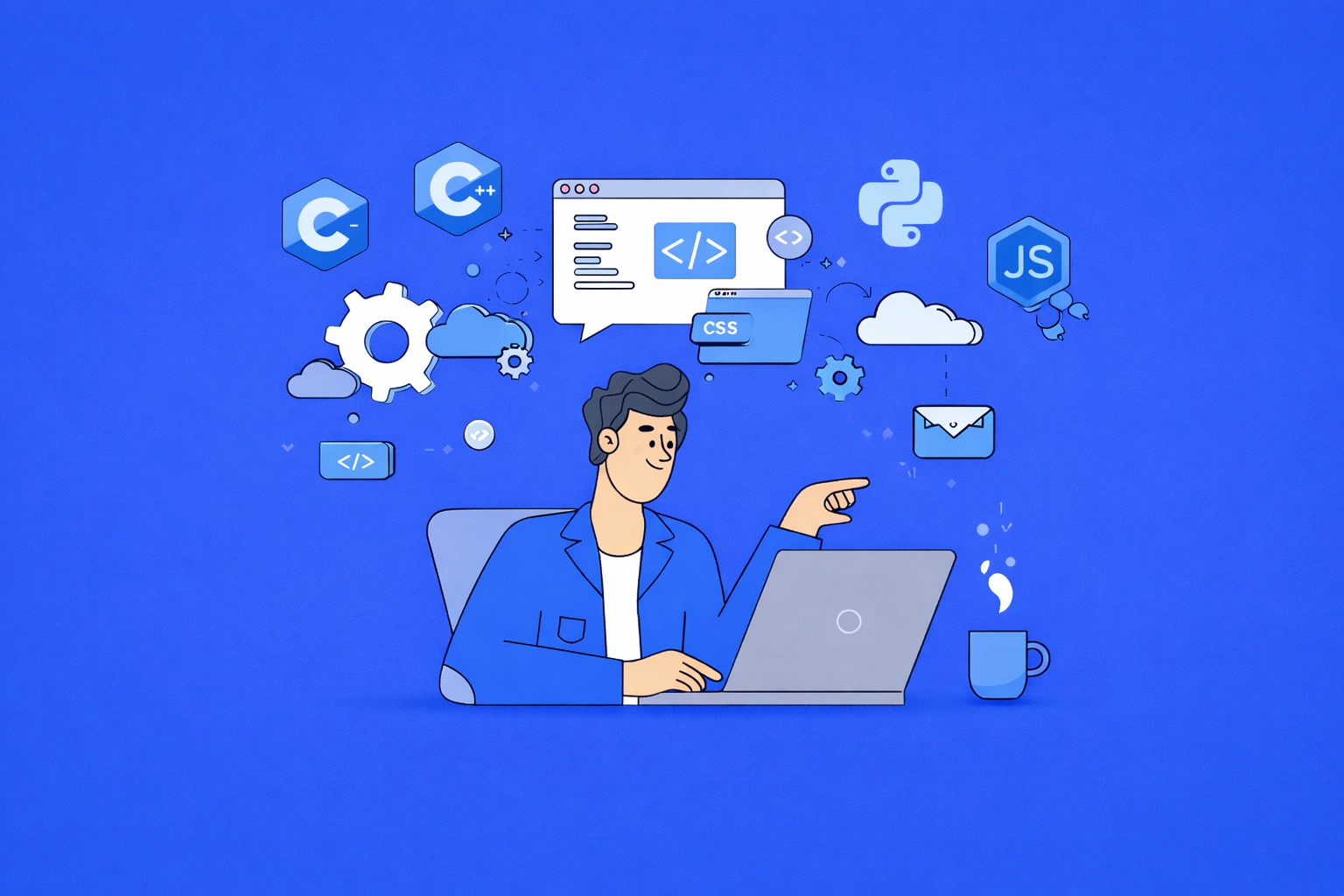
A software framework is a structured, reusable platform that provides a foundation upon which programmers can build applications more efficiently. Real-world example: a Canadian fintech startup that migrated its backend from custom PHP to Laravel reported a 45% reduction in production bug reports within the first quarter post-migration. Mitigating learning curve challenges requires intentional investment. Every abstraction layer a framework introduces comes with some performance cost.
Key Takeaways
- ✓ A software framework is a reusable, structured foundation that defines architecture and provides built-in tools to streamline application creation.
- ✓ Frameworks enforce inversion of control, calling developer code rather than being called by it, unlike standalone libraries.
- ✓ Major categories include frontend, backend, full-stack, and mobile application frameworks, each serving distinct layers of modern software architecture.
- ✓ Using a well-chosen software framework for developers reduces code duplication by up to 60%, accelerating project delivery timelines significantly.
- ✓ Popular software frameworks like React, Django, Spring Boot, and Flutter each have distinct strengths tailored to specific application types.
- ✓ Framework selection should be based on project scope, team expertise, community support, and long-term maintenance requirements.
- ✓ Enterprise clients across the USA and UK report that standardizing on proven frameworks improves team onboarding speed by over 40%.
- ✓ Challenges such as steep learning curves and performance overhead can be mitigated through phased adoption and targeted team training programs.
- ✓ Modern software architecture in UAE and Canada increasingly relies on multi-framework ecosystems combining frontend and backend frameworks for scalability.
- ✓ A software framework guide helps teams align technical decisions with business outcomes, ensuring sustainable, maintainable codebases at scale.
What is a Software Framework?
A software framework is a structured, reusable platform that provides a foundation upon which programmers can build applications more efficiently. Rather than starting from scratch for every new project, a framework offers pre-written code, standard protocols, and a defined architecture that handles common tasks such as routing, authentication, database interactions, and error handling. At its core, a software framework acts as a skeletal structure that shapes how code is written and organized.
What distinguishes a software framework from a simple library is the concept of inversion of control. When using a library, the programmer calls specific functions from it on demand. With a framework, the framework itself dictates the flow of control, calling into the programmer’s custom code at defined extension points. This architectural distinction fundamentally shapes how applications are structured and maintained over time, making frameworks a cornerstone of modern software architecture.
In practical terms, think of a software framework like the steel frame of a skyscraper. The frame determines the building’s shape, load-bearing structure, and constraints. Architects work within this framework to design unique interiors, but they do not rebuild the foundational steel for each floor. Similarly, an application development framework provides the scaffolding so teams can focus energy on building unique business features rather than repetitive infrastructure code.[1]
Why Frameworks Matter in Modern Development?
In today’s fast-paced engineering environments, shipping reliable software quickly is a competitive necessity. Frameworks matter because they encapsulate years of community knowledge, best practices, and security considerations into a single, ready-to-use package. Teams across the USA, UK, UAE, and Canada consistently report that adopting a proven software framework for developers dramatically reduces the number of architectural decisions made from scratch, freeing engineers to innovate rather than reinvent.
Beyond speed, frameworks bring consistency. When a team follows a shared framework, code written by one engineer is immediately understandable to another. This consistency reduces onboarding time, simplifies code reviews, and makes long-term maintenance significantly more manageable. For organizations scaling engineering teams rapidly, this shared language provided by a popular software framework is invaluable to maintaining quality and velocity simultaneously.
How Software Frameworks Work?
Understanding how a software framework works begins with recognizing its layered approach to abstraction. Frameworks sit between raw programming languages and the application logic that programmers write. They expose a set of APIs, hooks, and extension points that allow programmers to plug in custom logic while the framework handles the underlying mechanisms. This separation of concerns is the engine that makes frameworks so powerful for building complex applications at scale.
A practical example: when a web request reaches a Django-powered application, the framework automatically routes the request to the appropriate view function, handles session management, and processes middleware, all before the programmer’s custom view logic executes. The programmer writes only the business logic; the framework orchestrates everything else. This model is consistent across virtually all popular software frameworks, whether for web, mobile, or enterprise applications.
Core Structure of a Framework
Every software framework shares a common structural anatomy regardless of its specific purpose. At its foundation lies a set of core modules that handle universal concerns: configuration management, logging, dependency injection, and lifecycle management. Above these foundational modules sit domain-specific layers that address the particular problem space, such as HTTP routing for web frameworks or widget rendering for UI frameworks.
Extension points and hooks allow programmers to inject custom behavior at predefined locations within the framework’s execution flow. Convention-over-configuration principles reduce boilerplate by assuming sensible defaults, requiring programmers to specify only deviations from those defaults. This structure is what allows a software framework guide like this one to apply broadly across diverse framework types while still providing actionable technical insight for real-world projects.
Key Components and Architecture
Core Framework Components
Routing Engine
- Maps URLs to handler functions
- Supports parameterized routes
- Handles HTTP method differentiation
- Enables middleware injection per route
ORM / Data Layer
- Abstracts database queries into objects
- Handles migrations automatically
- Supports multiple database backends
- Enforces data validation at model level
Auth & Security
- Built-in CSRF protection
- Session and token management
- Role-based access control
- Secure password hashing utilities
Types of Software Frameworks
The ecosystem of available software frameworks is vast and diverse, organized primarily by the layer of the application stack they target. Understanding these categories is essential for any team undertaking a new project, as the wrong framework category will create friction regardless of implementation quality. Each type addresses a distinct set of engineering concerns and requires different expertise to leverage effectively.
Frontend Frameworks
Frontend frameworks govern how user interfaces are built in the browser. React, developed by Meta, pioneered the component-based model, where UI is decomposed into reusable, stateful components. Vue.js offers a gentler learning curve while maintaining powerful reactivity. Angular, backed by Google, provides an opinionated full framework experience with TypeScript at its core. These popular software frameworks are deployed across e-commerce platforms, SaaS dashboards, and enterprise portals worldwide.
In the UK and USA, React commands the largest market share among frontend frameworks, particularly in fintech and media companies. Frontend frameworks handle DOM manipulation, state management, routing in single-page applications, and often include build tool integration. Selecting the right frontend framework directly impacts user experience quality, page load performance, and the long-term maintainability of the client-side codebase.
Backend Frameworks
Backend frameworks manage server-side logic, database interactions, authentication, and API design. Django (Python) is celebrated for its “batteries included” philosophy, shipping with an ORM, admin panel, and security features out of the box. Laravel (PHP) excels in rapid prototyping for web applications. Express.js (Node.js) is minimal and unopinionated, favored for microservices architectures. Spring Boot (Java) is the enterprise standard across the USA and Canada for large-scale system construction.
Backend frameworks define how applications handle incoming requests, interact with databases, enforce business rules, and return responses. They typically include tools for API versioning, background job processing, caching integration, and deployment configuration. Choosing the right backend framework has significant implications for server resource consumption, API response times, and the ease with which new services can be added as a system scales over time.
Full-Stack Frameworks
Full-stack frameworks unify frontend and backend concerns within a single, cohesive tool. Next.js (React-based) enables server-side rendering, static generation, and API routes in one framework. Nuxt.js provides similar capabilities for Vue. Ruby on Rails pioneered the full-stack approach with its convention-over-configuration philosophy and remains a popular software framework for startups and product companies globally. These frameworks minimize context-switching between different environments, reducing cognitive load for engineering teams.
In markets like the UAE, where tech startups need to move quickly from concept to market, full-stack frameworks are particularly appealing. They reduce the number of tools and configurations teams must maintain, while still offering the flexibility needed to build sophisticated applications. The shared language and data models between frontend and backend within one framework can reduce integration bugs and improve overall system coherence.
Mobile Application Frameworks
Mobile application frameworks enable programmers to build apps for iOS and Android from a single codebase. Flutter, Google’s framework using the Dart language, compiles to native code and offers pixel-perfect UI across platforms. React Native allows JavaScript programmers to build mobile applications using familiar React paradigms. Xamarin (now .NET MAUI) serves the Microsoft ecosystem. In Canada and the UK, mobile framework selection often hinges on the existing team’s language expertise and the desired level of native platform integration.
Key Features of Software Frameworks
The defining characteristics that distinguish a mature software framework from a simple code collection are its breadth of built-in features, the quality of its abstractions, and the ecosystem that surrounds it. Understanding these features helps engineering teams evaluate whether a candidate framework will meet both current and future project requirements, particularly as applications grow in complexity and user load.
Reusable Code Structure
The fundamental value proposition of any software framework is its reusable code structure. Frameworks provide pre-built modules for common tasks that would otherwise need to be reimplemented in every project. Authentication systems, form validation logic, email utilities, pagination handlers, and caching layers are examples of components that mature frameworks provide as ready-to-use, well-tested modules. This reuse is not merely convenient; it is safer, since framework-provided code has been vetted by thousands of contributors and users in production environments.
Beyond individual modules, frameworks enable code reuse at the architectural level. Component-based frameworks like React encourage building small, focused UI pieces that can be composed into complex interfaces and reused across different screens. This compositional model aligns with the software architecture principles of high cohesion and low coupling, producing codebases that are modular, testable, and easier to refactor as business requirements evolve.
Built-in Tools and Libraries
Built-in tools dramatically reduce the time spent on project configuration and setup. Modern frameworks ship with command-line interfaces for scaffolding new projects, generating boilerplate code, and running database migrations. Testing suites, linting configurations, build pipelines, and hot-reloading tools are often included or tightly integrated. This rich tooling ecosystem is a major reason why popular software frameworks consistently top developer satisfaction surveys globally.
Scalability and Flexibility
Enterprise-grade software frameworks are designed with scalability as a first-class concern. They support patterns such as microservices decomposition, horizontal scaling, load balancing integration, and asynchronous task processing. Spring Boot in Java is a prime example, widely used by large financial institutions in the USA and Canada to run high-throughput transaction systems. Simultaneously, frameworks must offer flexibility, allowing teams to swap out default components for specialized solutions when default implementations do not meet performance requirements.
Benefits of Using Software Frameworks
The business and technical case for adopting a software framework is compelling across virtually every project type and scale. Organizations that strategically select and implement the right application development framework consistently outperform those building purely custom solutions in terms of delivery speed, code quality, and long-term maintenance costs. Below we examine the three primary benefits that our team has observed across eight-plus years of client engagements.
Faster Development Process
Speed is the most immediately visible benefit of using a software framework. Scaffolding tools generate project structures, routing configurations, and database models in minutes rather than hours. Pre-built authentication modules eliminate weeks of security-critical coding. Templating engines render data-driven UIs with minimal code. A project that might take six months to build from scratch can reach production in eight to ten weeks with the right framework, a difference that is commercially significant in competitive markets from London to Dubai.
This acceleration is compounded by the quality of documentation and community resources surrounding popular software frameworks. Stack Overflow answers, video tutorials, official documentation, and third-party plugins mean that most implementation questions are already answered. Programmers rarely hit dead ends; instead, they find multiple community-vetted solutions and can implement the best fit for their context quickly, maintaining momentum throughout the project lifecycle.
Improved Code Quality
Frameworks inherently improve code quality by enforcing consistent patterns and discouraging anti-patterns. When all team members follow the same framework conventions, code reviews become more focused on logic than style. Junior programmers write more maintainable code because the framework guides them toward established best practices. Well-structured, framework-compliant code is also significantly easier to test, an important consideration for enterprises in the UK and USA where automated testing coverage is a governance requirement.
Real-world example: a Canadian fintech startup that migrated its backend from custom PHP to Laravel reported a 45% reduction in production bug reports within the first quarter post-migration. The framework enforced input validation, structured error handling, and proper separation of concerns that the previous codebase lacked. This quality improvement translated directly into reduced customer support costs and higher user retention rates across their platform.
Enhanced Security
Security is one of the most compelling reasons to adopt a reputable software framework. Mature frameworks have dedicated security teams and community contributors who identify and patch vulnerabilities rapidly. They provide built-in protection against the OWASP Top 10 threats, including SQL injection, XSS, CSRF, and insecure deserialization. For enterprises in regulated industries across the USA, UK, and UAE, using a framework with a strong security track record is often a compliance requirement, not merely a best practice.
Popular Software Framework Examples
Examining real-world popular software frameworks provides concrete grounding for the theoretical concepts discussed above. Each of the frameworks below has achieved widespread adoption because it solves a specific category of problems exceptionally well, backed by active communities and strong documentation. These are the frameworks our team most frequently recommends to clients across our global engagements, depending on project requirements.
Web Development Frameworks
Web application frameworks span both frontend and backend domains and are the most actively discussed category in the software framework guide landscape. React transformed frontend engineering with its virtual DOM and component model. Django, inspired by the DRY (Don’t Repeat Yourself) principle, remains the gold standard for Python web applications. Express.js powers millions of Node.js APIs globally. The table below summarizes key attributes of leading web frameworks to support informed selection decisions.
| Framework | Language | Type | Best For | GitHub Stars |
|---|---|---|---|---|
| React | JavaScript | Frontend | SPAs, dashboards, UI components | 220K+ |
| Django | Python | Backend | Rapid API and web app creation | 78K+ |
| Next.js | JavaScript | Full-Stack | SSR, SSG, hybrid web apps | 125K+ |
| Laravel | PHP | Backend | CMS, e-commerce, SaaS | 76K+ |
| Spring Boot | Java | Backend | Enterprise microservices, APIs | 74K+ |
Mobile Development Frameworks
Mobile application frameworks have redefined how consumer and enterprise apps are built, allowing teams to target both iOS and Android from a single codebase. Flutter has emerged as a dominant force, particularly popular in UAE and Canada tech ecosystems for its performance and expressive UI toolkit. React Native remains the choice for teams with strong JavaScript expertise. The table below compares the leading mobile application frameworks across key decision criteria.
| Framework | Language | Performance | Learning Curve | Community |
|---|---|---|---|---|
| Flutter | Dart | Excellent (native) | Moderate | Large & growing |
| React Native | JavaScript | Good (bridge) | Low (for JS devs) | Very large |
| .NET MAUI | C# | Good (native) | Moderate | Medium |
| Ionic | JS/TS | Moderate (web) | Low | Large |
Software Framework vs Library
One of the most frequently misunderstood distinctions in software architecture is the difference between a framework and a library. Both are collections of pre-written code designed to help programmers accomplish tasks more efficiently, but they differ fundamentally in how they interact with the programmer’s code and how much control they exert over application structure. Clarifying this distinction is essential for making sound architectural decisions at the outset of any project.
- Framework calls your code (IoC)
- Defines application structure
- Opinionated about architecture
- Higher abstraction level
- Requires adherence to conventions
- Example: Angular, Django, Rails
- Your code calls the library
- Does not impose structure
- Unopinionated, flexible
- Lower abstraction level
- Optional integration, modular
- Example: Lodash, Axios, Moment.js
When to Use Each
Choose a software framework when you are building a complete application from the ground up and want enforced structure, integrated tooling, and a defined architecture from the start. Frameworks excel in team environments where consistency across many engineers is critical, and in long-term projects where maintainability and scalability are priorities. Enterprise projects in sectors like banking, healthcare, and e-commerce in the USA and UK almost universally benefit from full frameworks.
Choose a library when you need to add specific functionality to an existing codebase without introducing a new structural paradigm. Libraries are ideal for utility functions, data manipulation, and solving narrow, well-defined problems. Many experienced teams use both strategically: a framework for overall structure combined with specialized libraries for specific tasks the framework does not address optimally, creating a best-of-both-worlds software architecture.
How to Choose the Right Software Framework?
Selecting the right software framework is among the most consequential decisions in any project’s lifecycle. A wrong choice early can result in performance bottlenecks, recruitment difficulties, high training costs, and technical debt that compounds over years. Over eight years of client work across the USA, UK, UAE, and Canada, our team has refined a clear evaluation process that balances technical requirements with business realities.
Framework Model Selection Criteria
Step 1: Define Requirements First
Document your application’s core functional and non-functional requirements before evaluating any framework. Identify expected user load, required integrations, real-time data needs, and compliance constraints. Requirements should drive framework selection, not market trends or personal preference.
Step 2: Assess Team and Ecosystem Fit
Evaluate your team’s existing language expertise, the size of the framework’s talent pool in your region, and the quality of available third-party plugins and integrations. A technically superior framework that no one on your team knows can result in slower delivery than a proven alternative your team already understands well.
Step 3: Validate with a Proof of Concept
Before committing to a framework for a large project, build a small proof of concept that exercises your highest-risk requirements. This validates that the framework can handle your edge cases and provides your team with hands-on experience before the full investment is made. A one-week POC can prevent months of costly course correction later.
Project Requirements
Project requirements encompass both functional needs (what the application must do) and non-functional needs (how it must perform). A real-time chat application demands a framework with excellent WebSocket support, such as Node.js with Socket.io. A data-intensive analytics platform benefits from Python’s ecosystem and Django or FastAPI. An e-commerce platform in the UK with complex inventory management may thrive on Magento’s PHP framework. Matching the framework to the specific problem domain prevents the friction of forcing the wrong tool for the task.
Developer Expertise
Team expertise is often the decisive factor in framework selection. A highly capable Python team can build more effective software faster with Django than a beginner team could with any framework. Assess your team’s proficiency not just in the programming language but in the specific paradigms the framework promotes. React’s functional component model with hooks is different enough from class-based OOP that even experienced programmers face a meaningful adjustment period. Honest capability assessment prevents overestimating how quickly teams will achieve productivity in an unfamiliar framework.
Community Support
Community support is a proxy for long-term viability. A framework with an active community receives regular security patches, consistent feature improvements, and a rich ecosystem of compatible plugins and tools. Stack Overflow activity, GitHub contribution frequency, conference presence, and corporate backing are all indicators of a healthy framework community. Frameworks with declining communities pose the risk of abandonment, leaving teams to maintain increasingly outdated dependencies. In enterprise contexts across the USA and UK, frameworks backed by major corporations like Google, Meta, or Microsoft typically offer the strongest community guarantees.
Framework Selection Compliance & Governance Checklist
| Criterion | Must Have | Notes |
|---|---|---|
| Active security patch releases | ✓ | Monthly or quarterly patch cadence required |
| OSI-approved open source license | ✓ | MIT, Apache 2.0, or BSD preferred |
| Documented CVE disclosure process | ✓ | Required for enterprise compliance |
| Long-term support (LTS) version | ✓ | Minimum 3-year support window |
| GDPR/CCPA compliant data handling | ✓ | Critical for EU/UK/Canada markets |
| Accessible community forum/support | ○ | Recommended but not mandatory |
Challenges of Using Software Frameworks
Despite the compelling benefits, software frameworks are not without drawbacks. An honest software framework guide must address these challenges candidly, as underestimating them can lead to project delays, team frustration, and suboptimal technical outcomes. Understanding these limitations proactively allows teams to plan mitigation strategies before they become critical problems.
Common Framework Challenges & Mitigations
Learning Curve
- Steep for opinionated frameworks
- New paradigms require mental shift
- Mitigation: Structured onboarding
- Pair programming with experts
Performance Overhead
- Abstraction layers add latency
- Bundle sizes can be large
- Mitigation: Code splitting, lazy loading
- Profile before premature optimization
Version Lock-in
- Breaking changes between versions
- Migration can be costly
- Mitigation: Follow LTS releases
- Maintain upgrade documentation
Learning Curve
The learning curve is the most immediate challenge teams face when adopting a new software framework. Frameworks like Angular impose a full paradigm including TypeScript, decorators, dependency injection, and a complex module system that can overwhelm programmers accustomed to simpler environments. Teams in the UAE tech sector who have recently expanded their engineering capacity with junior hires frequently cite framework complexity as a significant onboarding barrier that slows initial velocity considerably.
Mitigating learning curve challenges requires intentional investment. Structured training programs, internal mentoring, curated documentation libraries, and scheduled time for experimentation all help teams climb the learning curve more efficiently. Some organizations adopt a “framework champion” model, where one or two engineers become deep experts who coach the rest of the team and own architectural decisions, accelerating organizational knowledge transfer substantially.
Performance Limitations
Every abstraction layer a framework introduces comes with some performance cost. ORM queries may be less optimal than hand-crafted SQL. A full-stack framework’s server-side rendering process adds latency compared to raw HTML delivery. Frontend frameworks add JavaScript bundle weight that affects initial page load times. For applications where milliseconds matter, such as high-frequency trading platforms in the USA or real-time gaming applications, these costs demand careful measurement and optimization. The key is benchmarking actual performance under realistic load rather than assuming theoretical concerns are dealbreakers without evidence.
Final Thoughts
A software framework is far more than a productivity shortcut. It is a strategic technology decision that shapes the entire trajectory of an application, from initial architecture to long-term scalability, team culture, and maintenance cost. Understanding what a software framework is, how it works, the different types available, and how to evaluate candidates against real-world project needs is a foundational skill for any professional programmer operating in today’s competitive landscape.
Final Thoughts for Developers
The software framework landscape continues to evolve rapidly, with new entrants challenging established players and existing frameworks continuously improving. Staying current requires active engagement with the community, attending conferences, reading release notes, and experimenting with new versions in sandbox environments. The developers and teams who thrive are those who invest in understanding frameworks deeply rather than merely using them superficially.
Our experience working with organizations across the USA, UK, UAE, and Canada confirms that framework expertise is one of the highest-return investments an engineering team can make. Teams that choose wisely, train thoroughly, and adopt governance best practices consistently deliver better software faster than those who neglect framework strategy. Whether you are building your first application or scaling an enterprise platform, the principles in this software framework guide provide the foundation for making informed, confident framework decisions.
Remember: the best software framework is not the most popular one or the newest one. It is the one that best aligns with your requirements, your team’s skills, and your organization’s long-term technical vision. Take the time to evaluate thoughtfully, validate with evidence, and commit fully once a decision is made. That disciplined approach is what separates expert engineering teams from teams that perpetually struggle with technical debt and missed deadlines across every market and industry.
Ready to Build with the Right Framework?
Our team helps you select, implement, and scale the perfect software framework for your project. Get expert guidance today.
Frequently Asked Questions
Q1.What is a software framework in simple terms?
A software framework is a pre-built, reusable structure that provides a foundation for building applications. Think of it as a blueprint or scaffold that handles common tasks so programmers can focus on unique business logic. Popular frameworks like React, Django, and Spring follow established conventions, provide libraries, and define how code should be organized, significantly reducing the time and effort required to build robust, production-ready software applications from scratch.
Q2.What is the difference between a software framework and a library?
The key difference lies in control flow. With a library, your code calls the library’s functions whenever it needs them. With a framework, the framework calls your code, following what is known as the “inversion of control” principle. A library is a toolbox you pick from, while a framework is a structured environment you build within. Frameworks enforce architectural patterns; libraries are optional, modular utilities you integrate as needed into any project.
Q3.Why should developers use a software framework?
Developers use software frameworks because they dramatically speed up the application creation process by providing ready-made components, enforcing best practices, and reducing repetitive coding. Frameworks offer built-in security mechanisms, testing utilities, and scalability patterns. In competitive markets like the USA and UK, using frameworks ensures teams ship faster, maintain code consistency, and produce software that meets industry standards without reinventing solutions that have already been refined over years of community use.
Q4.What are the most popular software frameworks in 2024?
The most popular software frameworks in 2024 include React and Angular for frontend web applications, Node.js/Express and Django for backend services, Flutter and React Native for mobile applications, and Spring Boot for enterprise Java applications. In regions like the UAE and Canada, demand for full-stack frameworks such as Next.js and Nuxt.js has surged. Framework popularity varies by use case, team expertise, and industry requirements, making selection a critical strategic decision for any engineering team.
Q5.How do I choose the right software framework for my project?
Choosing the right software framework involves evaluating several factors: your project’s scope and scale, your team’s existing skills, the framework’s community size and long-term support, licensing requirements, and performance benchmarks relevant to your use case. Start by defining application requirements clearly, then research frameworks that address those needs. Proof-of-concept builds can help validate choices before full commitment. Enterprise projects in the UK and USA often prioritize frameworks with strong vendor support and compliance documentation.
Q6.What are the main types of software frameworks?
Software frameworks are broadly categorized into frontend frameworks (React, Vue, Angular), backend frameworks (Django, Laravel, Express), full-stack frameworks (Next.js, Nuxt.js, Ruby on Rails), mobile application frameworks (Flutter, React Native, Xamarin), and testing frameworks (Jest, Selenium, PyTest). Each category serves a specific layer of the application stack. Organizations building end-to-end solutions often combine multiple framework types, selecting the best tool for each layer based on performance and maintainability requirements.
Q7.What are the challenges of using a software framework?
The main challenges of using a software framework include a steep learning curve for newcomers, potential performance overhead from abstraction layers, rigid opinionated structures that may not fit every project, and the risk of framework abandonment leading to technical debt. Version upgrades can introduce breaking changes. Teams in Canada and UAE enterprise sectors often cite dependency management as a key concern. Overcoming these challenges requires thorough documentation review, team training investment, and careful evaluation of a framework’s maturity and roadmap before adoption.
Explore Services
Related Services
Reviewed by

Aman Vaths
Founder of Nadcab Labs
Aman Vaths is the Founder & CTO of Nadcab Labs, a global digital engineering company delivering enterprise-grade solutions across AI, Web3, Blockchain, Big Data, Cloud, Cybersecurity, and Modern Application Development. With deep technical leadership and product innovation experience, Aman has positioned Nadcab Labs as one of the most advanced engineering companies driving the next era of intelligent, secure, and scalable software systems. Under his leadership, Nadcab Labs has built 2,000+ global projects across sectors including fintech, banking, healthcare, real estate, logistics, gaming, manufacturing, and next-generation DePIN networks. Aman’s strength lies in architecting high-performance systems, end-to-end platform engineering, and designing enterprise solutions that operate at global scale.