Ai Overview
Property tokenization regulatory risks multiply exponentially when projects operate across multiple jurisdictions without understanding the fundamental incompatibilities between regulatory frameworks. Many platforms describe tokens as representing direct property ownership when they actually represent shares in SPV entities, debt instruments, or revenue participation rights. Revenue sharing arrangements create additional tax withholding obligations.
Key Takeaways
- Property tokenization regulatory risks create significant compliance exposure when tokens qualify as securities under SEC, FCA, DFSA, and CSA frameworks.
- Cross-border property token offerings face regulatory fragmentation requiring compliance with multiple jurisdictions simultaneously, increasing costs and complexity dramatically.
- AML and KYC blind spots in permissionless token transfers expose platforms to money laundering property tokenization regulatory risks and potential enforcement actions from financial regulators.
- Smart contract enforcement limits prevent token holders from exercising real property rights when blockchain records conflict with legal ownership documentation.
- Land registry incompatibility across USA, UK, UAE, and Canada creates fundamental gaps between on-chain token ownership and legally recognized property rights.
- Taxation ambiguity in tokenized property transactions creates uncertainty around income recognition, capital gains treatment, and withholding obligations for global investors.
- Custodial failures in tokenized property structures expose investors to asset loss when intermediaries lack proper licensing or adequate safeguarding controls.
- DAO-based property token issuers create regulatory arbitrage property tokenization regulatory risks when decentralized governance structures obscure accountability for securities law compliance.
- Secondary market trading of non-compliant property tokens exposes exchanges and investors to enforcement actions and potential asset freezes by regulators.
- Regulatory debt accumulates silently in property tokenization projects, creating existential threats when enforcement actions target previously ignored compliance gaps.
Regulatory Fragmentation in Cross-Border Property Tokenization Models
Property tokenization regulatory risks multiply exponentially when projects operate across multiple jurisdictions without understanding the fundamental incompatibilities between regulatory frameworks. Real estate tokenization platforms promising global accessibility often underestimate the compliance complexity inherent in cross-border securities offerings. Our agency has spent over eight years helping clients navigate these treacherous regulatory waters across the USA, UK, UAE, and Canada.
Each jurisdiction maintains distinct regulatory frameworks that may conflict directly with one another. A token structure compliant under Dubai’s VARA framework might constitute an unregistered security under SEC rules. The FCA in the UK applies different tests for security classification than Canadian provincial regulators. These conflicts create impossible compliance situations where satisfying one regulator’s requirements automatically violates another’s rules.
Regulatory fragmentation forces property tokenization projects to either limit geographic reach significantly or invest heavily in multi-jurisdictional compliance infrastructure. Many platforms choose to ignore these requirements, accumulating regulatory debt that eventually triggers enforcement actions with devastating consequences for investors and operators alike.
Jurisdiction Shopping Risks in Global Property Tokenization Platforms
Jurisdiction shopping represents a dangerous strategy where property tokenization projects deliberately establish operations in permissive regulatory environments while marketing to investors in stricter jurisdictions. This approach creates property tokenization regulatory risks that eventually catch up with issuers through extraterritorial enforcement actions and international regulatory cooperation.[1]
Regulators in the USA, UK, and Canada actively pursue enforcement against offshore platforms marketing to their residents. The SEC has brought numerous actions against foreign token issuers who solicited American investors. The FCA maintains similar extraterritorial reach for UK investor protection. Establishing operations in Dubai or other crypto-friendly jurisdictions provides no immunity from these enforcement actions.
International regulatory cooperation continues strengthening through organizations like IOSCO, enabling cross-border enforcement coordination. Property tokenization platforms cannot escape regulatory obligations through geographic arbitrage as effectively as they could five years ago.
Securities Law Collisions Between On-Chain Tokens and Off-Chain Deeds
Property tokenization regulatory risks intensify when on-chain token records conflict with traditional property law documentation. Blockchain immutability cannot override legal deed records maintained by government land registries, creating potential disputes over ownership rights.
| Conflict Type | On-Chain Record | Legal Reality | Risk Level |
|---|---|---|---|
| Ownership Transfer | Token transfer complete | Deed not updated | Critical |
| Lien Recording | No on-chain reflection | Property encumbered | High |
| Court Judgment | Tokens unchanged | Ownership transferred | Critical |
| Inheritance | Keys lost/inaccessible | Legal heir owns property | High |
| Bankruptcy | Tokens in wallet | Asset in estate | Critical |
Compliance Gaps Caused by Misclassified Property Token Rights
Property tokenization regulatory risks emerge from fundamental confusion about what rights tokens actually convey. Many platforms describe tokens as representing direct property ownership when they actually represent shares in SPV entities, debt instruments, or revenue participation rights. Each classification triggers different regulatory requirements that platforms often fail to recognize.
Equity interests in property-holding entities constitute securities requiring registration or exemption. Debt tokens may trigger lending regulations and usury laws. Revenue sharing arrangements create additional tax withholding obligations. Misclassifying these rights leads to compliance failures across multiple regulatory frameworks simultaneously.
Investors relying on platform marketing materials may not understand the actual legal nature of their token holdings. This information asymmetry creates investor protection concerns that regulators in the USA, UK, UAE, and Canada actively monitor and enforce against.
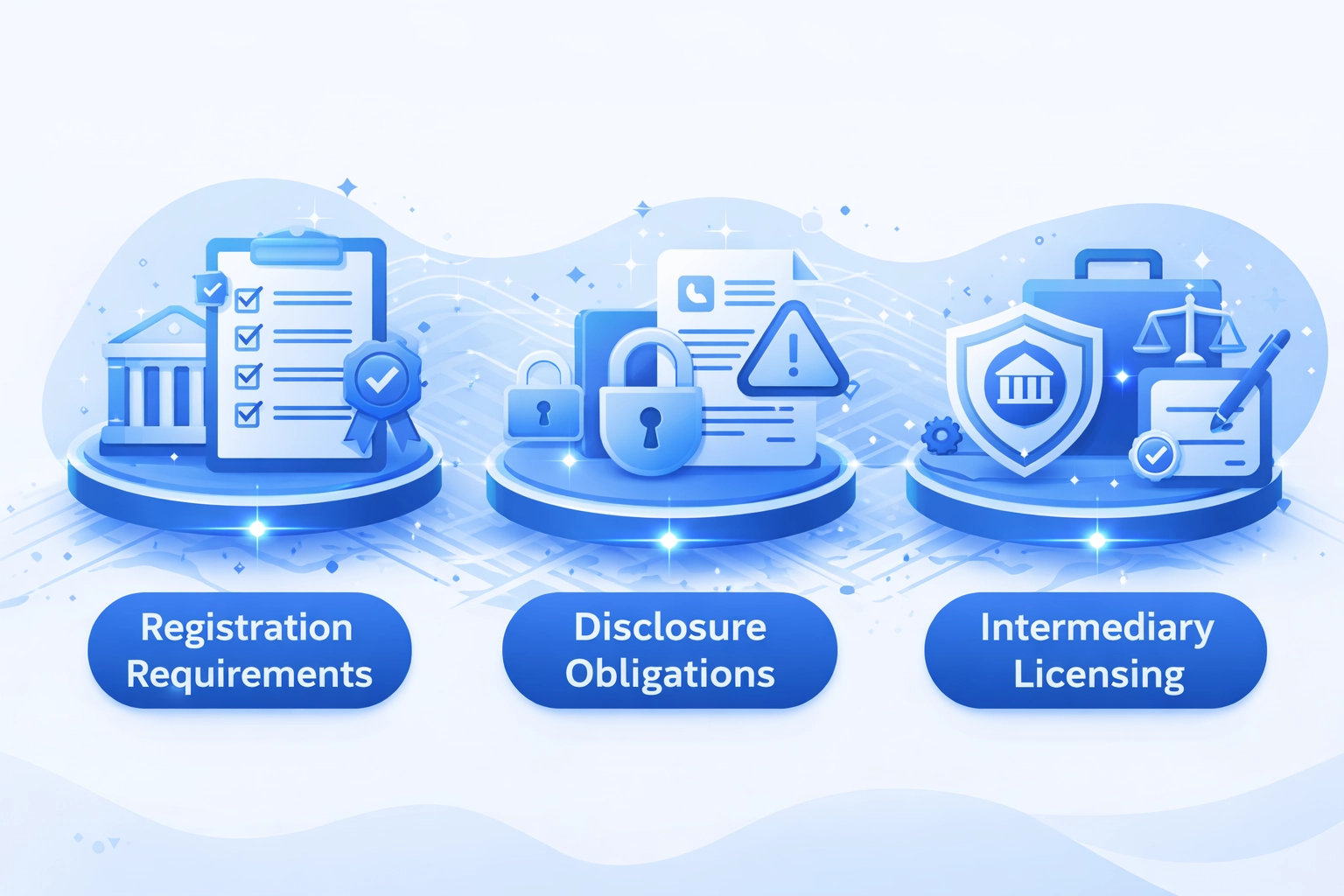 How Fractional Ownership Triggers Complex Securities Obligations
Fractional property ownership through tokenization creates property tokenization regulatory risks requiring comprehensive compliance frameworks.
Registration Requirements
- SEC registration or valid exemption
- State blue sky law compliance
- Accredited investor verification
- Investment limits enforcement
Disclosure Obligations
- Property valuation methodology
- property tokenization regulatory risks factor documentation
- Management fee transparency
- Ongoing reporting requirements
Intermediary Licensing
- Broker-dealer registration
- Transfer agent compliance
- ATS licensing requirements
- Custodian qualifications
Custodial Failures in Tokenized Property Holding Structures
Custodial arrangements in property tokenization create unique property tokenization regulatory risks when platforms fail to properly safeguard either the digital tokens or the underlying real property assets. Property tokenization regulatory risks multiply when custody is fragmented across multiple parties without clear accountability or adequate insurance coverage.
Digital asset custody requires qualified custodians meeting SEC or state regulatory requirements for holding customer assets. Many property token platforms utilize unregulated custody solutions that expose investors to loss without recourse. The collapse of cryptocurrency custodians has demonstrated these property tokenization regulatory risks dramatically.
Real property custody involves ensuring legal title remains properly held by the SPV or trust structure backing tokens. Inadequate corporate governance, missing insurance, or poor property management can erode the value backing tokens without token holders having any practical ability to intervene.
AML and KYC Blind Spots in Permissionless Property Token Markets
Property tokenization regulatory risks include significant AML and KYC compliance failures when tokens trade on permissionless networks without identity verification. Once tokens leave a compliant primary issuance, secondary transfers may occur without any KYC checks, enabling money laundering and sanctions evasion through real estate investments.
Regulators in the USA, UK, UAE, and Canada all require AML programs for money service businesses and securities intermediaries. Property token platforms facilitating trading without adequate compliance programs face severe penalties. FinCEN, FCA, and other regulators have brought enforcement actions against crypto platforms lacking proper AML controls.
The pseudonymous nature of blockchain addresses complicates beneficial ownership identification required under AML regulations. While blockchain analysis tools help trace transactions, they cannot definitively identify ultimate beneficial owners without additional off-chain verification systems.
Smart Contract Enforcement Limits in Real-World Property Disputes
Smart contracts cannot enforce real-world property rights against parties who refuse to recognize blockchain records. Property tokenization regulatory risks include the fundamental limitation that code cannot compel physical world compliance. When disputes arise between token holders and property occupants or traditional titleholders, courts apply existing property law rather than smart contract logic.
Eviction proceedings, property maintenance disputes, and tenant relations all occur in traditional legal forums regardless of blockchain token structures. Smart contracts may automate dividend distributions or voting rights, but they cannot force property managers to perform maintenance or remove trespassers.
This enforcement gap means property token holders ultimately depend on traditional legal mechanisms and the good faith of platform operators. The promise of trustless execution breaks down at the interface between digital and physical assets.
Taxation Ambiguity in Tokenized Property Income and Capital Gains
Property tokenization regulatory risks include substantial taxation uncertainty across jurisdictions. Tax authorities have not provided comprehensive guidance on tokenized property treatment, creating compliance challenges for issuers and investors.
| Jurisdiction | Income Treatment | Capital Gains | Withholding |
|---|---|---|---|
| USA (IRS) | Ordinary income or REIT rules | Property vs crypto rates unclear | FIRPTA may apply |
| UK (HMRC) | Property income rules apply | CGT with crypto overlay | Non-resident landlord scheme |
| UAE (FTA) | Generally tax-free | No capital gains tax | VAT considerations |
| Canada (CRA) | Rental income taxation | 50% inclusion rate | Part XIII withholding |
Regulatory Arbitrage Through DAO-Based Property Token Issuers
Property tokenization regulatory risks include attempts to avoid compliance obligations through DAO structures claiming no identifiable issuer exists. These structures assert that decentralized governance prevents any single party from bearing regulatory responsibility. Regulators have consistently rejected this argument.
The SEC has stated that DAO token offerings remain securities offerings subject to registration requirements. Enforcement actions against DAO founders and significant token holders demonstrate that decentralization provides no immunity. Similar positions exist among UK, UAE, and Canadian regulators.
DAO structures may actually increase property tokenization regulatory risks by obscuring governance and creating confusion about accountability. When problems arise, the lack of clear responsible parties complicates investor remedies and may result in more aggressive enforcement responses.
Governance Breakdowns in Tokenized Property SPV Structures
Property tokenization regulatory risks intensify when SPV governance structures fail to protect token holder interests. Many platforms create holding entities with governance documents that concentrate control with platform operators while distributing economic property tokenization regulatory risks to token holders. This misalignment creates classic agency problems that securities regulations aim to prevent.
Token holders often lack voting rights on material decisions affecting their investments. Property sales, refinancing, major expenditures, and management changes may proceed without token holder approval. These governance limitations may not be adequately disclosed, creating compliance failures around material information disclosure.
Fiduciary duties owed by SPV managers to token holders remain unclear in many jurisdictions. Traditional corporate and trust law principles may not apply cleanly to novel tokenized structures, leaving investors without clear legal recourse when managers act against their interests.
Disclosure Failures Around Property Valuation and Token Pricing
Property tokenization regulatory risks include inadequate disclosure around valuation methodologies and token pricing. Many platforms present property valuations without explaining appraisal assumptions, comparable sales data, or potential conflicts of interest in the valuation process. Investors cannot make informed decisions without understanding how values were determined.
Token pricing often includes premiums above underlying property values to cover platform fees, legal costs, and profit margins. These premiums may not be clearly disclosed, leaving investors believing they are purchasing at property value when they are actually paying significant markups.
Securities regulations in the USA, UK, UAE, and Canada all require material information disclosure. Valuation methodology and pricing components constitute material information that investors need for informed decision-making. Inadequate disclosure creates enforcement property tokenization regulatory risks and civil liability exposure.
Secondary Market Risks for Non-Compliant Property Security Tokens
Property tokenization regulatory risks cascade through secondary markets when compliance failures occur at issuance.
Non-Compliant Issuance
Tokens issued without proper registration or exemption compliance taint all subsequent transactions.
Exchange Listing
Exchanges listing non-compliant tokens face regulatory liability and potential enforcement actions.
Regulatory Warning
Regulators issue warnings identifying compliance failures, triggering exchange due diligence reviews.
Token Delisting
Exchanges delist non-compliant tokens to protect themselves from regulatory exposure.
Liquidity Collapse
Token holders lose ability to sell, becoming trapped in illiquid positions with no exit options.
Enforcement Action
Regulators pursue issuers, exchanges, and potentially large token holders for securities violations.
Asset Freeze
Court orders may freeze underlying property assets during enforcement proceedings.
Investor Losses
Token holders bear ultimate losses from both enforcement penalties and collapsed asset values.
Cross-Chain Property Tokens and Conflicting Legal Jurisdictions
Property tokenization regulatory risks multiply when tokens exist across multiple blockchain networks with bridging mechanisms. Cross-chain functionality may inadvertently create securities offerings in jurisdictions where the original issuance had no presence, triggering registration requirements the issuer never anticipated.
Each blockchain network may have different regulatory treatment, and bridged tokens might lose compliance features embedded in the original chain. Transfer restrictions, KYC requirements, and holding limits encoded in smart contracts may not survive cross-chain movements, creating compliance gaps that expose platforms to regulatory liability.
Failure of Legal Recourse When Token Holders Lack Asset Control
Property tokenization regulatory risks include fundamental limitations on investor remedies when token structures separate economic interests from legal control. Token holders may have claims to income distributions but lack standing to enforce property rights directly, leaving them dependent on platform operators to pursue legal remedies on their behalf.
When platforms become insolvent, conflicted, or simply unresponsive, token holders discover they cannot compel property sales, maintenance actions, or tenant enforcement without the intermediary’s cooperation. This dependency undermines the disintermediation benefits tokenization supposedly provides.
Licensing Risks for Platforms Facilitating Property Token Trading
Platforms facilitating property token trading may require multiple licenses including broker-dealer registration, alternative trading system authorization, and money service business licensing. Property tokenization regulatory risks arise when platforms operate without required licenses, exposing operators to criminal prosecution and civil penalties.
The licensing landscape varies significantly across the USA, UK, UAE, and Canada, requiring platforms with international operations to maintain multiple registrations. Compliance costs can exceed millions of dollars annually, creating barriers that many startups cannot overcome while remaining financially viable.
Custody and Key Management as Hidden Compliance Attack Surfaces
Property tokenization regulatory risks hide in custody and key management practices that determine actual asset control.
Key Generation Security
Weak key generation creates vulnerability where attackers can derive private keys and steal token holdings.
Multi-Signature Controls
Inadequate multi-sig implementations enable single points of failure for high-value property token transfers.
Recovery Procedures
Missing or inadequate key recovery mechanisms can permanently lock investors out of their property interests.
Custodian Qualification
Unqualified custodians expose investors to loss without regulatory protection or insurance coverage.
Audit Trail Integrity
Incomplete audit trails prevent regulators from verifying compliance and investigating suspicious activities.
Insurance Coverage
Inadequate insurance leaves investors without recovery options when custody failures cause asset losses.
Why Regulatory Debt Is the Biggest Threat to Property Tokenization
Property tokenization regulatory risks accumulate as regulatory debt when compliance is deferred or ignored.
Risk 1: Unregistered securities offerings create rescission liability that can exceed total capital raised.
Risk 2: AML failures expose platforms to criminal prosecution and substantial monetary penalties.
Risk 3: Unlicensed trading platforms face cease-and-desist orders that immediately halt operations.
Risk 4: Tax reporting failures compound annually with penalties and interest accumulating over time.
Risk 5: Cross-border violations create jurisdiction-multiplied liability across USA, UK, UAE, and Canada.
Risk 6: Investor lawsuits multiply when regulatory actions publicize compliance failures to affected parties.
Risk 7: Reputational damage prevents future fundraising and partnership opportunities permanently.
Risk 8: Personal liability for founders and executives survives corporate dissolution in serious cases.
Property Tokenization Regulatory Compliance Checklist
Securities Compliance
- Registration or exemption verified
- Investor accreditation confirmed
- Disclosure documents prepared
AML/KYC Programs
- Identity verification procedures
- Transaction monitoring active
- Suspicious activity reporting
Licensing Requirements
- Broker-dealer registration
- Transfer agent compliance
- MSB licensing obtained
Tax Reporting
- Income reporting procedures
- Withholding obligations met
- Cross-border tax treaties
Navigate Property Tokenization Regulatory Risks With Expert Guidance
Our team helps enterprises across USA, UK, UAE, and Canada build compliant tokenization platforms that avoid regulatory pitfalls.
People Also Ask
Q1.1. What are the main regulatory risks in property tokenization?
Property tokenization regulatory risks include securities law violations, cross-border compliance conflicts, AML/KYC failures, and investor protection gaps. Tokenized properties may trigger unregistered securities classifications under SEC, FCA, or SCA regulations. Platforms face enforcement actions when tokens representing fractional ownership lack proper registration. Additionally, land registry incompatibility, taxation ambiguity, and custodial failures create significant legal exposure for issuers and investors across USA, UK, UAE, and Canada markets.
Q2.2. Can tokenized real estate be classified as a security?
Yes, tokenized real estate frequently meets securities definitions under the Howey Test in the USA, similar frameworks in the UK under FCA guidelines, and securities regulations in UAE and Canada. When investors purchase tokens expecting profits primarily from others’ efforts, the token becomes a security requiring registration, disclosure obligations, and licensed intermediaries. Misclassification exposes issuers to severe penalties including disgorgement, fines, and criminal prosecution.
Q3.3. How do AML and KYC requirements apply to property token platforms?
Property token platforms must implement robust AML and KYC programs complying with FinCEN requirements in USA, FCA regulations in UK, DFSA rules in UAE, and FINTRAC obligations in Canada. Permissionless blockchain transactions create compliance blind spots when token transfers occur without identity verification. Platforms facilitating secondary trading face money service business licensing requirements and must maintain transaction monitoring systems to detect suspicious activity patterns.
Q4.4. What happens if a property tokenization platform operates without proper licensing?
Operating without proper licensing exposes platforms to regulatory enforcement including cease-and-desist orders, substantial monetary penalties, and potential criminal charges. Investors may lose legal recourse for recovering funds from unlicensed operators. Regulatory agencies across jurisdictions coordinate enforcement actions against non-compliant platforms. Token holders face asset freezes, and secondary market liquidity disappears when exchanges delist non-compliant tokens following regulatory warnings.
Q5.5. How do different countries regulate tokenized real estate investments?
Regulatory approaches vary significantly across jurisdictions. The USA applies federal securities laws through SEC oversight with state-level requirements. The UK regulates through FCA with specific guidance on security tokens. UAE offers relatively friendly frameworks through DFSA and VARA in Dubai. Canada applies provincial securities regulations with CSA coordination. These differences create compliance complexity for cross-border offerings, requiring multiple registrations and jurisdiction-specific disclosures.
Explore Services
Related Services
Reviewed by

Aman Vaths
Founder of Nadcab Labs
Aman Vaths is the Founder & CTO of Nadcab Labs, a global digital engineering company delivering enterprise-grade solutions across AI, Web3, Blockchain, Big Data, Cloud, Cybersecurity, and Modern Application Development. With deep technical leadership and product innovation experience, Aman has positioned Nadcab Labs as one of the most advanced engineering companies driving the next era of intelligent, secure, and scalable software systems. Under his leadership, Nadcab Labs has built 2,000+ global projects across sectors including fintech, banking, healthcare, real estate, logistics, gaming, manufacturing, and next-generation DePIN networks. Aman’s strength lies in architecting high-performance systems, end-to-end platform engineering, and designing enterprise solutions that operate at global scale.