Ai Overview
Imagine a business owner who keeps detailed notes about every customer in their personal notebook. They remember that Sarah from Acme Corp prefers email communication, that she always orders in February, and that she dislikes overselling. They know that Mike values quick response times and technical depth. They understand their customers so deeply that they anticipate needs before customers even ask.
Key Takeaways
- CRM systems centralize customer data in one place, eliminating scattered information across emails, spreadsheets, and sticky notes.
- Automation reduces manual tasks for sales teams and support agents, freeing time for genuine customer relationships and strategic work.
- Personalization at scale means businesses can deliver tailored experiences to thousands of customers simultaneously.
- Better communication tracking ensures no customer inquiry falls through the cracks, regardless of channel or team member.
- Data-driven insights help businesses understand customer behavior patterns and predict future needs with accuracy.
- Improved customer retention directly increases lifetime value and reduces expensive customer acquisition costs.
- Seamless omnichannel experiences keep customers satisfied whether they contact you via email, phone, chat, or social media.
- Sales teams close deals faster with instant access to complete customer context and historical interactions.
- AI-powered CRM software predicts customer churn and suggests next best actions automatically.
- Scalable growth becomes possible without proportional increases in operational complexity or headcount.
Think about the last time you called your bank, your favorite e-commerce platform, or a restaurant you visit regularly. When you connected with them, they somehow knew your purchase history, your preferences, and what you needed. That magic isn’t a coincidence, it’s the power of CRM customer management working behind the scenes.
A Customer Relationship Management system is like a smart assistant that helps businesses remember everything about their customers, not just transactions, but conversations, preferences, pain points, and dreams. In today’s competitive business landscape, managing customer relationships effectively has become the difference between thriving companies and those that fade away.
Whether you’re a startup with 10 customers or an enterprise with 10 million, understanding how CRM improves customer relationships is essential to your survival. In this guide, we’ll explore the practical ways CRM systems transform how businesses interact, engage, and retain their most valuable asset their customers.
What is CRM Customer Management?
Imagine a business owner who keeps detailed notes about every customer in their personal notebook. They remember that Sarah from Acme Corp prefers email communication, that she always orders in February, and that she dislikes overselling. They know that Mike values quick response times and technical depth. They understand their customers so deeply that they anticipate needs before customers even ask.
This level of personalized relationship management is what CRM software does, but for teams, across thousands of customers, and at unlimited scale. CRM customer relationship management system is a technology platform that collects, organizes, and analyzes customer data to help businesses build meaningful relationships and drive growth.
Core Definition: CRM is a comprehensive system that stores customer interactions, preferences, purchase history, communication logs, and behavioral data in a unified platform, enabling teams to deliver personalized service and build lasting relationships.
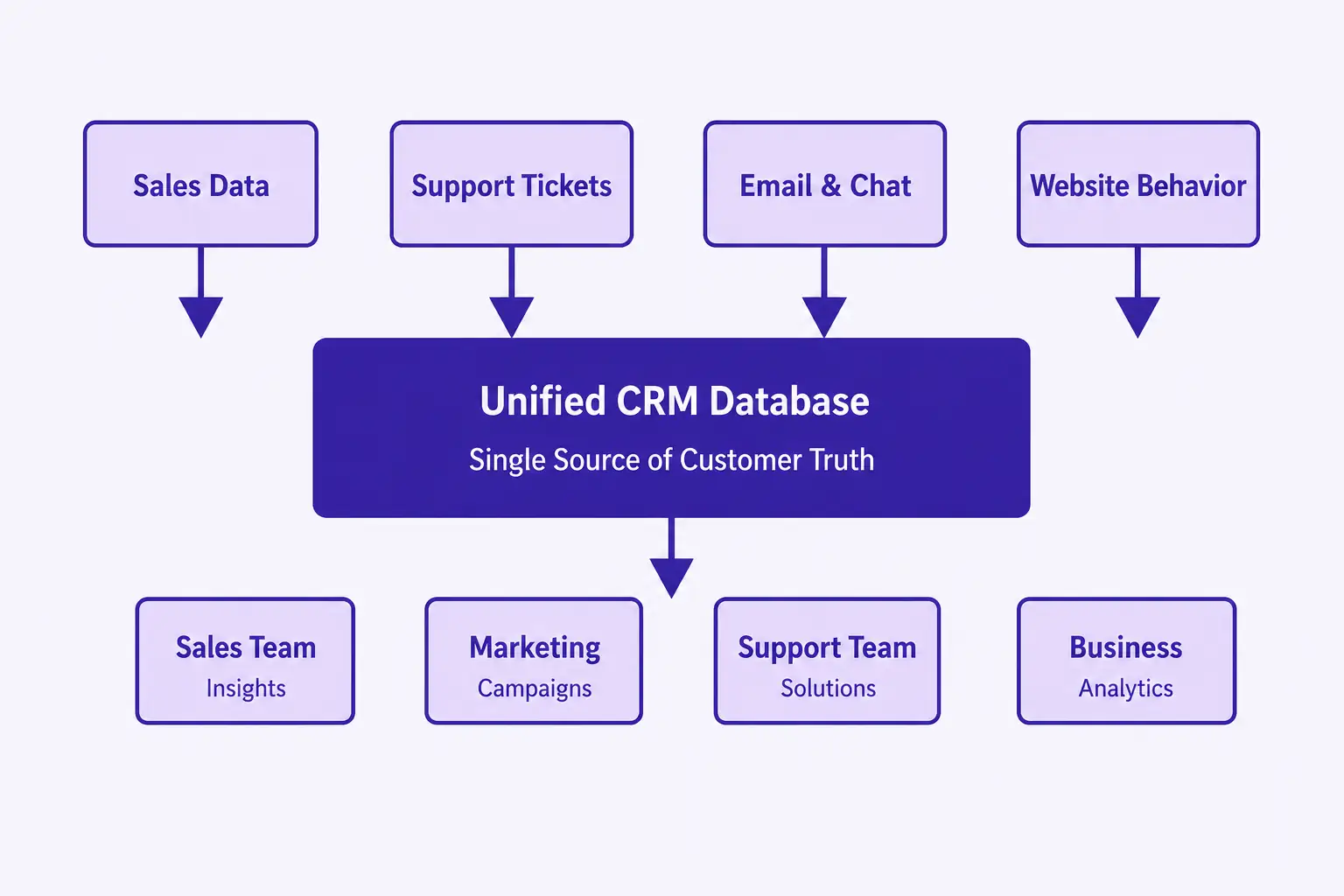
Rather than having sales representatives maintain separate spreadsheets or customer support agents scattered across different communication tools, CRM brings everything together. It’s like having a 360-degree view of every customer relationship in your organization.
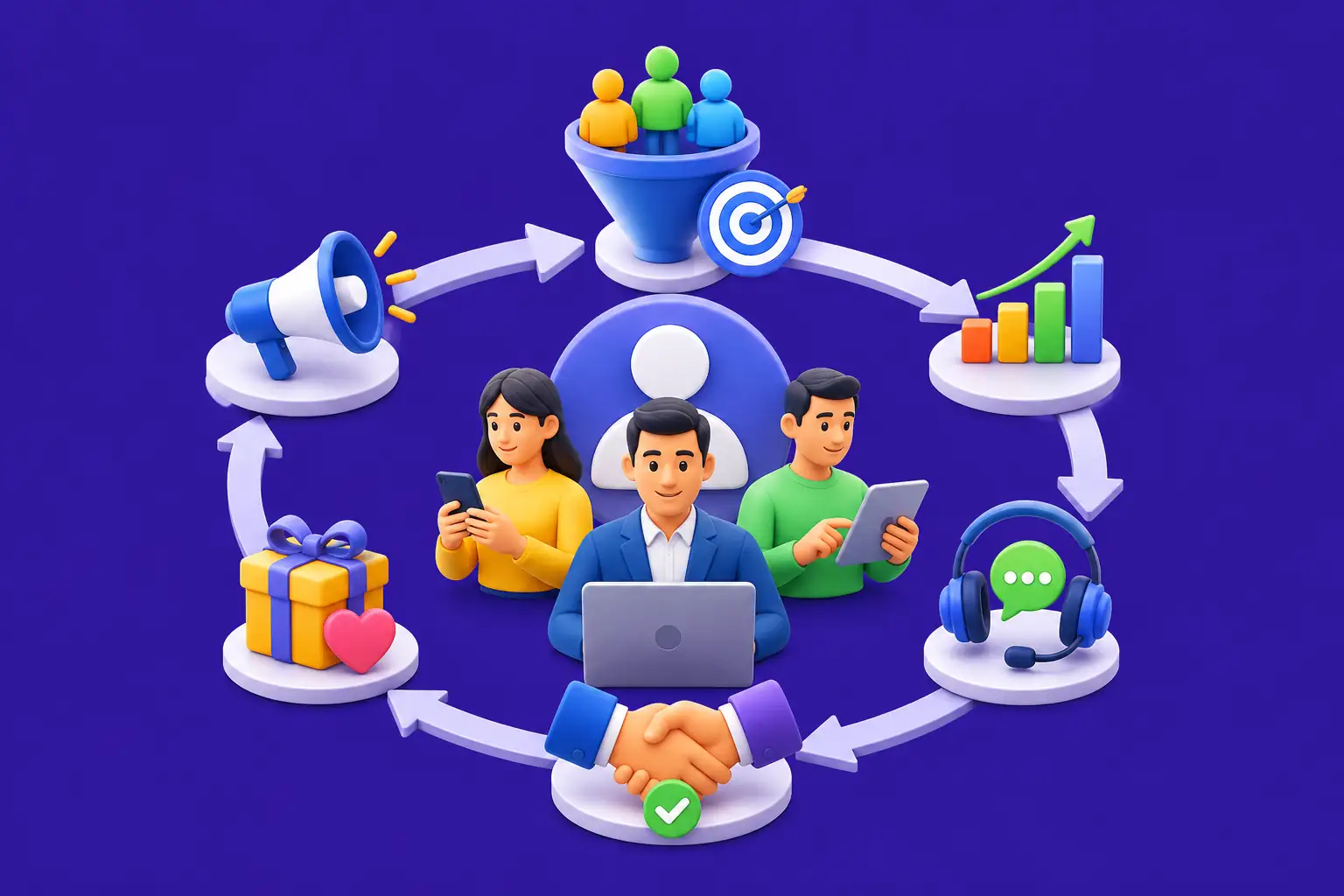
CRM Ecosystem: How Data Flows
Why Customer Relationships Matter in Modern Business
Here’s a sobering statistic: acquiring a new customer costs 5-25 times more than retaining an existing one. Yet many businesses still invest heavily in chasing new customers while neglecting the ones they already have. This approach is financially backwards and operationally exhausting.
Strong customer relationships are the foundation of sustainable business growth. When customers feel valued, understood, and heard, they don’t just make repeat purchases, they become advocates who refer others, provide valuable feedback, and tolerate occasional mistakes because they trust you.
Customer Lifetime Value
Loyal customers spend 67% more over their lifetime and are 50% more likely to try new products from brands they trust.
Referral Power
Referred customers have a 37% higher retention rate and generate 25% more profit than customers from other sources.
The challenge is that maintaining meaningful relationships at scale is incredibly difficult without technology. A solopreneur might remember every customer’s birthday and preferences, but a sales team of 50 people managing thousands of accounts cannot. This is where CRM software becomes indispensable.
How CRM Improves Customer Relationships: A Step-by-Step Journey
Let’s walk through exactly how a modern CRM system transforms customer relationships from ad-hoc interactions into strategic partnerships:
Step 1: Complete Customer Data Centralization
Imagine Sarah’s customer profile in a traditional business setup: her initial contact info might be with the sales team, support tickets scattered across a help desk, email conversations in various inboxes, purchase records in accounting, and social media interactions nowhere to be found. When Sarah contacts the business, whoever answers doesn’t have the full picture.
With CRM software, Sarah’s complete history lives in one searchable profile. Sales, support, marketing, everyone sees the same information. No more asking “haven’t we worked with you before?” or repeating information customers already provided. This single source of truth eliminates frustration on both sides.
Step 2: Intelligent Communication Tracking Across All Channels
Modern customers reach businesses through multiple channels: email, phone, live chat, social media, SMS, and video calls. Without CRM communication management, these conversations fragment across different systems. A customer might email on Monday, chat on Wednesday, and call Thursday, with three different people handling each interaction.
CRM systems with omnichannel capabilities create a unified communication timeline. Every message, call, and interaction appears in one thread. Sales representatives can see the full context of customer communications before picking up the phone. Support agents never need to ask “what did you already tell us?” This continuity builds trust and saves time.
Step 3: Predictive Personalization at Scale
Traditional businesses personalize through effort: a boutique shop owner learns customers’ sizes and preferences over years of interaction. Scaling this becomes impossible. CRM software enables personalization through data intelligence. It identifies patterns, preferences, purchase timing, and communication preferences automatically.
When a customer logs in or receives an email, they see products and messaging tailored to their history, not a generic template. A SaaS company might offer a feature upgrade to a customer approaching their usage limits before they even realize they need it. An e-commerce brand sends product recommendations based on browsing history, not random inventory.
Step 4: Automated Relationship Nurturing Without Losing the Human Touch
Sales teams spend significant time on repetitive tasks: sending follow-up emails, updating contact information, scheduling meetings, and sending renewal reminders. These tasks are necessary but don’t build relationships, they consume the time that could be spent on actual relationship building.
CRM automation handles these tasks instantly. A customer support representative doesn’t manually check if a ticket needs escalation; the system flags high-priority issues automatically. Sales teams don’t manually track who to follow up with; the CRM sends reminders and suggests optimal contact times based on customer response patterns. This frees teams to focus on what matters: understanding needs, solving problems, and building genuine connections.
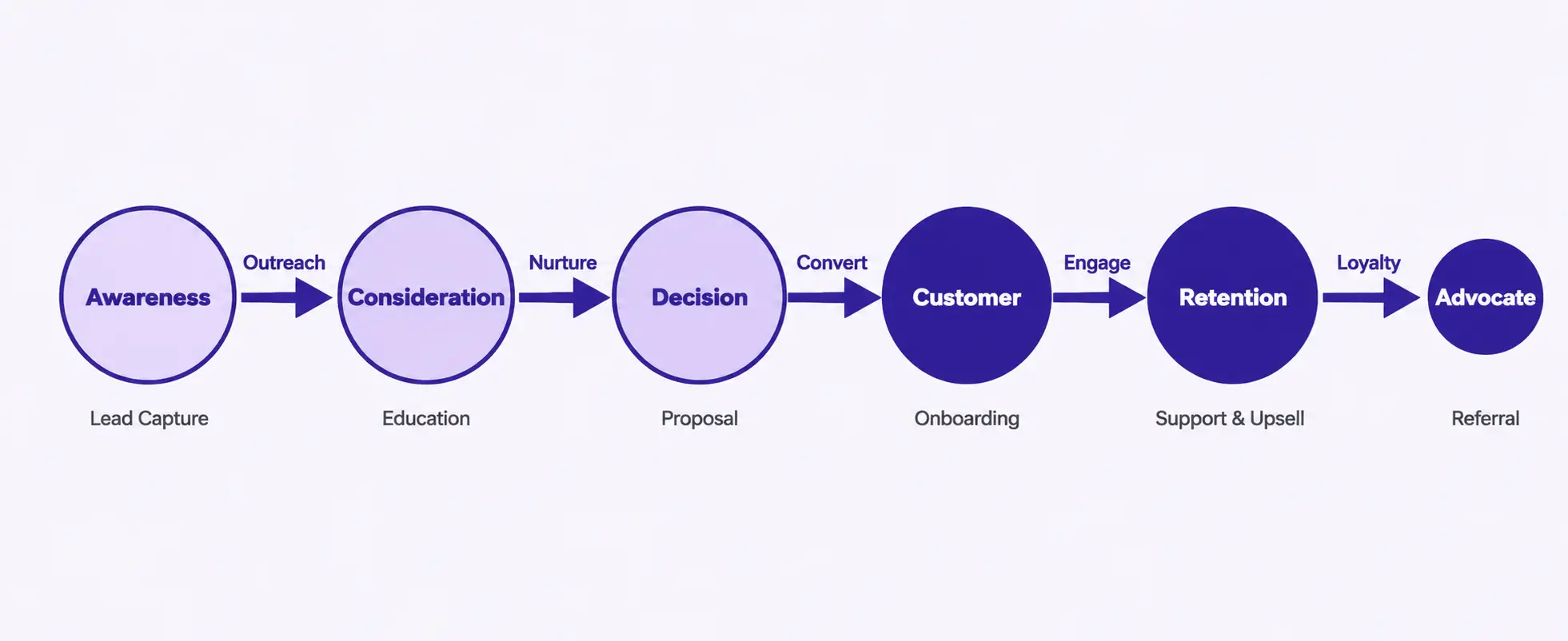
Customer Lifecycle Management in CRM
Key CRM Features That Transform Customer Management
Modern CRM software offers numerous features designed to strengthen customer relationships. Here are the most impactful ones:
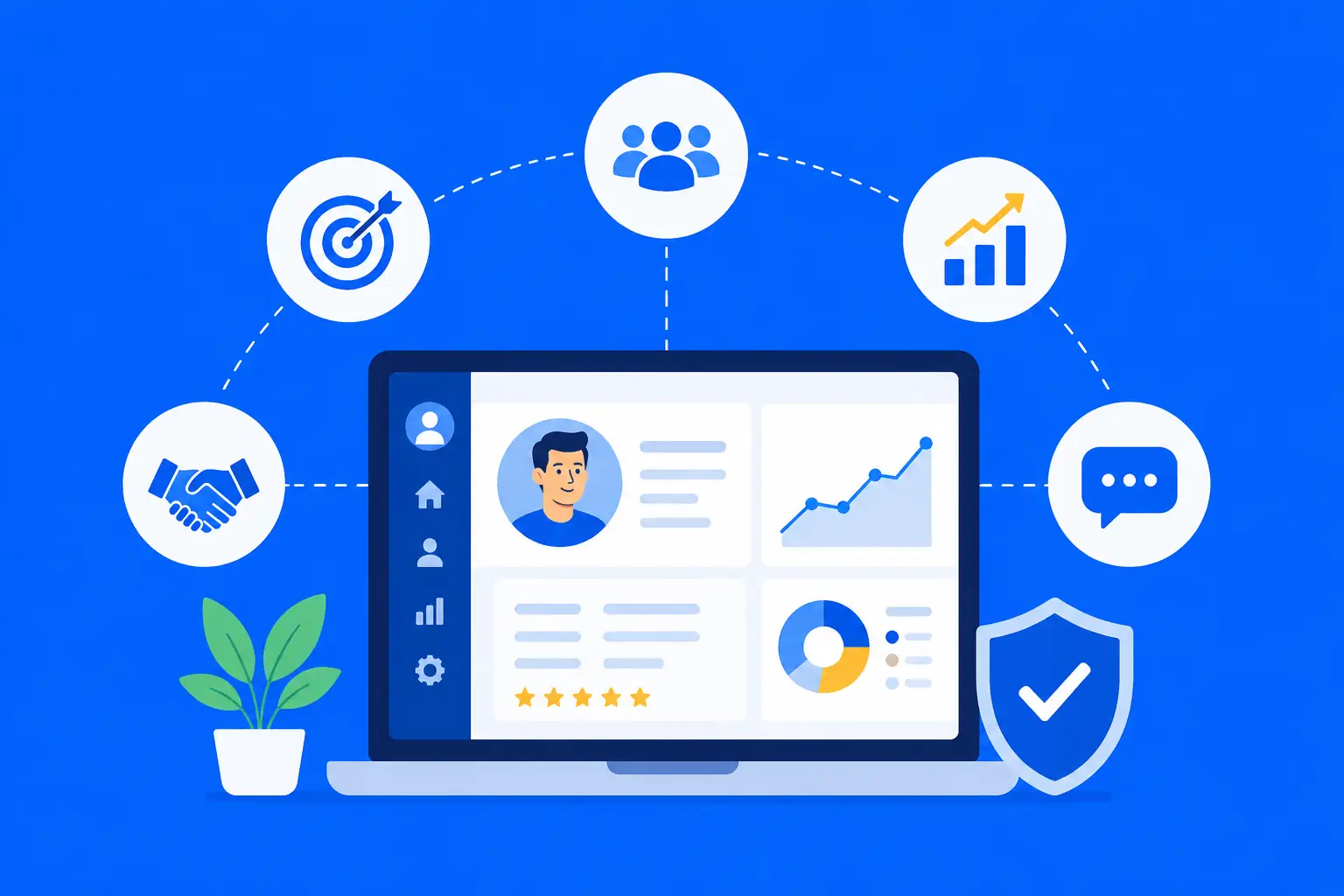
360-Degree Customer View
Every interaction, purchase, preference, and communication appears in one unified profile, eliminating information silos.
Automation & Workflow
Automate repetitive tasks like email sequences, follow-ups, and lead scoring, freeing teams for strategic work.
Omnichannel Communication
Manage email, phone, chat, social media, and SMS from one platform while maintaining conversation continuity.
Advanced Analytics & Reporting
Visualize customer trends, sales pipeline health, and team performance with intuitive dashboards and custom reports.
Segmentation & Targeting
Group customers by behavior, demographics, or lifecycle stage to deliver highly relevant messaging and offers.
Integration Ecosystem
Connect with accounting, marketing automation, e-commerce, and support platforms for seamless data flow.
CRM vs. Traditional Customer Management
| Aspect | Traditional Approach | CRM System Approach |
|---|---|---|
| Data Storage | Scattered across emails, spreadsheets, notebooks | Centralized, accessible, searchable database |
| Customer Insights | Dependent on individual memory and notes | Automatic analysis, patterns, and predictions |
| Follow-ups | Manual reminders, often forgotten or delayed | Automated, timely, and consistent |
| Scalability | Breaks down as team and customers grow | Scales effortlessly to thousands of customers |
| Communication | Fragmented across channels, often duplicated | Unified timeline across all channels |
| Decision Making | Based on gut feeling and partial information | Data-driven with full customer context |
Transformative Benefits of CRM for Different Business Types
The benefits of CRM software vary based on your business model, but certain advantages are universal:
For Startups: Competitive Advantage Without the Big Budget
Startups operate with limited budgets and small teams. A single sales representative might manage 100 leads simultaneously. Without CRM, they juggle spreadsheets and miss opportunities. With CRM, they’re equipped like an enterprise, automated lead scoring identifies the most promising prospects, workflow automation handles admin tasks, and insightful analytics reveal which marketing channels drive real customers. This allows scrappy startups to punch above their weight.
For E-commerce Brands: Personalization That Drives Revenue
E-commerce success depends on conversion rates and repeat purchase rates. CRM systems track customer preferences, browsing behavior, purchase frequency, and seasonal patterns. This enables personalized product recommendations that increase average order value, automated win-back campaigns that re-engage dormant customers, and loyalty programs that reward repeat buyers. Amazon’s entire business model is built on this principle, and smarter CRM systems help smaller e-commerce brands replicate this success.
For Service Businesses: Relationship Continuity Across Projects
Agencies, consultants, and professional service firms live and die by client relationships. When a project ends, the relationship shouldn’t. CRM systems maintain institutional memory, even if your key contact leaves your company, the relationship continues because all knowledge lives in the CRM. You remember their business challenges, past solutions, and future goals. This continuity transforms one-time clients into long-term revenue streams.
CRM Software Benefits: Manual Customer Tracking vs. Automation
| Metric | Manual Tracking | CRM Automation |
|---|---|---|
| Lead Response Time | 24-48 hours (depends on workload) | Minutes (instant alerts) |
| Follow-up Consistency | 50-70% (human error, forgetfulness) | 100% (never missed) |
| Admin Time per Customer | 30-45 minutes/month | 5-10 minutes/month |
| Sales Cycle Length | 35-40 days (longer, manual process) | 20-25 days (optimized nurturing) |
| Data Accuracy | 70-80% (manual entry errors) | 95%+ (automated validation) |
| Retention Rate | 60-70% | 85-92% |
Ultimate CRM Software Guide
Customer Retention and Loyalty: The Ultimate CRM Outcome
Customer retention is the silent profit multiplier that most businesses overlook. It’s easier to keep customers you have than to acquire new ones, yet companies spend disproportionately on acquisition. CRM changes this equation by making retention a systematic, measurable process.
A well-implemented CRM system identifies at-risk customers before they churn. When a customer hasn’t purchased in unusual amounts of time, stops opening emails, or reduces engagement, the system alerts your team. Proactive intervention can save accounts. At the other end, CRM identifies your most valuable customers, your best customers receive VIP attention, exclusive offers, and premium support. This segmentation ensures resources are invested where they matter most.
Retention Impact: Companies with strong customer retention rates are 6-7x more likely to grow revenue, and retained customers spend 31% more compared to new customers acquired in the same period.
Omnichannel Communication: Meeting Customers Where They Are
Modern customers don’t have a single preferred channel anymore. They might research on Instagram, question via email, chat on WhatsApp, and call for support. Businesses that force customers into a single channel create friction. CRM software with omnichannel capabilities eliminates this problem.
Imagine a customer contacts you via email on Monday, receives a response from Sarah on Tuesday, then tries live chat on Wednesday expecting to start fresh, only to find Mike is already aware of the entire conversation. This seamless continuity across channels transforms customer experience. No more repeating information. No more frustrated “haven’t we already discussed this?” moments. CRM communication management ensures every channel interaction feeds the same customer timeline.
Omnichannel CRM Benefits:
- Faster Resolution: Support agents see complete conversation history regardless of channel, solving issues 40% faster on average.
- Consistent Experience: Customers receive consistent messaging and service quality across email, phone, chat, and social platforms.
- Channel Flexibility: Customers start conversations in one channel and continue in another without friction or context loss.
- Intelligent Routing: Messages automatically route to the right team member based on expertise, availability, and customer history.
- Reduced Noise: Duplicate conversations are eliminated when the same customer reaches multiple channels simultaneously.
The Future: AI-Powered CRM Software and Predictive Intelligence
Artificial intelligence is transforming CRM from a historical record keeper into a predictive intelligence engine. Modern AI-powered CRM software doesn’t just track what happened, it predicts what will happen next and recommends optimal actions.
AI Capabilities in Modern CRM:
- Churn Prediction: AI identifies customers likely to cancel before they even consider leaving, enabling proactive retention.
- Next Best Action: The system recommends exactly what to do next with each customer to maximize conversion probability.
- Sentiment Analysis: AI reads customer messages to detect frustration, satisfaction, or confusion, automatically escalating negative sentiment.
- Deal Scoring: Sales deals are scored based on likelihood to close, allowing teams to focus on highest-probability opportunities.
- Automated Responses: AI handles routine customer questions, freeing humans for complex, high-value interactions.
Companies like Nadcab Labs are building AI-powered CRM systems that understand context at human level. Businesses looking for reliable Zoho CRM Implementation Services can leverage such intelligent platforms to streamline customer interactions, automate workflows, and improve long-term customer retention. These systems learn from your business history, understand your industry dynamics, and adapt to your specific workflow.
Common CRM Mistakes to Avoid
Many businesses invest in CRM but fail to realize its potential. Understanding common pitfalls helps you implement successfully:
❌ Treating CRM as a Database Only
Many teams enter customer data but don’t use insights to drive action. CRM is only valuable when insights drive decisions and improve relationships.
❌ Poor Data Quality
Garbage in, garbage out. If your CRM data is incomplete or inaccurate, insights are worthless and decisions are flawed.
❌ Inadequate Training
CRM adoption fails when teams don’t understand how to use it. Invest in training and change management, not just software licenses.
❌ Ignoring Customer Support
CRM improves customer relationships through sales AND support. Many companies neglect support team integration, missing huge retention opportunities.
❌ Overcomplicating Workflows
Complex CRM workflows frustrate users. Start simple, automate what matters most, then expand gradually as adoption increases.
❌ Siloed Departments
CRM power comes from unified data. When sales, support, and marketing operate independently, relationships fragment and insights diminish.
Transform Your Customer Relationships Today
Stop managing customer relationships with spreadsheets and scattered data. Nadcab Labs helps businesses of all sizes implement scalable CRM solutions that drive real growth, improve retention, and strengthen customer loyalty.
Whether you’re a startup looking to punch above your weight or an enterprise scaling globally, our CRM experts guide you through every step from selection and implementation to optimization and team training.
CRM as Your Customer Relationship Foundation
In a world where customer expectations are higher than ever, treating customer relationship management as optional is a liability. The businesses dominating their markets aren’t doing it through flashy marketing or aggressive sales tactics, they’re winning through superior customer understanding and relationship quality.
A modern CRM customer management system is no longer a competitive advantage, it’s table stakes. How your business implements CRM, however, is where real differentiation happens. The most successful companies treat CRM implementation as a strategic initiative, not an IT project. They invest in training, establish data governance, align teams around customer outcomes, and continuously optimize based on results.
When you centralize customer data, automate relationship nurturing, personalize at scale, and empower teams with intelligent insights, remarkable outcomes follow. Customer retention improves. Sales cycles accelerate. Customer lifetime value climbs. Team satisfaction increases because they’re focused on meaningful work instead of admin tasks.
The question isn’t whether you need CRM, it’s whether you’ll implement it strategically or continue struggling with fragmented customer data. The businesses ready to embrace modern customer relationship management are the ones that will thrive in the next decade. Your customers deserve better than scattered notes and forgotten follow-ups. Your business deserves the insights that drive profitable growth. And your team deserves tools that make their jobs meaningful.
Frequently Asked Questions
Q1.What is the difference between CRM software and email marketing platforms?
CRM software manages the entire customer relationship across all touchpoints—sales, support, communication, and analysis. Email marketing platforms are specialized tools for sending targeted email campaigns. While CRM systems include email capabilities, they provide much broader customer relationship management. Think of CRM as the comprehensive operating system for customer relationships, while email platforms are specialized applications within that ecosystem.
Q2.How long does it take to see ROI from CRM implementation?
Most businesses see measurable ROI within 3-6 months of proper CRM implementation, with significant returns appearing by month 9-12. However, timeline varies based on your current system complexity, team adoption speed, and data quality. Quick wins appear first (reduced admin time, faster response times), while longer-term benefits (improved retention, higher customer lifetime value) develop gradually as the organization matures in CRM usage.
Q3.Can small businesses afford enterprise CRM solutions?
Absolutely. Modern CRM pricing is flexible with cloud-based solutions starting as low as $15-50 per user per month. Startups and small businesses can implement professional-grade CRM systems without the expense of traditional enterprise software. Start with essential features, grow gradually, and scale as your business expands. Many vendors offer free trials and small business pricing tiers specifically designed for growing companies.
Q4.How do I ensure my team actually uses the CRM system?
CRM adoption requires three elements: (1) Comprehensive training ensuring teams understand the system and their specific workflows; (2) Leadership buy-in and modeling—managers must use CRM themselves; (3) Incentive alignment—tie compensation or performance metrics to CRM usage and outcomes. Start with your power users, celebrate early wins, address resistance head-on, and continuously optimize the system based on team feedback. Adoption is a journey, not a one-time event.
Q5.What data security considerations should I have with CRM systems?
CRM systems store sensitive customer data, so security is critical. Evaluate vendors for: (1) End-to-end encryption; (2) SOC 2 or ISO 27001 compliance; (3) Regular security audits and penetration testing; (4) Backup and disaster recovery protocols; (5) Clear data retention and deletion policies; (6) GDPR and privacy law compliance. Reputable vendors make security credentials transparent. Never sacrifice security for features—your customer trust depends on proper data protection.
Q6.How does CRM improve customer retention specifically?
CRM improves retention through early warning systems (identifying at-risk customers), personalized engagement (targeting relevant offers to specific customer segments), proactive support (resolving issues before they escalate), and loyalty programs (rewarding best customers). Automated workflows ensure no customer falls through the cracks. Analytics reveal which customers are most valuable, allowing you to invest retention efforts strategically. The result: higher retention rates and increased customer lifetime value.
Q7.Can CRM systems integrate with my existing business tools?
Modern CRM systems are built for integration. Most popular solutions integrate with accounting software (QuickBooks, Xero), marketing automation platforms (HubSpot, Marketo), e-commerce systems (Shopify, WooCommerce), communication tools (Slack, Microsoft Teams), and custom applications via APIs. Integration capabilities vary by vendor—prioritize solutions with extensive integration ecosystems that match your existing tech stack. Proper integration eliminates duplicate data entry and ensures information flows seamlessly across systems.
Q8.What's the difference between on-premise and cloud-based CRM solutions?
Cloud-based CRM (Software-as-a-Service) is hosted by vendors and accessed through your browser—no installation required, automatic updates, accessible from anywhere. On-premise CRM is installed on your servers, offering greater customization but requiring internal IT management and higher upfront costs. Most modern businesses choose cloud CRM for flexibility, scalability, and reduced IT burden. Cloud solutions work better for distributed teams, offer better security through specialized providers, and cost less overall.
Q9.How do I choose between different CRM platforms for my business?
Evaluate CRM platforms by: (1) Your specific needs—sales-focused, support-focused, or marketing-focused?; (2) Team size and growth projections; (3) Budget constraints; (4) Existing technology ecosystem; (5) Required integrations; (6) Ease of use and training requirements; (7) Customer support quality; (8) Scalability potential. Request free trials, involve your team in testing, and don’t choose based on features you’ll never use. The best CRM is the one your team will actually adopt and use consistently.
Q10.How does CRM automation impact team productivity and job satisfaction?
CRM automation dramatically improves both. By eliminating repetitive admin tasks (data entry, manual follow-ups, status updates), team members spend more time on high-value work: building relationships, solving complex problems, strategizing. This shift from tactical to strategic work increases job satisfaction—people feel they’re contributing meaningfully. Productivity improves because time wasters disappear. Burnout decreases because teams focus on meaningful activities. Studies show that sales teams using CRM effectively spend 15-20% more time actually selling versus admin work.
Explore Services
Related Services
Reviewed by

Aman Vaths
Founder of Nadcab Labs
Aman Vaths is the Founder & CTO of Nadcab Labs, a global digital engineering company delivering enterprise-grade solutions across AI, Web3, Blockchain, Big Data, Cloud, Cybersecurity, and Modern Application Development. With deep technical leadership and product innovation experience, Aman has positioned Nadcab Labs as one of the most advanced engineering companies driving the next era of intelligent, secure, and scalable software systems. Under his leadership, Nadcab Labs has built 2,000+ global projects across sectors including fintech, banking, healthcare, real estate, logistics, gaming, manufacturing, and next-generation DePIN networks. Aman’s strength lies in architecting high-performance systems, end-to-end platform engineering, and designing enterprise solutions that operate at global scale.