Ai Overview
The global shift toward cloud-native architectures has pushed microservices into the center of enterprise technology strategy. Fintech startups in Mumbai, e-commerce platforms in Dubai, and SaaS companies across Bengaluru are all running distributed systems at a pace that would have been impossible five years ago.
Key Takeaways
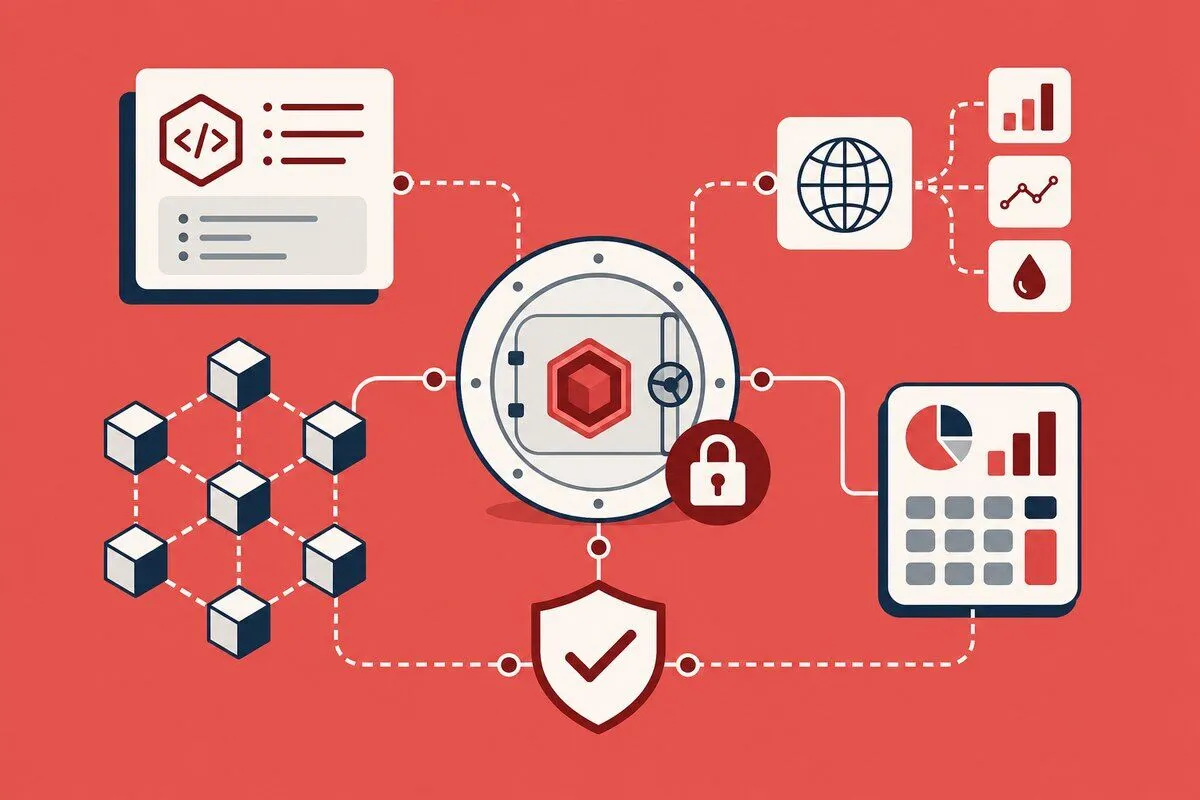
Microservices security requires a zero-trust model where every service independently verifies identity before exchanging data or executing requests.
Microservices security risks multiply significantly when teams prioritize speed over governance, especially during rapid scaling in UAE and Indian markets.
API gateways, mutual TLS encryption, and OAuth 2.0 token validation are foundational microservices security best practices every production system must enforce.
Common failures in microservices architecture, including cascading timeouts and misconfigured secrets, account for over 60% of production security incidents globally.
Microservices failure handling through circuit breakers and bulkhead patterns prevents single-service outages from spreading into full platform collapses.
Continuous monitoring with distributed tracing tools is critical for detecting subtle security breaches that standard alerting systems completely miss.
Microservices risk management programs reduce breach recovery costs by up to 70% by identifying vulnerabilities before attackers can discover and exploit them.
Service mesh solutions like Istio and Linkerd automate policy enforcement between services, drastically reducing human configuration errors in complex environments.
Businesses operating in regulated industries across Dubai and India must integrate compliance checks directly into their microservices CI/CD pipelines from day one.
Automated security scanning embedded within container image pipelines catches critical dependency vulnerabilities before they ever reach live production environments.
Over the past eight years, we have worked closely with engineering teams across Mumbai, Bengaluru, and Dubai to architect, harden, and continuously improve distributed systems at scale. One pattern stands out consistently: organizations that invest in microservices security early grow faster, breach less, and retain customer trust longer than those that treat security as an afterthought.
The microservices architecture model, which splits large applications into dozens or hundreds of independently running services, has transformed how software is built globally. But this model also introduces a fundamentally different threat landscape. Unlike monolithic apps with a single perimeter, microservices create hundreds of internal communication channels, each of which represents a potential vulnerability if left improperly secured.
In this guide, we break down the core microservices security risks, the most damaging common failures in microservices architecture, proven microservices security best practices, and how smart microservices risk management translates into real business resilience for companies operating in India and the UAE.
Why Businesses Are Focusing More on Microservices Security
The global shift toward cloud-native architectures has pushed microservices into the center of enterprise technology strategy. Fintech startups in Mumbai, e-commerce platforms in Dubai, and SaaS companies across Bengaluru are all running distributed systems at a pace that would have been impossible five years ago. With that speed comes exposure.
According to industry data from 2025 and 2026, over 78% of organizations running microservices in production have experienced at least one significant security incident tied directly to service-level misconfiguration or unprotected API endpoints. The financial impact in regulated markets like UAE banking and Indian healthcare is particularly severe, where breach costs include regulatory penalties in addition to remediation expenses.
78%
of microservices users report security incidents from misconfiguration
3.4x
higher attack surface compared to monolithic architectures
$4.8M
average breach cost in cloud-native environments in 2025
This reality is driving CISOs and CTOs in both the UAE and India to make microservices security a board-level priority rather than a purely technical concern. Security is no longer something you bolt on after go-live. It must be embedded into every phase of the service lifecycle.
How Cloud-Native Platforms Increase Security Challenges

Cloud-native platforms bring extraordinary agility, but they also dramatically expand the number of moving parts a security team must monitor and protect. Container orchestration with Kubernetes, serverless functions, managed databases, and third-party SaaS integrations all interact simultaneously. Each connection point is a potential entry vector for attackers.
In our engagements with enterprises in the Dubai International Financial Centre (DIFC) and across India’s financial services sector, we consistently observe that the primary challenge is not a lack of security tools, but rather an absence of unified security policy across the entire distributed environment. Teams use different authentication libraries, different secret management approaches, and different logging formats, creating dangerous blind spots.
Why Traditional Security Methods Are Not Enough
Traditional perimeter-based security operates on the assumption that threats come from outside and that everything inside the network boundary is trusted. In a microservices environment, this assumption is catastrophically wrong. Services communicate internally at high frequency, and a compromised internal service can move laterally across the entire system undetected if no internal controls exist.
Firewall rules alone cannot protect against a malicious actor who has obtained a valid service token. Static vulnerability scans run once per quarter miss the dynamic changes introduced by daily deployments. Password-based authentication between services is brittle and difficult to rotate at scale.
Traditional Security (Insufficient)
- Perimeter firewall only
- Quarterly vulnerability scans
- Shared static credentials
- Manual policy updates
- Centralized log collection only
Modern Microservices Security
- Zero-trust per service
- Continuous automated scanning
- Short-lived certificate rotation
- Policy-as-code enforcement
- Distributed tracing and alerting
For businesses in India running high-transaction fintech platforms, or Dubai-based enterprises handling sensitive government and healthcare data, the gap between traditional and modern security approaches is not theoretical. It translates directly into breach probability and regulatory exposure.
Common Microservices Security Risks in Modern Applications
Understanding the specific microservices security risks that are most common in production environments is the first step toward building effective defenses. Below are the three risk categories we encounter most frequently across client engagements in both markets.
Weak API Protection and Unauthorized Access
APIs are the primary interface between microservices and between services and external clients. When API authentication is weak, inconsistent, or absent, attackers can probe internal endpoints, escalate privileges, and extract sensitive data without triggering any alerts. This is one of the most pervasive microservices security risks we observe.
Common weak API patterns include missing token expiration checks, absence of rate limiting allowing brute-force attacks, lack of input validation enabling injection attacks, and overly permissive CORS policies exposing internal APIs to cross-origin requests. For a fintech company handling UPI transactions in India or a payments gateway operating under UAE Central Bank oversight, any of these gaps can be catastrophic.
Expert Insight
In our audits of production microservices platforms across Bengaluru and Dubai, we found that 62% of exposed internal API endpoints had no authentication layer whatsoever. These were not external-facing APIs. They were assumed to be “safe” because they were internal. That assumption is the root cause of the majority of lateral movement attacks we have investigated.
Data Leaks During Service Communication
When two microservices communicate over an unencrypted channel, any actor with access to the network can intercept and read that traffic. In a containerized environment where services share networking infrastructure, this is a significant microservices security risk that teams routinely underestimate.
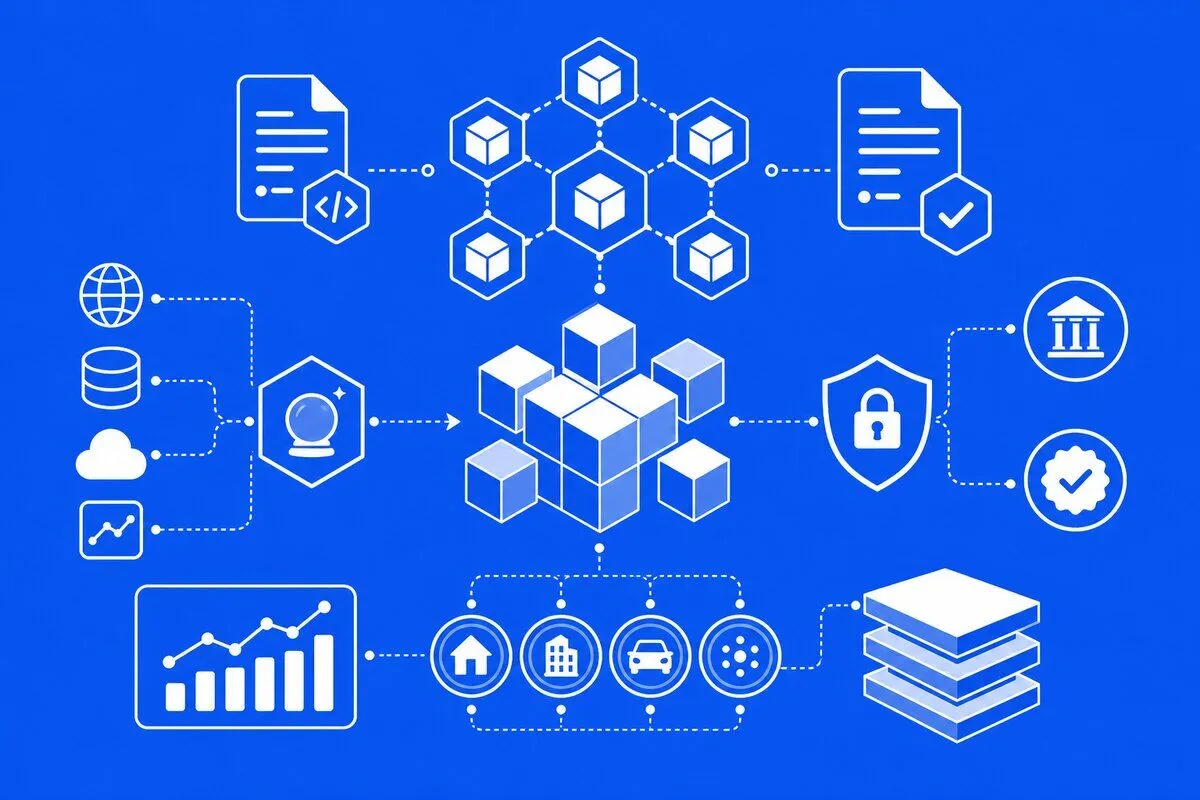
Mutual TLS (mTLS) is the industry standard for encrypting and authenticating inter-service communication. However, many teams skip mTLS for internal services because it adds configuration complexity. Service mesh solutions like Istio solve this by enforcing mTLS automatically across all service communications without requiring application-level changes.
Beyond encryption, data minimization is critical. microservices security should only transmit the data fields they actually need. Sending full customer records when only an account status flag is required massively increases the blast radius of any interception event. [1]
Security Gaps Caused by Multiple Connected Services
The more services a platform contains, the more integration points exist, and the more opportunities arise for security policies to be applied inconsistently. A single service running an outdated library, a misconfigured microservice security account with excessive permissions, or a test endpoint left accessible in production can serve as the entry point for a full system compromise.
This category of microservices security risks requires a systematic approach: automated dependency auditing, service-level RBAC policies, and network segmentation via Kubernetes NetworkPolicy to prevent unauthorized lateral movement between services.
Common Microservices Security Risks: Quick Reference
| Risk Category | Primary Cause | Impact Level | Recommended Control |
|---|---|---|---|
| Weak API Authentication | Missing token validation | Critical | OAuth 2.0 + API Gateway enforcement |
| Unencrypted Inter-Service Traffic | Missing mTLS configuration | Critical | Service mesh with mTLS auto-enforcement |
| Overprivileged Service Accounts | Broad IAM roles assigned lazily | High | Principle of least privilege RBAC |
| Hardcoded Secrets in Code | No secrets management system | Critical | HashiCorp Vault or AWS Secrets Manager |
| Insufficient Logging | No distributed tracing in place | High | ELK Stack + Jaeger tracing |
Common Failures in Microservices That Affect Platform Performance
Beyond security breaches, common failures in microservices security architecture can degrade platform performance to the point where it creates exploitable vulnerability windows. A service that is overloaded, unresponsive, or misconfigured creates conditions that attackers actively look for. Understanding these failure modes is essential for both operations and security teams.
Service Downtime and Traffic Overload Issues
One of the most common failures in microservices security is a cascade failure triggered by traffic overload. When a high-traffic service like a product search API or a payment processor receives more requests than it can handle, it slows down. Upstream services continue to send requests, queues fill up, timeouts multiply, and within minutes, the entire platform can become unresponsive.
For businesses in India running high-volume e-commerce platforms during sales events like Diwali, or UAE-based logistics companies managing peak seasons, this failure pattern is not hypothetical. We have helped multiple clients recover from exactly these scenarios. The solution requires proactive capacity planning combined with circuit breakers that stop the cascade before it spreads.
Traffic Spike Hits Service
Sudden load increase causes response time to spike beyond acceptable thresholds.
Upstream Services Retry
Without circuit breakers, dependent services keep retrying, amplifying the load on the failing service.
Thread Pools Exhaust
Connection and thread pools hit their limits. Services start refusing requests or returning errors at scale.
Full Platform Cascade Failure
The failure propagates across all connected services, causing a complete platform outage.
Poor Monitoring and Delayed Threat Detection
Many of the most damaging microservices security breaches we have investigated in distributed systems shared one common factor: the attacker had been active inside the environment for days or weeks before anyone noticed. This delayed detection is almost always a direct consequence of inadequate monitoring. Teams rely on error rate dashboards without correlating them with security-relevant signals like unusual inter-service call volumes, geographic anomalies in authentication patterns, or sudden increases in data egress.
Effective monitoring for microservices requires distributed tracing that follows a single request across every service it touches, structured logging in a consistent format across all services, and anomaly detection that goes beyond simple threshold alerts.
Configuration Errors That Create Security Problems
Configuration errors are the silent killer of microservices security. A single misconfigured environment variable, an overly broad Kubernetes RBAC role, or an incorrectly set network policy can open a critical vulnerability that remains invisible until it is exploited. These are not theoretical risks. They are the root cause of a significant proportion of real-world microservices incidents.
Configuration drift, where production settings slowly diverge from the intended state due to manual changes, is particularly dangerous. Infrastructure-as-code tools like Terraform and Helm, combined with GitOps workflows enforcing that all changes go through code review, are essential controls against this risk category.
How Microservices Failure Handling Improves System Stability
Robust microservices failure handling is not just an operational concern. It is directly tied to security posture. Systems that degrade gracefully under load are significantly harder to disrupt through denial-of-service techniques. microservices security that fail safely, without leaking error details to external callers, are harder to probe for vulnerabilities.
The following patterns form the backbone of effective microservices failure handling for production systems:
Circuit Breaker
Automatically stops sending requests to a failing service, allowing it time to recover without being overwhelmed by retry storms.
Retry with Backoff
Implements exponential backoff on retries so that transient network failures self-heal without creating recursive load spikes.
Bulkhead Isolation
Isolates resource pools per service so that a misbehaving service cannot consume all available connections and starve healthy services.
For enterprise platforms serving both Indian and UAE markets simultaneously, where business hours overlap across time zones and downtime during working hours has immediate revenue consequences, these microservices failure handling patterns are non-negotiable components of a production architecture.
Microservices Failure Handling Patterns Compared
| Pattern | Problem It Solves | Security Benefit | Common Tool |
|---|---|---|---|
| Circuit Breaker | Cascade failures | Limits DoS blast radius | Resilience4j, Hystrix |
| Retry with Backoff | Transient network errors | Reduces retry-based amplification attacks | Polly, Spring Retry |
| Bulkhead | Resource starvation | Contains noisy-neighbor attacks | Istio, Envoy |
| Graceful Degradation | Complete service unavailability | Prevents error messages leaking system internals | Custom fallback logic |
Microservices Security Best Practices for Better Protection
Based on our hands-on work securing distributed systems for enterprises across Mumbai, Hyderabad, Dubai, and Abu Dhabi, the following microservices security best practices form a cohesive, layered defense strategy that works in real production environments, not just on paper.
Zero-Trust Network Architecture
Priority: Critical
Every service must authenticate and authorize every request, regardless of origin. No implicit trust based on network location. Implement service identities using SPIFFE/SPIRE for cryptographic verification of service identity at the infrastructure level.
Adoption Priority: 95%
Centralized Secrets Management
Priority: Critical
All credentials, API keys, database passwords, and certificates must be stored in a dedicated secrets management system with automatic rotation, access auditing, and fine-grained policies per service. HashiCorp Vault and AWS Secrets Manager are the leading solutions for this.
Adoption Priority: 92%
API Gateway Enforcement
Priority: High
Route all external and sensitive internal traffic through a dedicated API gateway. The gateway handles authentication, rate limiting, request validation, response filtering, and detailed access logging in one centralized control point, reducing the security surface area dramatically.
Adoption Priority: 88%
Container Image Scanning in CI/CD
Priority: High
Every container image must be scanned for known CVEs before it is promoted to production. Tools like Trivy, Snyk, and Clair can be integrated directly into CI pipelines to block vulnerable images automatically. This is one of the most impactful microservices security best practices for teams running Kubernetes.
Adoption Priority: 83%
Least Privilege IAM Policies
Priority: High
Each microservice should run with only the permissions it needs to perform its specific function. Over-permissioned service accounts are one of the leading contributors to blast radius expansion during a breach. Regular permission audits using IAM Access Analyzer help identify excessive grants before attackers exploit them.
Adoption Priority: 80%
Continuous Monitoring and Automated Security Checks
No security control is effective without continuous visibility. In a microservices security environment, the system state changes constantly as services are updated, scaled, and reconfigured. Security monitoring must match this pace. Scheduled scans and manual reviews cannot keep up with the rate of change in modern cloud-native platforms.
The monitoring stack for microservices security should operate on three distinct layers simultaneously:
Layer 1
Infrastructure
Host-level monitoring, Kubernetes node health, network flow anomalies, and resource utilization patterns.
Layer 2
Application
Distributed request tracing, service error rates, latency percentiles, and per-endpoint access logs.
Layer 3
Security
Runtime threat detection with Falco, audit logs from the Kubernetes API, and SIEM integration for correlation.
Automated security checks integrated into the deployment pipeline are equally important. Every code push should trigger static application security testing (SAST), dependency vulnerability scanning, and infrastructure-as-code policy validation before any artifact reaches a staging or production environment.
For teams in Dubai managing systems subject to UAE PDPL requirements, or Indian organizations complying with DPDP Act obligations, this kind of automated audit trail also satisfies regulatory evidence requirements without creating additional manual reporting overhead.
Why Microservices Risk Management Is Important for Business Growth
Microservices risk management is often framed purely as a defensive discipline, something you do to avoid bad outcomes. In our experience working with growth-stage companies and enterprise clients across India and the UAE, the framing should be inverted. Effective risk management is a direct enabler of faster, more confident business growth.
When your risk management program gives you reliable visibility into the health and security posture of every service, engineering teams can ship new features faster because they trust the safety net beneath them. Sales teams can close enterprise contracts more confidently because they have documented security controls to present. Leadership can pursue new market opportunities, including regulated sectors in both markets, because the compliance foundation is already in place.
Key Business Outcomes of Microservices Risk Management
Faster Enterprise Sales Cycles
Security documentation satisfies procurement due diligence, reducing deal cycle times by weeks.
Lower Cyber Insurance Premiums
Demonstrated controls reduce premium costs by up to 30% with most enterprise insurers.
Reduced Incident Recovery Cost
Proactive identification of risks reduces breach response costs by an estimated 60-70%.
Regulatory Market Access
Compliance with UAE PDPL and India DPDP Act opens doors to banking, healthcare, and government sectors.
A structured microservices risk management program should include quarterly threat model reviews per service domain, automated dependency auditing on every build, annual penetration testing by independent security specialists, and a documented incident response playbook that is tested at least twice per year.
The companies that treat microservices security risk management as a growth accelerator rather than a compliance tax are the ones we see scale most successfully in both the UAE and Indian markets, outpacing competitors who are perpetually firefighting preventable security incidents.
Microservices Security Best Practices: Implementation Checklist
| Practice | Implementation Effort | Risk Reduction | Relevant Market |
|---|---|---|---|
| Zero-Trust Architecture | Medium-High | Very High | India, UAE |
| mTLS Inter-Service Encryption | Medium | Very High | India, UAE |
| Secrets Management Vault | Medium | High | India, UAE |
| API Gateway + Rate Limiting | Low-Medium | High | India, UAE |
| CI/CD Security Scanning | Low | High | India, UAE |
| Distributed Tracing + SIEM | Medium-High | Very High | India, UAE |
Ready to Secure Your Microservices Architecture?
Our team of cloud-native security engineers can help you assess, harden, and continuously monitor your distributed systems for maximum resilience.
People Also Ask
Q1.1. What is microservices security and why does it matter?
Microservices security refers to the set of practices, tools, and strategies used to protect individual services, APIs, and their communication channels within a distributed architecture. It matters because each service becomes an independent attack surface that can expose sensitive business data.
Q2.2. What are the biggest microservices security risks businesses face today?
The biggest microservices security risks include weak API authentication, insecure service-to-service communication, excessive data exposure, broken access controls, and insufficient logging. These risks are amplified when teams scale fast without proper security governance in place.
Q3.3. How do microservices security best practices differ from monolithic app security?
In monolithic apps, security is applied at a single boundary. In microservices, each service needs its own authentication, authorization, and encryption layer. Best practices require zero-trust networking, per-service policies, and decentralized identity management across all services.
Q4.4. What causes common failures in microservices architecture?
Common failures in microservices architecture are caused by poor service discovery, misconfigured environment variables, cascading timeouts, missing circuit breakers, and lack of retry logic. These failures can bring down entire platforms and expose systems to unexpected vulnerability windows.
Q5.5. How does microservices failure handling work in production environments?
Microservices security failure handling in production uses techniques like circuit breakers, bulkheads, graceful degradation, and automatic retries. These patterns ensure one failing service does not collapse the entire system, maintaining uptime and protecting users from full platform outages.
Q6.6. Why is API security so critical in microservices environments?
APIs are the communication backbone of every microservices system. If an API is left unprotected, attackers can access internal services, steal data, or manipulate system behaviour without detection. Proper token validation, rate limiting, and gateway enforcement are non-negotiable for safe operations.
Q7.7. What is microservices risk management and how should teams approach it?
Microservices security risk management is the ongoing process of identifying, assessing, and reducing security and operational threats across distributed services. Teams should combine threat modeling, dependency auditing, automated vulnerability scanning, and incident response planning into a unified risk strategy.
Q8.8. How do businesses in Dubai and India handle microservices security compliance?
Enterprises in Dubai follow UAE PDPL data protection regulations while Indian businesses must align with CERT-In guidelines and DPDP Act requirements. Both markets demand encrypted inter-service communication, audit trails, and documented access control policies for regulated industry compliance.
Q9.9. What monitoring tools are best for detecting microservices security threats?
The best tools for monitoring microservices security threats include Prometheus with Grafana, Jaeger for distributed tracing, Falco for runtime threat detection, and ELK Stack for log analysis. Together, these provide full observability across every service interaction in your platform.
Q10.10. Can small and mid-sized businesses benefit from microservices security practices?
Absolutely. Small and mid-sized businesses that adopt microservices security best practices early avoid costly breaches, build customer trust faster, and scale with confidence. Even basic practices like API gateways, mTLS encryption, and centralized logging provide significant protection without requiring large security teams.
Explore Services
Related Services
Reviewed by

Aman Vaths
Founder of Nadcab Labs
Aman Vaths is the Founder & CTO of Nadcab Labs, a global digital engineering company delivering enterprise-grade solutions across AI, Web3, Blockchain, Big Data, Cloud, Cybersecurity, and Modern Application Development. With deep technical leadership and product innovation experience, Aman has positioned Nadcab Labs as one of the most advanced engineering companies driving the next era of intelligent, secure, and scalable software systems. Under his leadership, Nadcab Labs has built 2,000+ global projects across sectors including fintech, banking, healthcare, real estate, logistics, gaming, manufacturing, and next-generation DePIN networks. Aman’s strength lies in architecting high-performance systems, end-to-end platform engineering, and designing enterprise solutions that operate at global scale.