Ai Overview
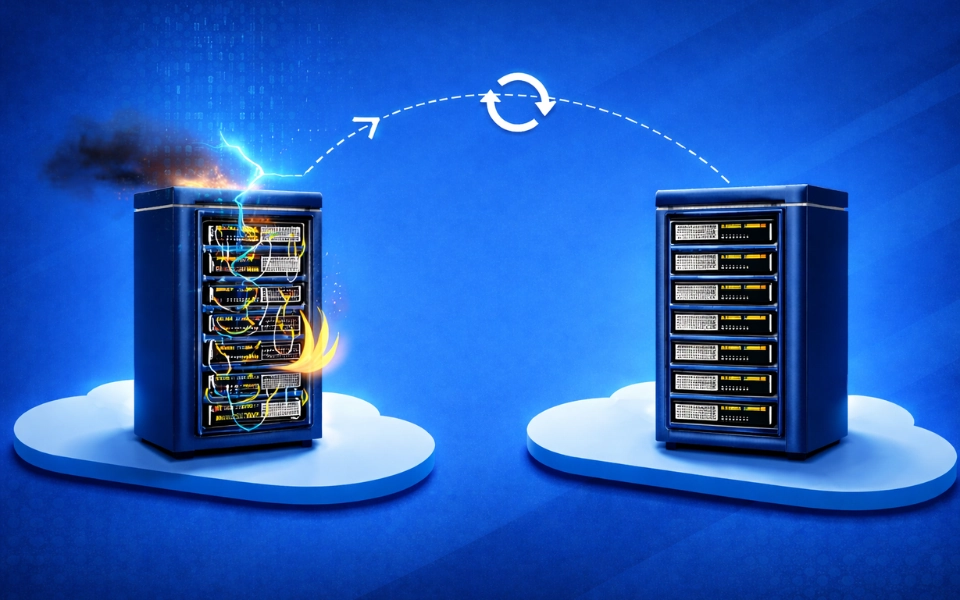
The definition has remained largely consistent over the years, but what has changed dramatically is the nature of the events that disaster recovery strategies must prepare for. In the early years of enterprise IT, disaster recovery was primarily about recovering from hardware failures, software bugs, and natural disasters like floods, fires, and earthquakes. By 2020, the threat landscape had expanded to include sophisticated ransomware, accidental data deletion, and supply chain attacks.
Key Takeaways
- Geopolitical conflicts in 2026 have made physical attacks on cloud data centres and undersea cables a realistic threat category that modern disaster recovery strategies must explicitly address.
- Single cloud provider dependency is among the highest-risk infrastructure decisions any organisation can make in 2026, as documented outages from conflict-related infrastructure disruptions have demonstrated.
- Cyberattacks increase significantly during periods of active geopolitical conflict, with ransomware, wiper malware, and data exfiltration campaigns correlating directly with military escalation events globally.
- Multi-region disaster recovery architecture spanning at least two independent geographic zones is now the minimum acceptable standard for any business with critical digital operations in India, UAE, or Singapore.
- AI-powered disaster recovery automation now enables sub-minute failover triggering and real-time anomaly detection that human operators cannot replicate during high-pressure conflict-driven incident scenarios.
- Big tech companies including AWS, Google, and Microsoft have all accelerated geographic diversification of their data centre footprints in direct response to geopolitical risk assessments conducted since 2022.
- Disaster recovery strategies must now include regulatory compliance dimensions for India’s CERT-In mandates, UAE’s National Electronic Security Authority requirements, and Singapore’s Cyber Security Agency guidelines.
- Recovery Time Objectives must be measured in minutes rather than hours for critical financial, government, and healthcare systems facing the accelerated threat timelines characteristic of state-sponsored cyberattacks.
- Offline and air-gapped backups held in jurisdictions separate from the primary operational environment have been proven essential during conflict scenarios where network connectivity itself becomes unavailable.
- The future of disaster recovery strategies lies in autonomous, AI-driven infrastructure that can detect, respond to, and recover from geopolitically motivated attacks faster than human operators can assess the situation.
In 2026, the threat landscape for enterprise IT has changed fundamentally. Disaster recovery strategies that were built around the assumption of natural disasters, hardware failures, and isolated cyberattacks are being tested against a new reality: geopolitical conflicts that target digital infrastructure as deliberately as they target physical territory. State-sponsored cyber operations, drone strikes near cloud data centres, undersea cable sabotage, and coordinated ransomware campaigns timed to coincide with military operations are no longer hypothetical scenarios. They are documented, real events that have caused measurable disruption to businesses and governments across the world. With over eight years of experience designing and implementing disaster recovery infrastructure for organizations across India, UAE, and Singapore, our team understands that the organizations that will survive the next major geopolitical IT disruption are those that have moved beyond traditional recovery planning and begun building truly conflict-resilient infrastructure. A skilled Disaster Recovery Engineer is no longer a technical luxury. In 2026, it is a business necessity.
What Are Disaster Recovery Strategies in 2026?
Disaster recovery strategies in 2026 are comprehensive plans, technical architectures, and operational procedures that enable organizations to restore their IT systems, data, and business operations after a disruptive event with minimum downtime and minimum data loss. The definition has remained largely consistent over the years, but what has changed dramatically is the nature of the events that disaster recovery strategies must prepare for. In the early years of enterprise IT, disaster recovery was primarily about recovering from hardware failures, software bugs, and natural disasters like floods, fires, and earthquakes. By 2020, the threat landscape had expanded to include sophisticated ransomware, accidental data deletion, and supply chain attacks. In 2026, disaster recovery strategies must now comprehensively address a threat category that few organizations were preparing for five years ago: geopolitically motivated attacks that deliberately target digital infrastructure as a tool of warfare and coercion.
The technical components of modern disaster recovery strategies include Recovery Time Objectives, which define the maximum acceptable time for systems to be restored, Recovery Point Objectives, which define the maximum acceptable amount of data that can be lost measured in time, backup and replication systems that create copies of data and system states across multiple locations, failover mechanisms that automatically switch traffic and operations to backup infrastructure when primary systems fail, and testing and simulation frameworks that regularly validate that recovery procedures work as designed under realistic conditions. What 2026 has added to this established framework is the requirement to design all of these components with active adversary scenarios in mind: not just passive failures but deliberate, coordinated attacks designed by sophisticated actors to maximize disruption and minimize recovery speed.
For organisations in India operating under CERT-In’s mandatory incident reporting and recovery requirements, in UAE under the National Electronic Security Authority’s critical information infrastructure protection framework, and in Singapore under the Cyber Security Agency’s critical information infrastructure protection regime, disaster recovery strategies are not merely operational best practice. They are regulatory requirements with defined timelines, reporting obligations, and minimum technical standards that must be met to avoid regulatory sanction. The geopolitical dimension of disaster recovery has therefore become simultaneously an operational, a security, and a compliance challenge for organizations across these three markets.
The relationship between geopolitical tension and IT risk has become one of the most important dynamics in enterprise technology planning in 2026. Understanding why this relationship exists and how it manifests in practice is essential for building disaster recovery strategies that are genuinely fit for the current threat environment. The fundamental mechanism is straightforward: modern states and non-state actors with sophisticated capabilities recognize that digital infrastructure is both critical to the functioning of the economies they wish to disrupt and far more accessible as a target than hardened physical military assets. A nation-state adversary that cannot realistically attack an aircraft carrier can nonetheless significantly disrupt the financial system, power grid, or government operations of a target country through cyberattacks that cost a fraction of a military operation and carry no risk of physical casualties on the attacking side.
This strategic calculus has led to a dramatic increase in state-sponsored cyber operations over the period from 2022 to 2026. The documented incidents in this period include large-scale attacks on Ukrainian government and banking infrastructure, persistent infiltration of Western defense contractor networks, sophisticated intrusions into Middle Eastern energy infrastructure including systems in the UAE, and targeted campaigns against Indian government systems coinciding with border tensions. Each of these documented incidents demonstrates a pattern: cyberattacks are increasingly timed, targeted, and designed to coincide with or amplify the effects of physical geopolitical events, making them a genuine component of modern conflict rather than a separate, purely criminal phenomenon.
For businesses in India, UAE, and Singapore, the geopolitical risk dimension of IT disaster recovery strategies manifests in several specific ways. First, these countries are active participants in regional and global geopolitical dynamics that create specific threat profiles for their organizations. India’s tensions with China and Pakistan create threat actors with documented cyber capabilities targeting Indian IT infrastructure. The UAE’s role in Middle Eastern geopolitics creates exposure to Iranian and other regional state-sponsored cyber operations. Singapore’s position as a global financial hub makes it a target for state actors seeking intelligence on international financial flows and sanctions evasion activities. Second, all three countries host significant data centre infrastructure used by multinational organizations, meaning that local geopolitical events can have international IT consequences that ripple far beyond the immediate region.
How War Is Moving from Physical to Digital Infrastructure
The militarization of digital infrastructure represents one of the most significant strategic shifts in modern conflict, and it has profound implications for how disaster recovery strategies must be designed. Modern warfare increasingly treats communications networks, power grids, financial systems, and cloud infrastructure as legitimate military targets, both for direct disruption and for intelligence collection. This is not a new observation, but the scale, sophistication, and operational integration of digital attacks with physical military operations has reached a qualitatively different level in the 2022 to 2026 period that requires a fundamental rethinking of what enterprise IT resilience means.
The integration of cyber operations into physical conflict is perhaps most clearly illustrated by the documented attacks on Ukrainian digital infrastructure that began prior to and continued throughout the military conflict in that country. Wiper malware attacks designed to destroy data and render systems unbootable were deployed against Ukrainian government agencies, banks, and defense contractors in the days before physical military operations commenced. This sequence, cyber disruption preceding and accompanying physical military action, has become a template that military strategists across the world have studied and that enterprise IT teams must now factor into their disaster recovery strategies when considering the realistic threat scenarios they might face.
The physical dimension of attacks on digital infrastructure has also become more concrete and more concerning. Undersea communications cables, which carry approximately 95 percent of international internet traffic, have been deliberately damaged in incidents coinciding with geopolitical tensions in the Baltic Sea region. Data centres, while hardened against many conventional threats, are physically located facilities that can be affected by drone strikes, missile attacks, or sabotage operations targeting power and cooling infrastructure. Disaster recovery strategies that ignore the physical vulnerability of digital infrastructure are incomplete in the 2026 threat environment, and organisations that have not mapped their critical infrastructure’s geographic exposure to physical conflict zones are operating without a full picture of their actual risk position.
The Rise of Cyber Warfare in Global Conflicts
Cyber warfare has evolved from a niche capability of the most technologically advanced states to a widely accessible tool used by a growing number of state and non-state actors in geopolitical conflicts. The democratization of offensive cyber capabilities through the proliferation of hacking tools, exploit kits, and ransomware-as-a-service platforms means that organizations now face cyber threats that originate from a much broader and less predictable set of actors than the traditional nation-state threat model suggested. At the same time, the most capable state actors have invested heavily in developing more sophisticated capabilities that can penetrate even well-defended networks and cause destruction that is more targeted, more persistent, and more difficult to attribute than earlier generations of cyberattacks.
The taxonomy of cyber warfare tools relevant to disaster recovery strategies includes destructive malware designed to permanently destroy data and system functionality rather than simply encrypting it for ransom, persistent access tools that establish long-term footholds in target networks for intelligence collection or to enable future disruptive operations at a chosen moment, supply chain attacks that compromise software or hardware at the source rather than attacking the end user’s systems directly, and denial of service attacks at a scale and sophistication that can overwhelm even well-provisioned network infrastructure. Each of these attack types requires different defensive measures and different disaster recovery responses, and a disaster recovery strategy that does not account for the full spectrum of cyber warfare capabilities is incomplete in the current threat environment.
Wiper Malware
Destroys data and system functionality permanently. Requires offline backups and full system restoration procedures in disaster recovery strategies.
Ransomware
Encrypts critical data and demands payment. Immutable backup copies held offline are the primary recovery mechanism against sophisticated ransomware.
Supply Chain Attacks
Compromises software at source affecting all downstream users simultaneously. Requires software integrity verification and rapid patch deployment capability.
DDoS at Scale
Overwhelms network and application infrastructure with traffic. Requires multi-provider connectivity and traffic scrubbing capabilities in disaster recovery strategies.
Real Case: How AWS Data Centers Were Disrupted During War
The disruption of cloud infrastructure during geopolitical conflicts has moved from theoretical concern to documented reality, and the AWS case studies that have emerged from the 2022 to 2026 period provide some of the most instructive examples for disaster recovery strategy planning. AWS’s infrastructure in regions near active conflict zones, most notably in the European region during the Russia-Ukraine conflict and in the Middle East during periods of heightened regional tension, faced challenges that standard infrastructure resilience planning had not fully anticipated. These challenges included not only the direct physical risks to data centre facilities from drone and missile threats in nearby areas but also significant connectivity disruptions as fibre optic cable infrastructure in conflict zones was damaged and rerouted, creating latency spikes and packet loss that degraded cloud service performance even for customers whose primary infrastructure was not directly affected.
The response of enterprise customers relying on AWS infrastructure in affected regions illustrated dramatically which organizations had robust disaster recovery strategies and which had not. Organizations that had implemented multi-region architectures with automated failover capabilities were able to redirect traffic and operations to unaffected regions with minimal service interruption. Their disaster recovery strategies had anticipated exactly this class of geographically concentrated disruption and had built the technical infrastructure required to respond to it automatically. Organizations that had concentrated their critical workloads in a single AWS region found themselves facing extended service degradation with no automated path to recovery, dependent instead on manual intervention by operations teams who were themselves dealing with the communication and coordination challenges that accompany rapidly evolving crisis situations.
The lessons from these documented disruptions have been incorporated into the updated disaster recovery strategy frameworks being implemented by forward-thinking organizations in India, UAE, and Singapore. The specific technical recommendations that have emerged include maintaining active-active or active-passive multi-region configurations rather than cold standby arrangements that require manual activation under pressure, conducting regular failover tests that simulate the specific failure modes observed during actual conflict-related incidents rather than only testing against standard hardware failure scenarios, and ensuring that disaster recovery runbooks can be executed by operations teams without requiring access to systems that might themselves be affected by the incident being recovered from.
The scenario of a data centre becoming unavailable due to conflict-related disruption is one that disaster recovery strategies must plan for with the same rigour previously reserved for power failures and hardware faults. When a data centre in or near a conflict zone goes offline, whether due to direct physical damage, power infrastructure disruption, connectivity loss, or the evacuation and shutdown of facilities by the operating organization for safety reasons, the immediate impact on dependent businesses can be catastrophic if disaster recovery strategies have not been designed and tested to handle this specific failure mode. Understanding the sequence of events that follows a conflict-related data centre outage is important for designing recovery procedures that work under the high-stress, low-communication conditions that typically accompany such incidents.
The first phase of a conflict-related data centre outage typically involves partial and intermittent service degradation as connectivity to the facility fluctuates and power systems switch to backup generators. This phase can last minutes to hours and creates significant uncertainty for operations teams trying to determine whether they are witnessing a temporary disruption or the beginning of a prolonged outage. Disaster recovery strategies must include clear decision criteria that define at what point operations teams initiate failover procedures rather than waiting for the situation to clarify, because the time spent waiting for clarity may be time that the recovery process should already be running.
The second phase is the extended outage, during which the primary facility is confirmed unavailable for a period that may range from hours to days or longer depending on the nature of the disruption. At this stage, disaster recovery strategies that involve manual recovery procedures face a critical challenge: the operations teams needed to execute the recovery may themselves be dealing with the personal and logistical impacts of the conflict event, communications infrastructure may be degraded, and access to critical recovery documentation and systems may be compromised if those systems were also hosted in the affected facility. This is precisely why automated recovery systems and geographically separated runbook storage are components of disaster recovery strategies that are genuinely non-negotiable in the 2026 threat environment.
Data Centre Outage Phases and Disaster Recovery Strategy Response
| Phase | Timeline | Symptoms | DR Strategy Response |
|---|---|---|---|
| Degradation | 0-30 min | Intermittent connectivity, latency spikes | Alert escalation, decision threshold monitoring |
| Outage Confirmed | 30-60 min | Complete connectivity loss, services offline | Automated failover initiation to secondary region |
| Extended Outage | Hours to Days | Primary facility confirmed unavailable | Full operations from secondary, comms protocol active |
| Recovery | Post-incident | Primary region stabilized or replaced | Controlled failback with data integrity verification |
Impact of Drone Attacks on Cloud Infrastructure (AWS Case Study)
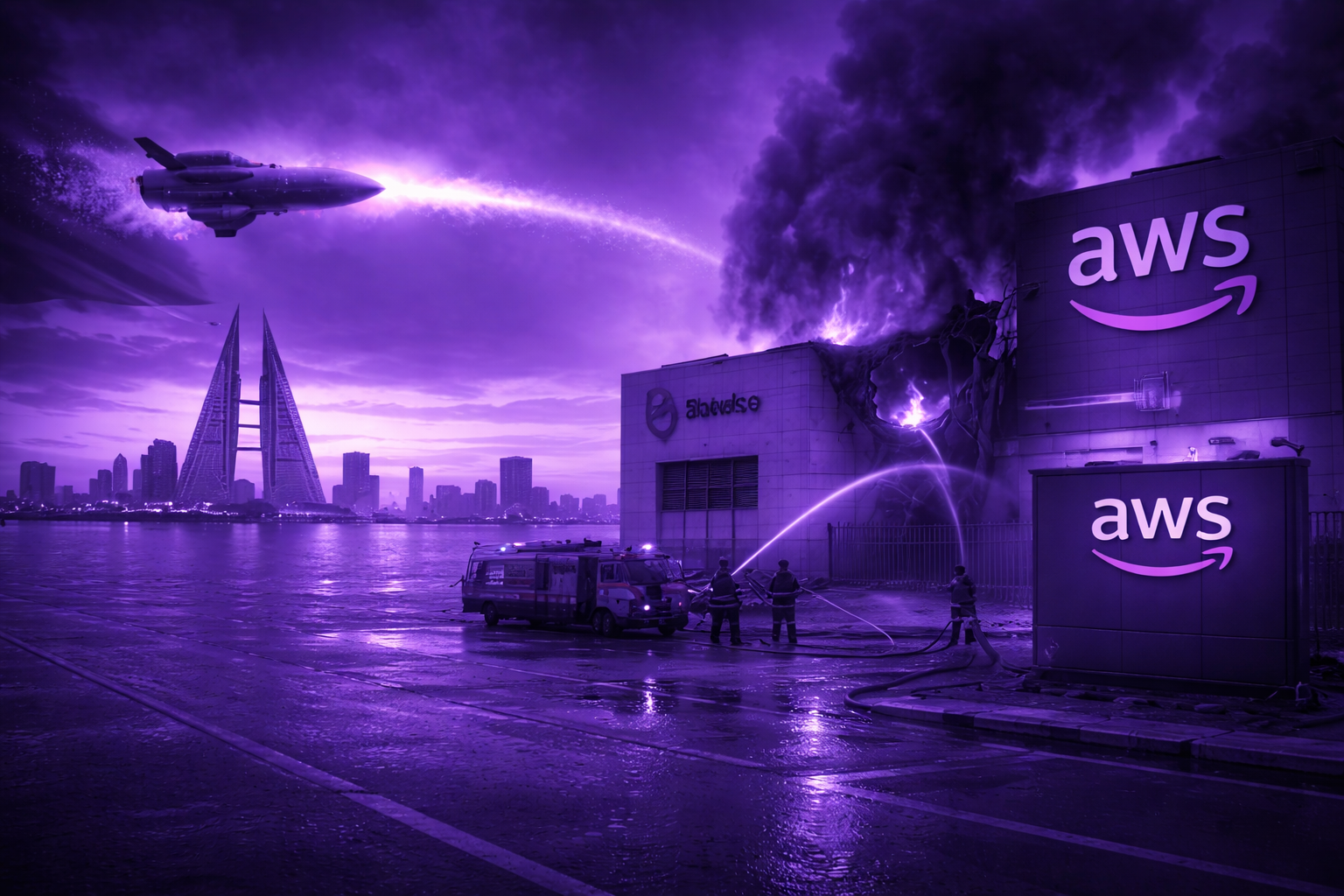
The emergence of affordable, capable drone technology as a tool of conflict has created a new physical threat vector for cloud infrastructure that disaster recovery strategies must account for. Data centres are large, energy-intensive facilities with external power infrastructure, cooling systems, and fibre connectivity that are difficult to fully protect against determined drone-based attacks. The concentration of cloud infrastructure in specific geographic regions, driven historically by economic and connectivity considerations, creates single-region risk profiles that become acutely concerning when the region in question is near a geopolitical hot spot. The AWS case study that has generated the most analysis in the disaster recovery community involves the company’s response planning for its European infrastructure following documented instances of drone activity near telecommunications and data centre facilities in Eastern European regions adjacent to active conflict zones. [1]
AWS’s response to this threat landscape has been instructive for the disaster recovery strategy community. The company accelerated the expansion of its availability zone footprint in geopolitically stable regions, increased investment in its transit backbone to reduce dependency on terrestrial fibre routes that pass through potentially vulnerable areas, and updated its shared responsibility documentation to be more explicit about the distinction between infrastructure resilience, which is AWS’s responsibility, and customer data and application recovery, which remains the customer’s responsibility. These changes reflect an acknowledgment that the threat landscape has changed in ways that require the cloud provider to invest more actively in conflict-resilient infrastructure design while also being more transparent with customers about the limits of what that investment can protect against.
For organizations in India, UAE, and Singapore using AWS infrastructure, the practical implication of these case studies is that disaster recovery strategies should never rely on the assumption that a major cloud provider’s infrastructure is itself invulnerable to conflict-related disruption. The cloud provider’s resilience investments reduce but do not eliminate the risk of conflict-related outages. Customer disaster recovery strategies must therefore include configurations that assume cloud provider infrastructure in a specific region can become unavailable and ensure that operations can continue without it, whether through multi-provider configurations, multi-region architectures, or hybrid cloud arrangements that maintain some on-premise capability as an ultimate fallback.
The major cloud providers and technology companies that provide the infrastructure backbone for global enterprise IT have responded to the geopolitical threat landscape with a series of infrastructure investments and policy changes that provide useful benchmarks for enterprise disaster recovery strategies. AWS, Microsoft Azure, and Google Cloud have all significantly expanded their availability zone footprint in geopolitically stable regions during the 2022 to 2026 period, adding infrastructure in locations chosen partly for their distance from active conflict zones and partly for their political stability and rule of law characteristics. India has been a significant beneficiary of this investment trend, with both AWS and Azure expanding their presence in Mumbai and Hyderabad, and Google Cloud investing heavily in its Chennai region, creating more options for Indian enterprises to build genuinely domestic multi-region disaster recovery strategies.
Beyond geographic expansion, major cloud providers have invested in satellite-based connectivity as a backup communication layer for their data centre networks, reducing dependency on terrestrial fibre routes that are vulnerable to physical attack. Starlink and other low-earth-orbit satellite constellations have been integrated into disaster recovery strategies by cloud providers and enterprises alike as a communications failover option that cannot be disrupted by the same physical attacks that might sever terrestrial cable infrastructure. This satellite connectivity layer is particularly relevant for organizations in geographically expansive markets like India, where terrestrial connectivity can be disrupted by infrastructure damage in ways that satellite communications can bridge.
Microsoft has been perhaps the most explicit of the major cloud providers in connecting its infrastructure investments to geopolitical risk management, publishing analysis of how its data sovereignty and geographic distribution strategies are designed to ensure continuity of service even in scenarios where specific regions become inaccessible due to conflict or sanctions. This transparency has been valuable for enterprise customers trying to understand how to design their disaster recovery strategies around cloud provider infrastructure in a way that accounts for geopolitical risk scenarios rather than only technical failure modes.
Multi-Region Disaster Recovery: A Must-Have in 2026
Multi-region disaster recovery has transitioned from a recommendation for large enterprises to a baseline requirement for any organization with critical digital operations, driven by the geopolitical and cyber threat landscape of 2026. A multi-region disaster recovery architecture distributes critical systems, data, and operational capability across multiple geographic locations in different regions, such that the failure or unavailability of any single region does not result in complete service disruption. The technical implementation of multi-region disaster recovery involves active-active configurations where multiple regions serve live traffic simultaneously and automatically absorb each other’s workloads when one region fails, active-passive configurations where a primary region handles all traffic while a secondary region maintains a warm standby that can be activated quickly when needed, and pilot light configurations where the secondary region maintains only minimal infrastructure that can be rapidly scaled up to full capacity when the primary region fails.
For organizations in India, implementing multi-region disaster recovery strategies typically involves configuring primary infrastructure in one of the two AWS or Azure regions in India, Mumbai or Hyderabad for AWS, and establishing a warm or hot secondary in the other. For the most critical systems, a third region outside India, such as Singapore or UAE, is added to provide complete geographic redundancy against scenarios where both Indian regions are affected simultaneously, whether by a natural disaster like the Mumbai flooding events that have historically disrupted data centres, or by a concentrated cyberattack campaign targeting Indian infrastructure. For UAE-based organizations, multi-region disaster recovery strategies typically span Dubai and Abu Dhabi as the primary domestic pair, with Singapore or a European region as the out-of-country failover destination.
The cost of multi-region disaster recovery has fallen significantly as cloud providers have reduced inter-region data transfer costs and made it easier to provision and manage resources across multiple regions through unified management planes. The remaining cost barrier for smaller organizations is primarily the ongoing cost of maintaining standby infrastructure that is not being used for production workloads but must remain ready for rapid activation. Serverless and auto-scaling architectures have made this standby cost more manageable by enabling secondary region infrastructure to scale to essentially zero when not needed while retaining the configuration and data replication necessary for rapid failover.
Why Single Cloud Dependency Is a Major Risk Today
Single cloud dependency, the practice of building all critical IT operations on a single cloud provider’s infrastructure, has been a common efficiency choice for organizations seeking to simplify procurement, management, and training. In 2026, this choice has become a recognized risk factor that sophisticated IT governance frameworks are actively working to mitigate. The risk is not primarily that cloud providers are unreliable. The major providers maintain impressive uptime statistics under normal conditions. The risk is that in the geopolitical threat scenarios that are now realistic planning cases for enterprise disaster recovery strategies, a single cloud provider’s regional infrastructure can become simultaneously unavailable across multiple facilities for reasons that the provider cannot quickly control or reverse.
The single cloud dependency risk manifests in several specific scenarios. A state-sponsored cyberattack targeting a specific cloud provider’s infrastructure across multiple regions simultaneously, as has been theorized and to limited degrees demonstrated in documented incidents, can create widespread service disruption that affects all customers of that provider regardless of which region they are hosted in. A regulatory or sanctions-related action by a government that forces a cloud provider to cease operations in a specific jurisdiction, a scenario that has occurred in various forms in different countries, creates immediate displacement for all customers in that jurisdiction who have not prepared alternative hosting options. A catastrophic software defect or operational error by the cloud provider, such as the cascading failures that have caused multi-region outages for major providers in the past, demonstrates that even without external attack, concentration in a single provider creates systemic risk that disaster recovery strategies must address.
Cyberattacks on Governments and Enterprises: Real Incidents

The documented record of cyberattacks on government and enterprise targets during geopolitical conflicts provides the most concrete evidence base for why disaster recovery strategies must be redesigned for the current threat environment. The period from 2022 to 2026 has produced an unprecedented volume of documented incidents that collectively paint a clear picture of how cyberattacks function as a component of modern geopolitical conflict. In Ukraine, government ministry websites and banking systems were hit with wiper malware and DDoS attacks in the days before and during the military conflict, demonstrating the integration of cyber and physical operations. In the Middle East, water treatment facility control systems were targeted by attacks attributed to state actors, a development that underscores how cyber operations can translate directly into physical harm by compromising industrial control systems that manage critical infrastructure.
Enterprise targets have not been spared. The Colonial Pipeline ransomware attack in the United States, while not directly attributable to a state actor in a geopolitical conflict context, demonstrated how a single successful cyberattack can disrupt critical physical infrastructure and create cascading effects across the economy. Similar attacks on energy, transportation, and financial infrastructure have been documented across multiple countries during the 2022 to 2026 period, many of them attributed by government cybersecurity agencies to actors operating in the context of geopolitical tensions. For organizations in India, UAE, and Singapore, the practical implication of these documented incidents is that disaster recovery strategies must include specific scenarios for attacks on industrial control systems, operational technology networks, and supply chain software, categories that traditional enterprise disaster recovery planning often overlooks in favours of focusing exclusively on IT systems.
How Ransomware and Data Leaks Increase During Conflicts
The correlation between geopolitical conflict and increased ransomware activity is one of the most clearly documented patterns in the cybersecurity threat landscape of the 2022 to 2026 period. Ransomware operators, whether acting under state direction, with state tolerance, or entirely independently, benefit from the distraction and resource diversion that accompanies conflict periods to conduct operations against organizations that are simultaneously dealing with other crisis management demands. The data is unambiguous: measured ransomware incident rates consistently spike during periods of heightened geopolitical tension in regions where significant ransomware operations are based. This is not coincidental. It is the operational logic of opportunistic and state-affiliated criminal organizations taking advantage of reduced law enforcement attention, increased target distraction, and in some cases explicit state encouragement to target adversary nations’ organizations.
Data leak incidents, where sensitive information is exfiltrated from targeted organizations and either published publicly, sold to adversaries, or held as leverage, have similarly increased during conflict periods. These incidents are particularly damaging for organizations in financial services, defense supply chains, and government contracting sectors, where the sensitivity of the data involved means that a successful exfiltration can have strategic consequences far beyond the immediate operational disruption. Disaster recovery strategies must address data leaks not only through backup and recovery procedures but through data classification, access control, and encryption measures that limit the volume and sensitivity of data that can be exfiltrated in a single incident, alongside monitoring capabilities that detect exfiltration activity before it reaches catastrophic scale.
Role of Disaster Recovery Engineers in Crisis Situations
The role of the disaster recovery engineer in the current threat environment has expanded significantly beyond its traditional scope of maintaining backup systems and documenting recovery procedures. In 2026, disaster recovery engineers are expected to be practitioners across the full spectrum of resilience disciplines: infrastructure architecture, security operations, cloud platform management, automation engineering, and crisis communications. During an active geopolitical-driven incident, the disaster recovery engineer is the technical authority who must assess the nature and scope of the disruption, execute or oversee the execution of recovery procedures under significant time pressure and often with degraded tooling, communicate progress and status to business leadership and regulatory bodies, and document the incident for post-event analysis and regulatory reporting.
The specific skills that distinguish effective disaster recovery engineers in the 2026 threat environment include deep expertise in multi-cloud and hybrid cloud architectures, practical experience with automated failover systems and infrastructure-as-code tooling, understanding of the specific threat techniques used by state-sponsored actors so that recovery decisions can be made with an understanding of whether the attack is ongoing or contained, familiarity with the regulatory reporting requirements of the jurisdictions in which the organization operates, and the personal resilience to perform effectively under the high-stress conditions that accompany major incident response. Organizations in India, UAE, and Singapore that have invested in disaster recovery engineers with this expanded capability profile have consistently demonstrated better outcomes during actual incidents than those that have treated disaster recovery as a documentation exercise managed by junior IT staff.
New Disaster Recovery Trends: AI, Automation and Real-Time Failover
The technological frontier of disaster recovery strategies in 2026 is being defined by the integration of artificial intelligence, sophisticated automation, and real-time monitoring into recovery architectures that can respond to threats faster than human operators can assess and react to them. AI-powered monitoring systems continuously analyze the health and performance of every component in an organization’s IT infrastructure, detecting anomalous patterns that might indicate an impending failure or an active attack. These systems can identify the subtle performance degradation that precedes a major outage by minutes or hours, enabling proactive intervention before the outage occurs rather than reactive recovery after it has happened. For conflict-driven incidents where the attack timeline may be compressed and the window for effective response narrow, this predictive capability is a genuine operational advantage that manual monitoring cannot replicate.
Real-time failover automation represents the most impactful evolution in disaster recovery strategies for the current threat environment. Traditional disaster recovery relied on human-initiated failover: an operations team member detecting an incident, escalating it through the appropriate channels, making the decision to initiate failover, and manually executing the failover runbook. In a conflict-driven incident where the attack is fast-moving and communications infrastructure may itself be disrupted, this human-in-the-loop model introduces delays that can allow the incident to progress significantly before recovery begins. Automated failover systems that can detect defined failure conditions and initiate failover procedures without human intervention eliminate this delay, enabling recovery to begin within seconds of the incident trigger rather than within the minutes to hours that human-initiated procedures typically require.
Infrastructure as code represents the third major trend reshaping disaster recovery strategies in 2026. When all infrastructure is defined in code and stored in version-controlled repositories, the ability to recreate an entire production environment from scratch in a new region or a new cloud provider is a matter of running a set of automated scripts rather than manually provisioning and configuring hundreds of individual resources. This capability, which would have seemed extraordinarily ambitious even five years ago, is now achievable with widely available tooling and is increasingly considered a baseline requirement for enterprise disaster recovery strategies in markets like Singapore and UAE where recovery time objectives for critical systems are measured in minutes rather than hours.
Future of Disaster Recovery in a World of Global Conflicts
The trajectory of disaster recovery strategies over the next three to five years will be shaped by the continuing evolution of geopolitical threats, the maturation of AI-powered recovery automation, and the progressive tightening of regulatory requirements for critical infrastructure resilience in every major jurisdiction. The organizations that will be best positioned to navigate this evolving environment are those that treat disaster recovery not as a compliance exercise or a cost centre but as a genuine strategic capability that provides competitive advantage during incidents that disable less prepared competitors. In the financial services sector in India, UAE, and Singapore, the ability to maintain operations during a major geopolitical cyber incident while competitors experience disruption creates direct business advantage that can attract customers, assets, and regulatory goodwill for years after the event.
Autonomous disaster recovery systems that require no human intervention for any aspect of the recovery process from detection through failover through verification and failback are the endpoint that the most advanced teams in the field are working toward. The current state of the art requires human approval for certain critical decisions, particularly around the decision to initiate full failover and the decision to failback to the primary environment after recovery. Future autonomous systems will make these decisions based on AI-driven analysis of the current system state, the recovery environment’s health, and the residual threat level, enabling complete, verified recovery from complex geopolitical incidents in timeframes that no human-supervised process can match. The disaster recovery strategies of 2030 will look as different from those of 2026 as the strategies of 2026 look from those of 2016, and organizations that begin building the foundational capabilities today will be measurably better prepared for the threat environment of the future.
Regulatory convergence around minimum disaster recovery standards is another significant trend that will shape the future of disaster recovery strategies. As regulators in India, UAE, Singapore, and globally recognize that cyber threats in geopolitical conflict contexts are a systemic risk to financial stability and critical infrastructure, they are progressively moving toward mandatory minimum standards for recovery time objectives, backup frequency, geographic redundancy, and failover testing frequency. Organizations that implement robust disaster recovery strategies ahead of these mandates will find that compliance becomes a byproduct of operational excellence rather than an additional burden. Those that wait for regulatory mandate will face the challenge of retrofitting disaster recovery capabilities under regulatory pressure and often at higher cost than proactive implementation would have required.
Disaster Recovery Strategy Maturity by Organization Type (2026)
Disaster Recovery Strategies by Architecture Type
| Architecture | RTO | RPO | Cost Level | Best For |
|---|---|---|---|---|
| Active-Active | Seconds | Near zero | Very High | Financial, critical systems |
| Active-Passive | Minutes | Minutes | High | Enterprise business systems |
| Warm Standby | 10-30 min | Hours | Moderate | Important internal systems |
| Pilot Light | 1-4 hours | Hours | Low-Moderate | Non-critical business systems |
| Backup Restore | Hours to Days | Days | Low | Low priority archive systems |
Frequently Asked Questions
Q1.1. What are disaster recovery strategies and why are they more important in 2026?
Disaster recovery strategies are structured plans and technical systems that enable organizations to restore IT operations after a disruptive event. In 2026, they are more critical than ever because geopolitical conflicts, state-sponsored cyberattacks, and physical attacks on cloud infrastructure have created a new category of enterprise risk that traditional business continuity plans were never designed to address.
Q2.2. How have geopolitical tensions changed disaster recovery planning?
Geopolitical tensions have forced organizations to rethink disaster recovery strategies from a compliance and technical exercise into a genuine national security consideration. Companies in India, UAE, Singapore, and globally are now evaluating their cloud providers’ geographic exposure, building multi-region redundancy to avoid dependency on data centres in conflict zones, and incorporating cyber warfare scenarios into their recovery testing frameworks.
Q3.3. What happened to AWS data centres during recent conflict zones?
There have been documented cases of cloud infrastructure disruption in regions affected by armed conflict, including drone strikes near data centre facilities and cable infrastructure damage affecting connectivity. These incidents have forced major cloud providers to accelerate their geographic redundancy investments and have pushed enterprise disaster recovery strategies toward assuming physical infrastructure attacks as a realistic threat rather than an edge case.
Q4.4. What is multi-region disaster recovery and do all businesses need it?
Multi-region disaster recovery involves distributing your IT systems and data across multiple geographic locations so that if one region becomes unavailable due to conflict, natural disaster, or technical failure, operations continue from another region with minimal interruption. In 2026, multi-region disaster recovery is no longer optional for any business with critical digital operations, regardless of size, because the risk of single-region dependency has become demonstrably unacceptable.
Q5.5. How do cyberattacks increase during geopolitical conflicts?
During periods of geopolitical tension, state-sponsored hacking groups significantly increase their activity against adversary nations’ infrastructure, targeting government systems, financial institutions, energy networks, telecommunications, and large enterprises. The 2022 to 2026 period has seen documented spikes in ransomware attacks, data exfiltration attempts, and destructive wiper malware deployments coinciding with active military conflicts, demonstrating the direct correlation between physical conflict and digital threat escalation.
Q6.6. What role does AI play in modern disaster recovery strategies?
AI is transforming disaster recovery strategies by enabling real-time threat detection, automated failover triggering, predictive failure analysis, and intelligent traffic rerouting during incidents. AI-powered recovery systems can detect anomalous patterns that indicate an impending attack or infrastructure failure before it becomes critical, initiate recovery procedures automatically, and provide operations teams with prioritized recovery recommendations based on the current state of all systems simultaneously.
Q7.7. What is the difference between backup and disaster recovery?
Backup is the process of creating copies of data so that it can be restored if lost. Disaster recovery is a comprehensive strategy that encompasses backup but goes much further, including the restoration of entire IT environments, application availability, network connectivity, and business process continuity. Backup answers the question of whether your data can be recovered. Disaster recovery strategies answer the question of whether your entire business can continue operating after a major disruptive event.
Q8.8. How long should a disaster recovery plan take to restore operations?
Recovery time objectives, or RTOs, define the maximum acceptable time for systems to be restored after an incident. For critical financial and government systems, RTOs are typically measured in minutes. For enterprise business systems, RTOs range from one to four hours. For non-critical systems, RTOs may extend to 24 hours or beyond. The target RTO drives the investment required in disaster recovery strategies: faster recovery objectives require more infrastructure, more automation, and more ongoing investment.
Q9.9. Are cloud providers responsible for disaster recovery if their infrastructure is attacked?
Cloud providers are responsible for the infrastructure and physical security of their facilities under the shared responsibility model. However, the disaster recovery strategies for the applications and data running on that infrastructure are the customer’s responsibility. If AWS, Azure, or Google Cloud experiences an outage due to a physical attack or cyberattack on their systems, the provider works to restore infrastructure, but customers must have their own disaster recovery strategies in place to handle the service interruption.
Q10.10. How do businesses in India and UAE build effective disaster recovery strategies in 2026?
Businesses in India should leverage CERT-In guidelines and work with cloud providers who have local availability zones in Mumbai and Hyderabad. UAE businesses benefit from Abu Dhabi and Dubai cloud regions from major providers. Both markets should implement multi-region architectures spanning at least two geographic zones, conduct regular failover testing, maintain offline backups in separate jurisdictions, and engage experienced disaster recovery engineers who understand the specific regulatory and threat environments of their markets.
Explore Services
Related Services
Reviewed by

Aman Vaths
Founder of Nadcab Labs
Aman Vaths is the Founder & CTO of Nadcab Labs, a global digital engineering company delivering enterprise-grade solutions across AI, Web3, Blockchain, Big Data, Cloud, Cybersecurity, and Modern Application Development. With deep technical leadership and product innovation experience, Aman has positioned Nadcab Labs as one of the most advanced engineering companies driving the next era of intelligent, secure, and scalable software systems. Under his leadership, Nadcab Labs has built 2,000+ global projects across sectors including fintech, banking, healthcare, real estate, logistics, gaming, manufacturing, and next-generation DePIN networks. Aman’s strength lies in architecting high-performance systems, end-to-end platform engineering, and designing enterprise solutions that operate at global scale.