Ai Overview
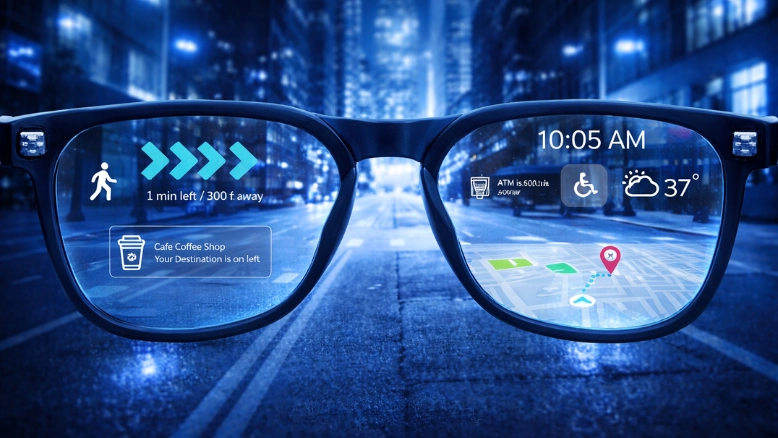
Understanding AR VR development cost breakdown is essential for businesses planning immersive technology projects in 2025. Game engines like Unity Pro ($2,040 per seat annually) or Unreal Engine (5% royalty on gross revenue after $1 million) provide the development foundation. Professional 3D modeling platforms including Autodesk Maya ($1,875/year), Blender (free but requires training investment), and substance painting tools ($219/year) enable content creation.
Understanding AR VR development cost breakdown is essential for businesses planning immersive technology projects in 2025. Development expenses typically range from $30,000 for basic mobile AR applications to over $500,000 for complex multiplayer VR environments, with costs determined by platform choice, team composition, content complexity, and integration requirements.
Key Takeaways
- Core cost drivers include hardware requirements, software licenses, and specialized team expertise spanning developers to 3D artists
- Platform selection between mobile AR, standalone VR, and WebXR significantly impacts budget allocation and development timelines
- Hidden expenses like 3D content creation, multi-device testing, and post-launch maintenance often add 30-40% to initial estimates
- Project complexity multipliers include spatial mapping sophistication, multiplayer infrastructure, and third-party system integrations
- MVP-focused development with asset reusability and hybrid team models can reduce costs by 25-35% without sacrificing quality
What Are the Core Components That Drive AR VR Development Costs?
The foundation of any AR VR development cost breakdown begins with three primary expense categories that determine your baseline investment. Hardware requirements form the first pillar, encompassing development kits for target devices like Meta Quest 3 ($499 per unit), HTC Vive Pro 2 ($799), or mobile AR testing devices across iOS and Android platforms. Development teams typically need 3-5 devices for comprehensive testing, plus specialized equipment like motion capture systems ($15,000-$50,000) for advanced projects. Licensing fees for proprietary SDKs and tracking technologies can add $5,000-$20,000 annually depending on deployment scale.
Software development tools constitute the second major cost driver. Game engines like Unity Pro ($2,040 per seat annually) or Unreal Engine (5% royalty on gross revenue after $1 million) provide the development foundation. Professional 3D modeling platforms including Autodesk Maya ($1,875/year), Blender (free but requires training investment), and substance painting tools ($219/year) enable content creation. Cloud rendering services for complex scenes cost $0.50-$2.00 per compute hour, accumulating quickly during intensive development phases.
Team composition represents the largest ongoing expense in augmented reality development cost calculations. A typical mid-sized project requires senior developers ($80-$150/hour), 3D artists and modelers ($60-$120/hour), UX designers specializing in spatial interfaces ($70-$130/hour), and QA specialists familiar with immersive testing protocols ($50-$90/hour). A six-month project with a five-person team averages $180,000-$360,000 in labor costs alone. Specialized roles like spatial computing engineers or photogrammetry experts command premium rates of $120-$180/hour.
| Cost Component | Budget Range | Typical Allocation |
|---|---|---|
| Hardware & Devices | $2,000 – $75,000 | 5-8% of total budget |
| Software Licenses & Tools | $5,000 – $25,000 | 8-12% of total budget |
| Development Team Labor | $120,000 – $450,000 | 60-70% of total budget |
| 3D Content Creation | $15,000 – $80,000 | 10-15% of total budget |
| Testing & QA | $8,000 – $35,000 | 5-8% of total budget |
How Do Platform Choices Impact Your AR VR Development Budget?
Platform selection creates dramatic variations in virtual reality development budget requirements. Mobile AR development using Apple’s ARKit or Google’s ARCore typically costs $30,000-$80,000 for moderate complexity applications, leveraging existing smartphone hardware and established development frameworks. These platforms offer lower barriers to entry since users don’t need specialized equipment, but they impose performance constraints that limit visual fidelity and interaction complexity. Development cycles run 3-5 months for standard applications.
Standalone VR headsets like Meta Quest 3 or Pico 4 require $60,000-$180,000 for comparable experiences due to higher graphical demands, spatial audio implementation, and controller integration complexity. These platforms demand optimization for mobile chipsets while delivering immersive 6DOF (six degrees of freedom) experiences. PC-tethered VR systems (HTC Vive, Valve Index) enable superior graphics but narrow your audience and add $20,000-$40,000 in development costs for high-fidelity rendering and performance optimization across varied PC configurations.
WebXR development presents an intriguing middle ground for AR VR project pricing. Browser-based experiences cost $40,000-$120,000 and eliminate app store barriers, reaching users across devices without downloads. However, WebXR currently offers reduced performance compared to native applications and limited access to advanced device features. Cross-platform development strategies using frameworks like Unity’s XR Plugin Framework add 25-40% to initial development time but reduce per-platform costs by 60% compared to building separate native applications for each target device. Similar to Blockchain MLM Platform development, cross-platform approaches require upfront architectural investment that pays dividends at scale.
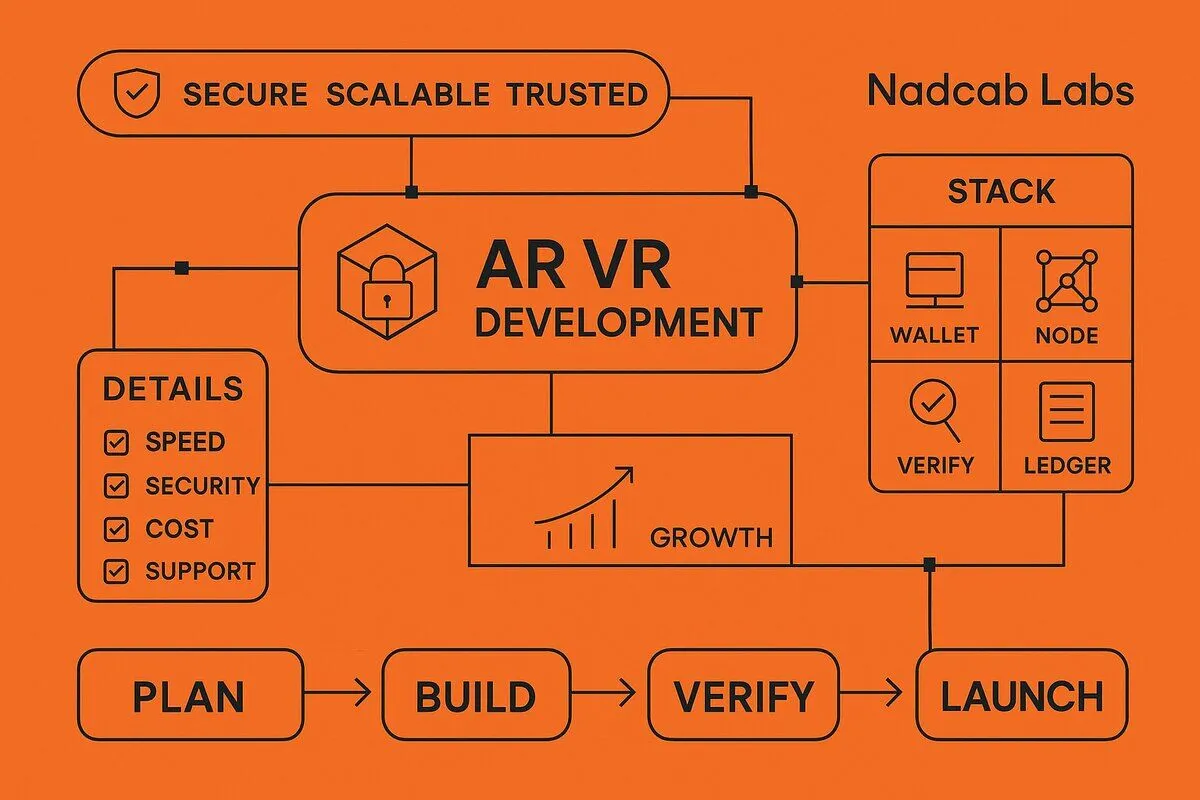
Platform Development Process Flow
Analyze target audience devices
Configure development environment
Build features and interactions
Optimize for target platforms
Launch across chosen platforms
What Hidden Costs Should You Account for in AR VR Projects?
Content creation expenses represent the most commonly underestimated component of immersive technology development expenses. Professional 3D asset modeling for a single high-quality environment costs $3,000-$12,000, while character models with full rigging and animation range from $2,500-$15,000 each. A typical VR experience requires 15-30 unique assets, quickly accumulating $45,000-$180,000 in modeling costs. Spatial audio design adds another $8,000-$25,000 for professional sound engineering, including positional audio implementation and environmental acoustics that make virtual spaces feel authentic.
Photogrammetry workflows for realistic environment scanning demand specialized equipment ($5,000-$15,000) and processing time. A single high-quality scanned location requires 500-2,000 photographs, 40-80 hours of processing, and 20-30 hours of cleanup work, totaling $4,000-$8,000 per location. Animation costs scale dramatically with complexity: simple object animations run $500-$2,000, while full character motion capture sessions cost $10,000-$30,000 per day including studio rental, actor fees, and post-processing.
Testing and optimization consume 20-30% of total AR VR development team cost in professional projects. Multi-device testing across 8-12 hardware configurations requires dedicated QA personnel spending 200-400 hours identifying platform-specific bugs, performance bottlenecks, and user experience issues. Performance optimization for maintaining 72-90 FPS (essential for VR comfort) demands specialized expertise, often requiring 100-200 additional development hours at $90-$140/hour. User experience refinement through iterative testing with 15-30 participants costs $8,000-$20,000 but significantly improves final product quality.
Post-launch maintenance frequently catches organizations unprepared. Cloud infrastructure for multiplayer features costs $200-$2,000 monthly depending on concurrent user capacity and data transfer volumes. Platform SDK updates require 40-80 development hours quarterly to maintain compatibility as Meta, Apple, and Google release new hardware and software versions. Content updates and feature additions average $5,000-$15,000 monthly for active applications. Much like Tokenization Cost Factors in blockchain projects, ongoing operational expenses require careful budget planning beyond initial development.
How Does Project Complexity Affect AR VR Development Pricing?
Simple marker-based AR applications represent the entry tier of metaverse development cost factors. These experiences, which overlay digital content when users scan specific images or QR codes, cost $30,000-$60,000 for basic implementations. Development timelines run 2-3 months and require modest teams of 2-3 developers plus a designer. Marker-based AR works reliably across devices but offers limited interactivity and doesn’t understand surrounding environments, making it suitable for marketing activations, product visualization, or educational content with constrained budgets.
Spatial mapping and environment recognition systems multiply complexity and costs significantly. SLAM (Simultaneous Localization and Mapping) implementations that understand room geometry, detect surfaces, and place persistent virtual objects cost $80,000-$180,000. These systems require computer vision specialists, extensive testing across varied environments, and sophisticated algorithms that track user position while building 3D environment maps in real-time. Development extends to 5-8 months and demands teams of 5-7 specialists including spatial computing engineers billing at premium rates.
Single-user experiences versus multiplayer metaverse environments create perhaps the largest cost differential in XR development budget planning. A polished single-user VR training simulation costs $100,000-$200,000, while comparable multiplayer experiences with real-time synchronization start at $250,000 and easily exceed $500,000. Multiplayer infrastructure requires backend servers, networking specialists, state synchronization systems, and extensive testing for latency, packet loss, and concurrent user scenarios. Voice chat integration adds $15,000-$30,000, while persistent world features where user actions affect shared environments demand additional database architecture and ongoing server costs.
Integration complexity with external systems dramatically impacts final pricing. Basic analytics integration adds $5,000-$10,000, while enterprise system connections (CRM, ERP, LMS platforms) require $20,000-$60,000 in custom API development and testing. Blockchain integration for NFT-based assets or decentralized ownership, similar to MLM Cost Breakdown considerations, adds $40,000-$100,000 for smart contract development, wallet integration, and transaction handling. AI-powered features like intelligent NPCs or adaptive difficulty systems require machine learning specialists and add $30,000-$80,000 plus ongoing training costs. IoT device integration for industrial AR applications (connecting to sensors, machinery, or building systems) ranges from $25,000-$75,000 depending on protocol complexity and device variety.
Development Cost by Project Complexity
What Budget Optimization Strategies Work Best for AR VR Development?
The MVP (Minimum Viable Product) approach delivers the most effective cost reduction for AR VR app development pricing without compromising core value. Start by identifying the 3-5 essential features that demonstrate your concept’s unique value proposition, deferring advanced capabilities to subsequent releases. A focused MVP costs 40-55% less than a full-featured initial release while reaching market 3-5 months faster. This strategy enables real user feedback before committing resources to features that might not resonate with your audience. Document deferred features in a prioritized roadmap, implementing them iteratively based on actual usage data and user requests rather than assumptions.
For example, a VR training application might launch with basic environment navigation and core instructional content, adding multiplayer collaboration, advanced analytics, and procedural scenario generation in phases two and three. This approach transformed a $280,000 full-scope project into a $120,000 MVP that validated market fit before additional investment, similar to how ICO Pricing strategies focus on essential token functionality before advanced features.
Asset reusability strategies significantly reduce content creation expenses. Building a component library of modular 3D assets (furniture, architectural elements, vegetation, UI components) costs $15,000-$30,000 upfront but reduces per-project asset costs by 35-50% across multiple applications. Leveraging existing 3D model marketplaces like Sketchfab, TurboSquid, or Unreal Marketplace provides quality assets at $20-$200 each versus $2,000-$8,000 for custom modeling. Template utilization from asset stores offers complete environment starting points for $50-$500, requiring only customization rather than building from scratch.
Procedural generation techniques create varied content algorithmically, reducing manual modeling time. A procedural building system might cost $12,000 to develop but generates unlimited architectural variations, while manual modeling of equivalent variety would cost $80,000-$150,000. Similar approaches work for terrain generation, crowd simulation, and texture variation. Integration with tools like Cost of Cryptocurrency Wallet Creation demonstrates how reusable components reduce development time across projects.
Hybrid team models optimize AR VR development cost breakdown by combining permanent staff with specialized contractors. Maintain in-house expertise for core competencies like application architecture, user experience design, and project management (2-3 full-time roles), while engaging contractors for specialized needs like photogrammetry, motion capture, or advanced shader programming (project-based). This approach reduces fixed overhead by 30-40% compared to full in-house teams while accessing expert-level skills for specific requirements.
Offshore development partnerships offer 40-60% cost savings when managed effectively. Eastern European developers charge $40-$80/hour versus $80-$150/hour domestically, while maintaining strong technical skills. Asian markets offer even lower rates ($25-$60/hour) but may require more intensive project management. Success requires clear specifications, regular communication cadences, and overlap hours for real-time collaboration. Consider hybrid models where core architecture happens domestically while asset creation and testing distribute globally, similar to strategies used in Solana Token development for blockchain projects.
Open-source tools and frameworks reduce licensing costs substantially. Blender provides professional 3D modeling capabilities without subscription fees, while Godot Engine offers capable XR development for projects not requiring Unity or Unreal’s advanced features. WebXR frameworks like A-Frame and Babylon.js enable browser-based experiences without commercial engine royalties. These choices work best for teams with technical depth to navigate less polished documentation and smaller community support compared to commercial alternatives.
Strategic partnerships with hardware manufacturers sometimes provide development kits, technical support, and marketing exposure in exchange for platform exclusivity or featured placement. Meta’s Oculus Start program, HTC’s Vive X accelerator, and similar initiatives offer resources worth $10,000-$50,000 to qualifying projects. Educational and non-profit initiatives often access additional discounts on software licenses and development tools, reducing baseline costs by 15-30%. These opportunities require early application and alignment with platform holder priorities but deliver significant value for suitable projects, comparable to benefits seen in Trust Wallet Listing fee structures for blockchain applications.
Final Thoughts
Effective AR VR development cost breakdown planning requires understanding the interplay between platform choices, team composition, content complexity, and hidden operational expenses. Projects in 2025 range from $30,000 for focused mobile AR experiences to over $500,000 for sophisticated multiplayer metaverse platforms, with the majority of costs concentrated in specialized labor and 3D content creation. Strategic approaches including MVP development, asset reusability, and hybrid team models reduce expenses by 25-35% while maintaining quality standards. Success demands realistic budgeting that accounts for testing, optimization, and post-launch maintenance, ensuring your immersive experience delivers value throughout its lifecycle. Like infrastructure considerations in Mining Rigs for blockchain operations, proper resource allocation determines project viability and long-term success in the competitive XR landscape.
Frequently Asked Questions
Q1.What is the average cost range for developing a basic AR application versus a full VR experience?
A basic AR application typically costs $20,000-$50,000, covering simple marker-based tracking and basic interactions. A full VR experience ranges from $50,000-$300,000+, depending on complexity, environment detail, and interaction mechanics. Enterprise-grade VR solutions with advanced features can exceed $500,000. Development time, platform choice, and custom 3D asset requirements significantly influence final costs.
Q2.How much should I budget for 3D content creation and asset development in AR VR projects?
3D content creation typically represents 30-40% of total AR VR development costs. Budget $5,000-$15,000 per high-quality 3D model for complex assets. Simple objects cost $500-$2,000 each. Environment design ranges from $10,000-$100,000 depending on detail level. Animation, texturing, and optimization add 20-30% to base modeling costs. Pre-built asset libraries can reduce expenses by 40-60%.
Q3.What are the ongoing maintenance and hosting costs for AR VR applications after launch?
Ongoing maintenance typically costs 15-20% of initial development annually. Cloud hosting for VR applications ranges from $200-$2,000 monthly depending on user load and data requirements. Budget for platform updates, bug fixes, content updates, and server infrastructure. Multiplayer VR experiences require higher hosting costs ($1,000-$5,000 monthly) for real-time synchronization and data management.
Q4.How does choosing between Unity and Unreal Engine affect development costs and timelines?
Unity development typically costs 10-20% less due to larger developer availability and faster prototyping. Unity projects average 3-6 months for medium complexity. Unreal Engine offers superior graphics but requires specialized developers at $80-$150/hour versus Unity’s $60-$120/hour. Unreal projects may take 20-30% longer but deliver photorealistic visuals ideal for high-end VR experiences.
Q5.What team size and skill sets are required for different types of AR VR projects?
Basic AR projects need 2-4 developers (Unity/AR developer, UI designer) for 2-4 months. Mid-level VR experiences require 5-8 specialists (VR developers, 3D artists, UX designer, QA tester) for 4-8 months. Enterprise metaverse projects need 10-20+ team members including blockchain developers, backend engineers, DevOps, and project managers for 8-18 months development cycles.
Q6.How can blockchain integration in metaverse projects impact the overall development budget?
Blockchain integration adds 25-40% to base development costs. Smart contract development costs $15,000-$50,000 depending on complexity. NFT marketplace integration adds $20,000-$80,000. Wallet integration and cryptocurrency payment systems require $10,000-$30,000. Security audits cost $5,000-$20,000. Ongoing blockchain infrastructure and gas fees add $500-$3,000 monthly to operational expenses.
Explore Services
Related Services
Reviewed by

Aman Vaths
Founder of Nadcab Labs
Aman Vaths is the Founder & CTO of Nadcab Labs, a global digital engineering company delivering enterprise-grade solutions across AI, Web3, Blockchain, Big Data, Cloud, Cybersecurity, and Modern Application Development. With deep technical leadership and product innovation experience, Aman has positioned Nadcab Labs as one of the most advanced engineering companies driving the next era of intelligent, secure, and scalable software systems. Under his leadership, Nadcab Labs has built 2,000+ global projects across sectors including fintech, banking, healthcare, real estate, logistics, gaming, manufacturing, and next-generation DePIN networks. Aman’s strength lies in architecting high-performance systems, end-to-end platform engineering, and designing enterprise solutions that operate at global scale.