Ai Overview
Cloud computing has moved from a competitive differentiator to a foundational requirement across virtually every industry in 2026. Gartner estimates that enterprises without active cloud management tooling waste an average of 32% of their cloud spend annually on unused reserved instances, overprovisioned virtual machines, orphaned storage volumes, and zombie resources that no longer serve active workloads.
Key Takeaways
- A cloud management platform provides centralized control, visibility, and automation across multiple cloud environments — eliminating the operational fragmentation that plagues enterprises running workloads across AWS, Azure, Google Cloud, and private clouds simultaneously.
- Multi-cloud adoption has passed the tipping point: over 87% of enterprises now operate workloads across more than one cloud provider, making a unified cloud management platform not a luxury but a baseline operational requirement.
- The best cloud management platforms in 2026 go far beyond simple dashboards — they deliver AI-powered cost optimization, automated compliance enforcement, predictive performance monitoring, and intelligent workload orchestration from a single control plane.
- Cloud cost waste remains the most urgent business problem that cloud management platforms address: enterprises without active cost management tooling waste an average of 32% of their cloud spend on unused or overprovisioned resources every year.
- Security and compliance management through a unified cloud management platform dramatically reduces the attack surface created by inconsistent security policies across different cloud environments and provider-specific configuration interfaces.
- Automation and orchestration capabilities are the differentiating features that separate enterprise-grade cloud management platforms from basic monitoring tools — the ability to provision, scale, and decommission infrastructure programmatically across clouds is what drives real operational efficiency gains.
- Choosing the right cloud management platform requires matching platform capabilities to your specific cloud footprint, security requirements, compliance obligations, and internal team technical depth — there is no single best platform for every organization.
- FinOps integration — the practice of financial accountability for cloud spending — is becoming a standard feature of leading cloud management platforms, enabling engineering, finance, and operations teams to collaborate on cloud cost decisions with shared real-time data.
- AI-powered cloud automation is the defining next-generation capability in cloud management platforms, enabling predictive scaling, intelligent anomaly detection, and self-healing infrastructure that reduces both operational costs and downtime simultaneously.
- Organizations that invest in a mature cloud management platform consistently achieve 25–40% reductions in cloud infrastructure costs and significantly faster deployment cycles compared to teams managing multi-cloud environments through provider-native tools alone.
Introduction: Why Cloud Management Has Become Enterprise-Critical in 2026
The Multi-Cloud Reality and the Problem It Creates
Cloud computing has moved from a competitive differentiator to a foundational requirement across virtually every industry in 2026. But as enterprises have matured in their cloud adoption, a new and more complex problem has emerged: most organizations are no longer managing one cloud — they are managing three, four, or five simultaneously. AWS hosts the core application workloads. Azure runs the Microsoft-integrated productivity and identity systems. Google Cloud handles the data analytics and machine learning pipelines. A private cloud carries the sensitive workloads that regulatory requirements keep off public infrastructure. And somewhere in the mix, a legacy on-premise environment is slowly being migrated. Each of these environments comes with its own management console, its own billing interface, its own security configuration model, and its own performance monitoring toolset. The result is a sprawling, fragmented operational landscape where IT teams spend more time navigating between provider portals than actually optimizing the infrastructure they manage. This is the problem that a cloud management platform is built to solve — and why 2026 has become the year that enterprises are treating unified cloud management as a strategic priority rather than a technical nice-to-have.
The Cost of Getting Cloud Management Wrong
The financial and operational consequences of managing multi-cloud environments without a unified cloud management platform are substantial and well-documented. Gartner estimates that enterprises without active cloud management tooling waste an average of 32% of their cloud spend annually on unused reserved instances, overprovisioned virtual machines, orphaned storage volumes, and zombie resources that no longer serve active workloads. Beyond pure cost waste, fragmented management creates dangerous security gaps: when different cloud environments are governed by different security teams using different policy frameworks, misconfigurations inevitably occur at the boundaries — and those boundary misconfigurations represent the majority of serious cloud security incidents. A cloud management platform that enforces unified governance policies across all environments simultaneously closes these gaps structurally rather than relying on manual consistency checks that fail under operational pressure.
What Is a Cloud Management Platform?
Definition and Core Architecture
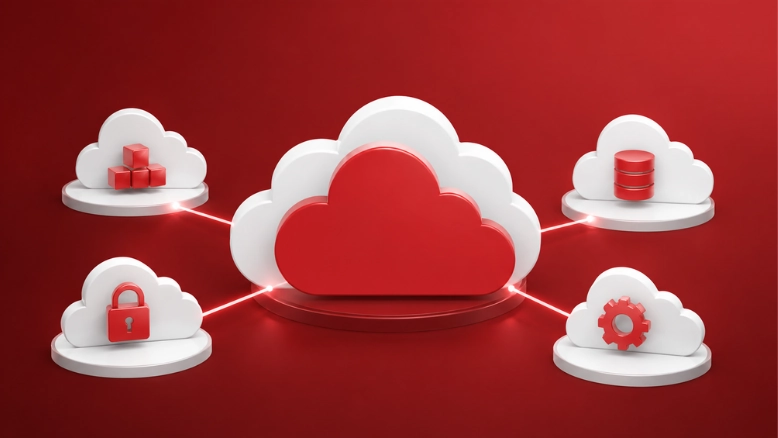
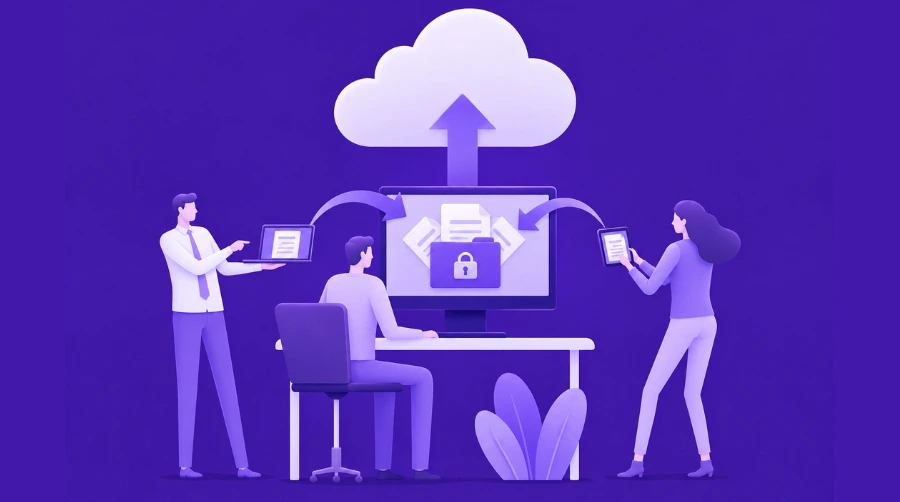
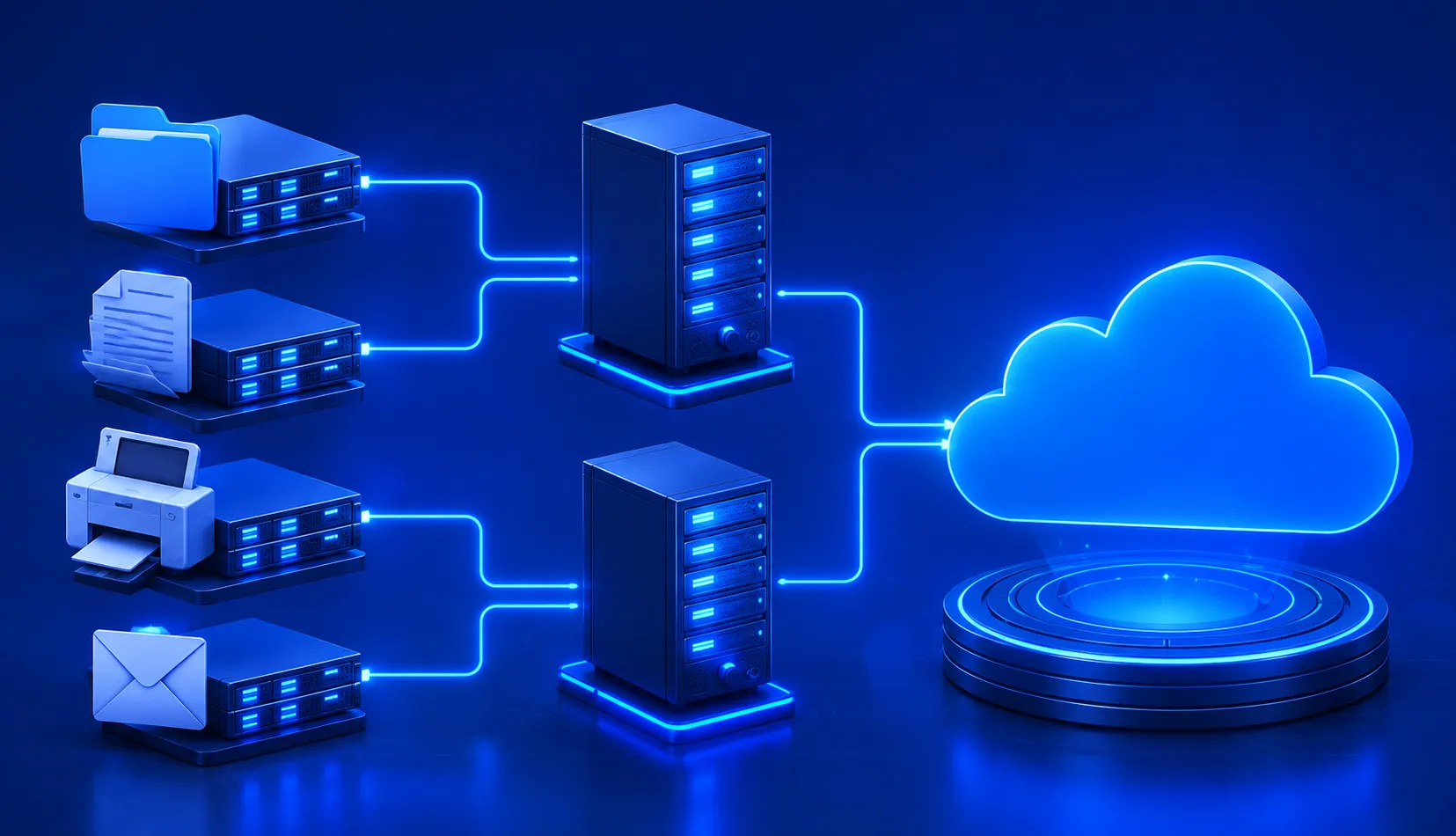
A cloud management platform is a unified software system that provides centralized visibility, control, and automation across multiple cloud environments including public clouds from providers like AWS Platform, Microsoft Azure, and Google Cloud, private cloud infrastructure, and hybrid combinations of both. Rather than requiring IT teams to log into separate provider consoles to manage each environment individually, a cloud management platform aggregates all cloud resources, services, costs, security policies, and performance metrics into a single interface from which the entire cloud estate can be governed. The platform connects to each cloud environment through APIs and provider-specific integrations, translating the different management models of each provider into a consistent operational layer that behaves the same way regardless of which underlying cloud is being managed.
The difference between cloud infrastructure and cloud management is important to understand clearly. Cloud infrastructure refers to the actual compute, storage, networking, and database resources that run on cloud providers. A cloud management platform is the operational layer that sits above that infrastructure — it does not replace the infrastructure but provides the tools to provision, monitor, optimize, secure, and automate it across all providers from a single control plane. Think of it as the air traffic control system for your entire cloud estate: the planes (workloads) fly on different airlines (cloud providers), but they are all managed and coordinated through a single unified system that ensures they operate efficiently, safely, and within budget.
Unified Control Plane
Single dashboard aggregating all cloud resources, services, and configurations across every connected provider and region into one operational view.
Cost Management Engine
Real-time spend tracking, usage-based cost allocation, waste identification, and forecasting across all cloud accounts and providers simultaneously.
Security and Compliance
Unified policy enforcement, configuration compliance monitoring, identity and access management, and automated threat detection across all cloud environments.
Automation and Orchestration
Infrastructure-as-code provisioning, automated deployment workflows, workload scheduling, and event-driven automation that executes across cloud boundaries.
Performance Monitoring
Real-time metrics, resource utilization analytics, SLA tracking, anomaly detection, and capacity planning intelligence across the entire multi-cloud estate.
Backup and Recovery
Automated backup scheduling, cross-cloud replication, recovery point and time objective management, and disaster recovery orchestration from a unified interface.
Understanding Multi-Cloud Environments
What Is a Multi-Cloud Environment?
A multi-cloud environment is an IT architecture where an organization uses services from two or more public cloud providers simultaneously, typically alongside some form of private cloud or on-premise infrastructure. A representative enterprise multi-cloud deployment in 2026 might use AWS for core application hosting and serverless compute, Microsoft Azure for Active Directory integration, Office 365 connectivity, and Windows-native workloads, Google Cloud for BigQuery analytics and Vertex AI machine learning pipelines, and a private cloud for regulated data workloads that cannot leave a specific geographic boundary. These environments do not operate independently — workloads, data, and users move between them continuously, creating a management surface that is fundamentally more complex than any single cloud environment regardless of scale.
Why Businesses Use Multi-Cloud Strategies
Avoiding Vendor Lock-In
Using multiple providers prevents dependency on any single vendor’s pricing, roadmap, or availability — giving organizations genuine negotiating leverage and migration flexibility.
Scalability and Flexibility
Workloads can be placed on the cloud provider with the best price-performance for each specific requirement, enabling optimization that no single-provider deployment can match.
Improved Disaster Recovery
Distributing workloads across multiple providers ensures that a single provider outage cannot take down the entire business — a critical resilience advantage for mission-critical applications.
Cost Optimization
Competitive bidding between providers and the ability to match workload pricing models to each provider’s strengths creates cost savings unavailable in single-provider architectures.
Challenges of Managing Multi-Cloud Infrastructure
The strategic benefits of multi-cloud come with genuine operational challenges that a well-chosen cloud management platform must address directly. Without a unified management layer, these challenges compound as the number of cloud environments grows creating a management debt that eventually undermines the cost and agility benefits that multi-cloud was supposed to deliver.
Resource Visibility Issues
Without a unified inventory, teams lose track of what is running where, leading to zombie resources, shadow IT proliferation, and inability to perform accurate capacity planning across the full cloud estate.
Security Complexity
Each cloud provider has a different security model, different IAM syntax, and different configuration options. Maintaining consistent security policies manually across three or more environments is operationally unsustainable and error-prone.
Performance Monitoring Difficulties
Application performance issues that span multiple cloud environments require correlating metrics from separate monitoring systems — a time-consuming process that extends mean time to resolution for incidents with cross-cloud root causes.
Compliance and Governance Concerns
Demonstrating compliance with GDPR, SOC 2, HIPAA, or PCI-DSS across a multi-cloud environment requires consolidated audit trails and policy evidence that provider-native tools cannot supply in a cross-cloud format auditors accept.
Core Features of the Best Cloud Management Platform
The feature set that distinguishes a best-in-class cloud management platform from a basic monitoring dashboard spans six critical capability domains. Each represents a dimension where the platform must deliver genuine operational value not just visibility, but actionable intelligence and automated intervention that reduces the burden on IT teams managing complex multi-cloud environments.
Performance Monitoring and Analytics
Real-time dashboards tracking CPU, memory, storage, and network utilization across all cloud resources simultaneously. ML-powered anomaly detection identifies performance degradation before it causes user-facing incidents, while capacity planning models forecast resource requirements based on historical usage patterns and projected workload growth.
Backup and Disaster Recovery
Automated backup scheduling with configurable retention policies, cross-cloud replication for geographic redundancy, and tested recovery runbooks that can be executed from the management platform interface during an incident. RPO and RTO visibility across all protected workloads in a single dashboard eliminates the uncertainty that plagues manual recovery processes.
Best Cloud Management Platforms in 2026
The cloud management platform market has matured significantly in 2026, with a clear set of enterprise-grade solutions emerging as the leading options for organizations managing complex multi-cloud environments. Each platform has distinct strengths and optimal use cases — understanding these differences is essential for making an informed selection decision.
| Platform | Best For | Key Strength | Cloud Support |
|---|---|---|---|
| VMware Aria | Large enterprise multi-cloud and private cloud | Deep automation and governance across hybrid environments | AWS, Azure, GCP, VMware |
| Microsoft Azure Arc | Microsoft-centric organizations extending to multi-cloud | Native Azure integration with cross-cloud policy enforcement | Azure, AWS, GCP, On-Prem |
| Google Cloud Operations | Data-heavy workloads and analytics-driven teams | Best-in-class monitoring and log analytics capabilities | GCP-native + Multi-cloud |
| AWS Systems Manager | AWS-heavy environments requiring infrastructure automation | Deep EC2 and hybrid node automation with patch management | AWS-native + Hybrid nodes |
| Flexera One | Cost optimization and software asset management | Industry-leading FinOps and cloud spend intelligence | AWS, Azure, GCP, Multi-cloud |
| IBM Cloud Management | Regulated industries with enterprise security requirements | Enterprise-grade security, governance, and compliance tooling | IBM Cloud, AWS, Azure, GCP |
| Morpheus Data | Multi-cloud orchestration and DevOps automation | Broadest multi-cloud orchestration with self-service portals | AWS, Azure, GCP, 20+ clouds |
How to Choose the Right Cloud Management Platform
A Decision Framework for Enterprise Buyers
Selecting a cloud management platform is one of the highest-stakes infrastructure decisions an enterprise IT team makes, because the platform becomes the operational backbone for the entire cloud estate and switching costs are significant once teams, workflows, and integrations are built around a specific tool. A structured evaluation framework prevents the common mistake of selecting a platform based on demo impressiveness rather than fit with actual operational requirements.
Define Business Requirements First
Map your current cloud footprint: which providers, how many accounts, what workload types, what compliance obligations. Define whether your primary pain point is cost visibility, security governance, operational automation, or all three. Platforms optimized for cost management will differ significantly from those optimized for DevOps automation.
Evaluate Scalability Against Future State
Your cloud management platform must accommodate not just your current environment but your three-year projection. Evaluate whether the platform’s account limits, supported cloud providers, and automation engine can handle the scale and complexity your roadmap implies without requiring a platform migration mid-journey.
Compare Security and Compliance Depth
Verify which compliance frameworks the platform supports natively — SOC 2, PCI-DSS, HIPAA, GDPR, ISO 27001 — and whether its policy enforcement engine can automatically remediate violations or only report them. For regulated industries, automated remediation is not a premium feature; it is a baseline requirement.
Analyze Cost Management Depth
Evaluate whether the platform’s cost management goes beyond simple dashboard display to include actionable optimization recommendations, automated rightsizing, anomaly alerting, and chargeback or showback reporting that finance teams can use for budget accountability decisions.
Check Integration and Ecosystem Compatibility
The platform must integrate with your existing ITSM, SIEM, CI/CD pipeline, and infrastructure-as-code tooling. A cloud management platform that creates a new operational silo rather than connecting to the existing toolchain creates more problems than it solves. Verify API quality, available pre-built integrations, and Terraform or Ansible compatibility before committing.
Benefits of Using a Cloud Management Platform
Best Practices for Managing Multi-Cloud Environments
Operational Principles for Multi-Cloud Management Excellence
Principle 1: Standardize Cloud Governance — Define unified tagging policies, naming conventions, and resource organization standards that apply consistently across every cloud provider before resources proliferate in formats that prevent accurate reporting and cost allocation.
Principle 2: Automate Repetitive Tasks — Any cloud management action performed manually more than twice a week should be automated through the platform’s orchestration engine. Human intervention in routine infrastructure tasks is a source of both errors and operational bottlenecks that automation eliminates structurally.
Principle 3: Monitor Cloud Costs Weekly — Cloud cost management is not a monthly billing review activity — it is a continuous operational discipline. Weekly review of cost anomalies, new resource provisioning, and idle resource identification prevents the small waste items from accumulating into major budget overruns that only appear at month-end.
Principle 4: Enforce Least-Privilege Access — Overly permissive IAM policies across multi-cloud environments are the leading cause of serious security incidents. A cloud management platform with centralized IAM management enforces least-privilege as a policy default, reducing the blast radius of any compromised credential automatically.
Principle 5: Optimize Workload Placement Continuously — Cloud management platform analytics should inform quarterly workload placement reviews where teams evaluate whether each workload is on the most cost-effective and performance-appropriate cloud environment given current pricing and performance data, not the environment it was originally deployed to.
Principle 6: Test Disaster Recovery Plans — A cloud management platform’s backup and recovery capabilities have no operational value unless recovery plans are tested regularly under realistic incident conditions. Schedule quarterly recovery tests and use the platform’s runbook execution features to validate that actual recovery times meet declared RTO commitments.
Future Trends in Cloud Management Platforms
Where Cloud Management Is Heading in 2027 and Beyond
The cloud management platform category is evolving rapidly, driven by advances in AI, the expansion of computing to the network edge, and the growing sophistication of enterprise cloud security requirements. Understanding the near-term trajectory of these platforms is important for organizations making multi-year platform investments in 2026.
| Trend | Business Impact | 2026 Status | Priority |
|---|---|---|---|
| AI-Powered Cloud Automation | Predictive scaling and self-healing infrastructure | Active in leading platforms | Critical |
| FinOps and Cloud Cost Intelligence | Real-time engineering-finance cost collaboration | Mainstream in 2026 | Critical |
| Edge Computing Integration | Unified management of distributed edge and cloud nodes | Early enterprise adoption | High |
| Zero Trust Cloud Security | Identity-first access for every cloud resource and user | Active in security-focused platforms | Critical |
| Unified Hybrid and Multi-Cloud Operations | Seamless orchestration across all environments | Forecast to dominate by 2028 | Transformational |
Role of Cloud Management Service Providers
For many organizations, the challenge of implementing and operating a cloud management platform effectively is not purely a technology problem — it is a people and expertise problem. The gap between the capabilities of leading cloud management platforms and the internal team expertise available to configure, integrate, and optimize them is a real and common barrier. Cloud management service providers bridge this gap by combining platform expertise with the operational experience that only comes from managing hundreds of enterprise cloud environments across different industries, scales, and compliance contexts.
Enterprise Cloud Consulting
Strategic platform selection, architecture design, and multi-cloud governance framework development aligned to your specific regulatory environment and operational requirements.
Infrastructure Migration
Structured migration of existing workloads into a managed multi-cloud architecture with zero-downtime methodology, data integrity validation, and rollback planning.
Monitoring and Optimization
Ongoing cloud performance monitoring, cost optimization reviews, and capacity planning managed by a dedicated team with full-stack visibility into your cloud management platform.
Managed Security and Compliance
Continuous compliance monitoring, security policy management, threat detection response, and audit preparation across all cloud environments managed through the platform.
Why a Cloud Management Platform Is Non-Negotiable in 2026
The multi-cloud environment has become the default architectural reality for enterprises in 2026 — not because organizations planned for it, but because the combination of best-of-breed cloud services, data sovereignty requirements, disaster recovery needs, and historical infrastructure decisions has made it inevitable. Managing that complexity through separate provider-native tools is a strategy that scales in cost and failure risk proportionally with every new cloud service adopted. A unified cloud management platform breaks that scaling relationship by providing centralized governance, automated operations, and consolidated intelligence that delivers more control with less operational overhead as the environment grows.
The organizations that invest in the right cloud management platform now — one selected through a structured evaluation of their specific requirements, integrated deeply with their existing operational toolchain, and operated with a culture of continuous optimization — will build a cloud management competency that compounds over time. Lower costs, faster deployments, stronger security, and better performance visibility are not one-time improvements; they are ongoing advantages that accrue with every month of disciplined cloud management platform operation. In an environment where cloud infrastructure costs and operational complexity continue to grow, that compounding advantage becomes a material competitive differentiator.
☁️ Key Summary: Why a Cloud Management Platform Is Essential in 2026
- Centralized control: A single pane of glass for AWS, Azure, Google Cloud, and private clouds eliminates the operational fragmentation that inflates costs and creates security blind spots
- Cost optimization: 25–40% cloud cost reduction is consistently achievable through automated waste identification, rightsizing, and reserved instance optimization
- Security and compliance: Unified policy enforcement across all environments reduces misconfigurations by 68% and provides the cross-cloud audit trail that compliance frameworks require
- Automation multiplier: Infrastructure-as-code provisioning and event-driven workflows reduce deployment cycle times by 55% and free IT teams from repetitive manual operations
- Selection discipline: Platform selection based on requirements fit cloud footprint, compliance needs, team depth, and integration requirements — not demo features determines long-term ROI
- Future trajectory: AI-powered automation, FinOps intelligence, zero trust security, and edge computing integration are the capabilities that will define next-generation cloud management platforms through 2028
Frequently Asked Questions (FAQs)
Q1.What is a cloud management platform?
A cloud management platform is a software solution that helps businesses manage, monitor, automate, and optimize cloud resources across different cloud providers such as AWS, Microsoft Azure, and Google Cloud. It provides centralized control for infrastructure, security, performance, and cost management.
Q2.Why do businesses use a cloud management platform?
Businesses use a cloud management platform to simplify multi-cloud operations, reduce infrastructure costs, improve security, automate workflows, and gain better visibility into cloud performance. It also helps organizations manage resources more efficiently from a single dashboard.
Q3.What are the key features of a cloud management platform?
Important features include cloud monitoring, automation, cost optimization, workload management, security compliance, backup management, analytics, resource scaling, and multi-cloud integration. Advanced platforms may also include AI-driven insights and predictive analytics.
Q4.How does a cloud management platform support multi-cloud environments?
A cloud management platform allows organizations to manage multiple cloud providers from one interface. It helps monitor workloads, track costs, automate deployments, and maintain security policies across AWS, Azure, Google Cloud, and private cloud systems.
Q5.Is a cloud management platform suitable for small businesses?
Yes, many cloud management platforms are designed for businesses of all sizes. Small businesses benefit from simplified cloud operations, reduced IT complexity, better resource management, and lower operational costs without needing a large technical team.
Q6.How does a cloud management platform improve cloud security?
A cloud management platform improves security by offering centralized access control, compliance monitoring, threat detection, encryption management, identity management, and automated security updates across all connected cloud environments.
Q7.What is the difference between cloud management and cloud monitoring?
Cloud monitoring focuses mainly on tracking system performance, uptime, and resource usage, while a cloud management platform provides broader functionality including automation, cost management, security, governance, and infrastructure control.
Q8.Can a cloud management platform reduce cloud costs?
Yes, a cloud management platform helps reduce costs by identifying unused resources, optimizing workloads, automating scaling, and providing detailed cost analytics. It helps businesses avoid overspending and improve cloud efficiency.
Q9.Which industries benefit the most from cloud management platforms?
Industries such as healthcare, finance, eCommerce, IT, logistics, education, and media benefit greatly from cloud management platforms because they rely on scalable infrastructure, secure data handling, and continuous application availability.
Q10.How do I choose the best cloud management platform in 2026?
To choose the best cloud management platform, evaluate factors such as scalability, security features, automation capabilities, multi-cloud support, pricing, integration options, user interface, customer support, and overall business requirements.
Explore Services
Related Services
Reviewed by

Aman Vaths
Founder of Nadcab Labs
Aman Vaths is the Founder & CTO of Nadcab Labs, a global digital engineering company delivering enterprise-grade solutions across AI, Web3, Blockchain, Big Data, Cloud, Cybersecurity, and Modern Application Development. With deep technical leadership and product innovation experience, Aman has positioned Nadcab Labs as one of the most advanced engineering companies driving the next era of intelligent, secure, and scalable software systems. Under his leadership, Nadcab Labs has built 2,000+ global projects across sectors including fintech, banking, healthcare, real estate, logistics, gaming, manufacturing, and next-generation DePIN networks. Aman’s strength lies in architecting high-performance systems, end-to-end platform engineering, and designing enterprise solutions that operate at global scale.