Ai Overview
The cryptocurrency ecosystem encompasses diverse digital assets serving distinct purposes within blockchain networks. Misclassifying tokens can result in severe regulatory penalties, while proper understanding enables informed investment decisions and compliant project development. The SEC has taken enforcement actions against numerous projects, with over $5 billion in penalties issued for unregistered token offerings since 2017 [2].
The cryptocurrency ecosystem encompasses diverse digital assets serving distinct purposes within blockchain networks. Understanding the difference between utility token and security token proves essential for investors, developers, and regulators navigating this evolving landscape. These two fundamental token classifications differ dramatically in function, regulatory treatment, investment characteristics, and legal implications affecting how projects structure offerings and how participants engage with digital assets.
Utility tokens vs. security tokens represents more than academic distinction; this classification determines regulatory compliance requirements, investor rights, trading restrictions, and legal protections applicable to token holders. Misclassifying tokens can result in severe regulatory penalties, while proper understanding enables informed investment decisions and compliant project development. This comprehensive guide examines both token types, their defining characteristics, regulatory frameworks, and practical implications for ecosystem participants.
Key Takeaways
- Fundamental Purpose Differs: Utility tokens provide access to platform services and features, while security tokens represent ownership stakes in assets or companies with profit expectations from third-party efforts.
- Regulatory Treatment Varies: Security tokens face stringent securities regulations requiring registration and compliance, whereas utility tokens operate with minimal regulatory oversight though classification remains context-dependent.
- Investment Characteristics Diverge: Security token value correlates with underlying asset performance and generates returns through dividends or appreciation, while utility token value depends on platform adoption and ecosystem demand.
- Howey Test Determines Classification: US regulators apply the Howey Test examining investment of money, common enterprise, profit expectation, and reliance on others’ efforts to classify tokens as securities.
- Compliance Requirements Differ: Security tokens mandate investor accreditation verification, disclosure obligations, and ongoing reporting, while utility tokens face lighter requirements focused on consumer protection rather than securities law.
- Trading Restrictions Apply Differently: Security tokens trade on regulated platforms with transfer restrictions and investor qualifications, whereas utility tokens list freely on cryptocurrency exchanges with broader accessibility.
- Risk Profiles Contrast: Utility tokens carry platform-specific risks including project failure and demand fluctuation, while security tokens face traditional investment risks plus regulatory changes and market volatility.
- Use Cases Span Spectrum: Utility tokens power decentralized applications, governance systems, and platform economies, while security tokens enable fractional ownership, asset tokenization, and compliant digital fundraising.
What is a Utility Token?
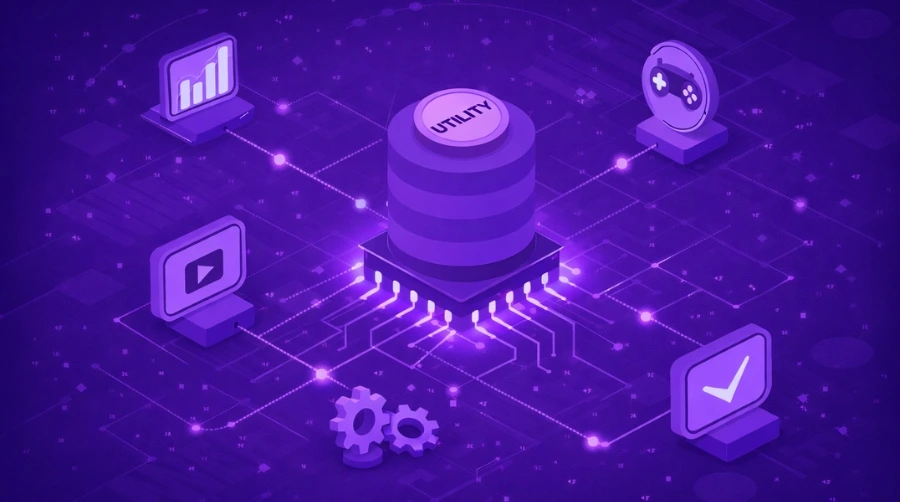
Utility tokens, also termed user tokens or app coins, represent digital assets providing access to specific products, services, or functionalities within blockchain ecosystems. These tokens serve practical purposes enabling users to interact with decentralized applications, pay transaction fees, access premium features, or participate in network governance. Utility tokens are not designed primarily as investments but rather as functional components integral to platform operations.
Projects typically issue utility tokens during initial coin offerings or initial DEX offerings to fund development while distributing tokens that will later facilitate ecosystem participation. Token holders can use these assets to pay for computational resources, storage space, advertising services, or other platform-specific utilities. The token’s value theoretically derives from network demand and adoption rather than profit-sharing or asset appreciation expectations.
How Utility Tokens Work
Utility tokens function as access keys or digital coupons within specific blockchain networks. Users acquire tokens to unlock platform features, pay fees at discounted rates, or participate in ecosystem activities. For example, exchange platforms may offer reduced trading fees when users pay with native utility tokens, creating demand tied directly to platform usage rather than speculative investment.
The economic model underlying utility tokens centers on supply and demand dynamics within contained ecosystems. As platform adoption increases and more users require tokens for services, demand theoretically rises relative to fixed or controlled token supply. In this context, well-planned crypto token development plays a crucial role in structuring tokenomics effectively. However, unlike security tokens, utility token holders generally possess no ownership rights, profit-sharing mechanisms, or governance participation unless explicitly designed into tokenomics.
Major Utility Token Examples
Several prominent utility tokens demonstrate diverse functionality across blockchain ecosystems:
- Binance Coin (BNB): Provides trading fee discounts on Binance exchange, powers Binance Smart Chain transactions, and enables participation in token sales on Binance Launchpad.
- Basic Attention Token (BAT): Facilitates advertising payments in Brave browser ecosystem, with over 60 million monthly active users, rewarding users for viewing ads and enabling advertisers to purchase attention.
- Chainlink (LINK): Compensates node operators providing external data to smart contracts through decentralized oracle networks connecting blockchains with real-world information.
- Filecoin (FIL): Enables users to pay for decentralized storage services while rewarding storage providers contributing hard drive space to the network.
- Polygon (MATIC): Pays transaction fees on Polygon network, participates in network security through staking, and governs protocol decisions through voting mechanisms.
These examples illustrate how utility tokens integrate into platform functionality, creating closed-loop economies where token utility drives demand independent of traditional investment return expectations.
What is a Security Token?
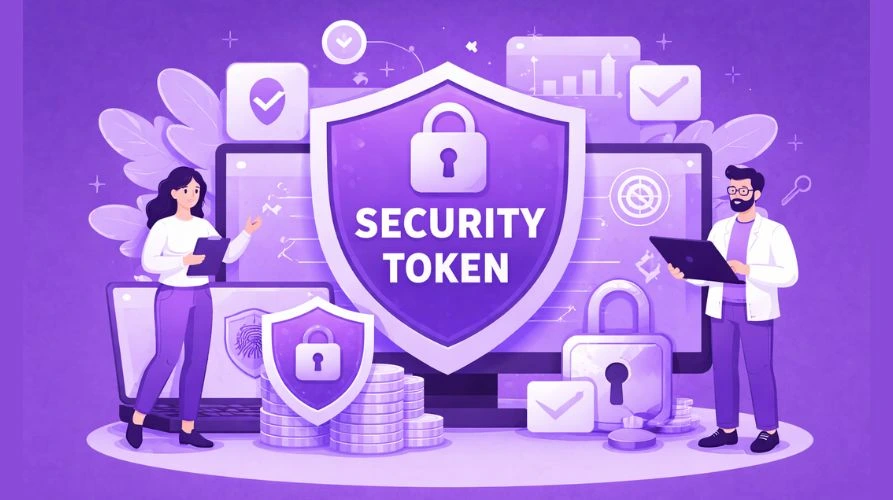
Security tokens represent digital securities functioning as investment contracts where token holders expect profits primarily from the efforts of others. These tokens confer ownership rights, profit-sharing arrangements, or equity stakes in underlying assets, companies, or revenue streams. Security tokens essentially digitize traditional securities like stocks, bonds, or real estate interests through blockchain technology while maintaining regulatory compliance with securities laws.
Unlike utility tokens serving functional purposes, security tokens explicitly target investment objectives. Holders acquire these tokens anticipating value appreciation, dividend payments, revenue shares, or other financial returns correlating with underlying asset performance. This investment contract nature triggers securities regulations requiring issuers to register offerings, provide disclosures, and comply with ongoing reporting obligations protecting investor interests.
How Security Tokens Work
Security token issuance typically follows security token offering processes similar to traditional securities offerings but leveraging blockchain infrastructure. Issuers create smart contracts defining token properties including ownership rights, dividend distribution mechanisms, voting privileges, and transfer restrictions. These programmable securities can automate compliance features including investor accreditation verification, transfer limitations, and regulatory reporting.
Companies utilize security tokens to raise capital by offering fractional ownership in assets or enterprises. Investors purchasing these tokens become stakeholders entitled to proportional benefits including profit distributions, asset appreciation, or governance rights. The blockchain foundation provides transparent ownership records, automated dividend payments, and potentially enhanced liquidity through secondary trading on compliant platforms.
Security Token Regulations and Compliance
Security tokens face comprehensive regulatory frameworks governing traditional securities adapted for blockchain applications. In the United States, the Securities and Exchange Commission applies the Howey Test determining whether arrangements constitute investment contracts subject to securities regulation. This analysis examines whether transactions involve investment of money in common enterprise with profit expectations derived primarily from others’ efforts.
Issuers must navigate complex crypto compliance requirements including registration with regulatory authorities or qualifying for exemptions. Know Your Customer and AML and KYC procedures verify investor accreditation status and jurisdictional eligibility. Transfer restrictions often limit trading to qualified investors through registered platforms ensuring ongoing compliance with securities laws preventing unlawful distribution.
Key Differences Between Utility Tokens and Security Tokens
Understanding the distinctions between utility token vs security token proves essential for proper classification, regulatory compliance, and investment decision-making. These differences span multiple dimensions from fundamental purpose through regulatory treatment to investor expectations and rights.
| Aspect | Utility Tokens | Security Tokens |
|---|---|---|
| Primary Purpose | Access to services, features, or platform functionality | Investment in assets with profit expectations |
| Ownership Rights | No ownership stake in company or assets | Represents equity, debt, or asset ownership |
| Profit Expectation | Value from utility and platform adoption | Expected returns from dividends or appreciation |
| Regulatory Status | Generally unregulated as securities | Heavily regulated under securities laws |
| Investor Protection | Limited regulatory safeguards | Comprehensive investor protections mandated |
| Trading Restrictions | Freely tradable on exchanges | Restricted to qualified investors on regulated platforms |
| Compliance Requirements | Minimal regulatory obligations | Registration, disclosure, ongoing reporting required |
| Value Correlation | Independent of company valuation | Directly tied to underlying asset performance |
| Issuance Method | ICOs, IDOs, airdrops | Security Token Offerings (STOs) with compliance |
| Examples | BNB, BAT, LINK, FIL, MATIC | Tokenized stocks, real estate tokens, equity tokens |
Regulatory Classification Criteria
Determining whether tokens qualify as securities involves applying established legal frameworks like the Howey Test in the United States. This four-prong analysis examines whether there exists investment of money in common enterprise with reasonable expectation of profits derived from efforts of others. If all criteria are met, the token constitutes a security regardless of labeling as utility token.
Projects attempting to structure tokens as utilities while incorporating investment characteristics risk regulatory enforcement. The SEC has taken enforcement actions against numerous projects, with over $5 billion in penalties issued for unregistered token offerings since 2017[2]. Factors suggesting security classification include marketing emphasizing potential returns, secondary market development before product launch, passive investor role, and token value depending on company efforts rather than ecosystem utility. Proper classification requires objective analysis of economic reality rather than subjective token naming.
Benefits and Risks of Utility Tokens
Utility tokens offer distinct advantages and disadvantages for both projects issuing them and users acquiring them. Understanding these trade-offs informs strategic decisions about token economics, platform design, and investment allocation.
| Category | Benefits | Risks |
|---|---|---|
| Accessibility | Easy acquisition on exchanges without accreditation requirements | Limited investor protections and recourse mechanisms |
| Functionality | Direct platform utility providing tangible value through services | Worthless if platform fails or adoption stagnates |
| Liquidity | Trade freely on multiple exchanges with minimal restrictions | High volatility creates significant price fluctuations |
| Regulation | Lighter compliance burden enables faster deployment | Regulatory uncertainty may reclassify tokens as securities |
| Network Effects | Growing adoption increases token utility and potential value | Scam potential with fraudulent projects creating worthless tokens |
| Incentives | Rewards encourage participation and community building | Token inflation from excessive rewards dilutes holder value |
Utility Token Investment Considerations
Evaluating utility tokens requires assessing platform fundamentals rather than traditional investment metrics. Key considerations include actual utility provided, adoption trajectory, competitive positioning, tokenomics sustainability, and development team credibility. Tokens offering genuine platform functionality with growing user bases demonstrate stronger value propositions than speculative tokens lacking clear utility.
However, utility tokens carry specific risks including platform failure rendering tokens worthless, regulatory reclassification triggering compliance issues, competitive displacement by superior alternatives, and demand collapse if adoption stalls. The lack of investor protections means holders bear full risk without recourse mechanisms available for regulated securities.
Benefits and Risks of Security Tokens
Security tokens present different value propositions and risk profiles reflecting their nature as regulated investment instruments rather than functional platform components.
| Category | Benefits | Risks |
|---|---|---|
| Asset Backing | Represents real ownership in tangible assets or companies | Value dependent on underlying asset performance and market conditions |
| Investor Protection | Regulatory safeguards including disclosure and reporting requirements | Complex compliance processes increase costs and barriers |
| Returns | Potential dividends, interest, or profit-sharing from investments | Market downturns can cause significant capital losses |
| Transparency | Blockchain records provide verifiable ownership and transaction history | Public records may compromise privacy for some investors |
| Fractional Ownership | Enables investment in high-value assets with lower capital requirements | Liquidity constraints limit ability to exit positions quickly |
| Global Access | Cross-border investment opportunities with reduced friction | Jurisdictional regulations create complex compliance requirements |
Security Token Investment Analysis
Security tokens require traditional investment due diligence examining underlying asset quality, issuer credibility, financial projections, and regulatory compliance status. The global security token market reached $900 million in 2024 and is projected to grow at 24% annually through 2030[3], indicating growing institutional adoption and regulatory acceptance.
Professional token audit services verify smart contract security and compliance features preventing unauthorized transfers or regulatory violations. Legal review ensures offering structures satisfy securities requirements while technical audits confirm proper implementation of programmed compliance controls including transfer restrictions and automated reporting.
Regulatory Landscape and Compliance Requirements
The regulatory environment surrounding utility tokens vs security tokens varies significantly across jurisdictions but generally applies stricter oversight to securities while allowing more flexibility for genuine utility tokens.
United States Regulatory Framework
The Securities and Exchange Commission maintains that tokens satisfying Howey Test criteria constitute securities requiring registration or qualifying exemptions. The agency has pursued enforcement actions against numerous projects conducting unregistered security token offerings disguised as utility token sales. SEC Chair Gary Gensler has stated that most crypto tokens meet the definition of securities[4], creating uncertainty for projects attempting utility token classifications.
Utility tokens may still face regulation under consumer protection laws, anti-fraud statutes, and money transmission requirements depending on specific functionality. Projects should work with a reliable token development company to build solutions that include compliance features, user protections, and transparent operations, even when securities regulations don’t directly apply.
Global Regulatory Approaches
Different jurisdictions adopt varied approaches to token classification and regulation. The European Union’s Markets in Crypto-Assets regulation creates distinct categories for asset-referenced tokens, e-money tokens, and other crypto-assets with tailored requirements. Singapore’s payment token framework exempts certain tokens from securities regulation while maintaining anti-money laundering obligations.
Projects operating internationally must navigate multiple regulatory regimes simultaneously, potentially restricting offerings based on jurisdiction or implementing region-specific compliance measures. Working with experienced coin and token service providers helps ensure proper legal structuring across relevant markets.
Choosing Between Utility and Security Tokens
The decision to issue or invest in utility versus security tokens depends on specific objectives, risk tolerance, and regulatory considerations. Projects should structure tokens based on genuine business models rather than attempting to avoid regulation through improper classification.
For Token Issuers
Companies building platforms with actual user services may appropriately issue utility tokens facilitating ecosystem participation. This approach suits projects where token value derives from network adoption rather than company profits. Utility tokens enable community building, incentive alignment, and decentralized governance without triggering securities regulations.
Conversely, ventures seeking to raise capital by offering ownership stakes, profit-sharing, or investment returns should issue compliant security tokens. This path provides access to traditional investment capital while maintaining regulatory legitimacy. Though compliance costs prove higher, proper structuring prevents enforcement actions while building institutional investor confidence.
For Token Investors
Investors seeking platform access, governance participation, or ecosystem utility should acquire utility tokens aligned with projects they wish to use. These tokens suit participants valuing functionality over financial returns, though price appreciation remains possible through adoption growth.
Investment-focused participants pursuing returns through ownership, dividends, or asset appreciation should target compliant security tokens offering regulated exposure to blockchain ventures or tokenized assets. These instruments provide traditional investment characteristics with regulatory protections at the cost of reduced liquidity and higher barriers to entry.
Get Expert Guidance on Token Classification
Avoid regulatory risks and costly misclassification. Work with blockchain and legal experts to design compliant utility or security tokens aligned with your business goals.
Future Trends in Token Classification
The distinction between utility tokens and security tokens continues evolving as regulators refine frameworks and projects explore hybrid models. Several trends are shaping the future landscape of token classification and regulation.
Regulatory Clarity and Standardization
Jurisdictions worldwide are working toward clearer token classification frameworks reducing ambiguity around regulatory treatment. These efforts aim to provide safe harbors for genuine utility tokens while ensuring appropriate oversight of investment products. International coordination may eventually harmonize standards, though significant jurisdictional differences will likely persist.
Hybrid Token Models
Some projects experiment with tokens combining utility and security characteristics, such as governance tokens granting both platform access and profit-sharing rights. These hybrid approaches raise complex classification questions requiring careful legal analysis. Regulators may develop new categories accommodating legitimate hybrid models while preventing regulatory arbitrage.
Programmable Compliance
Smart contract capabilities enable automated compliance features including transfer restrictions, investor verification, and regulatory reporting. Security tokens increasingly incorporate programmed controls ensuring ongoing regulatory adherence without manual intervention. This technological compliance may reduce costs while improving reliability of regulatory safeguards.
Final Thoughts
Understanding utility tokens vs. security tokens proves essential for anyone participating in cryptocurrency ecosystems whether as developer, investor, or regulator. These fundamental classifications determine legal obligations, investor protections, and appropriate use cases shaping how projects structure offerings and participants engage with digital assets.
The difference between utility token and security token centers on purpose, regulatory treatment, and economic characteristics. Utility tokens provide platform access and functionality valued through adoption and network effects. Security tokens represent investments in assets or companies with profit expectations triggering comprehensive regulatory requirements and investor protections.
Both token types serve legitimate purposes within the evolving digital economy. Utility tokens enable innovative platform economies, decentralized governance, and novel business models. Security tokens democratize access to investment opportunities, improve market efficiency, and bring transparency to asset ownership. Success requires matching token structure to genuine business models while maintaining appropriate regulatory compliance.
As blockchain technology matures and regulatory frameworks evolve, proper token classification becomes increasingly critical. Projects must prioritize substance over labeling, ensuring token economics align with regulatory reality rather than attempting to disguise securities as utilities. Investors should conduct thorough due diligence understanding both token functionality and legal classification before acquiring digital assets. This foundation of understanding enables informed participation in cryptocurrency markets while building sustainable, compliant token ecosystems.
Frequently Asked Questions
Q1.What is the difference between utility tokens?
Utility tokens provide functional access to services, features, or platforms within blockchain ecosystems. They do not represent ownership or investment interests and are designed for usage rather than profit expectations from issuer efforts.
Q2.Do utility tokens represent company ownership?
No, utility tokens do not represent ownership stakes in companies or projects. They provide access rights and functional utility within ecosystems but confer no equity, voting rights in corporate matters, or profit-sharing arrangements.
Q3.Are utility tokens regulated by the SEC?
Utility tokens are generally not regulated as securities if they function as tools or goods rather than investments. The SEC’s 2025 guidance clarified that tokens with genuine utility on decentralized networks may escape securities classification.
Q4.What makes security tokens different from stocks?
Security tokens function similarly to stocks but exist on blockchain networks. They represent ownership interests, may pay dividends, and require regulatory compliance. The primary difference is the underlying technology and trading infrastructure.
Q5.Can utility tokens become security tokens?
Yes, utility tokens may be reclassified as securities if marketing or usage patterns suggest investment characteristics. Tokens promoted with profit expectations or centrally controlled may trigger securities regulation despite initial utility classification.
Q6.What is the Howey Test for crypto?
The Howey Test evaluates whether digital assets constitute securities by examining investment of money, common enterprise, profit expectation, and reliance on others’ efforts. Meeting all four criteria triggers securities classification.
Q7.What risks do utility tokens carry?
Utility tokens risk platform failure rendering them worthless, regulatory reclassification triggering compliance issues, high price volatility, limited investor protections, scam potential from fraudulent projects, and value dependency on uncertain adoption.
Explore Services
Related Services
Reviewed by

Aman Vaths
Founder of Nadcab Labs
Aman Vaths is the Founder & CTO of Nadcab Labs, a global digital engineering company delivering enterprise-grade solutions across AI, Web3, Blockchain, Big Data, Cloud, Cybersecurity, and Modern Application Development. With deep technical leadership and product innovation experience, Aman has positioned Nadcab Labs as one of the most advanced engineering companies driving the next era of intelligent, secure, and scalable software systems. Under his leadership, Nadcab Labs has built 2,000+ global projects across sectors including fintech, banking, healthcare, real estate, logistics, gaming, manufacturing, and next-generation DePIN networks. Aman’s strength lies in architecting high-performance systems, end-to-end platform engineering, and designing enterprise solutions that operate at global scale.