Ai Overview
The foundational issue in tokenized real estate regulations centers on how tokens are legally classified within different jurisdictional frameworks. Ambiguity in legal classification creates a cascade of problems that can undermine the entire investment structure, leaving investors without clear legal standing or enforceable rights. Platforms handling over $1,000 in transactions from any customer in a single day must also file Currency Transaction Reports.
Key Takeaways
- ▸Legal classification ambiguity in tokenized real estate creates enforcement gaps where tokens may be deemed unregistered securities, exposing platforms and investors to regulatory penalties, asset seizures, and invalidated ownership claims across USA, UK, UAE, and Canadian jurisdictions.
- ▸Property registration disconnect between blockchain records and traditional land registries represents a critical vulnerability where token holders may possess digital assets without enforceable legal rights to underlying real estate, particularly when SPV structures are improperly established or documented.
- ▸Cross-border regulatory conflicts intensify in 2026 as jurisdictions implement divergent tokenization frameworks, creating compliance nightmares for platforms operating internationally and exposing investors to legal uncertainties when property, platform, investor, and token exist across multiple regulatory zones.
- ▸KYC and AML deficiencies on tokenized platforms create money laundering vulnerabilities and regulatory non-compliance that can result in platform shutdowns, frozen assets, and criminal liability for operators, with FATF guidelines demanding enhanced due diligence for high-value real estate transactions.
- ▸Unaudited smart contracts lacking regulatory compliance mechanisms pose systemic risks including security vulnerabilities, failure to enforce transfer restrictions, inability to implement court orders, and circumvention of securities law requirements that can invalidate entire token offerings legally.
- ▸Secondary market regulation gaps enable unregistered trading of tokenized real estate securities on non-compliant platforms, creating price manipulation risks, liquidity illusions, and legal exposure for investors who may unknowingly participate in illegal securities transactions without proper broker-dealer intermediation.
- ▸Tax reporting ambiguities in tokenized real estate regulations across jurisdictions create compliance burdens where investors face uncertain capital gains treatment, unclear income reporting obligations, and potential double taxation scenarios that vary dramatically between USA, UK, UAE, and Canadian tax authorities.
- ▸Platform licensing absence represents a fundamental red flag where operators bypass money services business registration, securities dealer licensing, and real estate broker requirements, operating in regulatory grey areas that offer no investor recourse when disputes or fraud occur.
The tokenized real estate sector has experienced explosive growth throughout 2024 and 2025, with global transaction volumes exceeding $18 billion across residential, commercial, and hospitality properties. As we navigate through 2026, the regulatory landscape has become increasingly complex and fragmented, with jurisdictions worldwide implementing divergent approaches to governing blockchain-based property investments. This regulatory evolution creates both opportunities and significant risks for investors who must navigate an intricate web of securities laws, real estate regulations, financial services requirements, and emerging digital asset frameworks.
Our agency has spent over eight years analyzing tokenized real estate markets across the USA, United Kingdom, United Arab Emirates, and Canada, working directly with platforms, regulators, legal experts, and institutional investors to understand the practical implications of regulatory compliance in this emerging sector. Through this extensive experience, we have identified twenty critical regulatory red flags that every investor must understand before committing capital to tokenized real estate tokenization opportunities. These warning signs represent fundamental structural issues that can result in total investment loss, legal liability, or prolonged disputes over ownership rights.
The regulatory environment in 2026 is characterized by increased enforcement actions, clearer jurisdictional guidelines, and growing sophistication among both compliant platforms and bad actors seeking to exploit regulatory gaps. Major financial centers including New York, London, Dubai, and Toronto have implemented specific frameworks for tokenized securities, while simultaneously prosecuting platforms that operate without proper authorization. This enforcement wave has resulted in over $420 million in penalties during the past 18 months, with several high-profile platform shutdowns affecting thousands of investors.[1]
Understanding these regulatory red flags is not merely an academic exercise but a practical necessity for protecting investment capital. Unlike traditional real estate investments where legal frameworks have been established over centuries, tokenized real estate regulations exist in a state of rapid evolution, with new guidance, court decisions, and legislative actions emerging regularly. Investors who fail to recognize warning signs face exposure to platforms that may be operating illegally, properties without clear legal ownership structures, and tokens that may be deemed unregistered securities subject to regulatory action.
Lack of Clear Legal Classification of the Token
The foundational issue in tokenized real estate regulations centers on how tokens are legally classified within different jurisdictional frameworks. This classification determines which regulatory regime applies, what compliance obligations exist, and what rights investors actually possess. Ambiguity in legal classification creates a cascade of problems that can undermine the entire investment structure, leaving investors without clear legal standing or enforceable rights.
In the United States, the Securities and Exchange Commission applies the Howey Test to determine whether a token constitutes an investment contract and therefore a security. This analysis examines whether there is an investment of money in a common enterprise with a reasonable expectation of profits derived from the efforts of others. Most tokenized real estate offerings meet these criteria, triggering securities registration requirements under the Securities Act of 1933. However, many platforms attempt to structure tokens as utility tokens, membership interests, or other classifications to avoid securities regulations, creating legal uncertainty that exposes both platforms and investors to enforcement risk.
The United Kingdom’s Financial Conduct Authority has established that tokens representing ownership stakes or profit participation in real estate typically fall within the definition of specified investments, requiring authorization under the Financial Services and Markets Act 2000. The FCA distinguishes between security tokens, which are regulated investments, and other digital assets that may fall under different regulatory frameworks. Platforms operating in the UK must obtain proper authorization or risk enforcement actions that can result in business cessation and investor losses.
Token Classification Frameworks Across Major Jurisdictions
United States Classification
- Application of Howey Test for security determination
- Investment contract analysis by SEC staff
- State securities law considerations under Blue Sky Laws
- CFTC jurisdiction for certain derivative structures
- FinCEN requirements for money services businesses
United Kingdom Framework
- Specified investments under FSMA 2000 definitions
- Security tokens as regulated instruments by FCA
- Collective investment scheme considerations
- Electronic money token distinctions under EMR 2011
- Financial promotion restrictions for marketing activities
UAE Regulatory Structure
- Virtual asset securities under VARA regulations
- SCA jurisdiction for mainland investment tokens
- DIFC framework for financial free zone operations
- ADGM virtual asset regulations for Abu Dhabi
- Property registration requirements with land departments
Canadian Provincial Approach
- Securities determination under provincial acts
- CSA guidance on crypto asset trading platforms
- Investment contract analysis across provinces
- FINTRAC compliance for MSB registration
- Provincial real estate regulatory considerations
European Union Standards
- MiFID II transferable securities definitions
- MiCA regulations for crypto assets from 2024
- National competent authority interpretations
- AIFMD compliance for fund-structured offerings
- Prospectus Regulation requirements for public offers
Asia-Pacific Variations
- Singapore MAS digital payment token framework
- Hong Kong SFC position on security tokens
- Japanese FSA registration for crypto exchanges
- Australian ASIC managed investment scheme tests
- Divergent approaches requiring multi-jurisdiction analysis
The United Arab Emirates has emerged as a leading jurisdiction for tokenized real estate regulations through the Virtual Assets Regulatory Authority in Dubai, which provides clear classification frameworks for different token types. VARA distinguishes between virtual asset securities, which include tokenized ownership interests in real estate, and other virtual asset categories. This clarity has attracted numerous platforms to Dubai, though compliance remains rigorous with substantial registration and ongoing reporting requirements.
Canada follows a provincial securities regulatory system where each province determines how tokenized real estate regulations apply within its jurisdiction. The Canadian Securities Administrators have issued guidance indicating that most tokenized real estate offerings constitute securities, requiring prospectus filing or reliance on available exemptions. Ontario, Quebec, and British Columbia have been particularly active in enforcement against non-compliant platforms, demonstrating that regulatory ambiguity will not be tolerated.
The consequences of unclear token classification extend beyond regulatory penalties to affect the fundamental enforceability of investor rights. When tokens are deemed to be unregistered securities, courts may void transactions, require rescission offers, or impose liability on sellers. Investors who purchased tokens believing they had ownership rights may discover their interests are legally unenforceable, particularly when platforms have structured offerings to avoid classification as securities but failed to establish alternative legal frameworks that provide comparable protections.
Tokenized Property Not Registered as a Security Where Required
The failure to register tokenized real estate offerings as securities where legally required represents one of the most serious violations in this sector. Securities registration exists to protect investors through mandatory disclosure, financial reporting, and regulatory oversight. When platforms bypass these requirements, either deliberately or through ignorance, they create significant legal and financial risks that can result in enforcement actions, investor losses, and criminal liability for operators.
In the United States, securities registration under the Securities Act of 1933 requires extensive disclosure through Form S-1 or other applicable forms, ongoing reporting obligations under the Securities Exchange Act of 1934, and compliance with state-level registration requirements. Most tokenized real estate platforms cannot meet the cost and complexity of full registration, instead relying on exemptions such as Regulation D for private placements, Regulation A for smaller public offerings, or Regulation S for offshore transactions. However, these exemptions carry strict requirements regarding investor qualifications, offering limits, and disclosure obligations that many platforms fail to satisfy.
| Registration Path | Jurisdiction | Key Requirements | Investment Limits | Disclosure Level |
|---|---|---|---|---|
| Full SEC Registration | USA | Form S-1 filing, audited financials, ongoing 10-K and 10-Q reporting, state blue sky compliance | No limit, public offering | Maximum |
| Regulation D 506(c) | USA | Form D filing, accredited investor verification, general solicitation permitted | Unlimited from accredited only | Moderate |
| Regulation D 506(b) | USA | Form D filing, no general solicitation, up to 35 sophisticated non-accredited allowed | Unlimited from accredited | Moderate to High |
| Regulation A+ Tier 2 | USA | Form 1-A filing, audited financials, ongoing semiannual and annual reports | $75M in 12 months | High |
| FCA Authorization | UK | Full authorization application, conduct of business rules compliance, client money safeguarding | Varies by investor type | Maximum |
| VARA Licensing | UAE Dubai | Virtual asset service provider license, token registration, AML compliance program | Based on offering structure | High |
| Provincial Exemptions | Canada | Accredited investor exemption, offering memorandum, report of exempt distribution | Varies by province | Moderate |
| DIFC Framework | UAE DIFC | DFSA authorization, investment token framework compliance, ongoing reporting | Professional client focused | High |
The practical implications of operating without proper securities registration became evident in several high-profile enforcement actions during 2025. The SEC charged multiple tokenized real estate platforms with conducting unregistered securities offerings, resulting in disgorgement of profits, civil penalties exceeding $50 million collectively, and requirements to offer rescission to all investors. These cases established clear precedent that blockchain technology does not exempt platforms from securities laws, and that claiming tokens are not securities without proper legal analysis is insufficient defense.
Expert Guidance on Tokenized Real Estate Regulations
Need help navigating complex tokenized real estate regulations? Our team has 8+ years of experience helping investors and platforms achieve compliance across USA, UK, UAE, and Canada markets.
In the United Kingdom, the Financial Conduct Authority has taken enforcement action against platforms operating without authorization, including criminal prosecutions in cases involving significant investor harm. The FCA’s position is unambiguous that offering security tokens without proper authorization violates financial services regulations, regardless of the underlying technology. Platforms cannot rely on regulatory uncertainty as a defense, particularly when legal guidance has been available since 2019.
For investors, the red flag of unregistered securities manifests in several observable ways. Platforms that avoid discussing regulatory status, claim their tokens are not securities without providing legal opinions, or operate without visible regulatory licenses are likely non-compliant. Additionally, platforms offering tokens to retail investors in major jurisdictions without appropriate exemption disclosures or investor qualification procedures are almost certainly violating securities laws. Investors should always verify regulatory status through independent research, checking regulatory databases, and reviewing disclosure documents prepared by qualified securities counsel.
Absence of Regulatory Approval or Licensing
Platform licensing represents a critical but often overlooked component of tokenized real estate regulations. Beyond securities registration for specific offerings, platforms themselves require various licenses to legally operate, including money services business registration, broker-dealer authorization, real estate licenses, and in some jurisdictions, specific digital asset or virtual asset service provider licenses. The absence of these licenses indicates fundamental non-compliance that can result in platform shutdown and complete loss of investor access to their holdings.
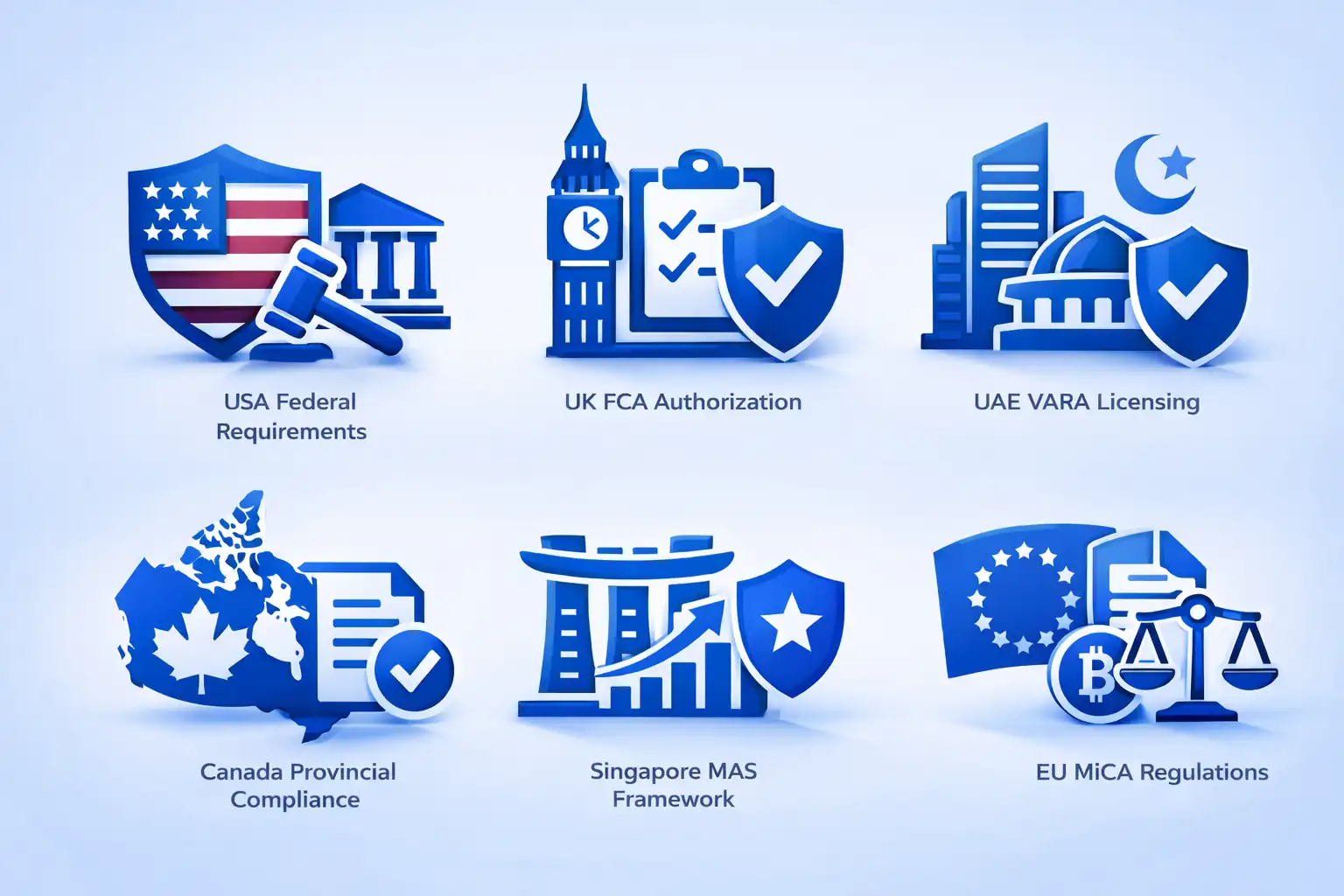
In the United States, platforms facilitating tokenized real estate transactions typically require registration with FinCEN as money services businesses, particularly when handling customer funds or facilitating token transfers. Additionally, platforms that facilitate secondary market trading may require registration as broker-dealers with the SEC and membership in FINRA, or operation as alternative trading systems under Regulation ATS. Platforms that provide investment advice or manage investor funds may need investment adviser registration. The cumulative regulatory burden is substantial, requiring significant legal resources, compliance infrastructure, and operational procedures.
The United Kingdom’s regulatory approach requires platforms to obtain full FCA authorization before conducting regulated activities related to tokenized real estate. This authorization process is rigorous, examining the platform’s business model, compliance infrastructure, financial resources, management competence, and ability to meet ongoing regulatory obligations. The FCA maintains a public register of authorized firms, allowing investors to verify platform status easily. Operating without authorization when required is a criminal offense carrying substantial penalties including imprisonment.
Dubai’s Virtual Assets Regulatory Authority represents one of the most comprehensive licensing frameworks specifically designed for digital asset platforms. VARA requires platforms to obtain appropriate licenses based on their activities, whether operating as brokers, exchanges, custodians, or advisers. The licensing process examines technology infrastructure, cybersecurity measures, governance structures, and compliance programs. VARA maintains active supervision of licensed entities, conducting regular inspections and requiring detailed reporting. This regulatory clarity has attracted substantial tokenized real estate activity to Dubai, though it also means non-compliant platforms face swift enforcement.
Canadian provincial securities regulators have established that platforms facilitating tokenized stocks and other tokenized securities transactions must register as investment dealers or restricted dealers, depending on their business model. This registration requires membership in applicable self-regulatory organizations, maintaining prescribed capital levels, implementing comprehensive compliance systems, and submitting to regular regulatory examinations. Platforms claiming to operate under exemptions must carefully document their eligibility and ensure their operations remain within exemption parameters.
The absence of proper licensing creates multiple risks for investors beyond regulatory enforcement. Unlicensed platforms typically lack adequate capital reserves, professional indemnity insurance, client asset segregation, and formal governance structures. When disputes arise or platforms fail, investors have limited recourse and may find their investments are unprotected. Licensed platforms provide regulatory oversight, complaint mechanisms, and in some jurisdictions, investor compensation schemes that can partially protect against platform failure or fraud.
Unclear Property Ownership Structure on Legal Records
The fundamental challenge in tokenized real estate regulations stems from the disconnect between blockchain-based token ownership and traditional property registration systems. Land registries in virtually all jurisdictions do not recognize blockchain records as evidence of property ownership. This creates a critical gap that must be bridged through proper legal structuring, typically using special purpose vehicles, trusts, or other recognized legal entities that own the property legally while tokens represent beneficial interests in these entities.
The most common structure for tokenized real estate involves creating a special purpose vehicle that takes legal title to the property and is registered in the relevant land registry. Tokens then represent ownership interests in this SPV, typically structured as shares, membership interests, or beneficial interests depending on the entity type and jurisdiction. The SPV’s governing documents must clearly establish the relationship between token ownership and rights in the entity, including voting rights, distribution rights, and transfer restrictions. Without proper documentation linking tokens to SPV interests and SPV interests to property rights, token holders may have no enforceable claim to the underlying real estate.
| Ownership Structure | Legal Entity Type | Token Representation | Enforceability Level | Common Jurisdictions |
|---|---|---|---|---|
| Delaware LLC Structure | Limited Liability Company | Membership interests tokenized as securities | High | USA, Canada |
| UK Property Trust | Unit Trust Structure | Beneficial interests in trust property | High | UK, Commonwealth |
| Dubai SPV with VARA | Free Zone Company | Share interests with virtual asset linkage | High | UAE, GCC region |
| Singapore Variable Capital | VCC Fund Structure | Fund shares with segregated portfolios | High | Singapore, Asia-Pacific |
| Direct Blockchain Record | No Legal Entity | Token claims direct property rights | Very Low | Not recognized |
| Cayman Islands SPC | Segregated Portfolio Company | Portfolio shares with asset segregation | High | Offshore structures |
| Swiss Foundation | Stiftung Structure | Beneficial interests governed by bylaws | Moderate | Switzerland, Liechtenstein |
| Ontario REIT Structure | Real Estate Investment Trust | Trust units with specific tax treatment | High | Canada |
In the United States, Delaware LLCs have become the preferred vehicle for tokenized real estate structures due to Delaware’s flexible corporate law and established precedents for alternative ownership representations. The LLC operating agreement can explicitly provide that blockchain-recorded tokens represent membership interests, with all associated rights and obligations. However, these agreements must be carefully drafted to ensure enforceability, particularly regarding transfer restrictions, voting mechanisms, and the relationship between on-chain token transfers and off-chain legal ownership changes.
The United Kingdom employs trust structures where property is held by trustees for the benefit of token holders. This approach leverages centuries of trust law precedent and provides clear beneficial ownership rights to token holders. The trust deed must specify how tokens represent beneficial interests, how trustees are appointed and removed, and what distributions token holders are entitled to receive. UK land registry requirements necessitate proper documentation of trust relationships, and platforms must ensure compliance with trustee obligations including fiduciary duties and asset segregation.
Dubai’s framework under VARA allows for specific legal recognition of tokenized ownership structures when properly registered with both VARA and the Dubai Land Department. This integrated approach provides clearer legal certainty than jurisdictions where blockchain records and land registries operate entirely separately. Properties can be registered with notations indicating tokenized ownership structures, though the legal entity holding title must still be a recognized corporate form. This regulatory innovation positions Dubai as a leader in tokenized real estate regulations but requires strict compliance with both virtual asset and property registration requirements.
Canadian provinces maintain traditional land registry systems that do not accommodate blockchain-based ownership records. Tokenized structures must use recognized legal entities registered in provincial corporate registries, with property title held by these entities. Provincial securities and real estate regulations may both apply, requiring careful navigation of overlapping requirements. Token holders’ rights must be clearly documented in constating documents, unanimous shareholder agreements, or trust deeds depending on the structure employed.
The critical red flag for investors is any platform claiming that blockchain token ownership alone provides enforceable property rights without explaining the underlying legal structure. Investors must verify that property is held by a properly established legal entity, that the entity’s governing documents explicitly link tokens to ownership interests, that these documents have been prepared by qualified legal counsel, and that all necessary registrations with land registries and corporate registries have been completed. Platforms unable or unwilling to provide complete legal documentation are likely operating with deficient structures that could fail under legal challenge.
No Enforceable Link Between Tokens and Real-World Assets
Even when proper legal entities hold property, a critical gap can exist between token ownership on the blockchain and recognized ownership interests in these legal entities. This disconnect represents one of the most dangerous aspects of poorly structured tokenized real estate offerings. The blockchain may record token ownership perfectly, but if this ownership is not recognized and enforceable under traditional legal systems, token holders possess digital assets with no real-world value or rights.
The enforceability challenge stems from fundamental differences between how blockchain systems and legal systems establish and transfer ownership. Blockchain transactions are permissionless, pseudonymous, and irreversible. Legal ownership transfers typically require identity verification, formal documentation, registry updates, and compliance with transfer restrictions. Creating an enforceable link requires mechanisms that bridge these different systems while respecting the requirements of both.
Critical Enforceability Mechanisms for Token-Asset Linkage
Share Register Synchronization
- Legal entity maintains official share register or member register
- Corporate secretary or registrar updates legal records based on blockchain state
- Smart contract events trigger administrative updates to official registers
- Reconciliation procedures ensure blockchain and legal records match
- Discrepancies resolved through defined governance processes
Transfer Agent Integration
- Licensed transfer agent maintains legal ownership records
- All token transfers subject to transfer agent approval and documentation
- Transfer agent validates KYC, accreditation, and transfer restrictions
- Legal transfer only complete upon transfer agent confirmation
- Provides regulatory compliance layer between blockchain and legal ownership
Custodial Nominee Structure
- Qualified custodian holds legal title as nominee for token holders
- Custody agreement establishes fiduciary obligations to token holders
- Regular attestations confirm custodian holdings match token supply
- Provides institutional-grade asset segregation and protection
- Enables court-ordered freezes and regulatory compliance actions
Legal Opinion Framework
- Qualified legal counsel opines on enforceability of token rights
- Opinion addresses specific jurisdiction’s recognition of structure
- Covers perfection of security interests and priority in insolvency
- Updates provided when laws change or structure is amended
- Provides independent verification for institutional investors
Smart Contract Control Points
- Transfer restrictions encoded in smart contracts prevent illegal transfers
- Whitelist mechanisms ensure only qualified investors can hold tokens
- Time-based locks enforce regulatory holding periods
- Administrative functions allow compliance with court orders
- Emergency pause capabilities for regulatory or security issues
Governance Right Alignment
- Token holder voting rights match legal entity governance provisions
- On-chain voting results translated to formal corporate resolutions
- Board composition and appointment reflects token holder interests
- Major decisions require both blockchain and legal approvals
- Dispute resolution procedures address blockchain-legal conflicts
The share register synchronization approach requires continuous reconciliation between blockchain records and official corporate registers. In the United States, Delaware LLCs and corporations must maintain member or shareholder registers as legal records of ownership. When tokens represent these interests, the entity must have procedures to update legal registers based on blockchain transfers. This typically involves a corporate secretary or registrar who monitors blockchain activity and makes corresponding updates to legal documents. The challenge lies in ensuring these updates occur reliably and quickly enough to maintain alignment between systems.
Transfer agent integration provides a more robust solution by inserting a licensed intermediary between token transfers and legal ownership changes. Transfer agents are regulated entities with established responsibilities for maintaining accurate ownership records, processing transfers, and ensuring compliance with securities laws. In the United Kingdom, transfer agents operating under FCA regulations provide credibility and oversight that purely blockchain-based systems lack. However, this approach introduces friction into token transfers, as each transaction must be approved by the transfer agent before legal ownership changes, potentially undermining the efficiency benefits of tokenization.
Custodial nominee structures separate legal ownership from beneficial ownership, with a qualified custodian holding property on behalf of token holders. This approach is common in institutional finance and provides clear legal protections. Dubai’s framework under VARA encourages custodial arrangements by requiring licensed custodians for certain token types. The custodian’s fiduciary obligations ensure they act in token holders’ interests, while the custody agreement creates enforceable rights. This structure also facilitates regulatory compliance, as custodians can implement freezes, comply with court orders, and enforce transfer restrictions more easily than decentralized systems.
Legal opinion frameworks provide independent verification that the token-asset linkage is enforceable under relevant law. Qualified counsel examines the entire structure, including corporate documents, token contracts, and operational procedures, then issues an opinion on whether token holders have enforceable rights to the underlying property. These opinions are critical for institutional investors and provide a basis for challenging deficient structures. In Canada, legal opinions from qualified securities counsel are often required for private placement memorandums and provide investors with recourse if opinions prove inaccurate.
Smart contract control points create technological enforcement of legal requirements directly in the token transfer mechanism. Transfer restrictions can prevent tokens from moving to non-qualified investors, time locks can enforce holding periods required by securities regulations, and administrative functions can implement court orders or regulatory directives. However, these controls must be carefully designed to avoid creating centralization risks or enabling abuse by administrators. Governance mechanisms should limit administrative powers to legally necessary actions while preserving the benefits of blockchain settlement.
Missing or Weak Investor Protection Frameworks
Comprehensive investor protection represents a cornerstone of developed securities markets, providing safeguards against fraud, misrepresentation, and platform failure. Traditional securities regulations mandate extensive disclosure, ongoing reporting, independent audits, and fiduciary obligations precisely because individual investors lack the resources and expertise to fully assess investment risks. Tokenized real estate regulations must incorporate comparable protections, yet many platforms operate with inadequate frameworks that leave investors vulnerable to losses that proper regulation would prevent or mitigate.
The foundation of investor protection lies in disclosure requirements that provide material information about the investment, the property, the platform, and associated risks. In the United States, Regulation D offerings require Private Placement Memorandums that disclose property details, financial projections, fee structures, conflicts of interest, legal risks, and platform operations. Regulation A+ requires even more extensive disclosure through Form 1-A, including audited financial statements and ongoing reporting obligations. These documents must be prepared by experienced securities counsel and reviewed by regulators or filed with the SEC, providing multiple layers of scrutiny before investors commit capital.
The United Kingdom’s FCA requires authorized platforms to comply with Conduct of Business rules that establish comprehensive investor protection standards. These include suitability assessments ensuring investments match investor profiles, clear and fair communication standards, client asset segregation requirements, and complaints handling procedures. Platforms must maintain professional indemnity insurance, capital adequacy requirements, and submit to regular regulatory supervision. These protections create a substantially safer environment for investors compared to unregulated platforms, though they also increase operational costs that platforms must manage.
Dubai’s VARA framework implements robust investor protection requirements for licensed platforms, including mandatory disclosure standards, ongoing reporting obligations, and client asset protection rules. Platforms must maintain minimum capital requirements scaled to their activities, implement comprehensive risk management frameworks, and establish internal audit functions. VARA conducts regular inspections and can impose sanctions ranging from fines to license revocation for non-compliance. This regulatory intensity ensures that licensed platforms maintain high standards, though it also means unlicensed platforms operating in Dubai face severe penalties.
Canadian provincial securities regulators require platforms to implement investor protection measures appropriate to their registration category. For exempt market dealers distributing tokenized real estate to accredited investors, this includes suitability obligations, relationship disclosure documents, and complaint resolution procedures. For restricted dealers operating secondary markets, additional requirements cover trade execution, best price obligations, and conflict of interest management. Provincial securities commissions can conduct compliance reviews and pursue enforcement against platforms that fail to meet obligations.
Investors must scrutinize platforms for evidence of comprehensive investor protection frameworks. Red flags include platforms that refuse to provide detailed disclosure documents, claim proprietary information prevents transparency, avoid independent audits, commingle investor funds with operating capital, lack clear governance procedures, or operate without regulatory oversight. Legitimate platforms embrace disclosure and oversight as competitive advantages that attract sophisticated investors, while problematic platforms treat investor protection as burdensome compliance that undermines their business models.
Non-Compliant KYC and AML Procedures
Know Your Customer and Anti-Money Laundering compliance represents a fundamental regulatory requirement for platforms handling financial transactions or securities offerings. The real estate sector has historically been vulnerable to money laundering due to high transaction values, complex ownership structures, and cross-border investment flows. Data and tokenization, however, can potentially exacerbate these risks by enabling pseudonymous transactions, rapid cross-border transfers, and fractional ownership that can obscure ultimate beneficial ownership. Robust KYC and AML procedures are therefore essential both for regulatory compliance and investor protection.
The Financial Action Task Force establishes international standards for AML and counter-terrorist financing that most jurisdictions incorporate into domestic law. These standards require financial institutions and designated non-financial businesses to conduct customer due diligence, identify beneficial owners, monitor transactions for suspicious activity, and report certain transactions to financial intelligence units. Real estate transactions typically trigger enhanced due diligence requirements given the sector’s money laundering risks. Platforms facilitating tokenized real estate must implement comprehensive AML programs addressing these requirements or face severe penalties including criminal prosecution of operators.
Comprehensive KYC and AML Compliance Framework
Customer Identification Program
- Government-issued photo ID verification using certified providers
- Proof of address documentation less than three months old
- Biometric verification for enhanced security
- Liveness detection preventing fraudulent documentation
- Document authenticity checks against known forgery patterns
- Continuous monitoring for identity changes or compromises
Beneficial Ownership Transparency
- Ultimate beneficial owner identification for all accounts
- Corporate structure documentation for entity investors
- Ownership chain verification to natural persons
- Twenty-five percent ownership threshold for control identification
- Politically exposed person screening and enhanced due diligence
- Regular updates ensuring beneficial ownership accuracy
Source of Funds Verification
- Documentation of legitimate fund sources for investments
- Employment verification and income documentation
- Tax return review for high-value transactions
- Bank statement analysis showing fund origins
- Enhanced scrutiny for cash-intensive businesses or high-risk jurisdictions
- Wealth source documentation for ultra-high-net-worth investors
Transaction Monitoring Systems
- Real-time transaction screening against sanctions lists
- Pattern analysis identifying unusual activity
- Threshold monitoring for reporting obligations
- Velocity checks detecting rapid transaction sequences
- Geographic risk assessment for cross-border transactions
- Automated suspicious activity report generation
Sanctions and PEP Screening
- OFAC, UN, EU sanctions list checking at onboarding
- Politically exposed person database screening
- Ongoing monitoring for sanctions list updates
- Related party screening for indirect exposure
- Country-based risk scoring and enhanced measures
- Immediate blocking of sanctioned entity transactions
Regulatory Reporting Compliance
- Suspicious Activity Report filing within regulatory timeframes
- Currency Transaction Report submission for large transactions
- International funds transfer reporting as required
- Regulatory audit trail maintenance for seven years minimum
- Cooperation with law enforcement investigations
- Annual AML program review and effectiveness assessment
In the United States, platforms facilitating tokenized real estate transactions must comply with Bank Secrecy Act requirements administered by FinCEN. This includes implementing Customer Identification Programs that verify investor identities, conducting ongoing customer due diligence to understand investment patterns and risk profiles, and filing Suspicious Activity Reports when transactions appear unusual or potentially linked to money laundering. Platforms handling over $1,000 in transactions from any customer in a single day must also file Currency Transaction Reports. Non-compliance can result in civil penalties up to $250,000 per violation, criminal prosecution, and platform shutdown.
The United Kingdom’s Money Laundering Regulations 2017 require platforms to register with the FCA as cryptoasset businesses if they facilitate exchange or custody of cryptoassets. Registration requires demonstrating robust AML controls, appointing a nominated officer responsible for compliance, conducting regular risk assessments, and maintaining comprehensive records. The FCA has been aggressive in refusing registration to platforms with inadequate controls, and operating without registration when required is a criminal offense. Enhanced due diligence is mandatory for high-risk customers, including politically exposed persons, customers from high-risk jurisdictions, and complex ownership structures.
Dubai’s regulatory framework under VARA includes comprehensive AML requirements aligned with FATF standards and UAE federal AML law. Platforms must implement risk-based AML programs, conduct customer due diligence proportionate to assessed risks, and maintain transaction monitoring systems capable of detecting suspicious patterns. VARA requires appointment of a Money Laundering Reporting Officer who is individually accountable for AML compliance. The UAE has significantly strengthened AML enforcement in recent years, removing the country from FATF’s grey list by demonstrating improved compliance and enforcement capabilities.
Canada’s Proceeds of Crime (Money Laundering) and Terrorist Financing Act requires money services businesses to register with FINTRAC and implement comprehensive AML programs. Platforms facilitating tokenized real estate transactions likely qualify as MSBs if they transfer funds or exchange virtual currencies. Requirements include verifying customer identity, keeping records of transactions and customer information, implementing compliance programs, reporting suspicious transactions, and conducting ongoing monitoring. Provincial securities regulations may impose additional requirements for platforms registered as dealers or advisers.
Non-compliant KYC and AML procedures create multiple risks for investors beyond regulatory violations. Platforms with weak controls attract money laundering activity, potentially exposing legitimate investors to association with criminal proceeds. Law enforcement actions against platforms can result in asset freezes affecting all investors, not just those involved in suspicious activity. Additionally, secondary markets may refuse to accept tokens from platforms with questionable AML compliance, creating liquidity problems for investors. Investors should verify that platforms have implemented institutional-grade KYC and AML systems, preferably validated by independent compliance audits.
Cross-Border Regulatory Conflicts and Jurisdiction Gaps
Tokenized real estate inherently operates across multiple jurisdictions, with properties located in one country, platforms operating from another, tokens potentially classified as securities in third countries, and investors distributed globally. This cross-border complexity creates regulatory conflicts where different jurisdictions claim authority, impose conflicting requirements, or leave gaps where no clear regulatory framework applies. These jurisdictional challenges represent some of the most complex issues in tokenized real estate regulations and require sophisticated legal structuring to navigate successfully.
The fundamental challenge stems from traditional territoriality principles in securities regulation, where each jurisdiction asserts authority over offerings made to its residents or involving property within its borders. A tokenized offering of USA property to UK investors using a Dubai-based platform potentially triggers regulatory requirements in all three jurisdictions. The USA may claim jurisdiction under securities laws protecting American property interests, the UK under laws protecting its investors, and Dubai under regulations governing platform operations. Satisfying conflicting requirements across multiple jurisdictions can be prohibitively expensive or legally impossible, creating practical barriers to cross-border tokenization.
| Jurisdictional Issue | Conflicting Requirements | Compliance Complexity | Common Solutions |
|---|---|---|---|
| Securities Registration vs Private Placement | USA requires registration or exemption, UK may require prospectus, Dubai needs VARA approval, Canada provincial requirements vary | Very High | Restrict offerings to qualified investors in each jurisdiction, use Regulation S for offshore sales, obtain legal opinions per jurisdiction |
| Platform Licensing Requirements | Different license types required in USA (MSB, BD), UK (FCA authorization), UAE (VARA), Canada (provincial dealer registration) | Very High | Establish entities in each major jurisdiction, use licensed intermediaries, implement geo-blocking for restricted regions |
| Data Privacy and Protection | EU GDPR right to erasure conflicts with blockchain immutability, different data localization requirements across jurisdictions | High | Minimize on-chain personal data, use off-chain KYC systems, implement data encryption and access controls, maintain EU representative |
| Tax Reporting and Withholding | Different tax treatment across jurisdictions, conflicting withholding requirements, unclear crypto tax basis rules | High | Implement automated tax reporting systems, obtain tax residence declarations, use withholding agents, provide comprehensive tax documentation |
| Transfer Restrictions and Lock-ups | USA Regulation D holds, UK prospectus exemption requirements, different accreditation standards across jurisdictions | Moderate | Encode strictest restrictions in smart contracts, implement transfer agent approval, maintain compliance systems tracking holding periods |
| Investor Qualification Standards | Accredited investor thresholds differ (USA $1M+ net worth, UK £100k+ income, varying Canadian provincial standards) | Moderate | Apply most restrictive standards across all jurisdictions, implement sophisticated investor verification, limit to professional investors |
| Dispute Resolution Jurisdiction | Multiple courts may claim jurisdiction, conflicting choice of law provisions, enforcement challenges across borders | High | Specify neutral arbitration venues, use international arbitration rules, include choice of law clauses, obtain enforceability opinions |
| Sanctions and Restricted Persons | USA OFAC sanctions differ from UN and EU lists, conflicting requirements on Russian and Iranian counterparties | Very High | Screen against all major sanctions lists, implement strictest restrictions, maintain blocking capabilities for sanctioned transfers |
Securities law conflicts represent the most significant cross-border regulatory challenge. The USA’s approach under Regulation S provides a safe harbor for offshore offerings to non-USA persons, but requires strict compliance with conditions including no directed selling efforts into the USA, offshore transactions, and distribution compliance periods. The UK’s financial promotion rules restrict marketing of investments to UK residents without authorization or exemption. Dubai’s VARA framework requires registration for offerings to UAE residents or involving UAE property. Navigating these overlapping regimes requires careful legal structuring, often limiting offerings to qualified investors in each jurisdiction to avoid triggering registration requirements.
Platform licensing creates additional cross-border complications, as licenses are typically jurisdiction-specific and non-transferable. A platform licensed by VARA in Dubai cannot rely on that license to operate in the UK or USA. Instead, platforms must either obtain licenses in each jurisdiction where they operate, partner with licensed intermediaries, or implement strict geo-blocking to prevent access from jurisdictions where they lack authorization. This fragmentation limits the global accessibility that blockchain technology theoretically enables and creates opportunities for regulatory arbitrage by platforms seeking the least restrictive jurisdictions.
Data privacy regulations create particular challenges for blockchain-based systems. The European Union’s General Data Protection Regulation grants individuals rights to data erasure and portability that conflict with blockchain’s immutable nature. Personal data recorded on public blockchains cannot be erased, creating potential GDPR violations. Solutions include minimizing on-chain personal data, using off-chain KYC systems with on-chain references, implementing data encryption, and considering tokenization platform cost while carefully assessing whether GDPR applies based on where data controllers and processors are established and where data subjects are located. These technical and legal complexities add significant costs to compliant implementations.
Tax reporting obligations vary dramatically across jurisdictions, with some countries treating tokens as property, others as financial instruments, and still others applying special regimes. Platforms may have withholding obligations in property jurisdictions, reporting requirements in investor jurisdictions, and tax residence issues in platform jurisdictions. The OECD’s Crypto-Asset Reporting Framework, being implemented in 2026, creates new automatic exchange of information obligations for platforms, requiring comprehensive customer and transaction reporting to tax authorities. Compliance requires sophisticated tax technology and potentially separate reporting systems for each major jurisdiction.
Investors face particular challenges with cross-border tokenized real estate regulations. Their investments may be subject to laws in multiple jurisdictions, creating legal uncertainties about which courts have jurisdiction over disputes, what laws govern their rights, and how they can enforce claims. Platforms that fail to properly structure cross-border offerings may expose investors to regulatory actions in any involved jurisdiction. Investors should verify that platforms have obtained proper legal advice on cross-border regulatory compliance, have implemented appropriate geo-blocking or access controls, and have clear documentation of applicable law and dispute resolution procedures.
Inadequate Disclosure of Property Risks and Financials
Comprehensive disclosure of property-specific risks and detailed financial information forms the foundation of informed investment decisions in real estate. Traditional securities regulations mandate extensive disclosure precisely because information asymmetries between issuers and investors create opportunities for fraud and misrepresentation. Tokenized real estate platforms must provide comparable disclosure to enable investors to properly assess property quality, financial performance, risk factors, and expected returns. Inadequate disclosure represents a serious red flag indicating either regulatory non-compliance or deliberate concealment of material information.
Property disclosure should include comprehensive information about the physical asset, legal ownership, encumbrances, environmental conditions, regulatory compliance, and market positioning. Investors need detailed property descriptions including location, size, construction quality, age, condition, and planned capital improvements. Title documentation must confirm clear ownership free from undisclosed liens, easements, or legal disputes. Environmental assessments should identify any contamination, hazardous materials, or remediation obligations. Zoning and regulatory compliance verification ensures the property can be legally used as intended. Market analysis should provide competitive positioning, occupancy trends, and valuation support.
| Disclosure Category | Required Information | Verification Source | Update Frequency |
|---|---|---|---|
| Property Physical Condition | Detailed description, construction quality, age, recent renovations, deferred maintenance, capital improvement needs, building systems condition | Independent property inspection report, engineering studies, capital needs assessment | Annual inspection minimum |
| Title and Legal Ownership | Title insurance policy, deed documentation, lien searches, easements and restrictions, outstanding legal claims, ownership structure clarity | Title company commitment, legal opinion on ownership, land registry search | At acquisition and material changes |
| Environmental Conditions | Phase I environmental assessment, contamination history, hazardous materials, flood zone status, climate risks, remediation obligations | Licensed environmental consultant, government environmental records | At acquisition, Phase II if issues identified |
| Financial Performance | Historical income statements, rent rolls, operating expense detail, capital expenditures, debt service, cash flow projections, variance analysis | Audited or reviewed financials, property management reports, independent verification | Monthly management reports, annual audited statements |
| Tenant and Lease Information | Current rent roll, lease terms and expiration schedule, tenant creditworthiness, renewal probabilities, tenant improvement obligations, lease incentives | Executed lease agreements, tenant financial information, credit reports | Monthly rent roll updates |
| Debt and Financing Structure | Loan terms and amounts, interest rates, maturity dates, prepayment provisions, covenant compliance, lender requirements, refinancing risks | Loan agreements, lender statements, covenant compliance certificates | Quarterly covenant reporting minimum |
| Valuation and Appraisals | Independent appraisal, valuation methodology, comparable sales or income approach, market assumptions, sensitivity analysis, valuation date relevance | MAI or RICS accredited appraiser, third-party valuation firm | Annual revaluation minimum |
| Operating Agreements and Management | Property management agreement, fee structures, manager track record, service standards, termination provisions, conflicts of interest | Executed management contracts, manager references, performance metrics | Annual performance review |
| Insurance Coverage | Property and liability insurance policies, coverage amounts, deductibles, exclusions, premium costs, claims history, adequacy analysis | Insurance declarations pages, broker recommendations, independent review | Annual policy renewal |
| Risk Factors and Sensitivities | Market risks, tenant concentration, interest rate exposure, regulatory changes, competitive threats, natural disaster vulnerability, economic sensitivity | Market studies, stress testing, scenario analysis, expert assessments | Annual comprehensive review, material changes disclosed immediately |
Financial disclosure must provide detailed historical performance and realistic projections. In the United States, Regulation D offerings typically include three to five years of historical financial statements, ideally audited or reviewed by qualified accountants. Income statements should detail all revenue sources and operating expenses with sufficient granularity to enable meaningful analysis. Balance sheets must disclose all assets, liabilities, and equity positions. Cash flow statements should reconcile operating performance to actual cash generation. Projections must be based on reasonable assumptions with sensitivity analysis showing how changes in key variables affect returns.
The United Kingdom’s FCA requires that financial promotions be clear, fair, and not misleading, with disclosure appropriate to the sophistication of the target audience. For restricted investors, simplified disclosure focusing on key risks and features may suffice. For sophisticated or high net worth investors, comprehensive disclosure including detailed financials and risk analysis is expected. Platforms must be able to substantiate any performance claims or projections with documentary evidence. Misleading financial disclosure can result in regulatory action, investor compensation orders, and reputational damage that destroys platform viability.
Dubai’s VARA framework requires comprehensive disclosure for virtual asset offerings, including detailed risk disclosures, financial information, and property details. Platforms must provide ongoing updates when material changes occur, such as significant tenant departures, property damage, financing issues, or changes in market conditions. The emphasis on continuous disclosure reflects recognition that real estate performance can change substantially over time, and investors need current information to make informed decisions about holding or selling positions.
Canadian securities regulations mandate delivery of offering memorandums to investors in exempt market offerings, with prescribed content requirements including detailed business and property descriptions, use of proceeds, management information, risk factors, and financial statements. Provincial regulators have established specific requirements for different types of exempt offerings, and platforms must ensure disclosure meets applicable standards. Enhanced disclosure is required for more complex structures, leveraged investments, or offerings to less sophisticated investors.
Inadequate disclosure manifests in several warning signs that investors must recognize. Platforms providing only summary property descriptions without detailed documentation, refusing to share financial statements or claiming confidentiality, presenting projections without underlying assumptions or sensitivity analysis, or avoiding discussion of risks and negative factors are likely non-compliant. Legitimate platforms embrace comprehensive disclosure as a competitive advantage that builds investor trust and attracts sophisticated capital. Investors should demand complete disclosure documents prepared by qualified professionals before committing any investment capital.
Unregulated Secondary Market Trading
Secondary market liquidity represents one of the most attractive features of tokenized real estate compared to direct property investment, allowing investors to trade fractional interests without coordinating property sales. However, secondary trading of security tokens requires compliance with extensive regulations governing broker-dealers, exchanges, and alternative trading systems. Unregulated secondary markets create significant risks including price manipulation, unfair trading practices, insider dealing, and regulatory violations that can result in token delisting, platform shutdown, and investor losses.
In the United States, any platform facilitating secondary trading of security tokens must either register as a broker-dealer with the SEC and become a FINRA member, or operate as an alternative trading system under Regulation ATS. Broker-dealer registration requires meeting substantial capital requirements, implementing comprehensive compliance systems, maintaining detailed trading records, and submitting to regular regulatory examinations. ATS registration provides an alternative path with somewhat reduced requirements but still mandates Form ATS filing, fair access provisions, and systems capacity and integrity standards. Operating without proper registration when required violates securities laws and exposes platforms to enforcement action.
Secondary Market Regulatory Compliance Frameworks
USA Broker-Dealer Registration
- SEC Form BD filing and approval process
- FINRA membership application and examination
- Minimum net capital requirements based on business model
- Compliance officer appointment and supervision systems
- Customer protection rule compliance for funds and securities
- Annual FOCUS report filing and financial examinations
- Transaction reporting to consolidated audit trail systems
Alternative Trading System Framework
- Form ATS initial operation report and amendments
- Fair access standards preventing discriminatory practices
- Systems capacity, integrity, and security requirements
- Display and execution access rules for qualifying quotes
- Order routing and best execution obligations
- Recordkeeping requirements for order and trade data
- Regulation SCI for significant market volume platforms
UK Multilateral Trading Facility
- FCA authorization as investment firm operating MTF
- MiFID II organizational and conduct requirements
- Non-discriminatory access based on objective criteria
- Transparent rules governing order execution
- Systems and controls for orderly trading
- Transaction reporting to FCA approved reporting mechanism
- Best execution and order handling procedures
UAE VARA Exchange License
- Virtual asset exchange license application to VARA
- Operational and governance framework requirements
- Market surveillance and manipulation prevention systems
- Custody arrangements for client virtual assets
- Listing standards and token admission criteria
- AML compliance integrated with exchange operations
- Regular reporting and regulatory examination compliance
Canadian Marketplace Registration
- Recognition as exchange or registration as ATS with provincial commission
- Form 21-101F1 information statement submission
- Fair access requirements and trading rules
- Systems and technology standards compliance
- Market integrity and surveillance obligations
- Clearing and settlement arrangements
- Cross-provincial operation through passport system
Exempt Secondary Trading Models
- Bulletin board systems connecting buyers and sellers
- No execution services, platform facilitates contact only
- Limited to accredited or qualified investors
- No active market making or price quotation
- Compliance with transfer restrictions and investor verification
- Regulatory guidance confirming exemption applicability
- Higher legal uncertainty and enforcement risk
The United Kingdom requires platforms facilitating secondary trading to obtain FCA authorization as investment firms operating multilateral trading facilities under MiFID II. MTF operators must establish non-discriminatory access rules, transparent trading procedures, and robust systems for preventing market abuse. The FCA maintains strict oversight of MTFs, requiring regular reporting on trading activity, systems performance, and compliance with conduct rules. Unauthorized operation of trading platforms violates financial services regulations and can result in criminal prosecution alongside civil penalties and investor restitution orders.
Dubai’s VARA framework provides clear licensing requirements for virtual asset exchanges facilitating secondary trading. Exchange licenses require comprehensive applications demonstrating operational capability, governance structures, custody arrangements, market surveillance systems, and AML compliance. VARA has been selective in granting exchange licenses, ensuring only platforms with institutional-grade infrastructure obtain authorization. This regulatory rigor creates a safe environment for investors but also means many platforms claiming to offer secondary markets for Dubai-based tokens may be operating without proper authorization.
Canadian provinces regulate secondary trading platforms as marketplaces requiring recognition as exchanges or registration as alternative trading systems. Provincial securities commissions assess whether platforms meet standards for fair access, transparent operations, systems integrity, and market surveillance. Platforms operating across multiple provinces must obtain recognition or registration in each jurisdiction or rely on the passport system for streamlined multi-jurisdictional approval. The regulatory burden has limited development of fully compliant secondary markets in Canada, with many platforms restricting Canadian residents from trading.
Unregulated secondary markets create multiple risks for investors. Price manipulation through wash trading, spoofing, or layering is common on platforms without proper surveillance systems. Insider dealing by platform operators or connected parties can disadvantage retail investors. Lack of best execution obligations means investors may receive inferior prices compared to properly regulated markets. Platform failures or hacks result in complete loss of positions without investor protection mechanisms. Regulatory enforcement against platforms can result in trading suspension, leaving investors unable to exit positions indefinitely. Investors should verify that secondary markets operate under proper regulatory authorization before relying on claimed liquidity for their investment decisions.
Restrictions on Token Transfers Not Properly Defined
Transfer restrictions represent essential compliance mechanisms in securities offerings, ensuring tokens only transfer to qualified investors, respecting regulatory holding periods, and maintaining alignment between on-chain token transfers and off-chain legal ownership changes. Properly structured restrictions protect both platforms and investors from regulatory violations, while poorly defined or unenforced restrictions create legal risks that can invalidate entire offerings. The challenge lies in implementing restrictions that satisfy multiple jurisdictions’ requirements while preserving the functionality and appeal of tokenized ownership.
USA securities law imposes various transfer restrictions depending on the exemption relied upon for the initial offering. Regulation D Rule 506 offerings require a one-year holding period before tokens can be transferred to non-accredited investors, with certain safe harbor provisions allowing earlier transfers in limited circumstances. Regulation S offshore offerings prohibit transfers back into the USA during distribution compliance periods ranging from six months to one year. Rule 144 restricts resales by affiliates and control persons. These restrictions must be encoded in smart contracts, disclosed to investors, and enforced through transfer agent approval or other mechanisms.
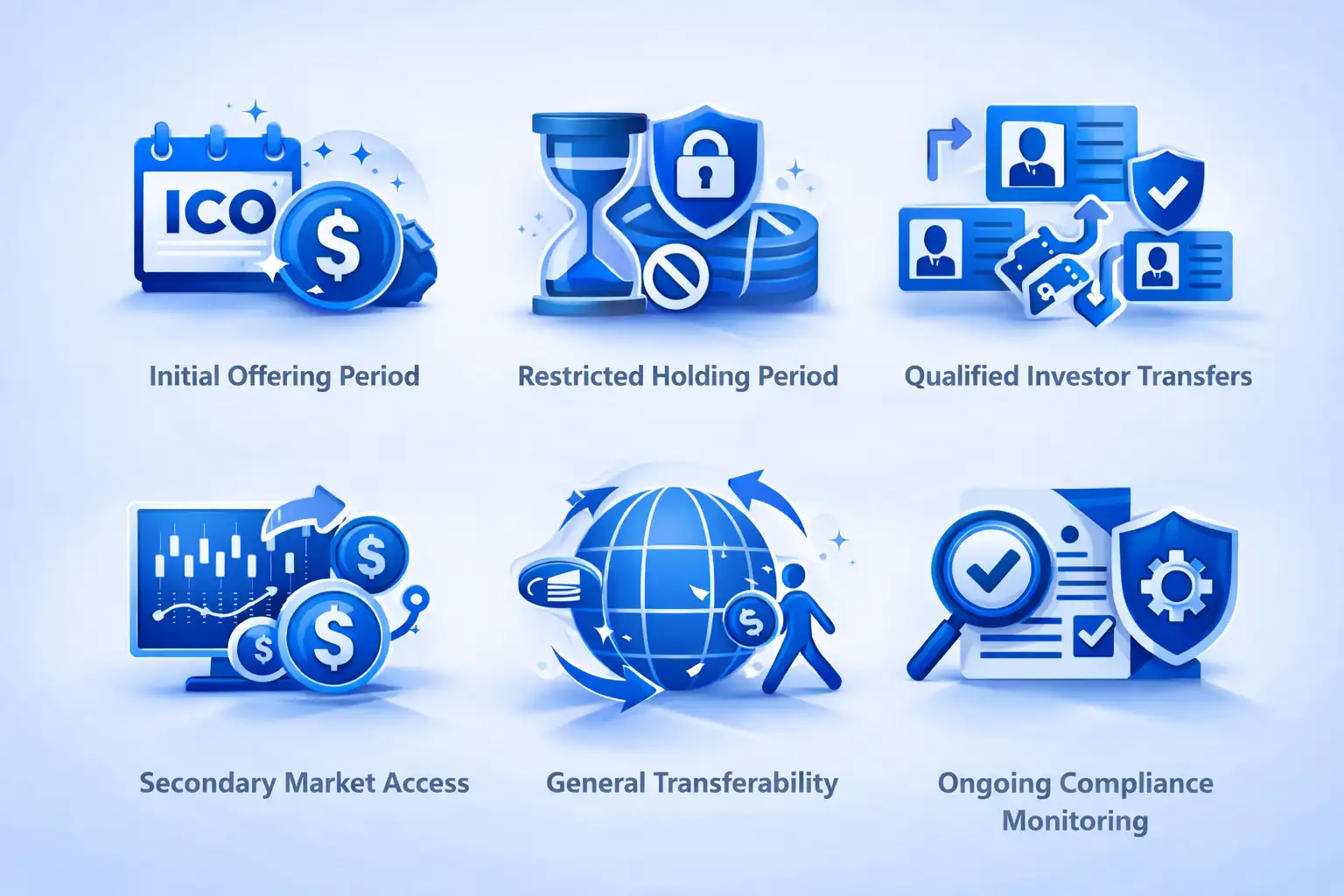
The United Kingdom’s approach to transfer restrictions focuses on ensuring tokens only transfer to appropriately categorized investors. Retail investors face restrictions on acquiring most tokenized securities, while professional clients and high net worth individuals have broader access. Platforms must implement systems verifying recipient categorization before permitting transfers. The FCA’s financial promotion rules effectively restrict how platforms can market tokens, limiting general solicitation and requiring sophisticated targeting to qualified audiences. These restrictions must be maintained throughout the token’s lifecycle, not just at initial offering.
Dubai’s VARA framework allows platforms to define appropriate transfer restrictions based on token characteristics and investor protection considerations. However, these restrictions must be clearly disclosed, consistently enforced, and technically implemented through smart contracts or transfer agent systems. VARA expects platforms to prevent transfers to unqualified investors, restricted jurisdictions, or sanctioned persons. The regulatory flexibility in defining restrictions creates opportunities for innovation but also places responsibility on platforms to design and implement effective controls.
Canadian provincial regulations impose holding period and investor qualification restrictions similar to USA requirements. Tokens sold under prospectus exemptions cannot be freely resold for specified periods, typically four months in most provinces. Subsequent transfers must comply with resale restrictions ensuring purchasers are qualified investors or the resale itself qualifies for an exemption. The complexity of coordinating restrictions across multiple provinces creates challenges for platforms operating nationally, often resulting in restrictions that satisfy the strictest provincial requirements to ensure multi-jurisdictional compliance.
Poorly defined transfer restrictions create multiple problems for investors. Tokens may be freely transferable technically but restricted legally, creating situations where transfers violate securities laws even if smart contracts permit them. Investors who unknowingly acquire tokens in violation of restrictions may be required to rescind purchases, losing any appreciation. Platforms may face enforcement actions requiring them to freeze all transfers, creating complete illiquidity. Investors should carefully review transfer restrictions in offering documents, verify they understand when and to whom they can transfer tokens, and confirm platforms have implemented technical and procedural controls ensuring restrictions are automatically enforced.
Lack of Custody and Asset Safeguard Compliance
Custody and asset safeguarding represent fundamental investor protections in regulated financial markets, ensuring client assets remain segregated from platform assets, protected from platform creditors, and available for return to investors upon demand. Tokenized real estate involves custody of both digital tokens and underlying property interests, creating complex requirements that span cryptocurrency custody regulations, securities custody rules, and real estate holding structures. Platforms lacking proper custody arrangements expose investors to total loss if platforms fail, are hacked, or misappropriate assets.
In the United States, broker-dealers and investment advisers face strict custody rules requiring client assets be held at qualified custodians, with annual surprise examinations and detailed reconciliation procedures. For tokenized securities, this creates challenges as traditional custodians may not accept cryptocurrency or token custody. Platforms must either work with emerging digital asset custodians meeting regulatory standards, implement segregated wallet architectures with robust security controls, or structure offerings so investors maintain direct custody of tokens while beneficial ownership in properties is held by bankruptcy-remote entities. Each approach has trade-offs between security, convenience, and regulatory compliance.
Tokenized Real Estate Custody Model Comparison
Qualified Custodian Model
- SEC-registered broker-dealer or bank custody
- Insurance coverage for client assets
- Annual surprise examination compliance
- Strict asset segregation and reconciliation
- Established legal and regulatory framework
- Limited availability for digital assets
- Higher costs but maximum investor protection
Digital Asset Custodian
- Specialized cryptocurrency custody providers
- State-licensed trust companies or limited purpose banks
- Cold storage and multi-signature security
- Insurance for digital asset holdings
- Growing regulatory acceptance and frameworks
- May lack securities custody licenses
- Moderate costs with good security standards
Investor Self-Custody
- Investors control private keys directly
- Platform never takes custody of tokens
- Eliminates platform custody risk completely
- Investors responsible for security and recovery
- May complicate corporate actions and governance
- Risk of investor key loss or theft
- Lowest cost but highest investor responsibility
Hybrid Custody Approach
- Combination of institutional and self-custody
- Platform custodian for operational efficiency
- Investor option to withdraw to self-custody
- Balance between convenience and security
- Requires clear custody transfer procedures
- Regulatory complexity in multiple jurisdictions
- Flexible but requires sophisticated implementation
Nominee Custody Structure
- Custodian holds legal title as nominee
- Token holders have beneficial ownership
- Bankruptcy remote from platform operations
- Established precedent in traditional securities
- Clear legal documentation of nominee relationship
- May require additional regulatory approvals
- Higher complexity but strong legal protection
Smart Contract Custody
- Custody enforced through smart contract logic
- Multisignature or time-lock mechanisms
- Transparent and auditable custody rules
- Reduces reliance on trusted intermediaries
- Smart contract security risks and bugs
- Uncertain regulatory treatment in some jurisdictions
- Innovative but less established legally
The United Kingdom’s FCA requires authorized firms to safeguard client assets through segregation in designated accounts at approved custodians, with detailed records enabling asset return in insolvency scenarios. The Client Assets Sourcebook provides comprehensive rules covering custody arrangements, reconciliation procedures, and governance oversight. For tokenized securities, platforms must demonstrate equivalent protections exist, whether through traditional custodians adapting to digital assets or new custody models providing comparable security. The FCA has shown willingness to approve innovative custody approaches if platforms can demonstrate robust controls and investor protection.
Dubai’s VARA framework establishes specific requirements for virtual asset custody, including licensed custodian obligations, insurance coverage minimums, cold storage requirements for majority of assets, and disaster recovery procedures. Platforms must either obtain custody licenses themselves or partner with licensed custodians. VARA emphasizes that custody arrangements must protect client assets from platform insolvency, with clear legal documentation establishing beneficial ownership. The integration of virtual asset custody with traditional property custody creates unique challenges that platforms must address through comprehensive legal structuring.
Stay Compliant with Evolving Tokenized Real Estate Regulations
Don’t risk your investment in non-compliant platforms. Get expert analysis of tokenized real estate regulations and identify red flags before you invest in blockchain property assets.
Canadian regulations require registered firms to hold client securities with designated custodians meeting specific criteria. The challenge for tokenized real estate lies in finding Canadian custodians willing to hold digital assets representing property interests. Some platforms have addressed this by structuring investments so physical property custody occurs through traditional real estate holding structures while tokens remain in investor self-custody, with legal documentation linking the two. This approach avoids custody regulatory issues but creates complexity in corporate actions, distributions, and governance.
Inadequate custody arrangements manifest in several warning signs. Platforms that maintain custody of both investor funds and tokens without qualified custodian arrangements create commingling risks. Lack of insurance coverage for digital assets means complete loss in case of hacks. Absence of regular proof of reserves attestations raises questions about whether platforms actually hold assets matching token supply. Platforms unwilling to discuss custody arrangements or claiming proprietary security prevents disclosure likely lack adequate protections. Investors should verify custody arrangements through independent documentation, confirm custodian credentials and licensing, and understand exactly how their assets are protected in various failure scenarios.
Smart Contracts Not Audited for Regulatory Compliance
Smart contracts form the technical foundation of tokenized real estate, encoding ownership rights, transfer restrictions, distribution mechanisms, and governance procedures in executable code. However, smart contracts must satisfy both technical security requirements and legal compliance obligations. Many platforms focus extensively on security audits to prevent hacks while neglecting regulatory compliance audits ensuring contracts properly implement legal requirements. This gap creates risks where technically sound contracts may violate securities laws, fail to enforce mandated restrictions, or enable regulatory non-compliance through their functionality.
Security audits examine smart contracts for vulnerabilities including reentrancy attacks, integer overflow, access control issues, and other technical flaws that could enable theft or manipulation. Multiple specialized firms provide security auditing services, with comprehensive audits becoming standard practice for serious platforms. However, security audits typically do not assess whether contracts comply with securities regulations, implement required transfer restrictions, provide necessary governance rights, or enable regulatory oversight mechanisms. These legal compliance aspects require different expertise combining smart contract knowledge with securities law understanding.
Comprehensive Smart Contract Compliance Audit Framework
Transfer Restriction Implementation
- Holding period enforcement matching regulatory requirements
- Investor qualification verification before transfer approval
- Geographic restrictions preventing transfers to prohibited jurisdictions
- Volume limitations for affiliate and control person sales
- Transfer agent integration for legal ownership updates
- Emergency freeze capabilities for regulatory compliance
- Clear audit trail of all transfer attempts and approvals
KYC and AML Controls
- Whitelist mechanisms ensuring only KYC-verified addresses can hold tokens
- Sanctions screening integration preventing blocked person transactions
- Enhanced due diligence triggers for high-risk transfers
- Beneficial ownership transparency through on-chain or linked records
- Automated suspicious activity detection and reporting
- Compliance officer override capabilities for special circumstances
- Regular synchronization with KYC database updates
Governance and Voting Rights
- Token holder voting proportional to ownership stakes
- Quorum requirements for valid governance decisions
- Voting threshold variations for different decision types
- Time-locked voting periods preventing manipulation
- Delegation mechanisms for proxy voting
- Clear procedures translating on-chain votes to corporate actions
- Protection against vote buying or coercion
Distribution and Dividend Mechanics
- Accurate distribution calculations based on ownership snapshots
- Tax withholding capabilities for different investor jurisdictions
- Reinvestment options where legally permissible
- Record date and payment date procedures
- Handling of distributions for fractional token holders
- Unclaimed distribution escrow mechanisms
- Complete distribution history and reporting
Regulatory Compliance Functions
- Court order implementation capabilities for asset freezes
- Regulatory reporting data extraction and formatting
- Securities legend enforcement through metadata
- Bad actor disqualification prevention mechanisms
- Accredited investor status reverification triggers
- Compliance with multiple jurisdictional requirements simultaneously
- Upgrade mechanisms for regulatory requirement changes
Administrative and Emergency Controls
- Multi-signature admin functions preventing single points of failure
- Time-delayed admin actions allowing community review
- Emergency pause functionality for security or regulatory issues
- Clearly defined scope and limitations of admin powers
- Transparent logging of all administrative actions
- Gradual decentralization pathway where appropriate
- Governance transition mechanisms as regulations evolve
In the United States, smart contracts for securities must implement transfer restrictions required by Regulation D, including one-year holding periods and accredited investor verification. Contracts must provide mechanisms for implementing court orders, such as freezing specific addresses in response to legal proceedings. Distribution mechanics must accurately calculate and distribute income to token holders while potentially withholding taxes. Governance functions must align with the legal entity’s operating agreement or bylaws. These requirements demand careful legal analysis during contract design, not just technical security review.
The United Kingdom’s regulatory approach emphasizes that technology cannot circumvent legal obligations. Smart contracts must enable platforms to comply with FCA requirements including investor categorization, financial promotion restrictions, and client asset protection. Contracts implementing governance must respect company law requirements for shareholder rights and director duties. The FCA has indicated that smart contracts will be judged based on their practical effects, not their stated intentions, meaning contracts that enable regulatory violations through their functionality expose platforms to enforcement regardless of disclaimers.
Dubai’s VARA has established smart contract registration requirements for certain virtual asset activities, including review of contract code to ensure compliance with VARA regulations. This regulatory innovation provides clearer expectations but also requires platforms to engage with regulators during contract development. VARA expects smart contracts to implement AML controls, sanctions screening, and regulatory reporting capabilities. The registration process includes review by both technical and legal teams at VARA, ensuring contracts meet both security and compliance standards.
Canadian regulators have emphasized that smart contracts are subject to traditional legal principles and cannot create legal rights or obligations inconsistent with corporate law and securities regulation. Contracts must implement required transfer restrictions, enable corporate governance in accordance with applicable corporate statutes, and provide mechanisms for regulatory compliance. The challenge lies in designing contracts that satisfy requirements across multiple provinces while maintaining operational efficiency.
Investors should verify that platforms have obtained both security audits and regulatory compliance audits from qualified firms. Audit reports should be publicly available and address specific compliance requirements for relevant jurisdictions. Platforms unable to provide compliance audit reports or claiming contracts are too complex to audit likely lack adequate compliance review. The absence of regulatory compliance audits represents a serious red flag indicating potential violations embedded in the contract code itself, creating systemic risks that cannot be easily remediated without contract replacement and token migration.
No Clear Tax Reporting or Capital Gains Guidance
Tax compliance represents one of the most complex and uncertain aspects of tokenized real estate investment, with treatment varying dramatically across jurisdictions and evolving rapidly as tax authorities develop positions on digital assets. Platforms must provide investors with adequate information and reporting to enable accurate tax compliance, including cost basis tracking, income characterization, and transaction reporting. The absence of clear tax guidance and reporting capabilities creates significant risks of underpayment penalties, double taxation, or unexpected tax liabilities that substantially reduce investment returns.
The fundamental tax question involves whether token transactions are treated as property sales, securities transactions, real estate sales, or some hybrid category. In the United States, the IRS treats most cryptocurrency as property for tax purposes, potentially subjecting token transfers to capital gains taxation. However, if tokens represent interests in partnerships or pass-through entities, more complex partnership taxation rules may apply. Distributions may be characterized as ordinary income, capital gains, or return of capital depending on the underlying source. Without clear guidance from platforms and professional tax advice, investors face substantial uncertainty about their tax obligations.
| Tax Issue | USA Treatment | UK Treatment | UAE Treatment | Canada Treatment |
|---|---|---|---|---|
| Token Purchase | Establishes cost basis, no immediate tax event | No tax on acquisition, base cost established | No personal income or gains tax | Establishes adjusted cost base |
| Token Sale | Capital gains tax on appreciation, long-term if held over 1 year | Capital gains tax at 10% or 20% depending on income | No capital gains tax for individuals | 50% of gain included in taxable income |
| Rental Income Distribution | Ordinary income, potential pass-through deduction, UBTI for IRAs | Income tax at marginal rates, potential property allowance | No personal income tax | Included in taxable income at full amount |
| Property Sale Proceeds | Capital gains passed through to token holders, recapture of depreciation | Capital gains distribution taxable as capital gain | No tax on distributions | Capital gain allocation to token holders |
| Foreign Investor Withholding | FIRPTA 15% withholding on property dispositions, treaty rates on income | 20% withholding on rental income for non-residents | Varies by emirate and property type, generally minimal | 25% withholding on rental income, tax treaty reductions available |
| Return of Capital | Reduces cost basis, taxable as gain once basis reaches zero | Reduces acquisition cost, eventual gain on disposal | Generally not taxable event | Reduces adjusted cost base of investment |
| Depreciation Benefits | Pass-through to token holders if structured properly, bonus depreciation potential | Wear and tear allowance for furnished holiday lets | Not applicable due to no income tax | Capital cost allowance available to partnership |
| Reporting Requirements | Form 1099, Schedule K-1 for partnerships, FBAR for foreign accounts over $10k | Self-assessment tax return, cryptoasset manual guidance | Economic substance regulations, VAT returns for commercial property | T5013 partnership return, T3 trust return depending on structure |
In the United Kingdom, HMRC has issued guidance on cryptoasset taxation treating tokens as property subject to capital gains tax on disposal. However, the specific treatment of tokenized real estate interests depends on the underlying structure, with potential for different treatment depending on whether tokens represent shares, units in collective investment schemes, or other interest types. Income distributions are generally subject to income tax at marginal rates, though specific characterization depends on whether the income is rental income, dividends, or interest. Platforms must provide sufficient information for UK investors to complete self-assessment tax returns accurately.
The United Arab Emirates offers favorable tax treatment with no personal income tax or capital gains tax for individuals in most emirates. However, commercial properties may be subject to Value Added Tax, and recent economic substance regulations require documentation of genuine economic activity for certain entity types. Foreign investors must still consider tax obligations in their home jurisdictions, potentially triggering worldwide taxation even if UAE source income is not taxed locally. Platforms serving UAE residents must provide reporting enabling investors to comply with their home country tax obligations.[2]
Canada treats cryptocurrency as property subject to income tax or capital gains tax depending on whether activity constitutes business or investment. For tokenized real estate, treatment likely follows capital gains provisions with 50 percent of gains included in taxable income. Partnership structures trigger complex tax reporting with annual T5013 information returns and allocation of income, deductions, and credits to partners. The Canada Revenue Agency has increased scrutiny of cryptocurrency transactions, making accurate reporting essential to avoid reassessment and penalties.
Platforms must provide comprehensive tax reporting including transaction histories, cost basis calculations, income characterization, and tax withholding where applicable. Form 1099 reporting in the USA, similar information returns in other jurisdictions, and detailed transaction exports enabling investor tax preparation are minimum requirements. Platforms should also provide general tax guidance documents, though these cannot constitute tax advice requiring professional accountant review. The absence of adequate tax reporting capabilities represents a serious red flag indicating platform immaturity or deliberate avoidance of regulatory obligations. Investors should consult tax professionals before investing in tokenized real estate to understand their specific tax obligations across all relevant jurisdictions.
Platform Operating Without Regulatory Oversight
Regulatory oversight provides critical investor protections through licensing requirements, ongoing supervision, examination authority, and enforcement capabilities that discipline platform behavior and provide recourse when violations occur. Platforms operating without regulatory oversight lack these accountability mechanisms, creating environments where fraud, mismanagement, and regulatory violations can persist unchecked until catastrophic failures occur. The absence of oversight represents perhaps the most fundamental red flag in tokenized real estate, indicating platforms have chosen to bypass or cannot meet regulatory standards.
Regulatory oversight operates through multiple mechanisms providing layered protections. Initial licensing examines platform fitness, including management competence, financial resources, compliance infrastructure, and business model viability. Ongoing supervision requires regular reporting, compliance reviews, and responses to regulatory inquiries. Examination authority allows regulators to conduct on-site inspections, review documents, interview personnel, and assess actual compliance versus representations. Enforcement powers enable regulators to impose corrective actions, levy penalties, restrict operations, or revoke licenses when violations occur. These mechanisms create powerful incentives for platforms to maintain high standards and provide investors with recourse beyond civil litigation.
Regulatory Oversight Benefits and Investor Protections
Licensing Standards and Entry Barriers
- Management fitness and competence assessment
- Minimum capital requirements ensuring financial stability
- Business plan review for viability and compliance
- Background checks preventing bad actor participation
- Compliance infrastructure requirements before operations
- Insurance and bonding requirements protecting investors
- Prevents unqualified operators from entering market
Ongoing Supervision and Monitoring
- Regular financial reporting and disclosure requirements
- Transaction monitoring for suspicious patterns
- Complaint tracking and resolution oversight
- Cybersecurity and operational risk assessments
- AML program effectiveness reviews
- Client asset segregation verification
- Continuous compliance rather than one-time approval
Examination and Inspection Rights
- Scheduled and surprise on-site examinations
- Document production and interview authority
- Systems access for transaction review
- Independent verification of platform claims
- Detection of undisclosed violations or risks
- Comparison against industry best practices
- Provides objective assessment of actual operations
Enforcement and Corrective Action
- Civil penalties for regulatory violations
- Restriction orders limiting harmful activities
- License suspension or revocation powers
- Cease and desist authority for immediate threats
- Investor restitution and compensation orders
- Criminal prosecution referrals for serious violations
- Creates meaningful accountability for platforms
Investor Complaint and Dispute Mechanisms
- Formal complaint submission processes
- Regulatory investigation of investor concerns
- Mandatory platform response requirements
- Ombudsman services in some jurisdictions
- Compensation schemes for platform failures
- Alternative dispute resolution options
- Provides recourse beyond expensive litigation
Transparency and Public Disclosure
- Public registers of licensed platforms
- Enforcement action disclosure and precedent
- Market conduct guidance and expectations
- Statistical reporting on industry compliance
- Warning notices for unlicensed operators
- Educational resources for investor protection
- Enables informed decision-making by investors
In the United States, platforms facilitating tokenized real estate securities face oversight from multiple regulators including the SEC for securities activities, FinCEN for money services, state securities regulators for local offerings, and potentially the CFTC for derivative activities. Each regulator maintains distinct examination and enforcement capabilities, creating comprehensive oversight when platforms comply but also creating complex multi-regulator engagement when platforms violate multiple regulatory frameworks. The SEC has been particularly active in pursuing unregistered securities offerings and unlicensed broker-dealer activities in the digital asset space.
The United Kingdom’s FCA provides comprehensive oversight for authorized firms through its supervisory framework. Firms receive regular contact from supervisors, submit detailed regulatory returns, undergo themed reviews examining specific risk areas, and face consequences ranging from additional requirements to authorization withdrawal for serious violations. The FCA publishes enforcement notices providing transparency about violations and penalties, creating precedent that guides industry behavior. Unauthorized activity is actively pursued through criminal prosecution and civil enforcement, with warning lists alerting investors to firms operating without required authorization.
Dubai’s VARA has established active oversight of licensed platforms including regular reporting requirements, compliance reviews, and examination authority. VARA maintains close relationships with licensed entities, providing regulatory guidance while also monitoring compliance closely. The authority has demonstrated willingness to take enforcement action, including public censures and license restrictions, when violations are identified. This active oversight creates confidence in VARA-licensed platforms while also meaning non-compliant platforms operating in Dubai without licenses face significant regulatory risk.
Canadian provincial securities commissions provide oversight through their registration and compliance frameworks. Registered firms submit annual compliance reports, face periodic compliance reviews, and must respond to commission inquiries. Enforcement divisions pursue violations through settlement agreements, administrative penalties, and referrals for criminal prosecution in serious cases. The passport system enables coordinated oversight across provinces, though platforms still face multiple regulators with varying priorities and approaches.
Platforms operating without regulatory oversight typically claim to operate in regulatory grey areas, argue their activities do not trigger licensing requirements, or deliberately choose jurisdictions with minimal oversight. These platforms lack the accountability mechanisms that protect investors in regulated environments. When problems arise, investors have limited recourse beyond expensive litigation with uncertain outcomes. Regulatory intervention to protect investors is unlikely when platforms operate outside regulatory frameworks. Investors should strongly prefer platforms operating under clear regulatory oversight with demonstrable compliance records, public license verification, and transparent regulatory relationships.
Vague Exit Rights and Redemption Mechanisms
Exit rights represent critical investor protections ensuring capital is not permanently locked into investments without clear paths to liquidity. While tokenization theoretically enables secondary market liquidity, regulatory restrictions, market conditions, or platform limitations often prevent free trading. Clear redemption mechanisms allowing investors to exit positions at fair values provide essential protections, particularly for retail investors who may face unexpected liquidity needs. Vague or absent exit rights create situations where investors become trapped in underperforming or problematic investments with no recourse.
Redemption mechanisms in tokenized real estate face inherent tensions between investor liquidity needs and property investment realities. Real estate is fundamentally illiquid, with property sales requiring time, market conditions, and transaction costs. Offering immediate redemption from real estate investments creates risks of redemption runs forcing distressed property sales at unfavorable prices. However, completely eliminating redemption rights for extended periods creates unacceptable investor lock-in. The challenge lies in structuring balanced redemption mechanisms that provide reasonable liquidity while protecting against destabilizing redemption pressures.
In the United States, closed-end fund structures typically provide no redemption rights, relying on secondary markets for liquidity. Open-end structures like REITs offer ongoing redemption but face significant regulatory requirements including daily net asset value calculations and redemption fulfillment obligations. Tokenized platforms often hybrid these approaches, providing periodic redemption windows with limitations protecting against redemption runs. SEC guidance emphasizes that platforms must disclose redemption limitations clearly, price redemptions fairly using independent valuations, and maintain adequate liquidity to meet expected redemption demand.
The United Kingdom’s FCA requires authorized platforms to establish clear and fair redemption policies appropriate to the investment type. Real estate funds typically offer quarterly redemptions with notice periods, though the FCA has allowed temporary redemption suspensions during market stress. The key requirement is that redemption terms must be clearly disclosed, consistently applied, and designed to treat all investors fairly. Platforms cannot arbitrarily deny redemptions without clear policy basis and must provide transparency about redemption processing and any limitations or suspensions.
Dubai’s regulatory framework allows platforms flexibility in structuring exit rights provided they are clearly documented and disclosed to investors. VARA expects platforms to consider investor protection in designing redemption mechanisms, balancing liquidity provision with structural stability. The authority has indicated that platforms with no exit mechanisms beyond uncertain secondary markets should clearly disclose this limitation and target only sophisticated investors who understand the illiquidity risk. Mandatory dissolution timelines have become common practice providing certainty about maximum investment duration.
Canadian securities regulations require clear disclosure of liquidity and redemption rights in offering memorandums. Platforms must accurately describe when and how investors can exit, what pricing methodology applies, and what circumstances might limit redemptions. Misleading or vague descriptions of exit rights constitute material misrepresentation exposing platforms to regulatory action and investor rescission rights. Provincial regulators have emphasized that illiquidity is acceptable if clearly disclosed, but false or misleading liquidity representations are serious violations.
Investors must carefully review exit and redemption provisions before investing, understanding that vague language often conceals unfavorable terms. Platforms claiming liquidity will be readily available through secondary markets without demonstrating actual trading volume are making potentially misleading representations. Redemption mechanisms subject to unrestricted platform discretion provide little meaningful protection. Investors should prefer clearly defined redemption rights, even with limitations, over vague promises of liquidity that may prove illusory when actually needed. Understanding exit options before entry is essential for proper investment planning and risk management.
Governance Structures That Bypass Investor Rights
Governance rights provide investors with voice in major decisions affecting their investments, protection against management self-dealing, and mechanisms to address performance failures. Traditional corporate and securities law establishes default governance rights including voting on major transactions, electing directors, amending governing documents, and bringing derivative actions. Tokenized real estate platforms sometimes structure governance to minimize or eliminate investor rights, concentrating control with platform operators or insiders. These structures create principal-agent problems where management interests diverge from investor interests without adequate accountability mechanisms.
The tension between operational efficiency and investor protection drives governance design. Platform operators argue that decentralized governance creates decision-making paralysis, prevents timely responses to market opportunities, and exposes platforms to manipulation by short-term activists. Conversely, investors argue that concentrated control enables self-dealing, excessive fees, and decisions favoring operators over investors. The optimal governance structure balances these concerns, preserving management flexibility for day-to-day operations while requiring investor approval for fundamental changes and providing meaningful oversight mechanisms.
Governance Red Flags Indicating Bypassed Investor Rights
Absence of Voting Rights
- Tokens provide economic rights only without voting
- Dual-class structures giving insiders control
- No investor approval required for major decisions
- Governance reserved exclusively to platform operators
- Amendments possible without token holder consent
- Complete concentration of power with management
- Investors have no voice in asset management
Supermajority Thresholds
- Unreasonably high voting thresholds preventing action
- Different thresholds favoring management proposals
- Quorum requirements making meetings impossible
- Effective veto power for small insider minorities
- Voting rules designed to entrench management
- Practical impossibility of investor-initiated changes
- Governance theater without meaningful participation
Unlimited Management Discretion
- Platform can amend terms without restrictions
- Fee structures modifiable at operator discretion
- Property sales or acquisitions without approval
- Related party transactions without limits
- Financing decisions made unilaterally
- No defined limits on management authority
- Investors become passive capital providers
Opaque Decision-Making Processes
- No disclosure of management deliberations
- Decisions announced without explanation
- Lack of transparency about conflicts of interest
- No investor access to management or advisers
- Absence of regular investor communications
- Refusal to answer investor questions
- Information asymmetry favoring insiders
No Management Removal Rights
- Investors cannot remove underperforming management
- No mechanism to replace property managers
- Platform operators have permanent control
- Poor performance carries no consequences
- Investors trapped with failing management
- No accountability for management failures
- Fundamental misalignment of incentives
Weak Fiduciary Obligations
- Limited or disclaimed fiduciary duties
- Broad indemnification protecting management
- Exculpatory provisions eliminating liability
- Conflicts of interest permitted without limits
- No duty to maximize investor returns
- Business judgment rule stretched beyond recognition
- Investors bear all risks while management protected
In the United States, corporate law establishes default governance rights for shareholders and members that cannot be completely eliminated. Delaware law, governing many tokenized structures, requires that fundamental transactions including mergers, asset sales, and dissolutions receive shareholder approval. However, operating agreements can modify default rules substantially, concentrating authority with managers and limiting investor rights. The challenge for token holders is ensuring governance documents provide meaningful protections rather than using legal flexibility to eliminate accountability. Courts have upheld broad management authority provisions but also enforced fiduciary duties preventing outright self-dealing.
The United Kingdom’s Companies Act establishes mandatory shareholder rights that cannot be completely contracted away, including rights to receive information, attend general meetings, vote on certain resolutions, and bring derivative claims for breaches of director duties. These protections create baseline governance standards that tokenized structures must respect. However, different entity types provide varying protection levels, with partnerships and limited partnerships offering more contractual flexibility than companies. The FCA’s Listing Rules add additional governance requirements for publicly traded securities, though most tokenized offerings avoid these by remaining private.
Dubai’s framework allows substantial contractual freedom in designing governance structures, though VARA expects platforms to implement governance appropriate to their investor base. Retail-focused offerings should provide more robust governance protections than professional investor offerings. The key requirement is disclosure, ensuring investors understand exactly what rights they possess and what authority management retains. VARA has indicated that completely eliminating investor voice while marketing to retail investors may violate suitability requirements or constitute misleading promotion.
Canadian corporate and securities law establishes governance rights that vary by entity type and jurisdiction. Federal corporations under the Canada Business Corporations Act have extensive shareholder rights, while provincial limited partnerships provide more flexibility. Securities regulators focus on disclosure of governance structures rather than mandating specific provisions, though egregious structures that eliminate all investor protections may trigger suitability concerns or registration requirements. The emphasis is ensuring investors understand governance limitations before investing rather than prohibiting particular structures.
Investors must carefully review governance provisions in offering documents, understanding that complex legal language often conceals unfavorable terms. Platforms should provide clear summaries of investor rights including what decisions require approval, what voting thresholds apply, what information access investors have, and what remedies exist for governance failures. Independent legal review by qualified counsel is essential for larger investments. Investors should be particularly wary of governance structures providing no meaningful rights, as these create environments where management can act contrary to investor interests without accountability or recourse.
Inconsistent Compliance With Real Estate Laws
Beyond securities and financial services regulations, tokenized real estate must comply with extensive property-specific laws governing real estate transactions, property management, landlord-tenant relationships, land use, environmental compliance, and real estate professional licensing. These requirements operate independently of tokenization, applying to property ownership regardless of how interests are represented or transferred. Platforms that focus exclusively on blockchain and securities compliance while ignoring real estate law create significant legal risks that can result in property seizures, lease invalidations, fines, and civil liability.
Real estate law compliance begins with proper property acquisition and registration. Title must be acquired through valid transactions, properly documented deeds, and appropriate consideration. Title registration in land registries must follow local procedures, with all required filings, tax payments, and government approvals completed. Failure to properly record title can create disputes over ownership, priority conflicts with other claimants, and challenges perfecting security interests. Additionally, many jurisdictions impose transfer taxes, stamp duties, or other transaction costs that platforms must account for in pricing and cost structures.
Critical Real Estate Law Compliance Categories
Title and Registration Requirements
- Proper deed execution and acknowledgment
- Land registry filing and fee payment
- Transfer tax and stamp duty compliance
- Title insurance procurement where customary
- Lien and encumbrance searches and clearance
- Survey and legal description accuracy
- Foreign ownership restrictions verification
Landlord-Tenant Compliance
- Lease agreement legal compliance and disclosures
- Security deposit handling and accounting
- Habitability standards and maintenance obligations
- Eviction procedure adherence to legal requirements
- Fair housing law compliance preventing discrimination
- Rent control and stabilization law adherence
- Tenant rights notification and proper documentation
Zoning and Land Use Regulations
- Permitted use verification for property type
- Zoning variance or special exception applications
- Building code compliance for renovations
- Occupancy permit maintenance and renewal
- Historical preservation requirements if applicable
- Signage and exterior modification restrictions
- Short-term rental regulations in many jurisdictions
Environmental Law Compliance
- Phase I environmental assessments at acquisition
- Contamination disclosure and remediation obligations
- Asbestos and lead paint compliance for older buildings
- Hazardous waste handling and disposal procedures
- Underground storage tank regulations
- Wetlands and endangered species protections
- Environmental lien priority and liability concerns
Real Estate Professional Licensing
- Property management license requirements in many states
- Real estate broker license for acquisition activities
- Proper supervision of licensed professionals
- Continuing education compliance
- Trust account management for client funds
- Professional liability insurance requirements
- Regulatory oversight by real estate commissions
Property Tax and Assessment Compliance
- Timely property tax payment to avoid liens
- Assessment appeal procedures when appropriate
- Special assessment district obligations
- Homestead exemption or other tax benefit forfeiture
- Tax sale prevention through payment monitoring
- Proper allocation across token holders
- International tax treaty considerations for foreign properties
In the United States, real estate law operates primarily at state and local levels, creating significant variation across jurisdictions. Platforms holding properties in multiple states must navigate different landlord-tenant laws, foreclosure procedures, property tax systems, and licensing requirements. Some states require property managers to hold real estate licenses, creating compliance obligations for platforms or their service providers. Environmental laws operate at federal, state, and local levels, with potential liability for contamination even when ownership was acquired after pollution occurred. Platforms must conduct thorough due diligence and maintain ongoing compliance across all applicable requirements.
The United Kingdom’s property law includes ancient principles alongside modern statutory requirements. Land registration with HM Land Registry is essential for establishing clear title, with different registration requirements for England, Wales, Scotland, and Northern Ireland. Leasehold properties, common in the UK, create complex relationships between freeholders and leaseholders with statutory rights and obligations. The Landlord and Tenant Act 1985 establishes repair obligations and other tenant protections. Planning permission requirements govern property alterations and use changes. Platforms must ensure proper legal advice covers all applicable UK property law requirements.
Dubai’s property law includes specific requirements for different property types and locations. Properties in Dubai Land Department jurisdictions require registration with specific procedures and documentation. Foreign ownership restrictions apply in some areas while others permit unrestricted ownership. The Real Estate Regulatory Agency oversees property management and brokerage activities, requiring licensing for professionals. Ejari registration is mandatory for rental properties, documenting lease terms and providing tenant protections. Service charge regulations govern common area maintenance in developments. Platforms must navigate these requirements while also complying with VARA’s virtual asset regulations.
Canadian real estate law varies significantly across provinces and territories, each with distinct land registration systems, landlord-tenant legislation, and property transaction requirements. Ontario’s Land Transfer Tax, British Columbia’s Property Transfer Tax, and varying legal procedures across jurisdictions create complexity for multi-provincial platforms. Aboriginal land claims, environmental assessment requirements, and zoning regulations add additional compliance layers. Some provinces require real estate licenses for property management activities, triggering regulatory oversight by provincial real estate councils.
Investors should verify that platforms have obtained proper real estate legal advice, conducted thorough property due diligence, and implemented compliance systems for ongoing obligations. Property acquisition documents should be reviewed by qualified real estate attorneys in relevant jurisdictions. Environmental reports, zoning verification, and title insurance should be standard for all properties. Platforms should demonstrate understanding of and compliance with landlord-tenant laws, property tax obligations, and any applicable licensing requirements. Failure to comply with real estate law can result in penalties, property liens, lease invalidations, and environmental liability that substantially impair property value and investment returns.
Overreliance on Regulatory Grey Areas
Regulatory grey areas exist where law has not clearly addressed new technologies or business models, creating uncertainty about applicable requirements. While some ambiguity is inevitable in emerging sectors, platforms that deliberately structure offerings to exploit grey areas rather than comply with clear legal principles create significant risks. Regulatory authorities have consistently demonstrated that technology does not exempt operators from fundamental legal obligations, and grey area reliance is not a valid compliance strategy. As regulations clarify and enforcement increases, platforms operating in grey areas face heightened risk of retroactive regulatory action.
The grey area strategy typically involves arguing that existing regulations do not clearly apply to tokenized structures, that blockchain technology creates novel arrangements falling outside traditional categories, or that specific regulatory requirements do not explicitly address digital assets. While these arguments may have superficial appeal, regulators have consistently rejected technology-based exemptions. The SEC has repeatedly stated that new technology does not change fundamental securities law analysis. The FCA has emphasized that financial services regulations apply regardless of underlying technology. VARA and other digital asset regulators have been established precisely because traditional frameworks apply, not to exempt digital assets from regulation.
Risks of Overreliance on Regulatory Grey Areas
Retroactive Enforcement Actions
- Regulators can pursue violations even after extended operations
- No statute of limitations for some securities violations
- Disgorgement of all profits from unlawful activities
- Civil penalties compounding over time
- Investor rescission rights creating massive liabilities
- Criminal prosecution for willful violations
- Platform shutdown with no grandfather provisions
Regulatory Clarification Against Platforms
- Grey areas typically clarify against unregulated activity
- New rules often apply retroactively to existing operators
- Compliance costs increase substantially post-clarification
- Existing structures may not be grandfathered
- Business model may become economically unviable
- Investors face sudden illiquidity or losses
- First movers become cautionary examples
Competitive Disadvantage
- Compliant platforms gain regulatory approval advantages
- Institutional investors avoid grey area operators
- Partnerships with regulated entities impossible
- Banking relationships difficult to establish
- Insurance coverage unavailable or prohibitively expensive
- Reputation damage from regulatory uncertainty
- Long-term viability questioned by sophisticated investors
Investor Liability Exposure
- Investors may be deemed to have participated in violations
- Secondary liability for facilitating unlawful schemes
- Tax authorities may disallow deductions or credits
- Professional investors face reputational damage
- Difficulty explaining grey area investments to stakeholders
- Potential clawback of distributions in insolvency
- Association with regulatory violations impacts future access
Limited Access to Capital
- Institutional capital avoids regulatory uncertainty
- Venture funding difficult without clear legal pathway
- Debt financing unavailable from regulated lenders
- Limited to unsophisticated retail investors
- Constrained growth due to capital scarcity
- High cost of capital from risk premium
- Platform scaling inhibited by funding limitations
Operational Instability
- Constant risk of regulatory intervention
- Management attention diverted to legal defense
- Difficulty hiring quality personnel
- Service provider reluctance to work with grey platforms
- Technology vendors unwilling to support risky clients
- Continuous pivoting to avoid enforcement
- Investor confidence undermined by uncertainty
In the United States, the SEC’s approach to digital assets has evolved from initial observation to active enforcement. Early platforms claiming grey area protection have faced enforcement actions years after initial operations, with the SEC arguing that securities laws clearly applied all along. Courts have generally supported the SEC’s position, rejecting arguments that blockchain technology creates new legal categories exempt from securities regulation. Platforms that took conservative compliance approaches have fared better than those pushing regulatory boundaries, even when grey area strategies initially appeared successful.
The United Kingdom’s FCA has explicitly warned against assuming that regulatory silence equals approval. The authority has stated that firms operating in grey areas without seeking regulatory guidance do so at their own risk. When the FCA clarifies grey areas, it typically applies new standards immediately without grandfather provisions. Platforms that engaged with the FCA early and sought authorization, even when requirements were uncertain, have gained competitive advantages over those that avoided regulatory contact hoping to continue operating indefinitely in grey areas.
Dubai’s establishment of VARA represents a jurisdiction eliminating grey areas through comprehensive regulation. Previously unregulated virtual asset activities now require explicit licensing. Platforms that engaged with VARA during its establishment gained first-mover advantages and influenced regulatory development. Those that avoided regulation hoping to continue operating without oversight found themselves suddenly non-compliant with clear regulatory requirements. The transition demonstrates how regulatory grey areas inevitably resolve, typically requiring compliance rather than continued exemption.
Canadian regulators have taken enforcement actions against platforms claiming grey area exemptions, particularly in securities and money services business contexts. Provincial securities commissions have imposed trading bans and penalties on platforms arguing their activities fell outside regulatory scope. The Canada Revenue Agency has aggressively pursued cryptocurrency tax compliance, rejecting grey area claims that digital assets escape taxation. The consistent pattern across jurisdictions is that grey area reliance provides temporary reprieve at best, creating substantial long-term risks.
Investors should view grey area reliance as a fundamental red flag indicating platforms are prioritizing regulatory avoidance over investor protection. Legitimate platforms seek regulatory clarity through engagement with authorities, obtaining legal opinions from respected counsel, and implementing conservative compliance approaches that satisfy multiple possible regulatory interpretations. Platforms advertising their grey area operation or claiming regulatory exemptions based on novel legal theories deserve extreme skepticism. The history of financial regulation demonstrates that grey areas resolve against unregulated activity, making early compliance the prudent long-term strategy for both platforms and investors.
Failure to Adapt to Emerging Tokenization Regulations in 2026
The regulatory landscape for tokenized real estate continues evolving rapidly in 2026, with new frameworks, guidance, and enforcement precedents emerging across major jurisdictions. Platforms that established compliance programs based on 2023 or 2024 requirements but failed to adapt to evolving standards face increasing regulatory risk. The pace of regulatory development shows no signs of slowing, requiring platforms to maintain active regulatory monitoring, engage with emerging requirements, and implement systems capable of adapting to changing standards. Static compliance approaches that assume regulations will remain unchanged represent serious vulnerabilities as enforcement intensifies.
Several significant regulatory developments characterize the 2026 landscape. The United States has seen increased SEC enforcement activity, with several major platforms facing actions for unregistered securities offerings and unlicensed broker-dealer operations. Courts have issued important precedents clarifying how securities laws apply to tokenized assets. State-level regulation has intensified, with some states establishing specific digital asset frameworks while others have pursued aggressive enforcement. The CFTC has asserted expanded authority over certain tokenized derivatives, creating overlapping regulatory obligations. Financial crimes enforcement has increased focus on cryptocurrency AML compliance, with substantial penalties for platforms lacking adequate controls.
In the United Kingdom, the FCA has finalized comprehensive cryptoasset regulations implementing broader authorization requirements and conduct standards. The Financial Services and Markets Act 2023 provided additional regulatory powers addressing digital assets specifically. Market abuse regulations have been extended to cryptoasset trading, requiring surveillance and reporting systems. The FCA has published detailed guidance on token admission to trading, custody arrangements, and financial promotion restrictions. Platforms operating under older interpretations face regulatory expectations to upgrade compliance or risk authorization withdrawal.
Dubai’s VARA framework has matured significantly since initial implementation, with detailed rulebooks covering platform operations, token offerings, and market conduct. VARA has conducted its first examination cycles, identifying common compliance deficiencies and issuing public guidance on expectations. Enforcement actions against licensed platforms have established precedents for how VARA interprets and applies requirements. The Dubai Land Department has integrated blockchain property registration more fully, creating clearer procedures for tokenized real estate. Platforms must ensure their compliance programs reflect current VARA expectations rather than initial interpretations.
Canada has seen provincial securities regulators coordinate through the Canadian Securities Administrators to establish more uniform approaches to crypto asset platform registration. New guidance addresses staking, lending, and tokenization activities. Some provinces have implemented specific registration categories for crypto asset dealers. FINTRAC has increased enforcement against unregistered money services businesses, with substantial penalties for platforms lacking proper registration and AML programs. Tax authorities have enhanced cryptocurrency reporting requirements, creating new compliance obligations for platforms and investors.
The European Union’s Markets in Crypto-Assets Regulation has entered into full application, establishing comprehensive requirements for crypto asset service providers across member states. This creates implications for platforms serving EU residents or operating within the bloc. The OECD’s Crypto-Asset Reporting Framework is being implemented globally, requiring platforms to collect and report customer information to tax authorities. FATF has issued updated guidance on virtual asset service providers, raising expectations for AML compliance. These international developments affect platforms regardless of their primary jurisdiction.
Platforms demonstrating commitment to regulatory adaptation maintain active relationships with regulators, participate in industry consultations on proposed rules, engage qualified legal and compliance advisors to monitor developments, implement flexible systems capable of incorporating new requirements, conduct regular compliance assessments against evolving standards, and communicate regulatory changes to investors transparently. These practices distinguish mature, sustainable platforms from those hoping static compliance will suffice indefinitely. Investors should verify that platforms have robust regulatory monitoring capabilities and track records of adapting to changing requirements rather than resisting or ignoring regulatory evolution.
Navigating Tokenized Real Estate Regulations in 2026
The tokenized real estate sector in 2026 presents substantial opportunities alongside significant regulatory challenges that investors must navigate carefully. The twenty regulatory red flags detailed in this analysis represent fundamental issues that can result in total investment loss, regulatory penalties, or protracted legal disputes. While tokenization technology offers genuine benefits including fractional ownership, enhanced liquidity, and broader investor access, these advantages materialize only when platforms implement comprehensive regulatory compliance across securities laws, financial services regulations, real estate requirements, and emerging digital asset frameworks.
Across the USA, UK, UAE, and Canada, regulatory approaches have matured substantially with clear frameworks, active enforcement, and growing sophistication among both regulators and market participants. The era of regulatory ambiguity is ending, replaced by comprehensive oversight that demands institutional-grade compliance from platforms seeking to operate legitimately. Investors who conduct thorough due diligence on regulatory compliance, verify platform authorization and licensing, review legal documentation carefully, and prefer platforms with transparent regulatory relationships will substantially reduce their risk exposure compared to those pursuing yield without adequate risk assessment.
The fundamental principle underlying all twenty red flags is that tokenization does not eliminate or reduce regulatory obligations but rather adds blockchain-specific requirements to traditional real estate and securities regulations. Platforms that embrace this reality, implement comprehensive compliance programs, engage actively with regulators, and prioritize investor protection over regulatory avoidance will form the foundation of a sustainable tokenized real estate sector. Investors who recognize regulatory compliance as an essential platform attribute rather than an optional feature will be best positioned to benefit from tokenization’s genuine advantages while avoiding the catastrophic losses that regulatory violations inevitably produce.
People Also Ask
Q1.1. What are the main regulatory risks in tokenized real estate investments?
The primary regulatory risks include unclear legal classification of tokens, absence of securities registration, lack of platform licensing, inadequate investor protection frameworks, and non-compliant KYC/AML procedures. Cross-border jurisdiction conflicts pose additional challenges, especially when properties span multiple regulatory zones. Investors face exposure to platforms operating in regulatory grey areas without proper oversight, weak custody safeguards, and unclear tax reporting obligations that can lead to legal complications and financial losses.
Q2.2. How do securities laws apply to tokenized real estate offerings?
Securities laws typically apply when tokens represent fractional ownership, profit-sharing rights, or investment contracts in real estate assets. In the USA, the Howey Test determines if a token qualifies as a security under SEC regulations. The UK follows FCA guidelines treating investment-based tokens as specified investments. UAE’s VARA and SCA frameworks classify tokenized property interests as virtual asset securities. Compliance requires registration, prospectus filing, investor accreditation verification, and ongoing disclosure obligations across these jurisdictions.
Q3.3. What KYC and AML requirements exist for tokenized real estate platforms?
Tokenized real estate platforms must implement robust Know Your Customer (KYC) and Anti-Money Laundering (AML) procedures compliant with FATF guidelines and local financial regulations. This includes identity verification using government-issued documents, address confirmation, source of funds documentation, PEP screening, sanctions list checking, and ongoing transaction monitoring. USA platforms follow FinCEN requirements, UK platforms adhere to FCA rules, UAE follows VARA standards, and Canadian platforms comply with FINTRAC regulations. Non-compliance can result in severe penalties and platform shutdowns.
Q4.4. Can tokenized real estate investments be traded on secondary markets legally?
Secondary market trading of tokenized real estate is heavily regulated and depends on token classification and jurisdiction. Securities-classified tokens require trading on licensed exchanges or alternative trading systems (ATS) with proper registration. USA requires broker-dealer licensing and SEC compliance, UK mandates FCA-authorized platforms, UAE requires VARA licensing, and Canada follows CSA provincial regulations. Unregulated secondary trading exposes investors to liquidity risks, price manipulation, and potential legal violations that can invalidate ownership claims.
Q5.5. What happens if a tokenized property is not properly registered legally?
Improper legal registration creates severe ownership risks where token holders may have no enforceable claim to the underlying property. Traditional land registries in most jurisdictions do not recognize blockchain-based ownership records without proper legal structuring through SPVs, trusts, or corporations. This disconnect can lead to situations where property can be sold, mortgaged, or seized without token holder consent. Investors may face total loss if legal ownership structures are challenged in court, making proper registration verification essential.
Q6.6. How do different countries regulate tokenized real estate in 2026?
Regulatory approaches vary significantly across major markets. The USA treats most tokenized real estate as securities under SEC jurisdiction, requiring Regulation D, A+, or S compliance depending on offering structure. The UK’s FCA regulates tokenized property as collective investment schemes or specified investments with strict authorization requirements. UAE has established comprehensive frameworks through VARA and DIFC, requiring platform licensing and token registration. Canada follows provincial securities regulations with additional guidance from CSA. Each jurisdiction has unique compliance, reporting, and investor protection requirements.
Q7.7. What are the tax implications of investing in tokenized real estate?
Tax treatment of tokenized real estate remains complex and jurisdiction-dependent. In the USA, tokens may be treated as property under IRS guidelines, triggering capital gains on transfers and rental income reporting requirements. The UK applies capital gains tax on disposal and income tax on distributions, with potential stamp duty implications. UAE offers favorable tax treatment with no capital gains tax but requires VAT compliance for commercial properties. Canada treats tokens as property with capital gains implications. Investors must track cost basis, transaction history, and income distributions across multiple tax years.
Q8.8. What investor protection mechanisms should exist in tokenized real estate?
Comprehensive investor protection includes proper securities registration, transparent disclosure documents, independent property valuations, segregated asset custody, clear governance rights, defined redemption mechanisms, and regulatory oversight of platform operations. Platforms should provide regular financial reporting, third-party audits, insurance coverage for property and technology risks, dispute resolution procedures, and clear communication channels. Regulatory frameworks in mature markets mandate these protections, but many emerging platforms operate without adequate safeguards, exposing investors to fraud and mismanagement risks.
Q9.9. How are smart contracts regulated in tokenized real estate transactions?
Smart contract regulation in tokenized real estate is evolving rapidly across jurisdictions. Regulatory bodies focus on ensuring contracts accurately represent legal agreements, contain proper security controls, include compliance mechanisms for KYC/AML/sanctions screening, and provide auditability for regulatory review. USA guidance emphasizes smart contracts cannot circumvent securities laws. UK requires smart contracts to align with FCA principles and contract law. UAE’s VARA mandates smart contract registration and audit requirements. Platforms must conduct regular security audits, legal reviews, and maintain contract upgradeability for regulatory changes.
Q10.10. What are the biggest red flags indicating non-compliant tokenized real estate platforms?
Critical warning signs include platforms operating without regulatory licenses, unclear legal ownership structures, absence of proper securities registration, vague or missing disclosure documents, unaudited smart contracts, inadequate KYC/AML procedures, promises of unrealistic returns, unclear fee structures, lack of independent property verification, anonymous team members, no clear redemption mechanisms, restricted or illiquid secondary markets, absence of legal counsel involvement, and operations in unregulated jurisdictions. Investors should thoroughly verify regulatory compliance, legal documentation, and platform credentials before committing capital to any tokenized real estate offering.
Explore Services
Related Services
Reviewed by

Aman Vaths
Founder of Nadcab Labs
Aman Vaths is the Founder & CTO of Nadcab Labs, a global digital engineering company delivering enterprise-grade solutions across AI, Web3, Blockchain, Big Data, Cloud, Cybersecurity, and Modern Application Development. With deep technical leadership and product innovation experience, Aman has positioned Nadcab Labs as one of the most advanced engineering companies driving the next era of intelligent, secure, and scalable software systems. Under his leadership, Nadcab Labs has built 2,000+ global projects across sectors including fintech, banking, healthcare, real estate, logistics, gaming, manufacturing, and next-generation DePIN networks. Aman’s strength lies in architecting high-performance systems, end-to-end platform engineering, and designing enterprise solutions that operate at global scale.