Ai Overview
Real estate tokenization platform cost structures vary significantly based on deployment models, ranging from subscription-based white-label solutions to comprehensive custom development projects. The real estate tokenization platform cost for custom builds ranges from $200,000 to $500,000+ depending on feature complexity, team expertise, and development timeline.
Key Takeaways
- ▸Real estate tokenization platform cost ranges from $50,000 for white-label solutions to $500,000+ for custom platforms, with blockchain selection and compliance requirements driving 40-60% of total expenses across target markets.
- ▸White-label platforms offer 60-70% cost reduction compared to custom development with 3-6 month deployment versus 12-18 months, making them ideal for market validation and rapid launch strategies in competitive jurisdictions.
- ▸Regulatory compliance costs constitute 20-35% of platform budgets, with multi-jurisdictional operations across USA, UK, UAE, and Canada requiring $150,000+ in legal infrastructure and ongoing compliance systems investment.
- ▸Digital contract development and security audits represent critical cost centers at $50,000-150,000, with blockchain choice impacting transaction fees, scalability expenses, and long-term operational costs significantly across different networks.
- ▸Hidden costs including KYC verification, API integrations, custody solutions, and ongoing maintenance add 30-50% to initial estimates, requiring comprehensive budget planning and contingency reserves for sustainable platform operations.
- ▸Annual operational costs consume 15-25% of initial development budget for maintenance, compliance updates, infrastructure scaling, and security enhancements, demanding long-term financial planning beyond launch phase investments.
The tokenization of real estate assets has emerged as a transformative innovation enabling fractional ownership, enhanced liquidity, and democratized access to property investments. As organizations across the USA, UK, UAE, and Canada explore blockchain-based property platforms, understanding the real estate tokenization platform cost becomes essential for informed decision-making. With over eight years of experience developing tokenization solutions, our agency has witnessed cost structures evolve from experimental projects exceeding $1 million to streamlined implementations starting at $50,000.[1]
The fundamental choice between white-label and custom development significantly impacts both initial investment and long-term operational expenses. White-label solutions leverage pre-built infrastructure with customization options, while custom platforms offer complete control over features, branding, and technical architecture. This comprehensive analysis examines 20 critical cost factors influencing real estate tokenization platform development, providing actionable insights for budget planning across different markets and regulatory environments.
Understanding Real Estate Tokenization Platform Pricing Models
Real estate tokenization platform cost structures vary significantly based on deployment models, ranging from subscription-based white-label solutions to comprehensive custom development projects. White-label platforms typically operate on licensing models with monthly or annual fees ranging from $3,000 to $15,000, plus setup costs of $25,000 to $100,000. Custom development follows traditional software project pricing with fixed-price contracts for defined scopes or time-and-materials arrangements for evolving requirements.
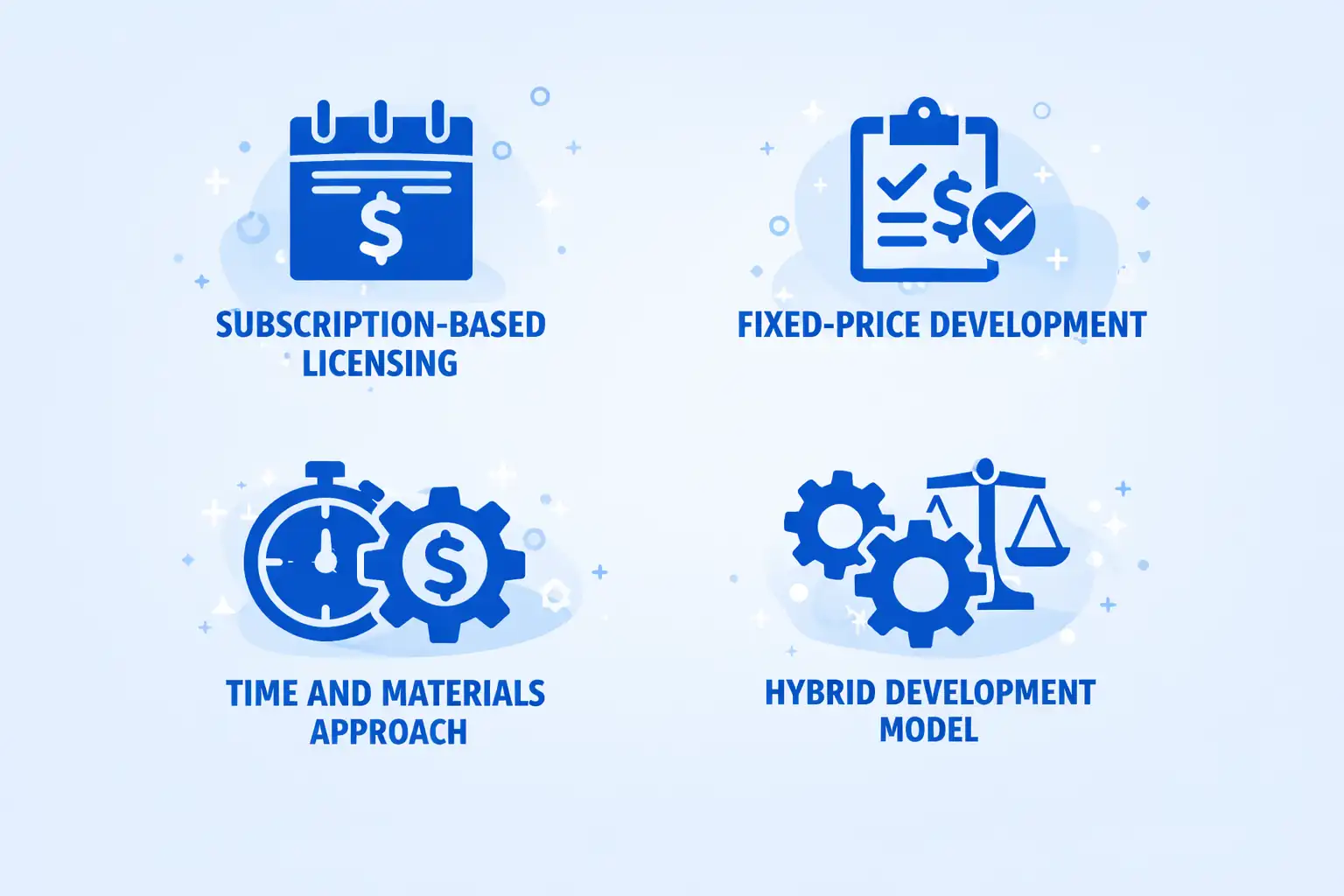
Platform Pricing Model Categories
Subscription-Based Licensing
- Monthly fees $3,000 to $15,000 depending on features
- Setup costs $25,000 to $75,000 for initial configuration
- Transaction-based revenue sharing 0.5% to 2%
- Minimal upfront investment for market entry
- Predictable operational expenses for budgeting
Fixed-Price Development
- Complete scope definition with detailed requirements
- Total cost $150,000 to $400,000 for defined features
- Fixed timeline with milestone-based payments
- Cost certainty but limited flexibility for changes
- Suitable for well-defined project specifications
Time and Materials Approach
- Hourly rates $75 to $250 based on expertise level
- Flexible scope adjustment during development
- Total investment $200,000 to $600,000 typical range
- Ideal for evolving requirements and complex projects
- Requires active project management and oversight
Hybrid Development Model
- White-label foundation with custom enhancements
- Base platform cost $50,000 to $100,000
- Custom development $75,000 to $200,000 additional
- Balanced approach reducing time-to-market
- Optimizes cost-efficiency with customization needs
Key Factors That Influence Real Estate Tokenization Platform Cost
Multiple interconnected factors determine the final real estate tokenization platform cost, with technical complexity, regulatory requirements, geographic considerations, and Red Flags Investment concerns creating significant variations. Blockchain selection impacts both development effort and ongoing operational expenses, with Ethereum implementations costing $50,000-150,000 versus Polygon or other Layer 2 solutions at $30,000-80,000. Regulatory compliance for securities offerings in USA, UK, UAE, and Canada adds substantial legal and development costs for KYC, AML, and investor accreditation systems.
Cost Breakdown of a White-Label Real Estate Tokenization Platform
White-label solutions provide pre-built infrastructure with customization capabilities, significantly reducing real estate tokenization platform cost and accelerating market entry. These platforms typically include core tokenization functionality, investor management, basic compliance tools, and administrative interfaces. Setup and customization costs range from $25,000 to $100,000 depending on branding requirements, feature selection, and integration needs with existing systems.
| Cost Component | Price Range | Typical Duration | Key Considerations |
|---|---|---|---|
| Platform License Fee | $15,000 – $50,000 | One-time setup | Initial licensing and configuration access |
| Branding Customization | $5,000 – $20,000 | 2-4 weeks | Logo, colors, domain, UI modifications |
| Compliance Configuration | $10,000 – $30,000 | 3-6 weeks | KYC/AML setup, jurisdiction rules |
| Integration Services | $8,000 – $25,000 | 4-8 weeks | Payment gateways, wallets, APIs |
| Testing and Deployment | $5,000 – $15,000 | 2-4 weeks | QA, security checks, go-live support |
| Monthly Subscription | $3,000 – $12,000 | Ongoing | Hosting, maintenance, support, updates |
| Transaction Fees | 0.5% – 2.0% | Per transaction | Revenue share on platform transactions |
| Total Initial Cost | $50,000 – $150,000 | 3-6 months | Setup to production deployment |
Cost Breakdown of a Custom Real Estate Tokenization Platform
Custom development delivers tailored solutions matching specific business requirements, regulatory needs, and competitive positioning strategies. The real estate tokenization platform cost for custom builds ranges from $200,000 to $500,000+ depending on feature complexity, team expertise, and development timeline. Organizations in USA, UK, UAE, and Canada increasingly pursue custom solutions for enterprise-grade requirements, unique compliance needs, or proprietary technology advantages.
| Development Phase | Cost Range | Timeline | Deliverables |
|---|---|---|---|
| Discovery and Planning | $15,000 – $40,000 | 4-6 weeks | Requirements, architecture, roadmap |
| Digital Contract Development | $50,000 – $120,000 | 8-12 weeks | Token contracts, governance, audits |
| Backend Infrastructure | $40,000 – $90,000 | 10-14 weeks | APIs, databases, blockchain integration |
| Frontend Development | $35,000 – $80,000 | 8-12 weeks | Investor portal, admin dashboard |
| Compliance Integration | $30,000 – $70,000 | 6-10 weeks | KYC/AML, accreditation, reporting |
| Security and Testing | $25,000 – $60,000 | 6-8 weeks | Penetration testing, QA, audits |
| Deployment and Launch | $15,000 – $35,000 | 3-5 weeks | Production setup, training, support |
| Total Development Cost | $200,000 – $500,000 | 12-18 months | Complete custom platform |
White-Label vs Custom Development – Cost Comparison Overview
The strategic decision between white-label and custom development significantly impacts real estate tokenization platform cost, time-to-market, and long-term operational flexibility. White-label solutions excel for organizations prioritizing rapid deployment, limited initial capital, and standard feature requirements. Custom development suits enterprises demanding proprietary technology, unique compliance frameworks, or differentiated user experiences justifying higher investment and extended timelines.
Platform Development Lifecycle Comparison
Requirements and Selection
White-label: 1-2 weeks vendor evaluation. Custom: 4-6 weeks detailed requirement gathering and technical planning.
Platform Configuration
White-label: 4-8 weeks setup and branding. Custom: 8-12 weeks architecture design and Digital contract development.
Integration and Testing
White-label: 3-6 weeks API connections and QA. Custom: 10-16 weeks comprehensive development, integration, and security testing.
Compliance Implementation
White-label: 2-4 weeks basic KYC setup. Custom: 6-10 weeks tailored compliance workflows for specific jurisdictions.
Deployment and Launch
White-label: 2-3 weeks production setup. Custom: 4-6 weeks staging, final testing, and phased production rollout.
Post-Launch Support
White-label: Vendor manages updates. Custom: Internal team or agency provides ongoing maintenance and feature development.
Blockchain Selection and Its Impact on Development Cost
Blockchain infrastructure choice fundamentally affects real estate tokenization platform cost through development complexity, transaction fees, scalability requirements, and developer availability. Ethereum remains the dominant choice for security token offerings despite higher gas fees, while Layer 2 solutions like Polygon and alternative chains like Binance Smart Chain offer cost-optimized alternatives. Each network presents distinct trade-offs between decentralization, security, transaction costs, and ecosystem maturity.
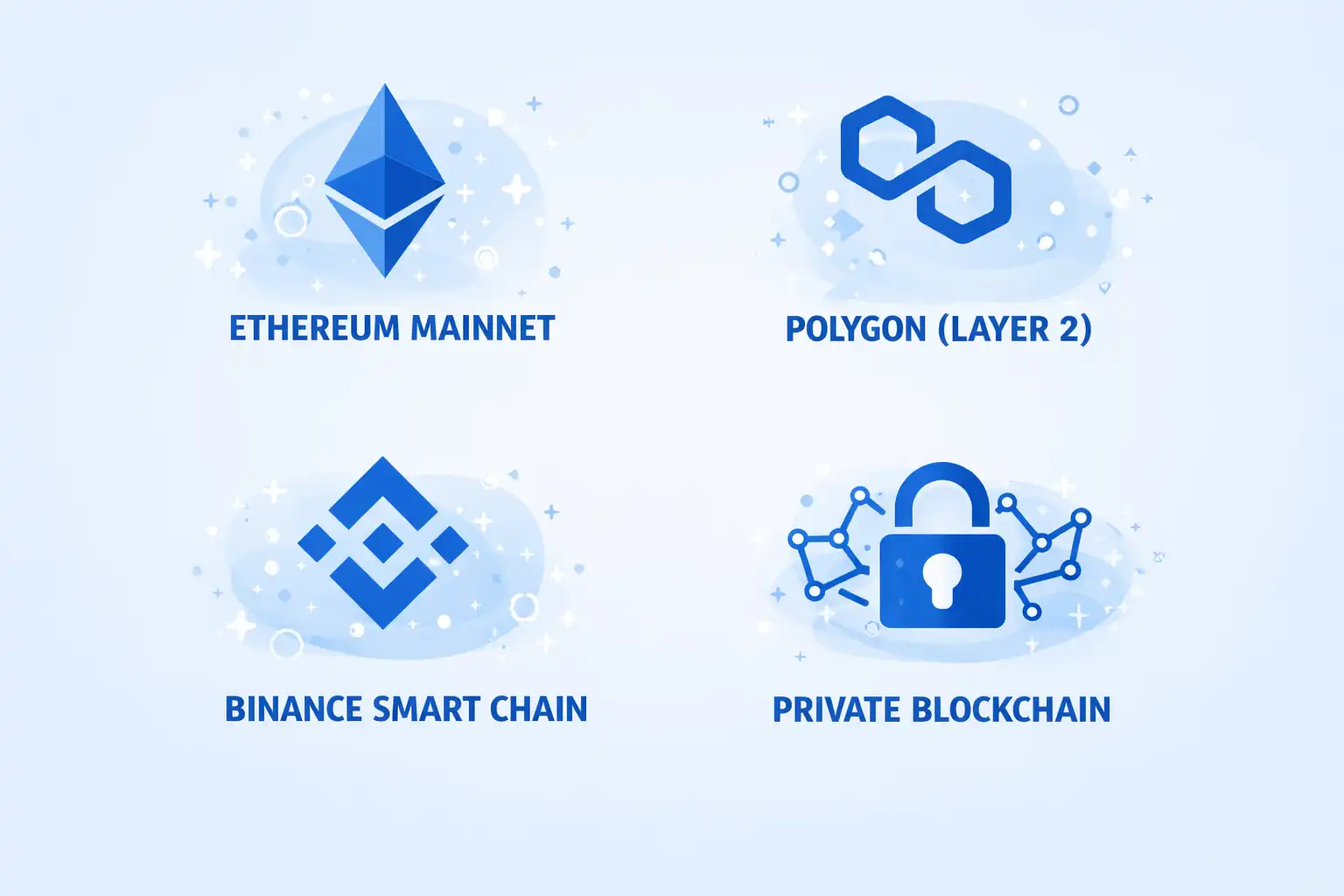
Blockchain Network Cost Analysis
Ethereum Mainnet
- Development cost: $80,000 – $150,000
- Transaction fees: $5 – $50 per transaction
- Smart contract deployment: $5,000 – $15,000
- Largest developer ecosystem available
- Maximum security and decentralization
- Best for high-value asset tokenization
Polygon (Layer 2)
- Development cost: $50,000 – $100,000
- Transaction fees: $0.01 – $0.50 per transaction
- Smart contract deployment: $500 – $2,000
- Ethereum compatibility with lower costs
- Growing institutional adoption
- Optimal for frequent transactions
Binance Smart Chain
- Development cost: $40,000 – $90,000
- Transaction fees: $0.10 – $1.00 per transaction
- Smart contract deployment: $200 – $1,000
- Fast transaction finality
- Lower development complexity
- Suitable for emerging markets
Private Blockchain
- Development cost: $100,000 – $200,000
- Transaction fees: Minimal internal costs
- Infrastructure setup: $20,000 – $50,000
- Complete control over network
- Enterprise-grade permissions
- Higher maintenance requirements
Digital Contract Development Cost for Real Estate Tokenization
Digital contract development represents a critical component of real estate tokenization platform cost, typically consuming 20-30% of total custom development budgets. Contracts must handle token issuance, transfer restrictions, dividend distributions, governance mechanisms, and compliance enforcement. Specialized Solidity developers command $100-250 per hour, with complete contract suites requiring 500-1,200 hours depending on complexity. Security audits add $20,000-80,000 to ensure contract safety before production deployment.
Get Accurate Real Estate Tokenization Platform Cost Estimate
Planning your tokenization project? Get a detailed cost breakdown tailored to your requirements, whether white-label or custom development for your target market.
Estimated Cost Ranges for White-Label Solutions
White-label real estate tokenization platform cost varies by provider capabilities, feature completeness, and customization requirements. Entry-level solutions start at $50,000 total investment including setup, basic branding, and first-year subscriptions. Mid-tier platforms with enhanced compliance tools, secondary market capabilities, and deeper customization range from $80,000-150,000. Enterprise white-label solutions offering extensive API access, dedicated support, and multi-jurisdiction compliance reach $150,000-250,000 for comprehensive implementations.
Strategic Considerations for Platform Development
Understanding real estate tokenization platform cost requires comprehensive analysis beyond initial development expenses. Organizations must evaluate total cost of ownership including ongoing operational costs, compliance maintenance, infrastructure scaling, and feature enhancement investments. White-label solutions offer predictable expense structures ideal for organizations testing market demand or requiring rapid deployment, while custom development provides long-term cost efficiency for enterprises processing substantial transaction volumes or requiring proprietary competitive advantages.
Successful platform implementations in USA, UK, UAE, and Canada demonstrate that cost optimization stems from clear requirement definition, realistic timeline expectations, and strategic technology selections aligned with business objectives. Organizations should budget 20-30% contingency reserves for unexpected compliance requirements, security enhancements, or market-driven feature additions. Engaging experienced development partners with proven tokenization expertise significantly reduces risk of cost overruns while accelerating time-to-market in this rapidly evolving sector.
People Also Ask
Q1.1. What is the average cost to build a real estate tokenization platform?
The average real estate tokenization platform cost ranges from $50,000 to $500,000 depending on complexity and customization level. White-label solutions typically cost $50,000 to $150,000 for basic implementations, while custom-built platforms require $200,000 to $500,000 or more. Factors influencing cost include blockchain selection, smart contract complexity, regulatory compliance requirements, security features, user interface sophistication, and integration needs. Development timelines vary from 3 months for white-label solutions to 12-18 months for fully custom platforms across USA, UK, UAE, and Canadian markets.
Q2.2. Is white-label or custom development more cost-effective for tokenization platforms?
White-label solutions offer significantly lower upfront real estate tokenization platform cost, typically 60-70% less than custom development, with faster deployment in 3-6 months versus 12-18 months. However, custom platforms provide greater flexibility, unique branding, proprietary features, and long-term scalability advantages. White-label works best for startups testing market viability or companies needing rapid deployment. Custom development suits enterprises requiring specific compliance features, unique investor experiences, or integration with existing systems. Total cost of ownership over 3-5 years may favor custom solutions despite higher initial investment.
Q3.3. What are the main cost drivers in real estate tokenization platform development?
Primary cost drivers include blockchain infrastructure selection affecting transaction fees and scalability, smart contract development requiring specialized Solidity developers at $100-250 per hour, regulatory compliance implementation for securities laws across multiple jurisdictions, KYC and AML integration with third-party verification services costing $10,000-50,000 annually, security audits ranging from $20,000-100,000, user interface and investor portal development, wallet integration and custody solutions, secondary market functionality, and ongoing maintenance consuming 15-20% of initial development cost annually. Geographic factors influence costs with developers in USA and UK commanding premium rates.
Q4.4. How much does regulatory compliance add to tokenization platform costs?
Regulatory compliance represents 20-35% of total real estate tokenization platform cost, ranging from $50,000 to $200,000 depending on target markets. USA securities compliance including SEC registration or exemption documentation costs $30,000-100,000. UK FCA authorization requires $40,000-80,000 in legal and compliance infrastructure. UAE VARA licensing demands $25,000-60,000. Multi-jurisdictional platforms targeting USA, UK, UAE, and Canada markets face combined compliance costs exceeding $150,000. Ongoing compliance including KYC/AML monitoring, reporting systems, legal counsel, and regulatory updates adds $30,000-80,000 annually to operational expenses.
Q5.5. What hidden costs should be considered when budgeting for a tokenization platform?
Hidden costs often increase real estate tokenization platform cost by 30-50% beyond initial estimates. These include third-party API fees for KYC verification ($5-15 per check), blockchain transaction fees varying with network congestion, smart contract deployment and upgrade costs ($5,000-20,000 per deployment), security audit iterations ($10,000-30,000), legal opinions for multiple jurisdictions ($15,000-40,000), insurance coverage for custody and technology errors ($20,000-100,000 annually), customer support infrastructure, marketing and user acquisition, banking relationships for fiat integration, and emergency technical support. Many platforms underestimate ongoing operational costs consuming 25-35% of initial development budget annually.
Explore Services
Related Services
Reviewed by

Aman Vaths
Founder of Nadcab Labs
Aman Vaths is the Founder & CTO of Nadcab Labs, a global digital engineering company delivering enterprise-grade solutions across AI, Web3, Blockchain, Big Data, Cloud, Cybersecurity, and Modern Application Development. With deep technical leadership and product innovation experience, Aman has positioned Nadcab Labs as one of the most advanced engineering companies driving the next era of intelligent, secure, and scalable software systems. Under his leadership, Nadcab Labs has built 2,000+ global projects across sectors including fintech, banking, healthcare, real estate, logistics, gaming, manufacturing, and next-generation DePIN networks. Aman’s strength lies in architecting high-performance systems, end-to-end platform engineering, and designing enterprise solutions that operate at global scale.