Ai Overview
The world of blockchain and cryptocurrencies is growing rapidly, offering new opportunities for businesses, startups, and individual innovators. One key element of this ecosystem is a crypto token, a digital asset that can represent anything from a utility within a platform to a financial investment.
The world of blockchain and cryptocurrencies is growing rapidly, offering new opportunities for businesses, startups, and individual innovators. One key element of this ecosystem is a crypto token, a digital asset that can represent anything from a utility within a platform to a financial investment. Whether you’re planning to create a decentralized finance (DeFi) project, launch an initial coin offering (ICO) or initial DEX offering (IDO), or build a blockchain-based application, having a custom crypto token is often essential.
Key Takeaways
- Crypto tokens are essential for fundraising, utility, governance, and community engagement
- Tokens are built on existing blockchains like Ethereum, BSC, Solana, or Polygon and must align with project goals
- Professional token development ensures security and prevents smart contract vulnerabilities
- Well-designed tokenomics (supply, distribution, incentives) drive adoption and long-term sustainability
- Legal and regulatory compliance is crucial to build trust and avoid legal risks
- Custom token solutions allow features like staking, governance, NFTs, or DeFi integrations
- A successful token launch enhances fundraising, liquidity, brand visibility, and community growth
Developing a crypto token is more than just coding; it requires a clear strategy, technical knowledge, and a deep understanding of blockchain platforms. In this guide, we’ll explore everything you need to know about crypto token solutions, types of tokens, the development process, and how to make your token secure, scalable, and efficient.
What Is a Crypto Token?
A crypto token is a digital asset built on a blockchain. Unlike cryptocurrencies like Bitcoin or Ethereum, which exist as standalone networks, tokens are created on top of existing blockchains such as Ethereum, Binance Smart Chain (BSC), Solana, Polygon, or TRON.
Depending on your goals, there are several types of crypto tokens:
- Utility tokens: Used within a platform to access services or features.
- Security tokens: Represent investments or ownership in real-world assets.
- Governance tokens: Allow users to vote on decisions affecting a project or platform.
- Non-Fungible Tokens (NFTs): Represent unique digital items like art, collectibles, or game items.
- Stablecoins: Digital tokens pegged to a stable asset like the US dollar to reduce volatility.
A well-designed crypto token can help you raise funds, increase engagement, and build a strong community around your project.
Why You Need Professional Crypto Token Solutions

Creating a crypto token may sound simple at first, after all, it’s “just code” on a blockchain. But in reality, a token is much more than digital money. It represents your project, your brand, and often a financial stake for investors. Developing it without expertise can lead to security risks, legal issues, or technical failures. That’s why professional crypto token solutions are crucial. Here’s a detailed look at why:
1. Customized Tokens for Your Unique Needs
Every blockchain project has different goals. Some aim to raise funds, others want to build a loyal community, and some may focus on creating a utility ecosystem. Professional developers offer custom crypto token solutions that align with your project’s objectives.
For example:
- A DeFi platform might need a token with staking and yield farming features.
- A gaming project may require NFTs or in-game utility tokens for rewards.
- A startup fundraising project might need a security token to represent investor shares.
Custom solutions ensure your token does exactly what your project needs, no more, no less. This targeted approach increases the chances of adoption and long-term success.
2. Deep Blockchain Expertise
Not all blockchains are the same. Choosing the wrong blockchain can result in high fees, slow transactions, or limited functionality. Experienced developers understand the strengths and weaknesses of different blockchains and help you select the best fit for your project.
- Ethereum: Perfect for complex smart contracts and DeFi projects but can have high gas fees.
- Binance Smart Chain (BSC): Offers low transaction costs, ideal for startups with budget constraints.
- Solana: High-speed transactions suitable for platforms that require fast processing.
- Polygon: Scalable solutions for decentralized apps, ideal for projects expecting high user traffic.
Professional guidance ensures your token works efficiently and can scale as your project grows.
3. Security and Smart Contract Reliability
Smart contracts form the backbone of any crypto token, and even a small flaw in their code can result in hacks, asset loss, or complete system breakdown. That’s why professional token development services prioritize strong security practices, implementing thorough audits and testing to ensure the contract is reliable, secure, and resistant to vulnerabilities.
- Code audits to detect vulnerabilities.
- Automated testing to check token functionality under different scenarios.
- Advanced security features like anti-fraud mechanisms and safe minting/burning processes.
By relying on experts, you reduce the risk of losing funds or damaging your project’s reputation. Security isn’t optional, it’s critical.
4. Legal and Regulatory Compliance
Cryptocurrency regulations are constantly evolving. Tokens can fall under different legal categories, like securities or utility tokens, depending on their functionality. Non-compliance can lead to fines, lawsuits, or project shutdowns.
Professional token developers:
- Stay updated on local and global crypto regulations.
- Ensure your token’s structure meets legal requirements.
- Help with KYC/AML integrations if needed for exchanges or fundraising.
Compliance builds trust with investors, users, and the crypto community, which is essential for long-term success.
5. Scalable and Future-Ready Design
A token isn’t just for launch, it needs to grow with your project. Professional crypto token solutions focus on scalability and adaptability.
- Tokens are built to handle increased transaction volumes without slowing down the network.
- Developers design tokens to integrate with wallets, exchanges, and other blockchain platforms.
- Future upgrades, like adding staking, governance, or cross-chain functionality, can be implemented easily.
This forward-thinking approach ensures your token remains relevant as your platform expands.
6. Optimized Tokenomics
Tokenomics, the economic design of a token, is critical for adoption and sustainability. Poor tokenomics can result in price instability, low user engagement, or failure to raise funds.
Professional developers:
- Plan total token supply and distribution models.
- Define reward mechanisms for staking, liquidity, or user engagement.
- Balance scarcity and availability to maintain value over time.
Well-structured tokenomics encourage active participation, investment, and long-term commitment from your community.
7. Seamless Integration with Ecosystems
A token is only useful if it can be easily used, traded, and integrated. Professional solutions ensure your token works with:
- Crypto wallets for user storage and transactions.
- Centralized and decentralized exchanges for trading.
- DeFi or NFT platforms for staking, rewards, or governance.
This integration improves the user experience, increases adoption, and makes your project more credible.
How Crypto Token Design Works
Creating a crypto token involves several steps. Each stage is crucial for ensuring your token is secure, functional, and aligned with your business goals.
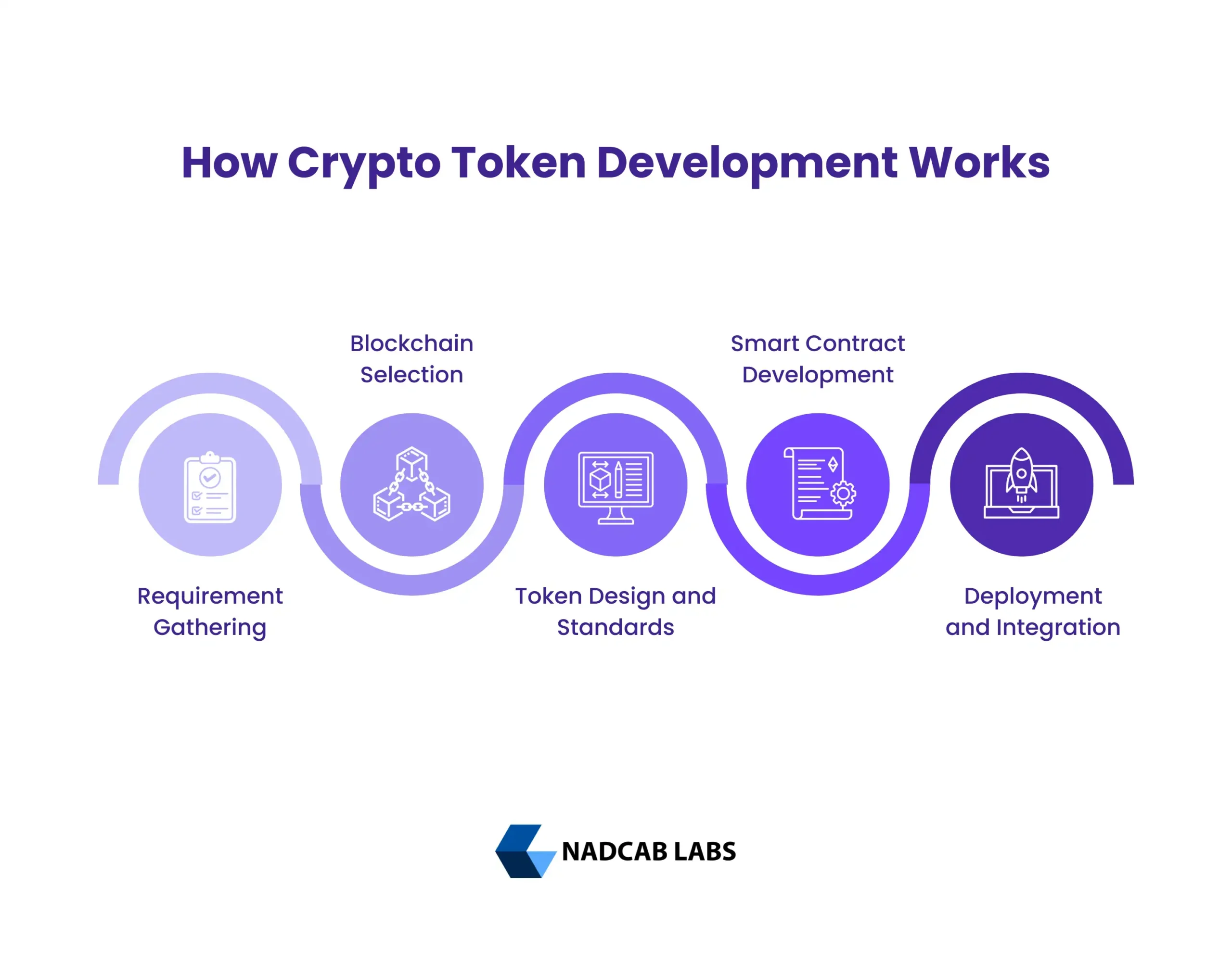
Step 1: Requirement Gathering
Before development begins, experts gather all necessary information about your project. They understand your goals, target audience, and specific requirements. This step helps define the token’s purpose, features, and the blockchain platform it will use.
Step 2: Blockchain Selection
Choosing the right blockchain is critical. The choice depends on your project’s needs, budget, and desired features. Ethereum is widely used for DeFi and NFT projects, while BSC is popular for low-cost token deployment. Polygon and solana blockchain are great for high-speed, scalable projects.
Step 3: Token Design and Standards
Tokens can follow different token standards depending on their type:
- ERC-20: Standard for fungible tokens on Ethereum.
- BEP-20: Token standard for Binance Smart Chain.
- ERC-721 or ERC-1155: Used for NFTs (non-fungible tokens).
Developers also define the token supply, distribution model, and any additional features such as staking or governance.
Step 4: Smart Contract Deployment
Smart contracts control the token’s operations, including minting, burning, transferring, or staking. Experts write robust, error-free contracts to ensure smooth functionality and avoid vulnerabilities.
Step 5: Deployment and Integration
After testing, the token is deployed on the blockchain. Developers integrate it with wallets, exchanges, and platforms, making it ready for trading and use by your community.
Benefits of Launching a Crypto Token
Launching a crypto token is more than just a technical achievement, it can bring strategic, financial, and community benefits to your project. A well-planned token can open up new opportunities, increase engagement, and help your platform grow sustainably. Here are the key benefits in detail:
1. Efficient and Global Fundraising
A crypto token allows you to raise funds without relying solely on traditional investors or banks. Through models like Initial Coin Offerings (ICOs) or Initial DEX Offerings (IDOs), your project can reach a global audience of investors and supporters.
Unlike conventional fundraising, tokens provide:
- Instant access to international capital.
- Transparent investment processes through blockchain.
- The ability for investors to participate with smaller amounts.
This makes funding faster, more efficient, and accessible to a broader audience.
2. Enhanced Liquidity and Trading Opportunities
Tokens can be listed on centralized and decentralized exchanges, allowing users to buy, sell, or trade them easily. High liquidity ensures:
- Users can access their investments quickly.
- Your token becomes attractive to traders and investors.
- The project gains market credibility, increasing confidence in its ecosystem.
Liquidity is crucial for token adoption because it allows participants to engage confidently without worrying about being stuck with an untradeable asset.
3. Stronger Community Engagement
Crypto tokens are excellent tools for building and incentivizing a community around your platform. By offering rewards, staking options, or governance rights, tokens encourage users to actively participate in the project.
Benefits include:
- Increased user loyalty through rewards and incentives.
- Community-driven decision-making via governance tokens.
- Higher engagement, as users feel a sense of ownership in the platform.
A loyal community helps sustain your project, attract more users, and drive long-term growth.
4. Driving Innovation and Ecosystem Development
Tokens empower you to create decentralized applications (DApps), DeFi platforms, and other blockchain-based services. With a token, you can:
- Introduce new financial models, such as staking, lending, or yield farming.
- Enable in-app or platform-based utility, improving adoption.
- Experiment with cross-platform integrations, expanding your ecosystem.
By launching a token, you create a foundation for innovation that can evolve over time, attracting more developers and users.
5. Incentivizing Participation and Retention
A token is not just a tradable asset, it’s a tool for motivating user behavior. Well-structured incentives can drive:
- Regular platform usage through rewards and loyalty programs.
- Participation in governance or voting, creating a more democratic ecosystem.
- Contributions from developers, users, or content creators who earn tokens for their work.
This active participation ensures your platform remains vibrant and self-sustaining.
6. Brand Recognition and Market Presence
Launching your own token can enhance your brand visibility and establish your presence in the blockchain space. Key advantages include:
- Being recognized as an innovative and forward-thinking project.
- Attracting attention from potential investors, partners, and media.
- Differentiating your platform from competitors through a unique digital asset.
A token isn’t just a financial tool, it’s a symbol of your platform’s vision and potential.
Ready to Launch Your Crypto Token or Coin?
Launch your custom crypto token with expert developers. Secure, scalable, and compliant solutions built for your blockchain vision.
Key Considerations for Crypto Token Creation
When developing a token, it’s important to keep these aspects in mind:
- Security: Prioritize smart contract audits and security testing.
- Compliance: Stay updated with legal regulations to avoid future issues.
- Tokenomics: Plan the supply, distribution, and incentives carefully.
- Blockchain Choice: Pick a blockchain that aligns with your goals and budget.
- User Experience: Ensure your token integrates smoothly with wallets, exchanges, and platforms.
Choosing the Right Crypto Token Solution Provider
Selecting an experienced team for your crypto token solution is essential. Experts bring technical knowledge, security practices, and regulatory awareness to the table. They can help you design a token that is:
- Secure: Free from vulnerabilities.
- Scalable: Capable of handling growth.
- Compliant: Meets all legal requirements.
- Customizable: Tailored to your unique business needs.
Final Thoughts
A crypto token is a powerful tool for fundraising, community building, and developing innovative blockchain solutions. With the right crypto token solution, you can create a secure, functional, and scalable token that aligns with your business goals.
From understanding token types to choosing the right blockchain and ensuring legal compliance, every step of token development is important. By following best practices and leveraging professional expertise, you can maximize the success of your project and unlock the full potential of blockchain technology.
Whether you aim to launch a DeFi platform, create NFTs, or design a governance system, a well-developed crypto token is the key to a strong foundation in the blockchain ecosystem.
Frequently Asked Questions
Q1.Which blockchains support token development?
Popular blockchains for token development include Ethereum, Binance Smart Chain, Polygon, Solana, and TRON, each offering different advantages in transaction speed, cost efficiency, scalability, and ecosystem support for projects worldwide.
Q2.What are common crypto token types?
Common crypto token types include utility tokens, security tokens, governance tokens, stablecoins, and NFTs, each serving distinct purposes like access, investment, voting rights, price stability, or uniqueness within blockchain ecosystems.
Q3.How long does token development take?
Token development timelines vary by complexity, features, blockchain choice, and compliance needs, but most standard tokens can be designed, tested, audited, and deployed within a few weeks with experts involved.
Q4.How is token security ensured?
Token security is ensured through professional smart contract development, rigorous testing, third-party audits, secure minting controls, and continuous monitoring to prevent vulnerabilities, exploits, fraud, or unauthorized access on blockchain networks.
Q5.What is tokenomics in crypto?
Tokenomics refers to the economic design of a crypto token, including total supply, distribution, incentives, rewards, and scarcity, influencing value, user behavior, adoption, and long-term sustainability within decentralized blockchain projects.
Explore Services
Related Services
Reviewed by

Aman Vaths
Founder of Nadcab Labs
Aman Vaths is the Founder & CTO of Nadcab Labs, a global digital engineering company delivering enterprise-grade solutions across AI, Web3, Blockchain, Big Data, Cloud, Cybersecurity, and Modern Application Development. With deep technical leadership and product innovation experience, Aman has positioned Nadcab Labs as one of the most advanced engineering companies driving the next era of intelligent, secure, and scalable software systems. Under his leadership, Nadcab Labs has built 2,000+ global projects across sectors including fintech, banking, healthcare, real estate, logistics, gaming, manufacturing, and next-generation DePIN networks. Aman’s strength lies in architecting high-performance systems, end-to-end platform engineering, and designing enterprise solutions that operate at global scale.