Ai Overview
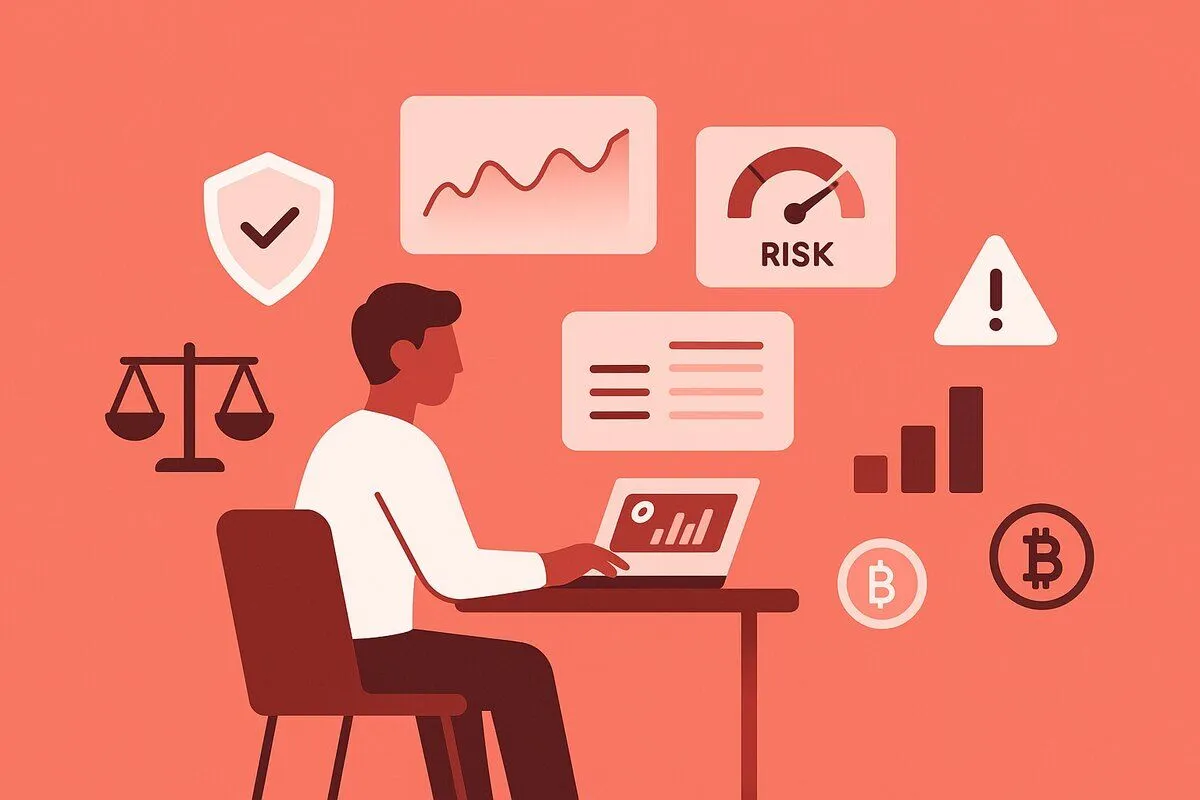
The honest answer is: some are, and some are not. 4 billion from crypto platforms, including the record $1. In 2025 alone, hackers stole approximately $3. If the exchange is hacked, becomes insolvent, or engages in misuse of funds (as FTX did in 2022, losing over $10 billion in customer assets), you may not be able to recover your money.
The honest answer is: some are, and some are not. Cryptocurrency exchange safety varies widely depending on how a platform is built, who regulates it, how it handles user funds, and what security measures it has in place. In 2025 alone, hackers stole approximately $3.4 billion from crypto platforms, including the record $1.5 billion Bybit breach in February 2025. At the same time, millions of traders use regulated, well-secured exchanges every day without incident. This blog explains the real risks, what security features separate safe exchanges from unsafe ones, and exactly what you should check before using any platform.
Key Takeaways
- Not All Exchanges Are Equal: Safety varies widely. Regulated, audited exchanges with cold storage and proof-of-reserves carry far lower risk than unregulated platforms with no transparency.
- $3.4 Billion Lost in 2025: Centralized exchanges accounted for 79% of all reported crypto breaches in 2025, with off-chain attacks — compromised credentials and social engineering — causing 76% of all hack losses.
- Cold Storage Is a Baseline: Safe exchanges store at least 95% of user funds in offline (cold) wallets, which cannot be accessed by remote attackers.
- Proof-of-Reserves Matters: Exchanges that publish regular, verifiable proof-of-reserves reports give users independent confirmation that their funds actually exist on the platform.
- Regulation Reduces Risk: Exchanges licensed under recognized frameworks (EU MiCA, US FinCEN, Singapore MAS, UK FCA) are legally accountable for fund protection and compliance standards.
- 2FA Is Non-Negotiable: Two-factor authentication on your account prevents unauthorized access even if your password is compromised.
- BIS Warning (April 2026): The Bank for International Settlements warned that many exchanges now offer “earn” and yield products that pool customer assets into risky activities without deposit insurance or banking safeguards.
- Your Behavior Matters: Exchange-level security only goes so far. Weak passwords, reused credentials, and phishing clicks remain among the most common ways traders lose funds.
- No Guarantee of Safety: Even the most secure exchanges carry residual risk. No crypto exchange is insured by government-backed deposit schemes like FDIC-covered bank accounts in the US.
What Makes a Cryptocurrency Exchange Unsafe?
Before evaluating safety features, it helps to understand the specific failure points that have caused traders to lose funds on crypto exchanges. These are not theoretical — each has resulted in documented losses.
1. Custodial Risk: The Exchange Holds Your Funds
Most centralized exchanges are custodial — they hold your private keys and your funds on your behalf. This is convenient, but it means your assets are only as safe as the exchange itself. If the exchange is hacked, becomes insolvent, or engages in misuse of funds (as FTX did in 2022, losing over $10 billion in customer assets), you may not be able to recover your money. In a custodial model, you do not technically own your crypto until you withdraw it to your own wallet.[1]
2. Security Breaches and Hacks
In 2025, centralized exchange hacks resulted in over $2.7 billion in losses in the first half of the year alone — surpassing total losses from all of 2024. The Bybit hack in February 2025 was the single largest exchange breach in history at $1.5 billion. According to data from CoinLaw, FBI, and Chainalysis, 76% of all hack losses in 2025 came from off-chain attacks — compromised employee credentials, social engineering, and supply chain manipulation — not direct code exploits. This means strong exchange infrastructure is necessary but not sufficient. Internal operational security matters just as much. Understanding the full crypto exchange security checklist helps traders evaluate whether a platform’s security practices are comprehensive across both technical and operational layers.
3. Insolvency and Misuse of Funds
The FTX collapse in 2022 and the Celsius failure that same year demonstrated that exchange insolvency is a real risk even for large, well-known platforms. A Bank for International Settlements (BIS) report published in April 2026 warned that many exchanges now offer yield and “earn” products that pool customer assets into risky lending activities without deposit insurance, clear transparency, or traditional banking safeguards. These products function as unsecured loans to lightly regulated entities — a risk that many retail users are not aware of when they deposit funds.[2]
4. Regulatory Non-Compliance
Exchanges operating without regulatory licenses have no legal obligations to protect user funds, implement KYC verification, or report suspicious activity. When they fail, users have limited legal recourse. The North American Securities Administrators Association (NASAA) listed crypto investment risks as a top investor threat in 2025, specifically citing the ease with which fraudulent platforms can mimic legitimate exchanges online.
Security Features That Define a Safe Crypto Exchange
Not every exchange is equally risky. Platforms that implement the following security measures have a measurably better track record of protecting user funds. These are the specific features to verify before depositing on any platform.
Cold Storage for the Majority of Funds
Cold wallets are offline storage devices that cannot be accessed remotely. Safe exchanges store at least 90% to 95% of user funds in cold wallets, keeping only a small operational reserve in hot (online) wallets for daily withdrawals. Exchanges that store a high proportion of funds in hot wallets expose most user assets to the same attack vectors that caused the Bybit breach. Always check whether an exchange publishes its cold storage ratio.[3]
Proof-of-Reserves Audits
Proof-of-reserves (PoR) is a method that allows any user to independently verify that an exchange holds the assets it claims to hold. Platforms like Kraken and OKX publish regular PoR reports using Merkle trees and zero-knowledge proofs, giving users verifiable on-chain evidence of reserve ratios above 100%. Exchanges without PoR reporting require you to trust their internal records entirely — the same trust model that failed at FTX. Wanting to trade crypto safely starts with checking whether your exchange publishes and passes proof-of-reserves verification.
Two-Factor Authentication (2FA)
Two-factor authentication requires a second verification step — typically a time-based code from an authenticator app — in addition to your password when logging in or withdrawing funds. This prevents unauthorized account access even if your password is leaked in a data breach. All reputable exchanges offer 2FA. Using SMS-based 2FA is better than nothing but less secure than authenticator apps or hardware keys, as phone numbers can be hijacked through SIM-swapping attacks.[4]
KYC Verification
KYC (Know Your Customer) verification requires users to submit identity documents before trading. While some traders view this as a privacy trade-off, KYC verification is a compliance requirement under anti-money laundering regulations in most jurisdictions. Exchanges that implement KYC are legally accountable for user verification and operating under recognized financial regulations. Exchanges that allow fully anonymous trading with no KYC process have no regulatory accountability — a risk factor in itself. A cryptocurrency exchange that operates under KYC requirements is subject to oversight that reduces the risk of fraud and misuse of funds.
Regulatory Licensing
Licensing under recognized frameworks means the exchange must meet specific legal standards for fund protection, user verification, financial reporting, and incident response. Key regulatory bodies include the EU’s MiCA framework, the US Financial Crimes Enforcement Network (FinCEN), Singapore’s Monetary Authority (MAS), and the UK’s Financial Conduct Authority (FCA). Licensed exchanges face real legal consequences if they fail to protect user funds — unregulated platforms do not.
Insurance and Emergency Funds
Some exchanges maintain emergency reserves to compensate users in the event of a security breach. Binance’s SAFU (Secure Asset Fund for Users) is an example — a dedicated fund set aside specifically to cover losses in certain hack scenarios. Check whether an exchange has any fund protection mechanism and what its specific terms cover. Crypto exchange funds are not protected by government-backed deposit insurance like bank accounts in the US (FDIC) or UK (FSCS).[5]
Crypto Exchange Safety Features: What to Look For
| Security Feature | What It Does | Risk if Absent |
|---|---|---|
| Cold Storage (90%+ of funds) | Keeps most assets offline, unreachable by hackers | High exposure in any breach |
| Proof-of-Reserves (PoR) | Lets users verify exchange holds what it claims | No way to confirm solvency |
| Two-Factor Authentication | Blocks unauthorized account access | Account takeover from leaked passwords |
| KYC / AML Compliance | Regulatory accountability and identity verification | No legal recourse if platform fails |
| Regulatory License | Legal oversight in recognized jurisdiction | No fund protection obligations |
| Withdrawal Whitelisting | Restricts withdrawals to pre-approved addresses | Unauthorized withdrawals if account is hacked |
| Anti-Phishing Code | Marks legitimate exchange emails for verification | Susceptibility to phishing emails |
| Emergency Reserve Fund | Compensates users in specific hack scenarios | Total loss with no compensation in breach |
| Third-Party Security Audits | Independent verification of platform security | Unknown vulnerabilities undetected |
Red Flags That Indicate an Unsafe Exchange
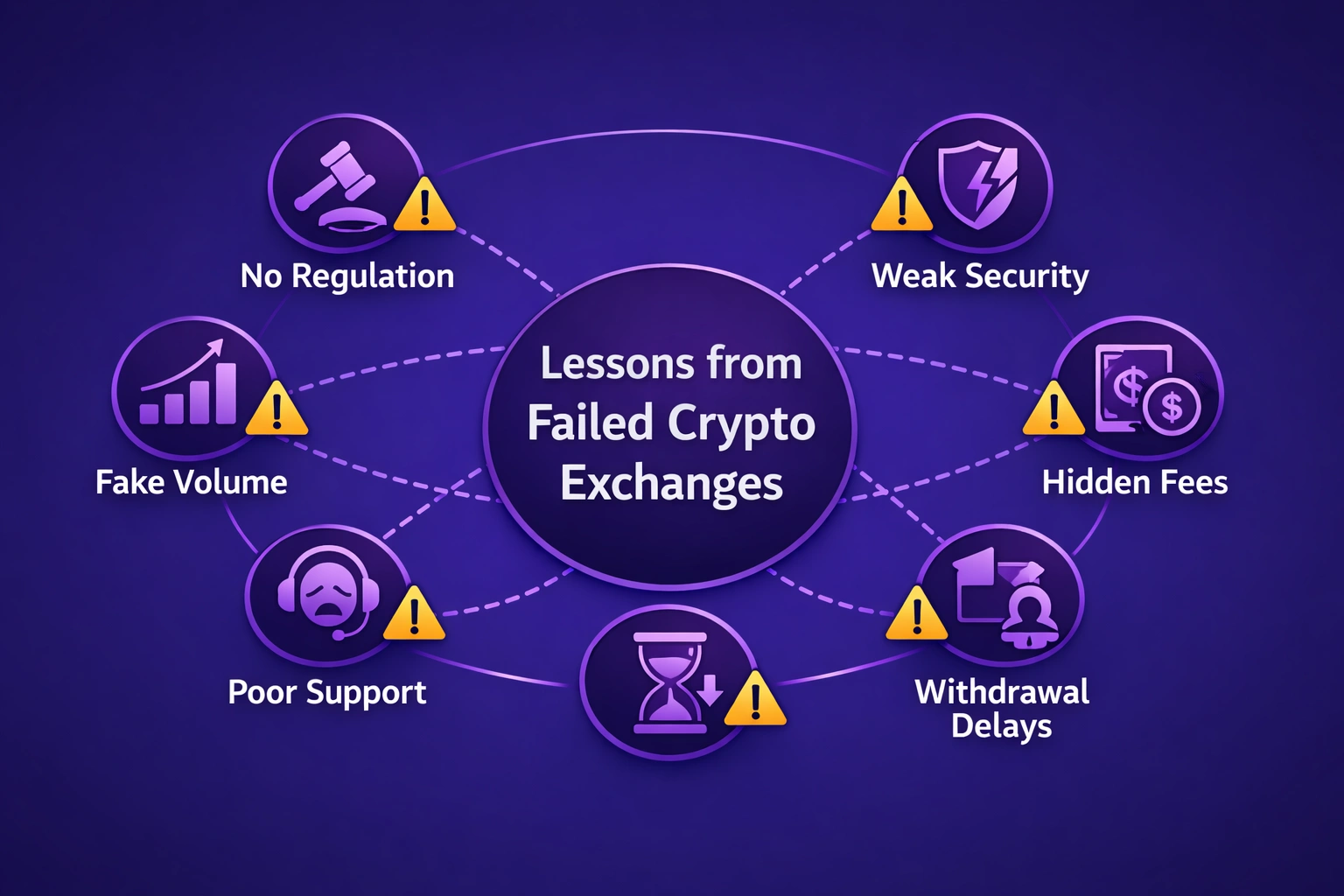
Equally important as knowing what safe exchanges include is knowing what warning signs to avoid. These are documented patterns from exchanges that failed or defrauded users.
No Regulatory License or Jurisdiction Listed
A legitimate exchange discloses where it is registered and which regulatory bodies oversee it. If an exchange does not list a specific jurisdiction or licensing status, it has no legal accountability to users in any country.
Guaranteed High Returns on Deposits
The BIS April 2026 report specifically flagged “earn” products that promise high fixed returns on deposited crypto as a significant risk. No legitimate financial product guarantees returns without risk. When an exchange offers this, it typically means customer funds are being used in high-risk lending — without your full awareness of the risk involved.
No Proof-of-Reserves Publication
Refusal to publish proof-of-reserves means users cannot verify that the exchange actually holds their assets. FTX did not publish verifiable PoR before its collapse. This remains one of the clearest indicators of potential insolvency risk.[6]
Withdrawals Are Restricted or Delayed
Any exchange that introduces unexpected restrictions on withdrawals, requires additional verification steps that were not present at sign-up, or delays withdrawals without clear explanation is showing signs of a liquidity problem. This was observed at both Celsius and FTX before their collapses.
How to Protect Yourself on Any Crypto Exchange
Exchange-level security is only part of the picture. Your own account practices account for a significant portion of the risk. These steps apply regardless of which platform you use.
Use a Dedicated Email Address
Create an email address used only for your crypto exchange accounts. This isolates it from data breaches affecting other accounts and reduces phishing exposure.
Enable 2FA on Every Account
Use an authenticator app (Google Authenticator, Authy) rather than SMS-based 2FA. Enable it for both login and withdrawals where the exchange offers the option.
Set Withdrawal Address Whitelisting
Most major exchanges allow you to whitelist specific wallet addresses for withdrawals. Enabling this means that even if your account is compromised, an attacker cannot send funds to a new address without a separate approval step.
Do Not Leave Large Balances on Exchanges
The standard practice in crypto security is to keep only the amount you are actively trading on an exchange and move the rest to a hardware wallet you control. Exchanges that hold large balances centrally — yours included — are higher-value targets. Moving funds to self-custody eliminates custodial risk entirely for assets you are not trading.
Verify URLs Before Logging In
Phishing sites that replicate exchange login pages are a consistently documented attack vector. Always type the exchange URL directly or use a bookmarked link. Never click login links from emails. Check for HTTPS and verify the exact domain spelling before entering credentials.[7]
📌 Security Trend to Watch (2025–2026)
The dominant shift in exchange security threats is away from direct code exploits and toward social engineering and credential compromise. According to Chainalysis and FBI data, 76% of all 2025 crypto hack losses came from off-chain attacks — targeting employees, third-party vendors, and user accounts rather than smart contracts or protocol vulnerabilities. AI is accelerating the sophistication of these social engineering attacks. Exchanges responding to this shift are investing in AI-based fraud detection, zero-trust internal access policies, and mandatory hardware security key requirements for all privileged operations. Traders should look for exchanges that publicly document their operational security practices, not just their technical infrastructure.
Build a Secure Cryptocurrency Exchange Platform
Nadcab Labs develops cryptocurrency exchange platforms with cold storage architecture, proof-of-reserves infrastructure, KYC/AML modules, two-factor authentication, and regulatory compliance features built in from the ground up.
Frequently Asked Questions
Q1.Are cryptocurrency exchanges safe to use?
Regulated, well-secured exchanges with cold storage, proof-of-reserves, and 2FA are significantly safer than unregulated platforms. However, no exchange eliminates risk entirely — $3.4 billion was lost to exchange breaches in 2025. Safety depends on which exchange you use, what security features it has, and what account-level precautions you take. Leaving only actively traded funds on an exchange and using a hardware wallet for long-term holdings reduces your exposure substantially.
Q2.What is the safest type of crypto exchange?
Exchanges with cold storage for 90%+ of funds, verified proof-of-reserves, regulatory licenses in recognized jurisdictions (EU MiCA, US FinCEN, UK FCA, Singapore MAS), and mandatory 2FA are the safest. Non-custodial exchanges eliminate custodial risk entirely by never holding your funds. Regulated centralized exchanges with strong security practices represent the best balance of safety and usability for most traders.
Q3.Can I lose money if an exchange is hacked?
Yes. If an exchange is hacked and its security reserve or insurance fund does not cover all losses, users can lose funds. This happened at Mt. Gox (2014) and was a partial risk at Bybit (2025), though Bybit covered losses through its own reserves. Crypto exchange funds are not protected by government-backed deposit insurance like bank accounts. Only amounts kept in wallets you personally control are fully protected from exchange-level hacks.
Q4.What security features should a safe exchange have?
Cold storage for at least 90% of funds, proof-of-reserves audits, two-factor authentication, withdrawal address whitelisting, KYC/AML compliance, regulatory licensing in a recognized jurisdiction, anti-phishing protections, and optional hardware key support for account access. Exchanges that publish third-party security audits and have an emergency reserve fund for breach scenarios provide the most comprehensive user fund protection.
Q5.Is two-factor authentication enough to stay safe?
2FA significantly reduces account takeover risk but is not sufficient on its own. You also need strong, unique passwords, withdrawal address whitelisting, and awareness of phishing attempts. SMS-based 2FA carries SIM-swap risk; authenticator app-based 2FA is more secure. 2FA protects your account access but does not protect against exchange-level hacks where the platform’s own infrastructure or employee credentials are compromised.
Q6.What is proof-of-reserves in crypto exchanges?
Proof-of-reserves (PoR) is a verification method that allows any user to confirm an exchange holds the assets it claims to hold. Exchanges publish cryptographic evidence — typically using Merkle trees or zero-knowledge proofs — mapped to on-chain wallet addresses. Users can check their account balance is included in the reserve snapshot. PoR does not guarantee future solvency, but it confirms the exchange is not operating with a deficit at the time of the report.
Explore Services
Related Services
Reviewed by

Aman Vaths
Founder of Nadcab Labs
Aman Vaths is the Founder & CTO of Nadcab Labs, a global digital engineering company delivering enterprise-grade solutions across AI, Web3, Blockchain, Big Data, Cloud, Cybersecurity, and Modern Application Development. With deep technical leadership and product innovation experience, Aman has positioned Nadcab Labs as one of the most advanced engineering companies driving the next era of intelligent, secure, and scalable software systems. Under his leadership, Nadcab Labs has built 2,000+ global projects across sectors including fintech, banking, healthcare, real estate, logistics, gaming, manufacturing, and next-generation DePIN networks. Aman’s strength lies in architecting high-performance systems, end-to-end platform engineering, and designing enterprise solutions that operate at global scale.