Ai Overview
Cryptocurrency is growing fast, but many users still get confused between a crypto wallet vs exchange. At first glance, they may seem similar, but they serve very different purposes. A cryptocurrency exchange helps you buy, sell, and trade digital assets, while a wallet is designed to store and manage them securely. Understanding the difference between wallet and exchange is essential if you want to protect your funds and make smarter decisions.
Cryptocurrency is growing fast, but many users still get confused between a crypto wallet vs exchange. At first glance, they may seem similar, but they serve very different purposes. A cryptocurrency exchange helps you buy, sell, and trade digital assets, while a wallet is designed to store and manage them securely.
Understanding the difference between wallet and exchange is essential if you want to protect your funds and make smarter decisions. Whether you are trading daily or holding long-term, choosing the right tool can directly impact your security, control, and overall crypto experience.
In this guide, we explain how a cryptocurrency exchange is different from a cryptocurrency wallet, along with real use cases, security insights, and when to use each. If you are planning to build a crypto platform or use one, this comparison will help you get clarity fast.
Key Takeaways
- ◆A crypto exchange vs wallet comparison shows that exchanges are used for trading, while wallets are designed for secure storage.
- ◆The difference between crypto wallet and exchange mainly comes down to control, as wallets give full ownership while exchanges hold your funds.
- ◆Holding crypto on exchange vs wallet depends on your goal, with exchanges suited for trading and wallets ideal for long-term storage.
- ◆A cryptocurrency wallet vs exchange also differs in security, as wallets, especially cold wallets, offer better protection from online threats.
- ◆Beginners often start with exchanges, while experienced users prefer wallets for better control and asset safety.
- ◆For businesses, combining both through crypto exchange development services and wallet integration creates a complete solution.
What Is a Crypto Exchange and How Does It Work?
A cryptocurrency exchange is an online platform where users can buy, sell, and trade digital assets like Bitcoin, Ethereum, and other cryptocurrencies. In simple terms, it works like a digital marketplace that connects buyers and sellers in real time. When people search for what is a crypto exchange, this is the core role of an exchange, it handles trading, not storage.
A crypto exchange operates by matching orders. When a user places a buy or sell order, the platform finds another user with a matching request. Once the prices align, the trade is executed instantly. Most exchanges provide tools like live charts, order books, and price tracking to help users make informed decisions while trading. This is why in a crypto exchange vs wallet comparison, exchanges are always linked to active trading and market activity.
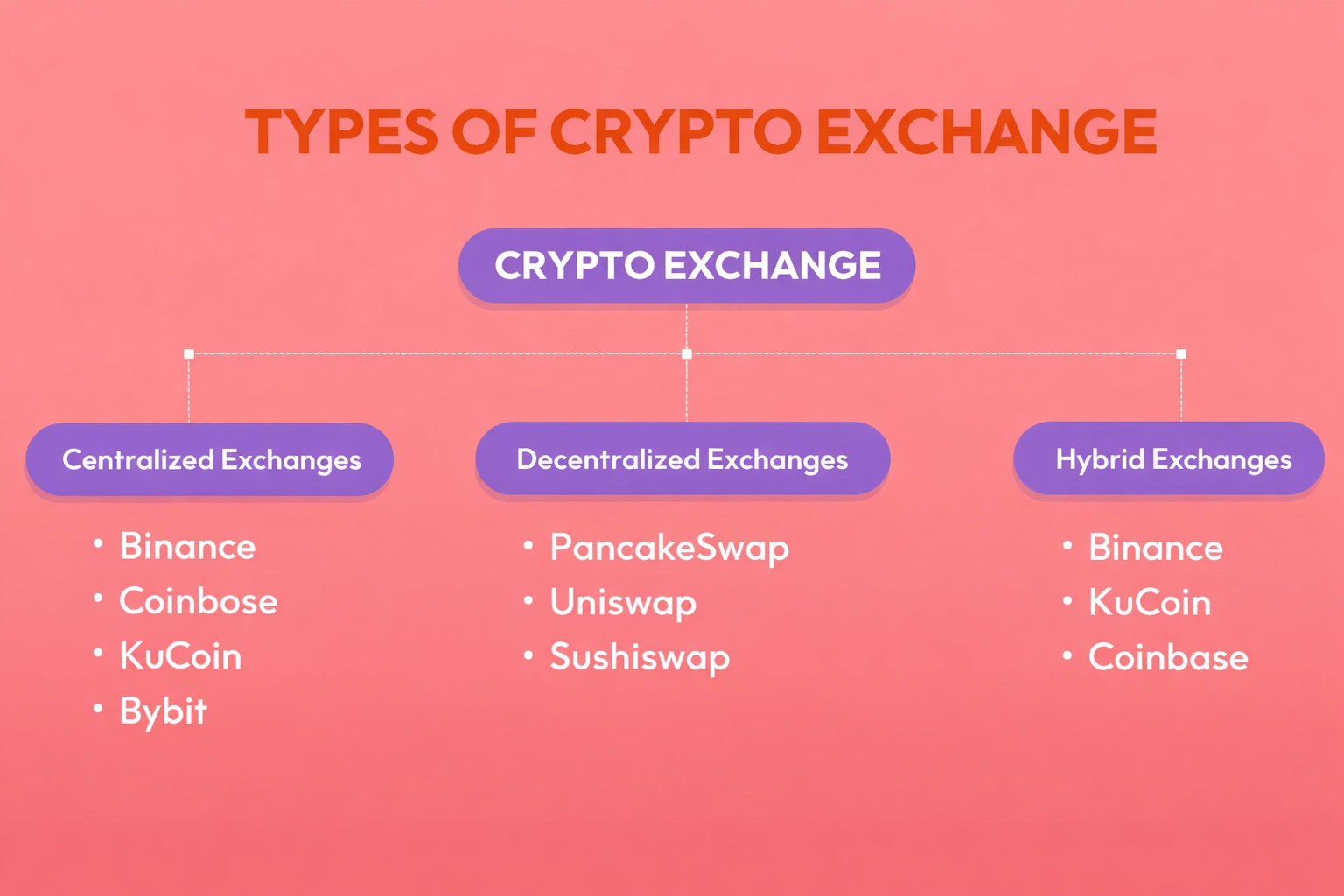
There are two main types of exchanges. Centralized exchanges are managed by companies and handle transactions on behalf of users. These platforms are easy to use and ideal for beginners. On the other hand, decentralized exchanges allow users to trade directly without a middleman, giving them more control over their funds.
To get started, users typically create an account, complete identity verification, and deposit funds using either fiat currency or crypto. Once the account is funded, they can begin trading instantly. However, it’s important to note that most exchanges hold user funds in custodial wallets, meaning the platform controls the private keys.
Overall, a crypto exchange is designed for speed, liquidity, and convenience. It plays a key role in the crypto ecosystem by enabling seamless trading, but it is not primarily built for long-term asset security.
A cryptocurrency wallet is a digital tool that allows users to store, send, and receive cryptocurrencies securely. Unlike a traditional wallet, it does not physically hold your coins. Instead, it stores the private keys that give you access to your digital assets on the blockchain. When people compare cryptocurrency wallet vs exchange, this is the key difference—wallets are built for ownership and security, not trading.
What Is a Crypto Wallet and How Does It Work?
A cryptocurrency wallet is a digital tool that allows users to store, send, and receive cryptocurrencies securely. Unlike a traditional wallet, it does not physically hold your coins. Instead, it stores the private keys that give you access to your digital assets on the blockchain. When people compare cryptocurrency wallet vs exchange, this is the key difference, wallets are built for ownership and security, not trading.
A crypto wallet works through two essential components: a public address and a private key. The public address is like an account number that you can share to receive funds. The private key, on the other hand, is a secure code that gives you full control over your crypto. Anyone with access to your private key can control your assets, which is why keeping it safe is critical.
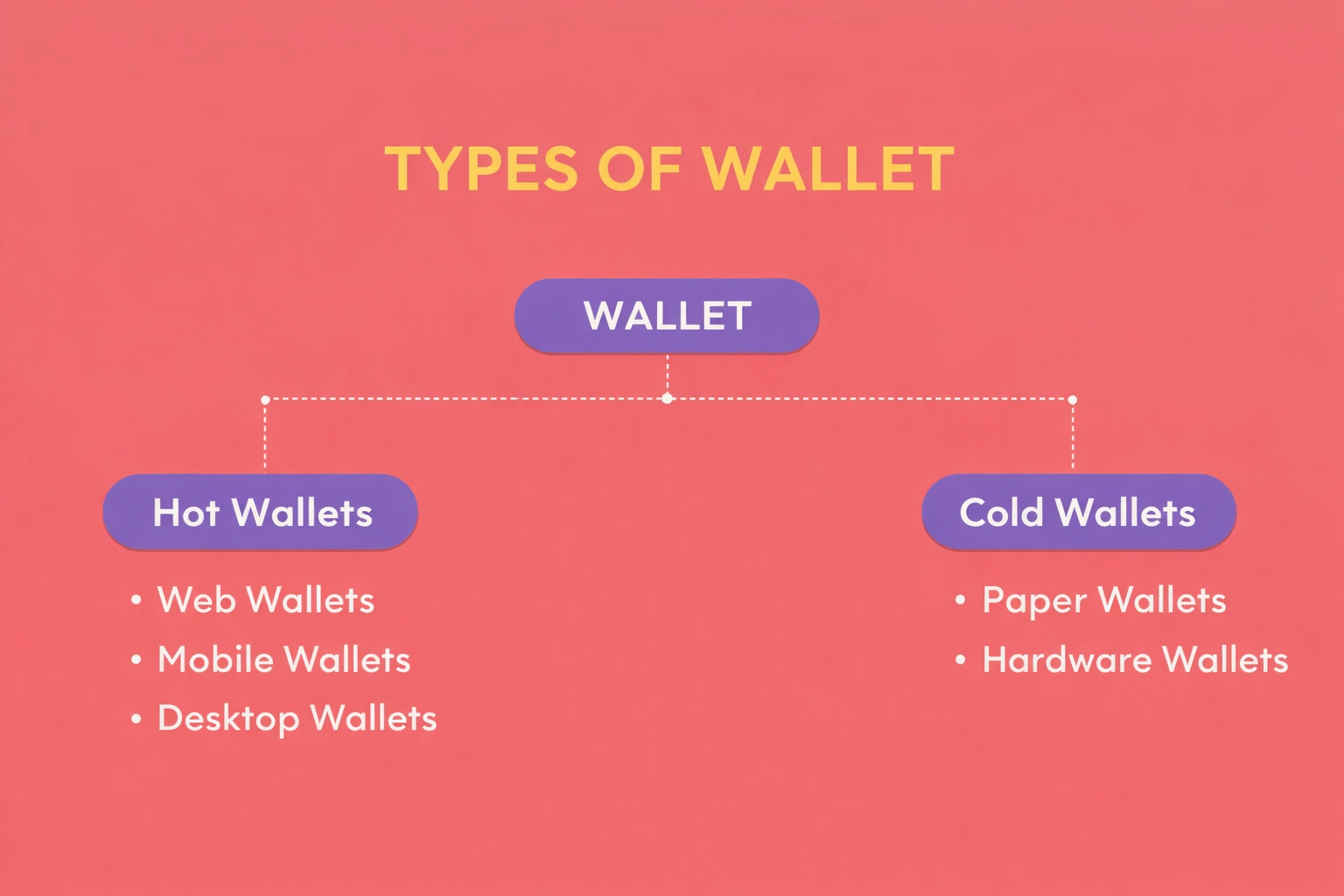
There are different types of wallets designed for various needs. Software wallets are apps or programs that run on mobile or desktop devices and are convenient for daily use. Hardware wallets are physical devices that store private keys offline, offering a higher level of security. Paper wallets, although less common today, involve printing your keys on paper for offline storage. When evaluating which crypto wallet is safe, hardware wallets are often considered the safest option for long-term holding.
Transactions using a crypto wallet are direct and peer-to-peer. When you send crypto, your wallet signs the transaction using your private key and broadcasts it to the blockchain network. Once confirmed, the funds are transferred to the recipient’s address. This process ensures transparency and eliminates the need for intermediaries.
In simple terms, a crypto wallet gives you full control over your digital assets. It is a crucial tool for anyone looking to manage their funds independently, especially when considering the difference between crypto wallet and exchange in terms of security and ownership.
How Is a Crypto Exchange Different from a Cryptocurrency Wallet?
The difference between wallet and exchange comes down to purpose, control, and security. While both are essential tools in the crypto ecosystem, they are built for completely different functions. A cryptocurrency exchange is designed for buying, selling, and trading assets, whereas a wallet is used to store and manage those assets securely.
The most important distinction in a crypto wallet vs exchange comparison is ownership. In a crypto wallet, especially a non-custodial one, you control your private keys. This means you have full ownership of your funds. On the other hand, most exchanges are custodial, meaning they hold your private keys and manage your assets on your behalf. This creates a level of dependency on the platform.
Another major difference is how they are used. Exchanges are ideal for active trading. They offer liquidity, real-time pricing, and advanced tools to execute trades quickly. In contrast, wallets are better suited for holding assets safely over time. This is why the debate around holding crypto on exchange vs wallet often depends on whether you are trading frequently or investing for the long term.
Security also plays a big role in the difference between crypto wallet and exchange. Exchanges are more exposed to online threats because they manage large volumes of funds in one place. Wallets, especially cold wallets, reduce this risk by storing private keys offline. However, wallets come with their own responsibility, if you lose your private key or recovery phrase, you may permanently lose access to your funds.
In terms of accessibility, exchanges are generally easier for beginners. They offer user-friendly interfaces and simplified processes. Wallets, while more secure, require users to understand key management and basic crypto operations.
In simple terms, a cryptocurrency exchange helps you interact with the market, while a crypto wallet helps you stay in control of your assets. Understanding this cryptocurrency wallet vs exchange difference is essential for making smart and secure decisions in your crypto journey.
Difference between Wallet and Exchange
| Feature | Crypto Exchange | Crypto Wallet |
|---|---|---|
| Primary Purpose | Buying, selling, and trading cryptocurrencies | Storing, sending, and receiving cryptocurrencies |
| Ownership & Control | Platform controls your private keys (custodial) | You control your private keys (non-custodial) |
| Security Level | More vulnerable to hacks due to centralized storage | Higher security, especially with cold wallets |
| Usage | Best for active trading and market participation | Best for long-term storage and asset management |
| Access to Funds | Depends on platform availability | Full access anytime with private keys |
| Ease of Use | Beginner-friendly with simple interfaces | Requires basic knowledge of key management |
| Risk Factor | Risk of exchange hacks or shutdowns | Risk of losing private keys or seed phrase |
| Transaction Type | Trades happen within the platform | Direct peer-to-peer blockchain transactions |
| Examples | Binance, Coinbase | Ledger, Trezor, MetaMask |
| Best For | Traders and beginners | Long-term investors and security-focused users |
Control Over Funds: Who Owns Your Crypto
One of the most important aspects in a crypto wallet vs exchange comparison is control. In the crypto world, ownership is defined by who holds the private keys. Simply put, if you control the keys, you control the crypto.
When you use a cryptocurrency exchange, your funds are stored in a custodial wallet managed by the platform. This means the exchange holds your private keys and takes responsibility for securing your assets. While this setup is convenient, it also means you are trusting a third party with your funds. In the context of the difference between wallet and exchange, this is a major limitation, as your access can be affected by platform issues, restrictions, or even security breaches.
On the other hand, a crypto wallet, especially a non-custodial wallet, gives you full ownership. You hold your private keys, which means no one else has control over your funds. This is why many users prefer wallets when evaluating holding crypto on exchange vs wallet, particularly for long-term storage. However, this control comes with responsibility. If you lose your private keys or recovery phrase, there is no way to recover your assets.
This difference highlights a simple truth in crypto: convenience comes with shared control, while security comes with full responsibility. Understanding this balance is key when deciding between a cryptocurrency wallet vs exchange, especially if your goal is to keep your assets safe and fully under your control.
Security Comparison: Which One Is Safer
Security is a major factor when comparing a crypto wallet vs exchange, and the answer depends on how you use each tool. Both options come with risks, but the level of exposure and control makes a big difference.
Cryptocurrency exchanges are more vulnerable to attacks because they store large amounts of user funds in one place. This makes them attractive targets for hackers. Even though top platforms use advanced security measures like encryption and two-factor authentication, risks still exist. When analyzing the difference between crypto wallet and exchange, exchanges rely on centralized systems, which means a single breach can impact many users at once.
In contrast, crypto wallets, especially cold wallets, offer stronger security by keeping private keys offline. This reduces the risk of online attacks significantly. When comparing cold wallet vs exchange, cold wallets are generally considered the safest option for long-term storage because they are not connected to the internet.
However, wallets are not completely risk-free. The biggest risk is user error. If you lose your private key or recovery phrase, your funds are gone permanently. There is no customer support to recover access. This is a critical point in the cryptocurrency wallet vs exchange debate; wallets offer more security, but also more responsibility.
In simple terms, exchanges are safer for convenience and quick access, while wallets are safer for control and long-term protection. The best approach is to use both wisely, keep small amounts on exchanges for trading and store larger holdings in a secure wallet.
Ease of Use: What Beginners Should Choose
When comparing a crypto wallet vs exchange, ease of use is often the deciding factor for beginners. For someone new to crypto, the learning curve can feel overwhelming, so choosing the right starting point is important.
Cryptocurrency exchanges are generally more beginner-friendly. They offer simple sign-up processes, guided interfaces, and easy options to buy, sell, and trade assets. Most exchanges also provide features like customer support, tutorials, and mobile apps, making it easier for users to get started quickly. This is why in the crypto exchange vs wallet debate, exchanges are often recommended as the first step for beginners.
On the other hand, crypto wallets require a bit more understanding. Users need to manage private keys, store recovery phrases safely, and understand how transactions work. While modern wallets have become more user-friendly, they still demand a higher level of responsibility. When looking at the difference between wallet and exchange, wallets prioritize control over simplicity.
For beginners, the best approach is often to start with an exchange to learn how crypto works and then gradually move to a wallet for better security and ownership. This balance helps users gain confidence while reducing risks. In the cryptocurrency wallet vs exchange comparison, ease of use favors exchanges, but long-term safety leans toward wallets.
When Should You Use a Wallet and When an Exchange
Choosing between a crypto wallet vs exchange depends on your goal. Both tools serve different purposes, and using them correctly can improve both security and efficiency.
You should use a cryptocurrency exchange when you want to buy, sell, or actively trade digital assets. Exchanges provide liquidity, real-time pricing, and fast execution, making them ideal for frequent transactions. This is especially useful when considering holding crypto on exchange vs wallet for short-term trading activities.
On the other hand, a crypto wallet is the better choice for storing your assets securely over the long term. If you are holding crypto as an investment, keeping it in a wallet—especially a cold wallet, reduces the risk of hacks and unauthorized access. In the cryptocurrency wallet vs exchange comparison, wallets clearly stand out for long-term safety and full control.
A smart strategy is to use both. Keep a small amount of crypto on an exchange for trading and move the rest to a secure wallet for storage. This balanced approach helps you take advantage of both convenience and security while addressing the difference between wallet and exchange effectively.
Common Mistakes to Avoid While Managing Crypto
Many users make simple mistakes that can lead to serious losses. Understanding these risks is essential when evaluating the difference between crypto wallet and exchange.
One common mistake is leaving large amounts of crypto on exchanges for long periods. While exchanges are convenient, they are not designed for secure storage. This becomes risky in the context of holding crypto on exchange vs wallet, especially if the platform faces security issues.
Another major mistake is failing to back up private keys or recovery phrases. In a wallet, losing this information means losing access to your funds permanently. Unlike traditional systems, there is no recovery option.
Users also often fall for phishing scams or fake apps that steal login details and private keys. Even in a crypto wallet vs exchange setup, security depends on user awareness.
Sending crypto to the wrong address is another irreversible error. Blockchain transactions cannot be undone, so even a small mistake can result in permanent loss.
Avoiding these common mistakes and understanding how to use both wallets and exchanges properly will help you manage your crypto assets more safely and confidently.
Why Modern Platforms Combine Exchange and Wallet Features
As the crypto industry evolves, many platforms are moving beyond the traditional crypto wallet vs exchange divide. Instead of offering just one function, modern solutions are combining both trading and storage features into a single ecosystem. This approach is designed to improve user experience, security, and overall efficiency.
The main reason behind this shift is convenience. Users no longer want to switch between multiple platforms to manage their assets. By integrating exchange and wallet functionalities, platforms allow users to trade, store, and transfer crypto seamlessly in one place. This directly addresses the challenges seen in the difference between wallet and exchange, where users previously had to choose between accessibility and control.
Another key advantage is enhanced security. Many modern platforms now offer hybrid models, where users can trade on an exchange while still maintaining control of their private keys through non-custodial wallet features. This reduces dependency on centralized systems and minimizes risks associated with storing funds on exchanges. In the cryptocurrency wallet vs exchange comparison, this hybrid approach delivers the best of both worlds.
For businesses and startups, this trend opens new opportunities. Offering a combined platform not only attracts more users but also builds trust by providing both flexibility and security. This is why many companies are now investing in integrated solutions through Crypto Exchange Development Services and advanced wallet development to stay competitive in the market.
In simple terms, the future of crypto platforms lies in integration. By merging exchange and wallet capabilities, modern platforms are creating a more seamless, secure, and user-friendly experience.
Build a Secure Crypto Exchange and Wallet Platform
Looking to go beyond understanding crypto wallet vs exchange? Launch your own secure and scalable platform with integrated trading and wallet features designed for performance, security, and growth.
Final Thoughts
Understanding the crypto wallet vs exchange difference is essential for anyone entering the crypto space. While exchanges are built for trading and convenience, wallets are designed for security and control. Each plays a unique role, and choosing the right one depends on your specific needs.
For beginners, starting with an exchange can make the process easier. As you gain experience, moving your assets to a secure wallet ensures better protection and full ownership. This balanced approach helps you manage risk while staying flexible.
In today’s fast-growing crypto landscape, relying on just one tool is not enough. The smartest strategy is to use both, trade on exchanges and store securely in wallets. By understanding the difference between crypto wallet and exchange, you can make informed decisions, protect your assets, and confidently navigate the world of digital finance.
Frequently Asked Questions
Q1.What is the main difference between a crypto wallet and an exchange?
The main difference between a crypto wallet vs exchange is their purpose. An exchange is used to buy, sell, and trade cryptocurrencies, while a wallet is used to store and manage them securely. Exchanges focus on trading, whereas wallets focus on ownership and safety.
Q2.Is it safe to keep crypto on an exchange?
Keeping crypto on an exchange is convenient but not the safest option for long-term storage. Exchanges can be vulnerable to hacks. In the holding crypto on exchange vs wallet comparison, wallets, especially cold wallets, are considered more secure for storing large amounts.
Q3.Do I need both a crypto wallet and an exchange?
Yes, using both is the best approach. Exchanges help you trade and buy crypto, while wallets help you store it securely. Understanding the difference between crypto wallet and exchange helps you use each tool effectively.
Q4.Which is better for beginners: wallet or exchange?
For beginners, exchanges are usually easier to use because they offer simple interfaces and guided steps. However, as users learn more, moving to a wallet provides better control and security in the crypto exchange vs wallet comparison.
Q5.Can I transfer crypto from an exchange to a wallet?
Yes, you can easily transfer crypto from an exchange to a wallet by using your wallet’s public address. This is a common step when comparing cryptocurrency wallet vs exchange, especially for securing funds after trading.
Explore Services
Related Services
Reviewed by

Aman Vaths
Founder of Nadcab Labs
Aman Vaths is the Founder & CTO of Nadcab Labs, a global digital engineering company delivering enterprise-grade solutions across AI, Web3, Blockchain, Big Data, Cloud, Cybersecurity, and Modern Application Development. With deep technical leadership and product innovation experience, Aman has positioned Nadcab Labs as one of the most advanced engineering companies driving the next era of intelligent, secure, and scalable software systems. Under his leadership, Nadcab Labs has built 2,000+ global projects across sectors including fintech, banking, healthcare, real estate, logistics, gaming, manufacturing, and next-generation DePIN networks. Aman’s strength lies in architecting high-performance systems, end-to-end platform engineering, and designing enterprise solutions that operate at global scale.