Ai Overview
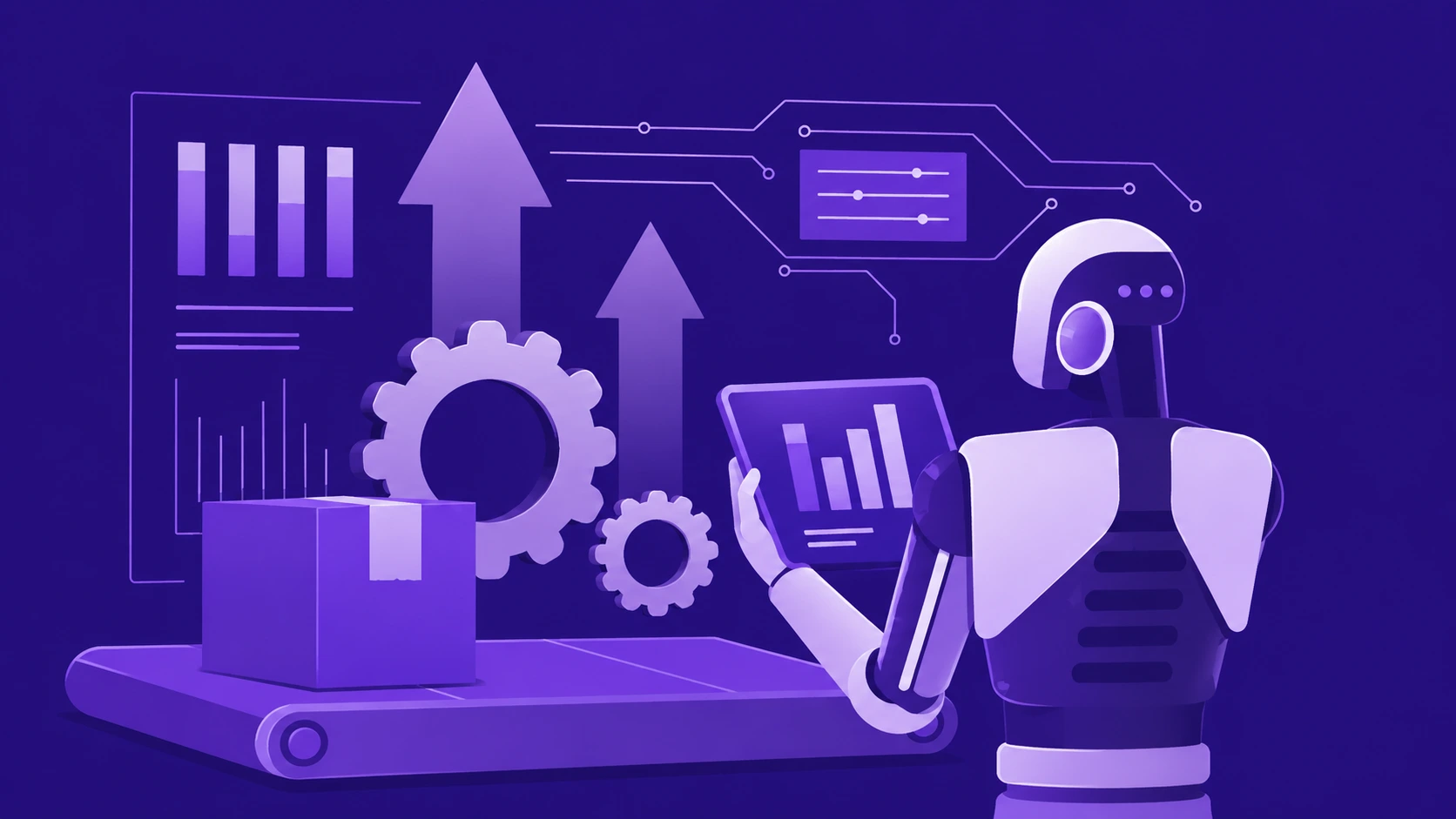
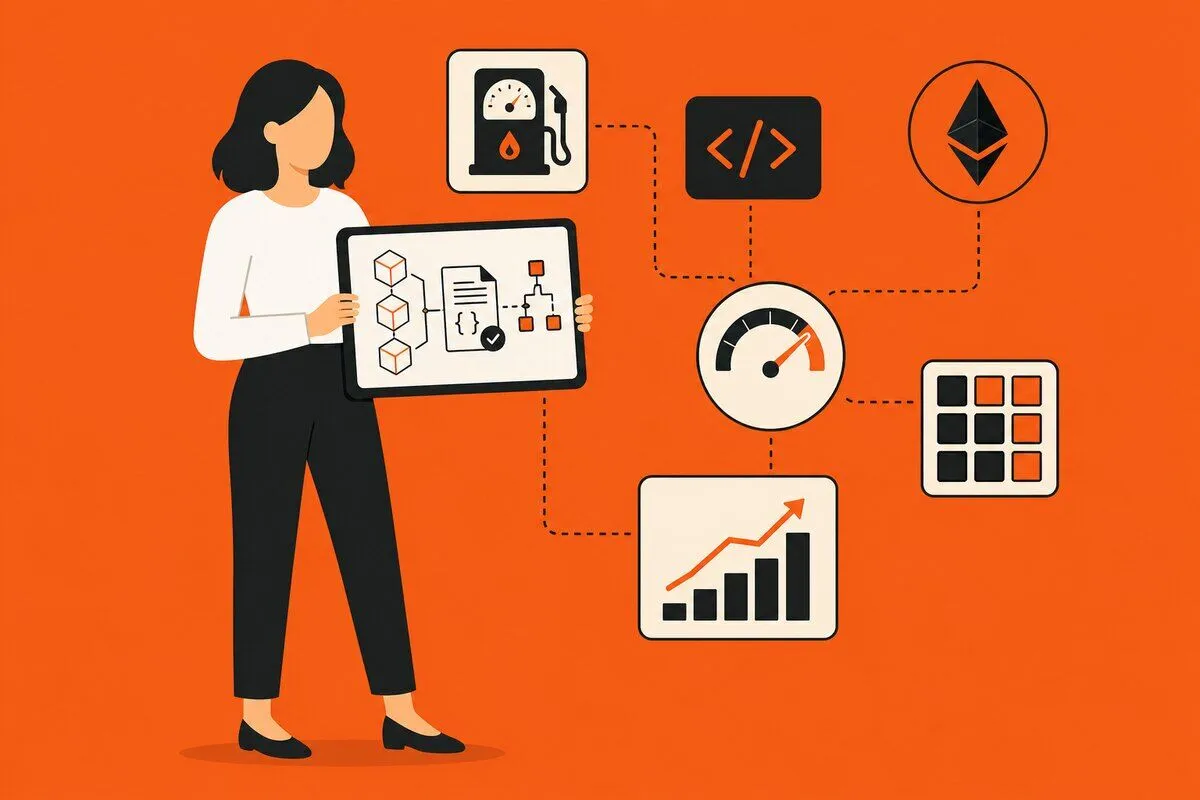
All of those together form the machine learning tech stack. Choosing the right stack is one of the most consequential decisions an AI team makes. The wrong choices create technical debt that slows the team down for years. The right choices create leverage: infrastructure that makes each new model faster to build, more reliable to deploy, and easier to maintain.
Key Takeaways
Introduction to Modern Machine Learning Tech Stacks
When someone says they are “doing machine learning,” what they usually mean is they are working with a specific collection of tools that each handle a different piece of the puzzle. Data comes in through one tool. Features are computed by another. Models are trained by a third. Results are served by a fourth. All of those together form the machine learning tech stack.
Choosing the right stack is one of the most consequential decisions an AI team makes. The wrong choices create technical debt that slows the team down for years. The right choices create leverage: infrastructure that makes each new model faster to build, more reliable to deploy, and easier to maintain. After eight years of building ML systems across dozens of industries, we have formed clear opinions about what works, what does not, and what questions to ask before committing to any tool.
Essential Tools for Building AI Applications
Before we get into the top 10 stacks, it helps to understand the categories of tools that every production ML system needs. According to this insights, Think of this as the vocabulary for evaluating any stack you encounter. These are the layers that must exist in some form for an ML system to work reliably in the real world.
The Seven Layers of an Machine Learning Tech Stack
Data Layer
- Data lakes and warehouses
- Ingestion pipelines (Kafka, Airbyte)
- Data quality validation
- Version control for datasets
Feature Layer
- Feature stores (Feast, Tecton)
- Transformation pipelines
- Training-serving consistency
- Feature registry and discovery
Training Layer
- ML frameworks (PyTorch, TensorFlow)
- Distributed training (Ray, Horovod)
- GPU cluster management
- Hyperparameter optimization
Experimentation Layer
- Experiment tracking (MLflow, W&B)
- Model registry and versioning
- Reproducibility tooling
- A/B experiment management
Serving Layer
- Model serving APIs (FastAPI, Triton)
- Real-time and batch inference
- Load balancing and auto-scaling
- Latency and throughput management
Monitoring Layer
- Drift detection (Evidently, Arize)
- Performance dashboards
- Alert and retraining triggers
- Data and concept drift tracking
Core Components of a Machine Learning Tech Stack
Every machine learning development solutions is built around four non-negotiable components that every team needs regardless of size, industry, or model type. These are not optional. Any project missing one of these four components is running incomplete ML infrastructure that will cause problems in production.
Data Pipeline
Collects, cleans, and delivers data to models reliably. Tools: Airflow, Prefect, Spark, dbt. Without this, data scientists are cleaning data by hand and cannot reproduce their work consistently across environments and team members.
Training Framework
The core engine where model learning happens. PyTorch for research and custom architectures. TensorFlow and Keras for structured production deployment. Scikit-learn for classical ML on tabular data with smaller datasets requiring less compute.
Experiment Tracker
Logs every training run, its configuration, and its results so the team can reproduce any experiment. MLflow is the open-source standard. Weights and Biases is preferred for collaborative research teams needing rich visualization dashboards and reporting features.
Serving Infrastructure
Deploys trained models so applications can call them via API. FastAPI for simple low-traffic use cases. Triton Inference Server for high-throughput GPU serving. BentoML for packaging models with their dependencies in reproducible containers ready for any cloud.
Data Engineering Tools for ML Pipelines
Data engineering is the unglamorous foundation of any successful AI system. The 1.2K+ ML tools tracked by industry researchers show that data engineering tooling has grown the fastest of any ML category in recent years, reflecting the market’s growing understanding that better data tooling beats better algorithms almost every time.
The core data engineering stack for ML typically consists of an orchestration tool like Apache Airflow or Prefect for scheduling pipelines, a transformation layer like dbt for SQL-based data modeling, a compute engine like Apache Spark for large-scale batch processing, and a streaming tool like Kafka or Flink for real-time data flows. Together, these four layers handle the full data lifecycle from raw source to model-ready feature.
| Tool | Category | Best For | Cost |
|---|---|---|---|
| Apache Airflow | Orchestration | Complex batch pipeline scheduling | Free (open source) |
| dbt | Transformation | SQL-based feature engineering | Free / Cloud from $50/mo |
| Apache Spark | Batch Compute | Large-scale data processing | Free (compute costs) |
| Apache Kafka | Streaming | Real-time ML feature serving | Free / Confluent from $1/hr |
| Feast | Feature Store | Consistent train-serve features | Free (open source) |
Frameworks Used in Machine Learning Development
The training framework is the heart of any machine learning tech stack. It is where the mathematical optimization happens, where you define model architectures, and where GPUs are put to work. The framework choice shapes what kinds of models are easy to build and what kinds require significant custom engineering effort.
OpenAI built GPT-3 and GPT-4 on top of PyTorch running on custom Microsoft Azure GPU clusters. The model itself uses Transformer architecture implemented in PyTorch, trained with custom distributed training infrastructure. This real-world case shows why PyTorch’s flexibility for custom architecture research is valued by teams building genuinely novel model designs rather than adapting existing patterns.
Model Training and Experimentation Platforms
Model training is an iterative process. You train, evaluate, adjust hyperparameters, train again, and repeat dozens or hundreds of times. Without experiment tracking infrastructure, teams quickly lose track of what configurations produced which results. Tracking is not optional in any serious machine learning tech stack.
The leading experiment tracking tools each serve different team profiles. MLflow is the open-source standard used by 800+ organizations who want full control over their tracking infrastructure and do not want to send experiment data to a third party. Weights and Biases is the preferred choice for collaborative research teams who value rich visualization, report sharing, and team-level dashboards. Neptune.ai sits in between with strong enterprise data governance features.
Deployment and MLOps Solutions for AI
Getting a trained model into production is where most ML projects stall. The gap between a model that works in a notebook and one that serves reliable predictions at scale is larger than most teams expect. This is the problem that MLOps tooling exists to solve.
Kubeflow
Kubernetes-native ML workflow orchestration. Manages training runs, pipeline execution, and model deployment in a unified control plane. Used by 1.2K+ enterprise teams for end-to-end ML automation on Kubernetes clusters.
Enterprise Grade
BentoML
Packages ML models with their runtime dependencies into standardized containers. Works with any framework. Handles the last-mile problem of making models portable and reproducible across different serving environments and cloud providers.
Framework Agnostic
Ray Serve
Distributed model serving framework that scales from a single machine to 400+ node clusters. Supports online learning and model composition where multiple models chain together in a single request pipeline.
Highly Scalable
ZenML
MLOps framework that abstracts over infrastructure so the same pipeline code runs locally, on AWS, on GCP, or on any other cloud without changes. Reduces the operational burden of multi-cloud ML systems significantly.
Multi-Cloud
Spotify uses Kubeflow as a core component of its ML platform infrastructure. The company runs 350+ ML models in production serving music recommendations, podcast suggestions, and ad targeting to 600 million users. Kubeflow manages the training pipeline automation that allows Spotify’s data science teams to retrain and redeploy models reliably at scale without manual intervention at each step of the lifecycle.
Cloud Infrastructure for Machine Learning Workloads
Cloud infrastructure powers modern ML at scale. The three major cloud platforms each offer managed ML services that abstract away much of the infrastructure complexity of building a production AI system. Understanding what each one offers helps teams choose the platform that reduces their operational burden the most given their existing skills and ecosystem.
AWS SageMaker is the most mature platform with 2K+ enterprise deployments, covering data labeling, training, tuning, deployment, and monitoring in one integrated service. Google Vertex AI integrates tightly with BigQuery for teams managing massive datasets in Google Cloud. Azure Machine Learning suits Microsoft-centric organizations running on Azure Active Directory with tight compliance requirements in regulated industries like healthcare and finance.
Cloud ML Platform Capability Ratings
Top 10 Machine Learning Tech Stacks Explained
Based on 8+ years of hands-on project experience and analysis of hundreds of production ML systems, these are the ten most effective and commonly adopted machine learning tech stacks in 2025, mapped to the types of teams and problems they serve best.
| # | Stack Name | Core Tools | Best For | Scale |
|---|---|---|---|---|
| 1 | Startup Minimal | Python, Scikit-learn, MLflow, FastAPI | Early-stage products | Small |
| 2 | Research PyTorch | PyTorch, Hugging Face, W&B, CUDA | AI research labs | Medium-Large |
| 3 | AWS Enterprise | SageMaker, Spark, Airflow, Feast | Enterprise cloud | Large |
| 4 | Google Data-Heavy | Vertex AI, BigQuery, TensorFlow, dbt | Data-intensive products | Large |
| 5 | Kubernetes MLOps | Kubeflow, MLflow, KServe, Prometheus | Multi-team ML platforms | Large |
| 6 | Real-Time Serving | Kafka, Ray Serve, Redis, Triton | Low-latency inference | Medium-Large |
| 7 | LLM Fine-Tuning | Hugging Face, PyTorch, DeepSpeed, W&B | Language AI products | Medium-Large |
| 8 | Healthcare Compliant | Azure ML, FHIR, DVC, Neptune | Regulated industries | Medium |
| 9 | Edge AI Stack | TensorFlow Lite, ONNX, CoreML, Docker | On-device inference | Small |
| 10 | Full MLOps Platform | ZenML, Feast, Evidently, Grafana, Triton | Mature AI organizations | Enterprise |
Challenges in ML Stack Integration
Challenge 1: Tool Sprawl Most mature teams end up using 15 to 20 different tools across their ML lifecycle. Each additional tool adds integration complexity, maintenance burden, and learning curve. 500+ organizations we have spoken with cite tool overload as their top ML infrastructure challenge.
Challenge 2: Training-Serving Skew When features computed during training differ from features computed at serving time, model performance degrades silently. This is one of the most expensive bugs in production ML because it is invisible in standard testing and only shows up as degraded prediction quality over time in production.
Challenge 3: Infrastructure Cost Control GPU compute for training and inference is expensive. 400+ engineering leaders report surprise GPU bills as a leading reason ML projects exceed budget. Without compute budget monitoring and efficient resource allocation, infrastructure costs can easily outpace the business value AI delivers in early production stages.
Challenge 4: Model Drift Production data changes over time. A model that performed well at launch may degrade quietly as user behavior shifts, seasonal patterns change, or upstream data sources evolve. Continuous monitoring with automated retraining triggers is the only reliable solution to keeping models accurate long-term.
Challenge 5: Talent Shortage ML engineers who understand both the mathematical theory and the production engineering side are rare. 700+ job postings for ML platform engineers were unfilled at major companies in 2024. This shortage makes tool selection even more critical because simpler stacks reduce the expertise barrier for maintaining AI systems reliably.
Challenge 6: Reproducibility Reproducing an ML experiment from six months ago requires the same data, the same code, the same dependencies, and the same random seeds to all be available. Without disciplined version control covering all four, experiments cannot be reproduced and findings cannot be trusted. This is a governance challenge as much as a technical one.
How to Choose Your Machine Learning Tech Stack
Three questions that cut through the noise and identify the right stack for your project.
What Is Your Data Situation?
Map your data before picking any tool. Tabular data under one million rows means Scikit-learn and Pandas handle everything you need. Images, audio, or text means you need PyTorch or TensorFlow. Data above 100 million rows means you need Spark or BigQuery before you even think about model selection.
What Are Your Serving Requirements?
Sub-100ms latency for consumer-facing features means you need optimized serving infrastructure with GPU-accelerated inference. Daily batch predictions for reporting mean any simple serving setup works fine. The serving requirements determine whether you need Triton, KServe, or a simple FastAPI wrapper.
What Can Your Team Actually Maintain?
The most powerful stack your team cannot maintain reliably is worse than a simpler stack they own confidently. Be honest about team size, experience, and capacity for operational maintenance. 350+ failed AI projects traced root cause to infrastructure that the team could not reliably manage as it scaled under real production load.
ML Tech Stack Governance Checklist
| Governance Item | Status Check | Priority |
|---|---|---|
| Data versioning configured before first model training run | Yes / No | Critical |
| Experiment tracking running for all training jobs | Yes / No | Critical |
| Feature consistency verified between training and serving | Yes / No | Critical |
| Model drift alerts configured before production launch | Yes / No | High |
| Compute cost monitoring and budget alerts active | Yes / No | High |
| Model bias evaluation completed before customer-facing launch | Yes / No | Required |
Future of Machine Learning Tech Stacks
The machine learning tech stack of 2030 will look meaningfully different from what teams use today. Several trends are converging to reshape how AI systems are built, deployed, and maintained. Understanding these trends helps teams make infrastructure investments today that will age well rather than becoming obsolete in two years.
The most transformative shift is the rise of foundation model fine-tuning as the dominant paradigm. Instead of training models from scratch, most teams will adapt large pre-trained models to their specific problems. This changes the machine learning tech stack from a training-heavy architecture to a fine-tuning and serving-heavy one, dramatically reducing compute costs and shortening the path from idea to production for most use cases.
AutoML Maturation
Automated model selection, hyperparameter tuning, and architecture search are becoming good enough to match human-tuned baselines in many standard problem types, reducing the expertise barrier for deploying effective ML systems.
Serverless ML Inference
Pay-per-inference model serving platforms eliminate the need to manage always-on GPU infrastructure. This will democratize production ML for 1.2K+ small teams that cannot justify dedicated serving infrastructure cost.
AI-Generated Pipelines
LLM-assisted tools that generate data pipeline code, model training scripts, and monitoring configurations from natural language descriptions are reducing the engineering effort required to build ML infrastructure significantly.
Federated Learning
Training models across distributed data sources without centralizing sensitive data will become standard practice in regulated industries. This changes the data layer of the ML tech stack fundamentally for 700+ healthcare and finance teams.
Frequently Asked Questions
Q1.What is a machine learning tech stack?
A machine learning tech stack is the complete set of tools, frameworks, libraries, and infrastructure used to build, train, deploy, and monitor AI systems. It covers data collection, feature engineering, model training, serving infrastructure, and monitoring. Choosing the right stack determines how fast you can iterate, how well your models perform in production, and how much it costs to run them at scale.
Q2.What programming language is best for ML?
Python is the dominant language for machine learning by a wide margin. Its ecosystem of libraries including NumPy, Pandas, Scikit-learn, TensorFlow, and PyTorch makes it the default choice for 3K+ ML teams globally. R is used for statistical analysis in academia. Julia is gaining ground for high-performance numerical computing. But for most practical production ML work, Python is the correct and complete answer.
Q3.PyTorch or TensorFlow: which should I pick?
PyTorch has become the research community’s default choice, used by 1.5K+ top AI labs and leading universities. TensorFlow remains strong in production deployment scenarios, especially with its TFX ecosystem. If you are doing research or building custom model architectures, choose PyTorch. If you need tight integration with Google Cloud’s ML infrastructure or are deploying at very large scale with mature MLOps tooling, TensorFlow is a strong option.
Q4.What is MLOps and why does it matter?
MLOps is the practice of applying DevOps principles to machine learning workflows. It automates the process of training, testing, deploying, and monitoring models so teams do not have to do it manually every time. Without MLOps, 800+ organizations report that models stagnate in notebooks and never reach production. MLOps tools like Kubeflow, MLflow, and ZenML bring reliability and repeatability to AI systems at scale.
Q5.Which cloud platform is best for machine learning?
AWS SageMaker, Google Vertex AI, and Azure Machine Learning each dominate different market segments. AWS has the broadest service catalog and is chosen by 2K+ enterprises for its mature ecosystem. Google Vertex AI integrates tightly with BigQuery and is preferred for data-heavy workloads. Azure ML suits Microsoft-centric organizations. The best choice depends on your existing cloud infrastructure, team expertise, and the specific managed services that reduce your operational burden.
Q6.What is a feature store and do I need one?
A feature store is a central repository that computes, stores, and serves features consistently across training and inference. If your team has 500+ features across multiple models and multiple engineers building them in parallel, a feature store prevents duplication, inconsistency, and the training-serving skew problem. For simple single-model projects, it may be overkill. For organizations running multiple production models, it becomes essential infrastructure quickly.
Q7.How do I choose the right ML tech stack for my startup?
Start as simple as possible. Python plus Scikit-learn handles most early-stage problems without heavy infrastructure. Add PyTorch or TensorFlow when you need neural networks. Use MLflow for experiment tracking from day one. Deploy initially on AWS SageMaker or Hugging Face Inference Endpoints rather than building serving infrastructure yourself. Only add complexity when you have clear evidence that simpler tools cannot meet your performance or scalability requirements.
Q8.What is the role of data engineering in an ML tech stack?
Data engineering builds and maintains the pipelines that collect, clean, transform, and deliver data to machine learning models. Without solid data engineering, even the best model architecture is starved of the quality inputs it needs. Tools like Apache Spark, dbt, Airflow, and Kafka form the data engineering layer of a production ML tech stack. In our experience, data engineering work accounts for 60 to 80 percent of total effort in production AI systems.
Explore Services
Related Services
Reviewed by

Aman Vaths
Founder of Nadcab Labs
Aman Vaths is the Founder & CTO of Nadcab Labs, a global digital engineering company delivering enterprise-grade solutions across AI, Web3, Blockchain, Big Data, Cloud, Cybersecurity, and Modern Application Development. With deep technical leadership and product innovation experience, Aman has positioned Nadcab Labs as one of the most advanced engineering companies driving the next era of intelligent, secure, and scalable software systems. Under his leadership, Nadcab Labs has built 2,000+ global projects across sectors including fintech, banking, healthcare, real estate, logistics, gaming, manufacturing, and next-generation DePIN networks. Aman’s strength lies in architecting high-performance systems, end-to-end platform engineering, and designing enterprise solutions that operate at global scale.