Ai Overview
Modern cloud infrastructure generates a volume of operational data that has fundamentally outpaced the ability of traditional monitoring approaches to process meaningfully. First, the cybersecurity threat landscape targeting cloud environments has grown in both sophistication and volume: cloud-specific attacks credential stuffing, IAM privilege escalation, misconfiguration exploitation, and supply chain compromises increased by 156% in 2025 according to the Cloud Security Alliance, and the logs generated by these a…
Key Takeaways
- Cloud log management in 2026 is no longer a passive data collection exercise — it is an active intelligence layer that combines real-time log aggregation, AI-powered anomaly detection, and automated incident response to keep complex cloud infrastructures observable, secure, and compliant at all times.
- Organizations running multi-cloud environments without centralized cloud log management face a critical observability gap: critical security events can take days to detect when logs are fragmented across AWS CloudWatch, Azure Monitor, and Google Cloud Logging silos with no unified analysis layer.
- AI-driven log analytics has compressed mean time to detection (MTTD) for cloud security incidents from an industry average of 197 days to under 4 hours for organizations with mature cloud log management programs using intelligent anomaly detection.
- Kubernetes and container environments generate log volumes 10–50x higher than equivalent VM-based architectures, making intelligent log filtering, sampling, and structured logging practices non-negotiable for teams managing containerized cloud infrastructure.
- Cloud log management and SIEM (Security Information and Event Management) are converging in 2026, with leading platforms like Datadog and Middleware providing native security analytics on top of operational log data — eliminating the traditional gap between ITOps and SecOps log visibility.
- Compliance requirements including GDPR, HIPAA, PCI-DSS, and SOC 2 all mandate specific log retention periods, access controls, and audit trail completeness standards that a mature cloud log management system must enforce automatically rather than relying on manual processes.
- Alert fatigue — the phenomenon where engineers begin ignoring or suppressing alerts because too many are false positives — is the primary reason cloud log management programs fail in practice, and AI-powered signal correlation that reduces alert noise is the most important capability for sustaining operational effectiveness.
- Grafana Loki has emerged as the fastest-growing cloud log management platform for Kubernetes-native teams, delivering cost-effective log storage through label-based indexing that reduces storage costs by 80–90% compared to fully indexed alternatives like Elasticsearch.
- Zero Trust security architectures require cloud log management systems to maintain complete, tamper-proof audit trails of every authentication event, access decision, and data transfer — making logs not just an operational tool but a legal and compliance instrument of first importance.
- The future of cloud log management is autonomous observability: AI systems that not only detect anomalies but predict infrastructure failures before they occur, correlate log data with business impact metrics, and generate remediation recommendations that engineering teams can implement with a single click.
Introduction to Cloud Log Management
The Observability Crisis Driving Cloud Log Management Adoption
Modern cloud infrastructure generates a volume of operational data that has fundamentally outpaced the ability of traditional monitoring approaches to process meaningfully. Every API call, authentication event, database query, container lifecycle change, and network connection leaves a log entry somewhere in the cloud stack — and across a typical enterprise multi-cloud environment running thousands of services simultaneously, that somewhere can mean hundreds of billions of log events per day. Without a mature cloud log management strategy, these log events are either discarded before they can be analyzed, stored in siloed provider-native systems that cannot be correlated across platforms, or dumped into undifferentiated storage that engineers cannot search quickly enough to respond to incidents before they escalate into outages. In 2026, cloud log management has become the foundational intelligence layer that makes real-time infrastructure observability, proactive security monitoring, and automated compliance reporting practically achievable — not just theoretically desirable.
The Cybersecurity and Compliance Stakes Are Higher Than Ever
Two forces have dramatically elevated the business priority of cloud log management beyond its traditional role as an operational troubleshooting tool. First, the cybersecurity threat landscape targeting cloud environments has grown in both sophistication and volume: cloud-specific attacks credential stuffing, IAM privilege escalation, misconfiguration exploitation, and supply chain compromises increased by 156% in 2025 according to the Cloud Security Alliance, and the logs generated by these attack patterns are often the only forensic evidence available to security teams investigating incidents. Second, compliance frameworks have become increasingly explicit about log management requirements: GDPR mandates audit trails of data processing activities; HIPAA requires comprehensive access logs for protected health information; PCI-DSS demands 12-month log retention with real-time alerting for suspicious access patterns. Organizations that cannot demonstrate audit-ready cloud log management capabilities face regulatory consequences that make the cost of any monitoring platform look trivial by comparison.
What Is Cloud Log Management?
Definition and Purpose
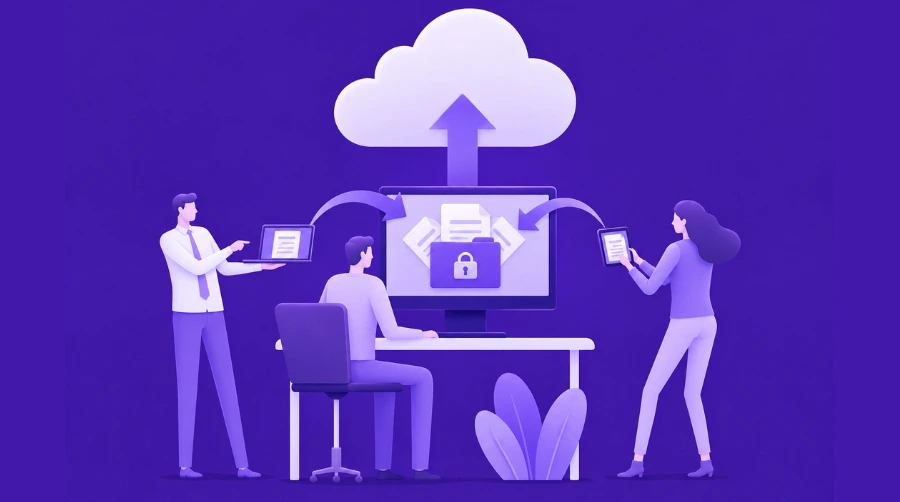
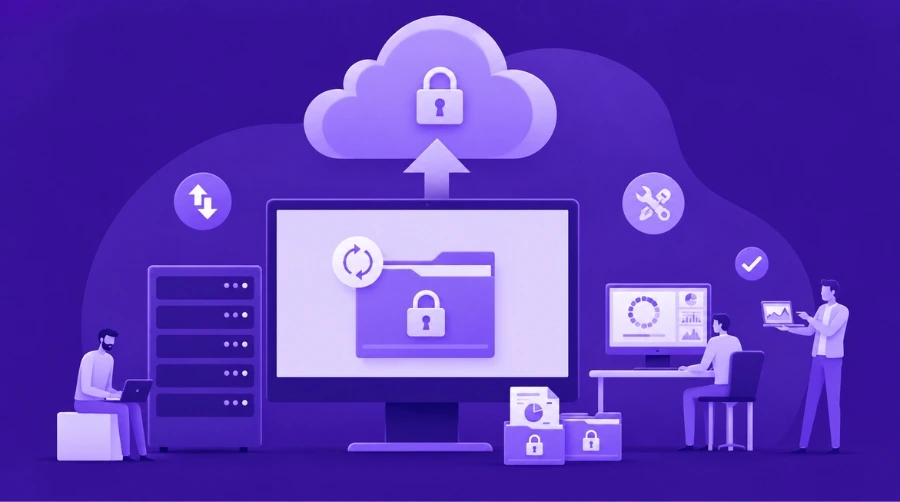
Cloud log management is the systematic practice of collecting, aggregating, storing, analyzing, and acting on the log data generated by cloud infrastructure, applications, and services. Logs are structured or semi-structured records of events every request processed, every authentication attempt, every configuration change, every error thrown, every scaling event triggered that collectively form a complete, timestamped record of everything that has happened across a cloud environment. Cloud log management transforms this raw event stream from passive data storage into an active operational intelligence system: one that surfaces anomalies in real time, enables rapid root cause analysis when incidents occur, provides the audit trails that compliance frameworks require, and feeds the security analytics that identify threats before they materialize into breaches.
How Cloud Log Management Works: The Four-Stage Pipeline
Log Collection — Capturing Every Event Source
Log agents, sidecar containers, cloud provider APIs, and application SDKs collect log events from every layer of the cloud stack — virtual machines, containers, serverless functions, managed databases, API gateways, load balancers, and security services. Comprehensive collection coverage is the non-negotiable foundation of effective cloud log management: any log source that is not collected is a blind spot that attackers and failures can exploit undetected.
Log Aggregation — Unifying Diverse Data Streams
Log aggregation pipelines ingest events from all collection sources, normalize them into a consistent format, enrich them with metadata (service name, environment, region, team ownership), and route them to appropriate storage and analysis destinations. In multi-cloud environments, aggregation is the layer that creates unified visibility across AWS, Azure, and Google Cloud log streams that would otherwise be permanently siloed in separate provider-native systems.
Storage and Analysis — Indexed Intelligence at Scale
Log storage systems ranging from fully indexed search engines (Elasticsearch, Splunk) to label-indexed cost-optimized solutions (Grafana Loki) retain log data for analysis windows spanning from real-time streaming to 12-month compliance retention. AI-powered analytics engines continuously process stored logs for anomaly patterns, performance baselines, and security signatures — transforming passive storage into an active intelligence layer.
Real-Time Alerting — Actionable Signal from Noise
Alert rules, machine learning models, and correlation engines translate log patterns into actionable notifications routed to the right teams through appropriate channels — PagerDuty for on-call engineers, Slack for team awareness, ticketing systems for tracked remediation. The quality of the alerting layer — its signal-to-noise ratio — determines whether cloud log management creates operational clarity or contributes to the alert fatigue that renders monitoring programs ineffective.
Traditional Logging vs Cloud Log Management
Traditional Logging
- →Flat log files on individual servers
- →Manual SSH access to review logs
- →Reactive troubleshooting after incidents
- →No cross-service correlation
- →Static storage, no intelligent analysis
Cloud Log Management
- →Centralized aggregation from all services
- →Real-time streaming search and analytics
- →Proactive AI anomaly detection
- →Cross-cloud correlation and enrichment
- →Automated compliance reporting and audit
Why Cloud Log Management Is Important in 2026
Five converging forces have elevated cloud log management from an operational nice-to-have to a business-critical investment that directly impacts security posture, operational reliability, regulatory standing, and engineering productivity simultaneously.
Key Features of Modern Cloud Log Management Solutions
Modern cloud log management platforms use AI and automation to simplify infrastructure monitoring at a scale that manual processes cannot sustain — transforming the raw volume of cloud-generated log events into actionable operational intelligence. The following capabilities define what separates a production-grade cloud log management platform from a basic log aggregator.
Real-Time Log Monitoring
Live streaming ingestion that makes log events searchable within seconds of generation — enabling engineers to query log data during active incidents rather than waiting for batch processing delays.
AI-Powered Log Analytics
Machine learning models that learn normal log patterns, detect statistical deviations that indicate anomalies, cluster related error events, and generate natural language explanations of what the log data reveals about infrastructure health.
Automated Threat Detection
Security-specific log analysis that identifies attack signatures — brute force authentication, privilege escalation, data exfiltration patterns, and known malware command-and-control communication — in real time with automated blocking or alerting responses.
Centralized Log Storage
Tiered, policy-driven log retention that keeps recent logs in hot, fast-query storage while automatically archiving older data to cost-efficient cold storage — balancing query performance against retention budget across different log types with different analysis frequency profiles.
Dashboard Visualization
Pre-built and custom dashboards that translate log volumes into operational metrics — error rates by service, latency distributions, geographic traffic patterns, security event timelines — visible to engineering, security, and executive audiences with appropriate detail levels for each context.
Compliance Reporting
Automated generation of compliance evidence packages — access logs, change audit trails, data processing records, security event summaries — formatted for specific regulatory frameworks including GDPR, HIPAA, PCI-DSS, and SOC 2, on demand without manual compilation.
Top Cloud Log Management Trends in 2026
Seven interconnected trends are reshaping how organizations approach cloud log management in 2026, collectively moving the discipline toward greater intelligence, broader coverage, and tighter integration with security operations.
AI-Driven Log Analytics
Large language models and ML pipelines that understand log semantics, cluster related anomalies, and generate plain-English explanations of what unusual log patterns indicate — making log data accessible to engineers without deep log analysis expertise.
Predictive Monitoring Systems
Models trained on historical log patterns that forecast infrastructure failures 24–48 hours before they occur, enabling proactive remediation that prevents incidents from reaching production rather than merely detecting them quickly after they do.
Zero Trust Security Integration
Cloud log management as the verification backbone of Zero Trust architectures — providing the continuous, comprehensive audit trail of every authentication event and access decision that Zero Trust policy enforcement depends on.
Kubernetes and Container Monitoring
Specialized log management for ephemeral container workloads that disappear before traditional log collection can capture their events — requiring streaming log aggregation that captures pod lifecycle logs in real time regardless of container duration.
Serverless Log Management
Purpose-built log aggregation for serverless functions where traditional agent-based collection is unavailable — using cloud provider log streams, distributed tracing, and cold start detection to maintain observability across ephemeral compute environments.
Real-Time Threat Intelligence
Log analysis enriched with live threat intelligence feeds — known malicious IP ranges, current CVE exploits, active threat actor signatures — that contextualizes log events with external threat data to dramatically improve detection accuracy.
Multi-Cloud Observability
Unified observability platforms that correlate logs, metrics, and traces across AWS, Azure, and Google Cloud into a single operational view — ending the silo problem that forces engineers to context-switch between three separate monitoring systems to investigate cross-cloud incidents.
Best Cloud Log Management Tools in 2026
The cloud log management tooling landscape has matured into a diverse ecosystem where the right choice depends on your infrastructure complexity, team size, budget, and whether you prioritize security analytics, cost efficiency, or multi-cloud unified observability. The following platforms represent the strongest options across different organizational contexts in 2026.
Datadog
The leading cloud log management platform for engineering teams that want unified logs, metrics, and traces in a single interface. Datadog’s AI-powered log anomaly detection, its cloud SIEM integration, and its native Kubernetes and serverless support make it the strongest all-round choice for organizations managing complex modern infrastructure across multiple providers.
✓ Best for: Full-stack observability across multi-cloud and Kubernetes
Middleware
Middleware is a developer-first cloud log management platform offering full-stack observability without enterprise complexity or cost. Its unified pipeline ingests logs, metrics, and traces into one correlated view, with AI-powered summarization, anomaly detection, and Kubernetes, Docker, and serverless support. Transparent per-host pricing eliminates unpredictable ingestion costs, making it ideal for fast-growing engineering teams.
✓ Best for: Security-focused enterprises and large SOC teams
Elastic Stack (ELK)
The open-source backbone of cloud log management deployments globally — Elasticsearch for search and storage, Logstash for ingestion and transformation, and Kibana for visualization. ELK provides maximum flexibility and control for engineering teams that want to own their log infrastructure completely, with a self-hosted option that eliminates per-log pricing for high-volume environments.
✓ Best for: Self-hosted cloud log management with maximum flexibility
Grafana Loki
Grafana’s Prometheus-inspired log aggregation system that stores only log labels in its index rather than full text content, reducing storage costs by 80–90% compared to fully indexed alternatives. Loki’s tight integration with Grafana dashboards and Prometheus metrics makes it the natural choice for teams already using the Grafana observability stack and needing cost-effective Kubernetes log management at scale.
✓ Best for: Kubernetes-native teams seeking cost-optimized log storage
Full Platform Comparison: Cloud Log Management Tools 2026
| Tool | Best For | AI Features | Multi-Cloud Support | Pricing Model |
|---|---|---|---|---|
| Datadog | Full-stack observability | Anomaly detection, AI Bits, Watchdog | Full multi-cloud + K8s | Per GB ingested + retained |
| Middleware | Developer-focused full-stack observability | AI log summarization, anomaly detection, AIOps | Multi-cloud + Kubernetes + serverless | Per-host flat pricing |
| Elastic Stack (ELK) | Self-hosted, high-volume | ML anomaly, ESQL, AIOps | Multi-cloud via agents | Open source + cloud tiers |
| Grafana Loki | Kubernetes, cost-optimized | Pattern detection, AI advisor | Multi-cloud via agents | Open source + Grafana Cloud |
| Google Cloud Logging | GCP-native workloads | Error Reporting, Anomaly Detection | GCP-native + hybrid | Per GB beyond free tier |
| AWS CloudWatch | AWS-native environments | Insights, Contributor Insights | AWS-native only | Per log volume + retention |
| Azure Monitor | Azure-heavy enterprises | Sentinel SIEM, AI alerts | Azure + Arc-connected | Per GB data ingested |
How AI Is Transforming Cloud Log Management
From Manual Triage to Intelligent Automation
Artificial intelligence is fundamentally redefining what cloud log management can accomplish, moving the discipline from passive data storage and manual search toward proactive, autonomous intelligence that surfaces issues before they require human attention. The scale of modern cloud log generation — billions of events daily across a typical enterprise environment — has made AI assistance not a premium feature but an operational necessity: human engineers simply cannot review log volumes at the speed and breadth that production cloud environments demand, and the most critical security and performance signals are frequently buried in noise that pattern-matching rules alone cannot distinguish from legitimate activity.
Automated Incident Detection
AI models that continuously scan incoming log streams for signatures of infrastructure failures, security breaches, and performance degradation triggering automated alerts and remediation workflows without waiting for human review.
Intelligent Anomaly Detection
Statistical baseline models that learn what normal log patterns look like for each service, time of day, and traffic profile flagging statistically significant deviations that represent genuine anomalies while ignoring expected variation that rule-based systems would incorrectly alert on.
AI-Based Root Cause Analysis
Correlation engines that analyze log events across multiple services simultaneously, identifying the upstream cause of cascading failures that would take engineering teams hours to reconstruct manually from individual service logs.
Predictive Infrastructure Monitoring
Time-series forecasting models that identify log patterns gradually increasing error rates, growing database query latency, slowly filling disk volumes that historically precede outages, enabling preemptive intervention before the failure occurs.
Cloud Log Management and Cybersecurity
Why Logs Are the Most Valuable Security Asset in Cloud Environments
In cloud environments, logs are not simply an operational diagnostic tool — they are the primary forensic record of every security-relevant event that occurs across the infrastructure. Authentication attempts, IAM permission changes, API calls made with service account credentials, network connections to external IP addresses, data access patterns across storage services — these events are invisible to perimeter-based security tools but fully captured in cloud logs when a comprehensive cloud log management system is properly configured to collect and analyze them. The log record is often the difference between discovering a breach within hours and remaining unaware of it for the 197-day average that organizations without proactive cloud log management experience.
Cloud Log Management Security Capabilities: What Each Layer Detects
Security Breach Detection: Authentication log analysis identifying brute force attempts, credential stuffing campaigns, successful logins from anomalous geographies or time patterns, and impossible travel events that indicate account compromise.
Threat Intelligence Integration: Cloud log management platforms enriching log events in real time with external threat intelligence feeds — known malicious IP addresses, current CVE exploit signatures, active threat actor infrastructure — to dramatically accelerate detection accuracy.
Compliance Monitoring: Automated tracking of log completeness, retention policy adherence, access control changes, and data access events against regulatory framework requirements — generating continuous compliance scores and audit-ready evidence packages.
SIEM Integration: Cloud log management feeding structured, enriched log data into Security Information and Event Management platforms — Splunk Enterprise Security, Microsoft Sentinel, IBM QRadar — enabling unified security operations that correlate cloud log events with network, endpoint, and identity signals.
Common Challenges in Cloud Log Management
| Challenge | Root Cause | Recommended Solution |
|---|---|---|
| High Volume of Log Data | Microservices and containers generating billions of events daily | Intelligent sampling, filtering, and structured logging standards |
| Storage Costs | Retaining all logs in hot storage regardless of analysis frequency | Tiered storage with automated lifecycle policies (Loki, S3 Glacier) |
| Multi-Cloud Complexity | Fragmented log formats and silos across AWS, Azure, GCP | Centralized aggregation platform with provider-specific integrations |
| Alert Fatigue | Too many low-quality alerts from rule-based monitoring systems | AI-powered signal correlation reducing noise by 75% |
| Data Privacy and Compliance | PII in logs creating GDPR and HIPAA exposure risk | Log scrubbing, tokenization, and access-controlled log storage |
Best Practices for Effective Cloud Log Management
Operational Principles for Production Cloud Log Management
Practice 1: Centralize Log Collection Before Analyzing Anything — Cloud log management analysis is only as complete as its collection coverage. Map every log source across your infrastructure, verify collection agent deployment, and treat any uncovered service as a critical security and observability blind spot requiring immediate remediation.
Practice 2: Implement Real-Time Alerts with AI Correlation — Alerts without intelligence create noise; intelligence without alerts creates visibility without action. Combine real-time alerting with AI correlation that groups related events into single actionable notifications, eliminating the alert storms that cause engineers to develop immunity to monitoring signals.
Practice 3: Adopt Structured Logging Standards — Unstructured text logs are slow to query and difficult to parse reliably. Establishing structured JSON logging standards across all services makes cloud log management dramatically more effective: every field is machine-readable, filterable, and aggregatable without fragile regex parsing.
Practice 4: Retain Logs Strategically with Tiered Storage — Not all logs have equal analytical value over time. Security audit logs require 12-month retention for compliance; application performance logs are rarely useful beyond 30 days. Tiered retention policies that match storage tier to log type and retention value can reduce cloud log management storage costs by 60–80% without sacrificing compliance coverage.
Practice 5: Monitor Security Events Continuously, Not Periodically — Cloud log management security monitoring is not a weekly review activity — it is a continuous stream that requires real-time alerting on authentication anomalies, privilege changes, and data access patterns. Security events that are not detected within minutes of occurrence have significantly higher remediation costs than those detected and responded to within seconds.
Future of Cloud Log Management Beyond 2026
The Path to Autonomous Cloud Observability
The trajectory of cloud log management development points unmistakably toward autonomous observability systems that require minimal human intervention for routine monitoring, incident detection, and preliminary remediation. The platforms being deployed in 2026 are laying the technical foundation — AI anomaly detection models, automated correlation pipelines, natural language log query interfaces — for a near-term future where cloud log management operates as a continuous background intelligence system rather than a tool that engineers must actively interrogate.
| Future Capability | Impact on Cloud Operations | Status | Priority |
|---|---|---|---|
| Autonomous Cloud Monitoring | Self-healing infrastructure with zero human triage required | Early capability in leading platforms | Critical |
| AI-Driven Security Operations | Autonomous threat hunting and incident response initiation | Active in Splunk, Datadog SIEM | Critical |
| Edge Computing Log Analytics | Unified cloud log management across distributed edge nodes | Early enterprise adoption | High |
| Advanced Observability Platforms | Unified logs, metrics, traces, and business KPIs in one system | Mainstream in 2026 | Critical |
| Predictive Threat Prevention | AI blocking attacks before they execute based on log behavioral signals | Forecast to dominate by 2028 | Transformational |
Why Cloud Log Management Is the Foundation of Intelligent Cloud Operations
Cloud log management has evolved from a reactive diagnostic tool into the proactive intelligence foundation of modern cloud operations — the system that makes security breaches detectable in hours rather than months, infrastructure failures preventable rather than merely recoverable, and compliance audits routine rather than disruptive. The 2026 technology landscape has delivered cloud log management platforms — Datadog, Splunk, Elastic Stack, Grafana Loki, and the major provider-native options — that combine AI-powered analytics, real-time alerting, multi-cloud aggregation, and security operations integration into systems capable of monitoring enterprise cloud infrastructure at a scale and intelligence level that would have been impractical just three years ago.
The organizations that invest in mature cloud log management infrastructure now — comprehensive collection coverage, structured logging standards, tiered retention policies, AI-powered anomaly detection, and security-integrated monitoring — are building the observability foundation that makes every other cloud optimization investment more effective. Cost optimization requires visibility into resource behavior. Security requires forensic log evidence. Compliance requires audit trails. Performance engineering requires application log analytics. Cloud log management is not one component of cloud operations strategy it is the data layer that makes every other component function with the intelligence and reliability that modern cloud infrastructure demands.
Key Summary: Cloud Log Management in 2026
- Security imperative: Cloud log management reduces MTTD for security incidents from 197 days to under 4 hours — the difference between early containment and catastrophic breach
- AI is non-negotiable: 75% alert noise reduction, 60% faster MTTR, and autonomous root cause analysis are only achievable with AI-powered log analytics, not rule-based monitoring
- Tool selection by context: Datadog for full-stack observability, Splunk for security-focused enterprises, ELK for self-hosted flexibility, Loki for Kubernetes cost efficiency
- Compliance foundation: GDPR, HIPAA, PCI-DSS, and SOC 2 all require specific log management capabilities — a mature cloud log management system makes compliance continuous rather than crisis-driven
- Structured logging wins: JSON structured logs are 10x faster to query, dramatically more reliable to parse, and far more compatible with AI analysis than unstructured text logs
- Future trajectory: Autonomous cloud monitoring, predictive threat prevention, and edge computing log analytics will define next-generation cloud log management through 2028 and beyond
Frequently Asked Questions (FAQs)
Q1.What is cloud log management and why is it important?
Cloud log management is the process of collecting, monitoring, storing, and analyzing logs generated by cloud infrastructure and applications. It helps businesses improve security, detect issues faster, and maintain better system performance.
Q2.How does cloud log management improve cybersecurity?
Cloud log management helps security teams identify suspicious activities, unauthorized access attempts, and unusual behavior in real time. This improves threat detection and reduces the risk of cyberattacks.
Q3.Which are the best tools for cloud log management in 2026?
Some popular cloud log management tools include Splunk, Datadog, Elastic Stack, AWS CloudWatch, Grafana Loki, and Google Cloud Logging because of their monitoring and analytics capabilities.
Q4.How does AI help in cloud log management?
AI-powered cloud log management solutions can automatically detect anomalies, predict infrastructure issues, reduce alert fatigue, and improve incident response through intelligent analytics.
Q5.What types of logs are collected in cloud environments?
Cloud environments usually generate application logs, security logs, server logs, network logs, audit logs, and performance monitoring data used for troubleshooting and analysis.
Q6.Is cloud log management necessary for small businesses?
Yes, cloud log management is useful for small businesses because it improves visibility, strengthens security, and helps monitor cloud infrastructure without requiring large IT teams.
Q7.What are the biggest challenges in cloud log management?
Common challenges include handling large volumes of data, reducing storage costs, managing multi-cloud environments, and filtering unnecessary alerts effectively.
Q8.How does cloud log management support compliance requirements?
Cloud log management helps organizations maintain compliance by storing activity records, monitoring access logs, and generating reports required for industry regulations and audits.
Q9.What is the difference between cloud monitoring and cloud log management?
Cloud monitoring focuses on tracking infrastructure performance and uptime, while cloud log management analyzes detailed log data to identify system events, errors, and security incidents.
Q10.How can businesses optimize their cloud log management strategy?
Businesses can improve cloud log management by centralizing logs, using AI-driven analytics, enabling automated alerts, and regularly reviewing security and performance data.
Explore Services
Related Services
Reviewed by

Aman Vaths
Founder of Nadcab Labs
Aman Vaths is the Founder & CTO of Nadcab Labs, a global digital engineering company delivering enterprise-grade solutions across AI, Web3, Blockchain, Big Data, Cloud, Cybersecurity, and Modern Application Development. With deep technical leadership and product innovation experience, Aman has positioned Nadcab Labs as one of the most advanced engineering companies driving the next era of intelligent, secure, and scalable software systems. Under his leadership, Nadcab Labs has built 2,000+ global projects across sectors including fintech, banking, healthcare, real estate, logistics, gaming, manufacturing, and next-generation DePIN networks. Aman’s strength lies in architecting high-performance systems, end-to-end platform engineering, and designing enterprise solutions that operate at global scale.