Ai Overview
Web3 event platforms are decentralized systems built on blockchain technology that allow organizers to host, manage, and monetize events without relying on centralized intermediaries. Organizers and attendees can verify transactions, ticket sales, and revenue distribution in real time. Tasks like ticket sales, refunds, revenue distribution, and access control are executed automatically based on predefined conditions.
Key Takeaways
- ✓ Web3 event platforms leverage blockchain, NFTs, and smart contracts to eliminate centralized control over virtual and hybrid events globally.
- ✓ NFT-based ticketing systems in the USA and UK are actively reducing scalping, counterfeiting, and unauthorized resale of event tickets.
- ✓ Smart contract automation reduces administrative overhead by up to 60%, enabling organizers to focus on delivering superior attendee experiences.
- ✓ Decentralized identity solutions provide secure, privacy-preserving login for attendees without requiring sensitive personal data storage.
- ✓ Crypto payment integration enables borderless participation for attendees across the UAE, Canada, UK, and USA without currency conversion friction.
- ✓ Metaverse and AI integration with Web3 event platforms is set to unlock immersive, personalized hybrid experiences by 2026 and beyond.
- ✓ DAO-governed community events allow attendees to vote on agendas, speakers, and formats, making participation truly democratic and inclusive.
- ✓ Blockchain event platforms provide immutable audit trails that simplify compliance for regulated industries in financial and healthcare sectors.
- ✓ Web3 virtual events eliminate geographic barriers, enabling simultaneous participation from thousands of attendees across multiple continents.
- ✓ The global blockchain event market is projected to exceed $1.5 billion by 2027, driven by adoption in the USA, UAE, and emerging Asian markets.
The way events are hosted and experienced has changed dramatically over the past few years. From physical conferences to fully virtual setups and now hybrid formats, event technology continues to evolve. Today, a new shift is happening with the rise of Web3 event platforms, bringing decentralization, transparency, and user ownership into the event ecosystem.
Unlike traditional platforms, Web3-based solutions are not controlled by a single authority. They use blockchain technology to give users more control, improve security, and create engaging experiences that go beyond simple video streaming or webinars.
In this blog, we’ll explore how Web3 event platforms are reshaping virtual and hybrid events, their key features, benefits, real-world use cases, and what the future holds.
What Are Web3 Event Platforms?
Web3 event platforms are decentralized systems built on blockchain technology that allow organizers to host, manage, and monetize events without relying on centralized intermediaries.
These platforms combine technologies like blockchain, NFTs, smart contracts, and crypto wallets to create secure and transparent event environments. Unlike traditional platforms where data and control are owned by a single company, Web3 platforms distribute control among users and participants.
In simple terms, they enable:
- Secure ticketing using NFTs
- Transparent transactions
- Direct interaction between organizers and attendees
- Ownership of digital assets like event passes or collectibles
These platforms are becoming increasingly popular for hosting Web3 virtual events and enhancing hybrid Web3 experiences.
Evolution of Virtual and Hybrid Events
Events have come a long way from traditional in-person gatherings. The shift started with virtual events, especially during global disruptions, and later evolved into hybrid formats that combine physical and digital participation.
Key stages of evolution:
- Traditional Events – Fully offline, location-based
- Virtual Events – Online-only webinars, conferences
- Hybrid Events – Mix of offline and online participation
- Web3-Powered Events – Decentralized, immersive, and user-owned
While virtual and hybrid events improved accessibility, they still relied heavily on centralized systems. This created limitations in terms of control, transparency, and user engagement.
This is where decentralized event platforms powered by Web3 are making a significant impact.
Why Traditional Event Platforms Fall Short?
Even though traditional platforms made events more accessible, they come with several challenges:
-
Lack of Ownership
In traditional event platforms, users do not have full control over their tickets or digital assets. These are stored and managed by the platform itself, meaning users cannot truly own, transfer freely, or reuse them without restrictions imposed by the platform.
-
Limited Transparency
Traditional systems lack transparency in key areas such as ticket sales, revenue sharing, and attendee data. Organizers and participants often cannot verify how transactions are handled, which can create trust issues and reduce confidence in the overall event management process.
-
Security Risks
Centralized platforms store user data in a single database, making them a common target for cyberattacks. If breached, sensitive information like personal details and payment data can be exposed, leading to privacy issues and potential financial losses for users.
-
Fraud and Scalping
Fake tickets and unauthorized reselling are major concerns in traditional event systems. Scalpers often buy tickets in bulk and resell them at higher prices, while duplicate or counterfeit tickets can lead to denied entry and poor user experiences.
-
Low Engagement
Many traditional virtual platforms offer limited interaction, often restricted to basic video streaming or chats. This results in lower audience engagement, as users miss out on immersive experiences, personalized content, and interactive features that make events more enjoyable and memorable.
Because of these limitations, event organizers are now exploring blockchain event platform solutions to deliver better and more secure experiences.
How Web3 is Transforming Event Experiences?
Web3 is reshaping the way events are organized and experienced by introducing decentralization, transparency, and user ownership, making virtual and hybrid events more secure, interactive, and efficient than traditional platforms.
Decentralization in Event Management
Web3 eliminates the need for intermediaries, allowing event organizers to manage everything directly without relying on third-party platforms. This leads to reduced operational costs, better control over event data, and direct communication with attendees.
Since the system is decentralized, no single authority has complete control. This ensures fairness, prevents data manipulation, and allows open access for participants without unnecessary restrictions.
Ownership and Transparency with Blockchain
Blockchain technology records every transaction on a secure and public ledger, making the entire event process more transparent. Organizers and attendees can verify transactions, ticket sales, and revenue distribution in real time.
With Web3, ticket ownership becomes fully verifiable, and users truly own their tickets often in the form of NFTs. These tickets can also act as digital collectibles or provide access to future events, adding long-term value.
Enhanced User Engagement Through Web3
Web3 introduces interactive and rewarding ways to engage users beyond just attending an event. Instead of passive participation, users can actively interact with the platform and community.
Features like token-based rewards, NFT badges, virtual environments, and community-driven activities make events more engaging. This transforms Web3 virtual events into immersive experiences that keep users involved before, during, and after the event.
Key Features of Web3 Event Platforms
Web3 event platforms come with advanced features powered by blockchain technology, enabling secure transactions, automated processes, and seamless user interactions that enhance the overall event experience.
NFT-Based Ticketing Systems
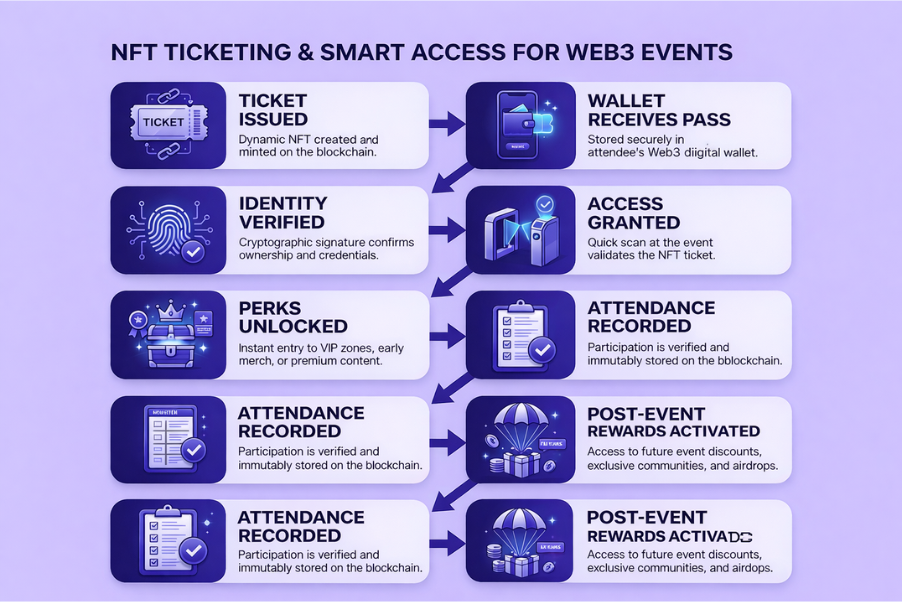
NFT ticketing is a core feature of Web3 event platforms, where each ticket is unique and securely stored on the blockchain. This eliminates duplication and fraud while ensuring authenticity.
Users can easily verify ownership, transfer tickets, or resell them securely. Additionally, NFT tickets can include added benefits such as exclusive content, backstage access, or VIP privileges, enhancing the overall event experience.
Smart Contract Automation
Smart contracts automate important event processes without the need for manual intervention. Tasks like ticket sales, refunds, revenue distribution, and access control are executed automatically based on predefined conditions.
This reduces human error, increases efficiency, and ensures trust. For example, if an event is canceled, refunds can be processed instantly through smart contracts, saving time and improving user satisfaction.
Crypto Payments and Wallet Integration
Web3 platforms support cryptocurrency payments, making transactions faster, more secure, and globally accessible. Users can pay for tickets without relying on traditional banking systems.
Wallet integration simplifies the user experience by allowing seamless login and identity verification. It removes the need for multiple accounts and passwords, making access quicker and more secure.
Decentralized Identity and Secure Login
Instead of traditional login systems, Web3 uses decentralized identities linked to crypto wallets. This approach enhances security and gives users full control over their personal data.
It reduces the risk of data breaches since sensitive information is not stored in centralized databases. Users can choose what data to share, ensuring better privacy and a safer event experience.
Web3 vs Traditional Event Platforms – Feature Comparison
| Feature | Traditional Platforms | Web3 Event Platforms |
|---|---|---|
| Ticket Authenticity | Barcode/QR (Vulnerable) | NFT Cryptographic Proof |
| Data Control | Centralized (Platform Owns) | User-Owned (Decentralized) |
| Payment Methods | Fiat Only (High Fees) | Crypto + Fiat (Low Fees) |
| Event Governance | Organizer Controlled | DAO Community Voting |
| Revenue Model | One-Time Sale | NFT Royalties + Secondary |
| Identity Verification | Email/Password (Hackable) | DID Wallet Auth (Secure) |
| Global Accessibility | Limited by Banking | Borderless & Permissionless |
Benefits of Web3 in Virtual and Hybrid Events
By integrating blockchain and decentralized technologies, Web3 event platforms offer multiple advantages such as improved security, better accessibility, and more engaging experiences for both organizers and participants.
Improved Security and Data Privacy
Web3 uses blockchain technology to secure data through encryption and decentralization. Unlike centralized systems, data is not stored in a single location, making it harder for hackers to access or manipulate information.
Users also gain more control over their personal data, deciding what to share and with whom, which improves overall privacy and trust.
Fraud Prevention and Ticket Authenticity
NFT-based ticketing ensures that each ticket is unique and cannot be duplicated. This makes it easy to verify authenticity and prevents issues like fake or duplicate tickets.
It also reduces ticket scalping, as resale rules can be built into smart contracts, ensuring fair pricing and controlled distribution.
Global Accessibility and Borderless Participation
Web3 platforms remove geographical limitations, allowing anyone with an internet connection and a crypto wallet to participate in events.
Users from different parts of the world can easily buy tickets, attend sessions, and engage with others. This makes virtual and hybrid events more inclusive and accessible to a global audience.
Personalized and Immersive Experiences
Web3 enables highly personalized experiences tailored to individual users. Participants can interact using avatars, explore virtual event spaces, and receive customized rewards based on their activity.
These immersive features create deeper engagement and make events more interactive, enjoyable, and memorable compared to traditional formats.
Real-World Use Cases of Web3 Event Platforms
Web3 event platforms are already being used across various industries, showcasing their ability to host innovative, interactive, and scalable events in both virtual and hybrid environments.
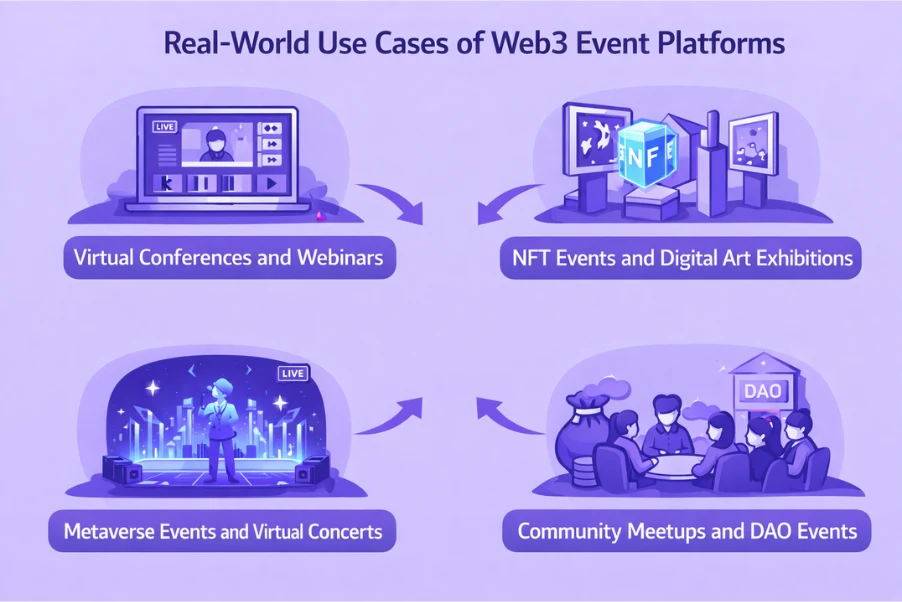
Virtual Conferences and Webinars
Web3 enhances online conferences by introducing features like NFT-based access passes, token rewards, and interactive networking opportunities.
These additions make webinars more engaging and valuable, encouraging active participation rather than passive viewing.
NFT Events and Digital Art Exhibitions
Artists and creators can host virtual exhibitions where their work is displayed as NFTs. Attendees can explore galleries, interact with creators, and purchase digital assets directly.
This not only improves audience engagement but also creates new monetization opportunities for artists in the digital space.
Metaverse Events and Virtual Concerts
Web3 enables events within virtual worlds where users can participate through avatars. These include virtual concerts, gaming events, and branded experiences.
Such events provide immersive environments where users can interact, socialize, and enjoy experiences that go beyond traditional event formats.
Community Meetups and DAO Events
Decentralized communities (DAOs) use Web3 platforms to organize events that are governed by members. Decisions are made through token-based voting, ensuring transparency and inclusivity.
These events strengthen community bonds and encourage active participation, making users feel more connected and involved. For in-person community meetups, organizers are increasingly using Uniqode’s dynamic QR codes to handle check-ins and share resources on-site without needing to reprint materials every time a link changes.
Challenges in Adopting Web3 Event Platforms
Despite their benefits, Web3 event platforms face certain challenges related to technology, scalability, and regulations that need to be addressed for wider adoption.
Technical Complexity and User Adoption
Web3 technologies can be difficult for beginners to understand. Users need to learn how to use crypto wallets, manage private keys, and navigate new interfaces.
This complexity can create a barrier for non-technical users, slowing down adoption and requiring better user education and simplified solutions.
Scalability and Performance Issues
Blockchain networks sometimes face limitations such as slow transaction speeds and high fees, especially during peak usage.
These issues can impact the performance of large-scale events, making it important to choose scalable solutions and optimize platform performance.
Regulatory and Compliance Concerns
Web3 operates in an evolving legal environment with varying regulations across regions. Event organizers must consider compliance requirements, data laws, and financial regulations.
Staying updated with these changes is essential to avoid legal issues and ensure smooth event operations.
Future of Web3 Event Platforms
As technology continues to evolve, Web3 event platforms are expected to grow rapidly, integrating with emerging trends like AI and the metaverse to deliver even more immersive and advanced event experiences.
Integration with Metaverse and AI
The future of Web3 events lies in combining blockchain with technologies like the metaverse, artificial intelligence, and augmented reality.
This integration will enable smarter, more immersive, and highly interactive event experiences that adapt to user behavior and preferences.
Growth of Decentralized Communities
Web3 promotes community-driven ecosystems where users actively participate in decision-making. In the future, events will be co-created by communities rather than controlled by a single organizer.
This will increase engagement, transparency, and trust among participants.
Emerging Trends in Event Technology
Several trends are shaping the future of Web3 event platforms, including gamification, token-based economies, cross-platform integrations, and advanced virtual networking tools.
These innovations will continue to enhance user experiences and drive the evolution of Web3 event platform development, making events more interactive, scalable, and engaging.
Final Thoughts
Web3 is bringing a major transformation to the events industry. By introducing decentralization, transparency, and user ownership, Web3 event platforms are solving many of the challenges faced by traditional systems.
From NFT ticketing and smart contracts to immersive virtual environments, these platforms are redefining how virtual and hybrid events are experienced. While there are still challenges like scalability and user adoption, the potential of Web3 in this space is undeniable.
As businesses and organizers explore new ways to engage audiences, adopting advanced Web3 development solutions can help create secure, scalable, and innovative event experiences without relying on outdated centralized systems.
The future of events is not just virtual or hybrid, it is decentralized, interactive, and powered by Web3.
Frequently Asked Questions
Q1.What are Web3 event platforms and how do they work?
Web3 event platforms are decentralized digital environments that use blockchain technology, smart contracts, and token-based systems to manage virtual and hybrid events. Unlike traditional platforms, they eliminate centralized control, allowing organizers and attendees to interact directly through secure, transparent protocols. They enable NFT ticketing, crypto payments, decentralized identity verification, and on-chain governance, creating a trustless ecosystem for event management across the USA, UK, UAE, and Canada.
Q2.How do NFT tickets differ from traditional event tickets?
NFT tickets are blockchain-based digital assets that provide verifiable proof of ownership and cannot be duplicated or counterfeited. Each NFT ticket carries unique metadata, including event details, seat information, and attendee privileges. They can be traded on secondary markets with royalties returning to organizers, eliminating scalping fraud. In markets like the UK and UAE, NFT ticketing is rapidly gaining traction as a secure alternative to conventional PDF or barcode-based tickets susceptible to duplication.
Q3.Are Web3 virtual events more secure than traditional platforms?
Yes, Web3 virtual events offer significantly stronger security through cryptographic protocols and decentralized architecture. Traditional platforms store user data on centralized servers, making them vulnerable to breaches. Web3 platforms distribute data across blockchain nodes, making unauthorized access practically impossible. Smart contracts automate processes without human intermediaries, reducing manipulation risks. For businesses in the USA and Canada handling sensitive attendee information, this decentralized security model represents a substantial improvement over legacy systems.
Q4.What is the role of smart contracts in hybrid Web3 experiences?
Smart contracts are self-executing agreements coded onto the blockchain that automate key event functions such as ticket sales, refunds, access control, and reward distribution. In hybrid Web3 experiences, smart contracts ensure that both in-person and virtual attendees receive equal treatment and benefits without manual oversight. They execute automatically when predefined conditions are met, eliminating disputes, reducing administrative costs, and ensuring complete transparency for organizers and participants across global markets.
Q5.Can Web3 event platforms support large-scale virtual conferences?
Emerging Web3 event platforms are increasingly capable of handling large-scale virtual conferences, though scalability remains an active area of improvement. Networks like Polygon, Solana, and layer-2 Ethereum solutions are enabling faster, cheaper transactions suitable for high-volume events. Platforms integrating decentralized storage solutions like IPFS can host vast amounts of content without centralized server limitations. Leading conferences in the USA and UK have already piloted Web3 hybrid formats with thousands of attendees attending simultaneously.
Q6.How do crypto payments work at Web3 events?
Crypto payments at Web3 events are processed through integrated digital wallets connected to the event platform. Attendees can purchase tickets, merchandise, or premium access using cryptocurrencies such as Ethereum, USDC, or platform-native tokens. Smart contracts automatically process and confirm transactions without payment processor intermediaries, reducing fees and enabling instant global transfers. This borderless payment capability is particularly valuable for events targeting international audiences across the USA, UAE, UK, and Canada simultaneously.
Explore Services
Related Services
Reviewed by

Aman Vaths
Founder of Nadcab Labs
Aman Vaths is the Founder & CTO of Nadcab Labs, a global digital engineering company delivering enterprise-grade solutions across AI, Web3, Blockchain, Big Data, Cloud, Cybersecurity, and Modern Application Development. With deep technical leadership and product innovation experience, Aman has positioned Nadcab Labs as one of the most advanced engineering companies driving the next era of intelligent, secure, and scalable software systems. Under his leadership, Nadcab Labs has built 2,000+ global projects across sectors including fintech, banking, healthcare, real estate, logistics, gaming, manufacturing, and next-generation DePIN networks. Aman’s strength lies in architecting high-performance systems, end-to-end platform engineering, and designing enterprise solutions that operate at global scale.