Ai Overview
Selecting the right blockchain platform is one of the most critical decisions when creating a crypto token. The blockchain you choose directly impacts transaction speed, costs, security, scalability, and overall project success. Ethereum processes approximately 15-30 transactions per second, while Solana handles over 65,000 TPS. BNB Chain, Polygon, and Solana deployments typically cost under $10.
Selecting the right blockchain platform is one of the most critical decisions when creating a crypto token. The blockchain you choose directly impacts transaction speed, costs, security, scalability, and overall project success. With numerous options available including Ethereum, Solana, BNB Chain, and Avalanche, understanding how to choose the right blockchain platform requires careful evaluation of your project requirements. This comprehensive guide explores key factors for blockchain selection for cryptocurrency development, helping you make informed decisions for your token project.
Key Takeaways
- Project Requirements First: Define your token’s purpose, target audience, and transaction volume before evaluating blockchain platforms.
- Transaction Costs Matter: Low-fee blockchain platforms are essential for high transaction volume applications and consumer-facing projects.
- Scalability Planning: Choose high-throughput blockchain networks that can handle your projected growth without performance degradation.
- Security Priority: Blockchain security and audit readiness should be non-negotiable factors in platform selection.
- EVM Compatibility: EVM-compatible blockchains offer easier migration, broader tool support, and developer familiarity.
- Ecosystem Strength: Consider existing DeFi protocols, wallets, and exchanges supporting each blockchain platform.
- Future Flexibility: Multi-chain token strategy and interoperable blockchain networks provide long-term adaptability.
Why Blockchain Selection Matters for Token Projects
The blockchain platform you select becomes the foundation for your entire token ecosystem. This decision affects everything from user experience and transaction costs to security guarantees and integration possibilities. Making the wrong choice can result in expensive migrations, limited functionality, or project failure.
For enterprise blockchain development, platform selection carries additional weight, making it essential to work with a trusted blockchain development service provider that understands compliance and scalability needs. Understanding the best blockchain for your project requires evaluating multiple factors against your specific use case rather than following trends.
Key Factors for Blockchain Platform Comparison
When evaluating blockchain platforms for token development, several critical factors should guide your decision-making process.
Transaction Speed and Throughput
Blockchain scalability and performance directly impact user experience. Ethereum processes approximately 15-30 transactions per second, while Solana handles over 65,000 TPS. For applications requiring high transaction volumes like gaming or micropayments, high-throughput blockchain networks become essential.
Consider your projected transaction volume realistically. Consumer applications and DeFi protocols typically require faster throughput than simple utility tokens. Token development solutions must account for peak usage scenarios to avoid network congestion issues.
Transaction Costs and Gas Fees
Token development cost comparison across blockchains reveals significant differences in ongoing operational expenses. Ethereum gas fees can spike to hundreds of dollars during congestion, while BNB Chain and Solana maintain sub-dollar transaction costs consistently.
For projects involving frequent small transactions, low-fee blockchain platforms for high transaction volume become mandatory. Gaming tokens, loyalty programs, and payment systems cannot sustain high per-transaction costs without degrading user experience.
Security and Decentralization
Blockchain security and audit readiness varies significantly across platforms. More decentralized networks like Ethereum offer stronger security guarantees through distributed validation, while newer chains may sacrifice decentralization for performance.
Evaluate the trade-offs between decentralized vs centralized blockchain approaches based on your security requirements. Enterprise applications often prioritize security over speed, while consumer apps may accept some centralization for better performance.
Developer Ecosystem and Tools
Strong developer ecosystems accelerate token development and reduce costs. Ethereum’s mature tooling, extensive documentation, and large developer community make it easier to find talent and resources. Newer blockchains may offer technical advantages but lack ecosystem depth.
EVM-compatible blockchains like BNB Chain, Polygon, and Avalanche provide familiar development environments for Ethereum developers. BSC token projects benefit from reduced learning curves, code reuse, and efficient blockchain architecture consulting for startups.
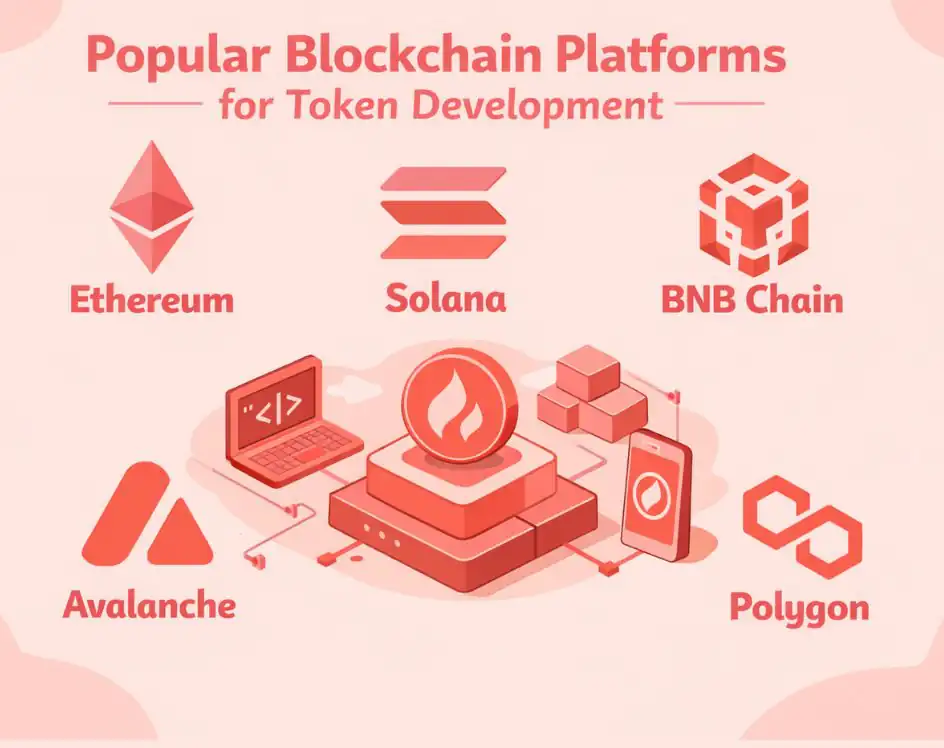
Popular Blockchain Platforms for Token Development
Understanding the strengths and limitations of major blockchain platforms helps narrow your selection based on project requirements.
Ethereum
Ethereum remains the leading platform for token development with the largest ecosystem, most liquidity, and strongest brand recognition. Its mature smart contract infrastructure supports complex tokenomics and DeFi integrations. However, high gas fees and slower throughput limit suitability for high-volume, low-value transactions.
Layer 2 solutions for Ethereum like Arbitrum, Optimism, and Polygon address scalability concerns while maintaining Ethereum security. These solutions offer the best of both worlds for projects needing Ethereum’s ecosystem with better performance and lower costs.
Solana
Solana offers exceptional speed and low costs, processing thousands of transactions per second for fractions of a cent. This makes it the best blockchain for NFTs and consumer apps requiring high throughput. However, Solana uses different programming languages and has experienced network stability issues.
Projects prioritizing performance over ecosystem maturity find Solana attractive. Gaming applications, high-frequency trading platforms, and consumer-facing products benefit from Solana’s capabilities when development teams have appropriate expertise.
BNB Chain
BNB Chain provides EVM compatibility with significantly lower fees than Ethereum mainnet. Its connection to Binance exchange offers built-in liquidity and user access. The trade-off involves more centralized validation compared to Ethereum.
For projects targeting the Binance ecosystem or requiring affordable EVM development, BNB Chain presents a practical choice. Many successful DeFi protocols and token projects operate on BNB Chain due to its balance of cost and capability.
Avalanche
Avalanche combines high throughput with EVM compatibility and unique subnet architecture. Custom blockchain development through subnets allows enterprises to create dedicated chains with custom rules while benefiting from Avalanche’s security. This flexibility suits enterprise-ready blockchain platforms requirements.
Projects needing custom blockchain environments without building from scratch find Avalanche’s subnet model compelling. The platform supports both public token launches and private enterprise deployments through its flexible architecture.
Polygon
Polygon operates as an Ethereum Layer 2 scaling solution, offering low fees while maintaining Ethereum compatibility. Its suite of scaling technologies addresses different use cases from simple sidechains to zero-knowledge rollups.
For projects wanting Ethereum ecosystem access without mainnet costs, Polygon provides an accessible entry point. Many major brands have chosen Polygon for NFT and token projects due to its combination of low costs and Ethereum security.
How to Select Blockchain for Enterprise Crypto Projects
Enterprise blockchain development requires additional considerations beyond typical consumer projects. Regulatory compliance, long-term support, and integration capabilities become paramount.
Regulatory Compliance Considerations
Regulatory-compliant blockchain development demands platforms supporting KYC/AML integration, permissioned access when needed, and audit trails. Some jurisdictions have specific requirements that certain blockchains accommodate better than others.
Consider whether your token requires regulatory approval and what blockchain characteristics support compliance. Working with experienced token development services providers ensures proper compliance consideration during platform selection.
Integration and Interoperability
Enterprise projects often require integration with existing systems and potentially multiple blockchains. Interoperable blockchain networks and cross-chain communication protocols enable broader functionality and future flexibility.
Evaluate how each platform connects with enterprise systems, other blockchains, and external data sources. API availability, oracle support, and bridge infrastructure affect long-term integration capabilities essential for enterprise development.
Long-term Viability and Support
Enterprise projects require confidence in platform longevity. Evaluate the development team’s track record, funding stability, governance structure, and community engagement. Platforms with strong foundations and active development provide better long-term security for business-critical applications.
Multi-Chain Strategy Considerations
Rather than committing to a single blockchain, many projects adopt multi-chain token strategy approaches deploying across multiple platforms to maximize reach and flexibility.
Benefits of Multi-Chain Deployment
Deploying tokens across multiple blockchains provides access to different user bases, liquidity pools, and ecosystem features. Projects can leverage Ethereum’s liquidity while using Solana for high-frequency operations or BNB Chain for cost-sensitive transactions.
Multi-chain approaches also reduce platform dependency risk. If one blockchain experiences issues, operations can continue on alternative chains. This resilience becomes increasingly important for mission-critical applications requiring token vesting and complex tokenomics.
Challenges of Multi-Chain Approach
Multi-chain deployments increase complexity in token management, liquidity fragmentation, and user experience. Bridges connecting different chains introduce additional security considerations and potential points of failure.
Development costs increase when supporting multiple platforms, requiring expertise across different blockchain environments. Weigh these costs against the benefits of broader reach when planning your token development strategy.[3]
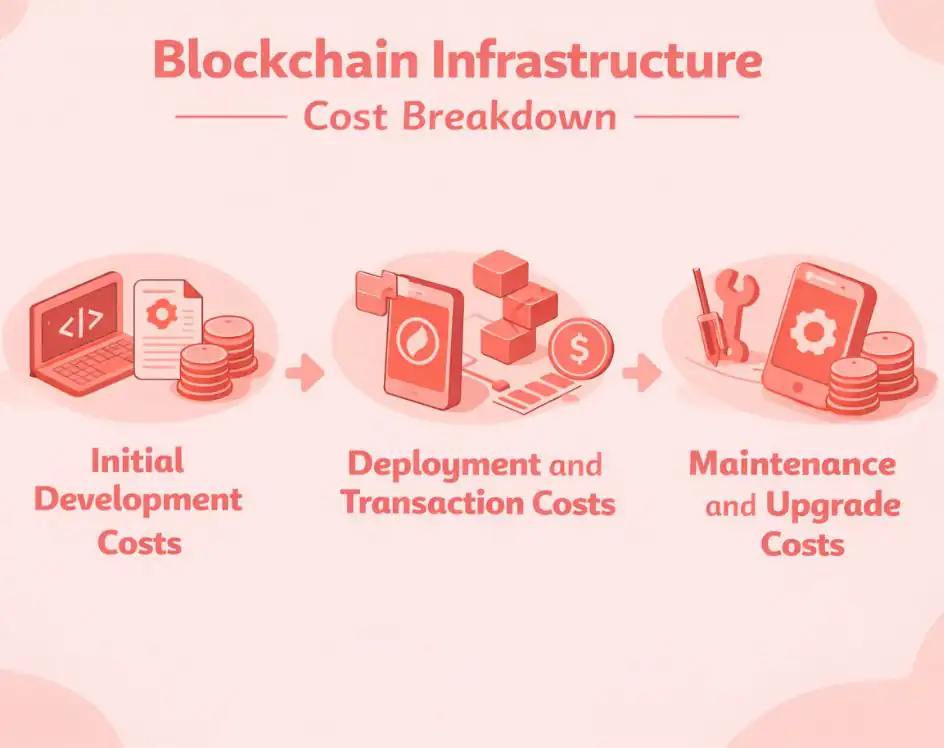
Blockchain Infrastructure Cost Breakdown
Understanding the complete cost picture helps budget accurately for token projects across different platforms.
Initial Development Costs
Smart contract development costs vary by platform complexity and developer availability. Ethereum and EVM-compatible chains typically have more available developers, potentially reducing costs. Solana development may cost more due to smaller talent pools and different technical requirements.
Deployment and Transaction Costs
Contract deployment on Ethereum mainnet can cost hundreds or thousands of dollars during high-fee periods. BNB Chain, Polygon, and Solana deployments typically cost under $10. Ongoing transaction costs follow similar patterns, dramatically affecting total cost of ownership.
Maintenance and Upgrade Costs
Post-launch development for upgrades, security patches, and feature additions requires ongoing investment. Platforms with better tooling and documentation reduce maintenance overhead. Consider these long-term costs when making initial platform selections.
Need Help Selecting the Right Blockchain?
Get expert blockchain architecture consulting to evaluate platforms, compare costs, and choose the best blockchain for your token project requirements.
Making Your Final Blockchain Selection
After evaluating all factors, prioritize based on your specific project requirements rather than general popularity.
Match Platform to Use Case
DeFi protocols often benefit from Ethereum’s liquidity and composability. Gaming and NFT projects may prefer Solana or Polygon for performance. Enterprise solutions might choose Avalanche subnets or private chains for customization and compliance.
Consider Growth Trajectory
Select platforms that accommodate your growth projections. Starting on a platform that cannot scale with your success creates painful migration requirements later. Plan for success by choosing infrastructure and token structure that support your long-term ambitions.
Leverage Expert Guidance
Blockchain architecture consulting for startups provides valuable perspective from experienced professionals who have navigated these decisions before. Expert guidance helps avoid common mistakes and optimize platform selection for your specific situation.[4]
Final Thoughts
Blockchain selection for crypto token projects requires careful evaluation of multiple factors including transaction costs, scalability, security, ecosystem strength, and long-term viability. The best blockchain for your project depends entirely on your specific requirements, target audience, and growth projections rather than general market trends.
Understanding the trade-offs between platforms like Ethereum, Solana, BNB Chain, and Avalanche enables informed decision-making. Whether prioritizing ecosystem access, transaction speed, cost efficiency, or enterprise features, each platform offers distinct advantages for different use cases.
For projects requiring expert guidance, working with experienced token development teams provides valuable insights from professionals who have navigated blockchain selection across numerous successful launches. Proper platform selection creates the foundation for sustainable token ecosystems that can scale with your ambitions and deliver lasting value to your community.
Frequently Asked Questions
Q1.What is the best blockchain for token development?
The best blockchain depends on your specific requirements. Ethereum offers the largest ecosystem, Solana provides highest speed, BNB Chain balances cost and capability, and Avalanche offers enterprise flexibility. Evaluate based on your use case.
Q2.How do I choose between Ethereum and Solana?
Choose Ethereum for maximum ecosystem access, DeFi composability, and security prioritization. Choose Solana for high-speed applications, low costs, and consumer-facing products where performance matters most.
Q3.Are EVM-compatible blockchains better for beginners?
Yes, EVM-compatible blockchains like BNB Chain, Polygon, and Avalanche allow developers familiar with Ethereum to apply existing skills. More tutorials, tools, and developer resources are available for EVM development.
Q4.What factors affect blockchain transaction costs?
Transaction costs depend on network congestion, transaction complexity, blockchain architecture, and consensus mechanism. Layer 2 solutions and alternative chains offer lower costs than Ethereum mainnet.
Q5.Should I deploy my token on multiple blockchains?
Multi-chain deployment provides broader reach and reduces platform risk but increases complexity and costs. Consider multi-chain approaches when targeting diverse user bases or requiring platform redundancy.
Q6.How important is blockchain decentralization for tokens?
Decentralization affects security, censorship resistance, and trust assumptions. Highly decentralized networks offer stronger guarantees but may sacrifice performance. Match decentralization requirements to your project’s security needs.
Q7.What blockchain is best for enterprise token projects?
Enterprise projects often choose Ethereum for credibility, Avalanche for customizable subnets, or private chains for maximum control. Regulatory requirements and integration needs typically guide enterprise platform selection.
Q8.How do Layer 2 solutions affect blockchain selection?
Layer 2 solutions like Polygon, Arbitrum, and Optimism allow projects to benefit from Ethereum’s security while achieving better performance and lower costs. Consider Layer 2 options when evaluating Ethereum ecosystem development.
Explore Services
Related Services
Reviewed by

Aman Vaths
Founder of Nadcab Labs
Aman Vaths is the Founder & CTO of Nadcab Labs, a global digital engineering company delivering enterprise-grade solutions across AI, Web3, Blockchain, Big Data, Cloud, Cybersecurity, and Modern Application Development. With deep technical leadership and product innovation experience, Aman has positioned Nadcab Labs as one of the most advanced engineering companies driving the next era of intelligent, secure, and scalable software systems. Under his leadership, Nadcab Labs has built 2,000+ global projects across sectors including fintech, banking, healthcare, real estate, logistics, gaming, manufacturing, and next-generation DePIN networks. Aman’s strength lies in architecting high-performance systems, end-to-end platform engineering, and designing enterprise solutions that operate at global scale.