Ai Overview
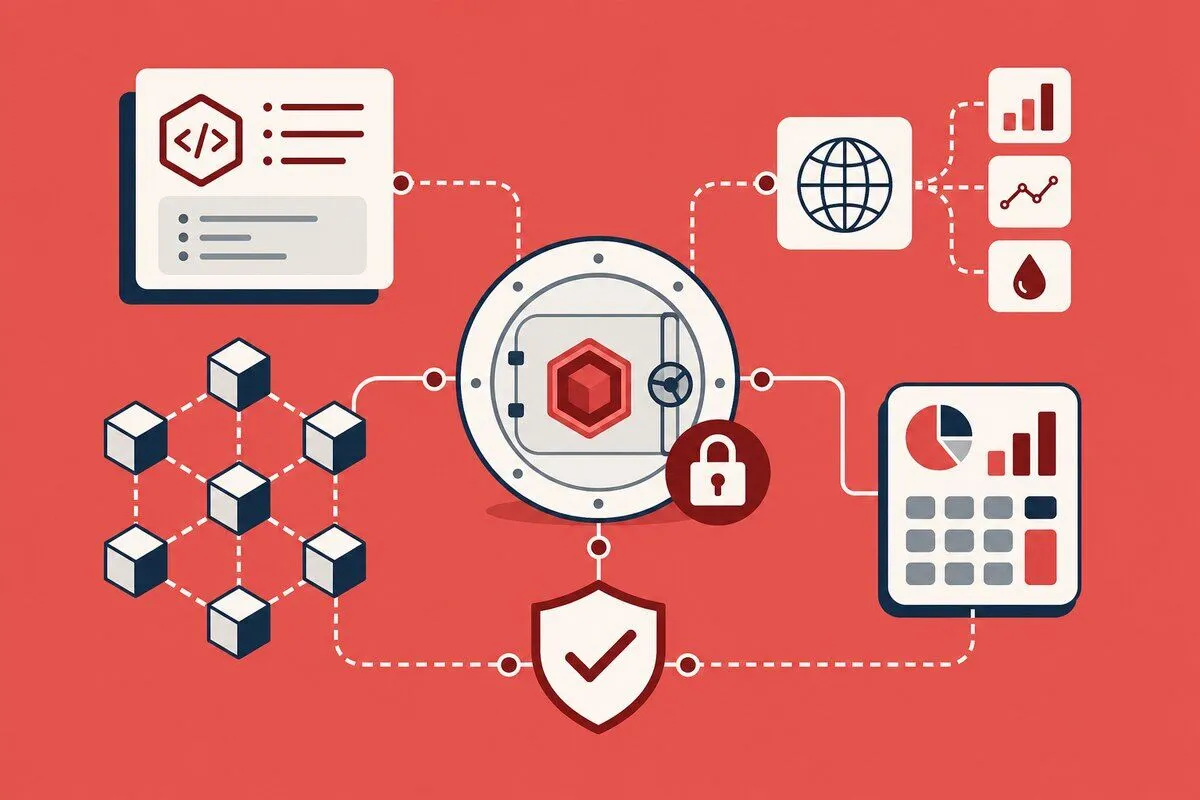
The fractional ownership token structure represents a transformative approach to asset investment that is reshaping how individuals and institutions access high-value opportunities. Industry Standard: Institutional-grade fractional ownership token structure implementations require minimum $10M asset values to justify compliance and operational costs. Platforms like Masterworks and Maecenas have tokenized works by Banksy, Picasso, and Basquiat, allowing investors to purchase shares starting at $20.
Key Takeaways
- Fractional ownership token structure enables investors to purchase digital shares of high-value assets including real estate, fine art, and commodities with minimal capital.
- Property funds across USA, UK, UAE, and Canada increasingly adopt fractional ownership token structure to democratize access to commercial real estate investments.
- Tokenized art investments allow collectors to own portions of masterpieces valued at millions, creating new liquidity for previously illiquid fine art markets.
- Smart contracts automate dividend distributions, governance voting, and compliance verification within fractional ownership token structure frameworks automatically.
- Regulatory frameworks including SEC Regulation D and UK FCA guidelines provide compliant pathways for launching fractional ownership token structure offerings.
- Secondary market platforms enable fractional token trading, though liquidity remains limited compared to traditional securities markets currently.
- Institutional adoption of fractional ownership token structure accelerates as major financial institutions explore tokenized asset management solutions.
- Risk management in fractional ownership requires careful evaluation of smart contract security, legal compliance, and underlying asset quality.
Introduction to Fractional Ownership Token Structures
The fractional ownership token structure represents a transformative approach to asset investment that is reshaping how individuals and institutions access high-value opportunities. With over eight years of experience implementing tokenization solutions across USA, UK, UAE, and Canadian markets, our agency has witnessed the evolution from theoretical concept to mainstream adoption. This innovative framework divides ownership of valuable assets into blockchain-based tokens, enabling investors to purchase fractional shares of properties, artwork, and commodities that were previously accessible only to wealthy individuals or large institutions. The convergence of blockchain technology, smart contract automation, and evolving regulatory frameworks has created unprecedented opportunities for portfolio diversification.
Understanding Fractional Ownership in Tokenized Assets
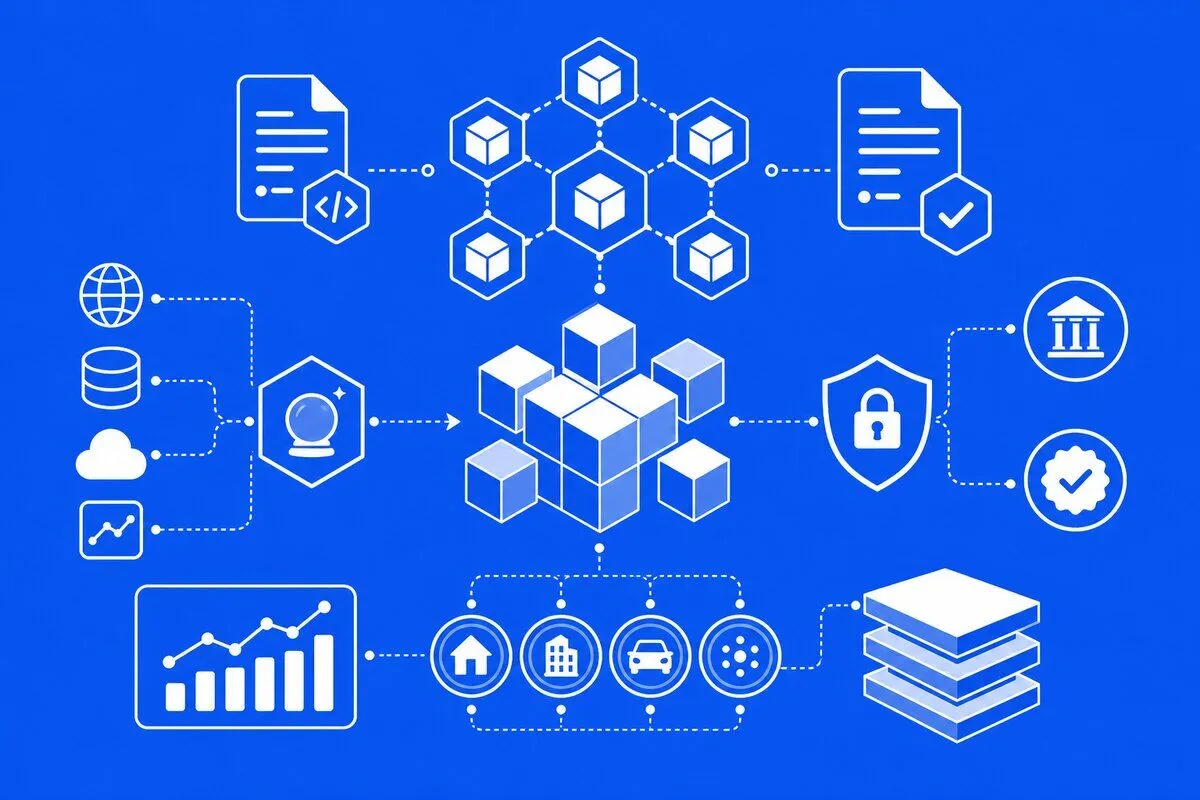
Fractional ownership token structure fundamentally transforms traditional investment models by representing ownership rights as digital tokens on blockchain networks. Each token corresponds to a specific percentage of the underlying asset, granting holders proportional rights to income, appreciation, and governance decisions. Unlike traditional syndication models requiring extensive paperwork and intermediaries, tokenized fractional ownership operates through programmable smart contracts that automate distributions, verify compliance, and maintain transparent ownership records accessible to all stakeholders.
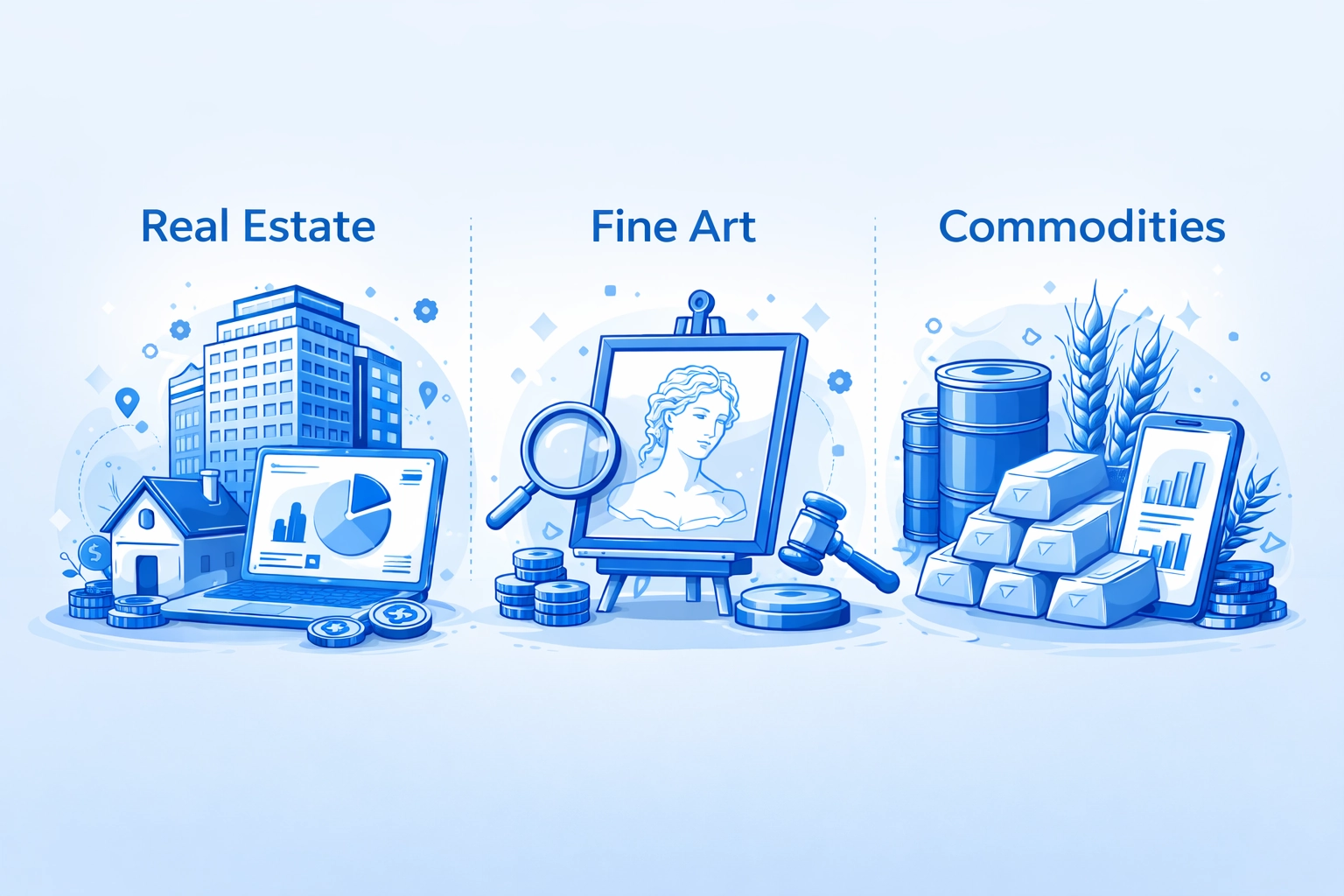
Evolution of Tokenized Ownership Across Asset Classes
Phase One: Real Estate
- First major asset class tokenized
- Commercial properties led adoption
- Regulatory frameworks established
- Institutional validation achieved
Phase Two: Fine Art
- Masterpiece fractionalization
- Gallery partnerships formed
- Authentication integration
- Collector market expansion
Phase Three: Commodities
- Precious metals tokenization
- Agricultural commodity tokens
- Energy asset fractionalization
- Supply chain integration
Fractional Ownership Adoption in Property Funds
| Region | Adoption Rate | Primary Asset Type |
|---|---|---|
| United States | High adoption | Commercial real estate |
| United Kingdom | Growing rapidly | Mixed-use properties |
| UAE (Dubai) | Accelerating | Luxury developments |
| Canada | Emerging | Residential portfolios |
| Singapore | Established | Office buildings |
Token Structures Used in Real Estate Investment Funds
Real estate tokenization investment funds leverage various fractional ownership token structure models depending on regulatory requirements and investor preferences. Security tokens representing equity ownership remain most common, providing proportional rights to rental income and capital appreciation. Debt tokens offer fixed-income exposure to property-backed loans, while hybrid structures combine equity and debt characteristics. Leading property funds across USA, UK, UAE, and Canada increasingly utilize ERC-1400 standard tokens that embed compliance rules directly into smart contract logic.
Industry Standard: Institutional-grade fractional ownership token structure implementations require minimum $10M asset values to justify compliance and operational costs.
Regulatory Considerations for Tokenized Property Assets
| Jurisdiction | Regulatory Framework | Key Requirements |
|---|---|---|
| USA (SEC) | Regulation D, Regulation A+ | Accredited investor verification |
| UK (FCA) | Security Token Regime | Prospectus requirements |
| UAE (DFSA/VARA) | Virtual Asset Framework | Licensing and registration |
| Canada (CSA) | Securities legislation | Provincial compliance |
Fractional Ownership Models in Art Investments
The art market has embraced fractional ownership token structure to democratize access to museum-quality masterpieces. Platforms like Masterworks and Maecenas have tokenized works by Banksy, Picasso, and Basquiat, allowing investors to purchase shares starting at $20. These structures typically involve SPV ownership of physical artwork stored in climate-controlled facilities, with tokens representing proportional equity stakes. The global art market exceeding $65 billion annually now increasingly intersects with blockchain technology.
Global Art Market Value
Minimum Investment
Average Annual Returns
Transform Assets with Fractional Ownership Token Structure
Our tokenization experts design compliant fractional ownership token structure solutions for property, art, and commodities. Launch your offering with confidence.
Tokenization Frameworks for Fine Art Assets
Fine art tokenization through fractional ownership token structure requires specialized frameworks addressing authentication, provenance tracking, and physical custody. Leading implementations integrate with established art registries, maintain insurance coverage exceeding asset values, and partner with recognized auction houses for eventual liquidation. These structures must balance regulatory compliance across multiple jurisdictions where collectors may reside, particularly USA, UK, UAE, and Canadian markets with significant collector populations.
Fractional Ownership Token Structure Implementation Lifecycle
Asset Selection
Identify suitable assets meeting value thresholds, legal clarity, and market demand criteria.
Legal Structuring
Establish SPV ownership, define token rights, and ensure regulatory compliance framework.
Smart Contract Creation
Build and audit token contracts embedding ownership rights and compliance verification.
Token Issuance
Mint tokens representing fractional ownership and distribute to verified investors.
Primary Offering
Conduct compliant token sale to accredited or qualified investors through secure platform.
Asset Management
Manage underlying asset, collect income, and maintain reporting for token holders.
Distribution Execution
Automate income distributions to token holders via smart contract mechanisms.
Secondary Trading
Enable compliant peer-to-peer trading through regulated secondary market platforms.
Commodities Tokenization Through Fractional Ownership
Commodities represent the newest frontier for fractional ownership token structure adoption. Gold-backed tokens like PAX Gold and Tether Gold have demonstrated viable models for precious metals tokenization. Agricultural commodities, including coffee futures and grain reserves, are increasingly tokenized to provide farmers with liquidity and investors with direct commodity exposure. Energy assets including oil storage facilities and renewable energy installations leverage fractional tokens for capital raising across USA, UK, UAE, and Canadian markets.[1]
Economic Impact of Fractional Ownership Tokens
Market Expansion
- Broader investor participation
- Increased asset liquidity
- Reduced transaction costs
- Global market access
Wealth Distribution
- Democratized investing
- Lower entry barriers
- Diversification options
- Passive income access
Industry Transformation
- Asset manager evolution
- Custody modernization
- Settlement efficiency
- Regulatory adaptation
Risk and Governance Challenges in Tokenized Ownership
| Risk Category | Description | Mitigation Strategy |
|---|---|---|
| Regulatory Risk | Changing compliance requirements | Multi-jurisdiction legal structuring |
| Liquidity Risk | Limited secondary markets | Multiple exchange listings |
| Smart Contract Risk | Code vulnerabilities | Professional audits and insurance |
| Custody Risk | Asset safekeeping concerns | Regulated custodian partnerships |
| Governance Risk | Decision-making conflicts | Clear voting mechanisms |
Smart Contracts and Automation in Fractional Assets
Smart contracts serve as the operational backbone of fractional ownership token structure implementations, automating critical functions that traditionally required manual processes and intermediaries. Distribution smart contracts automatically calculate and distribute income to token holders based on their proportional ownership. Governance contracts enable token-weighted voting on asset management decisions. Compliance contracts verify investor eligibility before allowing transfers, ensuring continuous regulatory adherence across jurisdictions.
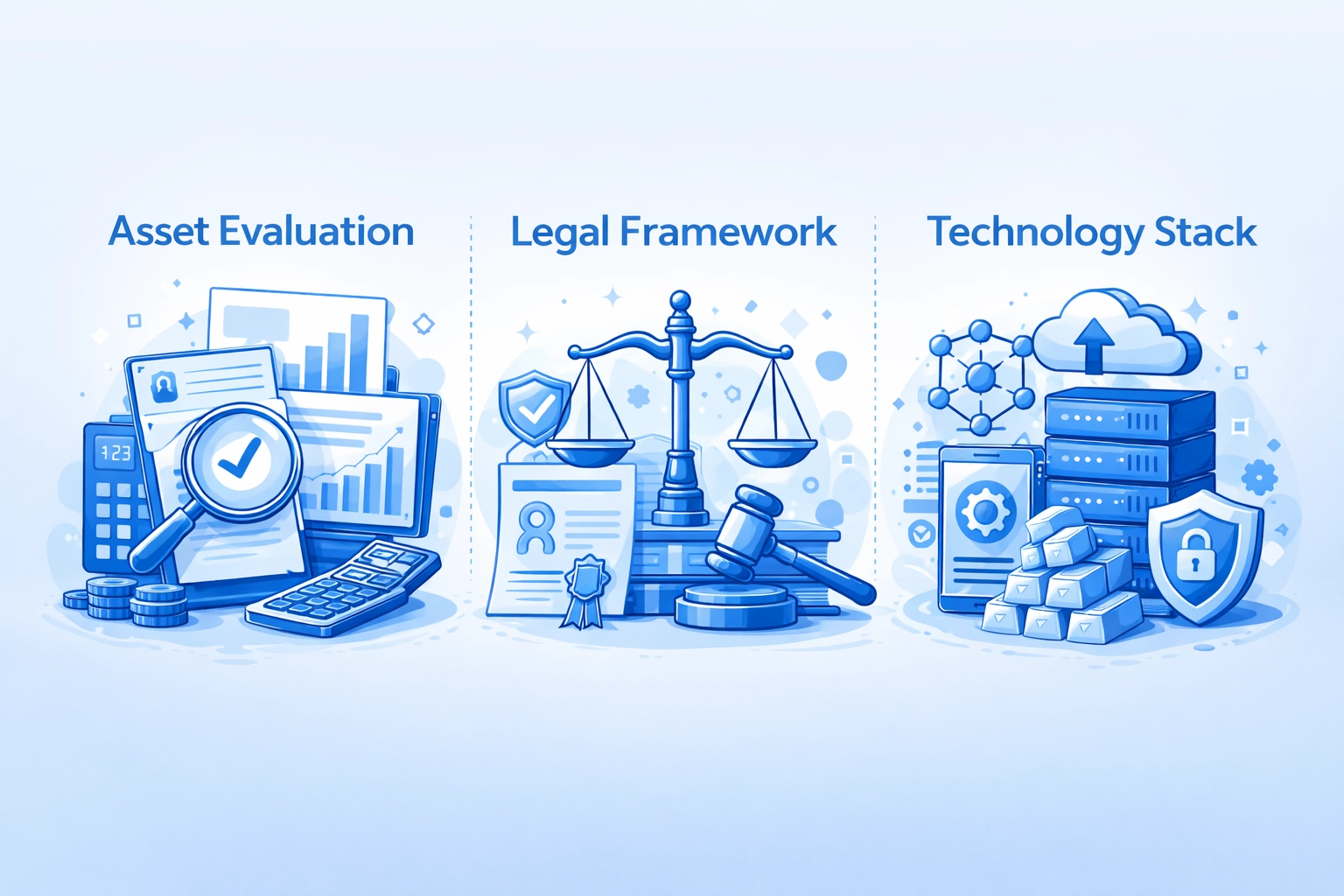
Fractional Ownership Model Selection Criteria
Asset Evaluation
- Minimum value threshold
- Clear ownership title
- Income generation potential
- Liquidity characteristics
Legal Framework
- Jurisdiction selection
- Regulatory exemptions
- Investor restrictions
- Transfer limitations
Technology Stack
- Blockchain platform choice
- Token standard selection
- Custody integration
- Secondary market access
Secondary Markets and Liquidity for Fractional Tokens
| Platform | Asset Types | Regulatory Status |
|---|---|---|
| tZERO | Real estate, equity tokens | SEC-registered ATS |
| INX | Multiple asset classes | SEC-registered exchange |
| Archax | Securities, funds | FCA regulated (UK) |
| SDX | Institutional assets | FINMA approved |
Compliance Standards for Fractional Ownership Token Structure
Standard 1: Conduct comprehensive KYC/AML verification for all token purchasers before allowing investment.
Standard 2: Implement transfer restrictions ensuring tokens only move between verified eligible investors.
Standard 3: Maintain complete audit trails of all ownership transfers and distribution events on-chain.
Standard 4: Provide quarterly financial reporting and annual audited statements to all token holders.
Standard 5: Engage qualified custodians for underlying asset storage meeting regulatory requirements.
Standard 6: Conduct annual smart contract security audits by recognized blockchain security firms.
Governance Compliance Checklist
| Requirement | Description | Priority |
|---|---|---|
| Investor Verification | KYC/AML checks for all token holders | Critical |
| Transfer Restrictions | Smart contract enforced trading limits | Critical |
| Financial Reporting | Quarterly statements and annual audits | High |
| Voting Mechanisms | Token-weighted governance procedures | High |
| Custody Arrangements | Qualified custodian for underlying assets | High |
Future of Fractional Ownership Across Property, Art, and Commodities
The fractional ownership token structure market is projected to exceed $16 trillion by 2030 as institutional adoption accelerates and regulatory frameworks mature across USA, UK, UAE, and Canadian markets. Major financial institutions including JPMorgan, BlackRock, and Goldman Sachs are actively exploring tokenized asset offerings. The convergence of traditional finance with blockchain technology creates unprecedented opportunities for asset owners and investors alike.
With eight years of experience implementing fractional ownership token structure solutions, our agency has witnessed remarkable evolution from experimental concept to mainstream financial instrument. The combination of regulatory clarity, institutional participation, and technological advancement positions tokenized fractional ownership as a fundamental component of future investment portfolios. Organizations seeking to tokenize assets or invest in fractional offerings should engage experienced partners to navigate the complex intersection of technology, law, and finance.
Launch Your Fractional Ownership Token Structure
Partner with our experienced team to implement compliant fractional ownership solutions for property, art, or commodity assets.
People Also Ask
Q1.1. What is a fractional ownership token structure and how does it work?
A fractional ownership token structure divides high-value assets into digital tokens representing partial ownership shares. Blockchain technology enables multiple investors to own portions of properties, art, or commodities through tokenized securities, providing access to previously inaccessible investment opportunities with lower capital requirements.
Q2.2. How does fractional ownership tokenization differ from traditional REITs?
Fractional ownership token structure offers direct asset ownership through blockchain tokens, while REITs provide indirect exposure through pooled investment vehicles. Tokenized ownership enables 24/7 trading, lower minimum investments, and transparent on-chain governance compared to traditional fund structures with quarterly liquidity windows.
Q3.3. What regulations govern fractional ownership tokens in the USA and UK?
In the USA, fractional ownership token structure falls under SEC securities regulations requiring registration or exemptions like Regulation D or Regulation A+. The UK’s FCA regulates security tokens under existing financial services frameworks. Both jurisdictions require investor accreditation verification and proper disclosures.
Q4.4. Can fractional ownership tokens be traded on secondary markets?
Yes, fractional ownership token structure enables secondary market trading on regulated security token exchanges and alternative trading systems. Platforms like tZERO and INX provide liquidity for compliant security tokens, though trading volumes remain lower than traditional securities markets currently.
Q5.5. What are the tax implications of fractional ownership tokens?
Fractional ownership token structure creates tax obligations similar to traditional securities ownership. Investors may face capital gains taxes on token sales, income taxes on distributions, and reporting requirements. Tax treatment varies by jurisdiction across USA, UK, UAE, and Canada, requiring professional advice.
Q6.6. How are dividends and rental income distributed through fractional tokens?
Smart contracts automate distribution of income generated by underlying assets in fractional ownership token structure. Rental income from properties, royalties from art licensing, or commodity returns flow directly to token holders’ wallets proportionally based on their ownership percentage without intermediary delays.
Q7.7. What risks should investors consider with fractional ownership tokens?
Fractional ownership token structure carries risks including regulatory uncertainty, limited liquidity, smart contract vulnerabilities, and asset valuation challenges. Investors should evaluate platform security, legal compliance, underlying asset quality, and governance mechanisms before participating in tokenized ownership offerings.
Explore Services
Related Services
Reviewed by

Aman Vaths
Founder of Nadcab Labs
Aman Vaths is the Founder & CTO of Nadcab Labs, a global digital engineering company delivering enterprise-grade solutions across AI, Web3, Blockchain, Big Data, Cloud, Cybersecurity, and Modern Application Development. With deep technical leadership and product innovation experience, Aman has positioned Nadcab Labs as one of the most advanced engineering companies driving the next era of intelligent, secure, and scalable software systems. Under his leadership, Nadcab Labs has built 2,000+ global projects across sectors including fintech, banking, healthcare, real estate, logistics, gaming, manufacturing, and next-generation DePIN networks. Aman’s strength lies in architecting high-performance systems, end-to-end platform engineering, and designing enterprise solutions that operate at global scale.