Ai Overview
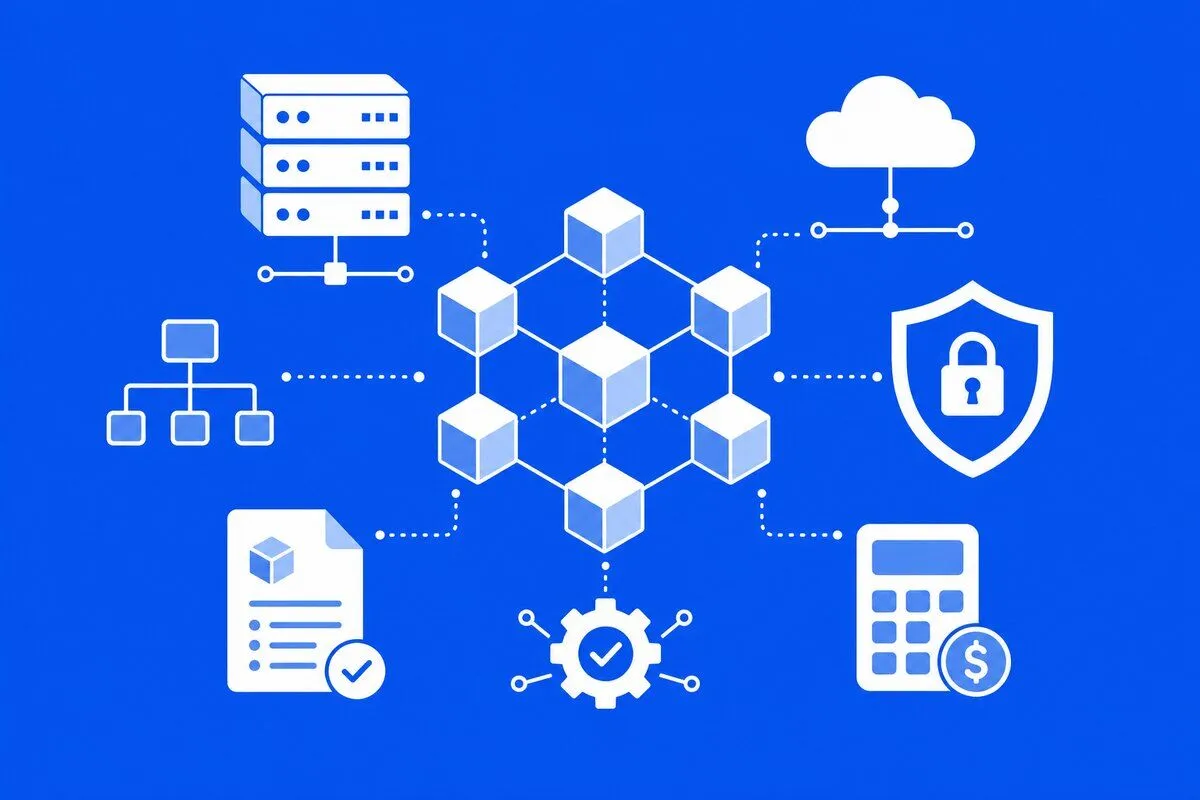
Recent blockchain innovations have transformed how organizations approach regulatory compliance in digital asset ecosystems. Blockchain Technology now enables native compliance frameworks that embed regulatory requirements directly into protocol architecture rather than relying on external enforcement mechanisms. This architectural shift represents a fundamental evolution from compliance as an afterthought to compliance as a core design principle.
Key Takeaways
- Recent blockchain innovations enable native compliance frameworks that embed regulatory requirements directly into protocol architecture for automated enforcement.
- Zero-knowledge proofs revolutionize regulatory audits by enabling verification of compliance status without exposing sensitive personal or transaction data.
- On-chain identity verification using verifiable credentials creates portable compliance attestations recognized across multiple Recent Blockchain Innovations networks and jurisdictions.
- Real-time compliance monitoring through smart contract events transforms regulatory oversight from periodic reviews to continuous automated surveillance.
- Regulatory-aware smart contracts with embedded policy logic automatically enforce transfer restrictions, investor limits, and jurisdictional requirements programmatically.
- Cross-border compliance automation addresses multi-jurisdiction challenges facing enterprises operating across USA, UK, UAE, and Canada markets simultaneously.
- Decentralized KYC protocols reduce identity verification costs while maintaining enterprise-grade compliance standards required by financial regulators globally.
- Oracles bridge on-chain smart contracts with off-chain regulatory databases, enabling dynamic compliance decisions based on current legal requirements.
- AI-assisted compliance validation enhances transaction monitoring accuracy, reducing false positives while identifying genuine regulatory violations effectively.
- Composable compliance layers enable modular integration of regulatory components without requiring complete protocol redesign or migration efforts.
Blockchain-Native Compliance Frameworks for Regulated Digital Assets
Recent blockchain innovations have transformed how organizations approach regulatory compliance in digital asset ecosystems. Blockchain Technology now enables native compliance frameworks that embed regulatory requirements directly into protocol architecture rather than relying on external enforcement mechanisms. This architectural shift represents a fundamental evolution from compliance as an afterthought to compliance as a core design principle.
Our agency has spent over eight years helping enterprises across the USA, UK, UAE, and Canada implement these native compliance frameworks. The most significant advantage is the elimination of compliance gaps that occur when regulatory requirements are bolted onto existing systems. Native frameworks ensure every transaction automatically satisfies applicable requirements before execution.
Token standards like ERC-3643 exemplify this approach, incorporating identity verification, transfer restrictions, and investor limits directly into token contracts. Financial institutions in London, Dubai, and Toronto have adopted these standards for security token offerings, ensuring regulatory compliance without sacrificing Recent Blockchain Innovations efficiency or decentralization benefits.
On-Chain Identity Verification Using Verifiable Credential Standards
Verifiable credentials represent recent blockchain innovations that create portable, privacy-preserving identity attestations for regulatory compliance. Unlike traditional KYC processes requiring repeated verification, verifiable credentials enable users to prove compliance status across multiple platforms using a single verified attestation. This approach dramatically reduces friction while maintaining regulatory rigor.
The W3C verifiable credentials standard provides interoperability across Recent Blockchain Innovations networks and traditional systems. Issuers like banks, government agencies, and accredited verification providers create credentials that users control and selectively disclose. Recipients can verify credential authenticity without contacting the original issuer, enabling offline and cross-border verification.
Enterprises in regulated industries adopt verifiable credentials to streamline customer onboarding while satisfying compliance requirements. A credential verified in Dubai can be recognized in London or Toronto, eliminating redundant verification processes and reducing customer friction. This interoperability accelerates cross-border business while maintaining regulatory compliance.
 Real-Time Compliance Monitoring Through Smart Contract Enforcement
Regulatory-Aware Smart Contracts With Embedded Policy Logic
Regulatory-aware smart contracts represent recent blockchain innovations that embed compliance logic directly into executable code. These contracts automatically enforce transfer restrictions, investor accreditation requirements, and jurisdictional limitations without requiring external compliance systems. Every transaction is validated against embedded rules before execution proceeds.
Policy logic includes investor eligibility verification, holding period enforcement, maximum investor counts, and geographic restrictions. Contracts can implement complex rules like accredited investor requirements for US residents while applying different standards for UK or UAE participants. This flexibility enables single token contracts serving multiple regulatory jurisdictions.
The shift from external compliance checking to embedded enforcement eliminates processing delays and reduces compliance failures. Transactions either satisfy all requirements and execute immediately or fail with specific compliance violation messages. This deterministic approach provides certainty for both issuers and investors while satisfying regulatory expectations.
Cross-Border Compliance Automation in Multi-Jurisdiction Recent Blockchain Innovations
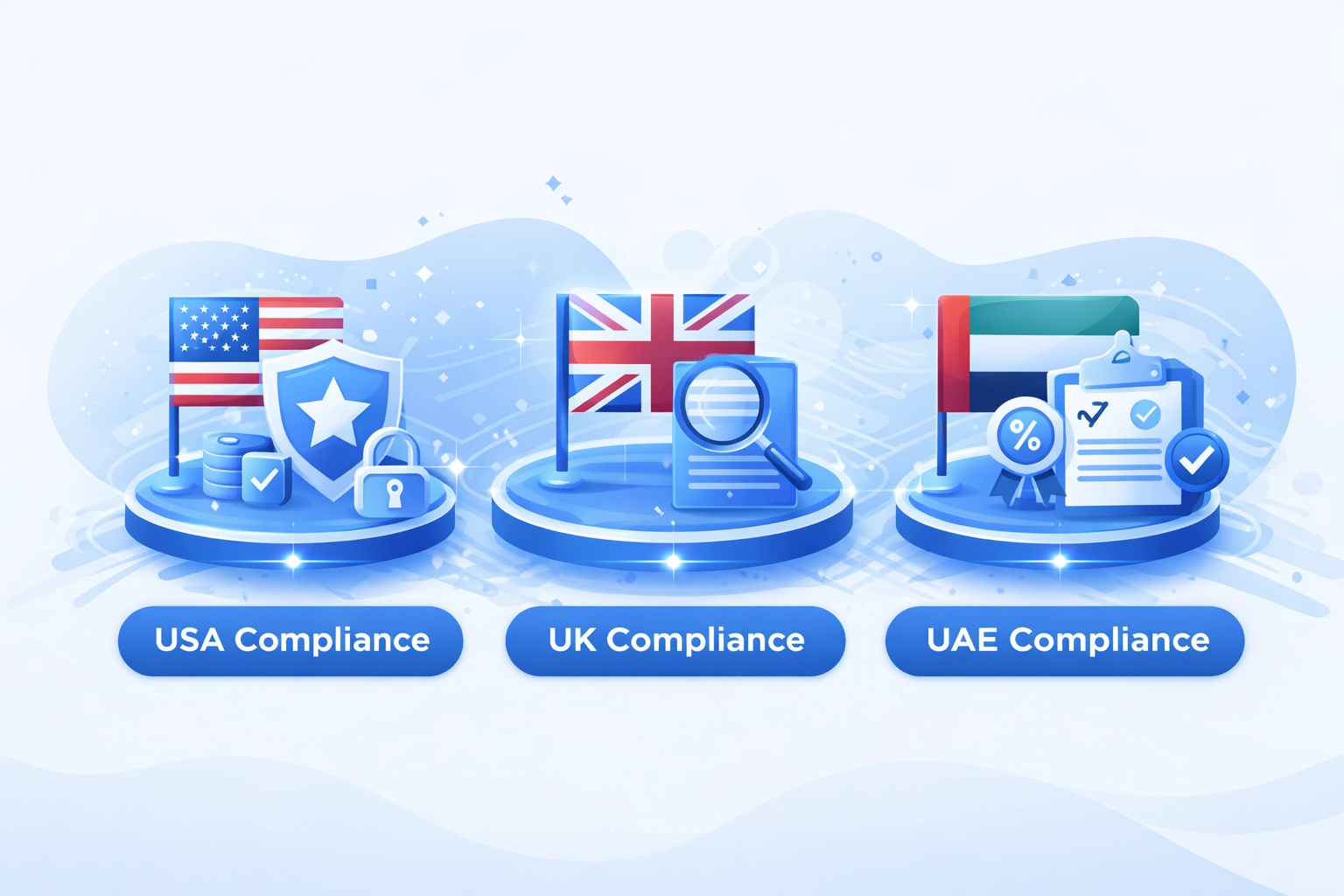
Recent blockchain innovations address complex multi-jurisdiction compliance challenges facing global enterprises.
USA Compliance
- SEC securities registration
- CFTC derivatives oversight
- FinCEN AML requirements
- State money transmission laws
UK Compliance
- FCA authorization
- MiFID II requirements
- GDPR data protection
- AML registration
UAE Compliance
- VARA licensing
- DFSA authorization
- SCA requirements
- ADGM frameworks
Decentralized KYC and AML Protocols for Enterprise-Grade Systems
Recent blockchain innovations in decentralized KYC dramatically reduce identity verification costs while maintaining compliance standards. Traditional KYC processes require each institution to verify customers independently, creating redundancy and friction. Decentralized protocols enable verified credentials to be reused across platforms.
| Feature | Traditional KYC | Decentralized KYC |
|---|---|---|
| Verification Cost | $15-$100 per customer | $1-$5 per verification |
| Processing Time | 2-5 business days | Instant to minutes |
| Data Storage | Centralized databases | User-controlled wallets |
| Portability | None | Cross-platform |
| Privacy | Full data exposure | Selective disclosure |
Audit-Ready Distributed Ledgers for Continuous Regulatory Reporting
Recent blockchain innovations create audit-ready infrastructure that satisfies regulatory reporting requirements continuously rather than through periodic compilations. Distributed ledgers provide immutable, timestamped records of every transaction that regulators can access directly or through authorized interfaces. This transparency transforms audit processes from detective to preventive.
Standardized event emissions from smart contracts enable automated regulatory report generation. Compliance systems subscribe to relevant events, aggregating data for required reports without manual data collection. This automation reduces reporting costs while improving accuracy and timeliness of regulatory submissions.
Enterprises across Canada, UK, and UAE leverage audit-ready ledgers to satisfy diverse reporting requirements from a single source of truth. The same transaction data feeds local regulatory reports while supporting international compliance obligations, eliminating reconciliation challenges that plague traditional multi-system environments.
Tokenized Asset Compliance Using Programmable Transfer Restrictions
Programmable transfer restrictions represent recent blockchain innovations enabling tokenized assets to comply with securities regulations automatically. These restrictions enforce holding periods, investor accreditation requirements, maximum investor counts, and jurisdictional limitations at the protocol level. Non-compliant transfers fail automatically without requiring manual intervention.
Transfer agents and compliance officers configure restriction parameters that smart contracts enforce immutably. Common restrictions include lock-up periods preventing sales during initial holding periods, accredited investor requirements blocking transfers to unverified recipients, and geographic restrictions preventing sales to prohibited jurisdictions.
Security token offerings across USA, UK, and UAE markets increasingly rely on programmable restrictions to satisfy regulatory requirements while enabling secondary market trading. This approach provides liquidity benefits traditional securities lack while maintaining compliance standards regulators require.
Oracles as Regulatory Data Bridges Between On-Chain and Off-Chain Law
Oracles serve as critical infrastructure in recent blockchain innovations, bridging on-chain smart contracts with off-chain regulatory data sources. Compliance-focused oracles provide real-time sanctions lists, accreditation databases, and jurisdictional requirements enabling automated compliance decisions.
| Oracle Type | Data Provided | Use Case |
|---|---|---|
| Sanctions Oracle | OFAC, UN, EU sanctions lists | Transaction screening |
| Identity Oracle | KYC verification status | Access control |
| Accreditation Oracle | Investor qualification | Securities compliance |
| Jurisdiction Oracle | Geographic restrictions | Geo-fencing |
| Regulatory Oracle | Rule updates and changes | Dynamic compliance |
Blockchain-Based Risk Scoring Models for Financial Institutions
Recent blockchain innovations enable sophisticated risk scoring models leveraging on-chain transaction history and behavioral analytics. Unlike traditional credit scoring relying on limited data points, Recent Blockchain Innovations-based models analyze comprehensive transaction patterns providing nuanced risk assessments for financial institutions across USA, UK, and UAE markets.
On-chain data reveals transaction frequency, counterparty relationships, protocol interactions, and asset holding patterns unavailable in traditional systems. Machine learning models trained on this data identify risk indicators with greater accuracy than conventional approaches, enabling better lending decisions and AML detection.
Privacy-preserving techniques ensure risk scoring respects data protection requirements while leveraging transaction history. Zero-knowledge proofs enable risk score verification without exposing underlying transaction data, satisfying both compliance requirements and user privacy expectations.
Composable Compliance Layers for Modular Blockchain Architectures
Recent blockchain innovations enable modular compliance components that integrate without requiring protocol redesign.
Identity Layer
Pluggable identity verification modules supporting multiple credential standards and verification providers.
Transaction Layer
Configurable transaction monitoring and screening modules for AML and sanctions compliance.
Reporting Layer
Automated regulatory reporting modules generating jurisdiction-specific compliance reports.
Restriction Layer
Programmable transfer restriction modules enforcing holding periods and investor limits.
Governance Layer
On-chain governance modules enabling compliant rule updates through transparent voting.
Audit Layer
Immutable audit trail modules providing evidence for regulatory investigations and disputes.
Governance-Driven Compliance Updates via On-Chain Voting Mechanisms
Recent blockchain innovations enable compliance rule updates through transparent on-chain governance rather than centralized administrative decisions. Token holders vote on proposed compliance changes, creating auditable records of decision-making processes that satisfy regulatory expectations for governance documentation.
Governance proposals include detailed compliance impact assessments, legal opinions, and implementation specifications before community voting. This transparency ensures stakeholders understand implications of compliance changes before they take effect. Time-locks between approval and implementation allow participants to exit if they disagree with changes.
The combination of decentralized governance with compliance requirements creates novel accountability structures. Unlike traditional systems where compliance changes occur through opaque internal processes, Recent Blockchain Innovations governance provides complete visibility into rule evolution and decision rationale.
RegTech Integration Patterns for Enterprise Blockchain Platforms
Recent blockchain innovations require systematic integration with existing regulatory technology infrastructure.
1. Requirements Analysis
Map existing RegTech capabilities to blockchain compliance needs and identify integration gaps.
2. API Architecture Design
Define integration interfaces connecting blockchain events with RegTech processing systems.
3. Data Mapping
Translate blockchain transaction data formats to RegTech system requirements.
4. Event Subscription
Configure RegTech systems to subscribe to relevant smart contract compliance events.
5. Alert Configuration
Define alert thresholds and escalation procedures for compliance violations detected.
6. Report Automation
Implement automated regulatory report generation from blockchain transaction data.
7. Testing Validation
Validate integration accuracy through comprehensive compliance scenario testing.
8. Production Deployment
Deploy integrated systems with monitoring and continuous improvement processes.
Immutable Evidence Trails for Regulatory Investigations and Disputes
Recent blockchain innovations create immutable evidence trails that satisfy evidentiary requirements for regulatory investigations and legal disputes. Unlike traditional systems where records can be altered, blockchain entries provide tamper-evident history that courts and regulators increasingly accept as authoritative evidence.
Timestamped transaction records prove when specific actions occurred with cryptographic certainty. This capability addresses common evidentiary challenges around document authenticity and chain of custody. Organizations across USA, UK, and Canada leverage blockchain evidence for contract disputes, intellectual property claims, and regulatory defense.
Smart contract event logs capture detailed execution history including function calls, parameter values, and state changes. This granular record provides investigators with complete transaction reconstruction capabilities unavailable in traditional systems, accelerating investigation timelines and reducing dispute resolution costs.
AI-Assisted Compliance Validation in Blockchain Transaction Flows
Recent blockchain innovations integrate AI capabilities enhancing compliance monitoring accuracy and efficiency.
Capability 1: Pattern recognition identifies suspicious transaction sequences that rule-based systems miss.
Capability 2: Anomaly detection flags unusual behaviors requiring human compliance review.
Capability 3: Risk scoring provides nuanced assessments beyond binary compliant/non-compliant determinations.
Capability 4: False positive reduction improves compliance team efficiency by filtering noise.
Capability 5: Natural language processing extracts compliance-relevant information from unstructured data.
Capability 6: Predictive analytics anticipates compliance risks before violations occur.
Capability 7: Continuous learning improves detection accuracy as new violation patterns emerge.
Capability 8: Explainable AI provides audit trails for compliance decisions enabling regulatory review.
Future Directions in Blockchain-Enabled Regulatory Infrastructure
Recent blockchain innovations point toward increasingly sophisticated regulatory infrastructure that transforms compliance from cost center to competitive advantage. Programmable regulation embedded at protocol levels will enable automatic adherence to jurisdiction-specific requirements, reducing compliance overhead while improving accuracy.
Regulatory sandboxes in Dubai, London, and Toronto are experimenting with blockchain-native compliance frameworks that may inform future legislation. These experiments demonstrate how decentralized systems can satisfy regulatory objectives without traditional intermediary structures, potentially reshaping financial regulation fundamentally.
Cross-border regulatory coordination through blockchain-based information sharing may eventually enable seamless international compliance. Recent blockchain innovations in this space create foundations for regulatory infrastructure that serves global markets while respecting jurisdictional boundaries and sovereignty concerns.
Blockchain Compliance Implementation Checklist
Identity Infrastructure
- Verifiable credential support
- KYC provider integration
- Identity oracle configuration
Transaction Monitoring
- Event subscription setup
- Alert threshold configuration
- RegTech system integration
Transfer Restrictions
- Holding period rules
- Investor limit enforcement
- Geographic restrictions
Reporting Automation
- Regulatory report templates
- Automated generation schedules
- Audit trail maintenance
Implement Recent Blockchain Innovations for Your Enterprise
Our team helps organizations across USA, UK, UAE, and Canada leverage blockchain compliance innovations for competitive advantage.
Frequently Asked Questions
Q1.1. What are recent blockchain innovations in regulatory compliance?
Recent blockchain innovations in regulatory compliance include zero-knowledge proofs for privacy-preserving audits, on-chain identity verification using verifiable credentials, and regulatory-aware smart contracts with embedded policy logic. These advancements enable organizations to meet compliance requirements while maintaining decentralization benefits. Enterprises across USA, UK, UAE, and Canada are adopting these technologies to automate KYC, AML monitoring, and cross-border compliance reporting, significantly reducing manual oversight costs and regulatory risks.
Q2.2. How do zero-knowledge proofs enable compliant blockchain transactions?
Zero-knowledge proofs allow users to prove compliance with regulatory requirements without revealing underlying personal data. This cryptographic technique enables verification of identity credentials, transaction legitimacy, and jurisdictional eligibility while preserving privacy. Financial institutions can confirm customer accreditation status or sanctions clearance without accessing sensitive information directly. This innovation reconciles privacy-first blockchain principles with stringent regulatory demands across global markets including Dubai, London, and Toronto.
Q3.3. What are regulatory-aware smart contracts and how do they work?
Regulatory-aware smart contracts embed compliance logic directly into executable code, automatically enforcing transfer restrictions, investor accreditation requirements, and jurisdictional limitations. These contracts check compliance conditions before executing transactions, rejecting non-compliant activities programmatically. This approach shifts compliance from manual review to automated enforcement, reducing human error and ensuring consistent rule application. Major financial institutions are implementing these contracts for tokenized securities and digital asset management.
Q4.4. How does blockchain enable real-time compliance monitoring for enterprises?
Blockchain enables real-time compliance monitoring through transparent transaction recording and smart contract event emissions that trigger automated alerts. Compliance officers can monitor transaction flows, detect suspicious patterns, and generate regulatory reports continuously rather than through periodic reviews. This capability transforms compliance from reactive to proactive, identifying potential violations before they escalate. Enterprise platforms integrate these monitoring capabilities with existing risk management systems for comprehensive oversight.
Q5.5. What role do oracles play in blockchain regulatory compliance?
Oracles serve as bridges between blockchain networks and off-chain regulatory data sources, providing real-time information about sanctions lists, accreditation databases, and jurisdictional requirements. Compliance-focused oracles feed verified regulatory data to smart contracts, enabling automated compliance decisions based on current legal requirements. This infrastructure ensures blockchain applications remain aligned with evolving regulations without requiring protocol changes, supporting dynamic compliance across multiple jurisdictions simultaneously.
Explore Services
Related Services
Reviewed by

Aman Vaths
Founder of Nadcab Labs
Aman Vaths is the Founder & CTO of Nadcab Labs, a global digital engineering company delivering enterprise-grade solutions across AI, Web3, Blockchain, Big Data, Cloud, Cybersecurity, and Modern Application Development. With deep technical leadership and product innovation experience, Aman has positioned Nadcab Labs as one of the most advanced engineering companies driving the next era of intelligent, secure, and scalable software systems. Under his leadership, Nadcab Labs has built 2,000+ global projects across sectors including fintech, banking, healthcare, real estate, logistics, gaming, manufacturing, and next-generation DePIN networks. Aman’s strength lies in architecting high-performance systems, end-to-end platform engineering, and designing enterprise solutions that operate at global scale.