Ai Overview
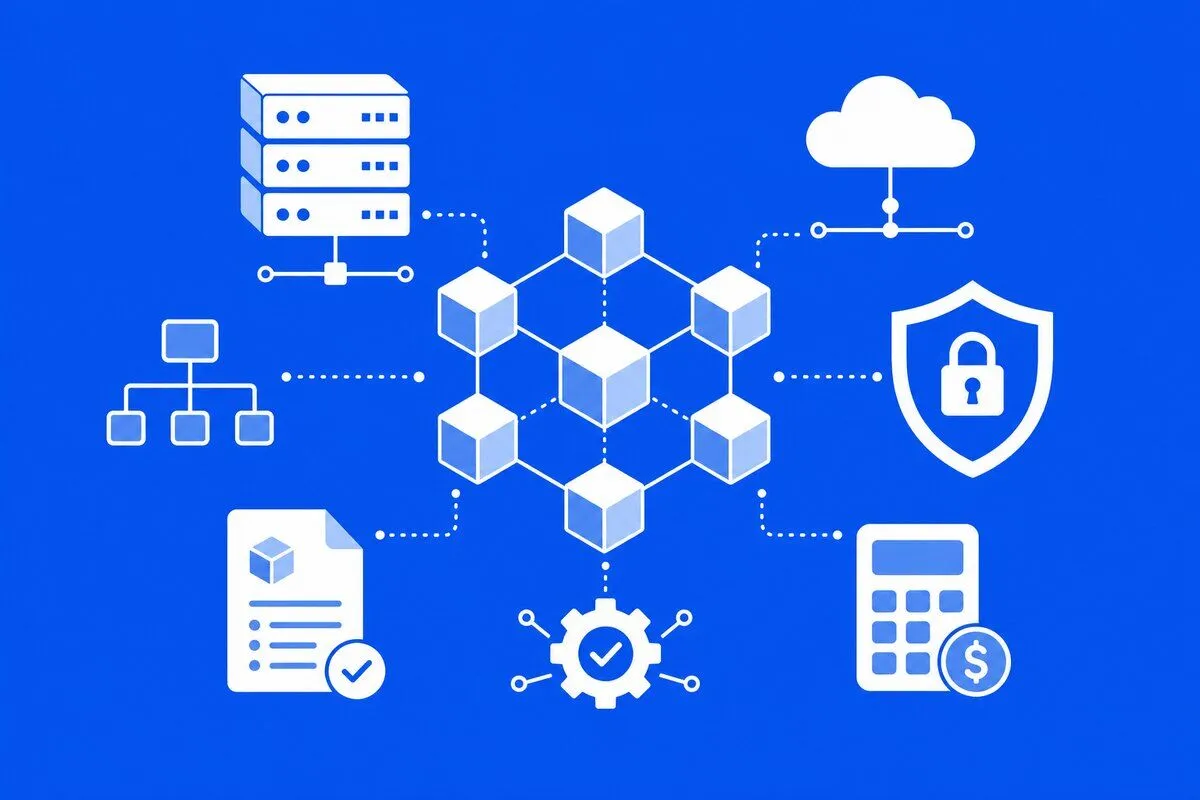
Decentralized platforms with blockchain operate on fundamentally different principles than traditional regulated entities, creating significant friction with existing compliance frameworks. Blockchain Technology enables permissionless participation where anyone can join, transact, and exit without gatekeepers. This openness directly conflicts with regulatory requirements that assume identifiable intermediaries responsible for compliance oversight and enforcement.
Key Takeaways
- Decentralized platforms with blockchain face unique regulatory friction where permissionless architecture conflicts with traditional compliance frameworks across global jurisdictions.
- On-chain immutability creates legal challenges when regulations evolve, requiring innovative compliance architecture that anticipates future regulatory requirements proactively.
- Smart contract enforceability varies by jurisdiction with courts in USA, UK, UAE, and Canada applying different standards to automated contract execution.
- KYC and privacy requirements create paradoxes in decentralized systems where identity verification conflicts with pseudonymous transaction processing principles.
- DAO governance participants face evolving liability risks as regulators examine token holder responsibilities and decision-making accountability structures.
- Oracle dependencies introduce compliance risks when external data feeds trigger automated actions with legal or financial consequences for platform users.
- Frontend interfaces and API providers face significant regulatory exposure even when underlying protocols remain permissionless and censorship resistant.
- Protocol upgrades and hard forks can trigger unexpected compliance failures requiring careful governance and legal analysis before implementation.
- Sanctions compliance and censorship resistance create fundamental tensions that decentralized platforms must navigate through layered architecture approaches.
- Future compliance models will likely incorporate programmable regulation enabling automated adherence to jurisdiction-specific requirements at the protocol level.
Regulatory Friction Points in Permissionless Decentralized Platforms
Decentralized platforms with blockchain operate on fundamentally different principles than traditional regulated entities, creating significant friction with existing compliance frameworks. Blockchain Technology enables permissionless participation where anyone can join, transact, and exit without gatekeepers. This openness directly conflicts with regulatory requirements that assume identifiable intermediaries responsible for compliance oversight and enforcement.
Our agency has spent over eight years helping clients across the USA, UK, UAE, and Canada navigate these friction points. The core challenge lies in applying territorial regulations to borderless networks where transactions flow across jurisdictions simultaneously. Regulators struggle to identify responsible parties when protocols execute autonomously without human intervention in individual transactions.
Traditional financial regulations assume centralized points of control where compliance can be monitored and enforced. Decentralized platforms with blockchain distribute control across thousands of participants, making traditional enforcement mechanisms ineffective. This architectural mismatch requires innovative approaches that satisfy regulatory objectives without compromising decentralization benefits.
Reconciling On-Chain Immutability with Evolving Legal Obligations
On-chain immutability presents fundamental challenges when legal obligations evolve after smart contract deployment. Decentralized platforms with blockchain record transactions permanently, creating conflicts with regulations requiring data modification or deletion such as GDPR right to erasure. This architectural characteristic requires careful consideration during system design to anticipate future regulatory requirements.
Legal frameworks change continuously while deployed smart contracts remain static unless explicitly designed for upgradability. A contract compliant at deployment may violate new regulations enacted subsequently. Organizations must implement governance mechanisms enabling protocol updates while maintaining security guarantees that immutability provides against unauthorized modifications.
Hybrid approaches storing sensitive data off-chain while maintaining transaction integrity on-chain offer practical solutions. Pointers to mutable off-chain storage enable compliance with data modification requirements while preserving blockchain’s audit trail benefits. This architecture requires careful security design to prevent off-chain data manipulation from undermining on-chain integrity guarantees.
Jurisdictional Ambiguity in Cross-Border Decentralized Networks
Decentralized platforms with blockchain operate across borders simultaneously, creating jurisdictional ambiguity that challenges traditional regulatory approaches. When a user in London transacts with a counterparty in Toronto through a protocol with validators distributed globally, determining applicable law becomes extraordinarily complex.[1]
| Jurisdiction | Regulatory Approach | Key Requirements |
|---|---|---|
| USA | Activity-based regulation | SEC, CFTC, FinCEN compliance |
| UK | Principles-based framework | FCA authorization, AML registration |
| UAE (Dubai) | Sandbox and licensing | VARA licensing, DFSA approval |
| Canada | Securities and MSB focus | CSA guidance, FINTRAC registration |
Regulatory arbitrage temptations arise when platforms can theoretically relocate to favorable jurisdictions while continuing to serve global users. However, enforcement actions increasingly reach across borders, and major markets apply regulations based on user location rather than platform domicile. Organizations must consider compliance requirements in all markets they serve rather than solely their incorporation jurisdiction.
Smart Contract Compliance Constraints and Legal Enforceability
Smart contracts in decentralized platforms with blockchain execute deterministically based on code, but legal enforceability requires meeting traditional contract formation elements. Courts increasingly recognize smart contracts, yet challenges arise when code execution conflicts with reasonable party expectations or violates public policy. The gap between code behavior and legal intent creates compliance risks requiring careful documentation.
Automated execution removes human discretion that traditional contracts assume for handling edge cases and disputes. When smart contracts produce outcomes that would be unconscionable in traditional agreements, courts may refuse enforcement or impose remedies conflicting with immutable on-chain states. Legal wrapper agreements specifying governing law and dispute resolution mechanisms help bridge this gap.
Consumer protection regulations in major markets require specific disclosures, cooling-off periods, and remedies that smart contracts may not natively support. Platforms serving retail users must implement additional safeguards ensuring automated execution complies with consumer protection requirements applicable in user jurisdictions.
 Identity, Privacy, and KYC Paradoxes in Decentralized Systems
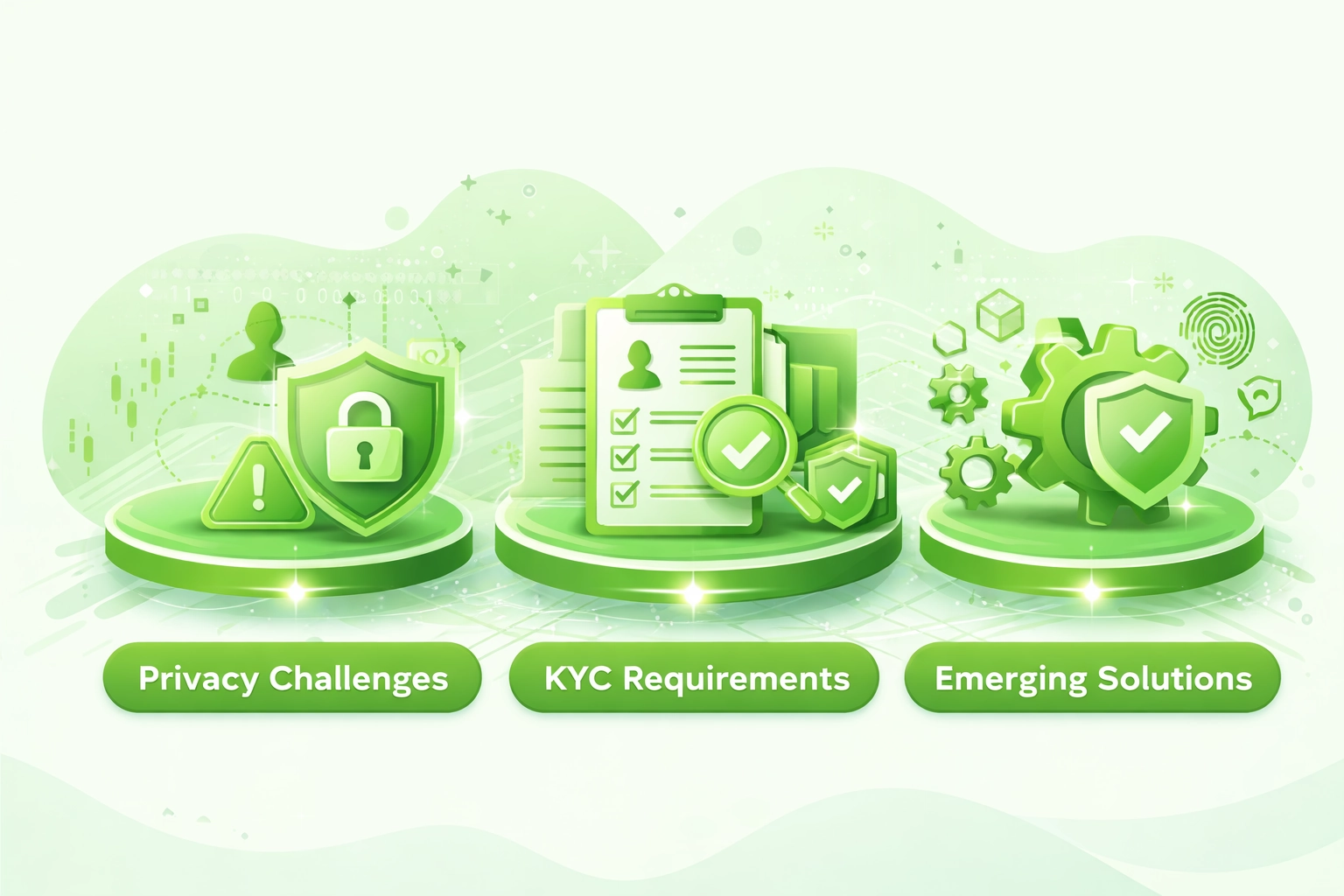
Decentralized platforms with blockchain face fundamental tensions between privacy principles and regulatory identity requirements.
Privacy Challenges
- Pseudonymous addresses enable tracking
- Transaction graphs reveal patterns
- On-chain data persists permanently
- Metadata leakage through providers
KYC Requirements
- Identity verification mandates
- Ongoing monitoring obligations
- Suspicious activity reporting
- Record retention requirements
Emerging Solutions
- Zero-knowledge identity proofs
- Decentralized identity standards
- Selective disclosure credentials
- Privacy-preserving compliance
Governance Liability Risks in DAO-Led Blockchain Platforms
Decentralized autonomous organizations governing blockchain platforms create novel liability questions that existing legal frameworks struggle to address. When token holders collectively make decisions affecting protocol operations, determining individual responsibility becomes extraordinarily complex. Recent enforcement actions suggest regulators view active governance participation as creating compliance obligations.
Without proper legal structuring, DAO participants may face unlimited personal liability as general partners in an unincorporated association. This exposure extends beyond invested capital to personal assets, creating significant risks for governance participants. Legal wrappers including foundations, LLCs, and cooperative structures help limit liability while preserving decentralized decision-making.
The threshold between passive token holding and active governance participation triggering liability remains unclear across jurisdictions. Voting on proposals, delegating voting power, and participating in governance discussions may create different liability exposure levels. Organizations should provide clear guidance to participants regarding potential legal obligations arising from governance activities.
Regulatory Classification Challenges for Tokens and Protocol Roles
Token classification in decentralized platforms with blockchain determines applicable regulatory requirements, yet classifications vary significantly across jurisdictions and evolve as tokens change function over time.
| Token Type | Primary Function | Regulatory Treatment |
|---|---|---|
| Utility Tokens | Platform access and services | Generally unregulated if purely functional |
| Security Tokens | Investment and profit rights | Securities laws apply fully |
| Governance Tokens | Protocol voting rights | Varies by jurisdiction and value accrual |
| Stablecoins | Value stability and payments | Payment and banking regulations |
| NFTs | Unique digital assets | Context-dependent classification |
Oracle Dependency Risks in Compliance-Critical Blockchain Operations
Decentralized platforms with blockchain often rely on oracles to bring external data on-chain, creating compliance risks when this data drives regulatory-significant decisions. Oracle failures or manipulation can trigger automated actions violating compliance requirements, yet protocols may have no mechanism to prevent or reverse such outcomes once initiated.
Price oracles in DeFi protocols determine liquidations, trades, and collateral valuations with significant financial and regulatory implications. Manipulated oracle data has caused millions in improper liquidations, raising questions about platform liability and user protection obligations. Regulators increasingly scrutinize oracle dependencies when evaluating platform compliance posture.
Compliance oracles verifying identity credentials, sanctions status, or jurisdiction restrictions introduce additional risks. If compliance oracles fail or provide incorrect data, platforms may inadvertently serve prohibited users or block legitimate ones. Redundancy, validation mechanisms, and fallback procedures help mitigate these compliance-critical oracle dependencies.
Handling Sanctions, Blacklists, and Censorship Resistance Conflicts
Decentralized platforms with blockchain face fundamental tensions between censorship resistance principles and sanctions compliance obligations. While permissionless protocols resist transaction censorship by design, operators and users in regulated jurisdictions face legal obligations to prevent sanctioned party interactions. This conflict requires careful navigation balancing legal compliance with decentralization values.
OFAC sanctions targeting cryptocurrency addresses have forced platforms to implement screening mechanisms. The Tornado Cash enforcement action demonstrated that even open-source protocols can face sanctions, creating uncertainty about developer and user liability. Organizations must evaluate their specific compliance obligations based on jurisdictional presence and user base composition.
Layered approaches implementing screening at frontend and infrastructure levels while maintaining permissionless protocol access offer practical compromises. Users requiring compliance can access screened interfaces while the underlying protocol remains open. This architecture satisfies regulatory requirements for compliant access points without compromising core decentralization principles.
Decentralized Custody Models and Asset Control Legal Boundaries
Custody in decentralized platforms with blockchain differs fundamentally from traditional financial custody, creating legal boundary questions that regulators continue to address. Self-custody through private keys eliminates custodial intermediaries but raises questions about asset security, inheritance, and recovery that traditional custody frameworks address through institutional safeguards.
Multi-signature and threshold signature schemes distribute control without clearly designating a custodian, complicating regulatory classification. When three parties each hold keys requiring two signatures for transactions, determining the custodian for regulatory purposes becomes ambiguous. This distributed control model challenges frameworks assuming singular custody responsibility.
Smart contract-based custody through DeFi protocols adds further complexity. Assets locked in lending protocols or liquidity pools are technically controlled by smart contract code rather than any party. Regulatory frameworks addressing this novel custody model remain under active discussion across major jurisdictions including the USA, UK, and UAE.
Compliance Failures Triggered by Protocol Upgrades and Forks
Protocol changes in decentralized platforms with blockchain can inadvertently trigger compliance failures requiring systematic evaluation processes.
1. Upgrade Proposal Review
Analyze proposed changes for compliance implications across all served jurisdictions before governance voting.
2. Legal Impact Assessment
Evaluate how changes affect regulatory classification, licensing requirements, and user protection obligations.
3. Stakeholder Notification
Inform affected users, partners, and regulators about upcoming changes and compliance implications.
4. Testnet Validation
Deploy upgrades to test environments and validate compliance mechanisms function correctly post-upgrade.
5. Governance Approval
Execute governance vote with full disclosure of compliance impacts to informed token holders.
6. Phased Deployment
Roll out upgrades gradually with monitoring for unexpected compliance issues during transition period.
7. Compliance Verification
Confirm all compliance systems operate correctly post-upgrade through comprehensive testing and monitoring.
8. Documentation Update
Revise compliance documentation, user disclosures, and regulatory filings reflecting post-upgrade state.
Legal Accountability in Autonomous Smart Contract Execution
Autonomous execution in decentralized platforms with blockchain raises profound questions about legal accountability when smart contracts cause harm without human intervention. Traditional liability frameworks assume human actors making decisions, yet smart contracts execute predetermined logic regardless of circumstances at execution time.
Potential liability targets include smart contract authors, deployers, governance participants, and infrastructure providers. Courts may apply product liability, negligence, or strict liability frameworks depending on jurisdiction and circumstances. The lack of precedent creates uncertainty that organizations must address through proactive risk management.
Insurance products covering smart contract risks are emerging but remain limited and expensive. Organizations should consider liability caps, user acknowledgments, and structural protections limiting exposure to autonomous execution outcomes. Documentation of design decisions, security audits, and governance processes helps demonstrate reasonable care if litigation arises.
Bridging Traditional Regulatory Frameworks with Trustless Systems
Organizations must select appropriate compliance models when building decentralized platforms with blockchain.
Fully Permissioned
Maximum regulatory compliance through controlled access but sacrifices decentralization benefits and censorship resistance.
Hybrid Permissioned
Permissioned access layer over permissionless protocol enabling compliant interfaces while maintaining core decentralization.
Compliance Modules
Optional compliance components users can enable based on their regulatory requirements without protocol-level restrictions.
Privacy-Preserving
Zero-knowledge proofs enabling compliance verification without exposing personal data to protocols or counterparties.
Jurisdiction Specific
Geofenced compliance applying different requirements based on user jurisdiction automatically through access layer.
Fully Permissionless
Maximum decentralization accepting regulatory limitations with users assuming compliance responsibility independently.
Risk Mitigation Strategies for Regulatory-Resilient dApps
Building decentralized platforms with blockchain that withstand regulatory scrutiny requires systematic risk mitigation approaches.
Strategy 1: Implement modular compliance architecture enabling jurisdiction-specific requirements without protocol changes.
Strategy 2: Maintain comprehensive documentation demonstrating compliance efforts and reasonable care in design decisions.
Strategy 3: Engage proactively with regulators to understand expectations and demonstrate cooperative compliance posture.
Strategy 4: Implement robust governance processes with compliance review requirements for protocol changes.
Strategy 5: Obtain regular security audits and compliance assessments from reputable third-party firms.
Strategy 6: Structure organizations with appropriate legal wrappers limiting individual participant liability exposure.
Strategy 7: Monitor regulatory announcements across target jurisdictions and adapt compliance measures proactively.
Strategy 8: Maintain insurance coverage appropriate for smart contract risks and regulatory defense costs.
Future Compliance Models for Fully Autonomous Blockchain Platforms
The future of compliance in decentralized platforms with blockchain likely involves programmable regulation embedded at the protocol level. Rather than external enforcement mechanisms, smart contracts may incorporate jurisdiction-aware compliance logic executing automatically based on participant credentials and transaction characteristics.
Regulatory sandboxes in the UAE, UK, and Canada are experimenting with approaches allowing innovation while maintaining oversight. These experiments inform future frameworks that may formally recognize decentralized governance structures and compliance-by-design architectures. Organizations participating in sandbox programs help shape evolving regulatory approaches.
International coordination through bodies like FATF and IOSCO may eventually produce harmonized frameworks reducing jurisdictional fragmentation. Until then, organizations building decentralized platforms with blockchain must navigate complex, evolving requirements across multiple jurisdictions while maintaining sufficient flexibility to adapt as regulations mature.
Decentralized Platform Compliance Governance Checklist
Legal Structure
- Legal wrapper established
- Jurisdiction selection documented
- Liability limitations implemented
User Protection
- Terms of service published
- Risk disclosures provided
- Dispute resolution defined
AML Compliance
- Sanctions screening active
- Transaction monitoring enabled
- Reporting procedures established
Governance Process
- Compliance review requirements
- Upgrade assessment procedures
- Documentation maintenance
Navigate Blockchain Compliance With Expert Guidance
Our team helps organizations across USA, UK, UAE, and Canada build regulatory-resilient decentralized platforms with blockchain.
Frequently Asked Questions
Q1.1. What are the main regulatory challenges facing decentralized platforms with blockchain?
Decentralized platforms with blockchain face significant regulatory challenges including jurisdictional ambiguity, identity verification requirements, and liability attribution. Since these platforms operate across borders without central authorities, regulators struggle to apply traditional compliance frameworks. Issues around securities classification, anti-money laundering obligations, and consumer protection create friction between innovation and legal requirements. Organizations in USA, UK, UAE, and Canada must navigate varying regulatory interpretations while maintaining platform functionality.
Q2.2. How do decentralized platforms handle KYC and AML compliance requirements?
Decentralized platforms with blockchain implement various approaches to KYC and AML compliance, ranging from on-chain identity solutions to off-chain verification layers. Some protocols integrate with third-party identity providers while others use zero-knowledge proofs to verify credentials without exposing personal data. The challenge lies in balancing regulatory requirements with privacy principles fundamental to decentralization. Hybrid solutions combining permissioned access points with permissionless infrastructure are gaining traction across regulated markets.
Q3.3. Can smart contracts be legally enforceable in decentralized systems?
Smart contract legal enforceability varies significantly by jurisdiction and contract type. While code execution is deterministic, legal recognition requires meeting traditional contract elements including offer, acceptance, and consideration. Courts in progressive jurisdictions increasingly recognize smart contracts, but challenges arise with immutability conflicting with legal remedies like contract modification or termination. Enterprises building decentralized platforms must consider legal wrapper structures that bridge on-chain execution with off-chain enforceability.
Q4.4. What liability risks do DAO participants face in decentralized governance?
DAO participants face evolving liability risks as regulators examine governance structures in decentralized platforms with blockchain. Token holders voting on protocol decisions may face partnership liability or be classified as general partners under certain legal frameworks. Recent regulatory guidance suggests active governance participation can create legal exposure. Proper DAO structuring through legal wrappers like foundations or LLCs helps limit individual liability while maintaining decentralized decision-making capabilities.
Q5.5. How do decentralized platforms address sanctions and blacklist compliance?
Decentralized platforms with blockchain face tension between censorship resistance and sanctions compliance. While core protocols may resist censorship, frontend interfaces and infrastructure providers often implement address screening against OFAC and other sanctions lists. This creates a layered compliance approach where permissionless protocols coexist with compliant access points. Organizations must evaluate their specific regulatory exposure and implement appropriate screening mechanisms without compromising fundamental decentralization principles.
Explore Services
Related Services
Reviewed by

Aman Vaths
Founder of Nadcab Labs
Aman Vaths is the Founder & CTO of Nadcab Labs, a global digital engineering company delivering enterprise-grade solutions across AI, Web3, Blockchain, Big Data, Cloud, Cybersecurity, and Modern Application Development. With deep technical leadership and product innovation experience, Aman has positioned Nadcab Labs as one of the most advanced engineering companies driving the next era of intelligent, secure, and scalable software systems. Under his leadership, Nadcab Labs has built 2,000+ global projects across sectors including fintech, banking, healthcare, real estate, logistics, gaming, manufacturing, and next-generation DePIN networks. Aman’s strength lies in architecting high-performance systems, end-to-end platform engineering, and designing enterprise solutions that operate at global scale.