Ai Overview
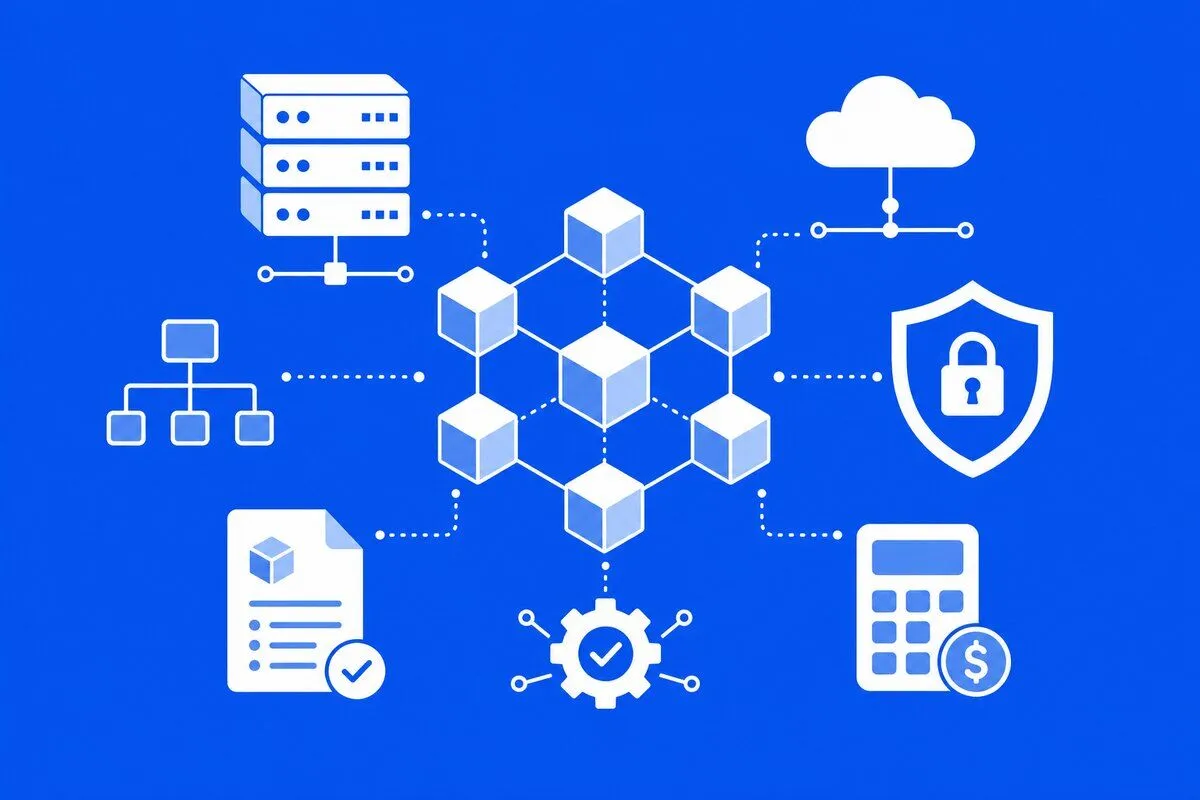
Regulatory-aware scalability design requires integrating compliance considerations into the fundamental architecture rather than treating legal requirements as external constraints to be addressed post-implementation. This approach begins with comprehensive regulatory mapping identifying applicable laws, regulations, and industry standards across all target jurisdictions where the blockchain network will operate.
Key Takeaways
- Improving blockchain scalability requires balancing throughput optimization with strict regulatory compliance across jurisdictions including the USA, UK, UAE, and Canada.
- Layer 2 scaling solutions must integrate compliance mechanisms without compromising transaction speed, privacy, or decentralization principles fundamental to Improve Blockchain Scalability networks.
- Zero-knowledge proofs enable privacy-preserving scalability while maintaining regulatory transparency through selective disclosure and compliance-friendly cryptographic validation.
- Data protection laws significantly impact scalability architecture, requiring careful design of data storage, processing, and cross-border transfer mechanisms in scaled networks.
- KYC and AML requirements create unique scalability challenges demanding innovative identity verification approaches that do not create transaction processing bottlenecks.
- Permissioned-permissionless hybrid models offer promising approaches to improve Improve Blockchain Scalability while accommodating regulatory oversight and auditability requirements.
- Sharding and state partitioning strategies must consider jurisdictional data localization laws when distributing state across multiple processing units.
- Governance frameworks for scaling upgrades must include regulatory review processes ensuring protocol changes comply with evolving legal requirements across jurisdictions.
- Risk management frameworks addressing scalability implementations must evaluate both technical performance risks and legal compliance failures systematically.
- Future-proofing scalability solutions requires monitoring regulatory trends and designing adaptable architectures capable of accommodating new compliance requirements without major redesign.
The imperative to improve Improve Blockchain Scalability while satisfying increasingly complex legal and compliance requirements represents one of the most significant challenges facing enterprise blockchain adoption today. As Blockchain Technology continues penetrating regulated industries including finance, healthcare, and supply chain management, organizations must navigate the tension between achieving high transaction throughput and maintaining regulatory compliance across multiple jurisdictions. Traditional scalability solutions designed for permissionless cryptocurrencies often fail to address the nuanced compliance requirements imposed by financial regulators, data protection authorities, and industry-specific oversight bodies. With over eight years of experience implementing Improve Blockchain Scalability solutions for enterprises in the USA, UK, UAE particularly Dubai, and Canada, our team has witnessed firsthand how regulatory constraints fundamentally shape scalability architecture decisions. The challenge extends beyond mere technical performance optimization to encompass data sovereignty, privacy preservation, auditability, and jurisdictional compliance in ways that require sophisticated protocol design integrating legal requirements from the foundational architecture rather than retrofitting compliance mechanisms onto existing scalability solutions.
Regulatory-Aware Scalability Design in Improve Blockchain Scalability Architectures
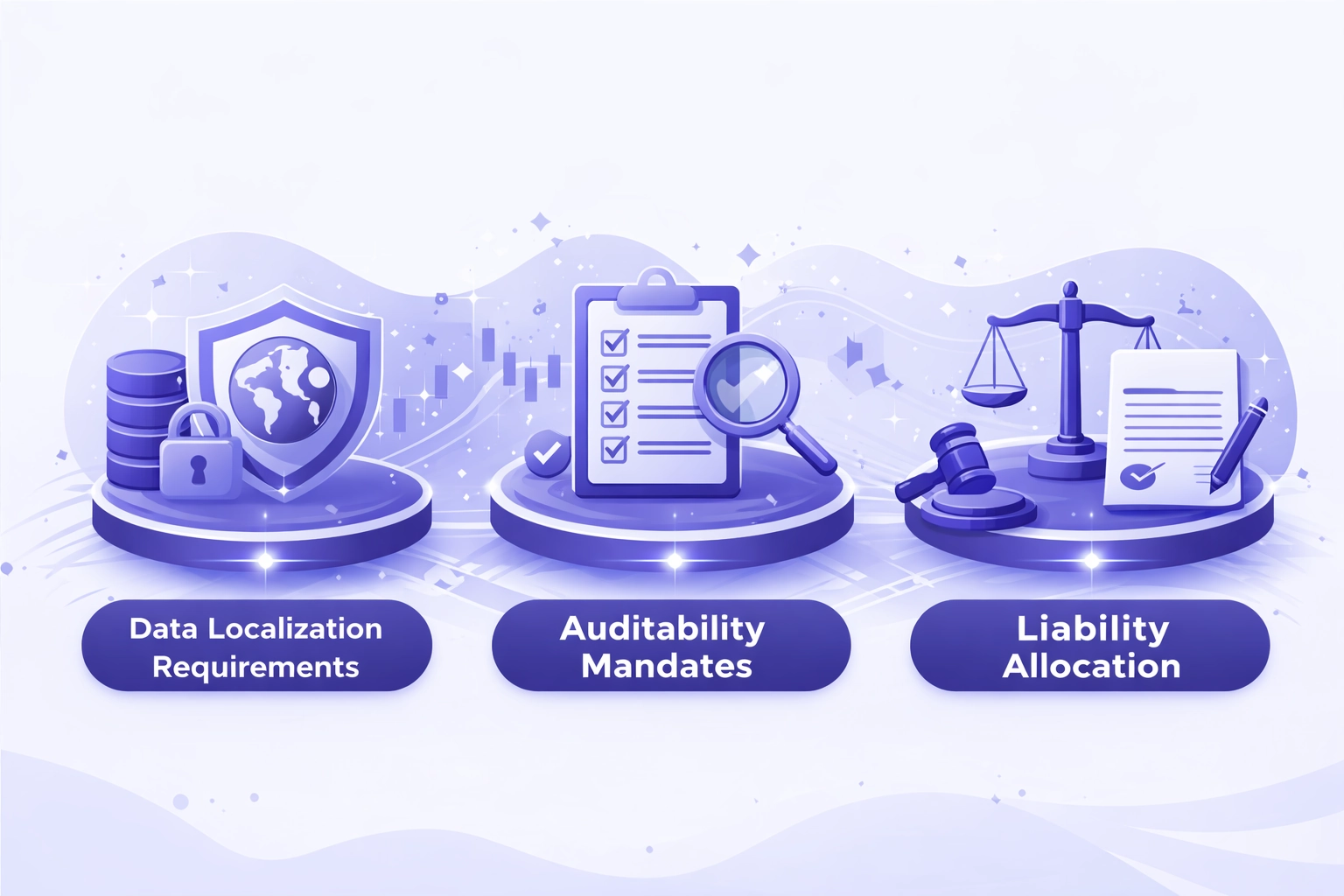
Regulatory-aware scalability design requires integrating compliance considerations into the fundamental architecture rather than treating legal requirements as external constraints to be addressed post-implementation. This approach begins with comprehensive regulatory mapping identifying applicable laws, regulations, and industry standards across all target jurisdictions where the blockchain network will operate. Architects must understand how scalability mechanisms like sharding, Layer 2 solutions, and state channels interact with data protection requirements, financial regulations, and sector-specific compliance mandates. The design process involves creating compliance matrices that map technical architectural choices to specific regulatory obligations, enabling informed tradeoff decisions between performance optimization and legal adherence. Critical considerations include data residency requirements affecting where transaction data can be stored and processed, auditability mandates requiring immutable logging mechanisms, and privacy regulations constraining how personal information flows through scaled systems. Regulatory-aware design also addresses liability allocation in multi-layer architectures, ensuring clear accountability for compliance failures across different network components and participants. Organizations implementing blockchain scalability improvements in regulated industries must adopt this holistic approach to avoid costly redesigns when regulatory scrutiny reveals architectural incompatibilities with legal requirements.
Balancing Throughput Optimization With Jurisdictional Compliance
Achieving optimal throughput while satisfying jurisdictional compliance requirements demands nuanced architectural decisions that recognize not all transactions require identical regulatory treatment. Tiered processing architectures can route transactions through different scaling mechanisms based on regulatory classification, with high-value regulated transactions receiving additional compliance validation while routine operations process through higher-throughput channels. This approach enables networks to improve Improve Blockchain Scalability for the majority of transactions while maintaining strict compliance for regulated subsets. Jurisdictional routing becomes essential when operating across multiple regulatory regimes, with transaction metadata determining appropriate processing paths that comply with local requirements in the USA, UK, UAE, Canada, and other markets. Compliance checkpoints integrated at strategic protocol layers can validate regulatory requirements without creating single points of failure that degrade overall network performance. Batch processing of compliance validations enables amortizing verification costs across multiple transactions, improving throughput while maintaining required oversight. The balance requires continuous monitoring of regulatory changes and performance metrics, with governance mechanisms enabling rapid adjustment of compliance thresholds and processing allocation as legal requirements evolve or network utilization patterns shift across different transaction types and jurisdictions.
 How Compliance Constraints Shape Layer-2 Scaling Strategies
Data Localization Requirements
- Layer 2 operators must host infrastructure within specific jurisdictions
- Cross-border data transfers require adequate protection mechanisms
- State channels need geographic distribution matching regulatory boundaries
Auditability Mandates
Liability Allocation
- Clear responsibility assignment between Layer 1 and Layer 2 operators
- Contractual frameworks addressing compliance failures across layers
- Insurance requirements for off-chain processing entities
On-Chain vs Off-Chain Scalability Under Legal Oversight
The choice between on-chain and off-chain scalability approaches carries significant legal implications beyond mere technical performance characteristics. On-chain scaling through sharding or increased block sizes maintains all transactions on the immutable ledger, providing superior auditability and regulatory transparency at the cost of lower throughput ceilings. This approach aligns well with financial regulations requiring comprehensive transaction records and facilitates compliance with retention requirements in jurisdictions like the USA, UK, UAE, and Canada. Off-chain scaling via state channels, sidechains, or rollups achieves dramatically higher throughput by processing transactions externally and periodically settling to the main chain. However, this architecture creates compliance challenges around data availability, dispute resolution jurisdiction, and regulatory authority over off-chain operators. Hybrid approaches combining both strategies enable networks to improve Improve Blockchain Scalability while maintaining compliance flexibility, routing regulated transactions through on-chain mechanisms while processing high-volume, low-value operations off-chain. Legal frameworks must clearly delineate which transaction types require on-chain finality versus off-chain processing, with smart contract logic enforcing routing rules that satisfy regulatory requirements without manual intervention or centralized gatekeepers that undermine Improve Blockchain Scalability value proposition of disintermediation and trustless operation.
Privacy-Preserving Scaling Without Violating Data Protection Laws
Privacy-preserving scalability techniques must navigate complex data protection regulations that simultaneously demand user privacy and regulatory transparency. GDPR and similar laws grant individuals rights over their personal data including access, rectification, and erasure, creating tension with Improve Blockchain Scalability immutability when implementing scalability solutions. Zero-knowledge proof systems offer promising approaches enabling transaction validation without revealing underlying data, allowing networks to improve Improve Blockchain Scalability while protecting user privacy. However, implementations must include mechanisms for law enforcement access and regulatory oversight as required by anti-money laundering and counter-terrorism financing regulations. Differential privacy techniques can aggregate transaction data for network analytics supporting scalability optimization while preventing individual user identification. Confidential computing environments enable processing encrypted data for compliance verification without exposing sensitive information to validators or network operators. The architecture must support selective disclosure where authorized parties can access specific data under appropriate legal procedures while maintaining general privacy for routine operations. Organizations must carefully document privacy-preserving techniques and demonstrate to regulators how systems satisfy both privacy protection mandates and lawful access requirements, avoiding situations where technical privacy mechanisms inadvertently obstruct legitimate regulatory oversight or create safe havens for illicit activity that invite regulatory backlash damaging Improve Blockchain Scalability adoption.
Zero-Knowledge Proofs as a Compliance-Friendly Scaling Primitive
Zero-knowledge proofs represent particularly promising primitives for improving Improve Blockchain Scalability while maintaining regulatory compliance through their ability to prove statement validity without revealing underlying data. ZK-rollups enable processing thousands of transactions off-chain while generating cryptographic proofs verifying correct execution, dramatically improving throughput while maintaining security guarantees. From a compliance perspective, zero-knowledge systems can prove regulatory requirements satisfaction without exposing sensitive personal or commercial information. For instance, proofs can demonstrate that KYC verification occurred, transaction amounts fall within permitted ranges, or parties meet accreditation standards without revealing specific identity details or exact values. This capability proves invaluable for organizations operating across the USA, UK, UAE, and Canada where privacy regulations restrict data sharing but compliance mandates require verification. Selective disclosure protocols enable revealing specific data elements to regulators under appropriate legal procedures while maintaining general privacy for routine network operations. Implementation challenges include computational complexity of proof generation potentially creating bottlenecks, standardization of proof systems across jurisdictions, and educating regulators about zero-knowledge cryptography’s security properties. Despite these obstacles, zero-knowledge proofs offer one of the most promising paths to reconcile the competing demands of high-throughput scalability, user privacy, and regulatory oversight in enterprise Improve Blockchain Scalability deployments.
Cross-Border Transaction Scalability and Regulatory Fragmentation
| Jurisdiction | Data Localization | Transfer Restrictions | Scalability Impact |
|---|---|---|---|
| USA | Sector-specific requirements | CLOUD Act implications | Moderate constraint |
| UK | GDPR-based adequacy | Transfer safeguards required | Significant overhead |
| UAE | Financial data retention | Central bank approval | Jurisdiction-specific routing |
| Canada | PIPEDA compliance | Provincial variations | Moderate flexibility |
| EU | Strict GDPR mandates | Adequacy decisions required | Major architectural impact |
Designing Validator Incentives That Meet Financial Regulations
Validator incentive mechanisms in scaled Improve Blockchain Scalability networks must navigate complex financial regulations governing securities, commodities, and payment systems without compromising network security or decentralization. Token-based rewards may trigger securities law obligations requiring registration, disclosure, and ongoing reporting in jurisdictions like the USA, UK, UAE, and Canada. Staking mechanisms that enable validators to earn returns on locked assets face regulatory scrutiny regarding whether they constitute investment contracts or deposit-taking activities requiring financial institution licenses. To improve Improve Blockchain Scalability while maintaining compliance, validator reward structures should consider alternative incentive designs including fee-based compensation, reputation systems, or consortium-based governance reducing regulatory exposure. Geographic distribution of validators helps satisfy anti-money laundering requirements and prevents concentration of control in jurisdictions with weak oversight. Transparency in validator selection, rotation, and reward allocation builds regulatory trust and demonstrates commitment to fair market practices. Implementation of validator due diligence procedures including KYC verification and ongoing monitoring addresses concerns about illicit actors operating network infrastructure. Governance mechanisms enabling rapid response to regulatory guidance or enforcement actions prevent situations where non-compliant incentive structures threaten network viability. Professional legal review of incentive mechanisms before launch helps identify regulatory risks early when architectural changes remain feasible rather than discovering compliance issues after significant adoption has occurred.
Compliant Scalability Implementation Lifecycle
Regulatory Mapping
Identify applicable laws, regulations, and standards across all target jurisdictions and industry sectors where network will operate.
Compliance Architecture Design
Create scalability architecture integrating regulatory requirements as fundamental design constraints rather than afterthoughts.
Legal Review and Validation
Engage counsel across jurisdictions to review architecture against specific regulatory obligations and identify gaps.
Controlled Testnet Deployment
Launch test environment validating both performance targets and compliance mechanism functionality under realistic conditions.
Regulatory Engagement
Present architecture to relevant regulators seeking informal guidance and building relationships before mainnet launch.
Phased Mainnet Rollout
Gradually activate scalability features while monitoring compliance metrics and adjusting parameters based on real-world performance.
Continuous Monitoring
Implement ongoing compliance surveillance tracking regulatory changes and network behavior to identify emerging risks.
Adaptive Governance
Establish processes for updating scalability parameters and compliance mechanisms as regulations evolve across jurisdictions.
Data Availability Scaling Under Retention and Disclosure Laws
Data availability represents a critical consideration when implementing scalability solutions under legal regimes mandating both data retention for compliance purposes and disclosure requirements for regulatory oversight. Financial regulations often require retaining transaction records for specified periods ranging from five to seven years, creating challenges for scaling solutions that prune historical data to reduce storage requirements. Archive nodes maintained by regulated entities can satisfy retention obligations while allowing the broader network to implement aggressive data pruning for scalability. However, ensuring archive node reliability and availability when regulatory inquiries occur requires careful coordination and potentially bonding mechanisms. Data disclosure laws enabling law enforcement and regulatory access must be reconciled with privacy-preserving scaling techniques, with protocols including backdoors or selective disclosure capabilities that can surface required information under appropriate legal procedures. Organizations must document data flows clearly, identifying what information exists where across different scaling layers and who maintains custody enabling compliance with subpoenas and information requests. Jurisdictional variations in retention periods and disclosure standards create complexity for networks operating globally, potentially requiring jurisdiction-specific data handling strategies. The architecture must balance aggressive data availability sampling and pruning to improve Improve Blockchain Scalability with legal obligations that may suddenly require producing complete historical records for investigations or audits spanning years.[1]
Permissioned-Permissionless Hybrid Models for Compliant Scaling
Hybrid architectures combining permissioned and permissionless elements offer promising approaches to improve Improve Blockchain Scalability while satisfying regulatory requirements that pure permissionless systems struggle to address. These models typically implement permissioned layers for regulated activities requiring KYC verification, transaction monitoring, and regulatory reporting while maintaining permissionless layers for operations outside regulatory scope. Tiered access controls enable different participants to interact with the network based on verification level and regulatory status, with verified entities accessing regulated services while others utilize permissionless features. Federated validator sets consisting of regulated institutions can operate compliance-focused shards processing financial transactions under appropriate oversight while community validators operate general-purpose shards. This approach enables jurisdictional customization where different regulatory regimes apply different access controls and oversight mechanisms to specific network segments. Interoperability protocols enable value and information transfer between permissioned and permissionless components while maintaining appropriate boundaries preventing regulatory arbitrage. The architecture must clearly delineate which activities occur in which domains, with smart contracts enforcing routing rules that prevent transactions requiring regulatory compliance from circumventing oversight through permissionless channels. Governance mechanisms must balance interests of regulated participants requiring compliance certainty with community members valuing permissionless access and censorship resistance, creating frameworks where both constituencies can achieve their objectives without compromising the other.
Legal Implications of Sharding and State Partitioning
Sharding and state partitioning introduce unique legal implications requiring careful consideration when implementing these powerful scalability techniques. Jurisdictional data localization laws may align naturally with geographic sharding strategies where specific shards operate within particular jurisdictions, though this approach creates challenges for cross-shard transactions spanning regions. Liability allocation becomes complex when state partitioning distributes smart contract components across multiple shards, potentially creating ambiguity about which shard’s validators bear responsibility for compliance failures. Legal certainty regarding which jurisdiction’s laws govern cross-shard transactions proves challenging when operations span shards operating under different legal regimes. Data protection regulations requiring specific data handling may be satisfied more easily when personal information concentrates in dedicated compliance-focused shards subject to appropriate safeguards. However, this approach risks creating honeypots attracting regulatory scrutiny and potential attackers seeking valuable concentrated data. Smart contract execution spanning multiple shards raises questions about contract formation, performance, and breach when different fragments execute in different legal jurisdictions. Audit and investigation procedures become more complex when reconstructing transaction histories requires aggregating data across multiple independently operated shards. Organizations implementing sharded architectures to improve Improve Blockchain Scalability must work closely with legal counsel to address these novel issues, potentially developing new legal frameworks specifically addressing distributed state management across jurisdictional boundaries.
Scalability Best Practices for Regulatory Compliance
Practice 1: Integrate compliance requirements into architecture from design inception rather than retrofitting onto existing scalability solutions.
Practice 2: Implement tiered processing enabling different regulatory treatment for various transaction types and participants.
Practice 3: Maintain comprehensive audit trails enabling transaction reconstruction and regulatory investigation across all scaling layers.
Practice 4: Design selective disclosure mechanisms enabling regulatory access without compromising general user privacy unnecessarily.
Practice 5: Establish clear liability allocation across different network components and participant roles in scaled architectures.
Practice 6: Monitor regulatory developments continuously and maintain governance mechanisms enabling rapid compliance adjustments.
Practice 7: Document all architectural decisions and their regulatory rationale comprehensively for auditor and regulator review.
Practice 8: Engage proactively with regulators building relationships and seeking guidance before launching compliant scalability solutions.
Scalability Trade-Offs in KYC-Enabled Improve Blockchain Scalability Networks
KYC-enabled Improve Blockchain Scalability networks face unique scalability trade-offs as identity verification requirements introduce verification latency and processing overhead that can constrain throughput. Traditional approaches requiring per-transaction KYC checks create severe bottlenecks as every operation must wait for identity verification before proceeding. More sophisticated architectures separate identity verification from transaction processing, performing KYC during user onboarding and issuing cryptographic credentials enabling subsequent transactions without repeated verification. This approach dramatically improves scalability while maintaining compliance, with credentials proving KYC completion without revealing specific identity details for every transaction. Verifiable credentials and decentralized identity standards offer promising frameworks enabling privacy-preserving KYC that scales efficiently. Batch processing of identity-verified transactions can amortize compliance overhead across multiple operations. Risk-based approaches applying different verification levels based on transaction amounts or participant profiles enable lightweight checks for low-risk operations while reserving intensive verification for high-value or sensitive transactions. Delegation to specialized KYC service providers can parallelize identity verification across multiple entities improving overall system throughput. However, this introduces centralization and creates potential bottlenecks if KYC providers cannot scale adequately. Organizations seeking to improve blockchain scalability in regulated contexts must carefully architect identity verification flows minimizing latency and overhead while satisfying Know Your Customer obligations imposed across the USA, UK, UAE, and Canada.
Compliant Interoperability Between Scaled Improve Blockchain Scalability Systems
| Interoperability Model | Compliance Approach | Scalability Impact | Regulatory Risk |
|---|---|---|---|
| Atomic Swaps | Per-chain compliance | Minimal overhead | Low |
| Bridge Protocols | Operator licensing required | Moderate latency | Medium |
| Relay Chains | Unified compliance framework | High throughput | Medium |
| Wrapped Assets | Custodian regulation | Good scalability | High |
| Interledger Protocols | Payment system rules | Excellent performance | Medium |
Governance-Driven Scaling Upgrades in Regulated Environments
Governance mechanisms for implementing scaling upgrades in regulated Improve Blockchain Scalability environments must balance agility in responding to performance needs with stability required by compliance frameworks and contractual obligations. Formal governance processes should include regulatory impact assessments evaluating how proposed scalability improvements affect compliance obligations before implementation. Stakeholder consultation engaging regulated participants, compliance officers, and legal counsel ensures scaling changes receive appropriate scrutiny from perspectives beyond pure technical performance. Phased rollout procedures enable monitoring compliance implications during controlled deployment before full network activation. Upgrade approval thresholds should consider not just technical consensus but regulatory sign-off from relevant authorities in jurisdictions like the USA, UK, UAE, and Canada where the network operates. Documentation requirements for governance decisions create audit trails demonstrating that scaling changes underwent appropriate review and consideration of legal implications. Emergency procedures must exist enabling rapid response to compliance failures or regulatory guidance requiring immediate adjustments to scaling parameters. Sunset provisions allowing rollback of problematic scaling upgrades provide safety mechanisms if unforeseen regulatory issues emerge post-deployment. The governance framework should clearly allocate decision-making authority between technical teams optimizing performance and compliance teams ensuring regulatory adherence, with escalation procedures resolving conflicts between these sometimes competing objectives while maintaining network security and operational continuity.
Navigate Complex Improve Blockchain Scalability Compliance
Work with experienced professionals who understand both technical scalability and regulatory requirements across multiple jurisdictions.
Risk Management Frameworks for Scaled Improve Blockchain Scalability Infrastructures
Comprehensive risk management frameworks addressing scaled Improve Blockchain Scalability implementations must evaluate both technical performance risks and regulatory compliance failures with equal rigor. Risk identification processes should systematically catalog scalability-related risks including throughput bottlenecks under peak load, latency increases from compliance checkpoints, and availability failures when scaling infrastructure encounters problems. Compliance risk assessment evaluates likelihood and impact of regulatory violations resulting from architectural choices, with specific attention to data protection breaches, inadequate AML controls, and securities law violations. Risk quantification assigns probability and impact scores enabling prioritization of mitigation efforts toward highest-severity threats. Mitigation strategies should address identified risks through architectural redundancy, compliance monitoring systems, incident response procedures, and insurance coverage where appropriate. Continuous monitoring tracks risk indicators including transaction processing latency, compliance checkpoint failure rates, and regulatory inquiry frequency. Stress testing validates that scaled systems maintain compliance under adverse conditions including extreme transaction volumes, validator failures, and coordinated attacks. Third-party audits by firms experienced in both blockchain technology and regulatory compliance provide independent validation of risk management effectiveness. The framework should integrate with overall enterprise risk management processes ensuring blockchain-specific risks receive appropriate board-level visibility and governance oversight commensurate with their potential impact on organizational reputation and financial performance.
Ensuring Regulatory Traceability in High-Throughput Networks
Maintaining regulatory traceability while achieving high transaction throughput requires careful architectural design ensuring audit capabilities do not degrade as network scaling increases. Transaction identifiers must remain globally unique and immutable across all scaling layers enabling unambiguous reference in regulatory investigations and dispute resolution. Comprehensive logging mechanisms capture transaction metadata including timestamps, participants, amounts, and compliance checkpoint results without creating storage or processing bottlenecks. Efficient indexing strategies enable rapid transaction lookup and reconstruction from potentially terabytes of historical data distributed across sharded or layered architectures. Standardized audit APIs provide regulatory authorities and auditors with programmatic access to transaction histories and compliance data without requiring direct blockchain expertise. Cryptographic commitments enable proving transaction inclusion and state transitions to external parties without revealing complete blockchain state. The traceability system must accommodate multi-hop transactions spanning Layer 2 channels, cross-shard operations, and interoperability bridges while maintaining end-to-end visibility. Privacy-preserving techniques like selective disclosure enable revealing specific transaction details to authorized investigators while protecting uninvolved parties’ information. Organizations must document traceability capabilities clearly and train compliance teams on data access procedures ensuring regulatory requests receive timely, complete, and accurate responses even as networks scale to millions of transactions daily across complex multi-layer architectures.
Future-Proofing Improve Blockchain Scalability Against Evolving Laws
Future-proofing Improve Blockchain Scalability solutions against regulatory evolution requires designing adaptable architectures capable of accommodating new compliance requirements without fundamental redesign. Modular compliance frameworks separate regulatory logic from core protocol mechanics, enabling updates to compliance rules without modifying underlying scalability infrastructure. Parameterized compliance thresholds allow adjusting verification requirements, reporting obligations, and access controls through governance processes rather than hard-coded protocol changes. Standards-based interfaces between Improve Blockchain Scalability layers and compliance systems facilitate integration of new regulatory technologies as they emerge. Monitoring regulatory trends across target jurisdictions provides early warning of potential legislative or regulatory changes affecting scalability architecture. Engagement with policymakers and standard-setting bodies enables organizations to influence regulatory frameworks toward Improve Blockchain Scalability-compatible approaches while demonstrating commitment to compliance. Contingency planning addresses potential regulatory scenarios including outright prohibitions, mandatory backdoors, or significant operational constraints requiring architectural pivots. Technology choices should favor mature, widely-adopted standards rather than proprietary solutions reducing risk of compliance frameworks becoming obsolete as technology evolves. The adaptable architecture balances flexibility to accommodate regulatory changes with stability required by network participants who cannot tolerate constant disruptive upgrades. Organizations improving blockchain scalability for long-term deployment must invest in regulatory monitoring, adaptive governance, and modular architecture ensuring their solutions remain viable as legal frameworks inevitably evolve across the USA, UK, UAE, Canada, and other jurisdictions worldwide.
Improving Improve Blockchain Scalability while meeting legal and compliance requirements represents a complex challenge requiring deep expertise in both technical architecture and regulatory frameworks. Success demands integrating compliance considerations from initial design rather than retrofitting regulatory mechanisms onto existing scalability solutions. Zero-knowledge proofs, hybrid permissioned-permissionless models, and carefully architected Layer 2 solutions offer promising approaches enabling high throughput while satisfying oversight requirements. Organizations must navigate jurisdictional complexity as regulations differ significantly across the USA, UK, UAE, Canada, and other markets, potentially requiring tailored compliance approaches for different regions. Risk management frameworks must evaluate both performance and legal risks systematically, with governance processes ensuring scaling upgrades undergo appropriate regulatory review. The balance between privacy preservation and regulatory transparency demands sophisticated technical solutions enabling selective disclosure and lawful access without compromising general user privacy. As Improve Blockchain Scalability adoption accelerates in regulated industries, the imperative to improve Improve Blockchain Scalability while maintaining compliance will only intensify, requiring ongoing innovation in protocol design, legal frameworks, and governance mechanisms. Organizations taking a proactive, holistic approach integrating legal requirements into fundamental architecture position themselves for success in an environment where regulatory compliance increasingly determines commercial viability regardless of technical performance achievements.
Frequently Asked Questions
Q1.1. How can blockchain scalability be improved while maintaining regulatory compliance?
Improving Improve Blockchain Scalability while maintaining regulatory compliance requires implementing Layer 2 solutions with built-in audit trails, using zero-knowledge proofs for privacy-preserving validation, and designing permissioned-permissionless hybrid architectures. Organizations must integrate KYC/AML verification at appropriate protocol layers without compromising transaction throughput. Sharding strategies should include jurisdictional data partitioning to comply with data localization laws in the USA, UK, UAE, and Canada. Smart contracts must embed compliance checkpoints that validate regulatory requirements before execution while maintaining high transaction speeds. Scalability solutions should implement immutable logging mechanisms enabling regulatory authorities to trace transactions when required. Cross-border interoperability protocols need multi-jurisdictional compliance frameworks ensuring scaled networks meet varying legal requirements across different regions.
Q2.2. What are the main legal challenges when scaling blockchain networks?
The primary legal challenges when scaling Improve Blockchain Scalability networks include data protection compliance under GDPR and similar regulations, maintaining transaction traceability for anti-money laundering requirements, and ensuring auditability in high-throughput environments. Jurisdictional fragmentation creates complexity as different regions impose conflicting requirements on data handling and cross-border transactions. Privacy-preserving scaling techniques like zero-knowledge proofs must balance anonymity with regulatory transparency demands. Securities law compliance becomes challenging when scaling tokenized asset platforms, requiring clear jurisdictional boundaries and investor protection mechanisms. Financial regulations in the USA, UK, UAE, and Canada mandate different reporting standards that scaled networks must accommodate. Layer 2 solutions face legal uncertainty regarding liability allocation between on-chain and off-chain components. Governance frameworks must address how protocol upgrades affecting scalability comply with existing contractual and regulatory obligations.
Q3.3. Can Layer 2 scaling solutions comply with data protection regulations?
Layer 2 scaling solutions can comply with data protection regulations through careful architectural design incorporating privacy by design principles and jurisdictional data handling. Rollups must implement data minimization strategies ensuring only necessary information gets stored on-chain while maintaining regulatory audit capabilities. State channels can include privacy-preserving commitment schemes that protect user data while enabling compliance verification when required. Zero-knowledge rollups offer strong compliance potential by proving transaction validity without revealing sensitive personal information. Implementations must include mechanisms for data subject rights including access, rectification, and erasure as required by GDPR and similar laws. Operators of Layer 2 networks in the USA, UK, UAE, and Canada must establish clear data controller relationships and processing agreements. Technical safeguards should enable selective disclosure to regulators without compromising user privacy or violating data protection principles.
Q4.4. How do KYC requirements affect Improve Blockchain Scalability implementations?
KYC requirements significantly impact Improve Blockchain Scalability implementations by introducing verification checkpoints that can create throughput bottlenecks if not properly architected. Identity verification processes must integrate seamlessly with high-speed transaction processing without degrading performance or user experience. Scalability solutions should separate identity verification from transaction execution, performing KYC checks asynchronously or during onboarding rather than per-transaction validation. Layered identity architectures enable privacy-preserving KYC where verification occurs off-chain while compliance attestations anchor on-chain. Batch processing of KYC-validated transactions can improve throughput while maintaining regulatory compliance. Different jurisdictions in the USA, UK, UAE, and Canada impose varying KYC standards requiring flexible compliance frameworks. Decentralized identity solutions offer promising approaches enabling users to prove KYC compliance without repeatedly submitting personal information, improving both privacy and scalability.
Q5.5. What governance frameworks support compliant Improve Blockchain Scalability scaling?
Effective governance frameworks supporting compliant Improve Blockchain Scalability scaling include multi-stakeholder decision-making structures, formal protocol upgrade processes with regulatory review periods, and transparent parameter adjustment mechanisms. Governance must balance technical scalability improvements with legal compliance obligations through comprehensive impact assessments before implementing changes. Frameworks should establish clear accountability for regulatory compliance across network participants including validators, developers, and node operators. Jurisdictional governance models enable different compliance requirements in various regions while maintaining network interoperability. Risk committees should evaluate scaling proposals against regulatory requirements in target markets including the USA, UK, UAE, and Canada. Documentation standards ensure all scaling modifications maintain audit trails and regulatory transparency. Dispute resolution mechanisms address conflicts between scalability objectives and compliance mandates. Frameworks must include sunset provisions enabling rapid response to regulatory changes affecting scaled network operations.
Explore Services
Related Services
Reviewed by

Aman Vaths
Founder of Nadcab Labs
Aman Vaths is the Founder & CTO of Nadcab Labs, a global digital engineering company delivering enterprise-grade solutions across AI, Web3, Blockchain, Big Data, Cloud, Cybersecurity, and Modern Application Development. With deep technical leadership and product innovation experience, Aman has positioned Nadcab Labs as one of the most advanced engineering companies driving the next era of intelligent, secure, and scalable software systems. Under his leadership, Nadcab Labs has built 2,000+ global projects across sectors including fintech, banking, healthcare, real estate, logistics, gaming, manufacturing, and next-generation DePIN networks. Aman’s strength lies in architecting high-performance systems, end-to-end platform engineering, and designing enterprise solutions that operate at global scale.