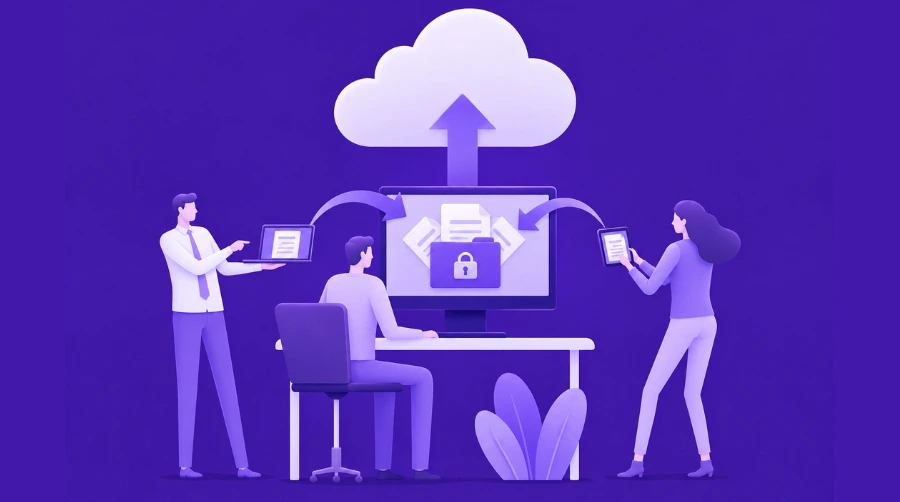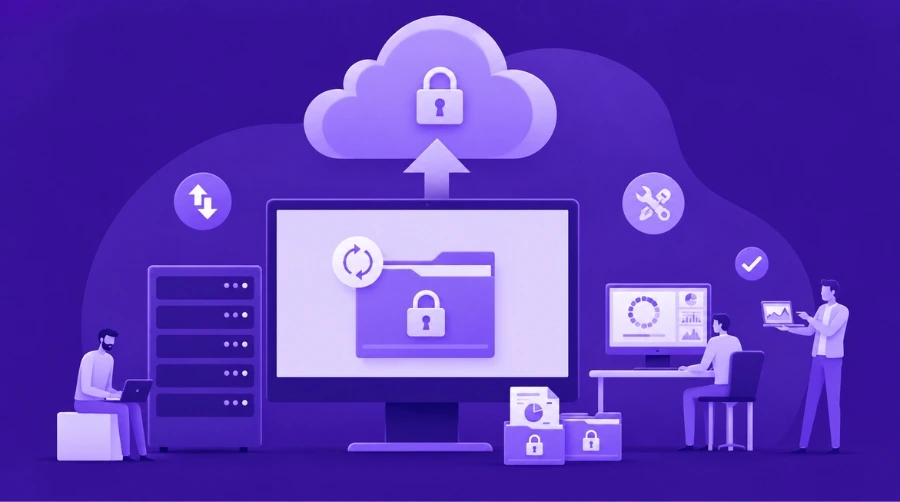
Encryption in Transit & At Rest
All data moved via encrypted tunnels (TLS 1.3+) with keys managed by HSMs. Encryption…
Migrate your workloads to the cloud with confidence and precision.








We execute smooth transitions from legacy systems to modern cloud environments with minimal disruption. Our migration framework covers strategy, data movement, application modernization, testing, and optimization.
Cloud migrations delivered across AWS, Azure, and GCP
Uptime maintained during migration windows
Faster time-to-value vs. in-house migration teams
Average cost optimization achieved post-migration

Cloud migration enables elastic scaling, automated resource optimization, and continuous monitoring, helping organizations build resilient, flexible infrastructure that efficiently supports changing workloads and long-term growth demands.

Ensure consistent deployments across cloud and on-prem environments using standardized platforms, improving portability, management simplicity, operational consistency, and seamless application lifecycle control across diverse infrastructures.

Cloud migration enables elastic scaling, automated resource control, and continuous monitoring, helping organizations efficiently manage dynamic workloads while improving system reliability, performance, and scalability.

Cloud-native and container adoption accelerates releases through CI/CD automation, reducing errors, increasing flexibility, and enabling faster responses to changing business demands and market expectations globally.

Optimized cloud platforms and containerized architectures reduce infrastructure costs, improve resource utilization, prevent overprovisioning, and significantly lower overall operational expenses across enterprise workloads and environments.

Modern application architectures enhance performance, scalability, and agility, allowing faster feature development, quicker releases, and improved responsiveness to business innovation needs across digital transformation initiatives.

Granular monitoring, logging, and tracing improve visibility, enable faster issue detection, proactive remediation, and ensure reliable application and infrastructure performance across cloud production environments consistently.
Cloud migrations expose sensitive data during transition. We embed security controls at every phase—from pre-flight audits to post-cutover validation—ensuring zero compliance gaps.
All data moved via encrypted tunnels (TLS 1.3+) with keys managed by HSMs. Encryption…

27001 Compliance Migration processes audited annually by third-party assessors. Audit trails maintained for every…

Identity & Access Control Hardening IAM policies re-architected during migration to enforce least-privilege access.…

Automated DLP rules prevent accidental exfiltration. Backup integrity verified before cutover; recovery procedures tested…

Network Segmentation & Firewall Rules VPCs, subnets, and security groups configured to isolate workloads…
We combine deep cloud platform expertise with pragmatic project discipline—no rip-and-replace fantasies, just reliable execution that fits your business timeline and risk appetite.
Certified architects across AWS, Azure, and GCP. We design migrations that avoid vendor lock-in and leverage each platform’s strengths for your specific workloads.
Database replication, dual-write patterns, and DNS failover orchestrated to eliminate service interruption. Your users won’t notice the move.
Reserved instances, auto-scaling policies, and storage tiering configured during migration—not months after. Savings realized immediately, not promised later.
Post-migration support includes cloud cost management, security posture reviews, and quarterly optimization sprints to keep your cloud environment lean and compliant.
Our client ratings and authentic feedback demonstrate the trust businesses place in our cloud migration expertise. These reviews highlight our ability to deliver secure, scalable, and high-performance cloud migration solutions that support operational efficiency, business growth, and long-term partnerships as a reliable cloud migration service provider.
Expertise You Can Verify
Service Expert

Co-Founder & CEO, Nadcab Labs
Technical lead for Cloud Migration Services engagements at Nadcab Labs.
Since 2017, our architects, auditors, and delivery leads have shipped blockchain, Web3, AI, and enterprise software for startups and global enterprises.
Cloud migration solutions enable businesses across industries to transition applications and infrastructure to the cloud efficiently. Modern cloud architectures improve scalability, enhance performance, reduce operational overhead, accelerate innovation, and ensure reliable, flexible systems that adapt seamlessly to evolving business and market demands worldwide.

Banks leverage cloud to secure data, accelerate online transactions, detect fraud, and ensure reliable, scalable financial operations while enhancing customer trust and regulatory compliance.

Cloud enables storing patient EHRs, supporting telemedicine, and facilitating medical research, improving healthcare efficiency, accessibility, and enabling secure, real-time collaboration across hospitals and clinics.

Companies like Amazon and Flipkart use cloud to manage high traffic, inventory, and personalized customer experiences, ensuring scalability, performance, and seamless online shopping.

Cloud is essential for DevOps, software development, and managing 5G networks, providing scalable infrastructure, operational efficiency, and faster deployment for technology-driven services.

Cloud powers online learning platforms and digital libraries, offering scalable access to educational resources, supporting remote learning, and enabling seamless collaboration for students and educators.

Cloud supports smart factories, supply chain management, and predictive maintenance, improving efficiency, reducing downtime, and enabling real-time monitoring of production systems and machinery.

Platforms like Netflix and YouTube use cloud for video streaming, large-scale data storage, and content delivery, ensuring high performance, scalability, and an uninterrupted user experience.

Governments use cloud to deliver digital services under initiatives like Digital India, enhancing transparency, accessibility, scalability, and efficiency in public service delivery.
2025: Multi-cloud orchestration becomes standard—enterprises migrate workloads across 2–3 providers to avoid single-vendor dependency and optimize costs per workload type.
2026–2027: AI-driven migration planning tools mature, automating dependency mapping and risk assessment. Manual discovery phases shrink from months to weeks.
2028: Edge-cloud hybrid architectures dominate—migrations now include edge compute nodes alongside cloud infrastructure for ultra-low-latency applications.
2029–2030: Sustainability metrics become migration criteria—enterprises prioritize cloud regions powered by renewable energy and measure carbon footprint reduction post-migration.

Successful cloud migration goes beyond moving infrastructure—it unlocks operational agility, cost efficiency, and competitive advantage in your market.

Reduced Infrastructure Costs & Right-Sizing
Improved Application Performance & Scalability

Faster Deployment Cycles & DevOps Enablement

Enhanced Disaster Recovery & Business Continuity

Modernized Legacy Systems with Cloud-Native Architecture
Trusted cloud migration services leverage leading cloud platforms to build secure, scalable, and efficient migration ecosystems. They ensure seamless application and infrastructure transitions, aligned with business objectives and long-term growth goals.








Our cloud migration services leverage proven cloud-native technologies to deliver secure, scalable, and high-performance migrations. We focus on reducing operational overhead while ensuring reliability and future-ready cloud architecture.
 AWS
AWS Azure
Azure Google Cloud
 Oracle Nodes
 Docker
 Kubernetes
 AWS ECS
 Azure AKS
 Google GKE
 Terraform
 AWS Cloudformation
 Azure Aesource Manager
 Ansible
 Puppet
 Amazon RDS
 DynamoDB
 Azure SQL Database
 MongoDB
 Jenkins
 GitLab CI
 GitHub / GitLab
 AWS Code Pioeline
 Azure Devops
 Prometheus
 Grafana
 AWS Cloud Watch
 Azure Monitor
Cloud migration is transforming how organizations move and manage infrastructure by enabling cost-efficient, secure, and transparent cloud operations. From enterprise applications to data workloads, automated and scalable migration strategies are becoming the standard for seamless and reliable cloud adoption, guided by trusted migration experts.
Distributed cloud architectures eliminate single points of failure, enhancing reliability.
Hardware-optimized infrastructure ensures dependable performance across IT and data sectors.
Incentive mechanisms motivate organizations to adopt and expand cloud migration.
Shared and optimized deployments reduce costs using globally distributed cloud resources.

Successful cloud migration requires a structured, transparent, and results-driven approach. Our cloud migration services focus on security, scalability, performance optimization, and long-term sustainability. We design and execute efficient cloud transition frameworks that integrate modern architectures, automation, and compliance-driven processes, enabling organizations to confidently adopt next-generation cloud environments with reliability, flexibility, and measurable business outcomes.
Cloud migration services deliver end-to-end solutions covering strategy, assessment, planning, migration, deployment, and continuous optimization for secure, scalable, business-aligned cloud transitions.
At Nadcab Labs, our excellence in cloud migration services has earned global recognition for delivering secure, scalable, and high-performance cloud transition solutions. These achievements reflect our commitment to innovation, operational excellence, and helping businesses successfully migrate, optimize, and scale cloud environments across global markets.






We evaluate your business objectives, scalability requirements, and technical landscape to deliver a clear, transparent migration cost estimate aligned with your cloud migration goals, supported by expert consulting and execution.
Migration Scope
Data Transfer & Integration
Workload & Governance
Security & Compliance Layer
Migration Execution Model
Post-Migration Support Scope

Cloud migration is the process of moving applications, data, servers, and workloads from on-premises or legacy systems to cloud environments like AWS, Azure, or GCP. It helps organizations improve scalability, performance, security, and cost efficiency while enabling faster innovation and simplified infrastructure management.
Cloud migration is important because it enables businesses to scale faster, reduce infrastructure costs, improve system reliability, and enhance security. By moving to the cloud, organizations gain flexibility, access to modern technologies, automated operations, and better disaster recovery while supporting digital transformation and long-term growth.
Common cloud migration strategies include rehosting (lift and shift), replatforming, refactoring, rebuilding, and replacing applications with cloud-native solutions. Each strategy is selected based on business goals, application complexity, cost considerations, performance requirements, and the desired level of cloud optimization.
Cloud migration timelines depend on application size, data volume, dependencies, and chosen migration strategy. Small workloads may take weeks, while enterprise-scale migrations can take several months. Proper assessment, planning, automation, and testing help reduce downtime and ensure a smooth, predictable migration schedule.
Common cloud migration challenges include data security risks, application compatibility issues, downtime concerns, cost overruns, and skill gaps. These challenges can be mitigated through detailed assessments, dependency mapping, security planning, automation, and continuous monitoring to ensure a successful and risk-free migration.
Yes, cloud migration is secure when implemented with best practices such as encryption, identity and access management, compliance controls, and continuous monitoring. Leading cloud providers offer advanced security features, and proper migration planning ensures data integrity, regulatory compliance, and protection against cyber threats.
Cloud migration costs vary based on infrastructure size, data volume, migration complexity, tools used, and post-migration optimization needs. While initial costs exist, cloud migration significantly reduces long-term operational expenses by eliminating hardware maintenance, improving resource utilization, and enabling pay-as-you-use pricing models.
Cloud migration focuses on moving existing workloads to the cloud, while cloud modernization involves redesigning applications using cloud-native technologies like containers, microservices, and serverless computing. Migration is often the first step, followed by modernization to maximize performance, scalability, and long-term cloud benefits.
Yes, businesses can migrate to hybrid or multi-cloud environments to improve flexibility, avoid vendor lock-in, and optimize costs. Hybrid cloud integrates on-premises and cloud systems, while multi-cloud uses multiple cloud providers, enabling workload distribution based on performance, compliance, and business requirements.
After cloud migration, organizations focus on optimization, monitoring, security management, and performance tuning. Post-migration activities include cost optimization, auto-scaling, backup management, compliance checks, and continuous improvement to ensure stable operations, high availability, and maximum return on cloud investment.
Nadcab Labs is a cloud migration services company delivering secure, scalable migration strategies, cloud architecture design, workload migration, optimization, and compliance-driven solutions that maximize performance, flexibility, and long-term business growth.
Explore Cloud Migration Opportunities
Insights
Fresh expert guides matched to this service — updated as we publish