Ai Overview
Natural language generation in NLP sits at the output end of the communication pipeline. Once it has that understanding, natural language generation takes over to craft a response that is clear, grammatically correct, contextually relevant, and appropriately toned. Understanding how natural language generation in AI operates helps businesses make smarter decisions about which conversational AI systems to invest in.
Key Takeaways
- ✓Natural language generation enables AI chatbots to produce human-like, grammatically correct responses by converting intent data into readable text automatically.
- ✓Natural language generation in AI works alongside natural language processing to complete the full input-to-output communication loop in conversational AI systems.
- ✓Transformer-based large language models are the core engine powering modern natural language generation in NLP, trained on billions of real human conversations.
- ✓Context-aware responses in modern chatbots are driven by attention mechanisms that allow the system to track and reference earlier parts of a conversation accurately.
- ✓Personalized chatbot interactions are made possible when NLG systems adapt tone, vocabulary, and sentence structure to match individual user preferences and history.
- ✓Businesses in India and UAE are increasingly using machine learning chatbots powered by NLG to handle real-time AI conversations at scale across multiple languages.
- ✓Deep learning for chatbots allows NLG systems to continuously improve fluency, accuracy, and relevance as they are exposed to more conversational training data over time.
- ✓Common NLG challenges include handling sarcasm, ambiguity, long-context memory, and producing culturally appropriate automated text generation without bias.
- ✓Real world examples of natural language generation in chatbots include customer service tools, healthcare virtual assistants, and intelligent e-commerce recommendation engines.
- ✓The future of conversational AI systems will include multimodal, emotionally intelligent chatbots capable of generating speech and text generation that truly mirrors human communication.
Over the past eight years, our team has built, tested, and refined conversational AI systems for clients across India, Dubai, and global markets. One question that comes up repeatedly from business owners and product managers is this: how does an AI chat assistant manage to reply with such fluency, context, and personality? The answer almost always comes back to one foundational technology: natural language generation.
Natural language generation is not a minor feature inside an AI chatbot. It is the mechanism that turns raw intelligence into readable, human-sounding communication. Without it, even the most powerful AI model would produce output that feels mechanical and disconnected. With it, a chatbot can greet users warmly, answer complex questions clearly, and maintain a conversational tone throughout an entire session.
In this guide, we will walk through every layer of how natural language generation in AI works, what technologies power it, why some chatbots sound more natural than others, and what the near future holds for AI communication tools across industries.
What is Natural Language Generation in Simple Words?
If you have ever wondered what is natural language generation, the simplest answer is this: it is the process by which an AI system takes structured information or intent and converts it into written or spoken language that sounds like a human produced it. Think of it as the “speaking” side of AI intelligence.
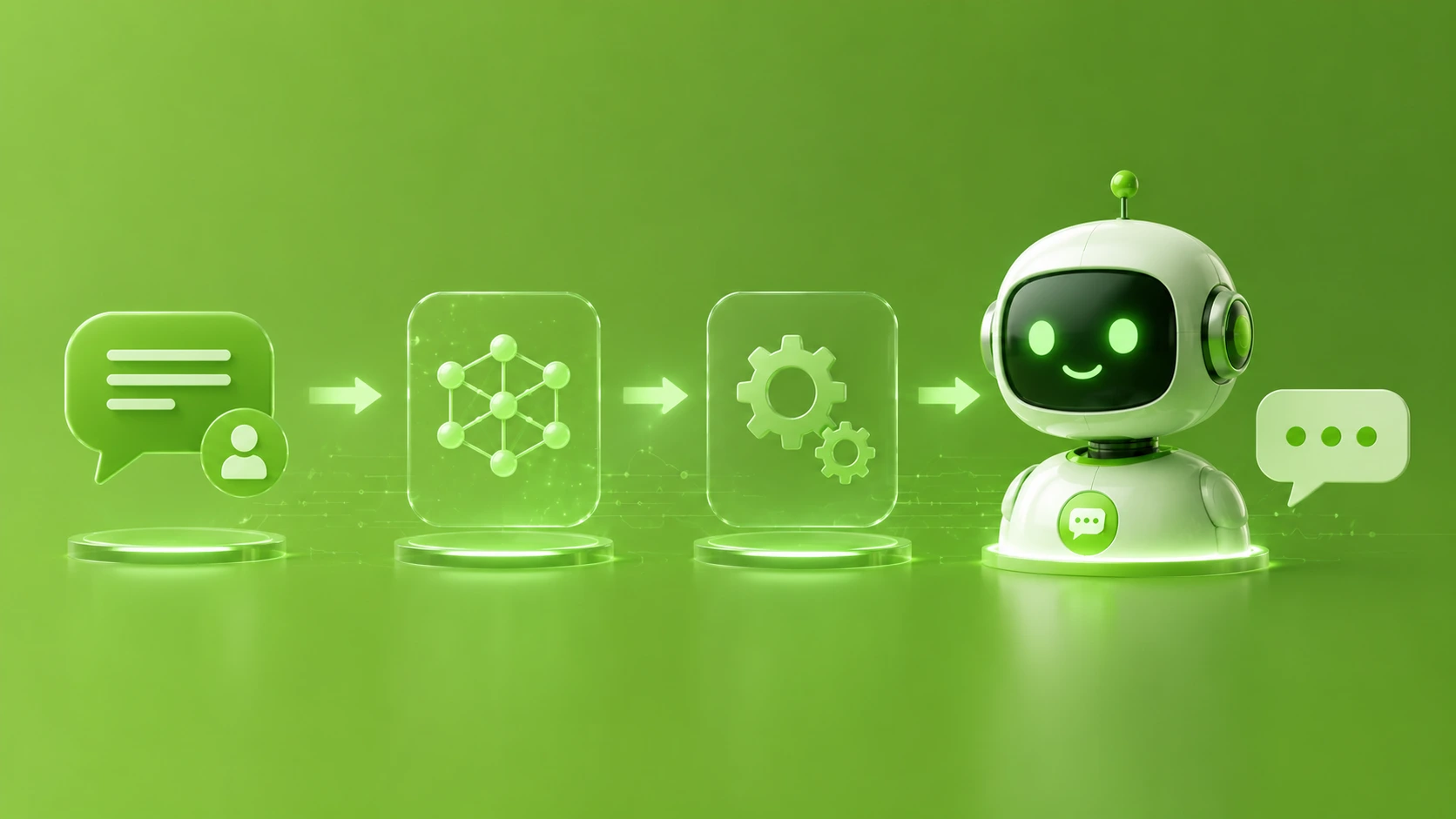
Natural language generation in NLP sits at the output end of the communication pipeline. When you type a question to a chatbot, the system first understands your meaning through natural language processing. Once it has that understanding, natural language generation takes over to craft a response that is clear, grammatically correct, contextually relevant, and appropriately toned.
From a business perspective, what makes natural language generation so valuable is its ability to scale communication without sacrificing quality. A company in Mumbai or Dubai can deploy a single intelligent virtual assistant that handles thousands of unique customer conversations per day, each one generating a fresh, contextually appropriate reply rather than a recycled script.
Content Determination
The AI decides what information should be included in a response based on user intent and available data.
Sentence Planning
The system organises information into logical sentence structures with proper flow and cohesion before writing.
Surface Realisation
The final stage converts abstract sentence plans into actual readable words, grammar, and punctuation for the user.
How Natural Language Generation Works Step by Step?
Understanding how natural language generation in AI operates helps businesses make smarter decisions about which conversational AI systems to invest in. The process is not a single action but a multi-stage pipeline that runs in milliseconds every time you interact with an automated system. While text-based bots utilize basic intent strings, complex speech platforms built on real-time AI insurance tools require hyper-optimized audio pipelines to handle instant voice recognition, front-office intake, and live customer phone routing.
Data Input and Intent Recognition
The system receives the user’s query and uses natural language processing to identify the core intent, entities, and sentiment behind the message.
Content Selection
The AI determines what information is relevant to include in the response, filtering from its knowledge base or connected data sources.
Discourse Structuring
The model arranges selected content into a logical sequence, ensuring that the response flows coherently from one point to the next.
Lexical Choice and Tone Calibration
The system chooses specific words and adjusts tone to match the context, ranging from formal to conversational depending on the user profile.
Surface Realisation and Output
The final text is generated with proper grammar, punctuation, and structure, then delivered to the user as a polished, human-like response.
The Technology Behind Human Like AI Chatbot Responses
The human-like chatbot responses that users experience today are the result of decades of research compressed into practical, deployable technology. At the heart of modern natural language generation in AI is a class of models known as large language models (LLMs), built on transformer architectures first introduced by Google in 2017.
These models are trained through deep learning for chatbots using massive datasets of human-written text. During training, the model learns statistical relationships between words, phrases, and concepts. It learns not just what words mean individually but how they combine meaningfully in different contexts. This is what enables semantic language understanding at a level that earlier AI systems could never achieve.
The attention mechanism within transformers is particularly critical. It allows the model to weigh the importance of different words in a sentence relative to each other, enabling it to resolve ambiguity, maintain context over long exchanges, and produce context-aware responses that reference earlier parts of a conversation with precision.
NLG Technology Comparison: Old vs. Modern
| Feature | Rule-Based NLG | Modern LLM-Powered NLG |
|---|---|---|
| Response Type | Fixed templates | Dynamically generated sentences |
| Context Handling | Limited to single turn | Multi-turn context tracking |
| Tone Adaptability | None | Adapts to user tone and context |
| Language Support | Usually one language | Multilingual (100+ languages) |
| Personalisation | Not possible | Highly personalised based on user data |
| Learning Ability | Static | Continuously improves with training |
How AI Chatbots Process Your Input Before Generating a Reply?
Before any natural language generation occurs, the chatbot must fully understand what you have said. This pre-processing stage is where natural language processing does its heaviest lifting, and it directly shapes the quality of the automated text generation that follows.
When a user submits a message, the AI first tokenises the text, breaking it into individual units of meaning. Next, it performs named entity recognition to identify people, places, dates, and objects mentioned. Simultaneously, sentiment analysis detects the emotional tone of the message, whether the user is frustrated, curious, or satisfied. Intent classification then maps the message to the most likely purpose behind it.
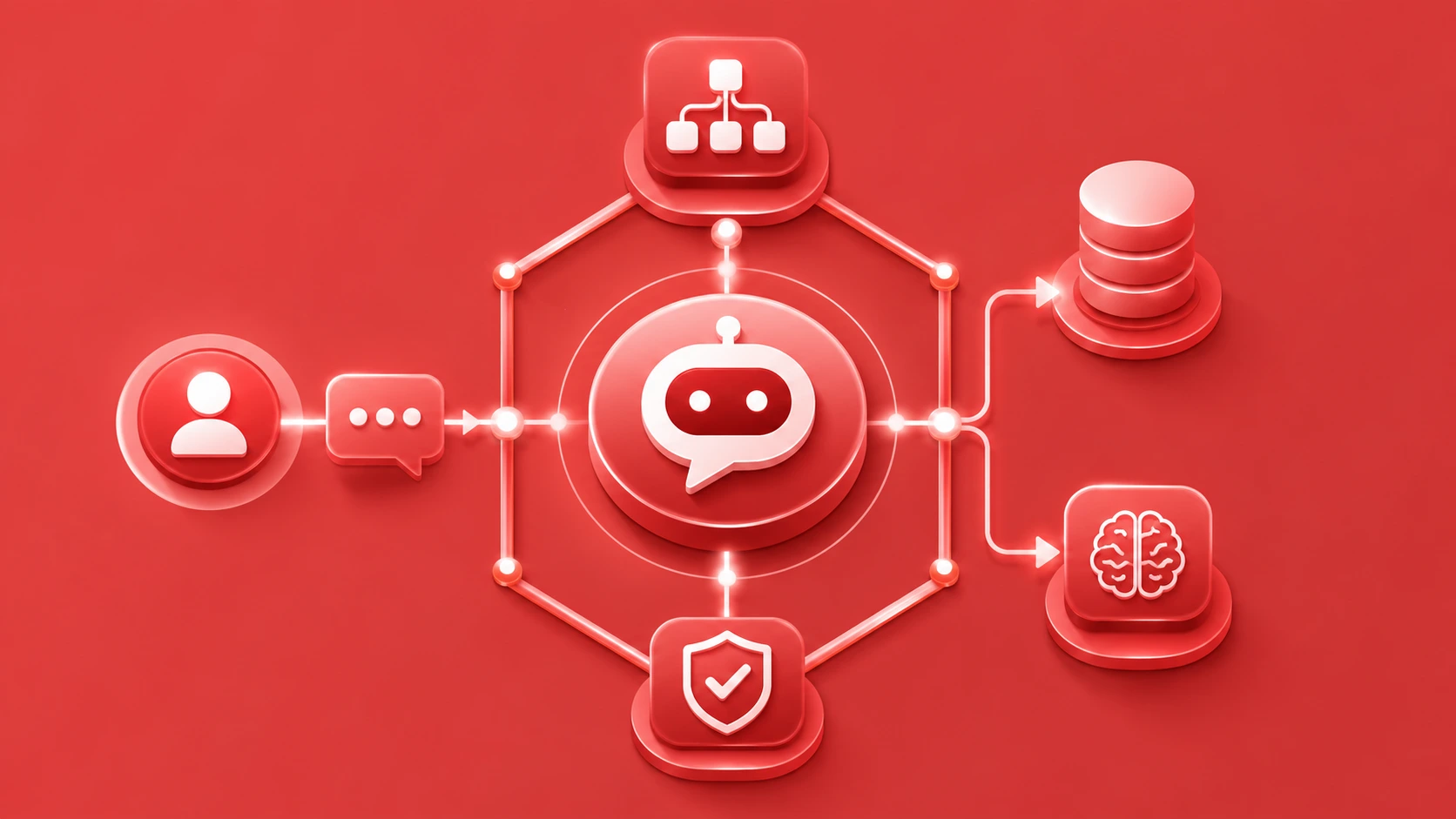
All of this information is passed into the natural language generation module as a structured package of signals. The generation model then uses these signals, combined with conversation history and user profile data, to produce a response that is not just accurate but contextually intelligent and tonally appropriate. This is what makes real-time AI conversations feel so responsive and personalised.
The Role of Natural Language Generation in Shaping Chatbot Replies
Natural language generation in NLP is the final creative act in chatbot communication. Once the system knows what to say, NLG decides exactly how to say it. This is a nuanced and sophisticated task that involves far more than selecting a sentence from a pre-written list.
In our experience working with conversational AI systems across e-commerce, banking, healthcare, and logistics clients in India and the UAE, the NLG layer is where the personality of a chatbot truly lives. Two chatbots can have access to the exact same underlying data but deliver completely different user experiences based solely on how their NLG models have been tuned and trained.
Advanced natural language generation systems also handle discourse management, meaning they ensure that a response connects logically to what was said earlier in the conversation. This prevents the disjointed, forgetful behaviour that used to plague older machine learning chatbots and instead delivers seamless, coherent multi-turn conversations. For businesses aiming to create more human-like and context-aware virtual assistants, investing in robust NLP for chatbots is essential for improving response quality, personalization, and long-term user engagement.
Tone Shaping
NLG calibrates whether a reply is warm, professional, urgent, or empathetic based on conversation context and user sentiment.
Coherence Building
The model ensures each new sentence connects naturally to previous replies, maintaining logical conversation flow without repetition.
Relevance Filtering
NLG prunes irrelevant information and includes only what directly addresses the user’s question, keeping responses concise and on-point.
How AI Chatbots Choose the Right Words and Tone?
Word choice and tone management are among the most sophisticated outputs of natural language generation in AI. This process happens through a mechanism called probability sampling, where the model assigns likelihood scores to thousands of possible next words and selects from the most probable options based on context.
Temperature and top-p sampling are two parameters that AI communication tools use to control this process. A lower temperature makes the model more deterministic and predictable, which is useful for customer service scenarios requiring precision. A higher temperature introduces more variety and creativity, which works better for conversational or entertainment-focused chatbot language models.
Beyond statistical sampling, tone adaptation in modern AI generated conversations is also driven by reinforcement learning from human feedback (RLHF). In this process, human evaluators rate thousands of chatbot responses, and the model learns to generate outputs that score higher on dimensions like helpfulness, fluency, and naturalness. The result is a system that instinctively selects language patterns associated with high-quality human communication.
Why Some Chatbot Responses Feel More Natural Than Others?
If you have used multiple chatbot platforms, you have likely noticed that some feel genuinely conversational while others feel stiff, repetitive, or obviously automated. The difference almost always comes down to the quality and sophistication of the underlying natural language generation system.
Chatbots that feel natural typically share several characteristics. They vary their sentence structure across responses rather than repeating the same patterns. They acknowledge what the user said before answering, mimicking the way humans confirm understanding before replying. They use contractions, conversational connectors, and occasionally informal language where appropriate. And they maintain consistency in persona and tone throughout the entire session.
Chatbots that feel robotic usually rely on template-based automated text generation with minimal personalisation. They ignore emotional signals in user messages, use overly formal language in casual contexts, and frequently produce responses that feel disconnected from what was actually asked. For businesses in India and Dubai serving diverse user bases, investing in a high-quality NLG layer is not optional. It is a direct driver of conversational user experience and customer retention.
What Makes Chatbot Replies Sound Human (Factors)
How Natural Language Generation Handles Complex Conversations?
Handling multi-turn, multi-topic conversations is where natural language generation in NLP truly demonstrates its complexity. A simple FAQ bot can match keywords and return answers, but a genuinely intelligent virtual assistant must track context across dozens of exchanges, remember prior information, and generate responses that acknowledge the full history of the conversation.
Modern transformer-based NLG models handle this through extended context windows, which allow them to process and reference hundreds or thousands of tokens worth of prior conversation. When a user says “can you repeat that in simpler terms” or “what did you mean by that earlier,” the model uses this extended context to locate the relevant prior statement and rephrase it appropriately.
For enterprise clients deploying AI communication tools in support centres across India and the UAE, we consistently find that context management is the single biggest differentiator between chatbots that resolve queries on the first interaction and those that frustrate users with repetitive or irrelevant replies. Investing in NLG models with large, well-managed context windows directly improves first-contact resolution rates and overall conversational user experience.
Common Challenges in Making AI Chatbots Sound Human
Despite extraordinary advances, natural language generation still faces meaningful challenges that prevent AI chatbots from being indistinguishable from human communicators in all scenarios. Understanding these limitations is essential for businesses setting realistic expectations and designing better user experiences.
Hallucination
NLG models sometimes generate confident-sounding but factually incorrect statements, a persistent issue in automated text generation systems.
Context Drift
In very long conversations, AI generated conversations can lose track of earlier context, leading to responses that feel disconnected or contradictory.
Cultural Nuance
Generating culturally appropriate responses for diverse markets like India and UAE requires localised training data that many generic NLG models lack.
Sarcasm and irony remain difficult for natural language processing and generation systems to handle reliably. When a user says “great, another delay” sarcastically, many chatbots still interpret this as a positive statement and respond accordingly. Ambiguity in pronoun reference, indirect questions, and elliptical statements also pose ongoing challenges for speech and text generation accuracy.
Bias in training data is another concern. If a model is trained predominantly on certain types of text, it may generate responses that are culturally narrow or linguistically limited. For businesses targeting multilingual audiences across South Asia and the Middle East, this makes it essential to partner with AI teams who understand data curation and bias mitigation as core parts of the NLG pipeline.
How Natural Language Generation is Improving With Every New AI Model
Each new generation of AI language models brings measurable improvements to natural language generation quality. The progression from GPT-2 to GPT-4 to the latest frontier models demonstrates how dramatically output fluency, factual grounding, and context management have advanced in just a few years.
Retrieval-augmented generation (RAG) is one of the most significant recent advances in natural language generation in AI. RAG allows a chatbot to query a live knowledge base before generating a response, dramatically reducing hallucination and ensuring that automated text generation is grounded in current, accurate information rather than relying solely on training data.
Instruction tuning and RLHF have also transformed how machine learning chatbots are aligned to produce human-preferred outputs. Models trained with these techniques not only generate fluent text but generate text that is more helpful, safer, and better aligned with the real communicative needs of users across different industries and cultures. For companies in India and UAE deploying intelligent virtual assistants at scale, these advances translate directly into higher resolution rates and better CSAT scores.[1]
Key NLG Improvements Across AI Model Generations
Larger Context Windows
Newer models process 128K+ tokens, enabling full-session memory for deeply personalised chatbot interactions over long conversations.
Factual Grounding via RAG
Real-time data retrieval before generation reduces hallucination and improves accuracy in context-aware responses across domains.
Instruction Following
Modern NLG models follow complex multi-step instructions, generating structured, role-appropriate conversational user experiences on demand.
Real World Examples of Natural Language Generation in Chatbots
Natural language generation in AI is not a theoretical concept. It is actively powering millions of customer interactions across every major industry. Looking at concrete examples helps businesses in India and Dubai understand where and how to apply this technology most effectively.
| Industry | NLG Application | Business Benefit |
|---|---|---|
| Banking and Finance | Automated account query responses, personalised financial summaries | Reduces call centre load by up to 40% |
| E-commerce | Product recommendations, order status updates, returns guidance | Increases conversion rate and repeat purchases |
| Healthcare | Appointment booking, medication reminders, symptom triage | Improves patient engagement and reduces no-shows |
| Real Estate | Property inquiry handling, virtual tour scheduling, lead qualification | Handles 28% of all sector chatbot interactions globally |
| Travel and Hospitality | Booking confirmations, itinerary generation, real-time travel updates | Reduces support ticket volume and improves guest satisfaction |
| Education | Admissions queries, learning assistance, personalised study feedback | Serves 14% of global chatbot use in the education sector |
Across all these sectors, the common thread is that natural language generation is what elevates a chatbot from a simple lookup tool into a genuine AI communication tool. The quality of NLG directly determines whether users trust, engage with, and return to an automated interface or abandon it within the first few exchanges.
The Future of AI Chatbots Powered by Natural Language Generation
The trajectory of natural language generation in AI points toward systems that do not just produce fluent text but communicate with genuine emotional intelligence, cultural sensitivity, and proactive intent. The next wave of AI conversational technology will be defined by three major shifts.
Multimodal NLG
Future chatbots will combine speech and text generation with image and video understanding, creating fully multimodal real-time AI conversations that mirror human communication across all senses.
Emotionally Aware Generation
NLG models will detect and respond to emotional cues with genuine empathy, adjusting language, pacing, and tone dynamically based on user emotional state during the interaction.
Hyper-Local Personalisation
NLG will generate text tuned to regional dialects, cultural idioms, and individual history, making personalized chatbot interactions feel indistinguishable from conversations with a local human expert.
Agentic AI is another frontier where natural language generation will play a defining role. In agentic systems, the chatbot does not just respond but takes actions, executes tasks, and reports results, all through generated language that explains what it is doing and why. For businesses in India and Dubai, this means conversational AI systems that can handle end-to-end customer journeys with minimal human intervention.
The global conversational AI market is projected to exceed $17 billion by 2026 and reach $82 billion by 2034, with natural language generation at the core of every interaction. For forward-thinking businesses, the question is no longer whether to adopt AI communication tools but how to implement natural language generation strategies that deliver genuine competitive advantage in their specific market context.
With our eight-plus years of experience building and deploying conversational AI systems across markets in India and the UAE, we have seen firsthand that the businesses which invest in high-quality natural language generation consistently outperform those that settle for template-driven chatbot solutions. The gap will only widen as AI capabilities continue to accelerate.
Frequently Asked Questions About AI Chatbots
Q1.1. What is natural language generation in simple words?
Natural language generation is the process where an AI system automatically converts structured data or intent into human-readable text. It is the technology that allows chatbots and virtual assistants to write sentences that sound like a real person wrote them, making every conversation feel smooth and natural.
Q2.2. How does natural language generation help chatbots talk like humans?
Natural language generation helps chatbots by converting raw data and intent signals into properly structured, grammatically correct sentences. Instead of outputting robotic or template-based replies, the system picks words, builds sentences, and adjusts tone so that every response feels genuinely conversational and context-aware to the user.
Q3.3. Is natural language generation the same as natural language processing?
No, they are two different but closely connected things. Natural language processing handles understanding what the user says, while natural language generation handles producing the reply. Together they form the complete input-output communication loop that makes an AI chatbot work intelligently in real conversations.
Q4.4. What technology powers natural language generation in AI chatbots?
Modern natural language generation relies on large language models, transformer architectures like GPT and BERT, deep learning neural networks, and attention mechanisms. These technologies learn patterns from billions of text examples and generate fluent, contextually relevant responses in real time for users across different industries and languages.
Q5.5. Why do some chatbot replies feel robotic while others feel completely human?
Chatbots that feel robotic use older rule-based or template-driven systems with limited natural language generation capability. Human-like responses come from advanced AI models that use deep learning to vary sentence structure, match tone, use context-aware vocabulary, and adapt dynamically to the natural flow of conversation.
Q6.6. Can natural language generation work in Hindi, Arabic, or other regional languages?
Yes. Modern multilingual natural language generation models are trained on data from dozens of languages simultaneously. Models like mBERT and multilingual GPT variants generate fluent responses in Hindi, Arabic, English, and many other languages, which is especially valuable for businesses operating across India and the UAE.
Q7.7. How is natural language generation used in real businesses today?
Businesses use natural language generation in customer support chatbots, automated report writing, personalised email generation, product description tools, and intelligent virtual assistants. In banking, e-commerce, healthcare, and real estate, it powers real-time AI conversations that handle thousands of unique customer queries daily without any human involvement.
Q8.8. Does natural language generation get better over time with more usage?
Yes. Natural language generation systems improve continuously as they are trained on more data and fine-tuned on domain-specific conversations. Reinforcement learning from human feedback is one technique that helps models learn which responses feel more natural and accurate, progressively improving the overall quality of conversational AI output.
Q9.9. What are the biggest challenges in making AI chatbots sound fully human?
Key challenges include maintaining factual accuracy, avoiding repetitive phrasing, managing long conversation context, handling sarcasm or ambiguous queries, and generating culturally appropriate responses. Ensuring that automated text generation does not produce misleading or biased content is also a significant ongoing concern for AI teams worldwide.
Q10.10. What does the future of natural language generation look like for AI chatbots?
The future points toward emotionally intelligent, multimodal, and hyper-personalised AI conversations. Models will better understand tone, intent, cultural nuance, and personal history, making AI chatbots feel far more like trusted human advisors than automated response tools in markets like India, Dubai, and beyond.
Explore Services
Related Services
Reviewed by

Aman Vaths
Founder of Nadcab Labs
Aman Vaths is the Founder & CTO of Nadcab Labs, a global digital engineering company delivering enterprise-grade solutions across AI, Web3, Blockchain, Big Data, Cloud, Cybersecurity, and Modern Application Development. With deep technical leadership and product innovation experience, Aman has positioned Nadcab Labs as one of the most advanced engineering companies driving the next era of intelligent, secure, and scalable software systems. Under his leadership, Nadcab Labs has built 2,000+ global projects across sectors including fintech, banking, healthcare, real estate, logistics, gaming, manufacturing, and next-generation DePIN networks. Aman’s strength lies in architecting high-performance systems, end-to-end platform engineering, and designing enterprise solutions that operate at global scale.