Ai Overview
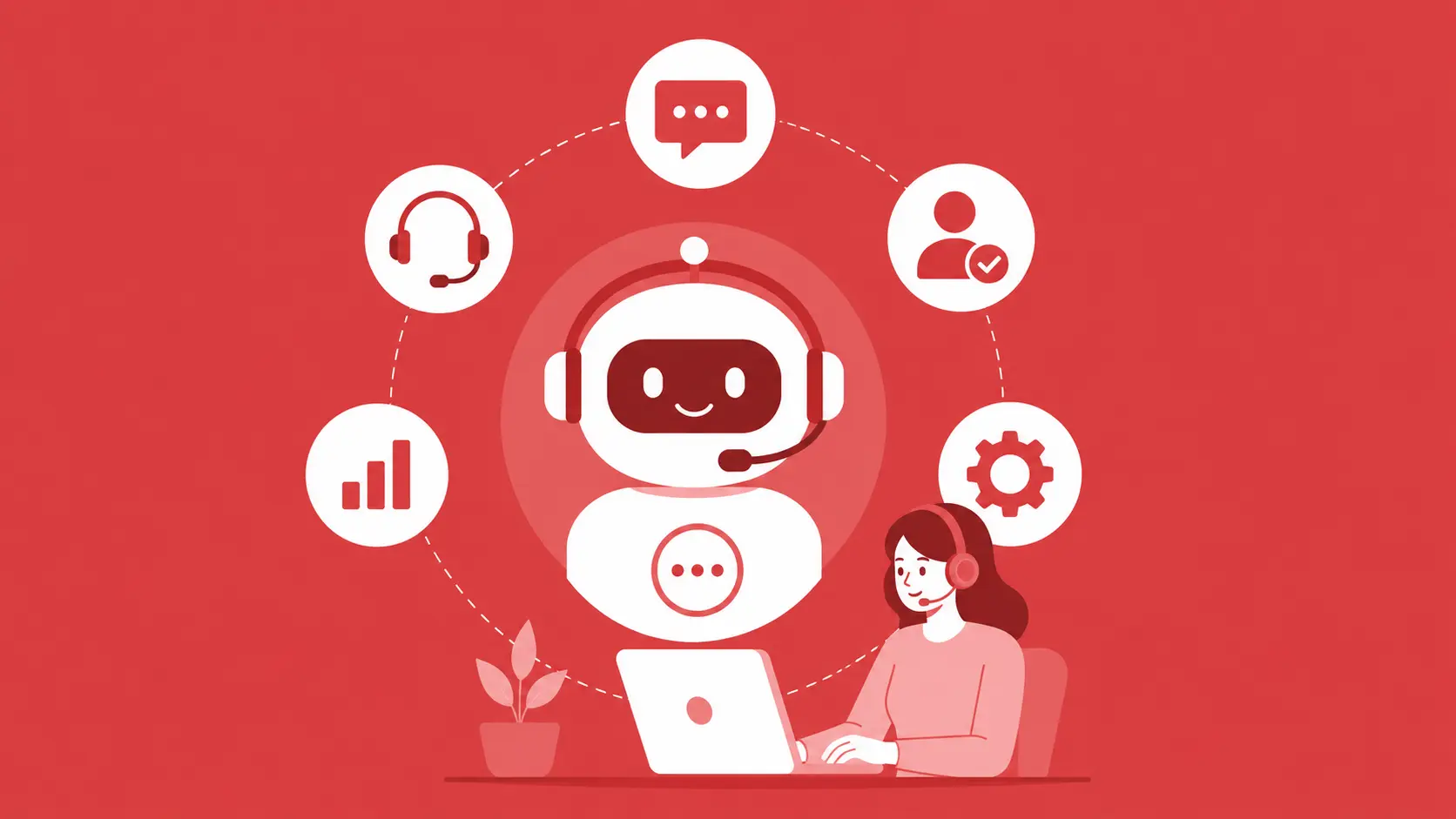
We are living through a defining shift in how businesses communicate. It is now a core business infrastructure that organisations of every size in India, Dubai, and globally rely on to stay competitive, deliver faster service, and scale customer engagement without proportional cost increases. Selecting the right type is critical for businesses in Dubai and India to get genuine value from their investment in chat automation.
Key Takeaways
- An AI chatbot uses natural language processing and machine learning to simulate intelligent, human-like conversations at any scale across digital platforms.
- The global AI chatbot market has surpassed USD 11 billion in 2026 with nearly one billion active users engaging daily across industries and regions worldwide.
- Businesses in India and Dubai are rapidly adopting conversational AI chatbot solutions to automate customer support, qualify leads, and drive measurable revenue growth effectively.
- Large language models power the best ai chatbot platforms today, enabling context-aware, multi-turn dialogue that dramatically improves customer experience and engagement scores consistently.
- An intelligent chatbot can handle up to 80 percent of routine customer queries autonomously, cutting support costs by 30 to 40 percent across any business vertical.
- Chat automation powered by AI integrates with CRMs, e-commerce platforms, and enterprise tools to create seamless, end-to-end customer journey automation without adding headcount or overhead.
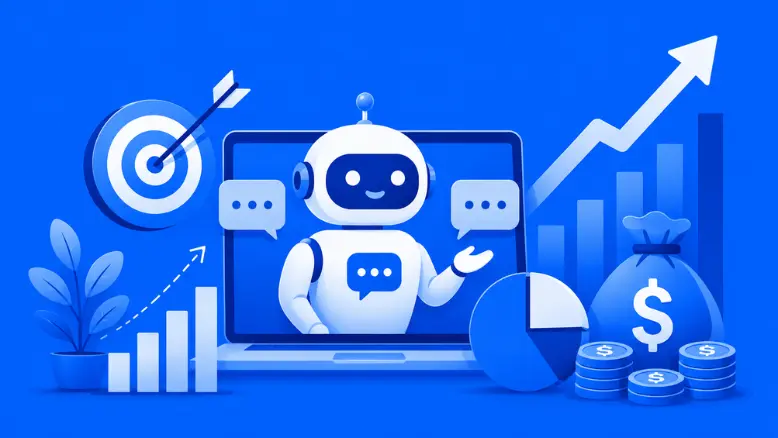
- A well-designed virtual assistant using artificial intelligence can deliver an average 340 percent return on investment within the first twelve months of strategic deployment for businesses.
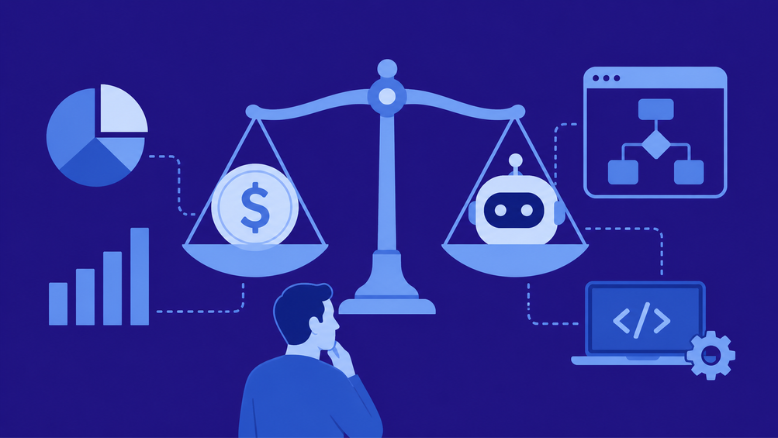
- Free ai chatbot tools serve as entry points, but enterprise-grade chatbot software requires custom training, multilingual support, and deep integration for meaningful business results.
- India is projected to lead global chatbot adoption growth at a 32.9 percent CAGR through 2034, making it one of the most important markets for AI chatbot investment today.
- Future AI chatbots will combine voice, multimodal inputs, and agentic capabilities to act as proactive business partners rather than passive customer support chatbot tools.
Introduction to AI Chatbots and Why They Matter Today
We are living through a defining shift in how businesses communicate. An AI chatbot is no longer a novelty reserved for large technology corporations. It is now a core business infrastructure that organisations of every size in India, Dubai, and globally rely on to stay competitive, deliver faster service, and scale customer engagement without proportional cost increases. From a small e-commerce brand in Mumbai to a luxury property firm in Dubai, the artificial intelligence chatbot has become the front line of digital customer experience.
With over 987 million people actively using AI chatbots worldwide and the global market crossing USD 11 billion in 2026, the numbers make the story clear. Businesses that deploy a well-configured AI chat assistant are not simply automating responses. They are transforming their entire customer lifecycle from first contact through to conversion and retention. With 8 years of experience designing and deploying chatbot solutions, our team has watched this technology evolve from simple FAQ bots to sophisticated, context-aware conversational AI platforms that understand intent, sentiment, and purpose.
This guide covers everything you need to know: what an AI chatbot fundamentally is, how it works, its core components, its applications across real industries, and what the next generation of intelligent chatbot technology will look like. Whether you are exploring the best ai chatbot for your business or deepening your technical understanding, this is the most comprehensive resource you will find in 2026.
What Is an AI Chatbot and How Does It Work?
An AI chatbot is a software application designed to simulate intelligent conversation with human users through text or voice interfaces. Unlike traditional scripted bots that follow rigid decision trees, an artificial intelligence chatbot uses machine learning, natural language processing, and large language models to understand the meaning behind a user’s message, infer their intent, and generate relevant, contextual responses in real time. Many AI development companies build and customize these chatbots to meet specific business needs across industries.
The working process of a modern ai chatbot online follows a clear sequence. First, the system receives input from the user through a chat interface, voice command, or messaging app. Second, it processes that input through an NLP engine which tokenises, parses, and interprets the message. Third, a machine learning model matched against a trained dataset identifies the intent behind the message. Fourth, the response generation layer produces an output that is contextually appropriate. Fifth, the interface delivers that response back to the user, often within milliseconds. This entire pipeline is what makes a conversational AI chatbot feel natural rather than mechanical.
The best ai chatbot systems also incorporate memory across conversation turns, allowing the bot to reference earlier parts of a dialogue to provide more precise and personalised answers. This is what separates a true intelligent chatbot from a basic scripted autoresponder and highlights how modern AI development is focused on creating more human-like conversational experiences. In markets like Dubai and India where customer expectations for speed and personalisation are extremely high, this capability is not optional. It is essential.
Brief History and Evolution of AI Chatbot Technology
The journey of the AI chatbot spans more than six decades of research, experimentation, and commercial application. Understanding this history gives important context to why today’s conversational AI platforms are so capable and why the pace of adoption is now exponential.
MIT’s Joseph Weizenbaum created ELIZA, widely regarded as the first chatbot. It used pattern matching and scripted responses to simulate a psychotherapist. Despite its simplicity, many users believed they were talking to a real person, which highlighted both the promise and the philosophical challenges of the technology.
A wave of rule-based chatbot software emerged for customer service, primarily in telecom and banking. These early systems relied on keyword matching and if-then logic trees. They were functional for narrow use cases but broke easily under natural, varied human language.
Apple launched Siri in 2011, followed by Google Now and Amazon Alexa. These marked the transition from text-only chatbots to voice-enabled virtual assistant technology. Machine learning began playing a serious role in understanding user intent rather than just matching keywords.
Facebook opened the Messenger platform to chatbot builders in 2016, catalysing a massive wave of business chatbot adoption. Brands across India and the UAE began deploying bots for customer service, lead generation, and e-commerce. NLP matured significantly during this period.
The arrival of GPT-4 and the explosion of generative AI transformed the AI chatbot landscape completely. Platforms like ChatGPT, the meta ai chatbot, Google Gemini, and Claude introduced a new era of context-aware, generative, deeply intelligent conversation at scale. In 2026, the technology has become standard business infrastructure globally.
Core Components That Power Modern AI Chatbots
A modern artificial intelligence chatbot is not a single piece of software. It is an integrated system of multiple components that work together to create the seamless conversation experience users now expect. Understanding each layer helps businesses in India and Dubai make smarter decisions when selecting or building their own ai chatbot online.
NLP Engine
The natural language processing layer interprets raw user text, breaks it into tokens, and extracts meaning, intent, and named entities. Without this, an ai chatbot cannot understand anything beyond exact keyword matches.
Intent Recognition
This component classifies what the user is actually trying to accomplish. Whether they want to check an order, file a complaint, or request a quote, the intent engine maps their message to a predefined or learned action with high accuracy.
Dialogue Manager
The dialogue management layer controls the flow of the conversation. It tracks context across multiple turns, decides when to ask follow-up questions, and determines when to escalate to a human agent within the customer support chatbot workflow.
Knowledge Base
A structured repository of business information, product data, FAQs, and policies that the chatbot draws on to answer queries. The quality of this knowledge base directly determines the accuracy and trustworthiness of every bot interaction.
Integration Layer
Modern chatbot software connects to external systems such as CRMs, ERPs, payment gateways, and inventory tools via APIs. This integration layer is what enables true end-to-end chat automation beyond simple question-and-answer exchanges.
Security and Compliance
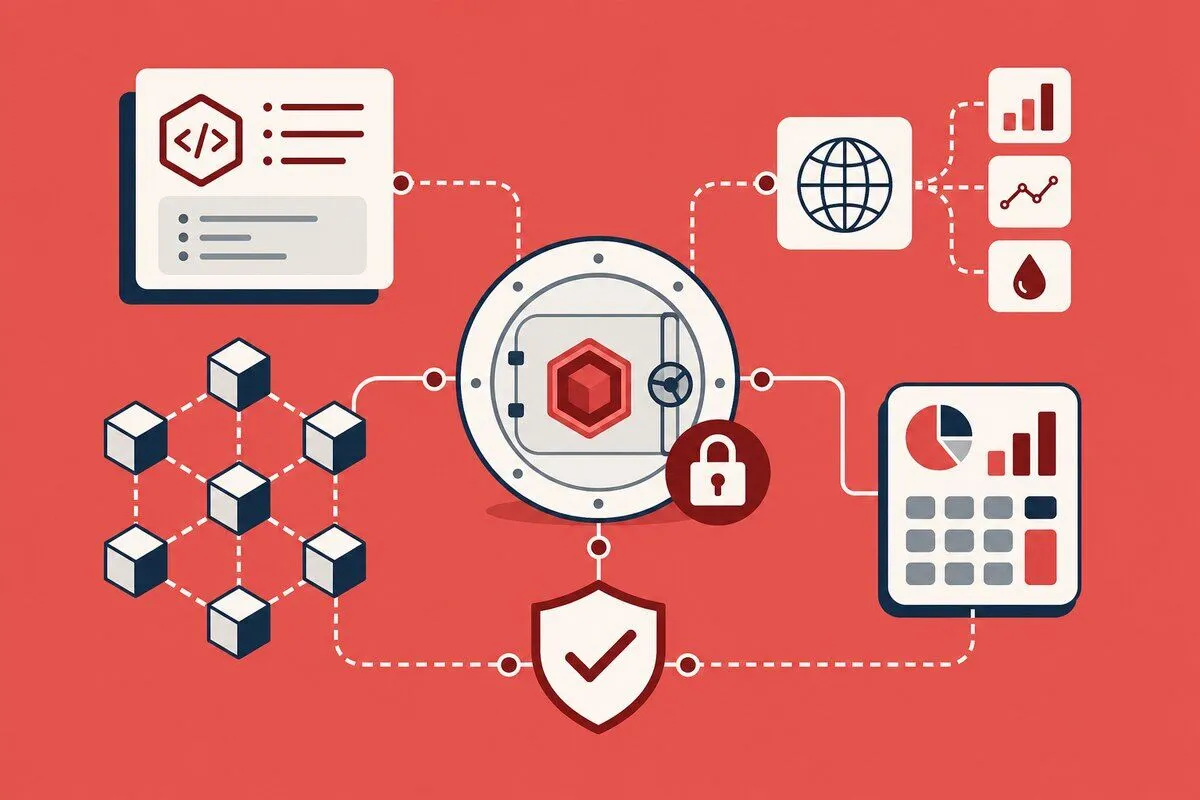
Enterprise-grade ai chatbot online solutions include data encryption, role-based access controls, and compliance frameworks relevant to markets like India (IT Act, DPDP) and the UAE (UAE Data Protection Law), ensuring safe and legally sound deployments.
Fundamental Concepts Behind Smart AI Chatbots
To truly understand what makes an AI chatbot smart, it is important to grasp a few foundational AI concepts that power everything. These concepts form the theoretical backbone of every modern intelligent chatbot and are directly responsible for the leaps in capability we have seen between 2020 and 2026.
Intent and Entity Extraction is the process by which a chatbot identifies what the user wants (intent) and extracts the specific pieces of information relevant to that intent (entities). For example, if a user in Dubai says “Book me a table for two tomorrow at 8 PM,” the intent is a reservation, the entity is the number of guests, and the date and time are additional entities parsed from the sentence.
Context Management is the ability to retain and reference information from earlier in a conversation. A conversational ai chatbot with strong context management can understand that when a user says “change the second one” it refers to a specific item discussed three messages earlier, without the user having to repeat themselves.
Sentiment Analysis allows an artificial intelligence chatbot to detect whether a user is frustrated, happy, confused, or angry. This enables the bot to adjust its tone accordingly or trigger an immediate escalation to a live human agent when the sentiment signals urgency or dissatisfaction.
Slot Filling is the process of gathering all the required pieces of information to complete a task. A business chatbot booking a hotel room must collect check-in date, check-out date, number of guests, and room preference before it can process the request. Slot filling guides the user through this data collection naturally within conversation.
Natural Language Processing in AI Chatbots Explained
Natural Language Processing, commonly referred to as NLP, is the technology that allows a machine to read, interpret, and generate human language. It is the most critical component of any AI chatbot because without it, machines simply cannot understand the natural, unstructured way people write and speak.
NLP in a modern conversational AI chatbot involves several layers. Tokenisation breaks a sentence into individual words or phrases. Part-of-speech tagging identifies verbs, nouns, adjectives, and their grammatical relationships. Named Entity Recognition detects people, locations, organisations, dates, and custom business entities within text. Semantic analysis determines the deeper meaning and relationship between words beyond their literal definitions.
According to recent industry data, 91 percent of messages handled by modern chatbots now use NLP, and top-tier NLP accuracy reaches 93 percent. This precision is what enables the best ai chatbot platforms to handle nuanced queries from users in India who may write in a mix of English and Hindi, or from users in Dubai whose messages blend English with Arabic expressions and cultural references.
NLP Capability Benchmarks in 2026
Machine Learning and Large Language Models in Chatbots
Machine learning (ML) is what allows an AI chatbot to improve over time. Rather than being manually reprogrammed for every new scenario, an ML-powered intelligent chatbot learns from each conversation, user correction, and new data input. This continuous learning loop is why enterprise-grade chatbots deployed in 2026 are dramatically more capable than those of just two years ago.
Large Language Models, or LLMs, represent the current frontier of this capability. LLMs are neural networks trained on vast datasets of human text, enabling them to generate fluent, contextually rich responses across virtually any topic. They power tools like ChatGPT, the meta ai chatbot, Google Gemini, and a growing ecosystem of enterprise conversational AI platforms. The generative AI chatbot segment specifically is now valued at over USD 12 billion in 2026 and growing at a pace that far outstrips the broader chatbot market.
For businesses in India and Dubai, the arrival of LLMs has unlocked a new class of free ai chatbot and enterprise tool that can handle complex workflows, draft responses, summarise documents, and conduct nuanced negotiations within a single conversation thread. RAG-based chatbots, which combine LLMs with real-time retrieval of a company’s proprietary data, now achieve 95 to 98 percent accuracy with near-zero hallucination rates. This makes them reliable enough for high-stakes use cases in banking, healthcare, and legal advisory services.
Different Types of AI Chatbots Used Today
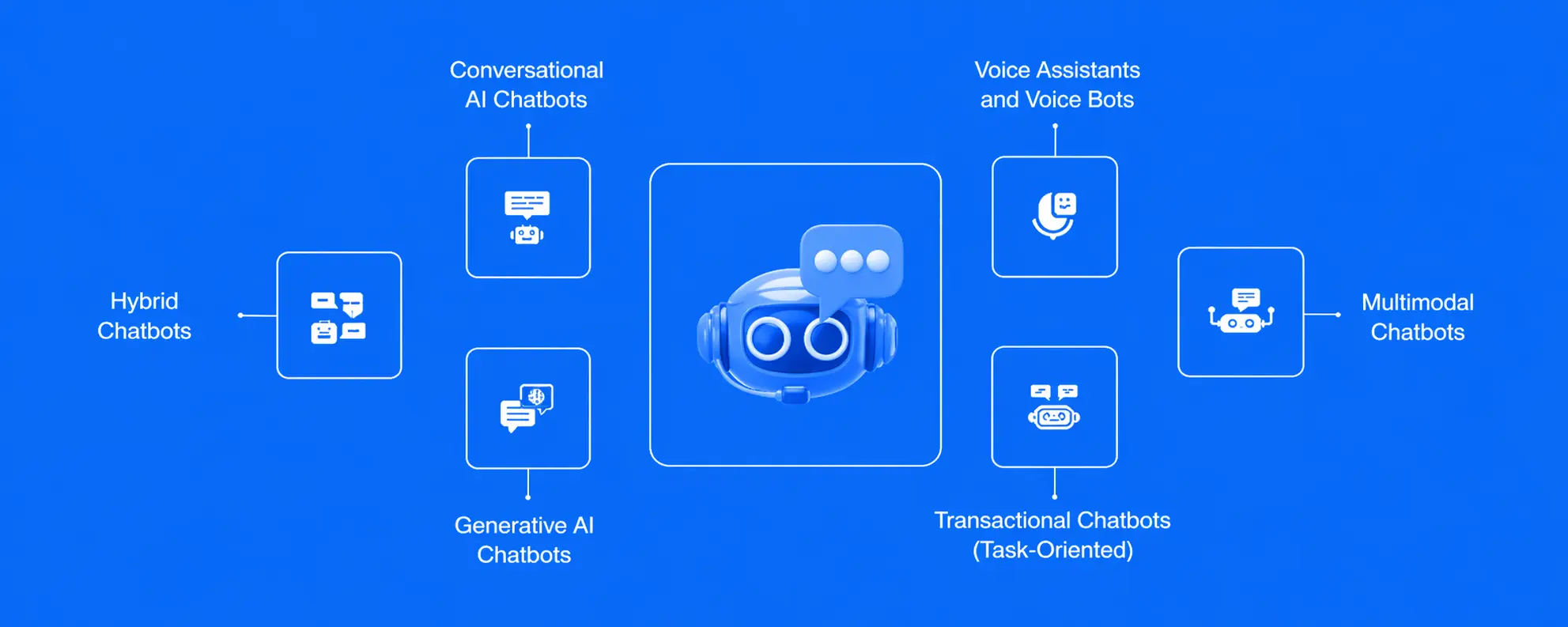
Not all AI chatbot platforms are created equal. Depending on the underlying technology and intended use case, chatbots can be broadly categorised into distinct types. Selecting the right type is critical for businesses in Dubai and India to get genuine value from their investment in chat automation.
| Type | Core Technology | Best For | Limitation |
|---|---|---|---|
| Rule-Based Chatbot | Decision trees, keyword triggers | Simple FAQ handling, menu navigation | Breaks on natural language variation |
| NLP-Powered Chatbot | Intent classification, entity extraction | Customer support, lead qualification | Requires manual training data |
| Generative AI Chatbot | LLMs (GPT-4, Gemini, Claude) | Complex queries, content creation | Hallucination risk without RAG |
| Conversational AI Chatbot | NLP + ML + context management | Multi-turn dialogue, personalisation | Higher build and maintenance cost |
| Voice AI Assistant | ASR, NLP, TTS | Hands-free use, accessibility | Noisy environment challenges |
| Agentic AI Chatbot | LLMs + tool use + autonomous planning | End-to-end workflow automation | Governance and oversight complexity |
Key Features of Modern AI Chatbots for Businesses
When evaluating chatbot software for enterprise or SMB use, there are specific features that separate mediocre tools from the best ai chatbot platforms. Based on our 8 years of implementing business chatbot solutions across sectors in India and the UAE, these are the features that actually drive results.
Omnichannel Deployment
Deploy the same AI chatbot across your website, WhatsApp, Instagram, and mobile app from a single platform. Consistent experience across every touchpoint is non-negotiable for businesses targeting customers in both India and Dubai simultaneously.
Multilingual Support
74 percent of global businesses cite multilingual AI chatbot capability as critical. A conversational AI solution must handle Hindi, Arabic, English, Tamil, and other regional languages to serve diverse audiences effectively without losing conversational quality.
Human Handoff
A well-designed customer support chatbot knows its limits. Smooth escalation to a live agent with full conversation history transferred ensures no context is lost, preventing customer frustration and protecting brand trust at critical moments.
Analytics Dashboard
Real-time reporting on conversation volumes, resolution rates, drop-off points, and sentiment trends allows teams to continuously optimise their intelligent chatbot and demonstrate ROI to stakeholders with concrete, measurable data.
CRM Integration
The best ai chatbot online tools connect directly to Salesforce, HubSpot, Zoho, or custom CRMs to log conversations, update contact records, and trigger follow-up workflows automatically without any human data entry required post-conversation.
Personalisation Engine
By accessing user history, preferences, and purchase records, a virtual assistant powered by AI can personalise every interaction. This drives higher conversion rates, stronger customer loyalty, and significantly improved satisfaction scores over time.
Major Benefits of AI Chatbots for Users and Brands
The commercial case for deploying an AI chatbot has never been stronger. In 2026, the average business deploying a well-configured artificial intelligence chatbot reports a 340 percent first-year ROI with payback periods averaging just one to three months. Here is a breakdown of the primary benefits for both users and the brands they interact with.
An AI chatbot never sleeps. Businesses in Dubai serving customers across multiple time zones and Indian e-commerce brands managing midnight shopping queries both benefit from round-the-clock automated support with no staffing overhead or quality compromise.
Deploying a customer support chatbot reduces service costs by up to 40 percent. Each automated interaction costs up to 80 percent less than one handled by a human agent, producing dramatic savings at scale for both SMBs and enterprise-level organisations across India and the UAE.
75 percent of customers expect immediate responses when contacting a business. A free ai chatbot or enterprise solution responds in milliseconds regardless of query volume, eliminating wait times that drive customer dissatisfaction and abandonment.
Agentic chat automation delivers up to 40 percent lift in conversion rates through proactive engagement. Chatbot-powered e-commerce funnels convert 2.4 times more customers compared to traditional static landing pages with no interactive assistance component present.
Real World Use Cases of AI Chatbots Across Industries
The AI chatbot has moved well beyond the simple help desk. In 2026, intelligent conversational AI solutions are actively transforming operations across a vast range of industries. Here is how the technology is being applied in markets like India and Dubai right now.[1]
| Industry | Key Use Case | Measurable Impact |
|---|---|---|
| E-Commerce and Retail | Order tracking, product recommendations, cart recovery | 15% higher AOV, 2.4x conversion rate improvement |
| Banking and Finance | Account queries, fraud alerts, loan pre-qualification | 90% query resolution, 25% revenue increase reported |
| Healthcare | Appointment booking, symptom checking, prescription reminders | 31% adoption in customer service; $543M market in 2026 |
| Real Estate (Dubai) | Property search, site visit scheduling, investor queries | 60% reduction in lead qualification time for agents |
| Education (India) | Admissions queries, course guidance, student support | 24/7 student support with zero additional staffing cost |
| Travel and Hospitality | Booking, itinerary updates, check-in assistance | 87% of users willing to use a travel chatbot for bookings |
Common Challenges and Limitations of AI Chatbots
Despite the remarkable progress, an AI chatbot is not a perfect solution out of the box. Businesses that go into deployment with a clear understanding of the limitations are far better positioned to design solutions that actually work. Here are the most common challenges we encounter across projects in India and the UAE.
Hallucination in LLMs
Generative AI chatbots can produce confident but factually incorrect responses. This is particularly dangerous in regulated industries like finance and healthcare. RAG architecture and strict validation layers help mitigate this, but zero-hallucination requires ongoing monitoring and human review processes.
Legacy System Integration
63 percent of banks and many enterprises in India report difficulty integrating chatbot software with legacy core systems. Bridging modern AI interfaces with decade-old databases requires experienced middleware architecture and often significant pre-integration technical work.
Training Data Quality
An intelligent chatbot is only as good as the data it is trained on. Poor, outdated, or biased training data leads to inaccurate intent recognition and irrelevant responses. Maintaining a clean, regularly updated knowledge base and conversation corpus is an ongoing operational requirement.
User Trust and Acceptance
60 percent of consumers still worry that an AI chatbot will not understand their queries. Building trust requires transparency about when the user is speaking to a bot, providing easy access to human escalation, and consistently delivering accurate, helpful answers over time through quality assurance.
Multilingual Nuance
In diverse markets like India, users switch between languages mid-sentence. A conversational ai chatbot must handle code-switching, regional slang, and transliterated text gracefully. Most off-the-shelf free ai chatbot tools struggle significantly with this requirement without custom fine-tuning.
Governance and Compliance
Deploying an AI chatbot in Dubai requires adherence to UAE Data Protection Law. In India, DPDP Act compliance is now mandatory. Only 18 percent of enterprises have enterprise-wide AI governance councils in place, creating significant compliance exposure for businesses moving fast on chat automation.
Best Practices for Building an Effective AI Chatbot
With 8 years of experience building and deploying AI chatbot solutions for clients across India and Dubai, we have identified the practices that consistently separate successful implementations from costly failures. These are not theoretical recommendations. They are battle-tested principles drawn from real deployments in competitive markets.
Start With a Specific Use Case
Do not attempt to build an AI chatbot that does everything at once. Start with one high-value use case such as lead qualification or order tracking, perfect the experience, prove the ROI, and then expand. Focused bots outperform feature-bloated ones consistently in both India and UAE deployments.
Invest Heavily in Training Data
The quality of your knowledge base and intent training set is the single most important factor in intelligent chatbot performance. Collect real customer queries from your support ticket history, sales transcripts, and live chat logs before building your NLP model. Real data beats synthetic data every time.
Design for Human Escalation
Every customer support chatbot must have a graceful, fast escalation path to human agents. Define the trigger conditions clearly, whether that is a negative sentiment score, three failed intents, or explicit user request, and ensure full context transfer so agents do not start the conversation from scratch.
Measure What Matters
Track containment rate, first contact resolution, CSAT score, and average handling time from day one. These metrics tell you whether your ai chatbot online is actually solving problems or just creating the appearance of automation. Monthly review cycles allow fast iteration and continuous improvement.
Plan for Multilingual Needs Early
If you are targeting customers in both India and Dubai, multilingual architecture must be decided at the design stage, not retrofitted later. Building a conversational AI chatbot that natively supports multiple languages from the beginning is far more efficient and produces a far better user experience than translation layered on top.
Future Trends Shaping the Next Generation of Chatbots
The AI chatbot of 2026 is already dramatically different from what existed three years ago. But the pace of change is not slowing. Based on our direct experience and the industry data emerging from both Indian and global markets, these are the trends that will define the next generation of conversational AI platforms.
Agentic AI Chatbots
Over 40 percent of enterprise applications will embed task-specific AI agents by the end of 2026. Agentic bots do not just answer questions. They take autonomous actions across connected systems, placing orders, sending emails, updating records, and completing complex multi-step workflows without human intervention.
Multimodal Interaction
The next generation of AI chatbot platforms will process text, images, voice, and video simultaneously. A customer in Dubai will be able to photograph a damaged product and describe the issue verbally in Arabic, with the bot understanding both inputs together to initiate a return process instantly.
Proactive Chatbots
Rather than waiting for users to initiate conversations, future virtual assistant technology will proactively reach out based on behavioural triggers. Abandoned cart nudges, renewal reminders, and personalised product suggestions triggered by browsing patterns will all be delivered through chat automation without user initiation.
Emotional Intelligence
Advanced artificial intelligence chatbot systems will detect and respond to the emotional state of users in real time. By 2027, 72 percent of CX leaders expect chatbots to become a genuine extension of their brand identity, with emotional intelligence playing a central role in making interactions feel genuinely human and empathetic.
Voice-First AI
63 percent of businesses are already investing in AI voice assistants. In India, where voice search and voice messaging are dominant, voice-first conversational AI chatbot platforms will become mainstream across banking, healthcare, and retail customer service operations within the next 18 to 24 months.
Hyper-Personalisation
Future best ai chatbot platforms will build individual models for each customer, understanding their communication preferences, purchase history, emotional patterns, and life stage to personalise every interaction beyond what any human agent could consistently achieve at scale.
India is projected to lead global chatbot growth at a 32.9 percent CAGR through 2034, while Dubai continues to accelerate AI adoption across its smart city infrastructure, real estate, and financial services sectors. Businesses that invest in building a future-ready business chatbot strategy today will be the ones that dominate customer experience in these high-growth markets over the next decade.
The AI chatbot is no longer a feature. It is a fundamental layer of how modern businesses operate, communicate, and grow. Whether you are evaluating a free ai chatbot to test the concept, comparing the meta ai chatbot against enterprise solutions, or looking to build a fully custom conversational ai chatbot for your specific market, the fundamentals covered in this guide will ensure you make the right decisions with confidence.
Ready to Deploy an AI Chatbot for Your Business?
Let our team build a smart, scalable AI chatbot that drives real results for your brand in India or Dubai.
Frequently Asked Questions About AI Chatbots
Q1.1. What exactly is an AI chatbot and how does it work?
An AI chatbot is a software program that uses artificial intelligence and natural language processing to simulate human-like conversations. It understands user inputs, processes intent, and delivers relevant responses automatically without human involvement.
Q2.2. Is there a free AI chatbot I can use right now?
Yes, several free AI chatbot options exist online. Tools like ChatGPT, Meta AI chatbot, and Google Gemini offer free tiers. Businesses in India and Dubai can access free ai chatbot platforms to test basic conversational automation before committing to a paid plan.
Q3.3. What is the difference between a rule-based chatbot and an AI chatbot?
A rule-based chatbot follows fixed decision trees and scripted responses, while an AI chatbot learns from data using machine learning. An artificial intelligence chatbot adapts dynamically, handles complex questions, and improves over time with each conversation it processes.
Q4.4. Which is the best AI chatbot for customer support in 2026?
The best ai chatbot for customer support depends on your business size and goals. In 2026, platforms like Intercom, Drift, and custom-built intelligent chatbot solutions powered by large language models lead for enterprise customer support automation in India and the UAE.
Q5.5. Can an AI chatbot replace human customer service agents?
An AI chatbot can automate up to 80 percent of routine queries, but complex, emotional, or high-value interactions still benefit from human agents. The ideal model in Dubai and India is a hybrid approach where a customer support chatbot handles volume and humans manage escalations.
Q6.6. How do businesses in India and Dubai use AI chatbots?
Businesses across India and Dubai use business chatbot solutions for lead generation, customer service, appointment booking, and sales automation. Sectors like e-commerce, banking, real estate, and healthcare in these markets are among the fastest adopters of conversational AI technology.
Q7.7. What is a conversational AI chatbot and how is it different from a regular chatbot?
A conversational ai chatbot goes beyond scripted responses by using deep learning and context awareness to hold natural, multi-turn dialogues. It remembers previous conversation steps, understands intent more accurately, and delivers far more human-like experiences compared to basic chatbot software.
Q8.8. Is the Meta AI chatbot free to use?
Yes, the meta ai chatbot is available as a free tool integrated within Meta’s platforms including WhatsApp, Instagram, and Facebook Messenger. It uses Meta’s own large language model and is accessible to users in India and across the UAE without any subscription fee.
Q9.9. What industries benefit the most from AI chatbots?
Retail, banking, healthcare, travel, real estate, and education benefit enormously from an intelligent chatbot. In India and Dubai, these industries use chat automation to handle thousands of simultaneous queries, qualify leads, and reduce operational costs significantly without adding more staff.
Q10.10. How do I build an AI chatbot for my business?
Building a business chatbot starts with defining goals, selecting a platform or AI model, training it on relevant data, and integrating it with your CRM or website. Partnering with an experienced ai chatbot online provider ensures faster deployment, better accuracy, and reliable ongoing support.
Explore Services
Related Services
Reviewed by

Aman Vaths
Founder of Nadcab Labs
Aman Vaths is the Founder & CTO of Nadcab Labs, a global digital engineering company delivering enterprise-grade solutions across AI, Web3, Blockchain, Big Data, Cloud, Cybersecurity, and Modern Application Development. With deep technical leadership and product innovation experience, Aman has positioned Nadcab Labs as one of the most advanced engineering companies driving the next era of intelligent, secure, and scalable software systems. Under his leadership, Nadcab Labs has built 2,000+ global projects across sectors including fintech, banking, healthcare, real estate, logistics, gaming, manufacturing, and next-generation DePIN networks. Aman’s strength lies in architecting high-performance systems, end-to-end platform engineering, and designing enterprise solutions that operate at global scale.