Ai Overview
Healthcare data protection has become one of the most pressing concerns facing the industry. This represents approximately 82% of the entire United States population having their protected health information exposed, stolen, or impermissibly disclosed in a single year. The attack caused nationwide care delivery interruptions, delayed billing cycles for healthcare providers across the country, and incurred response costs exceeding $2.
Key Takeaways
- The global healthcare IT market is projected to grow from $480.49 billion in 2025 to $961.26 billion by 2030 at a compound annual growth rate of 14.9%, reflecting the industry’s accelerating digital transformation efforts.[1]
- In 2024, 725 large healthcare data breaches were reported to the HHS Office for Civil Rights, affecting more than 275 million individuals, representing approximately 82% of the U.S. population.[2]
- The Change Healthcare ransomware attack in February 2024 compromised an estimated 190 million patient records, representing the largest healthcare data breach in history, with response costs exceeding $2.4 billion.[3]
- According to the Sophos State of Ransomware in Healthcare 2024 report, 67% of healthcare organizations experienced ransomware attacks in the past year, with the mean cost of recovery reaching $2.57 million, up from $2.20 million in 2023.[4]
- HHS estimates that industrywide first-year costs for implementing the proposed HIPAA Security Rule updates will reach $9 billion, with a five-year implementation estimate of $33 billion.[5]
- In 2024, 71% of hospitals reported using predictive AI integrated with their electronic health record, up from 66% in 2023, according to American Hospital Association data.[6]
The healthcare industry is undergoing a major technological shift as organizations work to modernize their systems, improve patient care, and meet growing regulatory demands. With the global healthcare IT market expected to nearly double by 2030, healthcare providers are investing heavily in digital tools such as electronic health records, cloud platforms, artificial intelligence, and advanced cybersecurity systems. This transformation is changing how hospitals and healthcare organizations manage operations, protect patient information, and deliver medical services.
Since 2020, digital transformation in healthcare IT has accelerated rapidly, driven by increasing operational challenges and the demand for better healthcare experiences. Many healthcare organizations have significantly expanded their IT budgets to strengthen infrastructure, improve workflow efficiency, and support data-driven decision-making. As technology becomes more integrated into healthcare environments, organizations must focus on balancing innovation, compliance, patient safety, and long-term operational performance.
The Current State of Healthcare Cybersecurity
Healthcare data protection has become one of the most pressing concerns facing the industry. The numbers tell a sobering story. According to the 2024 Healthcare Data Breach Report from the HIPAA Journal, 725 large data breaches were reported to the Department of Health and Human Services Office for Civil Rights, affecting more than 275 million individuals. This represents approximately 82% of the entire United States population having their protected health information exposed, stolen, or impermissibly disclosed in a single year.
The Change Healthcare ransomware attack in February 2024 stands as the largest healthcare data breach in history, compromising an estimated 190 million individual records. Beyond the staggering number of affected patients, the operational disruption proved devastating. The attack caused nationwide care delivery interruptions, delayed billing cycles for healthcare providers across the country, and incurred response costs exceeding $2.4 billion, according to UnitedHealth Group.
Healthcare cybersecurity solutions must address a threat landscape that continues to grow more sophisticated. The Sophos State of Ransomware in Healthcare 2024 report revealed that 67% of healthcare organizations experienced ransomware attacks in the past year, up from 60% in 2023 and nearly double the 34% reported in 2021. The healthcare sector now ranks second-highest for ransomware attack rates across all industries, trailing only central and federal government organizations.
Recovery from these attacks has become increasingly prolonged. Where 54% of healthcare organizations recovered from ransomware within one week in 2022, that figure dropped to just 22% in 2024. Meanwhile, 37% of organizations now require more than one month to restore normal operations, up from 28% the previous year. The mean cost of recovery reached $2.57 million in 2024, excluding ransom payments, representing a significant increase from $2.20 million in 2023.
Understanding HIPAA Compliant Healthcare IT Requirements
The Health Insurance Portability and Accountability Act remains the cornerstone of healthcare data security solutions in the United States. However, the regulatory landscape is evolving significantly. In December 2024, the Department of Health and Human Services published a proposed update to the HIPAA Security Rule, representing the most substantial modification since the original rule’s implementation.
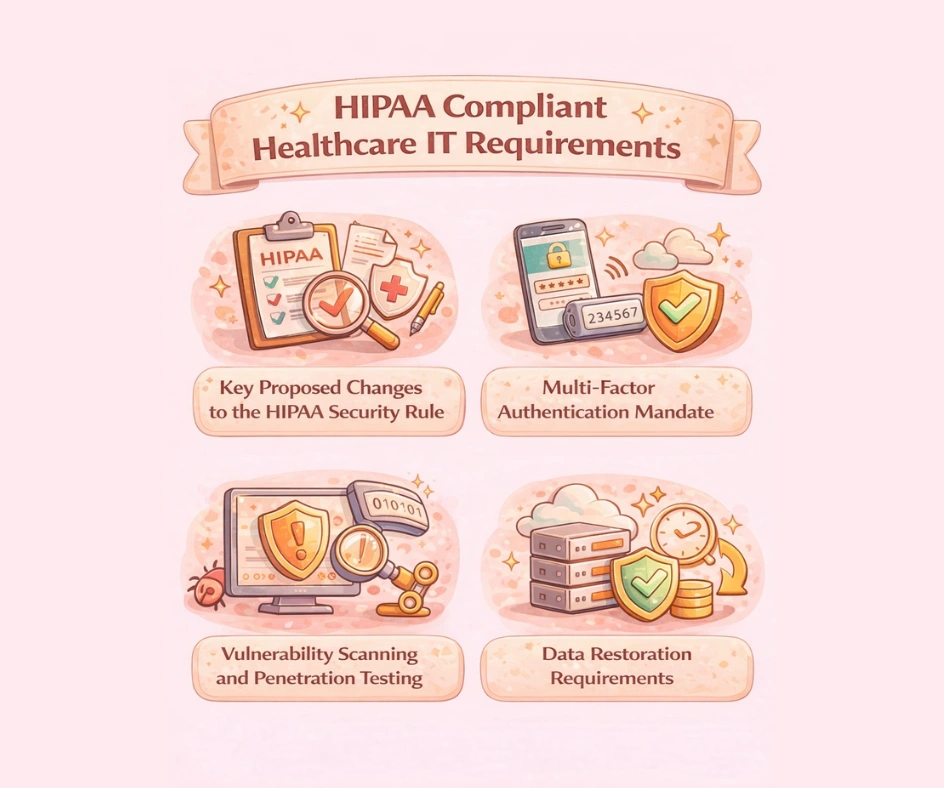
1. Key Proposed Changes to the HIPAA Security Rule
The proposed rule eliminates the distinction between “addressable” and “required” implementation specifications. Under the new framework, all security measures will become mandatory requirements rather than optional considerations. This change addresses a longstanding criticism that the flexibility of addressable specifications allowed some organizations to implement inadequate safeguards.
Healthcare organizations will be required to conduct and document comprehensive audits of their administrative, technical, and physical safeguards at least once every 12 months. This represents a significant shift from the previous approach, where many organizations conducted risk assessments only periodically or in response to incidents.
2. Multi-Factor Authentication Mandate
The 2025 HIPAA Security Rule introduces a pivotal requirement for implementing multi-factor authentication across all access points to electronic protected health information. Users will need to verify their identities through multiple credentials, such as passwords combined with biometric data or security tokens, before gaining access to sensitive systems.
3. Vulnerability Scanning and Penetration Testing
Covered entities and business associates will be required to perform vulnerability scans at least every six months and conduct penetration tests annually. These requirements acknowledge the dynamic nature of cybersecurity threats and the need for continuous vigilance.
4. Data Restoration Requirements
Organizations must implement backup solutions capable of restoring critical systems within 72 hours of a disruption. This requirement directly addresses the prolonged recovery times many healthcare organizations have experienced following cyberattacks.
The HHS estimates that industrywide first-year costs for implementing the proposed rule will reach $9 billion, with a five-year estimate of $33 billion. While substantial, these costs reflect the seriousness with which regulators view the current threat landscape and the inadequacy of existing protections.
You May Also Like:
Healthcare IT Risk Management Strategies
Enterprise risk management in healthcare has evolved from a primarily clinical focus to encompass technological, operational, financial, and strategic dimensions. According to the Ponemon Institute’s 2024 Cyber Insecurity in Healthcare report, 92% of U.S. healthcare organizations experienced at least one cyberattack over the previous 12 months, underscoring the pervasive nature of the threat.
1. The COSO ERM Framework Applied to Healthcare
The American Society for Healthcare Risk Management aligns its guidance with the COSO Enterprise Risk Management framework, which provides a structured approach to identifying, assessing, and managing risks across the organization. This framework emphasizes that risk management is not solely an IT function but a strategic priority requiring board-level oversight and organization-wide engagement.
2. Key Elements of Effective Healthcare IT Risk Management
- Risk Identification and Assessment: Organizations must systematically identify potential risks across clinical, operational, financial, strategic, compliance, and reputational domains. This process should involve stakeholders from IT, clinical operations, finance, and leadership to ensure comprehensive coverage.
- Failure Mode and Effects Analysis (FMEA): This methodology helps organizations identify potential failures in clinical or healthcare processes before they occur, determining various failure modes and pinpointing the underlying causes of each mode.
- Root Cause Analysis (RCA): When incidents or near-misses occur, RCA helps identify underlying causes to develop solutions that address fundamental vulnerabilities rather than symptoms.
- Continuous Monitoring: Healthcare IT risk management requires deploying advanced monitoring tools that provide real-time insights into network activity, enabling organizations to implement strict access controls and respond rapidly to emerging threats.
3. Zero Trust Architecture Implementation
Zero-trust security has emerged as a foundational approach to healthcare cybersecurity solutions. The core principle of “never trust, always verify” addresses the limitations of traditional perimeter-based security models that assume internal network traffic is inherently trustworthy.
According to a 2023 Okta survey, 61% of organizations had a zero-trust initiative in place, up from just 24% two years earlier. In 2024, over 41% of technology and security professionals reported being in the advanced stage of zero-trust implementation, while 12% indicated they had achieved optimal maturity.
For healthcare organizations, zero trust implementation involves:
- Identity Verification: Continuous authentication of all users, devices, and applications attempting to access network resources, regardless of their location or previous access patterns.
- Least Privileged Access: Granting users only the minimum access necessary to perform their specific job functions, reducing the potential impact of compromised credentials.
- Microsegmentation: Dividing networks into isolated segments to prevent lateral movement by attackers who breach initial defenses, and containing potential damage from security incidents.
- Continuous Validation: Ongoing verification of user behavior and device health throughout each session, not merely at initial authentication.
Healthcare IT Security Investments by Priority Area (2024)
| Priority Area | Percentage of Organizations Prioritizing | Key Implementation Focus |
|---|---|---|
| Cybersecurity Infrastructure | 55% | Network segmentation, threat detection, and incident response capabilities |
| EHR Modernization | 46% | System upgrades, integration improvements, and workflow optimization |
| Digital Care Solutions | 32% | Telehealth platforms, remote monitoring, and patient engagement tools |
| Advanced Analytics, AI, and Machine Learning | 31% | Predictive modeling, clinical decision support, and operational efficiency |
| Cloud Migration | 28% | Infrastructure modernization, data storage, and application hosting |
| Interoperability Solutions | 24% | Data exchange standards, API development, and health information networks |
Source: Guidehouse 2024 Health System Digital & IT Investment Trends Survey
Big Data Analytics for Healthcare
Big Data Analytics for Healthcare represents one of the most promising frontiers in healthcare IT transformation. The North American market for healthcare big data analytics is projected to grow at a 19.6% compound annual growth rate from 2024 to 2030, according to Grand View Research. This growth reflects the industry’s recognition that data-driven insights can fundamentally improve patient outcomes, operational efficiency, and financial performance.
1. Clinical Applications of Big Data Analytics
Healthcare providers are leveraging big data to enable predictive care models that identify patients at risk for adverse outcomes before complications develop. According to a study published by Healthcare IT News, hospitals using predictive analytics reduced readmission rates by 22%. The Mayo Clinic, for example, uses big data analytics to identify patients with multiple chronic conditions who are likely to benefit from early interventions at care homes, thereby preventing unnecessary emergency department visits.
- Diagnostic Enhancement: Machine learning algorithms can analyze extensive patient data in electronic health records to identify early signs of conditions such as sepsis, providing real-time alerts to physicians. As of August 2024, the FDA had authorized approximately 950 medical devices that use artificial intelligence or machine learning, with most designed to assist in the detection and diagnosis of treatable diseases. The top medical specialties using AI technologies include radiology, cardiology, neurology, and anesthesiology.
- Personalized Treatment Planning: By analyzing genetic, environmental, and lifestyle factors, healthcare organizations can develop individualized treatment strategies. Precision medicine initiatives leverage genomic data alongside clinical information to optimize therapeutic approaches for specific patient populations.
- Population Health Management: Big data enables healthcare systems to identify trends across patient populations, understand disease patterns, and allocate resources more effectively. This capability has proven particularly valuable for managing chronic disease populations and implementing preventive care programs.
2. Operational Applications
Beyond clinical care, Big Data Analytics for Healthcare delivers substantial operational benefits:
- Resource Optimization: Predictive models help hospitals manage staffing, bed allocation, and equipment utilization based on anticipated patient volumes and acuity levels.
- Supply Chain Management: Analytics can forecast demand for medications, supplies, and equipment, reducing waste while ensuring the availability of critical resources.
- Revenue Cycle Improvement: By analyzing billing patterns, denials, and payment trends, organizations can identify opportunities to improve revenue capture and reduce administrative costs. For practices looking to act on these insights, partnering with a specialized revenue cycle management company like AnnexMed ensures those opportunities translate directly into improved cash flow and cleaner claims.
According to a McKinsey report, Big Data analytics could save the healthcare industry between $300 billion and $450 billion annually by improving patient care and operational efficiency. Healthcare organizations using Big Data analytics have reported improvements in operational efficiency of approximately 12%, according to Deloitte research.
Cloud Computing in Healthcare IT Transformation
The healthcare cloud computing market has experienced remarkable growth, reaching approximately $39.8 billion in 2024, according to market analysis. Projections indicate this market will expand to $180.2 billion by 2034, growing at a compound annual growth rate of 16.3%. This trajectory reflects healthcare organizations’ increasing recognition of cloud platforms’ advantages for storing, processing, and analyzing healthcare data.
Cloud Adoption Trends
According to a survey by Global Healthcare Exchange, nearly 70% of U.S. health systems and hospitals planned to implement cloud-based solutions for supply chain management by 2026. McKinsey research indicates that cloud computing adoption in healthcare could generate up to $140 billion in economic value by 2030, driven by operational efficiency improvements and enhanced patient outcomes.
The services segment dominated the healthcare cloud computing market in 2024, accounting for 37.8% of total revenue. Healthcare providers represented 62.5% of end users, while North America captured 38.8% of the global market share.
Benefits of Cloud-Based Healthcare IT
- Flexibility and Accessibility: Cloud platforms enable healthcare professionals to access patient data and clinical applications from any location with internet connectivity, supporting telemedicine initiatives and distributed care models.
- Improved Disaster Recovery: Cloud-based systems typically offer automated backups across multiple geographic locations, providing resilience against both cyberattacks and natural disasters.
- Integration with Advanced Technologies: Cloud infrastructure supports the deployment of artificial intelligence, machine learning, and advanced analytics applications that require substantial computational resources.
- Cost Efficiency: Pay-as-you-go pricing models allow healthcare organizations to scale resources based on demand, avoiding large capital expenditures for on-premises infrastructure.
Security Considerations
While cloud platforms offer numerous advantages, healthcare data protection remains paramount. Major cloud providers invest heavily in security infrastructure, often exceeding what individual healthcare organizations could afford independently. However, the shared responsibility model requires healthcare organizations to properly configure cloud services and maintain appropriate access controls.
The shortage of skilled IT professionals continues to affect cloud adoption, with 45.6% of healthcare organizations citing limited access to qualified personnel as a primary barrier to implementation.
You May Also Like:
Addressing Healthcare IT Performance Challenges
Healthcare IT performance encompasses multiple dimensions, including system availability, response times, interoperability, and user satisfaction. Organizations must balance these performance requirements against security, compliance, and budgetary constraints.
The Interoperability Challenge
Electronic health record interoperability remains a significant pain point for clinicians and healthcare organizations. According to KLAS Research’s EHR Interoperability 2024 report, based on feedback from over 500,000 clinicians, interoperability is a major concern amid an already challenging EHR experience. Among the 11 metrics used to calculate the Net EHR Experience Survey, clinicians reported the lowest satisfaction with external integration, where only 44% agreed their EHR provides expected integration with outside organizations.
Physicians most frequently cite interoperability as a challenge and report it as their top requested improvement, noting that external patient data often isn’t readily available in their EHR and, when found, is difficult to leverage effectively.
Contributing Factors to Interoperability Challenges
- Vendor Lock-In: Some EHR vendors use proprietary software, creating closed ecosystems that limit data exchange with competing platforms.
- Fragmented Standards Adoption: Although standards like HL7 and FHIR exist, their adoption varies widely across organizations and regions, compounding integration difficulties.
- Regulatory Complexity: While regulations like HIPAA aim to protect data, they can inadvertently discourage data sharing by imposing strict compliance requirements.
The athenahealth Physician Sentiment Survey 2024-25 found that 95% of physicians indicated that getting the right clinical information at the right time is very important to them; however, only 28% said that sending and receiving patient data on a different EHR was easy.
System Performance Optimization
Healthcare IT compliance requirements increasingly mandate specific performance standards. The proposed HIPAA Security Rule update requires organizations to restore critical systems within 72 hours of disruption, establishing clear performance expectations for disaster recovery.
Organizations are addressing performance challenges through several strategies:
- Infrastructure Modernization: Migrating from legacy on-premises systems to modern cloud-based or hybrid architectures that offer greater flexibility and resilience.
- Application Optimization: Streamlining clinical workflows and reducing unnecessary system complexity to improve response times and user experience.
- Network Segmentation: Implementing microsegmentation to isolate critical systems and reduce the blast radius of potential security incidents.
- Continuous Monitoring: Deploying comprehensive monitoring solutions that provide real-time visibility into system health and performance metrics.
AI and ML in Healthcare
The integration of artificial intelligence into healthcare represents one of the most transformative aspects of digital transformation in healthcare IT. According to the HIMSS AI Adoption by Health Systems Report 2024, 86% of healthcare providers, life science companies, and technology vendors are currently using AI, with 60% recognizing its ability to uncover health patterns and diagnoses beyond human detection.
In 2024, 71% of hospitals reported using predictive AI integrated with their electronic health record, up from 66% in 2023, according to American Hospital Association data. The most common applications include predicting health trajectories and risks for inpatients, while the fastest-growing uses involve simplifying billing processes and administrative workflows.
Clinical AI Applications
- Diagnostic Support: AI algorithms analyze medical imaging, laboratory results, and clinical documentation to assist clinicians in identifying conditions earlier and more accurately. By May 2025, the FDA had approved 1,247 medical devices powered by AI and machine learning, with radiology accounting for 956 devices, followed by cardiovascular care with 116 devices.
- Clinical Decision Support: AI-powered systems provide evidence-based recommendations for diagnosis and treatment, helping clinicians navigate complex cases and large volumes of patient data.
- Ambient Documentation: AI scribes can listen to clinical consultations and automatically generate documentation, reducing the administrative burden on physicians. Microsoft’s Dragon Copilot represents one example of this emerging technology category.
Administrative AI Applications
Administrative AI attracted 60% of all healthcare AI investment in 2024, reflecting the substantial burden that non-clinical tasks place on healthcare organizations. Among physicians, 68% report increased use of AI for clinical documentation, while 36% note growth in administrative applications such as scheduling, claims processing, revenue cycle management, and integrations with healthcare administrative systems and the best wellness center CRM tools used to improve patient engagement and operational coordination.
According to survey data, 57% of healthcare organizations identify reducing administrative burdens through automation as the most significant opportunity for AI adoption. AI-powered ambient scribes are advancing rapidly, with 30% of providers reporting system-wide deployments and an additional 22% in the implementation phase.
Challenges and Concerns
Despite the promise of AI, healthcare organizations must address significant concerns:
- Data Privacy and Security: AI systems require access to large volumes of patient data for training and operation, raising concerns about data protection and potential misuse.
- Algorithmic Bias: AI models trained on historical data may perpetuate or amplify existing biases in healthcare, potentially leading to disparities in care quality.
- Clinical Accountability: Questions remain about responsibility when AI systems contribute to clinical errors, with current practice placing ultimate accountability on the healthcare provider.
- Patient Trust: In 2024, 68% of U.S. survey respondents expressed concern about AI’s potential to weaken relationships between patients and providers, while over 60% cited concerns about new security risks and inaccurate information.
Healthcare Data Breach Statistics: 2020-2024 Trends
| Year | Large Data Breaches Reported | Records Compromised | Primary Attack Vector |
|---|---|---|---|
| 2020 | 663 | 34.4 million | Hacking/IT incidents |
| 2021 | 714 | 45.9 million | Hacking/IT incidents |
| 2022 | 720 | 52.2 million | Hacking/IT incidents |
| 2023 | 747 | 168 million | Hacking/IT incidents with ransomware |
| 2024 | 725 | 275+ million | Ransomware and exploited vulnerabilities |
Source: HIPAA Journal Healthcare Data Breach Reports, HHS Office for Civil Rights Breach Portal
Building a Comprehensive Healthcare IT Transformation Strategy
Successful healthcare IT transformation requires a systematic approach that balances technological advancement with operational stability, security requirements, and regulatory compliance. Organizations must develop comprehensive strategies that address people, processes, and technology in an integrated manner.
Strategic Planning Elements
- Assessment of Current State: Organizations must thoroughly evaluate their existing IT infrastructure, identifying strengths, weaknesses, and gaps in capability. This assessment should encompass clinical systems, administrative platforms, security posture, and workforce capabilities.
- Stakeholder Engagement: Healthcare IT transformation affects every aspect of organizational operations. Successful initiatives require active engagement from clinical leadership, administrative staff, IT teams, and board members throughout the planning and implementation process.
- Phased Implementation: Rather than attempting comprehensive transformation simultaneously, organizations should develop phased approaches that prioritize high-impact initiatives while managing risk and resource constraints.
- Workforce Development: Technology transformation must be accompanied by investment in workforce training and development. According to CDW research, just 14% of healthcare organizations report their IT security teams are fully staffed, with over half indicating they need more help.
Implementation Best Practices
- Start with Risk Assessment: Begin any transformation initiative with a thorough risk analysis that identifies potential security, compliance, and operational risks. This assessment provides the foundation for prioritizing investments and developing mitigation strategies.
- Establish Clear Governance: Create governance structures that define decision-making authority, accountability, and oversight for IT initiatives. These structures should include representation from clinical, operational, and technical stakeholders.
- Focus on Interoperability: Prioritize solutions that support industry standards and facilitate data exchange with external partners. Avoid proprietary solutions that create vendor lock-in and limit future flexibility.
- Implement Incrementally: Deploy new capabilities in controlled phases, allowing time for testing, training, and optimization before expanding scope. This approach reduces risk and enables organizations to learn from early implementations.
- Monitor and Adapt: Establish metrics and monitoring capabilities that track progress toward transformation objectives. Use these insights to identify challenges early and adjust approaches as needed.
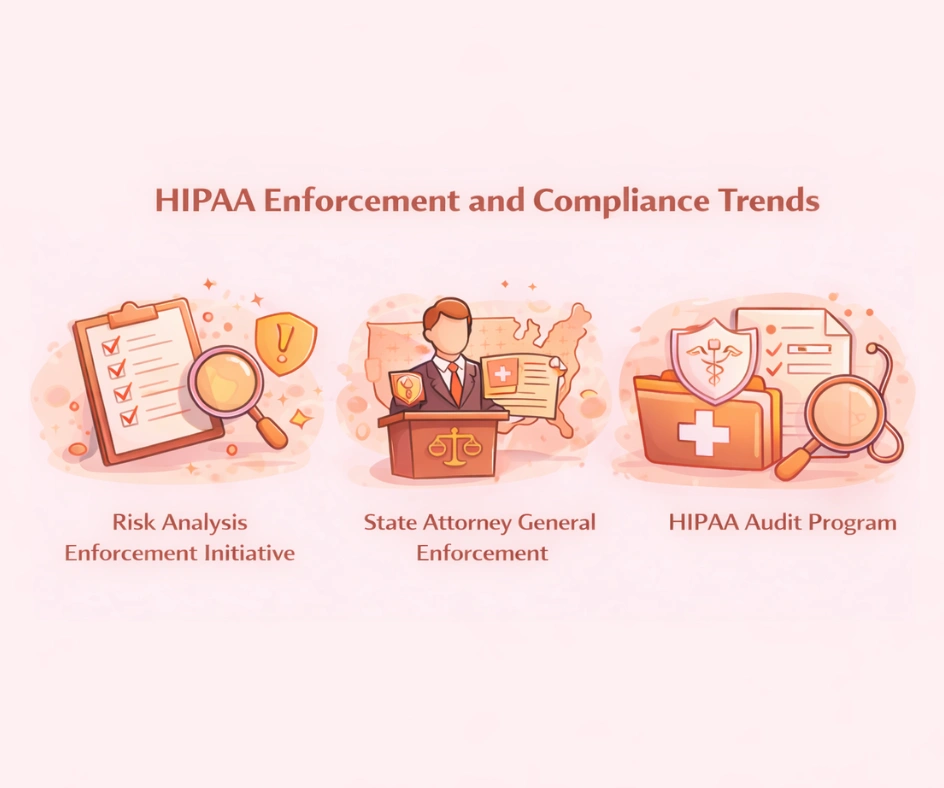
HIPAA Enforcement and Compliance Trends
The Office for Civil Rights at the Department of Health and Human Services has intensified its enforcement activities in recent years. In 2024, OCR closed 22 HIPAA investigations with financial penalties, collecting $12,841,796 in enforcement actions. This makes 2024 one of the most active years of HIPAA enforcement to date.
1. Risk Analysis Enforcement Initiative
OCR launched a risk analysis enforcement initiative in 2023, focusing specifically on compliance with the risk analysis provision of the HIPAA Security Rule. Risk analysis failures represent the most commonly identified HIPAA Security Rule violation in OCR investigations. By concentrating on this aspect of Security Rule compliance, OCR has been able to complete investigations more quickly while holding organizations accountable for fundamental security requirements.
The emphasis on risk analysis reflects a broader recognition that many healthcare data breaches result from inadequate security assessments rather than sophisticated technical attacks. Organizations that fail to identify and address vulnerabilities leave themselves exposed to preventable incidents.
2. State Attorney General Enforcement
State attorneys general also possess the authority to investigate data breaches and impose financial penalties for HIPAA violations. In 2024, state attorneys general settled potential violations with multiple HIPAA-regulated entities, often in conjunction with federal enforcement actions. The Enzo Biochem case, which resulted in a $4.5 million multistate settlement, illustrates how organizations may face enforcement actions from multiple jurisdictions for a single incident.
3. HIPAA Audit Program
OCR confirmed in March 2025 that the third phase of its HIPAA compliance audits is underway, initially consisting of audits of 50 covered entities and business associates. These audits focus on risk analysis and risk management requirements of the HIPAA Security Rule, with plans to expand scope over time.
The audit program represents a shift toward proactive enforcement, identifying compliance deficiencies before they contribute to data breaches rather than investigating after incidents occur. Organizations should prepare for potential audits by ensuring their compliance documentation is current and comprehensive.
You May Also Like:
Future Outlook for Healthcare IT Transformation
The trajectory of healthcare IT transformation points toward increasingly sophisticated technology deployment, stricter regulatory requirements, and greater integration of clinical and operational systems. Several trends will shape the industry’s direction in the coming years.
1. Artificial Intelligence Maturation
AI applications will move beyond pilot programs toward enterprise-wide deployment. The share of healthcare organizations that have adopted or explored generative AI rose from 72% in the first quarter of 2024 to 85% by year’s end. Healthcare AI spending reached $1.4 billion in 2025, nearly tripling 2024’s investment levels. The AI in healthcare market is projected to grow from $37.98 billion in 2025 to $928.18 billion by 2035.
2. Regulatory Evolution
The proposed HIPAA Security Rule update signals a fundamental shift toward mandatory security requirements. If finalized, organizations will face compliance deadlines 180 days after publication of the final rule. The elimination of addressable specifications means all regulated entities must implement comprehensive security controls regardless of size or resources.
3. Interoperability Advancement
The Trusted Exchange Framework and Common Agreement (TEFCA) is expected to advance healthcare data exchange by establishing a common framework for sharing information across organizations and networks. Organizations that invest in interoperability capabilities now will be better positioned to participate in emerging care coordination models.
4. Cybersecurity Investment
The average cost of a healthcare data breach reached $9.8 million in 2024, growing at twice the rate of other industries. This escalating cost, combined with increasing ransomware attacks and regulatory scrutiny, will drive continued investment in healthcare cybersecurity solutions.
5. Cloud and Edge Computing
Healthcare organizations will increasingly adopt hybrid cloud architectures that combine on-premises infrastructure with public and private cloud services. Edge computing will enable real-time processing of medical device data and support remote care delivery models.
Transform Your Healthcare IT Environment with Expert Development
Whether you need a healthcare IT transformation strategy, healthcare data security solutions, cloud migration services, or enterprise-grade healthcare IT risk management systems, our experienced development team delivers patient-focused implementations tailored to your organization’s requirements. We combine deep expertise in HIPAA-compliant healthcare IT with advanced cybersecurity solutions to build infrastructure you can trust.
Final Thoughts
Healthcare IT transformation has become essential for patient care, compliance, and long-term growth. Rising cyberattacks, stricter regulations, and increasing operational pressure are pushing healthcare organizations to modernize their systems and improve how they manage data, workflows, and digital infrastructure. At the same time, technologies like artificial intelligence, cloud platforms, and analytics are helping providers improve decision-making and reduce administrative complexity.
To move forward successfully, healthcare organizations need more than new software or infrastructure. They need stronger security practices, better workforce training, and leadership teams that treat cybersecurity and data protection as part of patient care itself. Continuous monitoring, risk assessment, interoperability improvements, and smarter IT planning will play a major role in building stronger healthcare environments.
The organizations that succeed in the coming years will be those that approach digital transformation with clear goals and a patient-focused mindset. By investing in modern healthcare IT systems, improving operational performance, and protecting sensitive information responsibly, providers can create more efficient care experiences while preparing for future industry demands.
Frequently Asked Questions
Q1.What is healthcare IT transformation and why is it important?
Healthcare IT transformation refers to the systematic integration of advanced technologies into clinical workflows, administrative processes, and patient engagement strategies. It encompasses electronic health records, cloud computing platforms, artificial intelligence applications, and cybersecurity frameworks. This transformation is important because it enables healthcare organizations to improve patient outcomes, enhance operational efficiency, meet regulatory requirements, and protect sensitive patient information in an increasingly digital environment.
Q2.What are the main cybersecurity threats facing healthcare organizations today?
Healthcare organizations face multiple cybersecurity threats, with ransomware representing the most significant concern. In 2024, 67% of healthcare organizations experienced ransomware attacks, with exploited vulnerabilities and compromised credentials tied as the leading attack vectors at 34% each. Other significant threats include phishing attacks, business email compromise, and insider threats from employees with access to sensitive systems.
Q3.How does the proposed HIPAA Security Rule update affect healthcare organizations?
The proposed HIPAA Security Rule update eliminates the distinction between “addressable” and “required” implementation specifications, making all security measures mandatory. Key requirements include annual compliance audits, multi-factor authentication for all access to electronic protected health information, vulnerability scans every six months, annual penetration testing, and the ability to restore critical systems within 72 hours of disruption. Organizations will have 180 days after publication of the final rule to achieve compliance.
Q4.What role does Big Data Analytics play in healthcare?
Big Data Analytics enables healthcare organizations to derive actionable insights from large volumes of clinical, operational, and financial data. Clinical applications include predictive care models, diagnostic enhancement through machine learning, personalized treatment planning, and population health management. Operational applications include resource optimization, supply chain management, and revenue cycle improvement. According to McKinsey, Big Data analytics could save the healthcare industry between $300 billion and $450 billion annually.
Q5.What is zero trust security and how does it apply to healthcare?
Zero trust security is a cybersecurity approach based on the principle of “never trust, always verify.” Unlike traditional perimeter-based security that assumes internal network traffic is trustworthy, zero trust requires continuous authentication of all users, devices, and applications regardless of their location. In healthcare, this approach involves identity verification, least privileged access, microsegmentation of networks, and continuous validation throughout user sessions. In 2024, over 41% of technology professionals reported being in advanced stages of zero trust implementation.
Q6.What challenges do healthcare organizations face with EHR interoperability?
Healthcare organizations face significant interoperability challenges, including vendor lock-in from proprietary software systems, fragmented adoption of data exchange standards like HL7 and FHIR, and regulatory complexity that can inadvertently discourage data sharing. According to KLAS Research, only 44% of clinicians agree their EHR provides expected integration with outside organizations, and only 28% of physicians find it easy to send and receive patient data with other EHR systems.
Reviewed by

Aman Vaths
Founder of Nadcab Labs
Aman Vaths is the Founder & CTO of Nadcab Labs, a global digital engineering company delivering enterprise-grade solutions across AI, Web3, Blockchain, Big Data, Cloud, Cybersecurity, and Modern Application Development. With deep technical leadership and product innovation experience, Aman has positioned Nadcab Labs as one of the most advanced engineering companies driving the next era of intelligent, secure, and scalable software systems. Under his leadership, Nadcab Labs has built 2,000+ global projects across sectors including fintech, banking, healthcare, real estate, logistics, gaming, manufacturing, and next-generation DePIN networks. Aman’s strength lies in architecting high-performance systems, end-to-end platform engineering, and designing enterprise solutions that operate at global scale.