Ai Overview
Cloud-based EHR systems have transformed healthcare information management by shifting from capital-intensive on-premise infrastructure to subscription-based cloud platforms. Traditional implementations for a five-physician practice cost between $162,000 to $226,000 upfront with annual maintenance of $75,000 to $85,000, while cloud solutions typically charge $200 to $700 per provider monthly, according to KLAS Research.
Key Takeaways-
- Cloud-based EHR systems have transformed healthcare information management by shifting from capital-intensive on-premise infrastructure to subscription-based cloud platforms. Traditional implementations for a five-physician practice cost between $162,000 to $226,000 upfront with annual maintenance of $75,000 to $85,000, while cloud solutions typically charge $200 to $700 per provider monthly, according to KLAS Research.
[1] - Security concerns about cloud storage are often misplaced, as major cloud providers invest more in security than individual practices could afford. The 2024 Healthcare Data Breach Report by Protenus analyzed 572 breaches affecting 89 million records and found that most resulted from human error and compromised credentials rather than cloud infrastructure vulnerabilities.[2]
- Internet connectivity becomes a critical dependency for cloud-based systems. The 2023 American Medical Association survey found 23 percent of physicians reported connectivity issues affecting cloud EHR access, with rural practices facing particular challenges.[3]
- Data migration causes implementation delays in 64 percent of EHR transitions, according to a 2024 Journal of Healthcare Information Management study, with legacy data format incompatibilities and data quality issues representing the primary challenges.[4]
- Cloud-based EHR user satisfaction varies dramatically between vendors. KLAS Research “Best in KLAS” 2023 study showed satisfaction scores ranging from 45 to 82 on a 100-point scale depending on the vendor, with usability and support quality being key differentiating factors.[5]
- EHR documentation burden contributes significantly to physician burnout, which reached 63 percent in a 2022 Mayo Clinic Proceedings study. The National Ambulatory Medical Care Survey found physicians spend an average of 16.1 minutes per patient encounter on documentation activities.[6]
- The 21st Century Cures Act information blocking provisions require EHR vendors to provide standardized APIs and avoid practices that interfere with data access or exchange. Most major cloud EHR vendors now support FHIR standards developed by Health Level Seven International.[7]
The healthcare industry has witnessed a massive transformation in how medical information is stored, accessed, and shared. Traditional paper-based records and locally installed software systems are rapidly giving way to cloud-based electronic health records that offer unprecedented flexibility and accessibility. This shift represents more than just a technological upgrade; it marks a fundamental change in how healthcare providers manage patient information and deliver care.
Cloud-based electronic health records represent a modern approach to health information management, where patient data is stored on remote servers accessed through the internet rather than on local computers or servers within a healthcare facility. This technology has gained significant traction among healthcare providers of all sizes, from small private practices to large hospital networks, fundamentally changing the landscape of medical record keeping.
Understanding Cloud Architecture in Healthcare
Cloud architecture forms the backbone of modern electronic medical record systems. Unlike traditional on-premise solutions, where hardware and software reside within the healthcare facility, cloud electronic medical records utilize remote servers maintained by third-party providers. This infrastructure consists of multiple layers, including the physical servers, virtualization technology, storage systems, and the application layer where the actual EHR software operates.
The architecture typically follows one of three deployment models. Public cloud solutions host data on shared infrastructure maintained by major cloud service providers. Private cloud deployments dedicate resources exclusively to a single healthcare organization, offering enhanced control and customization. Hybrid cloud approaches combine elements of both, allowing healthcare providers to keep sensitive data in private environments while leveraging public cloud resources for less critical functions.
This distributed approach to data storage and processing offers inherent advantages in terms of redundancy and disaster recovery. Healthcare organizations no longer need to worry about maintaining backup generators, duplicate servers, or comprehensive disaster recovery plans for their physical infrastructure. The cloud provider handles these concerns, typically maintaining multiple data centers in geographically dispersed locations to ensure continuous availability.
Healthcare organizations increasingly rely on advanced digital ecosystems supported by a trusted blockchain development company to enhance data security, streamline workflows, and ensure compliance with global standards. By combining cloud infrastructure with emerging technologies, providers can build more resilient, efficient, and patient-centric systems.
Financial Implications of Cloud-Based EHR Solutions
1. Reduced Capital Expenditure Requirements
Traditional EHR implementations required substantial capital investments in servers, networking equipment, and dedicated IT infrastructure. According to research published in the Journal of the American Medical Informatics Association, the average cost of implementing an on-premise EHR system for a five-physician practice ranged from $162,000 to $226,000, with ongoing maintenance costs adding another $75,000 to $85,000 annually. Cloud based ehr solutions fundamentally alter this cost structure by shifting from capital expenditure to operational expenditure, making advanced EHR capabilities accessible to smaller practices that might have struggled to afford traditional implementations.
2. Subscription-Based Pricing Models
Instead of large upfront investments, healthcare providers pay subscription fees based on the number of users, features required, and data storage needs. A 2023 report from KLAS Research indicated that cloud-based electronic health records typically cost between $200 to $700 per provider per month, depending on the vendor and feature set. While these recurring costs accumulate over time, they eliminate the need for significant capital outlays and include ongoing maintenance, updates, and technical support that would otherwise require dedicated IT staff.
3. Infrastructure Cost Savings
The reduction in IT infrastructure requirements translates to lower costs for physical space, cooling systems, and electrical consumption. Healthcare facilities can repurpose server rooms for patient care or other revenue-generating activities. Additionally, the elimination of hardware refresh cycles, which typically occur every three to five years for on-premise systems, removes another significant expense from the budget.
4. Long-Term Cost Considerations
However, healthcare organizations must carefully evaluate the total cost of ownership over extended periods. While monthly subscription fees may appear modest initially, they continue indefinitely and can increase over time as practices grow or require additional features. This is especially relevant when working with an Epic EHR integration company, as advanced interoperability requirements, custom workflows, and ongoing maintenance can add to long-term expenses. Some organizations find that after seven to ten years, the cumulative cost of cloud subscriptions along with integration and support costs exceeds what they would have spent on an on-premise solution.
Accessibility and Workflow Enhancement
1. Anywhere Access Capabilities
One of the most transformative aspects of cloud-based electronic health records lies in their ability to provide access to patient information from virtually anywhere with an internet connection. Physicians can review patient charts, order tests, and document encounters from their homes, satellite clinics, or while rounding at hospitals. This flexibility supports better work-life balance for healthcare providers and enables more responsive patient care. When a patient calls with a concern, their physician can access complete medical records immediately rather than waiting to return to the office.
2. Emergency Care Advantages
The mobility enabled by the best direct primary care EHR software proves particularly valuable in emergency situations. When patients present at facilities away from their primary care providers, emergency department physicians can access critical information about allergies, current medications, and previous medical history if the systems are connected through health information exchanges or shared platforms. This access can literally save lives by preventing adverse drug interactions or informing treatment decisions.
3. Multi-Site Organization Benefits
Multi-site healthcare organizations benefit tremendously from centralized cloud-based systems. Staff at any location can access the same information in real-time, eliminating the delays and errors associated with transferring records between facilities. A patient who sees a specialist at one location has their visit notes immediately available to their primary care physician at another location, facilitating better coordinated care.
4. Telehealth Integration Support
The COVID-19 pandemic accelerated the adoption of these systems as healthcare providers rapidly expanded telehealth services. Physicians conducting virtual visits needed access to complete patient records from their homes, something that would have been extremely difficult or impossible with traditional on-premise systems that required VPN connections and often had performance issues when accessed remotely.
Data Security and Privacy Considerations
1. Enterprise-Grade Security Infrastructure
Security and privacy concerns represent the most significant worries for healthcare organizations considering cloud-based EHR systems. Healthcare data ranks among the most sensitive personal information, and regulations like the Health Insurance Portability and Accountability Act (HIPAA) impose strict requirements for protecting patient privacy. Major cloud service providers typically invest far more in security measures than individual healthcare organizations could afford independently.
They employ dedicated security teams, implement multiple layers of protection, and undergo regular third-party audits. Leading cloud platforms such as Amazon Web Services (AWS), Microsoft Azure, and Google Cloud Platform provide HIPAA-eligible services, business associate agreements (BAAs), advanced encryption, and enterprise-grade security controls for cloud-based EHR deployments.
2. Real-World Breach Statistics
According to the 2024 Healthcare Data Breach Report by Protenus, cloud-based systems actually experienced fewer breaches per user than on-premise systems. The report analyzed 572 healthcare data breaches affecting 89 million patient records and found that inadequate access controls and insider threats posed greater risks than the cloud storage model itself. Most breaches resulted from human error, phishing attacks, or compromised credentials rather than vulnerabilities in cloud infrastructure.
3. Encryption Protection Layers
Encryption plays a crucial role in protecting data in cloud environments. Information should be encrypted both in transit, as it moves between users and cloud servers, and at rest, while stored in databases. Strong encryption using current standards makes intercepted or stolen data essentially useless without the decryption keys, which remain under the healthcare organization’s control in properly configured systems.
4. Access Control Management
However, the cloud model introduces new security considerations. Healthcare organizations must carefully manage user access controls, ensuring that only authorized personnel can view patient information and that access rights are promptly revoked when employees leave or change roles. Multi-factor authentication adds another layer of protection by requiring users to verify their identity through multiple methods before accessing the system.
5. Shared Responsibility Framework
The shared responsibility model in cloud computing means that while the provider secures the underlying infrastructure, healthcare organizations remain responsible for securing their applications and data. This includes proper configuration of security settings, management of user credentials, and training staff to recognize and avoid security threats like phishing emails.
6. Data Sovereignty Compliance
Data sovereignty concerns arise when patient information is stored in data centers located in different countries or states, potentially subjecting it to different legal jurisdictions and privacy laws. Healthcare organizations must understand where their data physically resides and ensure that storage locations comply with applicable regulations.
Security Feature Comparison: Cloud-Based EHR vs Traditional On-Premise EHR
| Security Feature | Implementation in Cloud-Based EHR | Traditional On-Premise EHR |
|---|---|---|
| Data Encryption | Automatic encryption at rest and in transit with enterprise-grade algorithms | Requires manual implementation and ongoing management |
| Access Controls | Role-based access control with detailed audit logging | Configurable but limited by local IT resources |
| Disaster Recovery | Automated backups across multiple geographic locations | Requires separate backup systems and offsite storage arrangements |
| Security Updates | Automatic deployment of patches and security updates | Manual installation often delayed due to IT workload |
| Monitoring | 24/7 security monitoring by dedicated teams | Limited to business hours unless additional staff hired |
| Compliance | Regular third-party audits and compliance certifications | Self-managed compliance efforts |
Performance and Reliability Factors
1. Internet Connectivity Dependencies
System performance directly impacts healthcare provider productivity and patient care quality. Slow or unreliable electronic medical record systems frustrate clinicians, reduce efficiency, and can lead to errors or omissions in documentation. Internet connectivity becomes a critical dependency for cloud-based systems. Healthcare facilities require robust, redundant internet connections to ensure consistent access to patient records. A 2023 survey by the American Medical Association found that 23 percent of physicians reported internet connectivity issues affecting their ability to use cloud-based EHR systems at least occasionally. Rural practices in areas with limited broadband infrastructure face particular challenges.
2. Superior Hardware Performance
When internet connections function properly, cloud systems can actually deliver superior performance compared to aging on-premise servers. Cloud providers use high-performance hardware and can scale resources dynamically to handle peak loads. During busy periods when multiple users access the system simultaneously, cloud platforms can allocate additional processing power and memory to maintain responsiveness.
3. Latency Considerations
Latency, the delay between requesting information and receiving it, deserves consideration in cloud deployments. Data traveling to and from remote servers takes longer than accessing information stored locally. For most EHR functions, this delay is measured in milliseconds and proves imperceptible to users. However, applications requiring rapid interaction or large file transfers may experience noticeable delays.
4. Uptime Guarantees
System uptime represents a crucial performance metric. Leading cloud providers guarantee availability levels of 99.9 percent or higher through service level agreements. This translates to less than nine hours of downtime per year. In practice, major cloud platforms often exceed these guarantees, achieving uptimes above 99.99 percent. Healthcare organizations should carefully review vendor uptime statistics and understand the compensation or credits available when service levels are not met.
5. Maintenance Window Optimization
Planned maintenance windows, when systems undergo updates or improvements, occur less frequently with cloud solutions because providers can often deploy changes without taking systems offline. When downtime is necessary, cloud vendors typically schedule maintenance during low-usage periods and provide advance notice. On-premise systems often require more frequent and longer maintenance windows, particularly for major upgrades.
6. Continuous Performance Tuning
Database performance optimization occurs continuously in cloud environments through automated monitoring and adjustment of system resources. Cloud providers employ specialists who tune database performance, optimize queries, and balance loads across servers. Small healthcare practices rarely have access to this level of database expertise for their on-premise systems.
Integration Capabilities and Interoperability
1. Application Programming Interface Support
Healthcare delivery depends on numerous interconnected systems, rom laboratory information management system and radiology PACS to billing software and patient portals. Modern cloud-based electronic health records typically offer extensive integration capabilities through application programming interfaces (APIs). These interfaces allow different software systems to exchange data in standardized formats. The 21st Century Cures Act mandated that EHR vendors support standardized APIs, promoting greater interoperability across the healthcare ecosystem.
2. FHIR Standards Adoption
Fast Healthcare Interoperability Resources (FHIR), a standard developed by Health Level Seven International, has emerged as the preferred framework for healthcare data exchange. Most major cloud EHR vendors now support FHIR APIs, enabling easier integration with third-party applications and health information exchanges. This standardization reduces the custom development work historically required to connect different healthcare systems.
3. Laboratory and Imaging Integration
Integration with laboratory and imaging systems allows test results to flow automatically into patient charts, eliminating manual data entry and reducing transcription errors. Cloud-based systems facilitate these integrations through secure internet connections rather than requiring direct network connections between facilities. A physician practice can receive laboratory results electronically from multiple laboratory companies without complex networking arrangements.
4. Patient Engagement Tools
Patient engagement tools, including portals and mobile applications, integrate more naturally with cloud-based EHR systems than with on-premise solutions. Patients can access their health information, schedule appointments, and communicate with their healthcare providers through web-based interfaces that connect directly to the cloud EHR. These capabilities enhance patient satisfaction and engagement in their own care.
5. Revenue Cycle Integration
Billing and practice management integration ensures that clinical documentation flows smoothly to revenue cycle systems. Cloud-based solutions often offer integrated billing modules or partner with specialized billing software companies to provide interfaces. This integration reduces the administrative burden on healthcare staff and improves billing accuracy.
6. Health Information Exchange Participation
Health information exchanges (HIEs) connect healthcare providers across a region or state, allowing them to share patient information regardless of where care was received. Cloud-based EHR systems participate more easily in HIEs because they can establish secure internet connections to exchange platforms without requiring complex networking infrastructure at each healthcare facility. The Veterans Health Administration’s transition to a cloud-based EHR system, though challenging, demonstrates the potential for large-scale interoperability.
Regulatory Compliance and Legal Considerations
1. HIPAA Compliance Framework
Healthcare organizations operate under extensive regulatory requirements that govern how patient information is collected, stored, shared, and protected. HIPAA establishes the foundation for patient privacy protection in the United States. Cloud EHR vendors must comply with HIPAA requirements and sign business associate agreements acknowledging their responsibilities for protecting patient data. Healthcare organizations remain ultimately responsible for HIPAA compliance even when using cloud systems, meaning they must verify that their vendors implement appropriate safeguards.
2. Meaningful Use and Promoting Interoperability
The HITECH Act introduced meaningful use requirements that stipulated specific EHR capabilities healthcare providers must demonstrate to qualify for incentive payments. While the meaningful use program has evolved into the Promoting Interoperability program under MIPS, the core requirements around clinical documentation, quality reporting, and information exchange remain relevant. Cloud-based EHR systems must support these capabilities to help healthcare providers meet regulatory requirements.
3. State Privacy Law Compliance
State privacy laws add another layer of complexity. The California Consumer Privacy Act and similar legislation in other states grant patients additional rights regarding their health information. Cloud EHR systems must support these rights through features that allow patients to access their data, request corrections, and, in some cases, request deletion of information.
4. Information Blocking Prevention
The 21st Century Cures Act’s information blocking provisions prohibit healthcare providers and technology vendors from engaging in practices that interfere with the access, exchange, or use of electronic health information. Cloud-based systems must provide standardized APIs and avoid contract terms or technical barriers that prevent patient access to their data or its exchange with other healthcare providers.
5. International Data Transfer Rules
International data transfer regulations impact healthcare organizations operating across borders or using cloud providers with data centers in multiple countries. The European Union’s General Data Protection Regulation imposes strict requirements on transferring personal data outside the EU. Healthcare organizations must understand where their cloud vendor stores data and ensure compliance with applicable data residency requirements.
6. Audit and Documentation Requirements
Audit requirements mandate that healthcare organizations maintain detailed logs of who accessed patient information, when, and what they viewed or modified. Cloud-based EHR systems typically provide comprehensive audit logging capabilities, often more detailed than what small practices could implement independently. These logs must be retained for specified periods and made available during regulatory investigations or legal proceedings.
7. Data Retention and Destruction
Data retention and destruction policies pose unique challenges in cloud environments. Healthcare organizations must retain medical records for periods ranging from six to ten years, depending on state law and record type. Cloud storage makes long-term retention straightforward, but organizations must ensure they can retrieve historical data even if they change vendors. Conversely, when records reach the end of their retention period, organizations need mechanisms to permanently delete data from cloud storage.
Recommended Reading:
Custom Workflow Automation Software for Healthcare Operations
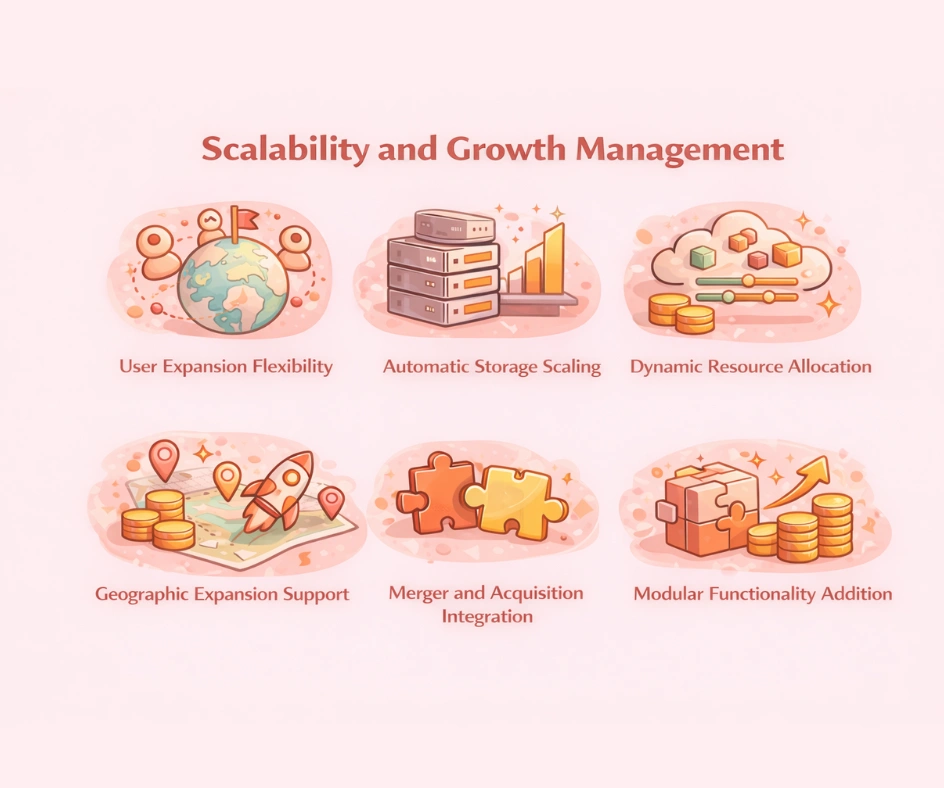
Scalability and Growth Management
1. User Expansion Flexibility
Healthcare organizations experience fluctuating demands on their information systems. Patient volumes vary seasonally, practices expand by adding providers or locations, and new services require additional functionality. Cloud-based electronic health records offer inherent scalability advantages over traditional on-premise systems. Adding new users typically requires only administrative changes to enable additional accounts rather than purchasing new server hardware or software licenses. Healthcare organizations can adjust their subscriptions monthly or annually to accommodate growth, avoiding the over-provisioning that often occurs with on-premise systems.
2. Automatic Storage Scaling
Storage capacity expands automatically in cloud environments as healthcare organizations accumulate more patient records and imaging studies. Traditional systems required periodic hardware upgrades when storage capacity approached limits, involving capital expenditures and potential downtime during installation. Cloud storage scales transparently, with costs adjusting based on consumption.
3. Dynamic Resource Allocation
Processing power and memory scale dynamically in cloud platforms to handle varying workloads. During peak usage periods, such as morning hours when multiple providers document patient encounters simultaneously, cloud systems can allocate additional resources to maintain performance. This elasticity eliminates the performance degradation that often occurs with fixed on-premise hardware during busy periods.
4. Geographic Expansion Support
Geographic expansion becomes simpler with cloud-based systems. When healthcare organizations open new locations, those facilities can immediately access the centralized EHR through internet connections without requiring new servers, software installations, or extensive IT infrastructure at each site. This capability particularly benefits organizations pursuing growth strategies involving multiple satellite clinics or telemedicine services.
5. Merger and Acquisition Integration
Mergers and acquisitions in the healthcare industry often involve integrating disparate EHR systems from different organizations. Cloud-based platforms can facilitate these integrations by providing a common platform that all entities migrate to over time. While system consolidation remains challenging regardless of deployment model, cloud architectures offer more flexibility in managing transitions.
6. Modular Functionality Addition
Specialty-specific functionality requirements can often be addressed through cloud-based app marketplaces or integrated modules. Many cloud EHR vendors offer specialty-specific templates, workflows, and tools that practices can activate as needed without requiring separate software installations. This modular approach allows organizations to start with core functionality and add capabilities as requirements evolve.
7. Growth Cost Implications
However, scaling does have financial implications in subscription-based models. As organizations add users and consume more storage, monthly costs increase proportionally. Unlike on-premise systems, where marginal costs for additional users were minimal after the initial investment, cloud pricing grows with the organization. Healthcare organizations should model long-term costs at various growth scenarios when evaluating cloud solutions.
Implementation and Migration Challenges
1. Data Migration Complexity
Transitioning to a cloud-based EHR system represents a significant undertaking that impacts every aspect of healthcare delivery. Data migration from existing systems poses one of the most complex challenges. Healthcare organizations must transfer years or decades of patient records, documents, images, and associated metadata to new cloud platforms. This process involves mapping data fields between systems, converting formats, and validating that information is transferred accurately and completely. According to a 2024 study in the Journal of Healthcare Information Management, data migration issues caused implementation delays in 64 percent of EHR transitions.
2. Legacy Data Handling
Legacy data proves particularly challenging. Historical records may exist in formats incompatible with modern systems or contain inconsistent coding that requires cleanup before migration. Some organizations choose to maintain read-only access to legacy systems for historical records rather than attempting to migrate everything, creating ongoing maintenance obligations.
3. Workflow Redesign Requirements
Workflow redesign accompanies most EHR implementations because new systems inevitably differ from previous ones in how tasks are accomplished. Healthcare providers and staff must learn new processes for documenting encounters, ordering tests, prescribing medications, and accessing information. This learning curve temporarily reduces productivity and can cause frustration during the transition period.
4. Comprehensive Training Needs
Training requirements consume substantial time and resources. All users need instruction on the new system’s features and workflows. Training approaches vary from formal classroom sessions to online modules to peer coaching. Organizations must balance the desire for comprehensive training against the practical constraints of provider schedules and continuing patient care obligations.
5. Implementation Timeline Management
The typical implementation timeline for cloud-based EHR systems ranges from three to nine months, depending on organization size and complexity. This period includes system configuration, data migration, testing, training, and go-live preparation. Rushed implementations often result in problems, while excessively prolonged transitions cause staff fatigue and loss of momentum.
6. Go-Live Transition Planning
Downtime during the transition creates risk and requires careful management. Healthcare organizations typically schedule go-live events during periods of lower patient volume when possible. Some organizations maintain parallel operations briefly, using both old and new systems simultaneously, though this approach doubles documentation burden on already-stressed clinicians.
7. Customization Balance
Customization requirements must be balanced against standardization. While cloud platforms offer configuration options to match organizational preferences, excessive customization increases complexity, complicates future upgrades, and may introduce performance issues. Most successful implementations rely primarily on standard functionality with limited custom modifications.
8. Strategic Vendor Selection
Vendor selection deserves careful consideration. The EHR market includes numerous vendors offering cloud-based solutions with varying capabilities, user interfaces, support quality, and pricing structures. Healthcare organizations should evaluate multiple options, involve end users in selection processes, and thoroughly check references from similar organizations. The substantial switching costs associated with changing EHR systems mean that vendor selection decisions have long-lasting consequences.
EHR Implementation Phases Overview
| Implementation Phase | Typical Duration | Key Activities | Common Challenges |
|---|---|---|---|
| Planning and Vendor Selection | 1 to 3 months | Requirements gathering, vendor demonstrations, and contract negotiation | Achieving stakeholder consensus, budgeting accurately |
| System Configuration | 2 to 4 months | Template building, workflow design, interface setup, and user role definition | Balancing customization with standardization |
| Data Migration | 2 to 3 months | Data extraction, transformation, validation, and historical record conversion | Data quality issues, format incompatibilities |
| Testing | 1 to 2 months | System testing, workflow validation, interface verification, and user acceptance testing | Identifying and resolving issues while maintaining the timeline |
| Training | 1 to 2 months | End-user training, super-user development, support preparation | Scheduling conflicts, varying user skill levels |
| Go-Live Support | 2 to 4 weeks | Intensive on-site assistance, issue resolution, workflow adjustment | Provider productivity decline, user frustration |
Vendor Dependency and Exit Strategies
1. Understanding Vendor Lock-In
Selecting a cloud-based EHR vendor creates a long-term relationship that significantly impacts healthcare operations. Unlike on-premise software that organizations control once installed, cloud systems remain under vendor control, creating dependencies that require careful management. Vendor lock-in occurs when switching costs become so high that organizations feel compelled to continue using a vendor’s services despite dissatisfaction or better alternatives emerging. In EHR systems, lock-in results from the difficulty of extracting data in usable formats, the cost of reimplementation, and the disruption to clinical operations that changing systems entails.
2. Contract Term Protection
Contract terms deserve careful scrutiny. Healthcare organizations should ensure that agreements include clear data ownership provisions confirming that all patient information remains the organization’s property. Contracts should specify data portability requirements, ensuring that organizations can extract complete data in industry-standard formats if they decide to change vendors. Service level agreements should define uptime guarantees, support response times, and remedies when vendors fail to meet obligations.
3. Vendor Financial Stability Assessment
Vendor financial stability warrants evaluation. If a cloud EHR vendor experiences financial difficulties or goes out of business, healthcare organizations could lose access to critical patient information or face emergency migrations under unfavorable circumstances. Organizations should assess vendor financial health through credit ratings, financial statements, and market position. Escrow arrangements for data can provide protection if vendors cease operations.
4. Product Development Alignment
Feature development and roadmaps affect long-term viability. Cloud EHR vendors continuously evolve their products, adding functionality and improving user interfaces. Healthcare organizations should understand vendors’ development priorities and ensure alignment with their own needs. Participation in user groups and advisory councils can provide influence over product direction.
5. Version Control Considerations
Version control differs in cloud environments from traditional software. Cloud vendors typically provide a single version to all customers, deploying updates automatically. While this ensures everyone has access to the latest features and security patches, it also means organizations cannot delay problematic updates or maintain custom versions. Organizations lose some control over the timing and scope of changes to the systems they depend on.
6. Planning Exit Strategies
Exit strategies should be considered before entering relationships. Healthcare organizations should understand exactly what data they can extract, in what formats, and how long vendors commit to supporting data extraction after contract termination. Some organizations maintain periodic data exports as insurance against vendor failures or relationship breakdowns. The process and cost of migrating to alternative systems should be evaluated during initial vendor selection to avoid selecting options that would be exceptionally difficult to leave.
7. Multi-Vendor Diversification
Multi-vendor strategies offer some protection against vendor lock-in. Larger healthcare organizations might use different EHR systems for different facilities or departments, avoiding total dependence on any single vendor. However, this approach sacrifices the integration and standardization benefits of enterprise-wide platforms.
Impact on Clinical Workflows and Provider Satisfaction
1. Documentation Time Burden
The ultimate measure of any EHR system’s success lies in its impact on healthcare delivery quality and provider satisfaction. Documentation time represents a significant concern for healthcare providers. EHR systems, regardless of deployment model, have increased the time physicians spend documenting encounters compared to paper records. The 2022 National Ambulatory Medical Care Survey found that physicians spent an average of 16.1 minutes per patient encounter on documentation activities. Cloud-based systems do not inherently reduce this burden, though features like voice recognition, template optimization, and mobile access can improve efficiency.
2. Inbox Management Challenges
Inbox management has emerged as a major workflow challenge. EHR systems generate numerous messages, alerts, test results, and tasks that appear in providers’ inboxes. The volume of these communications can become overwhelming, contributing to burnout. Organizations must carefully configure notification settings and develop workflow processes to manage electronic communications efficiently.
3. Clinical Decision Support Integration
Clinical decision support tools integrated into cloud-based EHR systems can improve care quality by providing evidence-based recommendations, highlighting potential drug interactions, and prompting preventive care measures. However, excessive or poorly designed alerts lead to alert fatigue, where providers override warnings without careful consideration, potentially missing genuinely important alerts among the noise.
4. Patient Interaction Dynamics
Patient interaction dynamics change when providers use EHR systems during encounters. Computer screens can create barriers between providers and patients if not managed thoughtfully. Some providers have mastered techniques for maintaining eye contact and engagement while documenting, while others struggle with divided attention. Room layout, screen positioning, and documentation approach all influence the patient experience.
5. Provider Satisfaction Variations
Provider satisfaction with EHR systems varies considerably. The 2023 KLAS Research study “Best in KLAS” found that cloud-based EHR user satisfaction scores ranged from 45 to 82 on a 100-point scale, depending on the vendor. Factors influencing satisfaction included system usability, reliability, vendor support responsiveness, and alignment between system workflows and clinical practice patterns.
6. Mobility Feature Benefits
Mobility features of cloud-based systems receive particularly positive feedback from providers who value the ability to review charts and respond to patient questions from anywhere. Physicians conducting hospital rounds appreciate accessing outpatient records without logging into separate systems. Providers covering after-hours calls can review patient information from home rather than relying on incomplete telephone summaries.
7. Burnout Prevention Concerns
Burnout concerns related to EHR usage have received increasing attention. The administrative burden imposed by documentation requirements contributes to physician burnout, which reached 63 percent in a 2022 study published in Mayo Clinic Proceedings. While EHR systems enable certain efficiencies, they also create new demands. Healthcare organizations must thoughtfully implement systems and continuously optimize workflows to minimize the burden on providers.
8. Emerging Documentation Solutions
Scribing solutions, both human and AI-powered, have emerged to address the documentation burden. Medical scribes accompany providers during patient encounters and handle real-time documentation, allowing physicians to focus on patient interaction. Increasingly, AI-powered ambient documentation tools listen to patient encounters and generate draft notes automatically. These solutions integrate with cloud-based EHR systems to reduce provider documentation time.
Future Developments and Emerging Trends
1. Artificial Intelligence Integration
The evolution of cloud-based electronic health records continues as new technologies and healthcare delivery models emerge. Artificial intelligence and machine learning integration promise to transform EHR functionality. AI algorithms can analyze patient data to identify individuals at risk for specific conditions, recommend personalized treatment options, and predict potential complications. Natural language processing can extract structured information from unstructured clinical notes, improving data quality and enabling better analytics. However, AI applications must be carefully validated to ensure accuracy and avoid introducing bias into clinical decision-making.
2. Voice and Ambient Documentation
Voice recognition and ambient documentation technologies are becoming more sophisticated. Rather than typing notes or selecting from dropdown menus, providers can simply speak their documentation, which AI systems convert to properly formatted clinical notes. Ambient listening solutions capture entire patient encounters and generate comprehensive documentation automatically. These technologies could dramatically reduce documentation burden if they achieve sufficient accuracy and reliability.
3. Blockchain Applications
Blockchain technology has been proposed for healthcare data management because of its ability to create immutable records of data access and modifications, often implemented using custom blockchain development services. While blockchain applications in EHR systems remain mostly experimental, the technology could enhance security, support patient control over data sharing, and facilitate interoperability. Practical implementations must overcome performance limitations and integration challenges.
4. Precision Medicine Support
Precision medicine initiatives require integration of genetic information, biomarker data, and other specialized testing results into EHR systems. Cloud platforms provide the computing power and storage capacity necessary to manage these large datasets and run complex analyses. As precision medicine becomes more common, EHR systems will need enhanced capabilities for storing, interpreting, and acting on genomic and molecular data.
5. Social Determinants Tracking
Social determinants of health data capture represents an evolving priority. Healthcare organizations increasingly recognize that factors like housing stability, food security, and transportation access significantly impact health outcomes. Cloud-based EHR systems are incorporating tools to screen for and document social determinants, connect patients with community resources, and track interventions addressing social needs.
6. Patient-Generated Data Integration
Patient-generated health data from wearable devices, smartphone apps, and home monitoring equipment creates new integration opportunities. Cloud-based EHR systems can ingest continuous streams of data about patient activity, vital signs, glucose levels, and other metrics. Incorporating this information into clinical care requires new workflows and decision support tools to identify actionable patterns among the volume of data.
7. Enhanced Telehealth Capabilities
Telehealth integration has accelerated dramatically since 2020. Cloud-based EHR systems now commonly include video consultation capabilities, allowing providers to conduct virtual visits without switching between separate platforms. Integration ensures that virtual visit documentation flows into the patient record alongside in-person encounters, creating a comprehensive view of patient care.
8. Open API Ecosystems
Application programming interfaces continue evolving to support greater interoperability and innovation. Open API platforms allow third-party developers to create specialized applications that integrate with EHR systems, fostering innovation in areas the EHR vendor may not prioritize. This app ecosystem approach mirrors successful models in consumer technology.
9. Predictive Analytics Advancement
Predictive analytics capabilities leverage the large volumes of data accumulated in cloud-based EHR systems to forecast patient outcomes, resource utilization, and operational patterns. Healthcare organizations can use these insights to intervene proactively with high-risk patients, optimize staffing levels, and improve efficiency.
You May Also Like:
Choosing the Right Cloud-Based EHR Solution
1. Organizational Readiness Assessment
Healthcare organizations evaluating cloud-based electronic health records face numerous options with varying capabilities, costs, and implementation approaches. Organizational readiness assessment should precede vendor selection. Healthcare organizations must evaluate their current workflows, identify pain points with existing systems, and define requirements for new solutions. This process should involve clinicians, administrative staff, IT personnel, and leadership to ensure all perspectives inform the decision.
2. Practice Size and Specialty Matching
Practice size and specialty considerations influence appropriate vendor choices. Solutions designed for large hospital systems may overwhelm small practices with unnecessary complexity, while EHR systems built for solo practitioners may lack capabilities needed by multi-specialty groups. Specialty-specific features for cardiology, orthopedics, behavioral health, or other disciplines may be essential for certain practices.
3. Budget and Cost Modeling
Budget constraints obviously impact vendor selection. Healthcare organizations should develop realistic total cost of ownership models that account for subscription fees, implementation costs, training expenses, productivity losses during transition, and ongoing support requirements. The lowest initial price rarely represents the best overall value.
4. Comprehensive Vendor Evaluation
Vendor demonstrations should involve actual end users performing realistic tasks rather than just viewing scripted presentations. Organizations should request access to sandbox environments where staff can experiment with the system before committing. Checking references from similar organizations provides insights into real-world experiences that sales presentations may not reveal.
5. User Interface Assessment
User interface design significantly impacts adoption and satisfaction. Systems with intuitive interfaces that align with natural workflows reduce training requirements and minimize frustration. Organizations should evaluate how many clicks are required for common tasks, how information is organized on screens, and whether the interface works well on tablets and other mobile devices.
6. Support Quality Verification
Support quality varies considerably among vendors. Healthcare organizations should understand what support is included in subscription fees versus what costs extra. Response time commitments for different severity levels, availability of 24/7 support, and quality of documentation and training resources all deserve evaluation.
7. Integration Capability Review
Integration requirements with existing systems must be thoroughly assessed. Healthcare organizations should catalog all current systems that need to exchange data with the EHR and verify that vendors support necessary interfaces. Custom integration development can become expensive and create ongoing maintenance burdens.
8. Implementation Support Evaluation
Implementation methodology and support offerings differ among vendors. Some provide comprehensive implementation services included in their fees, while others offer minimal support and expect organizations to manage implementations largely independently. The level of implementation support needed depends on internal IT capabilities and the complexity of the organization.
9. Regulatory Compliance Verification
Regulatory compliance certifications confirm that systems meet federal requirements for EHR technology. Organizations should verify that vendors maintain current ONC certification and have programs for staying current with evolving regulations.
Build Advanced Cloud-Based EHR Solutions with Expert Development
Whether you need a custom EHR system implementation, cloud migration services, or healthcare
data integration, or enterprise-grade medical record solutions, our experienced
development team delivers patient-focused implementations
tailored to your practice requirements. We combine deep healthcare IT expertise
with HIPAA compliance best practices to build cloud-based EHR systems you can trust.
Final Thoughts
Cloud-based electronic health records represent a transformative shift in healthcare information management that offers compelling advantages for modern medical practices. From reduced capital expenditures and subscription-based pricing models to anywhere access capabilities and enterprise-grade security infrastructure, these systems address many limitations that plagued traditional on-premise solutions for decades. The ability to scale effortlessly, integrate with diverse healthcare applications through standardized APIs, and support emerging technologies like artificial intelligence and telehealth positions cloud-based EHR systems as the foundation for future healthcare delivery. However, successful adoption requires careful consideration of internet connectivity dependencies, vendor selection, data migration complexities, and ongoing workflow optimization to maximize provider satisfaction and patient care quality. Healthcare organizations that thoughtfully evaluate their unique requirements, involve clinical staff in decision-making, and partner with reputable vendors will be best positioned to harness the full potential of cloud-based EHR technology while navigating the challenges inherent in any significant technological transition.
Frequently Asked Questions
Q1.What is a cloud-based electronic health record system?
A cloud-based electronic health record system stores patient data on remote servers accessed through the internet rather than on local computers or servers within a healthcare facility. This approach allows healthcare providers to access patient information from virtually anywhere with an internet connection, eliminating the need for expensive on-site hardware infrastructure. Major cloud service providers like Amazon Web Services, Microsoft Azure, and Google Cloud Platform maintain these systems with enterprise-grade security measures and HIPAA compliance certifications.
Q2.How much does a cloud-based EHR system cost compared to traditional on-premise solutions?
Cloud-based EHR systems typically cost between $200 to $700 per provider per month through subscription-based pricing models. Traditional on-premise EHR implementations for a five-physician practice ranged from $162,000 to $226,000 in upfront costs, with ongoing maintenance adding another $75,000 to $85,000 annually. While cloud subscriptions accumulate over time, they eliminate large capital outlays and include maintenance, updates, and technical support that would otherwise require dedicated IT staff.
Q3.Are cloud-based EHR systems secure enough for sensitive patient data?
Yes, properly implemented cloud-based EHR systems often provide stronger security than on-premise alternatives. Major cloud providers invest far more in security measures than individual healthcare organizations could afford independently, employing dedicated security teams, multiple protection layers, and regular third-party audits. According to the 2024 Healthcare Data Breach Report by Protenus, cloud-based systems actually experienced fewer breaches per user than on-premise systems, with most breaches resulting from human error or phishing attacks rather than cloud infrastructure vulnerabilities.
Q4.How long does it take to implement a cloud-based EHR system?
The typical implementation timeline for cloud-based EHR systems ranges from three to nine months, depending on organization size and complexity. This period includes planning and vendor selection (1 to 3 months), system configuration (2 to 4 months), data migration (2 to 3 months), testing (1 to 2 months), training (1 to 2 months), and go-live support (2 to 4 weeks). According to a 2024 study in the Journal of Healthcare Information Management, data migration issues caused implementation delays in 64 percent of EHR transitions.
Q5.What happens to my patient data if my cloud EHR vendor goes out of business?
Healthcare organizations should address this concern before signing contracts by ensuring agreements include clear data ownership provisions confirming that all patient information remains the organization’s property. Contracts should specify data portability requirements, ensuring organizations can extract complete data in industry-standard formats if they decide to change vendors. Some organizations maintain periodic data exports as insurance against vendor failures, and escrow arrangements for data can provide additional protection if vendors cease operations.
Q6.Can cloud-based EHR systems work in areas with limited internet connectivity?
Internet connectivity is a critical dependency for cloud-based systems, and rural practices in areas with limited broadband infrastructure face particular challenges. A 2023 survey by the American Medical Association found that 23 percent of physicians reported internet connectivity issues affecting their ability to use cloud-based EHR systems at least occasionally. Healthcare facilities require robust, redundant internet connections to ensure consistent access to patient records. Some cloud EHR vendors offer offline capabilities that allow limited functionality during connectivity outages, synchronizing data once connections are restored.
Reviewed by

Aman Vaths
Founder of Nadcab Labs
Aman Vaths is the Founder & CTO of Nadcab Labs, a global digital engineering company delivering enterprise-grade solutions across AI, Web3, Blockchain, Big Data, Cloud, Cybersecurity, and Modern Application Development. With deep technical leadership and product innovation experience, Aman has positioned Nadcab Labs as one of the most advanced engineering companies driving the next era of intelligent, secure, and scalable software systems. Under his leadership, Nadcab Labs has built 2,000+ global projects across sectors including fintech, banking, healthcare, real estate, logistics, gaming, manufacturing, and next-generation DePIN networks. Aman’s strength lies in architecting high-performance systems, end-to-end platform engineering, and designing enterprise solutions that operate at global scale.