Ai Overview
The original promise of a crypto exchange was revolutionary: a borderless, 24/7 market free from the gatekeepers of Wall Street. But for all its initial hype, the old crypto exchange model is now showing its age, failing to live up to its full potential. It’s a fractured ecosystem of siloed platforms, each acting as a digital island, hoarding its own liquidity and struggling to connect with the others.
Key Takeaways
- ◆ The future of crypto exchanges is no longer just about crypto. Multi-asset hubs will trade tokenized stocks, real estate, and more.
- ◆ AI is becoming the market’s brain, providing predictive analysis, superior risk management, and real-time fraud detection to create safer, more liquid markets.
- ◆ Real-World Asset (RWA) tokenization enables fractional ownership of assets from real estate to fine art, creating massive new sources of liquidity.
- ◆ Clear regulations like MiCA in Europe act as catalysts for institutional adoption, turning tokenized assets into a trusted and legitimate market.
- ◆ AI-powered trading and bots create 24/7 intelligent markets, removing time-based barriers and enabling constant global liquidity and price discovery.
- ◆ For crypto exchange development, integrating AI and tokenization is essential to capture the next wave of market growth and build infrastructure for the tokenized economy.
Think about your last trade. You probably opened an app, looked at a chart, and made a decision. For most of us, this is the extent of our interaction with the financial world. But what if I told you that this entire process, the fundamental way you engage with markets, is on the verge of becoming a relic of the past? The old way of trading, with its clunky interfaces, slow settlement times, and rigid structure, is dead. A new world is being built, and its architects are Artificial Intelligence and Tokenization. Welcome to the future of finance. Walk onto any major stock exchange floor today, and you’ll find it eerily quiet. The real action is happening somewhere else, on a network you can’t see. This is the beginning of the end for traditional models and the birth of a new, powerful digital ecosystem. The future of trading is being redefined by two unstoppable forces: AI in trading, which promises predictive power and automation on a scale we’ve never seen, and tokenization, which is unlocking the world of RWA tokenization (Real-World Assets). Soon, the future of crypto exchanges will no longer be just about buying Bitcoin; they will become global hubs for trading everything, all at once. The shift has already begun.
Why the Old Crypto Exchange Model is Failing?
The original promise of a crypto exchange was revolutionary: a borderless, 24/7 market free from the gatekeepers of Wall Street. But for all its initial hype, the old crypto exchange model is now showing its age, failing to live up to its full potential. It’s a fractured ecosystem of siloed platforms, each acting as a digital island, hoarding its own liquidity and struggling to connect with the others. This fragmentation means you might see the best price for an asset on one exchange, but be unable to execute a large trade without tanking the price due to limited liquidity. It’s an inefficient and costly system that stifles true market potential and creates a poor user experience. Worse, these platforms are often glorified single-asset markets, more akin to digital flea markets than the sophisticated financial hubs they need to become. The future of trading demands a unified, intelligent system that understands the correlation between Bitcoin, a tokenized stock, and real estate. The current model is a necessary but clunky stepping stone. It’s failing because it’s not built for the convergent world of AI in trading and RWA tokenization. It’s a relic, and the next generation of crypto exchanges is already being built to solve these fundamental flaws.
The Evolution of Crypto Exchanges: From Platforms to Financial Ecosystems
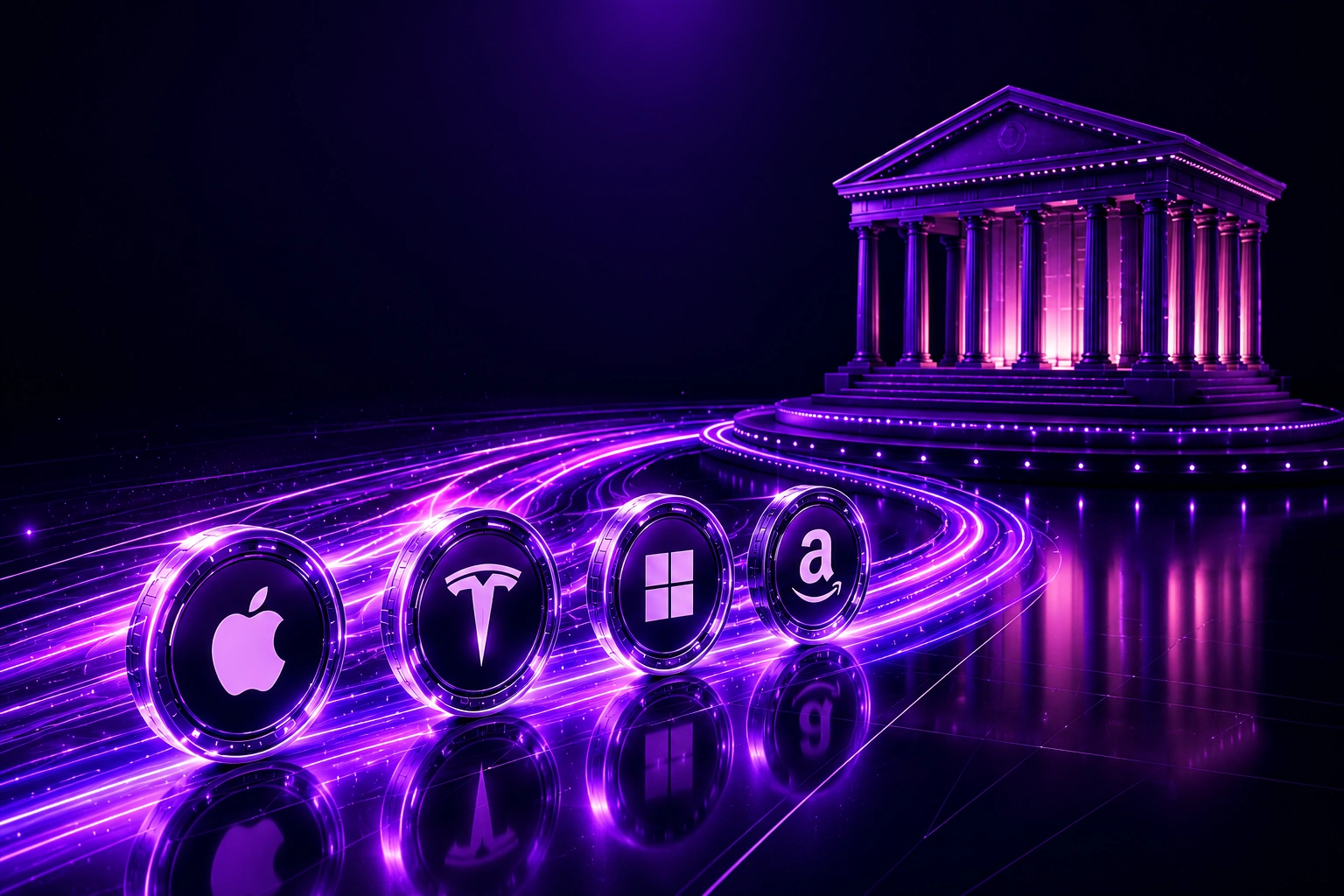
The evolution of the crypto exchange is one of the most important stories in finance today. We are rapidly moving past the notion of these platforms as simple venues for buying and selling Bitcoin or Ether. Today, they are evolving into sophisticated, interconnected networks known as multi-asset hubs. This shift is not just an upgrade; it’s a fundamental re-imagining of what a market can be. Imagine a future where a single crypto exchange no longer just lists tokens, but serves as a unified gateway to global finance. In this new paradigm, you could seamlessly trade a tokenized share of Apple stock, a fraction of a luxury watch, a piece of real estate in London, and the latest meme coin, all within the same interface. The future of these exchanges lies in their ability to aggregate liquidity and trust from a staggering array of assets. They are becoming the foundational layer for a new, everything tradable world. This is the birth of the true financial ecosystem, where the walls between traditional markets and decentralized finance dissolve. The exchange is no longer just a marketplace; it’s the operating system for a new financial reality, creating a unified financial layer where capital can flow freely between any asset class, any time, anywhere.
Meet the New Architects: AI and Tokenization
The transformation of the financial world isn’t happening by accident. It is being deliberately designed by two powerful and complementary forces: Artificial Intelligence and Tokenization. These are the architects of the new era, the two pillars holding up the future of crypto exchanges. Together, they are solving the biggest problems of the past and building a system that is faster, smarter, and more accessible than ever before.
AI – The Brain Power of the Market Think of AI as the nervous system and brain for the next generation of financial markets. The term AI in trading has evolved far beyond the simple algorithms of the past. Traders interested in building such systems often start with an algo trading course to understand strategy design, automation, and execution.We are now in the age of predictive intelligence. These are not just AI trading bots that execute orders; they are sophisticated systems that can analyze millions of data points, from global news feeds and social media sentiment to on-chain activity, in seconds to identify market trends before they even happen. This power is being integrated directly into next generation trading platforms, where AI can offer personalized investment strategies, automate complex risk management, and provide real-time fraud detection to keep user assets safe. The market is becoming more intelligent, and the human trader is being augmented, not replaced, by a powerful digital partner.
Tokenization – The Great Unlocking If AI is the brain, then Tokenization is the key that unlocks the entire value of the world’s assets. At its core, tokenization is the process of creating a digital token on a blockchain to represent ownership of a real-world asset. But its implications are world-changing. Suddenly, a multi-million dollar piece of art or a sprawling portfolio of commercial property becomes divisible. The tokenization of real estate is the perfect example. A $5 million building can be minted into 100,000 tokens, allowing anyone to buy a piece for just $50. This process, often called RWA tokenization (Real-World Assets), makes previously illiquid assets fluid and accessible to a global pool of investors. The simple question of how tokenization works opens the door to a world where you can invest in anything, from a single bond to an entire sports team, with unprecedented ease and transparency.
More Than Bots: The Rise of Intelligent Trading
Forget the old image of a simple AI trading bot sitting in a corner, executing pre-programmed strategies. That’s like comparing a basic calculator to a supercomputer. The reality of AI in trading today is something far more profound and strategic. These are no longer just digital parrots; they are the brains of a new financial nervous system. The new AI-powered platforms are not just automating trades; they are performing deep predictive analysis that was once the exclusive domain of elite quantitative funds. Imagine an AI that can scan global news headlines, parse social media sentiment from thousands of languages, and analyze on-chain data in the time it takes you to blink, all to predict market movements before they happen. This goes far beyond simple automation. These intelligent systems are the first line of defense for the entire ecosystem, providing real-time fraud detection that is so sophisticated it can spot a single suspicious transaction in a sea of millions. This is the new standard of market intelligence, creating a safer and more efficient environment for everyone, and setting the stage for the truly intelligent assets they are about to trade.
24/7 Markets: The New Trading Standard
Perhaps the most revolutionary shift isn’t just what we trade, but when we can trade it. For centuries, global markets have been governed by the clock and the bell. They open, they close, and for a weekend, they are dead. This schedule was designed for a world of physical paperwork and human-led trading floors, a world that no longer exists. The old system created artificial barriers, leaving vast pools of capital and countless opportunities untapped during off-hours. The world of crypto proved that a market doesn’t need to sleep. It demonstrated that when you remove the artificial constraints of geography and time, you unlock a new level of efficiency and access. This always-on financial system is quickly becoming the definitive trading standard. It means that a tokenized bond, an AI-driven fund, or a piece of real estate can be priced and re-priced in real-time, 365 days a year, reflecting a truly global consensus. The old 9-to-5 model isn’t just outdated; it’s an anachronism in a world where capital never stops moving.
How Regulation is Unlocking the Tokenization Boom
For years, regulation has been the biggest gatekeeper holding back the promise of tokenization. In a world of uncertainty, big players and institutions have been hesitant to dive in. But a powerful shift is happening right now. Clear, well-defined policies are emerging as the ultimate catalyst for growth. Take Europe, for example. The MiCA regulation is providing a clear roadmap that is building trust and encouraging massive institutional adoption. This isn’t just about creating rules; it’s about building a foundation for the future. With clear policies, the process of creating digital securities becomes less risky and more attractive. This newfound clarity is breathing life into the RWA tokenization market. It turns a once-niche idea into a viable, mainstream financial tool, promising to unlock immense value and liquidity in the real world. This regulatory green light is the green light for the tokenization boom, setting the stage for a new era of finance.
The Future of Crypto Exchanges: From Crypto Trading to Trading Everything
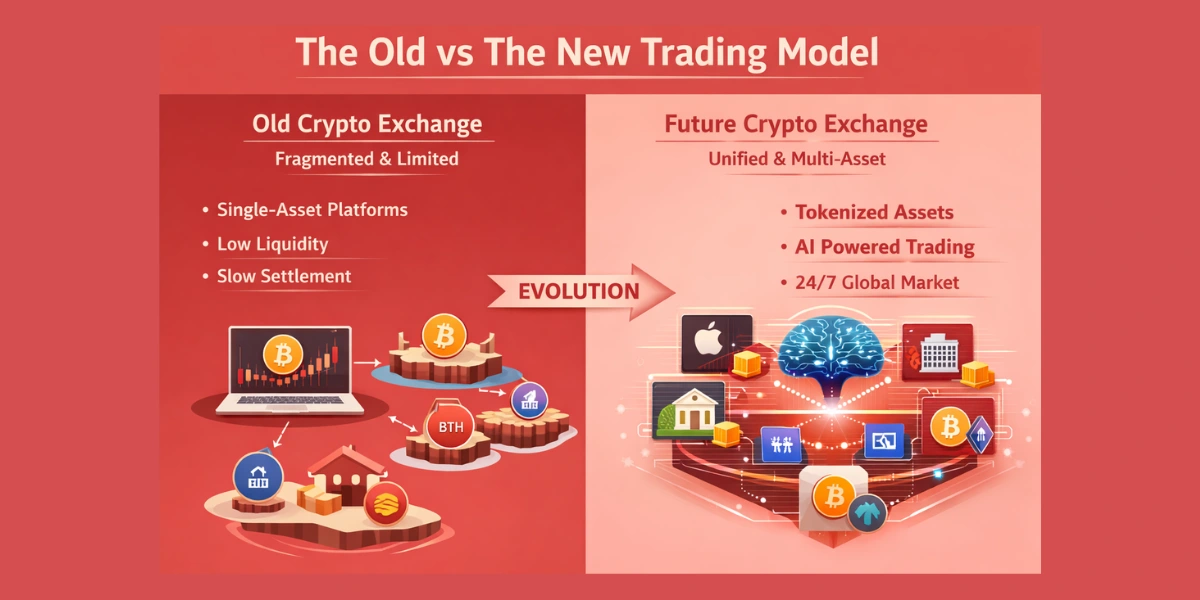
The ultimate destination for the future of crypto exchanges has very little to do with crypto itself. The true vision is to create a single, unified platform where the distinction between crypto, stocks, and real-world assets completely dissolves. The future of trading will be a place where you don’t switch between different apps for different markets. Instead, you log into one powerful interface that allows you to trade anything, at any time, from anywhere. This is the birth of the multi-asset hub.
Imagine a single dashboard. On one side, you see a tokenized share of Amazon, its price managed by global AI-driven market makers. On the other, you see a fractional ownership token in a luxury property in Tokyo, a piece of fine art, or a stake in a renewable energy project. The everything tradable concept moves from a bold idea to a daily reality. This is the power of the tokenized economy. Unlocked through RWA tokenization, assets that were once illiquid and exclusive—like real estate, private equity, and even intellectual property—become liquid, divisible, and accessible to anyone with an internet connection.
And how can anyone possibly manage this complexity? The answer is AI in trading. AI will be the brain that makes sense of this vast, interconnected web of assets. It will analyze correlations, manage risk across thousands of tokenized and traditional assets, and provide personalized investment strategies in real-time. This world is being built on a foundation of clear regulation, like the MiCA regulation in Europe, which provides the trust needed for massive institutional adoption. As big players enter, they bring liquidity and legitimacy that will accelerate the transition. The end result is a single, efficient unified financial layer. The future of crypto exchanges isn’t just about offering more products. It’s about creating the infrastructure for a new, interconnected global financial system where capital can flow freely between any asset class, creating unprecedented opportunities for everyone. The exchange is no longer just a marketplace. It is the operating system for the future.
| Feature | Old Crypto Exchange Model | New AI & Tokenized Exchange Model |
|---|---|---|
| Market Scope | Single-asset focus (Bitcoin, Ether) | Multi-asset hub: crypto, tokenized stocks, real estate, collectibles, etc. |
| Trading Hours | Limited by traditional hours or exchange downtime | 24/7 always-on markets |
| Liquidity | Fragmented; siloed exchanges, low liquidity for large trades | Aggregated global liquidity across multiple asset types |
| AI Integration | Minimal or basic trading bots | Advanced AI: predictive analysis, personalized strategies, fraud detection, risk optimization |
| Asset Accessibility | Mostly liquid crypto | RWA tokenization: fractional ownership in real estate, art, bonds, etc. |
| Regulatory Clarity | Fragmented, uncertain regulations | Clear frameworks (e.g., MiCA) encourage institutional adoption |
| Financial Ecosystem Role | Simple marketplace | Operating system for a unified financial layer |
| Trading Efficiency | Slow, inefficient, high fees | Fast, seamless, low friction across asset types |
Final Thoughts
Develop the Next-Gen Exchange
We build AI and RWA-powered exchanges. Join the 2026 revolution. Partner with us to create the future of trading platforms and build your vision.
This revolution is fundamentally reshaping the industry, and nowhere is this more apparent than in crypto exchange development. The mission is no longer to simply build a place to trade Bitcoin. The entire focus has shifted to creating sophisticated, AI-driven financial ecosystems capable of handling the complexity of the tokenized economy. The old model is obsolete; the new wave of crypto exchange development is about architecting a unified layer for a world where everything is tradable. This is a future built on predictive AI, fractionalized real-world assets, and 24/7 access. The technology is here. The vision is clear. The only question is how quickly the world will adopt the new platforms being built to serve it.
Frequently Asked Questions
Q1.What is driving the evolution of crypto exchanges beyond traditional crypto trading?
The evolution is driven by the integration of AI in trading and RWA tokenization (Real-World Assets). Modern platforms are moving from single-asset markets to multi-asset hubs, enabling users to trade crypto, tokenized stocks, real estate, and other fractionalized assets within a single, unified interface. This transition creates a more efficient, interconnected financial ecosystem.
Q2.How does AI improve trading efficiency and risk management?
AI systems in trading now provide predictive intelligence, analyzing massive datasets including market trends, social sentiment, and on-chain activity in real-time. This enhances automated trading strategies, personalized investment planning, and fraud detection, creating a safer and smarter trading experience for users.
Q3.What is tokenization, and why is it important for investors?
Tokenization is the process of converting real-world assets into digital tokens on a blockchain. It allows previously illiquid assets, like real estate or fine art, to be fractionalized and accessible to a wider audience. RWA tokenization enhances liquidity, transparency, and global access for investors of all sizes.
Q4.Why is the traditional crypto exchange model becoming outdated?
Old exchanges are often fragmented, single-asset platforms with limited liquidity. This results in inefficient pricing and poor user experiences. The new generation of exchanges focuses on multi-asset aggregation, AI-powered decision-making, and real-world asset trading, solving the inherent flaws of legacy systems.
Q5.How do 24/7 markets change the trading landscape?
The new model enables round-the-clock trading, eliminating artificial time barriers. AI-driven exchanges continuously adjust prices, monitor risks, and allow global users to trade tokenized assets and cryptocurrencies at any time, unlocking maximum efficiency and capital flow.
Q6.How is regulation influencing the adoption of tokenized assets?
Clear and robust regulations provide legal certainty and increase institutional participation. With regulatory clarity, digital securities and tokenized real-world assets gain trust, encouraging broader adoption and liquidity in the market. This regulatory framework supports the growth of sophisticated crypto exchange development.
Explore Services
Related Services
Reviewed by

Aman Vaths
Founder of Nadcab Labs
Aman Vaths is the Founder & CTO of Nadcab Labs, a global digital engineering company delivering enterprise-grade solutions across AI, Web3, Blockchain, Big Data, Cloud, Cybersecurity, and Modern Application Development. With deep technical leadership and product innovation experience, Aman has positioned Nadcab Labs as one of the most advanced engineering companies driving the next era of intelligent, secure, and scalable software systems. Under his leadership, Nadcab Labs has built 2,000+ global projects across sectors including fintech, banking, healthcare, real estate, logistics, gaming, manufacturing, and next-generation DePIN networks. Aman’s strength lies in architecting high-performance systems, end-to-end platform engineering, and designing enterprise solutions that operate at global scale.