Ai Overview
The difference between a generative AI system design application that delights users and one that frustrates them often comes down to invisible architectural decisions made months before launch. Keeping only the most recent and frequently accessed embeddings in high-performance SSD-backed vector stores, while archiving older indexes to cheaper object storage, can reduce database costs by 40-60% for mature AI platforms with large historical document collections.
Key Takeaways
- Generative AI System Design determines the overall performance, reliability, and scalability of AI-powered applications across diverse enterprise workloads globally.
- Enterprise generative AI architecture must integrate vector databases, RAG pipelines, and multi-model orchestration layers for production-grade accuracy and contextual relevance.
- Scalable generative AI applications built on microservices and auto-scaling cloud infrastructure maintain consistent throughput even under unpredictable high-traffic demand spikes.
- API-first design in generative AI system architecture allows modular upgrades, third-party integrations, and seamless multi-platform deployment without system-wide disruptions.
- Businesses in Dubai and India adopting enterprise generative AI architecture achieve measurable gains in cost efficiency, customer engagement, and operational automation speed.
- Performance optimization in AI systems requires GPU memory tuning, prompt caching strategies, and inference batching to reduce per-request compute costs significantly.
- Data security in generative AI platforms demands end-to-end encrypted pipelines, role-based access control, and private model hosting for compliance-sensitive industries.
- The best architecture for generative AI applications balances latency, throughput, cost, and security across all layers from data ingestion to final inference output delivery.
- Continuous monitoring and observability pipelines are critical for detecting model drift, latency regressions, and infrastructure failures before they impact production AI systems.
- Industry-specific generative AI system architecture in healthcare, finance, and retail delivers context-aware automation that generic off-the-shelf AI tools cannot replicate effectively.
With over eight years of designing and deploying AI-driven platforms for enterprises across India and the UAE, we have witnessed firsthand how foundational architecture decisions determine whether an generative AI system design product thrives or collapses under real business pressure. The field of Generative AI System Design has moved far beyond academic experimentation. Today it represents a mission-critical engineering discipline that shapes competitive advantage, operational continuity, and customer experience at scale.
From fintech startups in Bengaluru to large government-backed innovation hubs in Dubai, the conversation has shifted decisively. Organizations are no longer asking whether to adopt Generative AI. They are asking how to architect it correctly so it performs reliably at scale, integrates with legacy systems, and remains auditable, secure, and cost-efficient over time.
This guide presents a practitioner-level breakdown of every critical layer in a modern generative AI system design , from data pipelines and cloud infrastructure to latency optimization and enterprise security. Whether you are building from scratch or scaling an existing platform, these architectural principles apply.
Why Generative AI System Design Matters for High Performance Applications
The difference between a generative AI system design application that delights users and one that frustrates them often comes down to invisible architectural decisions made months before launch. Generative AI System Design is the discipline of planning, structuring, and integrating every technical component, from the model layer to the API gateway, into a coherent system that delivers consistent, high-quality output under real-world conditions.
High-performance AI applications do not tolerate architectural shortcuts. A poorly planned tokenization pipeline can introduce hundreds of milliseconds of unnecessary latency. An undersized vector store collapses retrieval quality as data grows. A monolithic deployment model breaks under traffic surges that microservices would absorb effortlessly. These are not hypothetical risks. They are patterns we have remediated repeatedly for enterprises across Mumbai, Hyderabad, Abu Dhabi, and Dubai.
Proper Generative AI System Design ensures that every component, the model serving layer, the data retrieval pipeline, the caching infrastructure, and the monitoring stack, works in harmony. This harmony is what separates generative AI system design products that scale to millions of users from those that require constant firefighting at a few thousand concurrent requests.
Key Layers of a Generative AI System Architecture
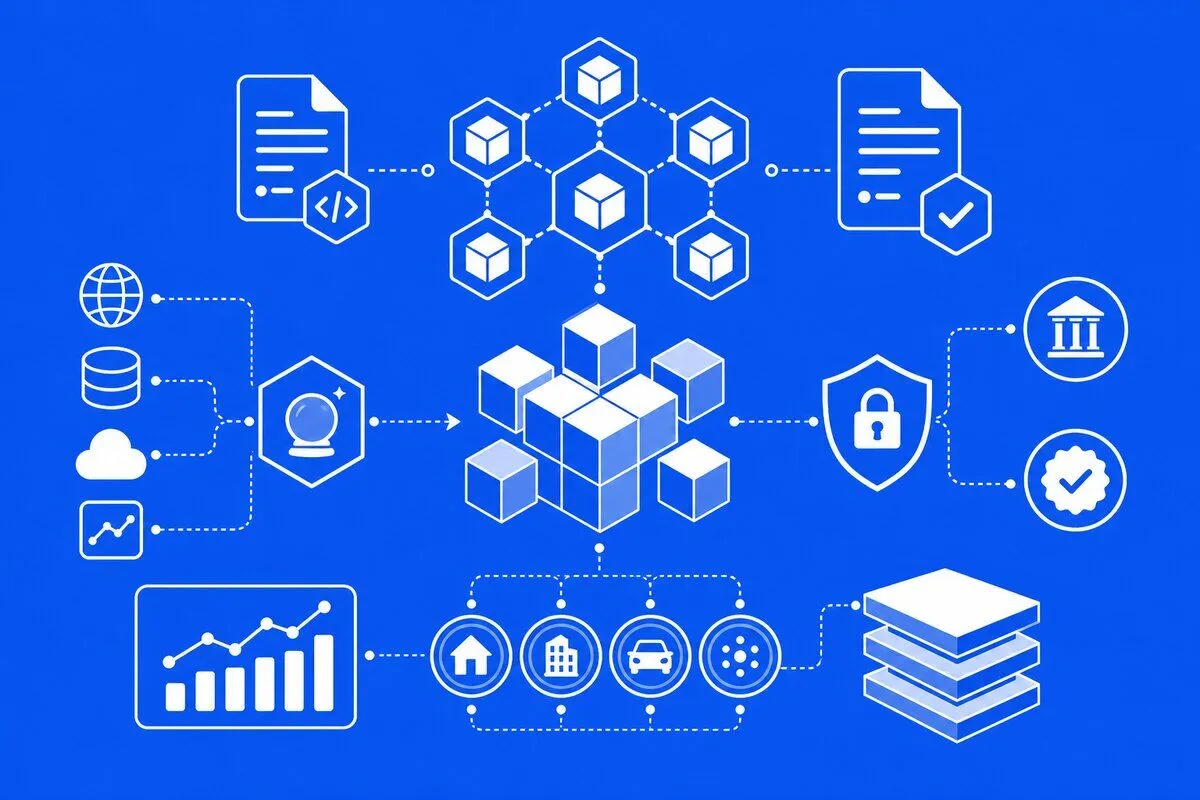
A robust generative AI system design architecture is not a single layer. It is a carefully sequenced stack where each layer has a clearly defined responsibility and communicates with adjacent layers through well-specified interfaces. Understanding these layers is prerequisite knowledge for any engineering team tasked with building scalable generative AI applications.
Each of these layers communicates through defined contracts, typically REST or gRPC APIs, with shared telemetry feeding centralized dashboards. In the enterprise generative AI architecture we deploy for clients in India and the UAE, this layered approach prevents cascading failures and allows individual layers to be upgraded or replaced without affecting the entire system.
Data Processing in High Performance AI Applications
Data is the substrate on which every generative AI application runs. Poor data processing produces poor output, regardless of how powerful the underlying model is. In high-performance generative AI system design applications, data processing must be fast, reliable, and structured to feed clean, semantically rich content into retrieval and model layers.
Effective data processing in Generative AI System Design involves several interconnected stages. First, raw data from enterprise sources, whether internal documents, databases, APIs, or third-party feeds, is ingested through event-driven pipelines using tools like Apache Kafka or AWS Kinesis. Second, preprocessing stages normalize formats, remove noise, and apply domain-specific cleaning rules. Third, chunking algorithms break documents into semantically coherent segments optimized for embedding model input windows. Fourth, embedding models convert text chunks into high-dimensional vectors stored in specialized vector databases like Pinecone, Weaviate, or Qdrant.
For enterprise clients in sectors such as banking in Mumbai or retail in Dubai, data processing pipelines must handle millions of documents while maintaining sub-second retrieval latency. This requires careful index partitioning, approximate nearest neighbour (ANN) algorithms, and tiered storage strategies that keep hot data in memory while archiving cold data cost-efficiently.
Data Processing Pipeline Stages
Role of Cloud Infrastructure in AI System Performance
Cloud infrastructure is the foundation upon which scalable generative AI system design applications are built. Without properly configured cloud environments, even the most sophisticated AI models underperform. The choice of cloud provider, instance types, networking configuration, and storage tiers directly affects inference throughput, latency, and cost-per-query metrics.
For businesses operating in Dubai, proximity to regional data centers on AWS Middle East (Bahrain), Google Cloud’s upcoming UAE region, or Microsoft Azure UAE North reduces round-trip latency for end users significantly. Similarly, for enterprises in India, AWS Mumbai, Google Cloud Mumbai, and Azure Central India regions provide the local presence required for both performance and data residency compliance under India’s Digital Personal Data Protection Act.
Dynamically provision GPU instances during demand peaks and scale down during idle periods to optimize cost without sacrificing availability.
Replicate model weights and vector indexes across regions in India and UAE to deliver low-latency responses irrespective of user location.
Use spot or preemptible instances for batch inference and training workloads, reducing cloud spend by up to 70% versus on-demand pricing.
Cache frequently requested AI responses at edge nodes across the Middle East and South Asia to dramatically cut repeat-query latency.
API Integration in Modern AI Platforms
API integration is the connective tissue of any modern generative AI system design platform. In Generative AI System Design, a well-defined API layer enables product teams, data engineers, and third-party vendors to interact with generative AI system design capabilities without needing to understand the underlying model infrastructure. This abstraction is what makes enterprise AI platforms maintainable and extensible over years of operation.
Modern generative AI system design platforms use API gateways such as Kong, AWS API Gateway, or custom Nginx-based proxies to handle authentication, throttling, request transformation, and routing. These gateways sit in front of the model serving layer and shield it from malformed requests, unauthorized access, and traffic overloads. For enterprise clients in sectors like healthcare in India or government services in Dubai, these API security mechanisms are non-negotiable requirements rather than optional enhancements.
Webhook-based integrations allow enterprise generative AI system design architecture to push inference results to downstream systems such as CRMs, ERPs, and analytics platforms in real time. This event-driven integration pattern decouples AI outputs from consuming applications, enabling each side to evolve independently without coordination overhead.[1]
Enterprise Generative AI Architecture for Large Scale Operations
Enterprise generative AI architecture operates at a fundamentally different scale and complexity than proof-of-concept deployments. At the enterprise level, AI systems must serve thousands of concurrent users across multiple geographies, integrate with decades-old legacy systems, meet strict regulatory requirements, and maintain multi-nines availability commitments.
The architecture for large-scale enterprise generative AI system design adopts a service mesh pattern where individual AI capabilities, document summarization, sentiment analysis, code generation, image interpretation, are exposed as independent microservices. These services communicate through a central orchestration layer that routes user requests to the appropriate service combination based on intent classification results. This design pattern allows enterprises to add new generative AI system design capabilities incrementally without rebuilding the entire system.
For a large banking group we supported across operations in Pune and Dubai, this service-mesh enterprise generative AI architecture allowed the team to add a regulatory document analysis service to an existing customer support generative AI system design without any disruption to live customer-facing functions. The modularity was not an accident. It was a deliberate architectural choice made at the generative AI system design phase, saving what would have been months of rearchitecting later.
Important Features of Enterprise Generative AI Architecture
Enterprise-grade AI systems carry a distinct set of requirements that separate them from consumer-grade or prototype implementations. These features are not optional. They are the baseline expectations of any organization deploying AI at production scale.
Enterprise AI Architecture Feature Comparison
| Feature | Basic AI Setup | Enterprise AI Architecture |
|---|---|---|
| Scalability | Fixed single-instance | Auto-scaling horizontal pods |
| Security | API key only | RBAC, encryption, audit logs |
| Availability | No SLA guarantee | 99.9%+ SLA with failover |
| Observability | Basic logging only | Full telemetry, tracing, alerts |
| Multi-tenancy | Single user context | Isolated namespaces per tenant |
| Compliance | Not addressed | GDPR, DPDP, UAE PDPL ready |
Common Performance Challenges in Enterprise AI Systems
Even well-designed systems encounter performance challenges when they meet real-world traffic patterns. Understanding these challenges in advance is a core competency of experienced Generative AI System Design practitioners. The following issues represent the most frequent pain points we address for enterprise clients.
Serverless and container-based deployments experience cold start delays of 3-15 seconds when instances must load model weights before serving the first request after an idle period.
Concurrent long-context requests can exhaust GPU VRAM, forcing requests to CPU fallback or causing out-of-memory errors that terminate inference processes entirely.
As vector stores grow beyond optimal size without re-indexing or hierarchical navigation, approximate nearest neighbour searches return lower-quality results that reduce AI response accuracy.
Poorly tuned prompt engineering that sends excessive context tokens inflates latency and cost, particularly in workflows that pass entire document contents into model input windows.
Security and Data Management in Enterprise AI Applications
Security in enterprise generative AI architecture is not a feature added at the end of the project. It is a design constraint that must be embedded in every layer of the system from the initial architecture review. AI systems that process sensitive business data, personal information, or regulated content must meet the same or higher security standards as core enterprise systems.
Encryption at rest and in transit is the minimum baseline. All data moving between services, from the API gateway to the orchestration layer to the model server, must travel over TLS 1.3. Stored embeddings, conversation histories, and fine-tuned model weights must be encrypted using AES-256. For enterprises in Dubai operating under UAE PDPL regulations, data localization requirements demand that all personally identifiable information remain within UAE-hosted cloud regions without exception.
Role-based access control (RBAC) must govern which users, services, and teams can invoke which AI capabilities, access which knowledge bases, and view which operational dashboards. In multi-tenant enterprise AI deployments, namespace isolation ensures that one tenant’s data never bleeds into another tenant’s retrieval context, even when they share the same underlying vector database cluster.
Prompt injection attacks represent an AI-specific threat that traditional security frameworks do not address. Malicious users can craft inputs that override system instructions or exfiltrate context window data. Defending against these attacks requires input sanitization layers, output filtering pipelines, and periodic red team testing as part of ongoing security operations for any production AI platform.
Best Architecture for Generative AI Applications Across Industries
The best architecture for generative AI applications is not universal. It is shaped by the specific data types, user volumes, latency requirements, and compliance constraints of each industry. Applying a one-size-fits-all architecture to diverse industry contexts is one of the most common mistakes we observe in enterprise AI engagements.
Industry-Specific AI Architecture Considerations
| Industry | Key AI Use Case | Architecture Priority | Compliance Focus |
|---|---|---|---|
| Banking (India/UAE) | Fraud detection, document review | Real-time inference, low latency | RBI, UAE CBUAE |
| Healthcare | Clinical summarization, coding | Data privacy, accuracy | HIPAA, DPDP |
| E-commerce | Personalization, search | High throughput, CDN edge | GDPR |
| Government (Dubai) | Citizen services, translation | Data sovereignty, auditability | UAE PDPL |
| Legal Services | Contract analysis, research | Retrieval accuracy, citations | Privilege confidentiality |
Choosing the Right Infrastructure for AI Workloads
Infrastructure selection is one of the highest-leverage decisions in Generative AI System Design. The wrong infrastructure choice creates ceiling effects that limit how far your AI system can scale, regardless of how well the software layers are built. The right infrastructure provides a performance foundation that the application layer can rely on without constant hardware-related firefighting.
For real-time inference workloads, NVIDIA A100 or H100 GPUs on managed Kubernetes clusters deliver the highest tokens-per-second throughput for large language model serving. For embedding generation, which is computationally lighter, T4 or L4 instances offer excellent price-performance ratios. For batch workloads such as nightly document reprocessing, CPU-optimized instances often suffice and significantly reduce infrastructure spend.
Hybrid infrastructure, combining on-premise GPU servers for sensitive data processing with cloud burst capacity for variable demand, is increasingly popular with large enterprises in India’s BFSI sector and government-adjacent organizations in Dubai. This architecture provides data sovereignty controls without sacrificing the elasticity that cloud-native scalable generative AI applications require.
Storage and Database Planning for AI Systems
AI systems have distinct storage requirements that differ substantially from traditional transactional applications. A production Generative AI System Design must account for at least four categories of storage: relational metadata storage, vector embedding storage, object storage for raw documents and model artifacts, and in-memory caching for hot retrieval paths.
Storage Layer Breakdown
Storage tiering matters enormously for cost management. Keeping only the most recent and frequently accessed embeddings in high-performance SSD-backed vector stores, while archiving older indexes to cheaper object storage, can reduce database costs by 40-60% for mature AI platforms with large historical document collections.
Load Management for High Traffic AI Platforms
Load management in AI platforms differs from web application load balancing because AI inference requests are not uniform. A request asking for a one-sentence summary costs dramatically fewer compute resources than one requesting a detailed 3,000-word analysis from 50 retrieved documents. Treating these requests equally at the load balancer results in unfair resource allocation and degraded performance under mixed traffic conditions.
Intelligent load management for scalable generative AI applications uses request classification at the API gateway to route requests to appropriately sized inference instances. Simple, short-output requests are directed to smaller, cheaper model instances. Complex, multi-document, long-output tasks are routed to larger GPU instances with sufficient VRAM and context window capacity to handle the workload correctly.
Rate limiting, queuing, and circuit breakers are additional load management mechanisms that prevent any single user, tenant, or traffic spike from degrading the experience for all users on a shared AI platform. For SaaS AI products launched across India and the UAE, these mechanisms are the difference between a platform that performs reliably and one that requires constant manual intervention during peak usage events.
Building Scalable Generative AI Applications for Business Growth

Human and AI robot working together to represent Generative AI System Design for scalable business growth applications
Building scalable generative AI applications requires thinking beyond the initial launch. The architectural decisions made today determine whether the platform can accommodate 10x user growth in 12 months without emergency re-engineering. This growth planning is a defining characteristic of mature Generative AI System Design practice.
Horizontal scaling, where additional compute nodes are added to increase throughput without increasing per-node capacity, is the preferred scaling strategy for most AI inference workloads. Kubernetes-based orchestration, with Horizontal Pod Autoscaler configured to respond to GPU utilization and queue depth metrics, enables this horizontal scaling to happen automatically in response to real-time demand signals.
Business growth in AI-intensive markets like Dubai’s smart government initiatives or India’s rapidly expanding edtech and fintech sectors often follows non-linear demand curves. Regional promotional events, new feature launches, and viral content can drive traffic spikes of 5-20x within hours. Scalable generative AI applications built on auto-scaling infrastructure absorb these spikes gracefully, while those built on fixed capacity suffer performance degradation and user abandonment precisely at the moments that matter most for business.
Performance Optimization Techniques for AI Systems
Performance optimization in AI systems spans multiple technical domains. Unlike web application optimization, which focuses primarily on network and database efficiency, AI system optimization must address compute-layer inefficiencies specific to neural network inference, tokenization, and retrieval operations.
Reduce model weight precision from FP32 to INT8 or INT4 to cut memory consumption by up to 75% with minimal accuracy loss for most production tasks.
Group multiple simultaneous requests into single batched inference calls to maximize GPU utilization and reduce average cost-per-request significantly.
Cache key-value attention states for static system prompt segments to avoid redundant recomputation on every new inference request sharing the same prefix.
Use a small draft model to speculatively generate token sequences that the large model verifies in parallel, reducing effective latency on auto-regressive outputs.
Reducing Latency in Real Time AI Applications
Real-time AI applications, such as live customer support chatbots, AI-assisted code editors, and voice-driven AI agents, operate under strict latency budgets that leave no room for inefficiency anywhere in the system stack. Users abandon real-time generative AI system design interactions if response latency exceeds approximately two seconds. This two-second budget must be distributed across network transit, retrieval, tokenization, inference, and response streaming.
Streaming token generation, where the AI model sends output tokens to the client as they are generated rather than waiting for the full response to complete, is one of the most impactful latency reduction techniques available. Users perceive streaming responses as faster even when total generation time is identical, because time-to-first-token is the metric that determines subjective experience quality in conversational AI applications.
Pre-warming model instances during anticipated demand windows, such as business opening hours in UAE time zones or peak shopping hours in Indian markets, eliminates cold-start latency contributions from the user-facing response budget. This scheduling-aware infrastructure management is a technique that separates expert generative AI system design operators from those who treat AI infrastructure like conventional web servers.
Monitoring and Maintenance for Scalable AI Platforms
Production AI platforms require observability strategies that go beyond standard application monitoring. In addition to infrastructure metrics such as CPU, memory, and network I/O, AI-specific metrics including tokens per second, mean time to first token (TTFT), retrieval recall scores, and model drift indicators must be tracked continuously to maintain system quality.
Distributed tracing using tools like Jaeger or Tempo allows engineering teams to follow a single AI request through every system component, from the API gateway through orchestration, retrieval, and model serving, to identify exactly where latency is being introduced. This granular visibility is essential for optimizing performance in complex enterprise generative AI architecture where request paths involve multiple services.
Model drift monitoring detects when AI response quality degrades over time due to shifts in the underlying data distribution or user behaviour patterns. Without automated drift detection, AI quality regressions go undetected for weeks or months before they accumulate enough user complaints to trigger an engineering investigation. Proactive monitoring prevents this scenario and maintains the standard of service that enterprise clients in both India and the UAE expect from production AI systems.
Business Benefits of Generative AI System Design
Investing in rigorous Generative AI System Design produces compounding business returns that extend far beyond initial deployment. Organizations that build on solid architectural foundations scale their AI capabilities faster, at lower cost, and with higher reliability than those that take architectural shortcuts in the rush to launch.
Optimized inference batching and infrastructure right-sizing reduce per-query compute costs dramatically compared to naive deployments.
Modular architecture allows product teams to add new AI features without rearchitecting existing services, accelerating release velocity.
Multi-zone deployment with automatic failover enables enterprise SLA commitments that build customer trust and reduce churn risk.
Beyond technical metrics, well-architected generative AI system design generate measurable business outcomes: faster customer service resolution, higher document processing accuracy, reduced operational staffing costs, and new revenue streams from AI-powered product features. These outcomes, not the technical sophistication of the architecture itself, are ultimately the value delivered to business stakeholders in every market we serve.
Industry Use Cases of Scalable Generative AI Applications
Scalable generative AI applications are transforming operations across industries in both India and the UAE. These are not future-state projections. They represent active deployments generating business value today, backed by the kind of enterprise generative AI architecture principles detailed throughout this guide.
The common thread across all these industry use cases is that success depends not on which generative AI system design model is chosen, but on the quality of the generative AI system architecture surrounding it. The model is a component. The architecture is the product.
Architect Your AI System the Right Way
We bring 8+ years of AI platform expertise to enterprises in India, UAE, and beyond. Build AI that scales with your business from day one.
People Also Ask
Q1.1. What is Generative AI System Design and why does it matter?
Generative AI System Design refers to the structured planning of generative AI system design model layers, data pipelines, APIs, and infrastructure to ensure reliable, scalable, and high-performance AI output across various business applications.
Q2.2. How is generative AI system architecture different from traditional software architecture?
Unlike traditional software, generative AI system architecture must handle non-deterministic outputs, large model weights, GPU memory constraints, and dynamic token generation pipelines that standard systems were never built to manage.
Q3.3. What is the best architecture for generative AI applications in enterprise settings?
The best architecture for generative AI applications in enterprises combines microservices, vector databases, retrieval-augmented generation (RAG) pipelines, and auto-scaling cloud infrastructure tailored to workload bursts and real-time inference needs.
Q4.4. How do scalable generative AI applications handle high traffic loads?
Scalable generative AI system design applications use horizontal pod autoscaling, load balancers, model-serving frameworks like vLLM or TorchServe, and caching layers to distribute inference requests without performance degradation during peak usage.
Q5.5. What cloud platforms are preferred for generative AI system architecture in India and UAE?
In India and UAE, businesses commonly use AWS, Google Cloud, and Azure for generative AI system design architecture due to their regional data centers, compliance readiness, and managed AI services tailored for enterprise deployments.
Q6.6. What role does API integration play in generative AI platforms?
API integration connects generative AI system design models to frontend applications, third-party tools, and business databases, enabling seamless data exchange, real-time inference calls, and modular upgrades without disrupting the entire system.
Q7.7. How do enterprises manage data security in generative AI system design?
Enterprise generative AI architecture incorporates role-based access control, encrypted data pipelines, private model deployments, and audit logging to protect sensitive business data processed through generative AI system design inference systems.
Q8.8. What are common performance bottlenecks in scalable generative AI applications?
Common bottlenecks include GPU memory overflow, cold-start latency in serverless deployments, inefficient tokenization pipelines, and unoptimized prompt engineering that significantly increases compute time per request.
Q9.9. How does RAG improve generative AI system architecture for enterprise use?
Retrieval-Augmented Generation connects generative AI system design models to live knowledge bases, enabling enterprise generative AI architecture to deliver accurate, context-aware responses without continuous and expensive model fine-tuning cycles.
Q10.10. What industries in Dubai and India are leading adoption of scalable generative AI applications?
In Dubai, fintech, real estate, and government sectors lead adoption, while in India, BFSI, healthcare, and e-commerce industries are rapidly deploying scalable generative AI system design applications to improve customer experience and operational efficiency.
Explore Services
Related Services
Reviewed by

Aman Vaths
Founder of Nadcab Labs
Aman Vaths is the Founder & CTO of Nadcab Labs, a global digital engineering company delivering enterprise-grade solutions across AI, Web3, Blockchain, Big Data, Cloud, Cybersecurity, and Modern Application Development. With deep technical leadership and product innovation experience, Aman has positioned Nadcab Labs as one of the most advanced engineering companies driving the next era of intelligent, secure, and scalable software systems. Under his leadership, Nadcab Labs has built 2,000+ global projects across sectors including fintech, banking, healthcare, real estate, logistics, gaming, manufacturing, and next-generation DePIN networks. Aman’s strength lies in architecting high-performance systems, end-to-end platform engineering, and designing enterprise solutions that operate at global scale.